
My Digital Photography of
Katydids
Click on any photo to see a larger view!
Meadow Katydid, Genus Orchelimum
Specimen #1
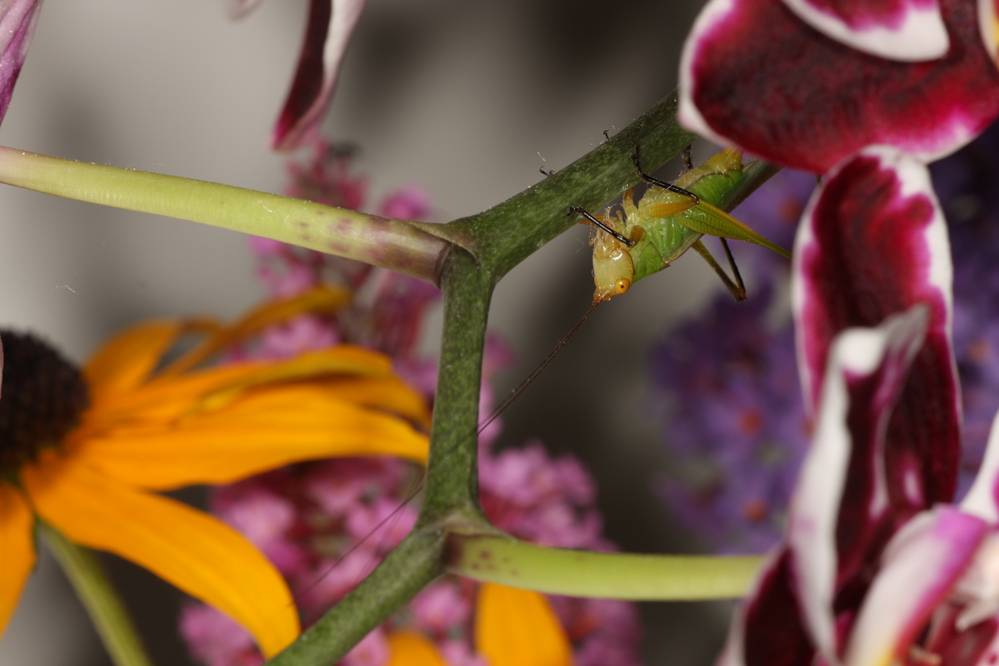
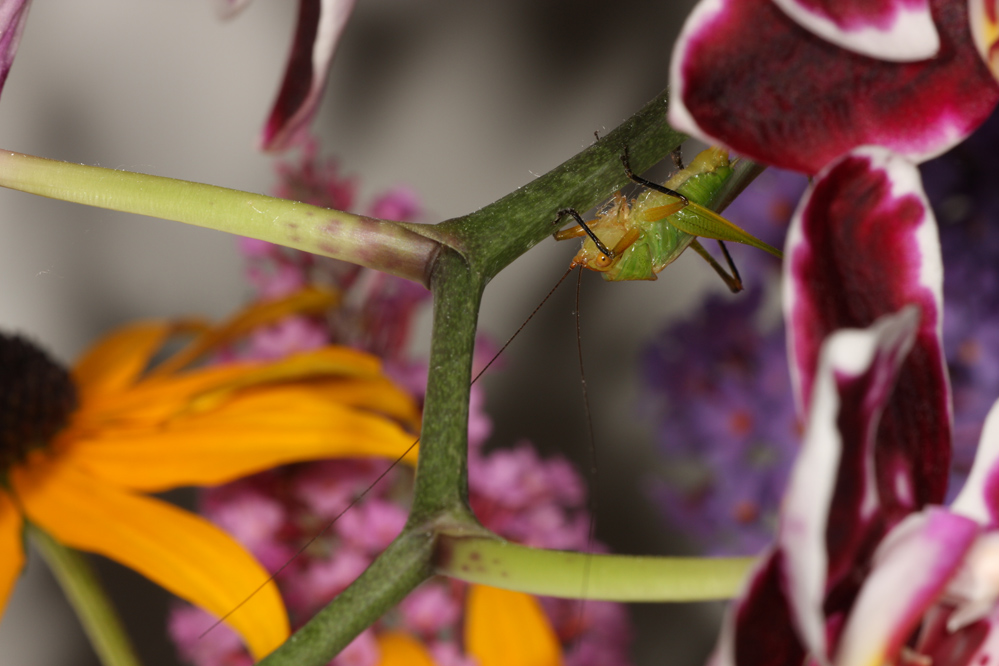
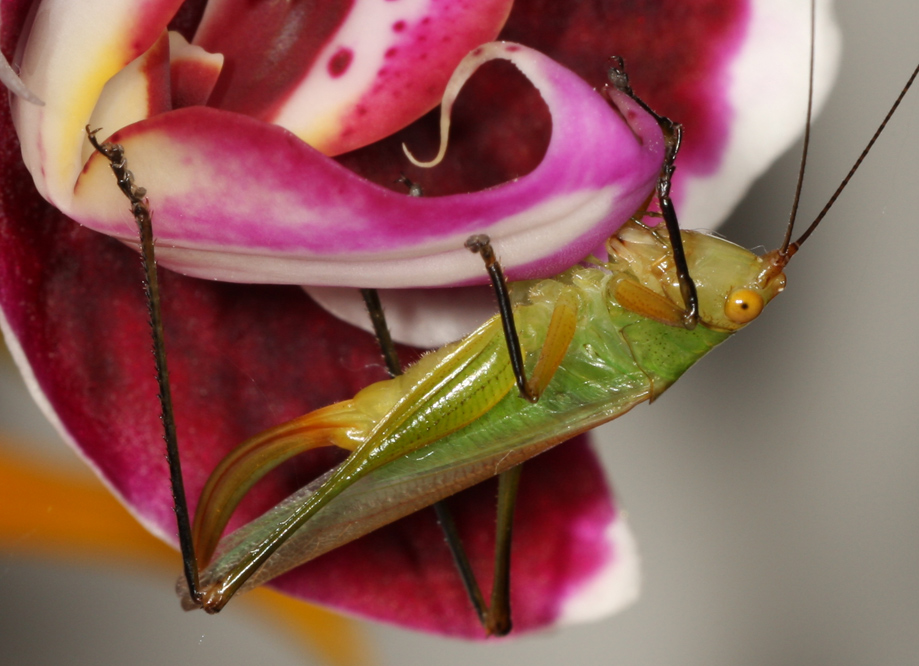
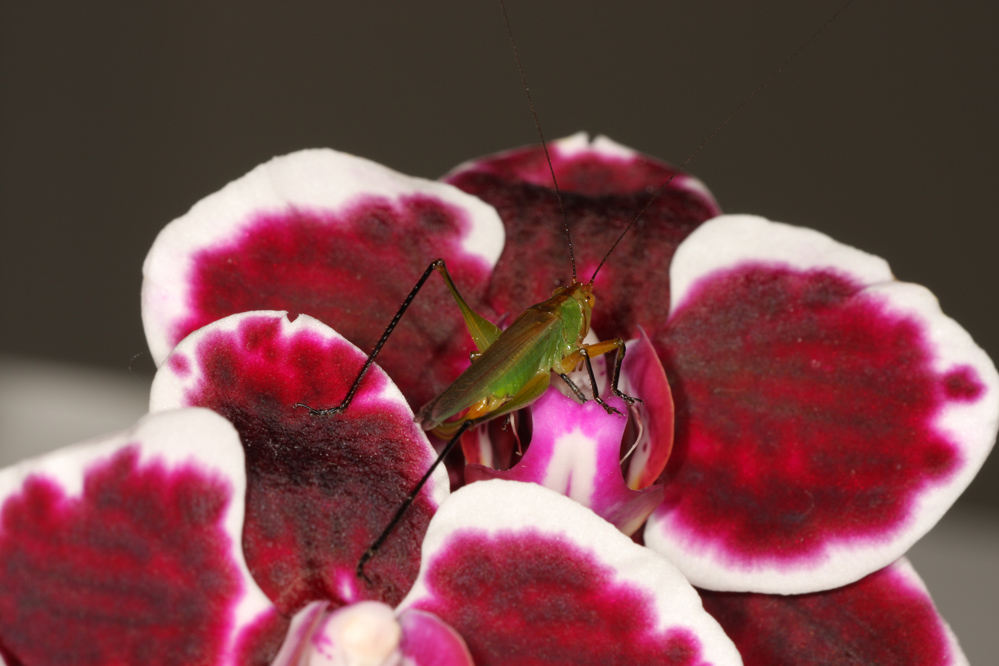
This type of katydid seems to be very abundant at my new house. They are everywhere in the backyard. They make their sounds during the day and early evening. This one was photographed on September 5, 2009.
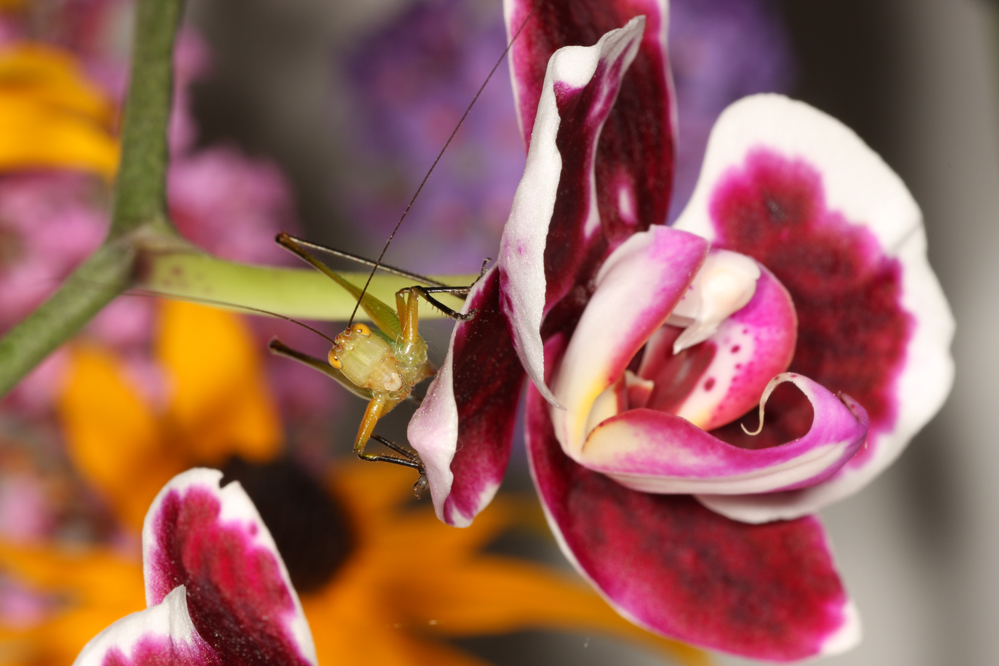


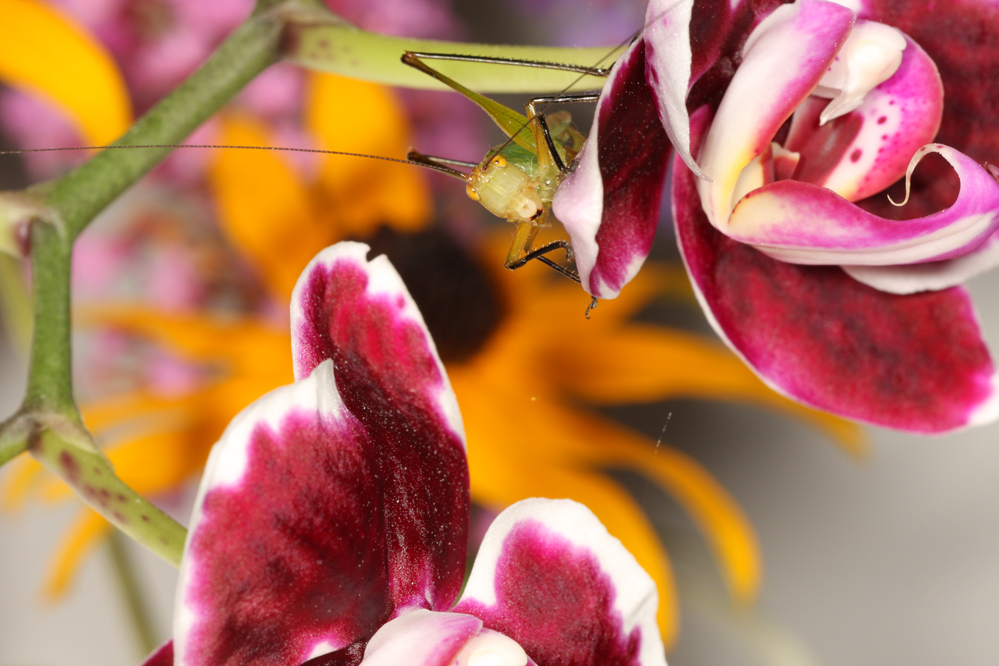
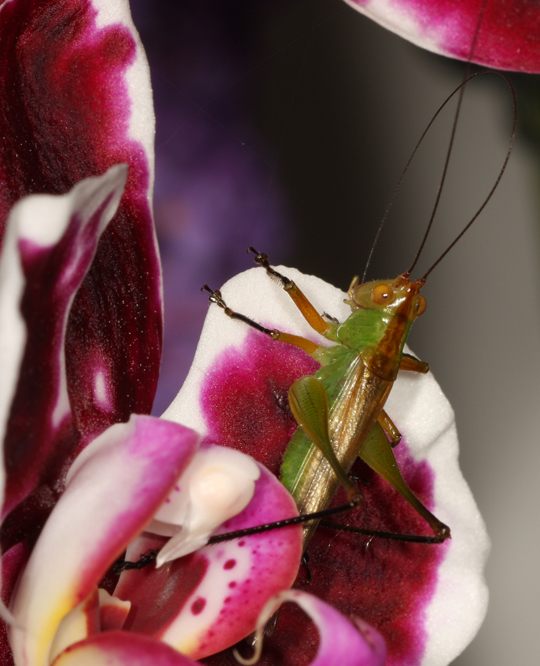
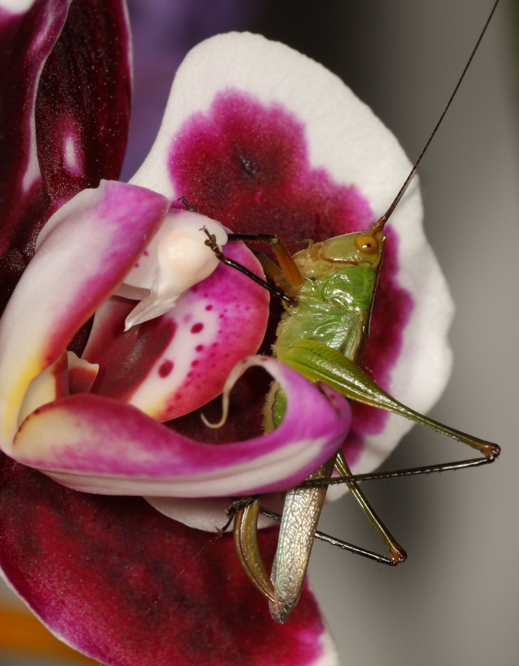
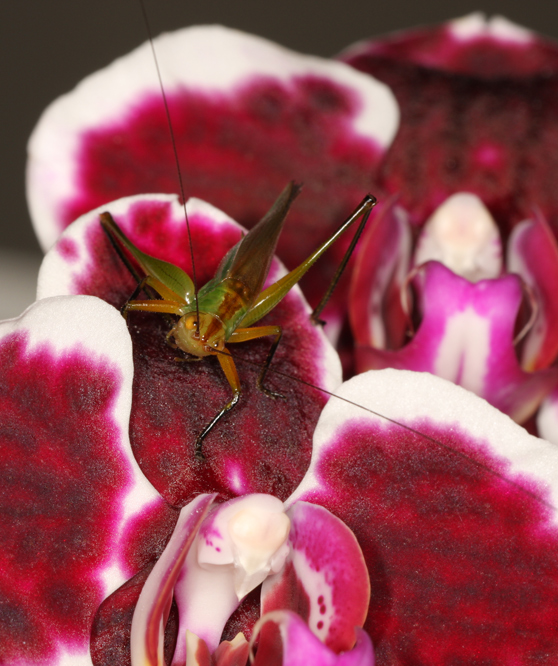
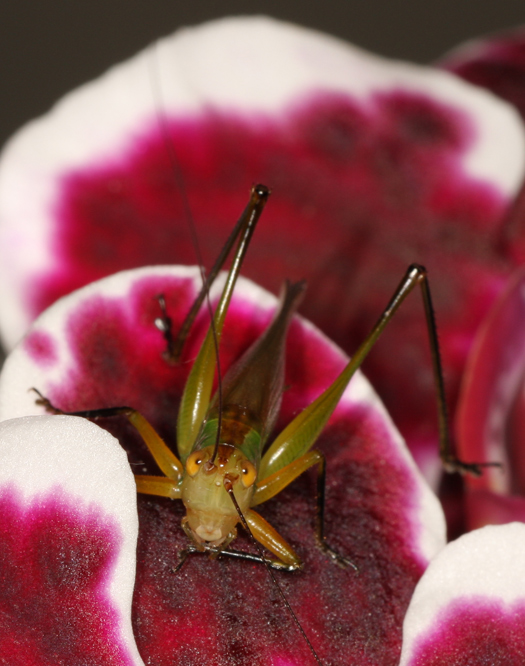
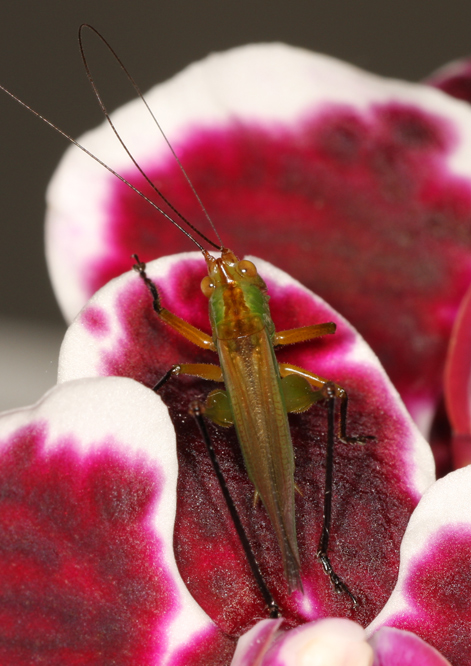
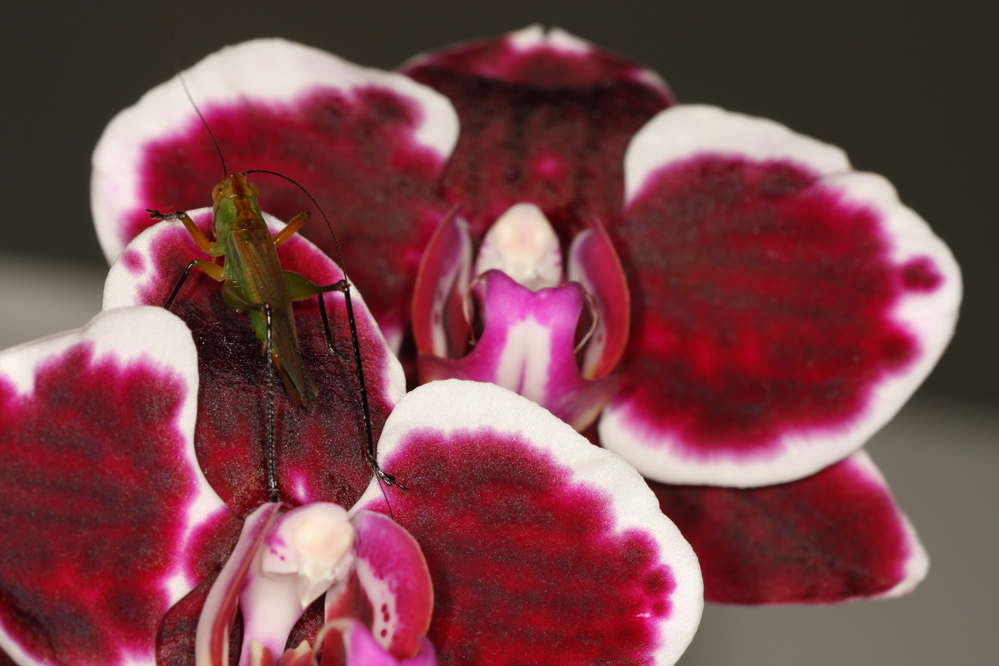
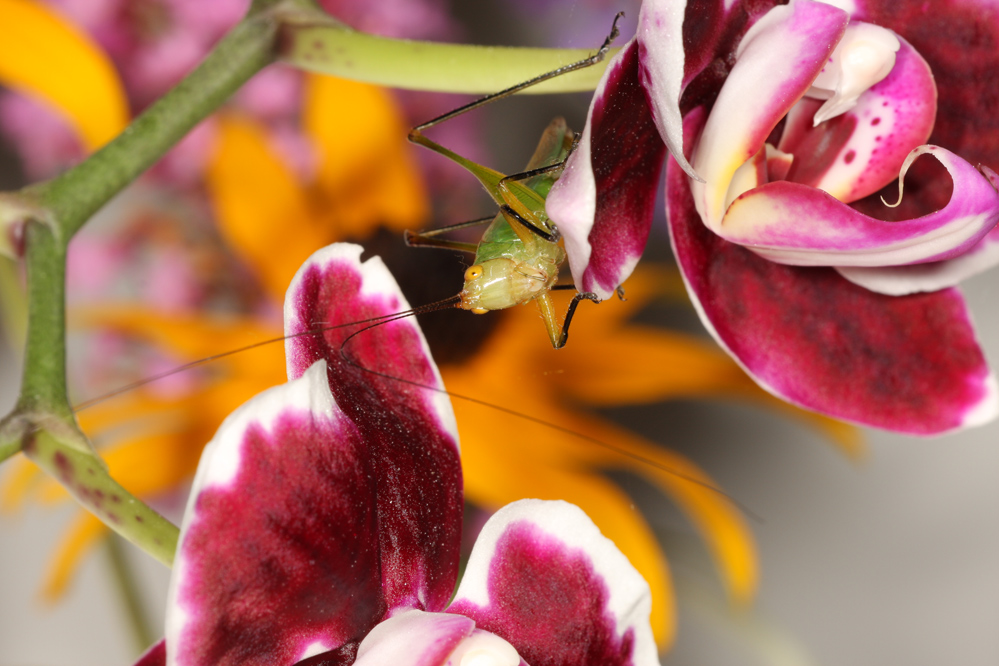
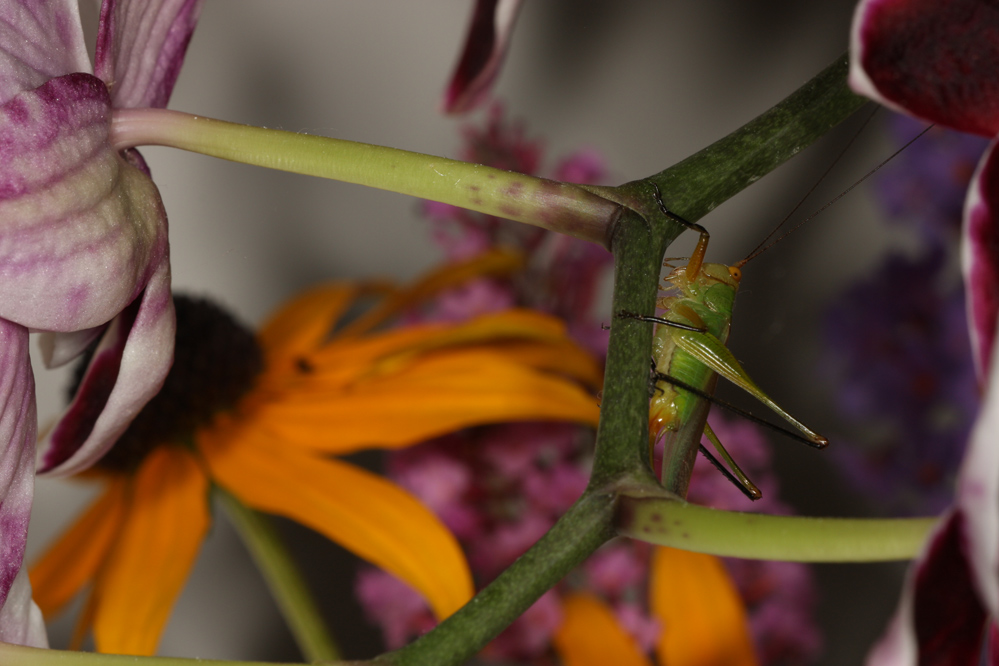
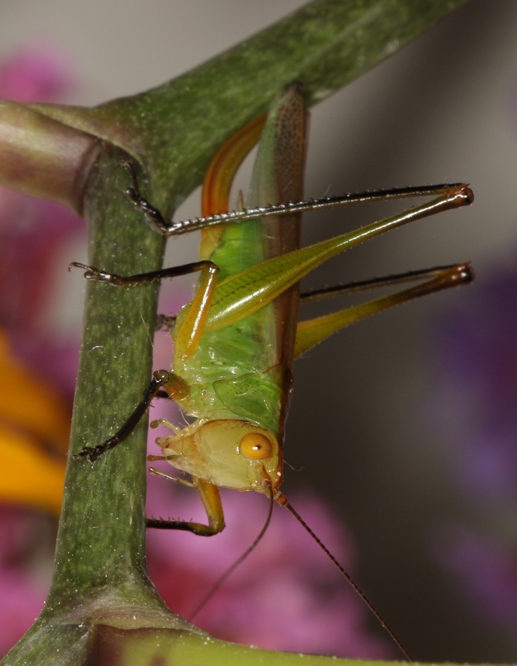
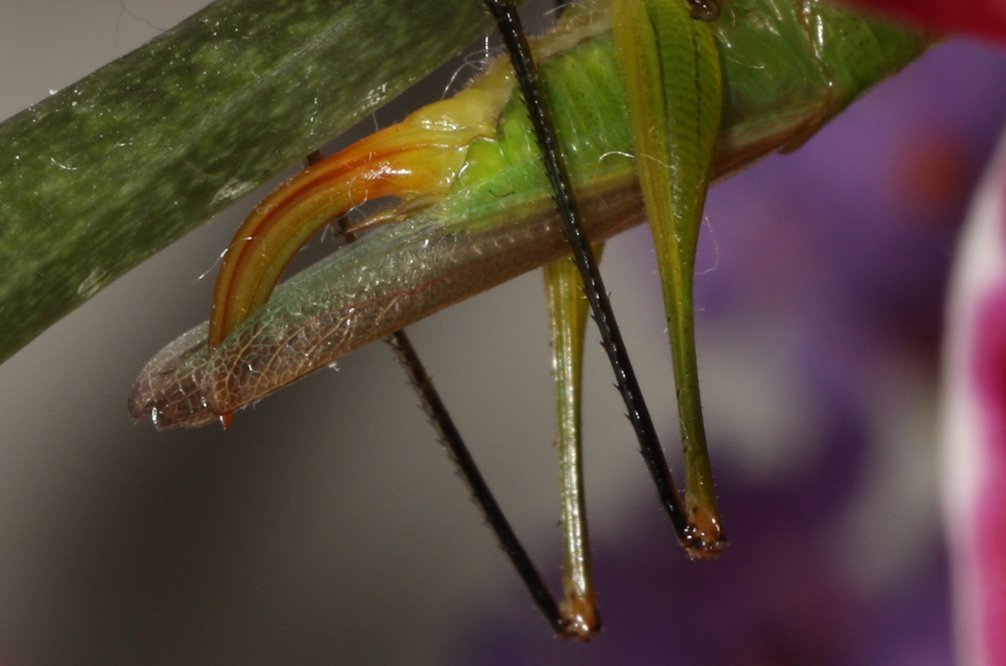
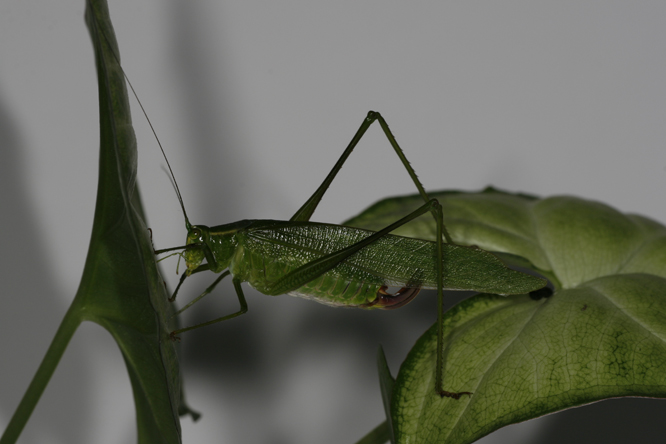
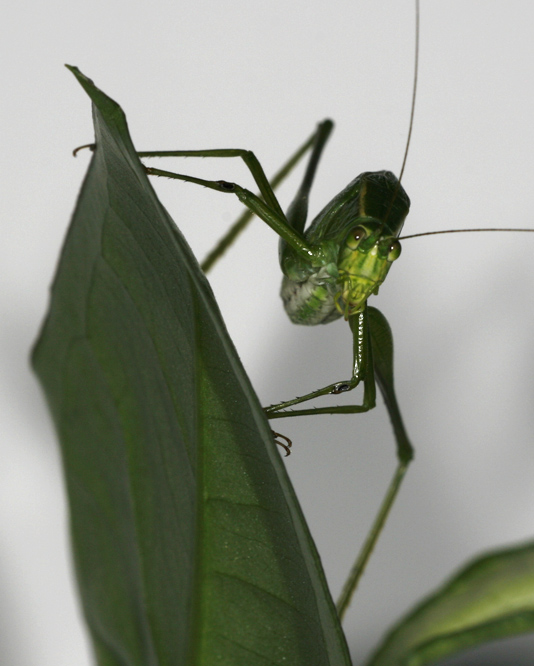
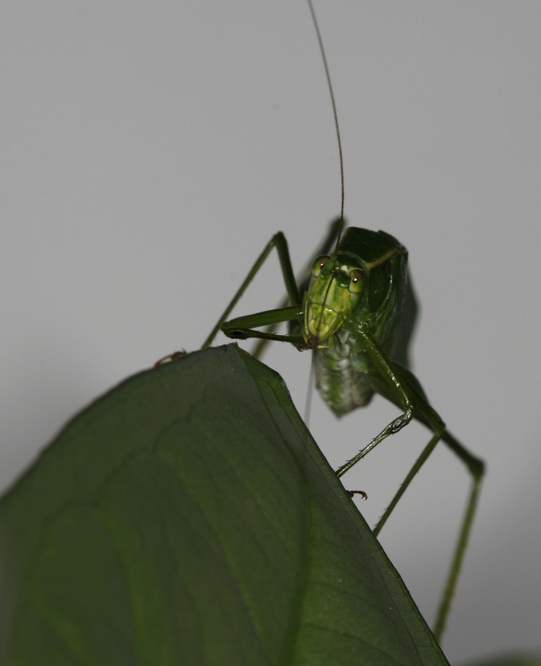
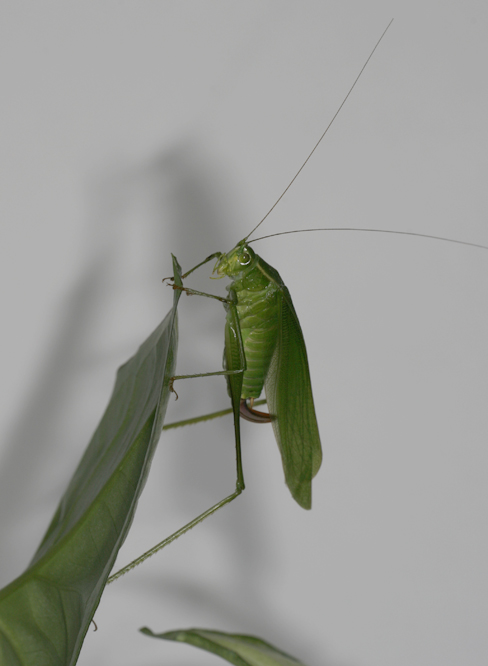
Specimen #2 (female)
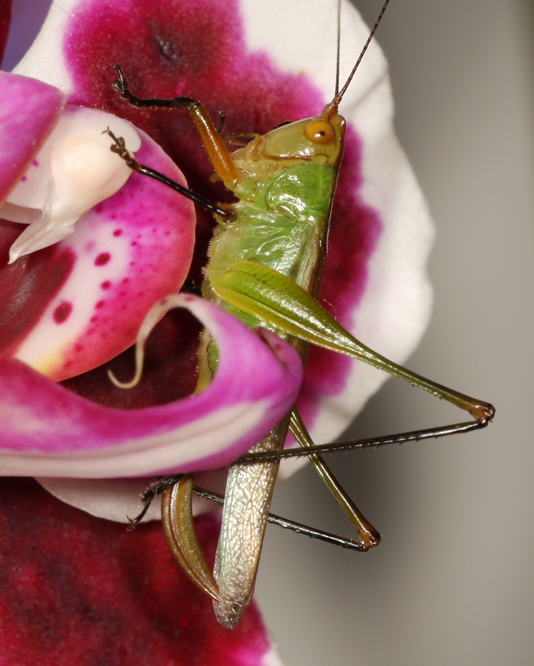
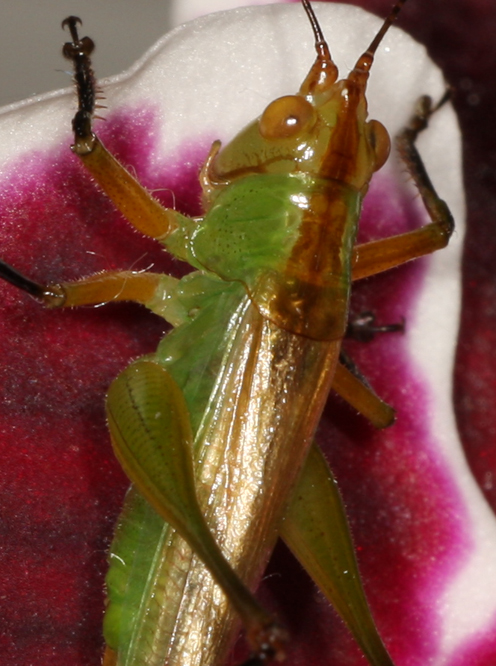
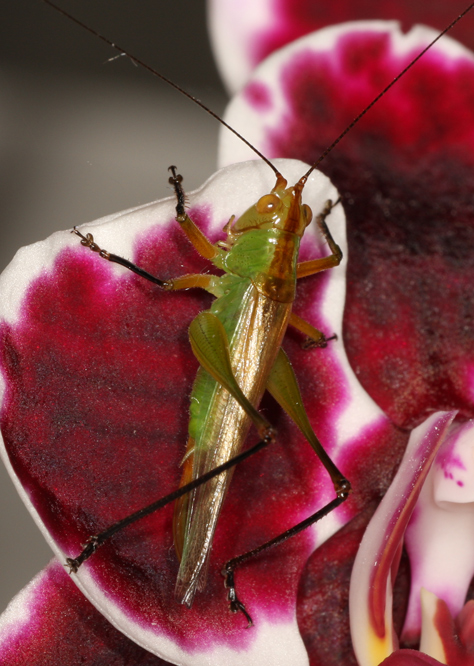
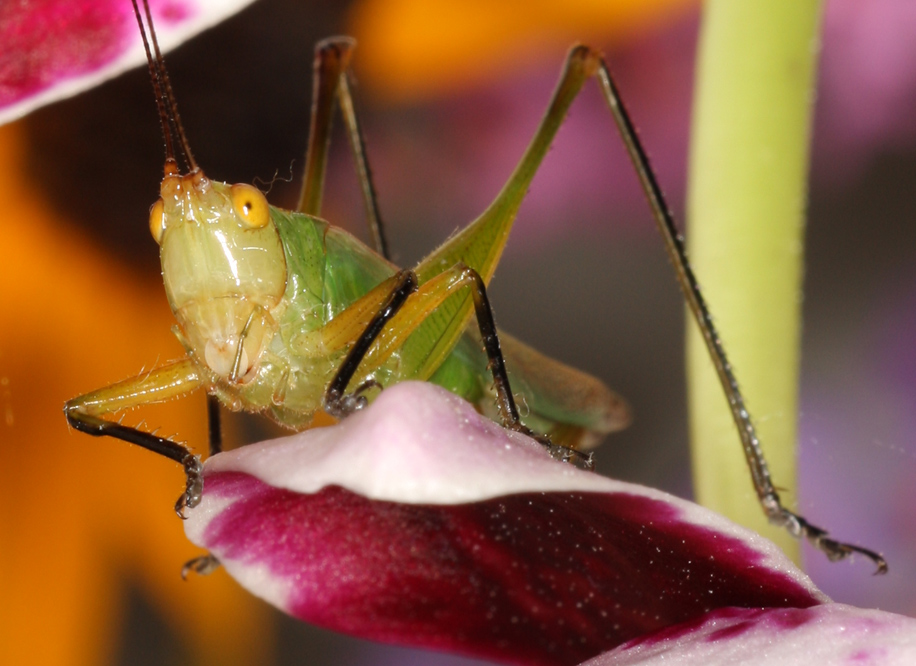
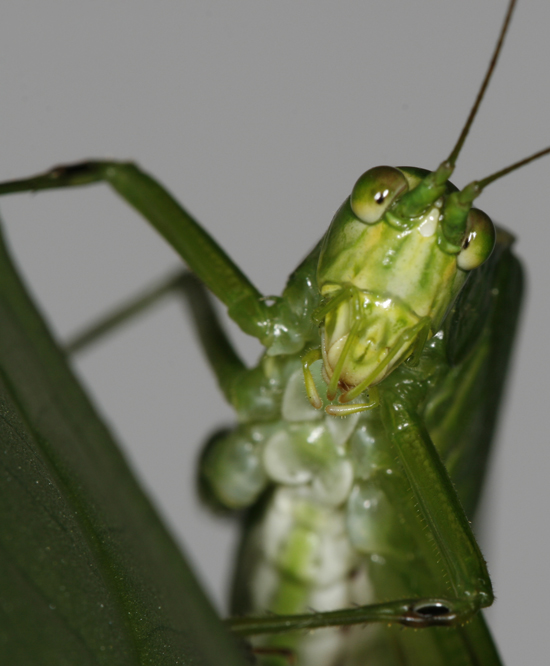
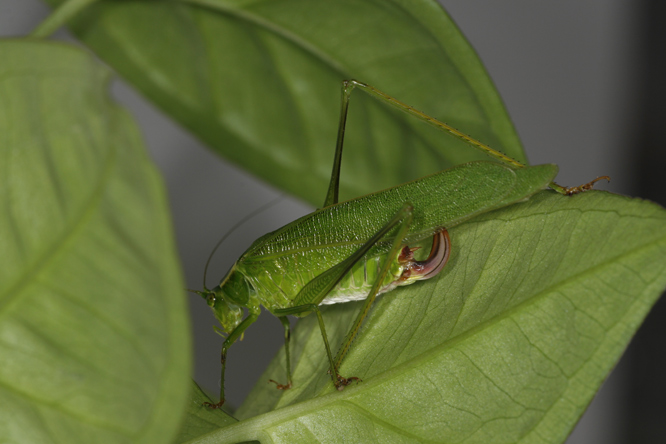
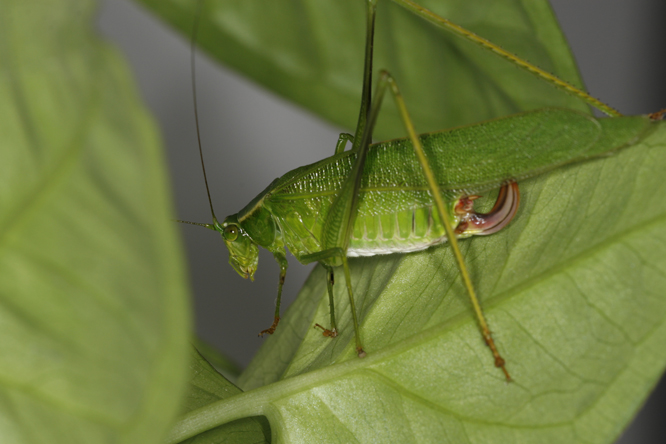
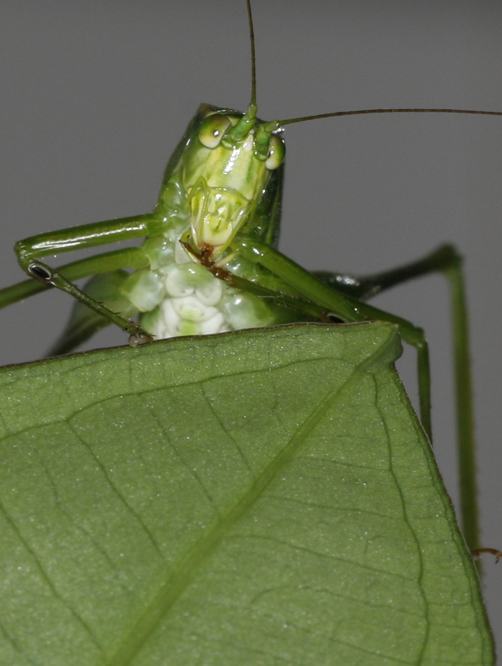
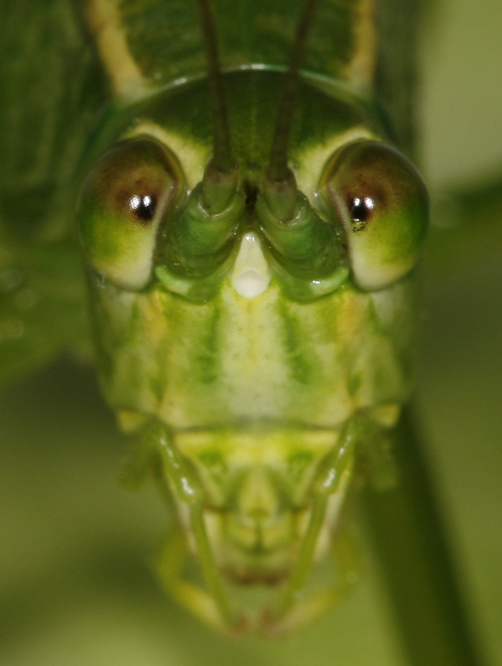
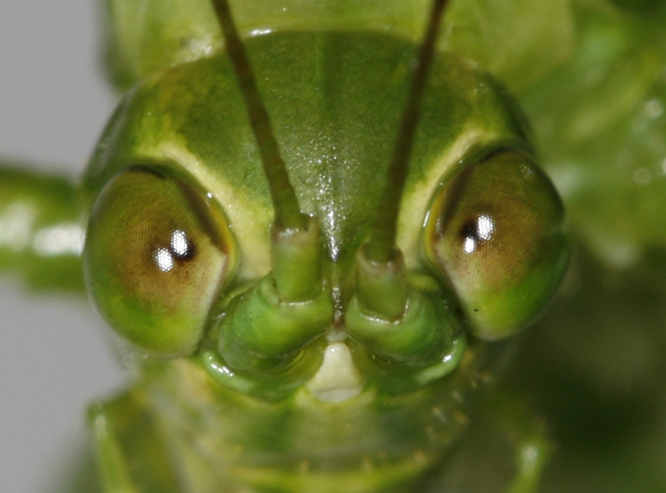
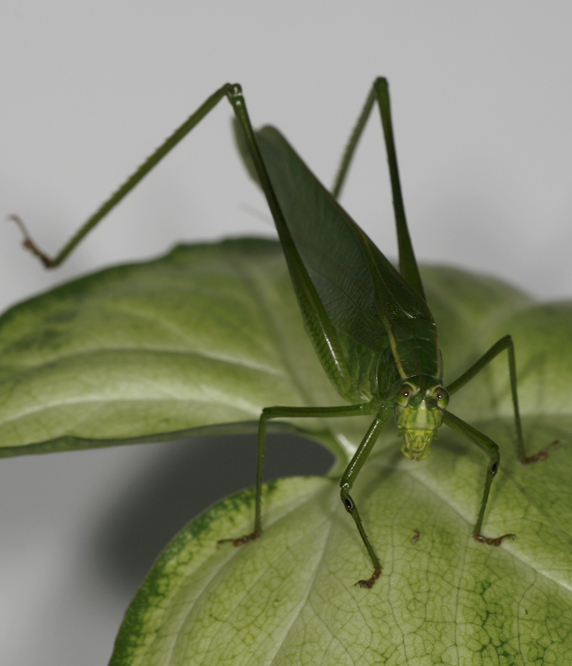
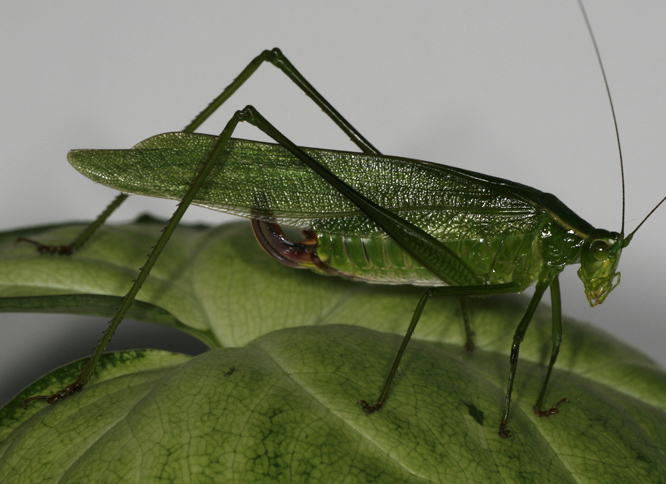
Brian found this katydid in the front yard. I photographed it indoors on July 25, 2007 (I knew I'd lose it quite quickly outdoors). It is a female---you can tell by the large ovipositor (egg-depositing device) at the end of her abdomen.
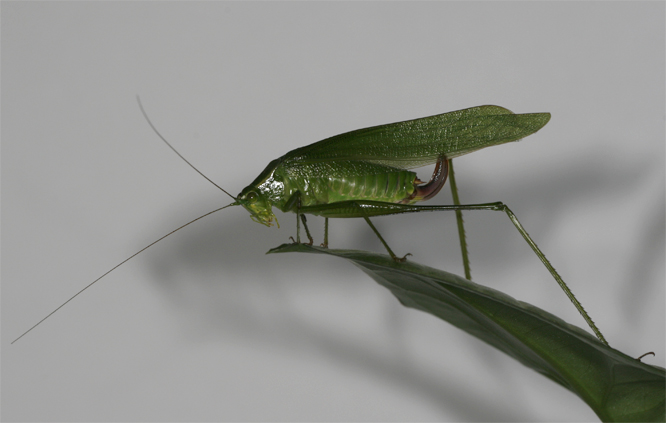
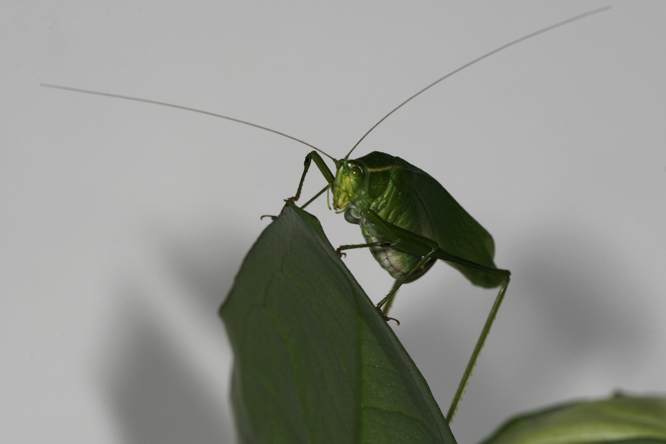
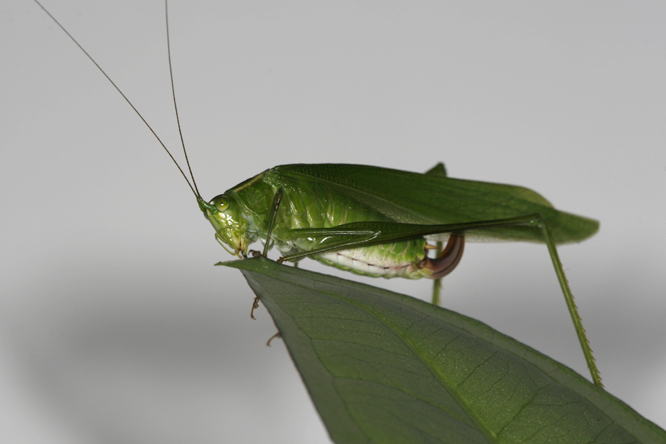
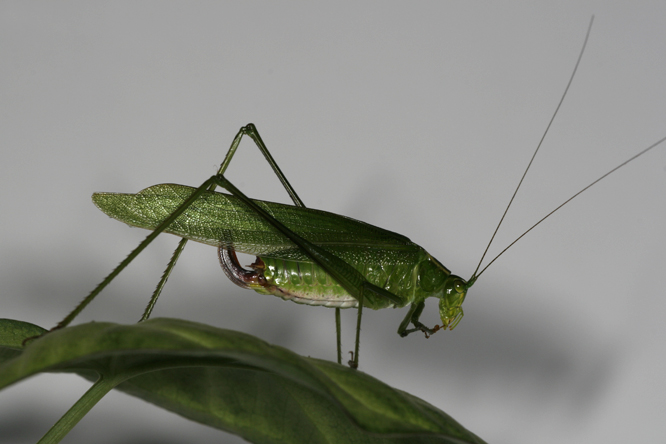





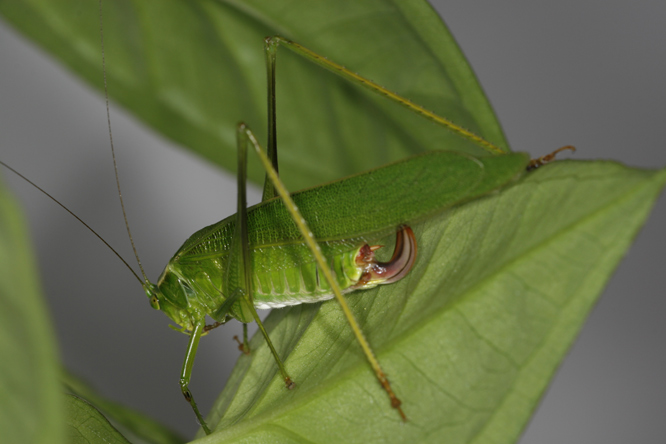
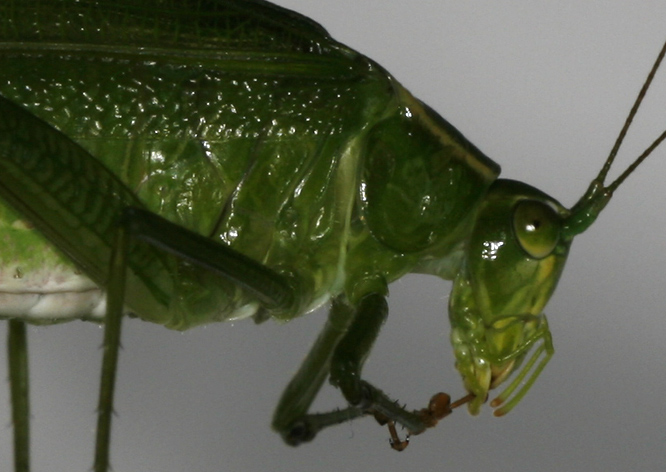
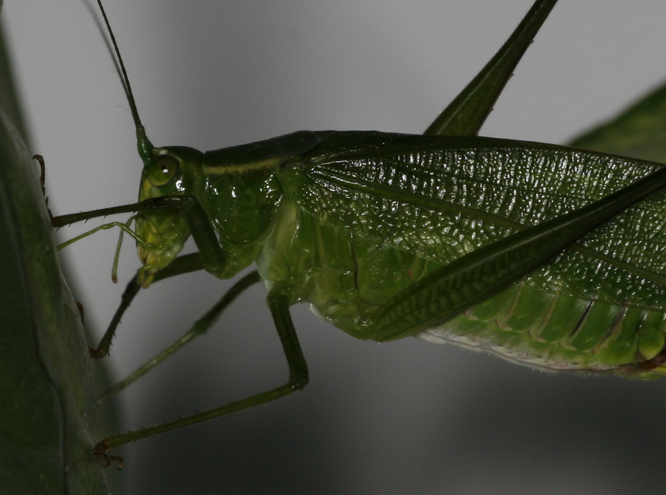

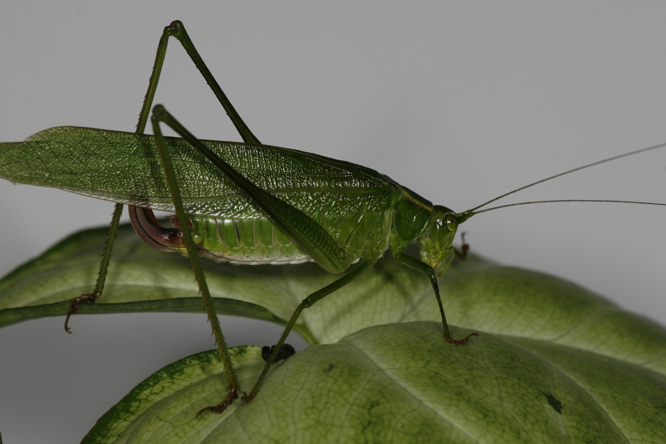

Specimen #1 (female)
I found many katydids on the evening of July 28th and 29th, 2006, while camping in Nelson, OH. I had always thought that katydids were only active during the day. That is when I have always seen them. They were strongly attracted to the lantern though. I had three of them there at one time! I photographed the one below on a rainy night. It actually laid an egg while I was taking pictures (look at the last two photos). It was very difficult to photograph because it was so dark outside. I could barely see if it was in the viewfinder or not, so a lot of photos don't have the full katydid in view.
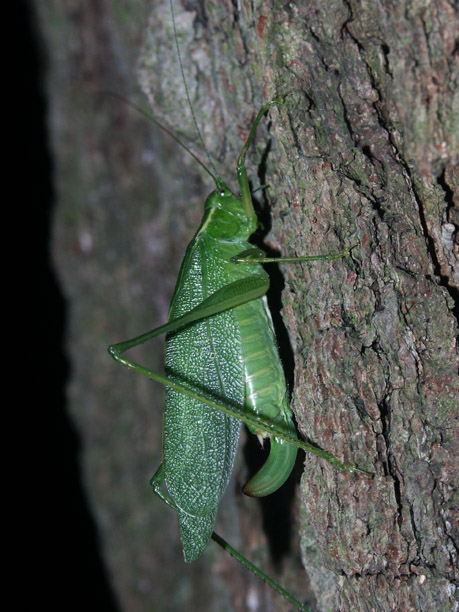
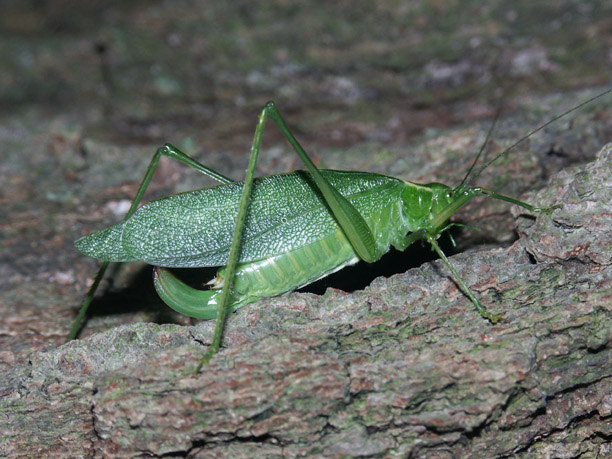
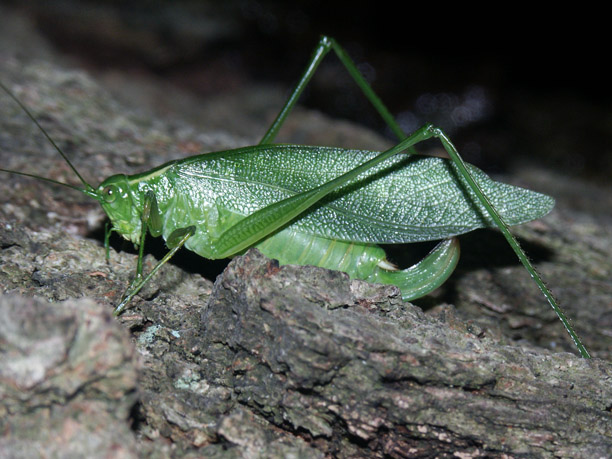
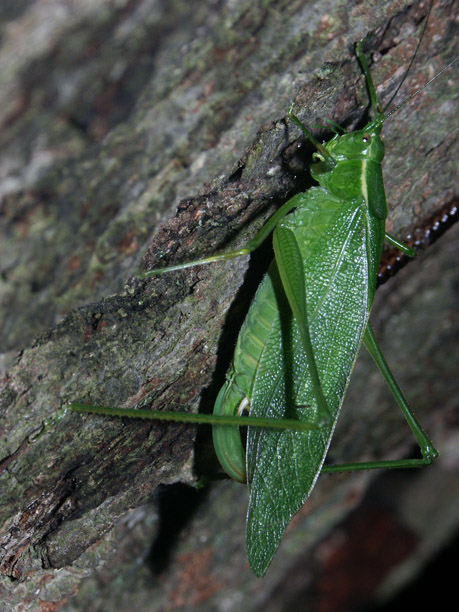
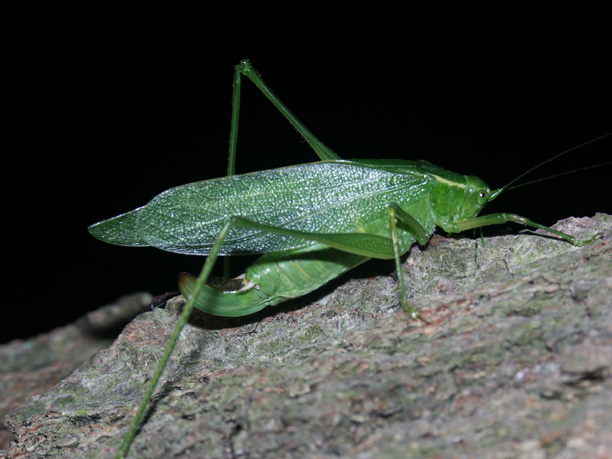
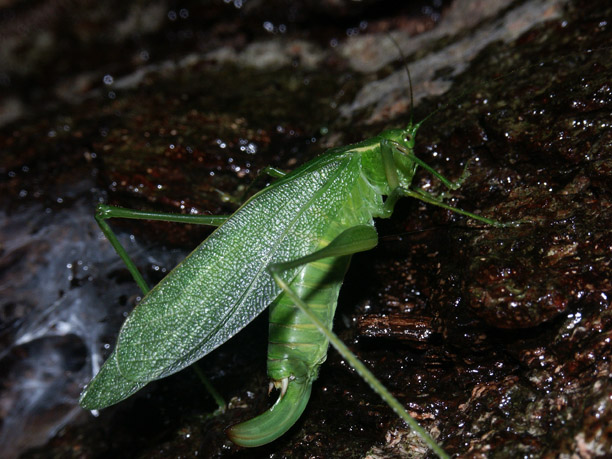
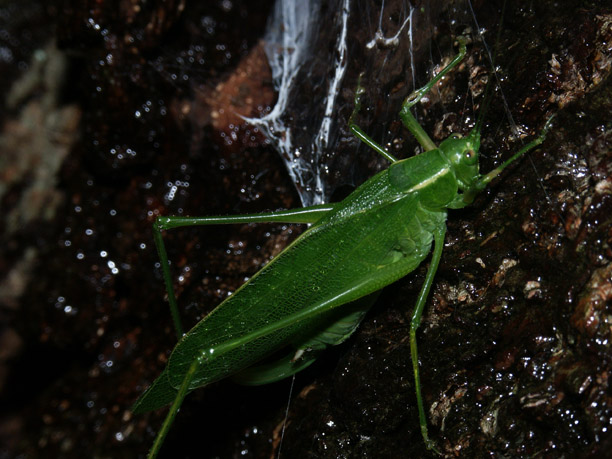

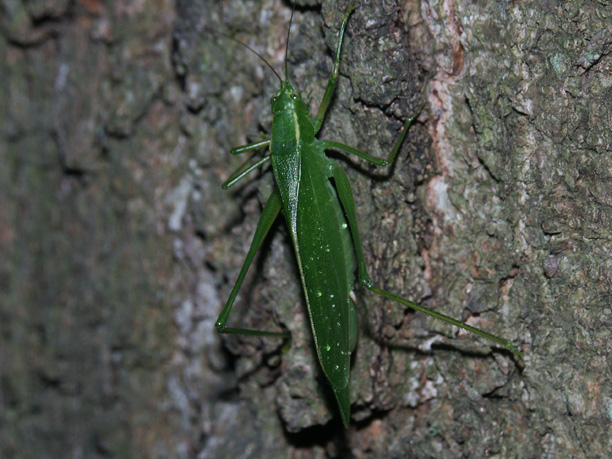
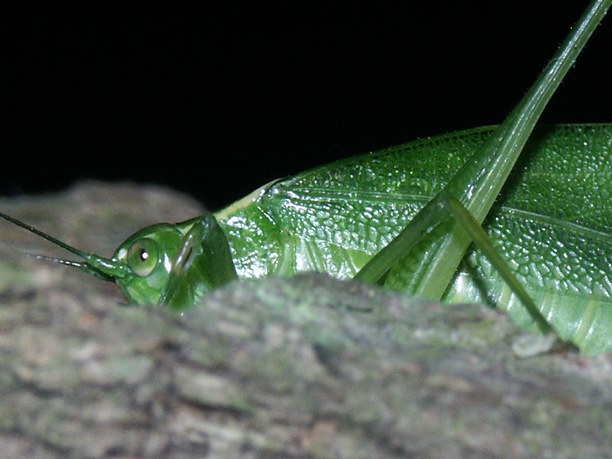

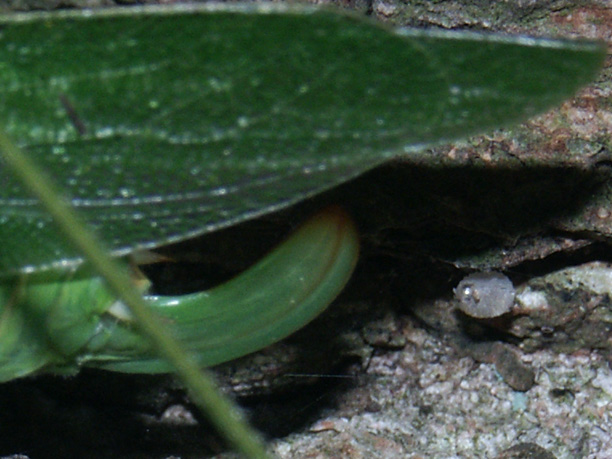
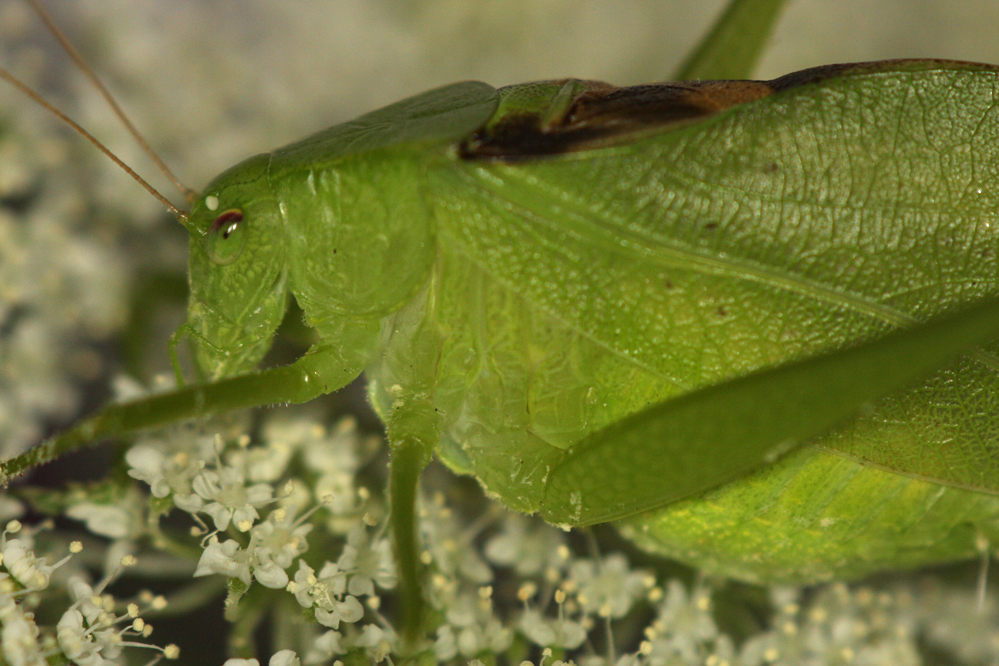
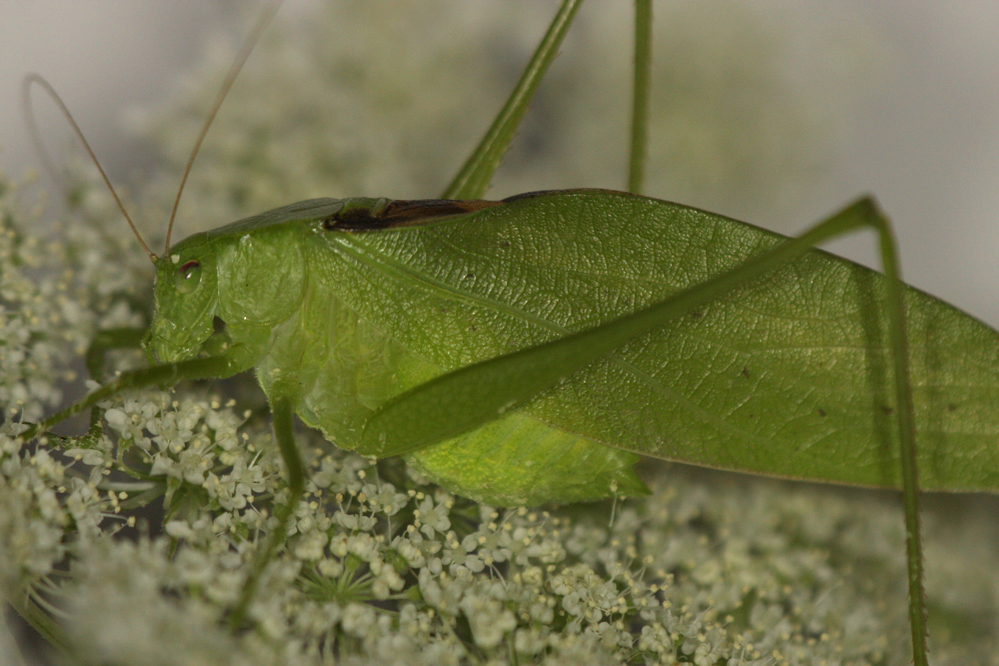
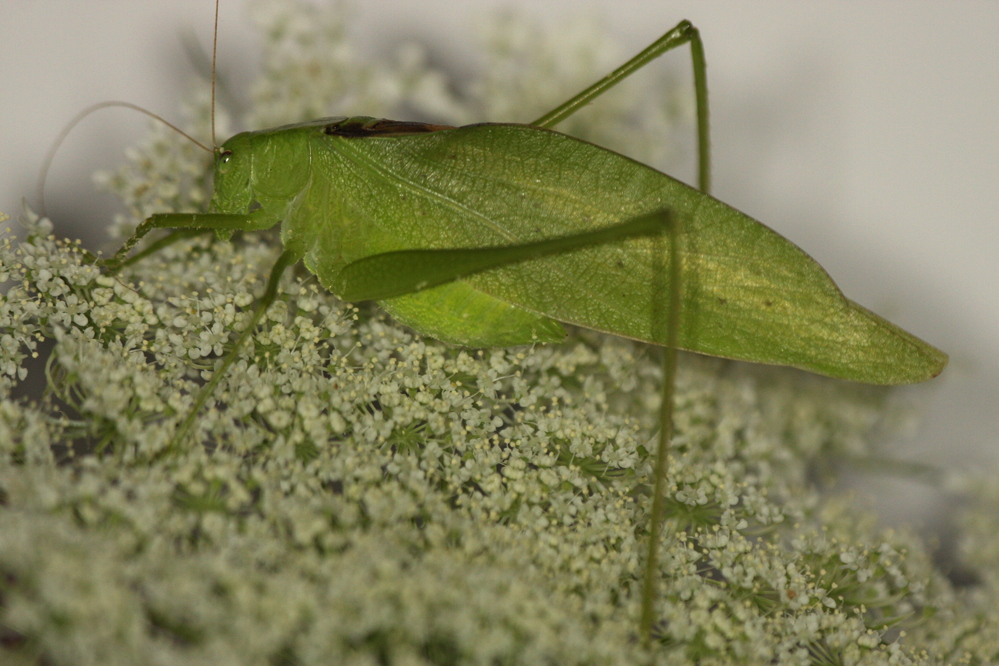
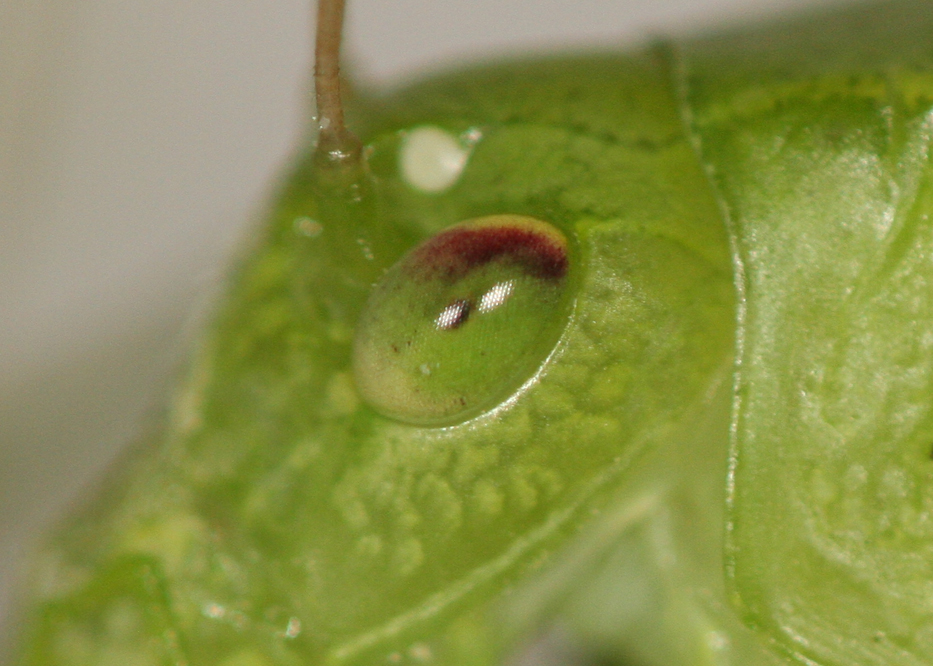
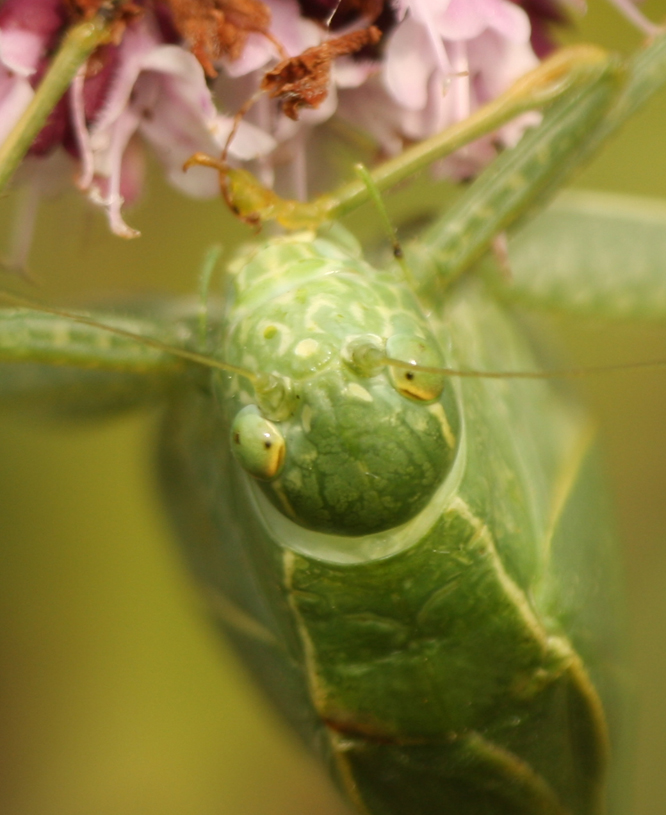
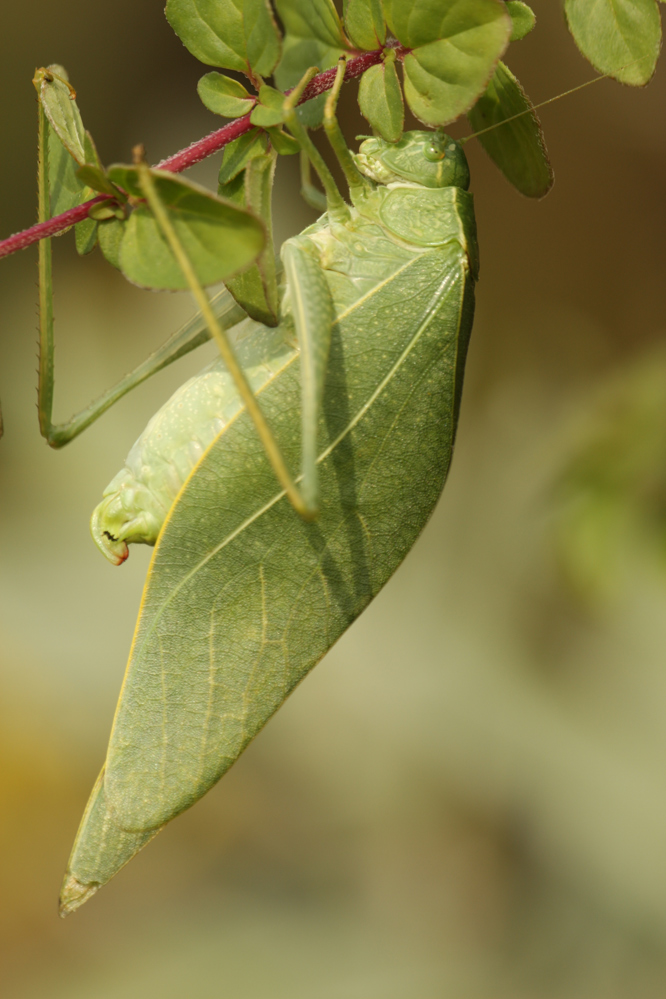
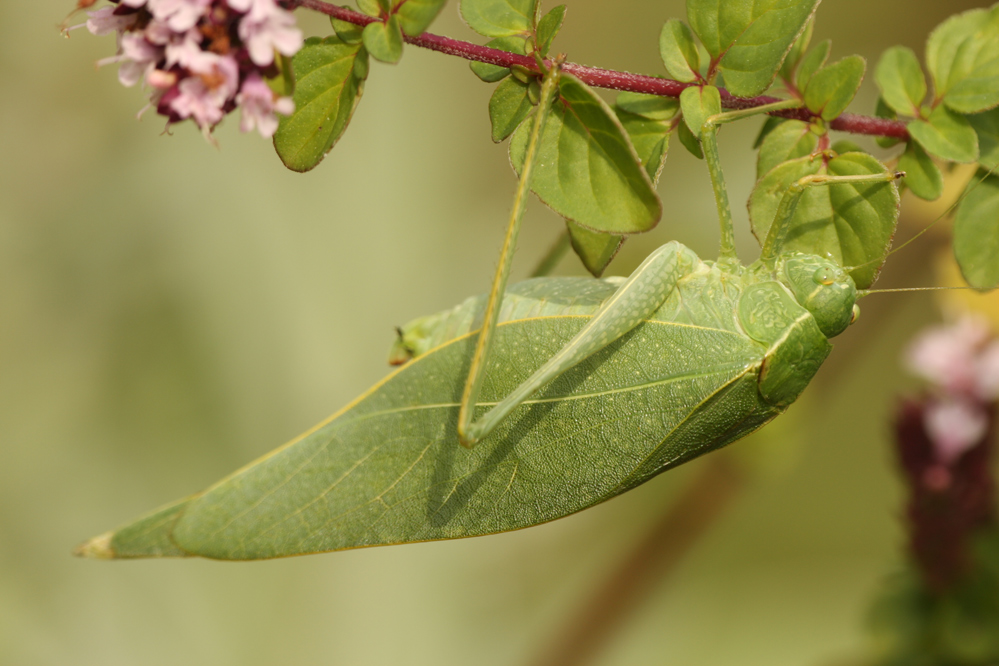
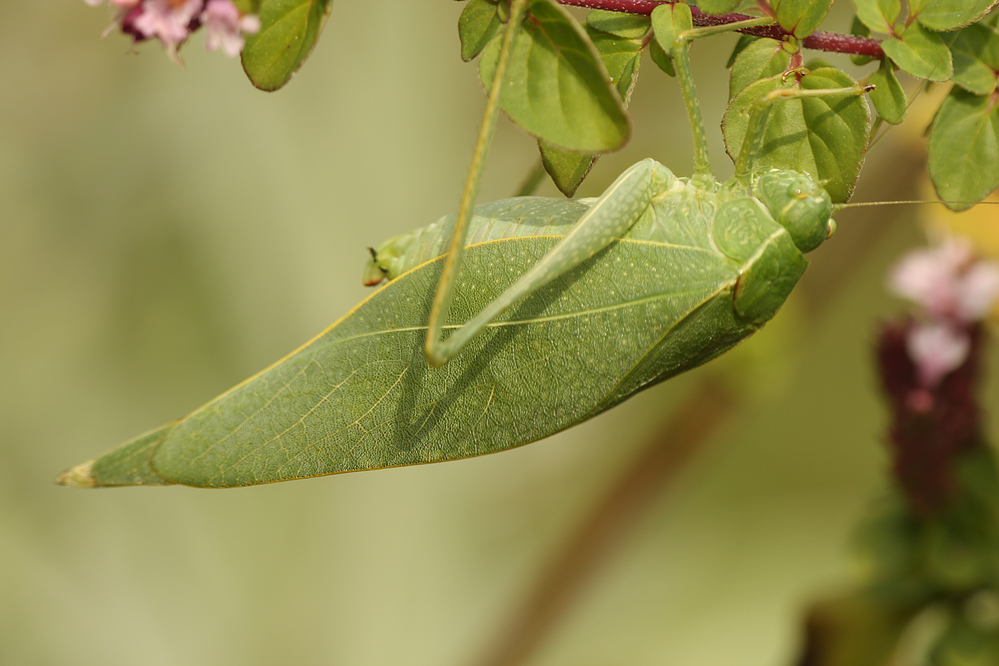
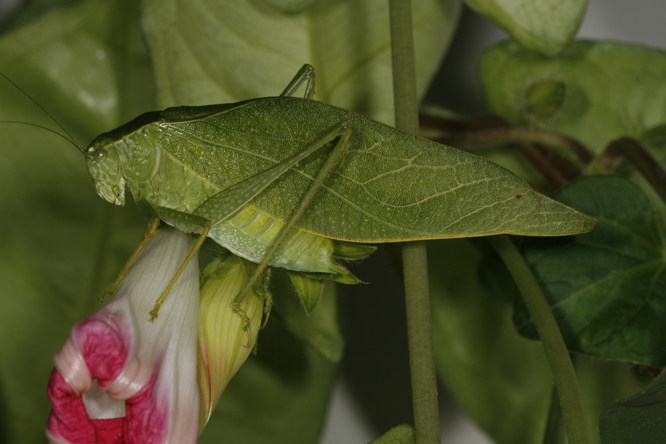
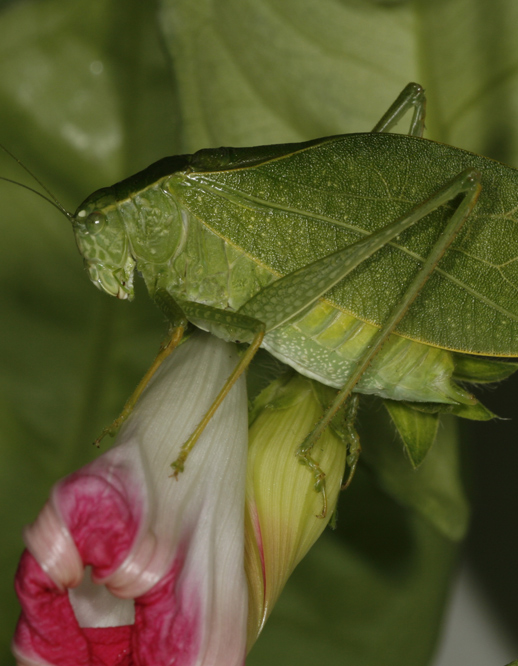
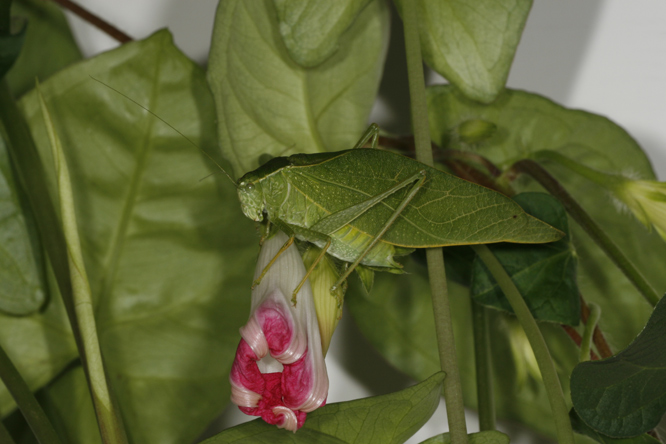
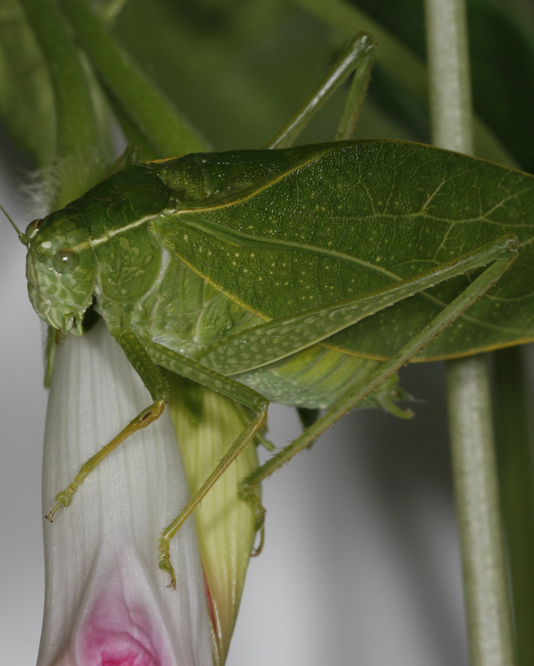
Broad-Winged Katydid or Angle-Winged Katydid, Microcentrum rhombifolium
Specimen #4 (Male)
July 13, 2012
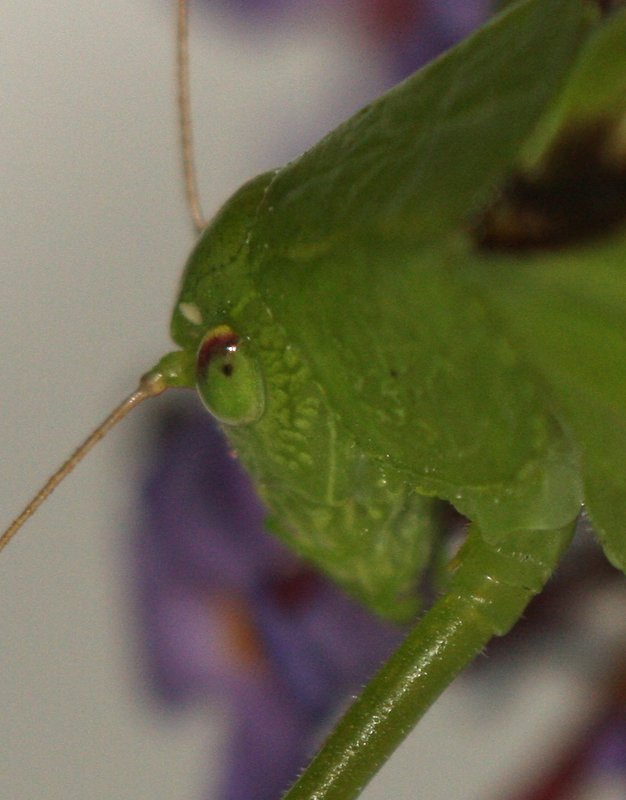
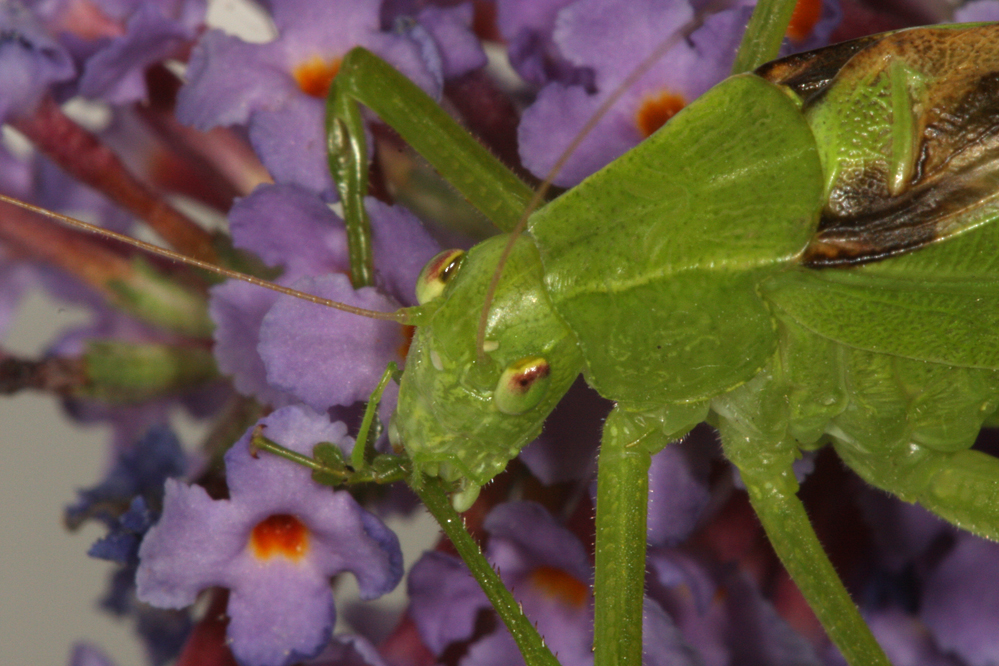
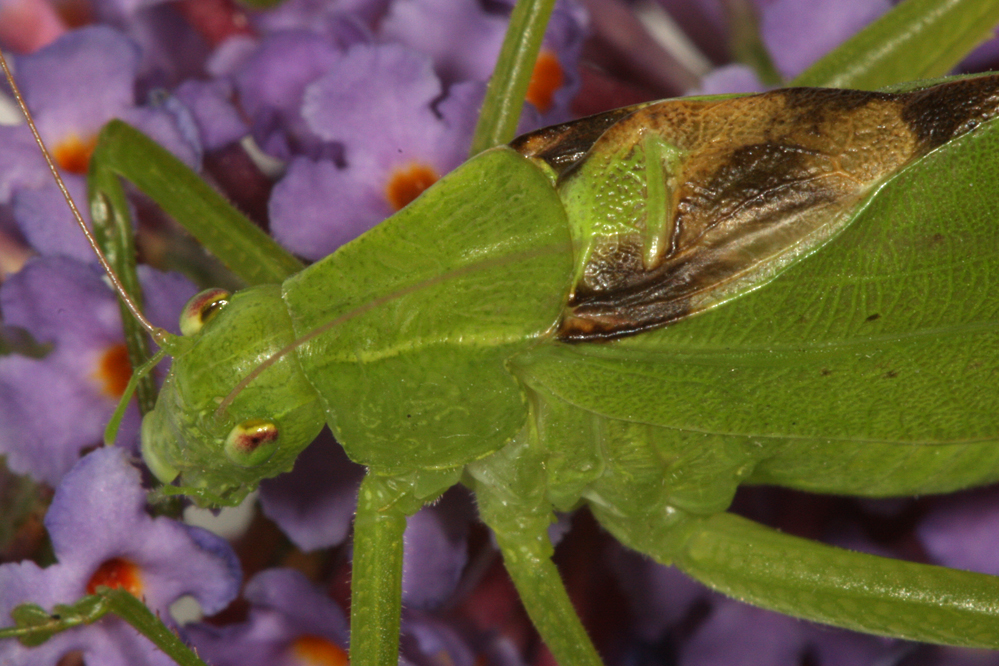
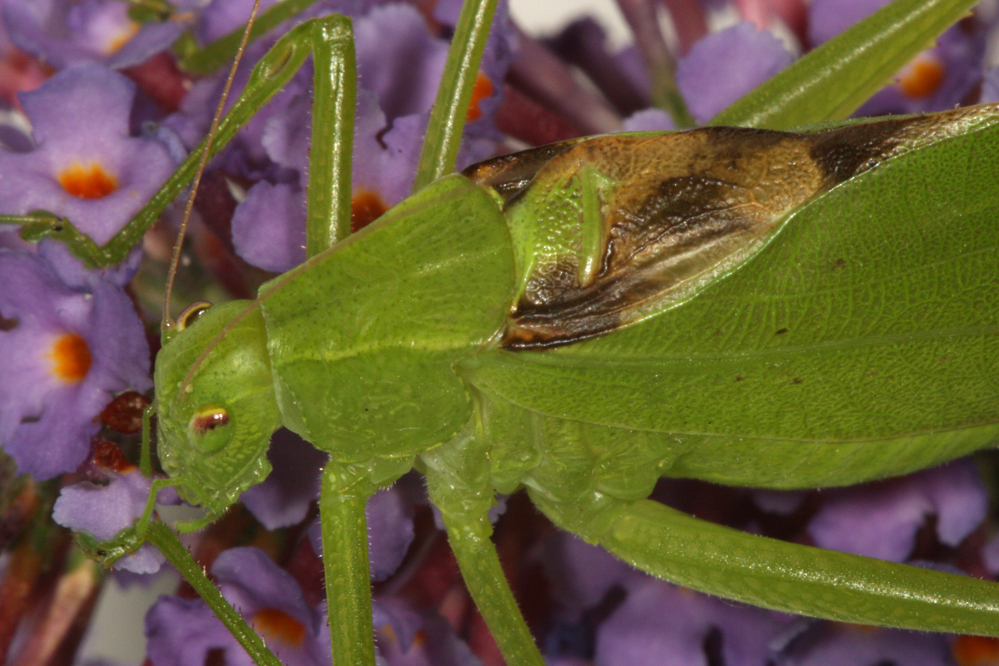
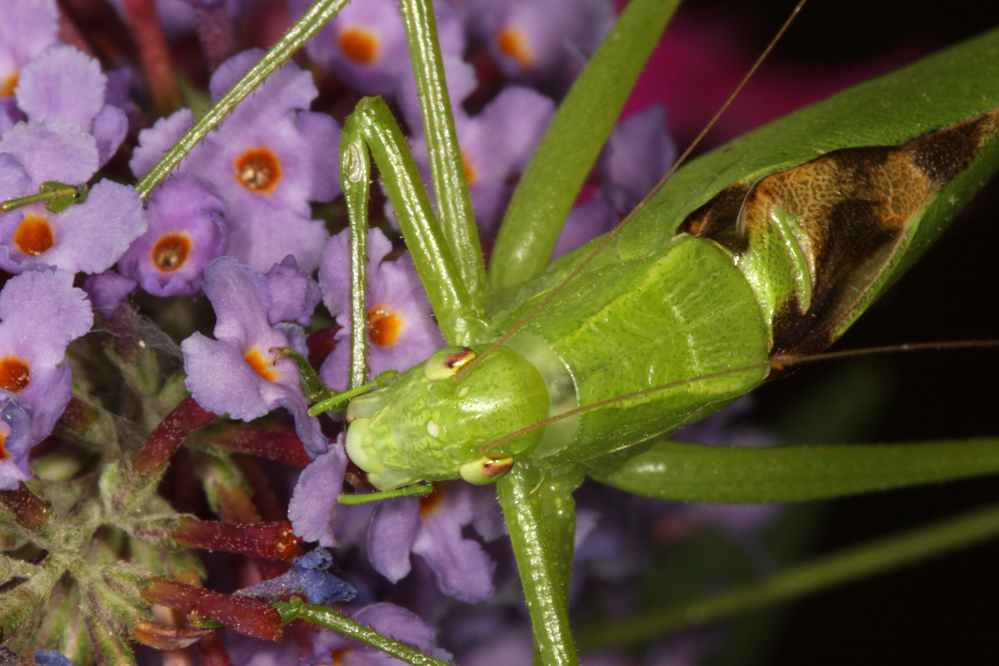
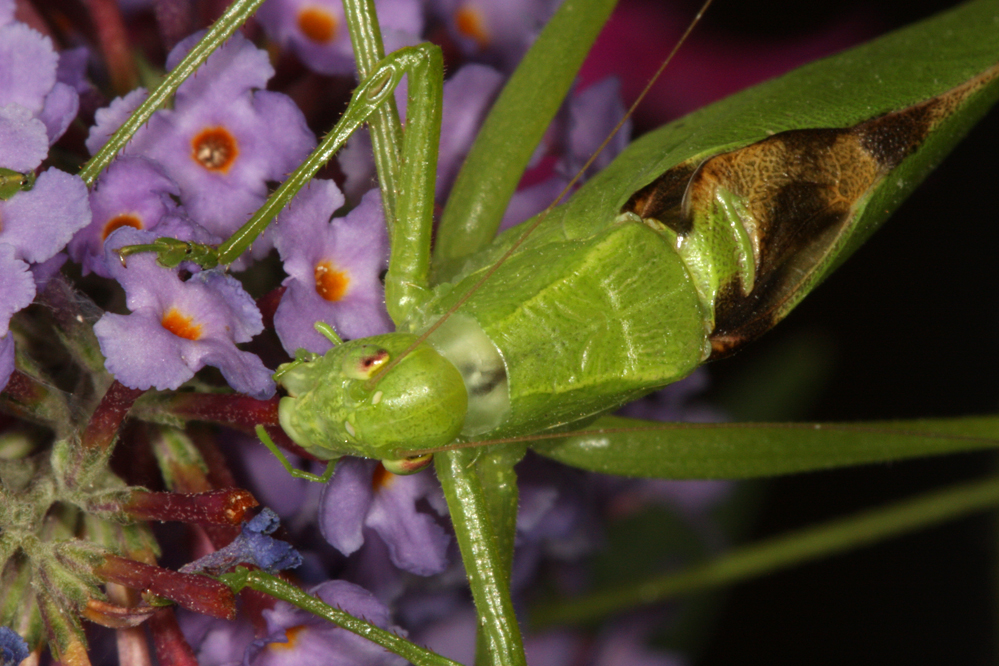
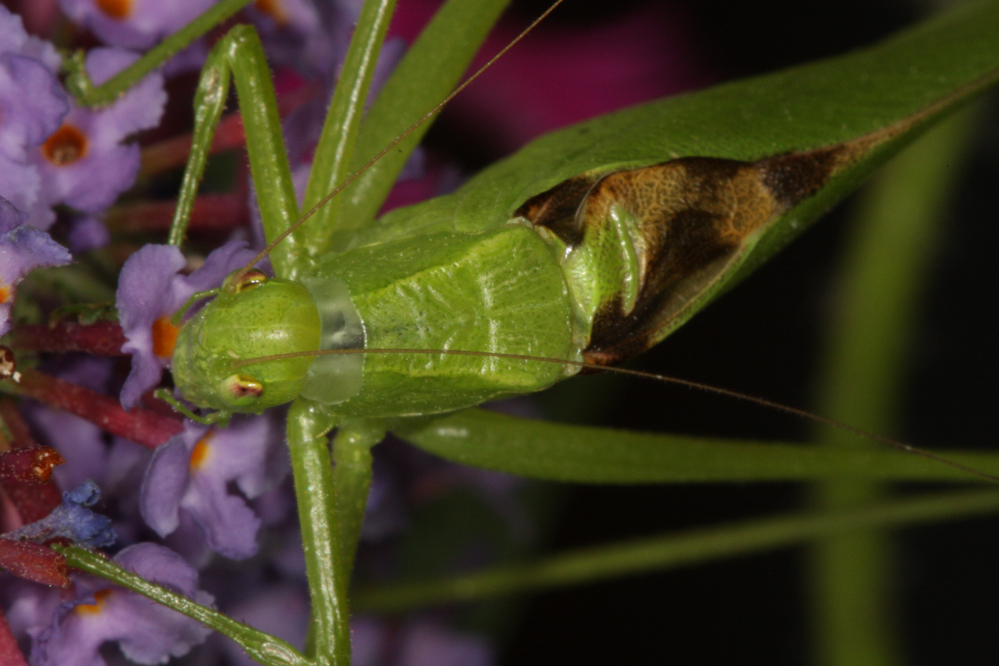
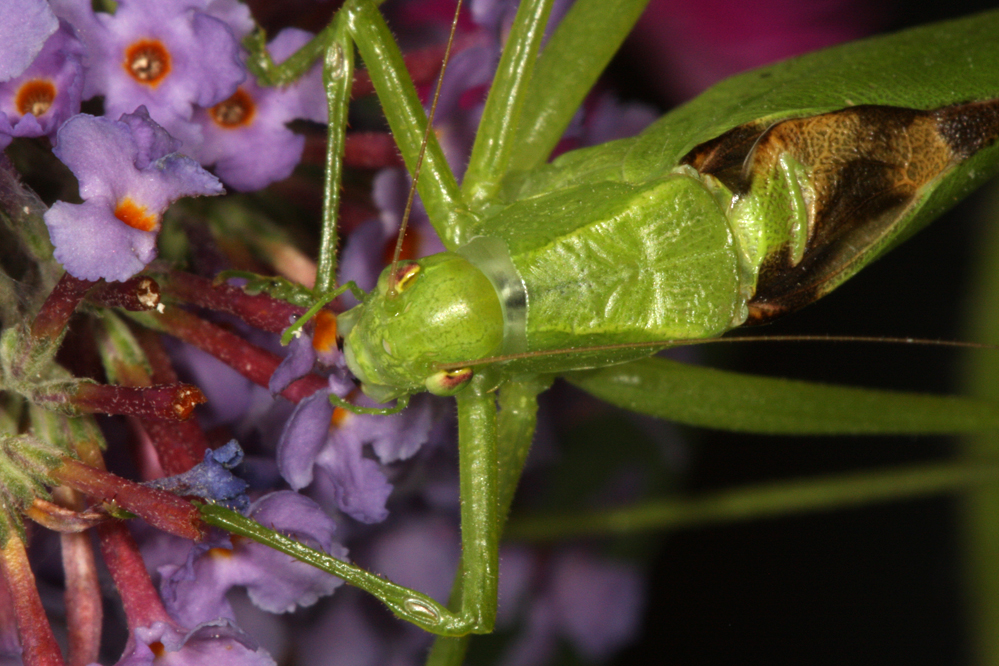
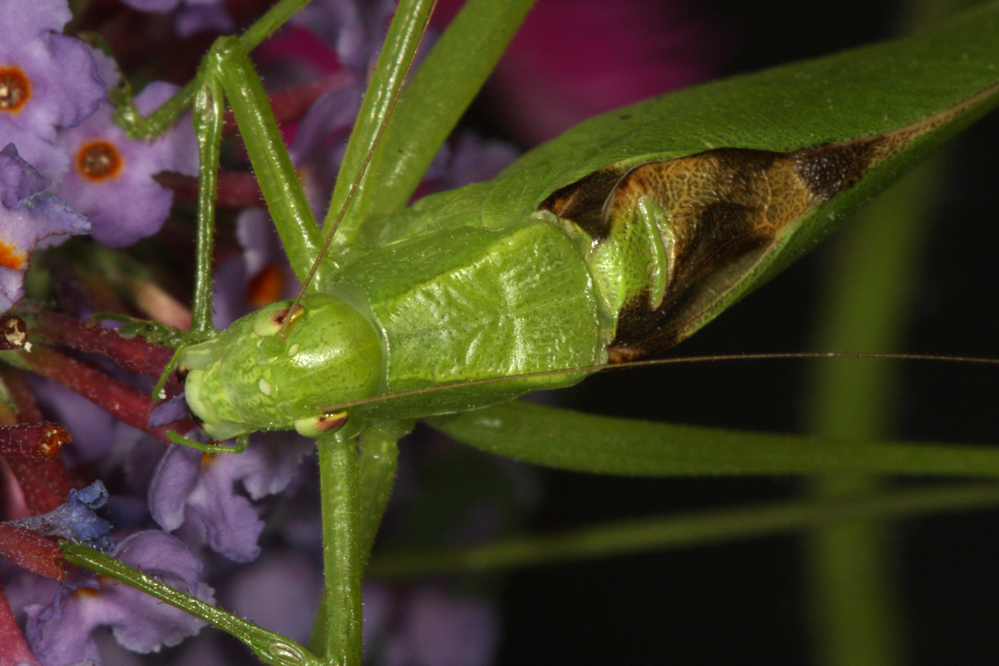
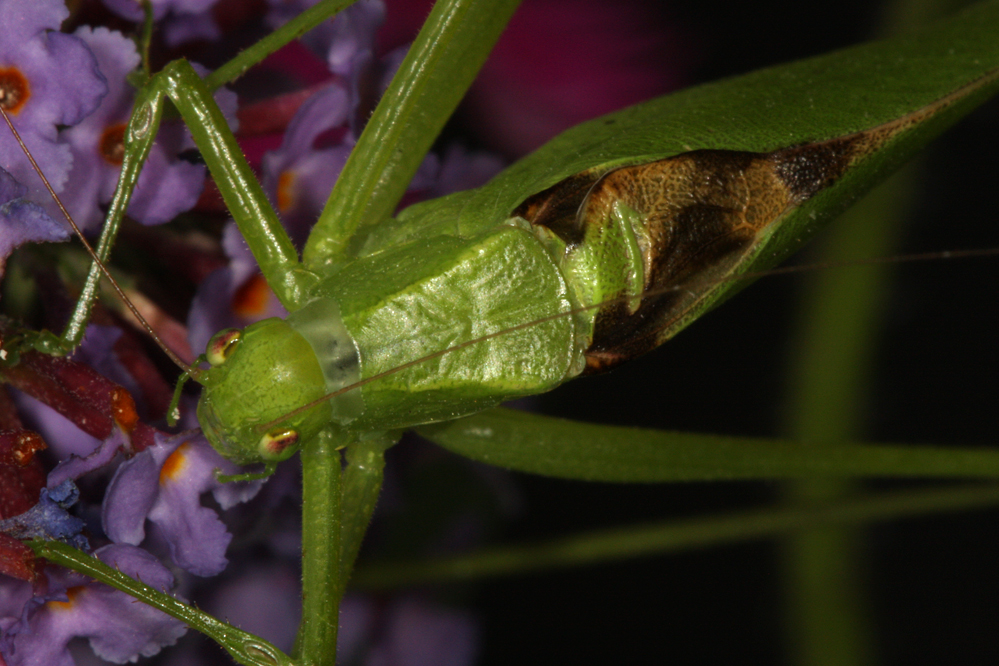
July 15, 2012

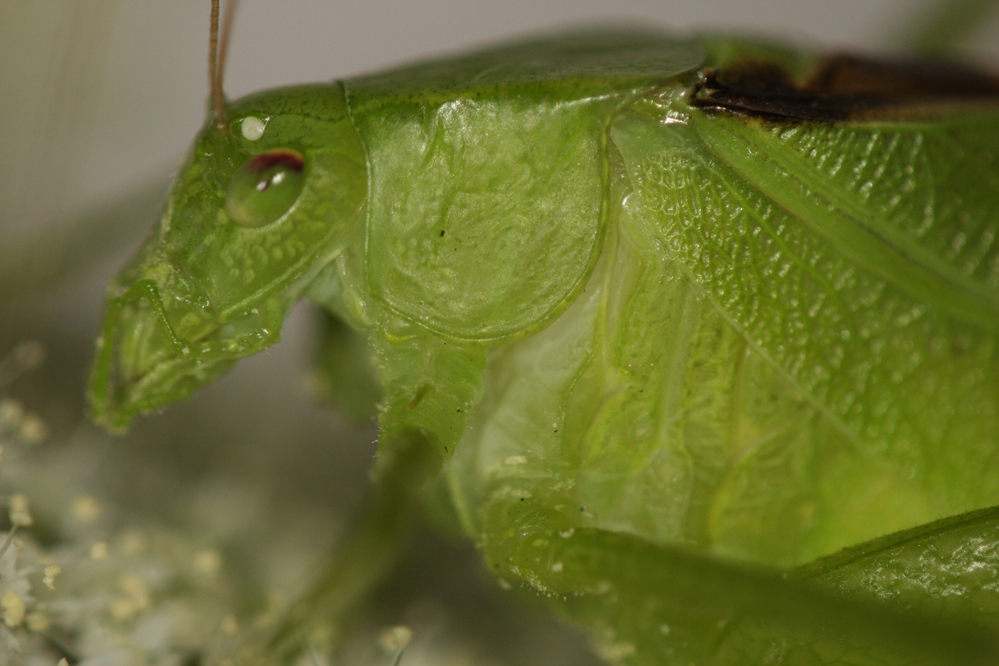
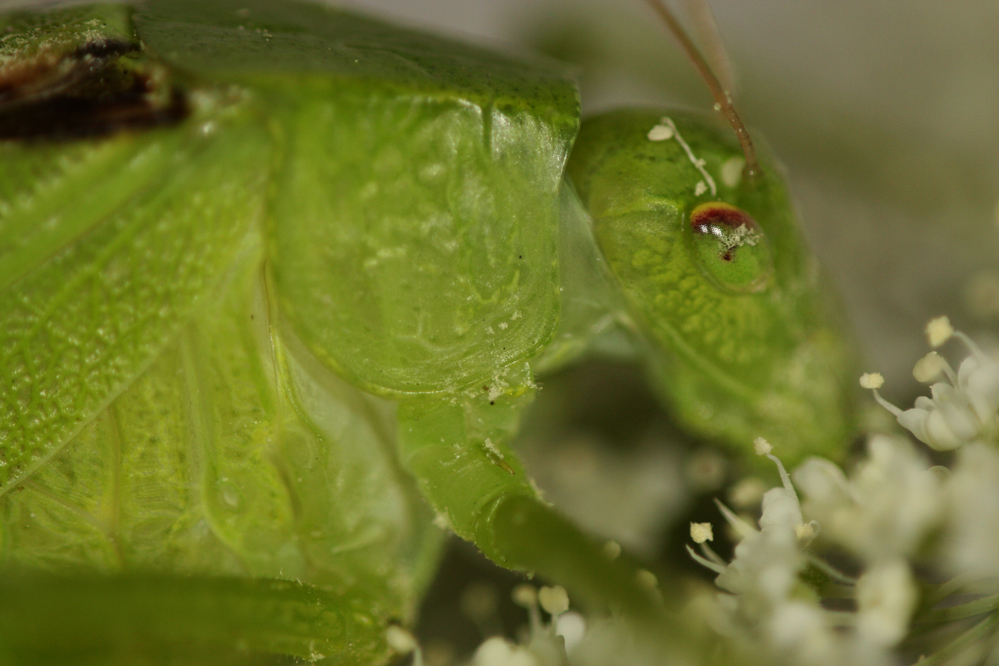
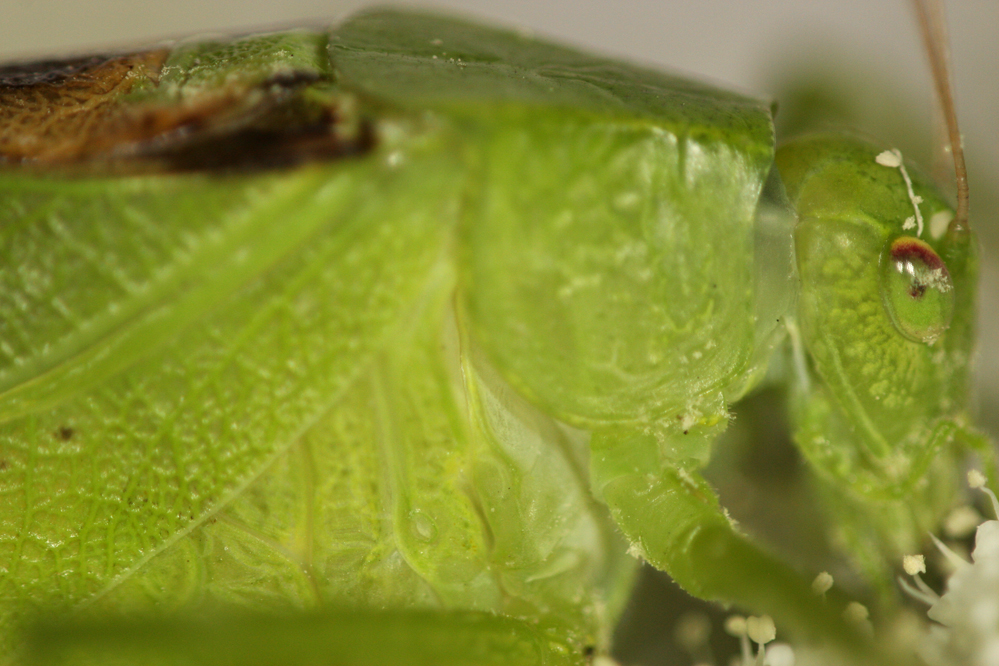
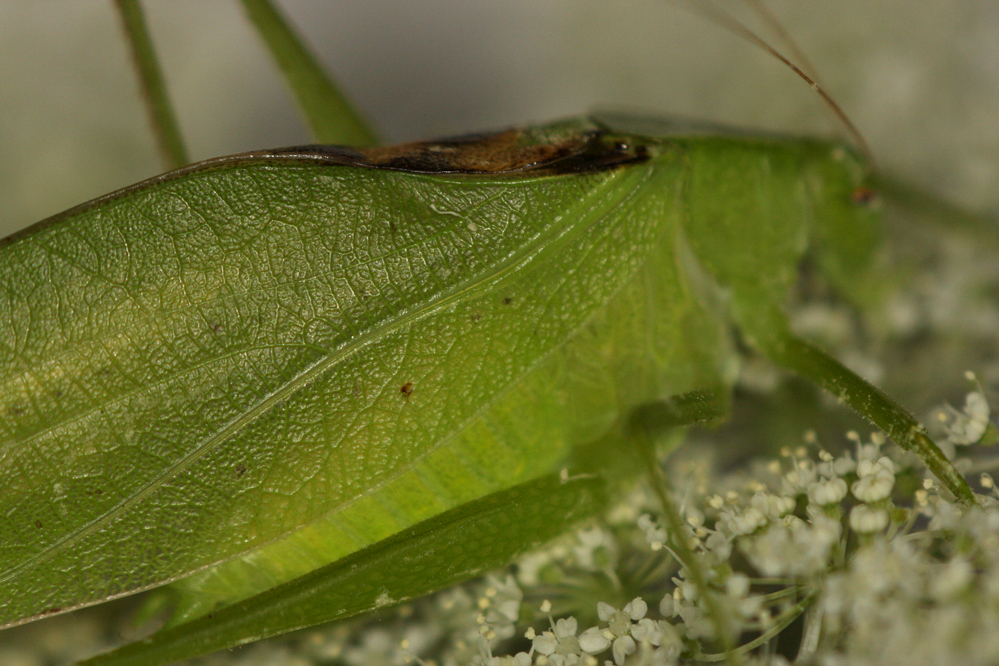
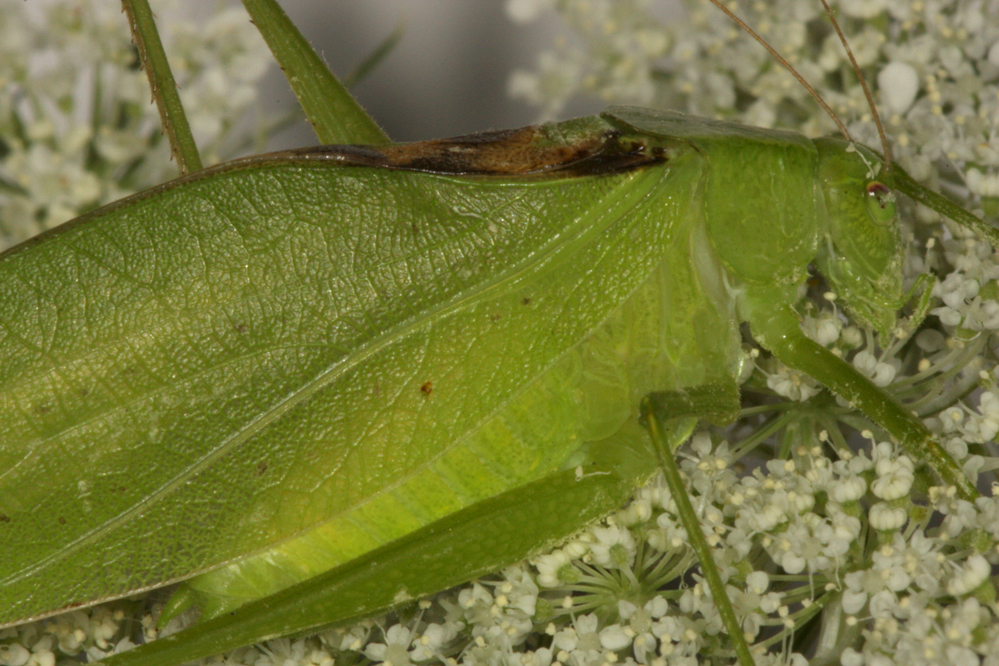
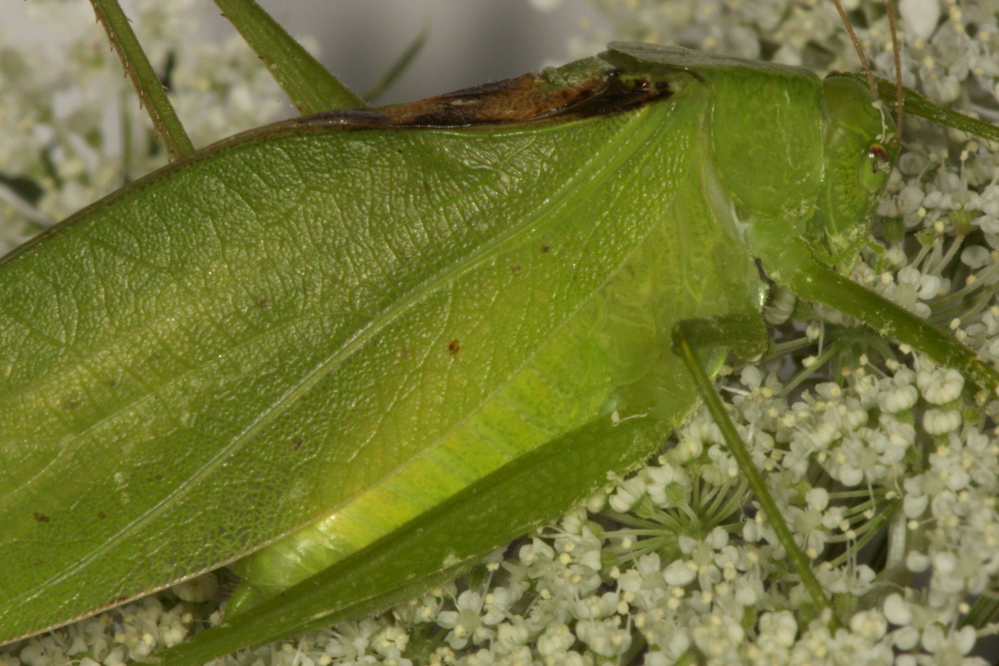
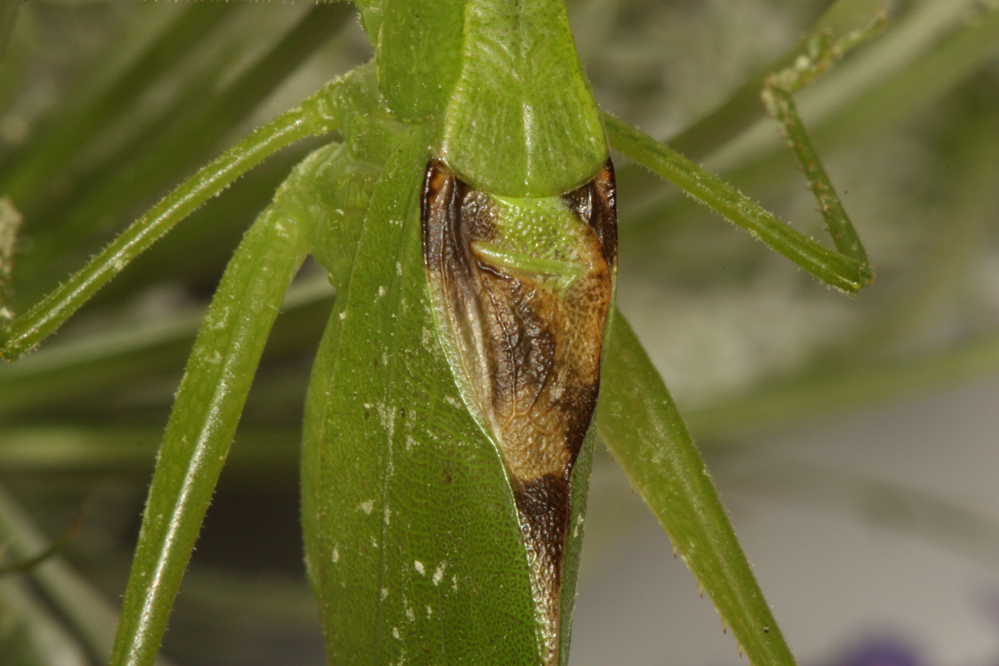


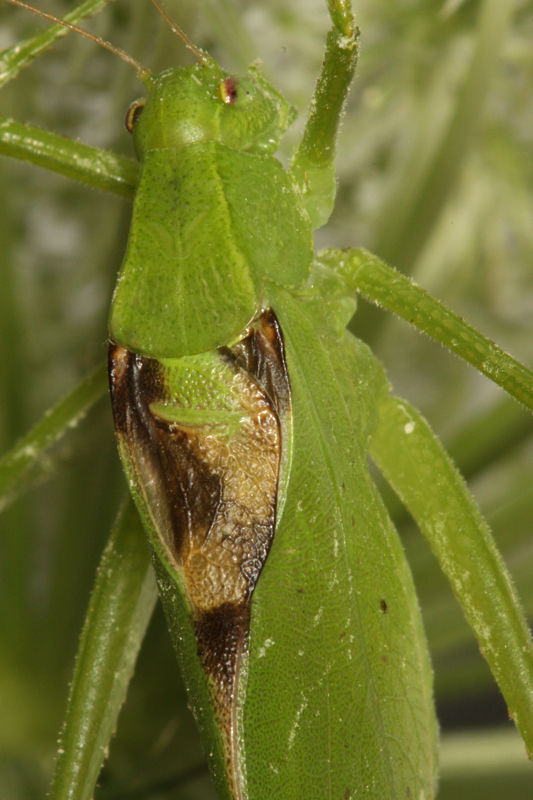
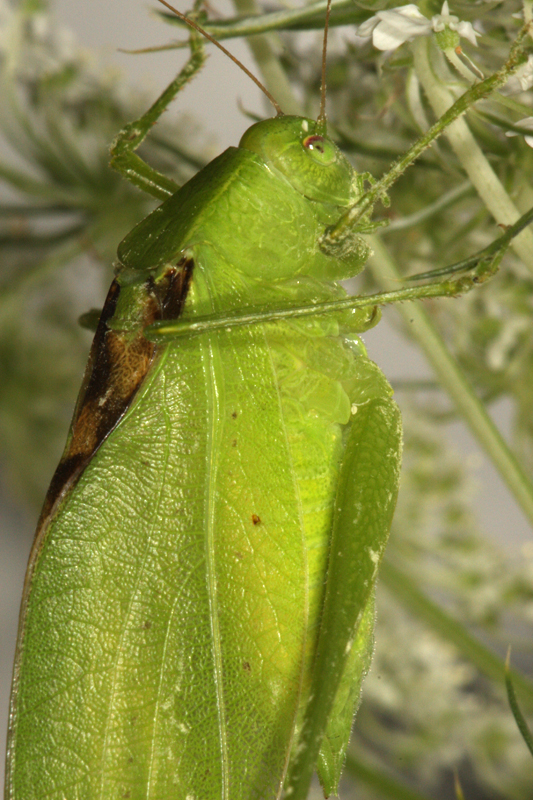
Specimen #3 (female)
My mom found this nice katydid (well, actually, Motley the cat did, but she retrieved it from him). I photographed her on two of my mom's dahlia flowers. She was photographed on October 9, 2010.
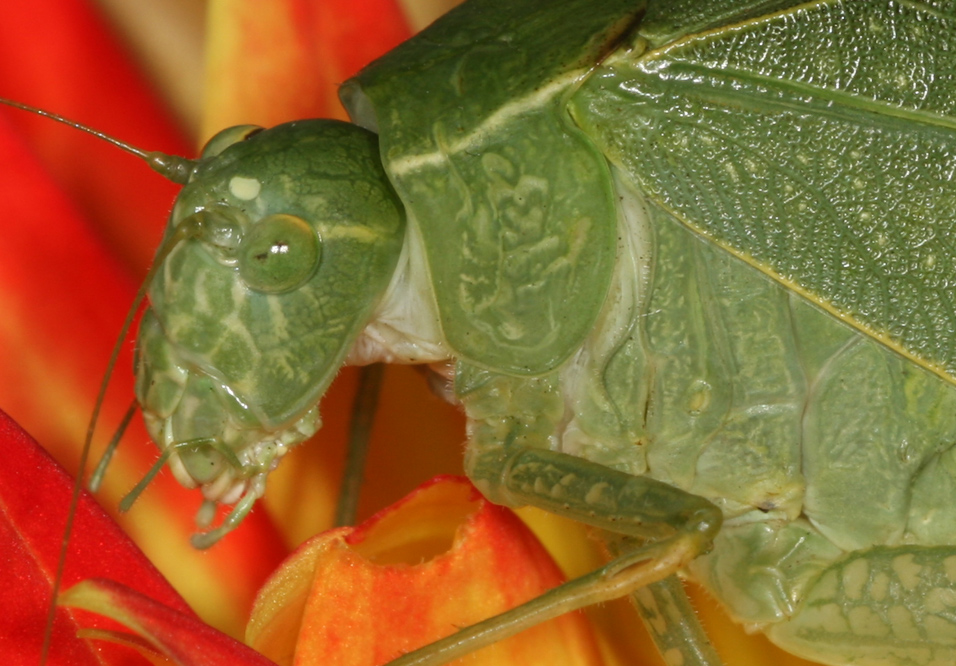

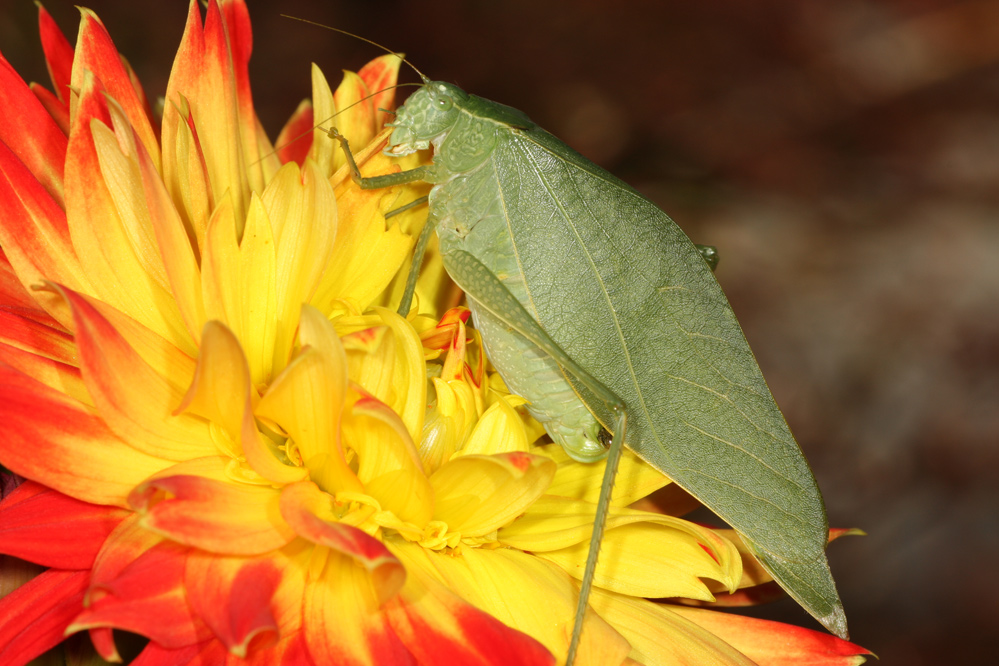
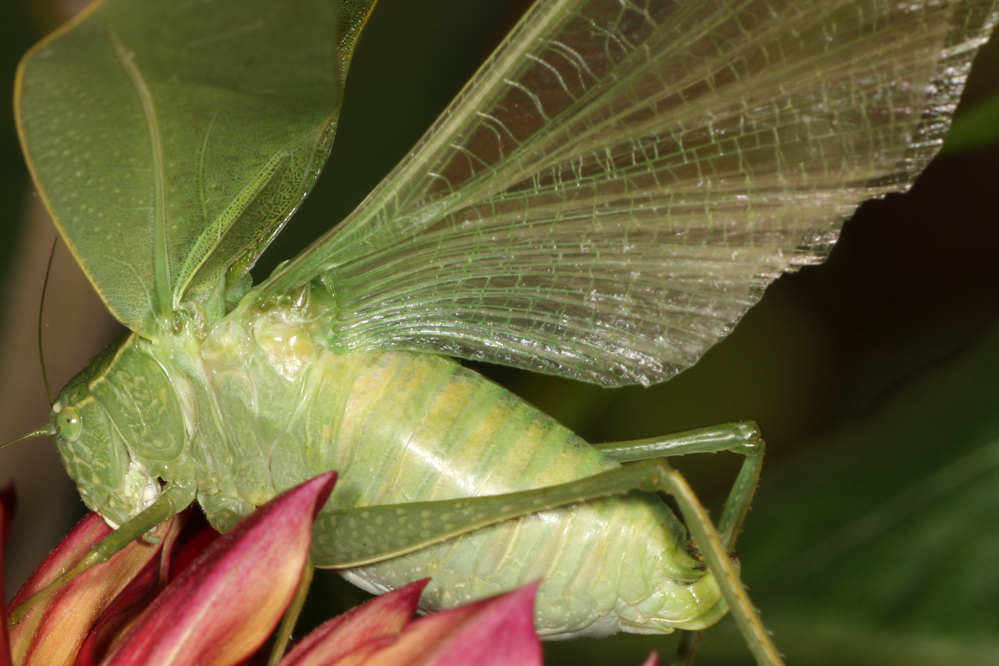
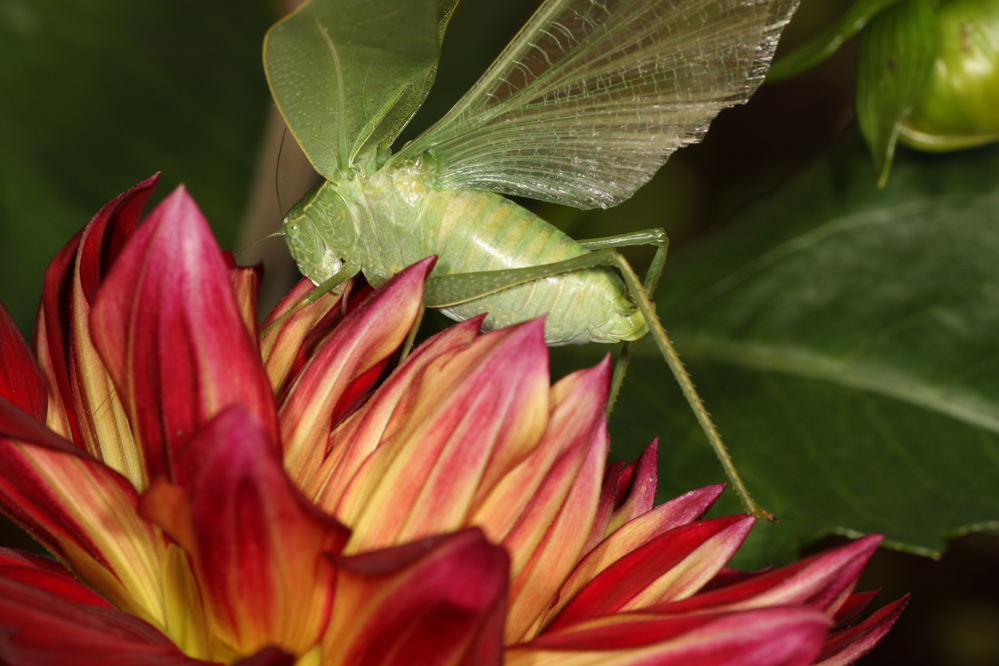
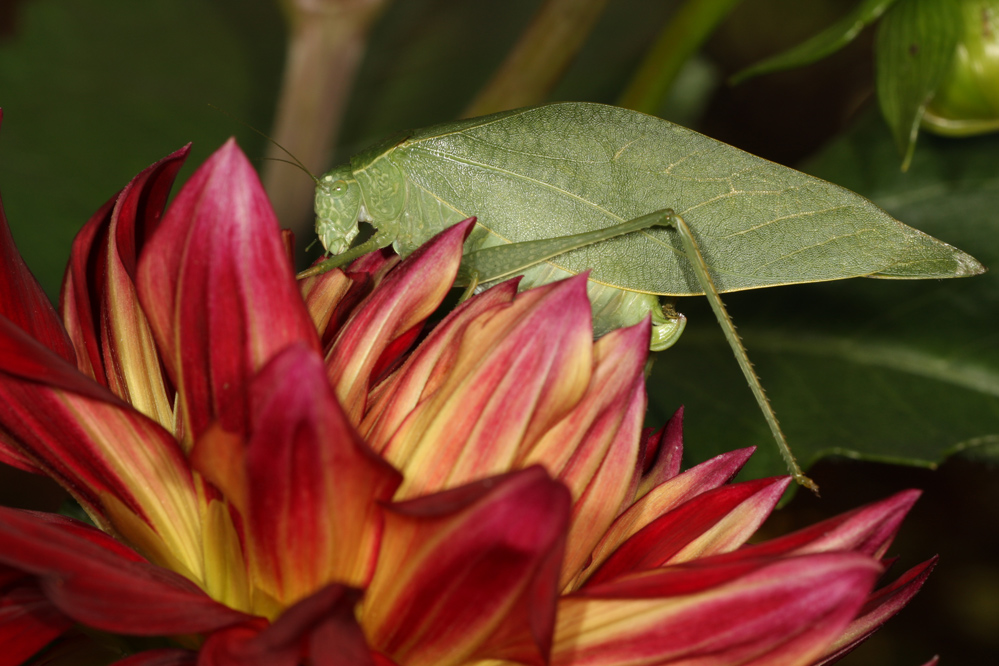
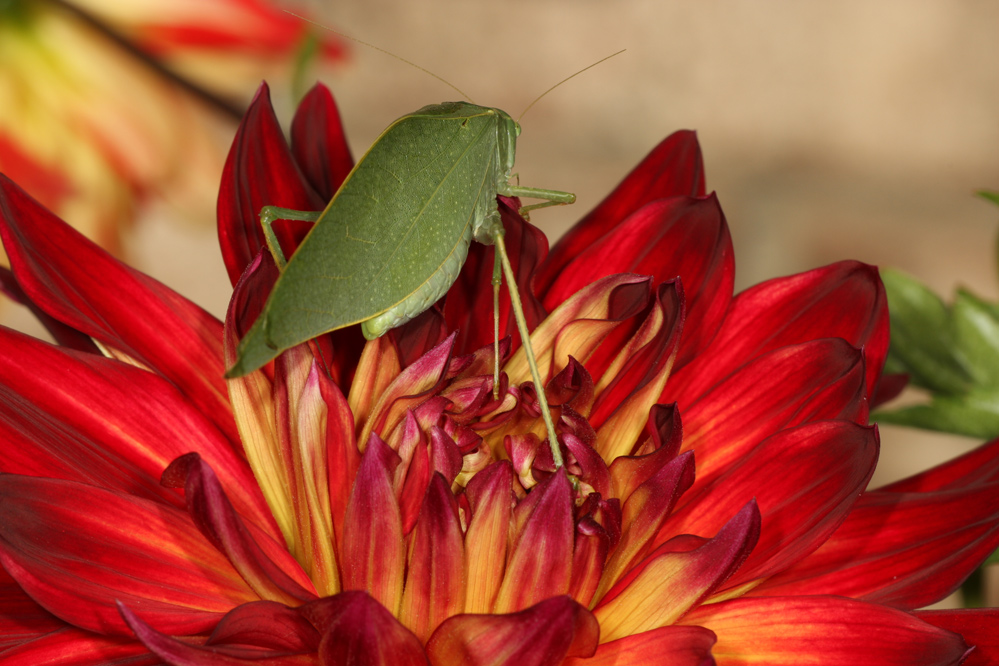
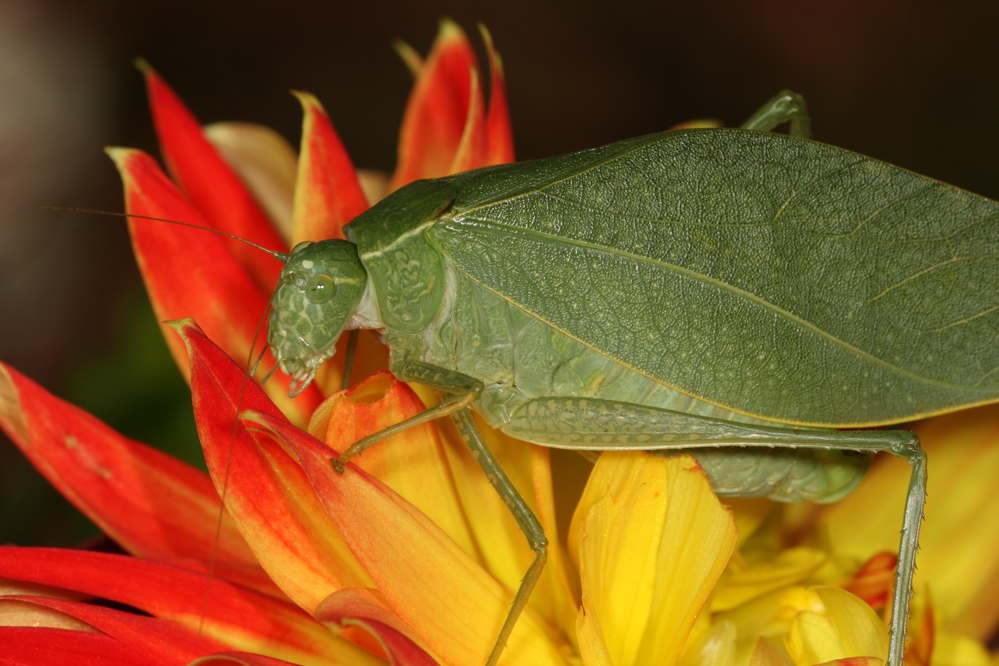
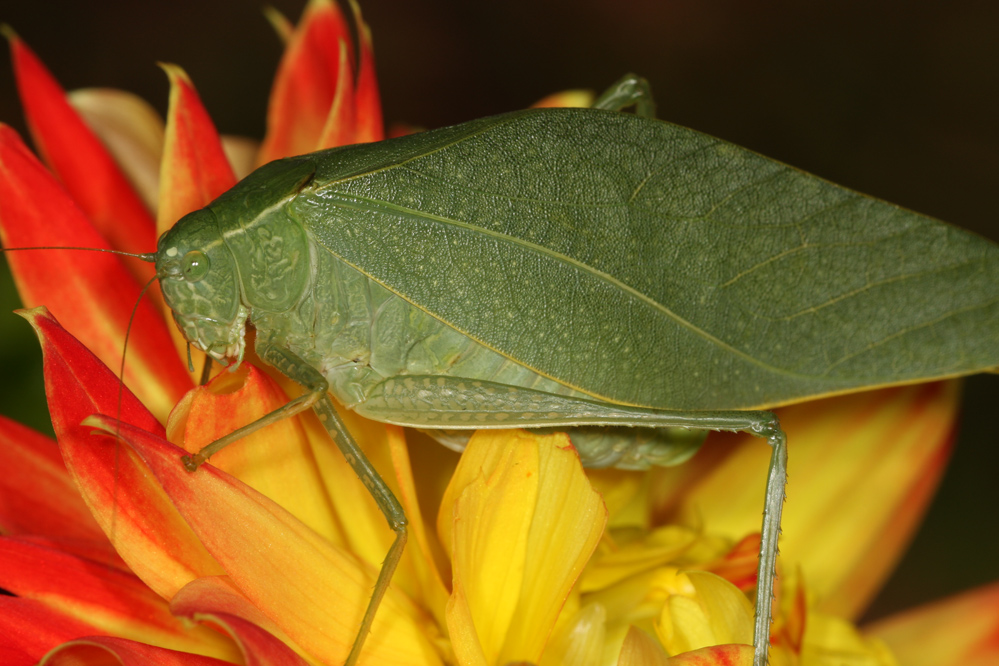
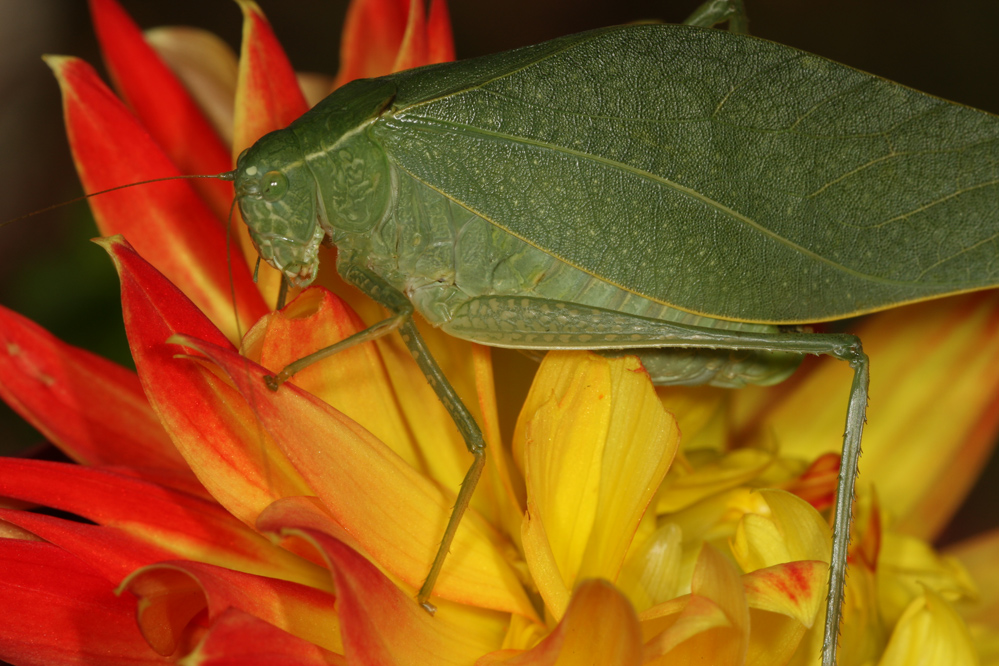

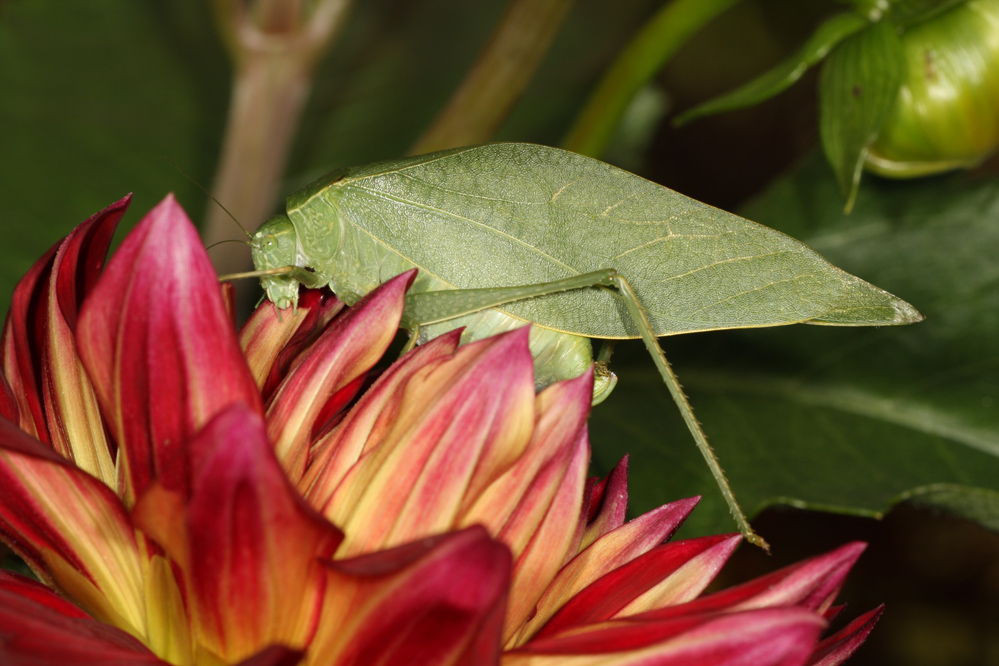
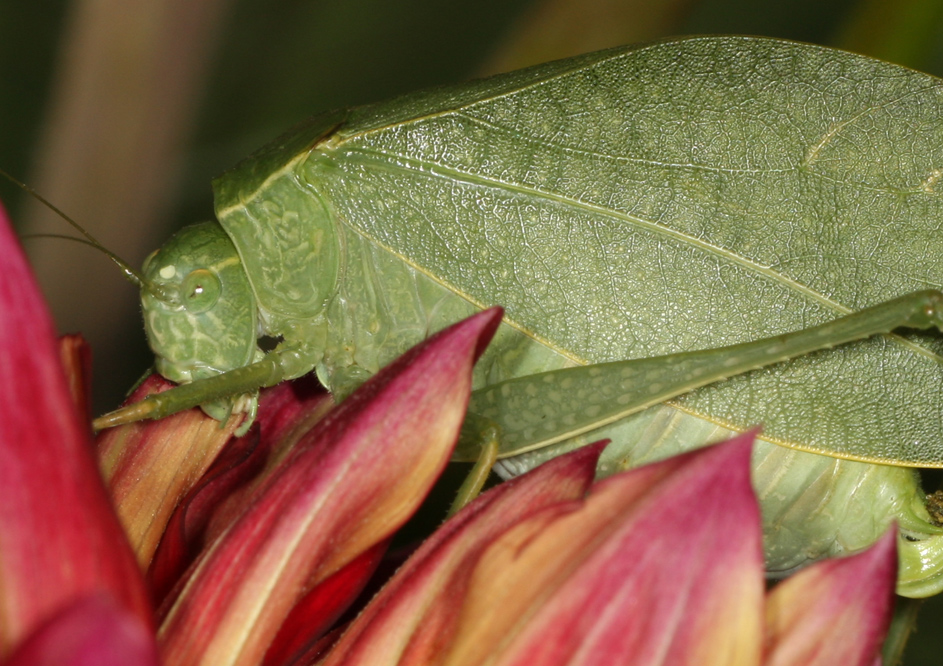
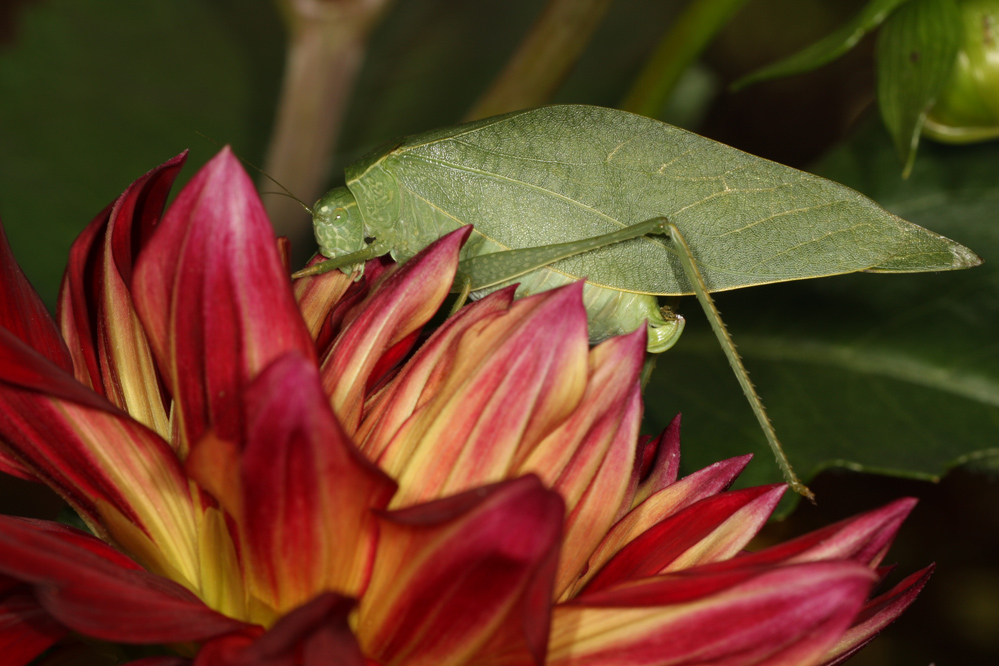

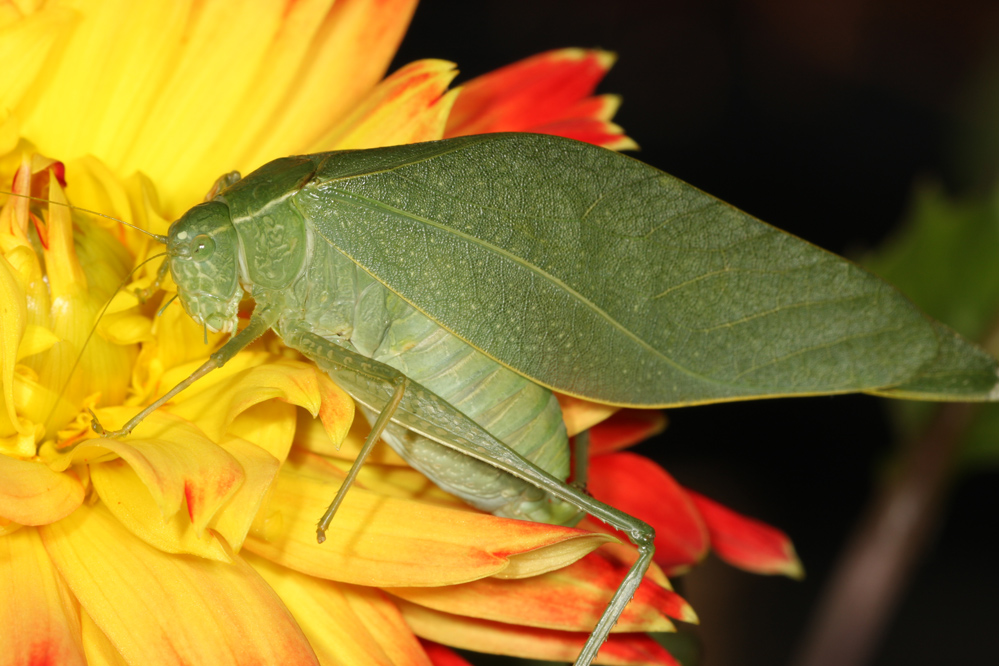
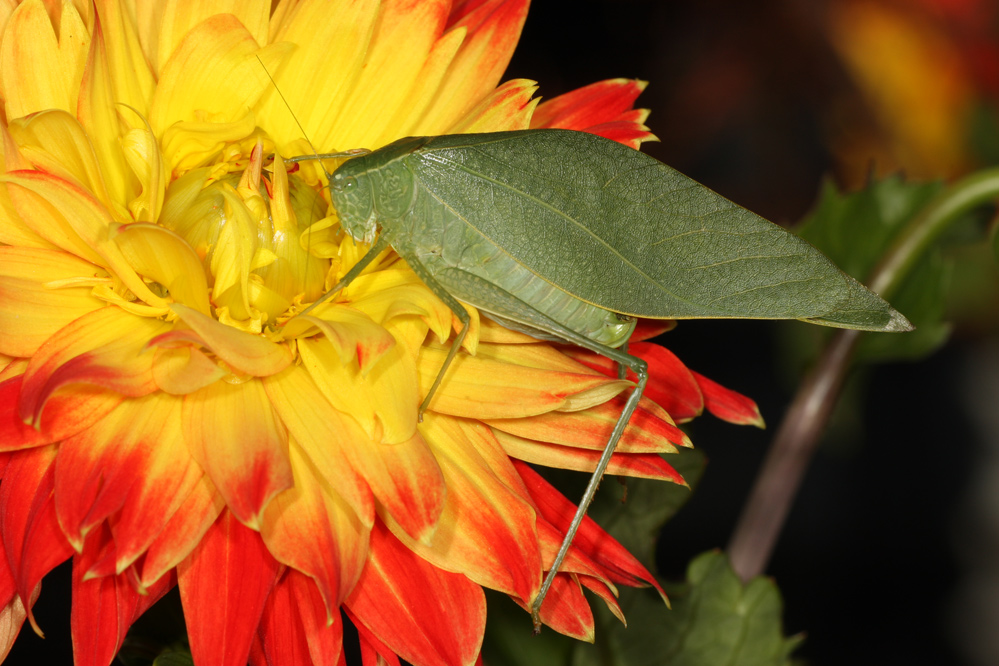
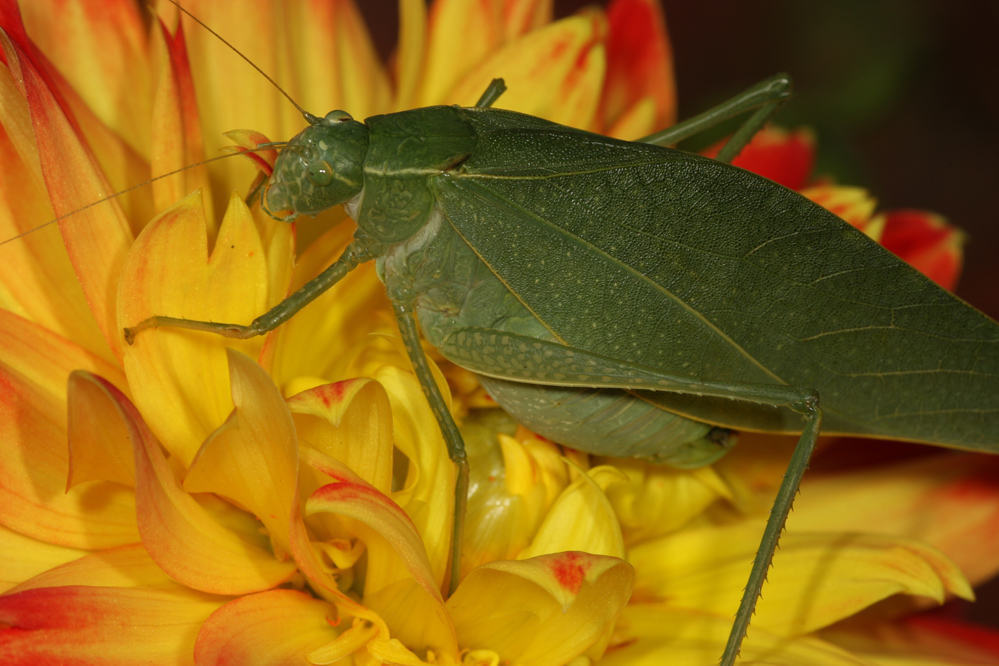
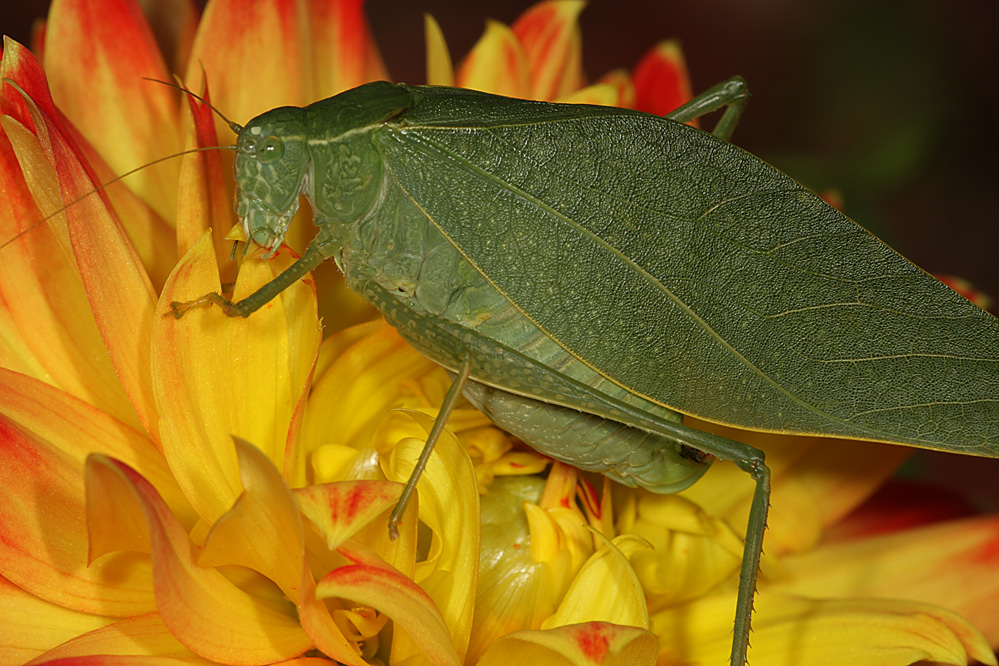
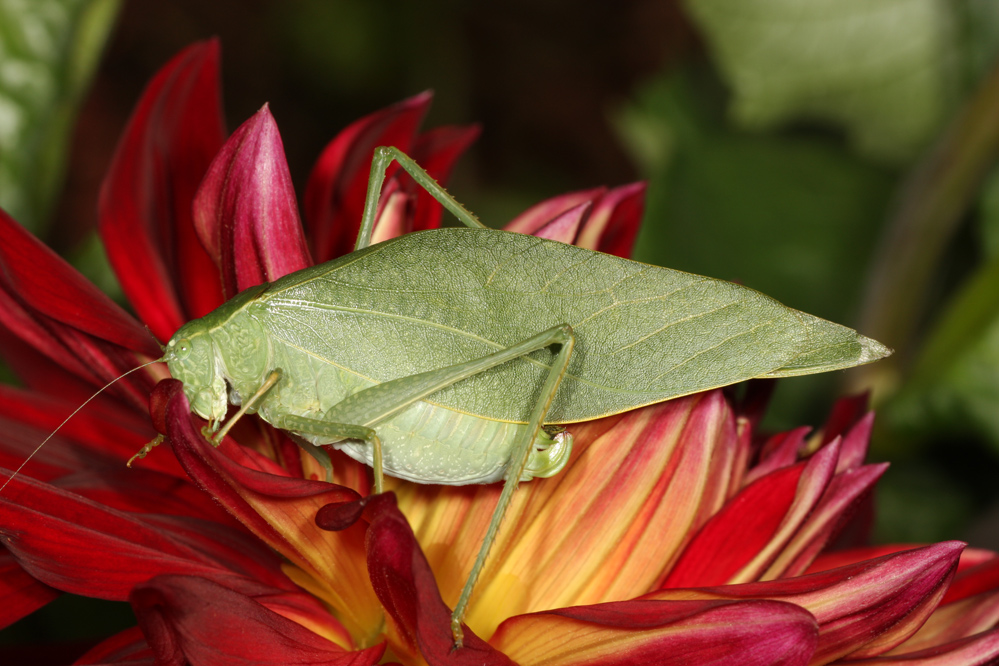
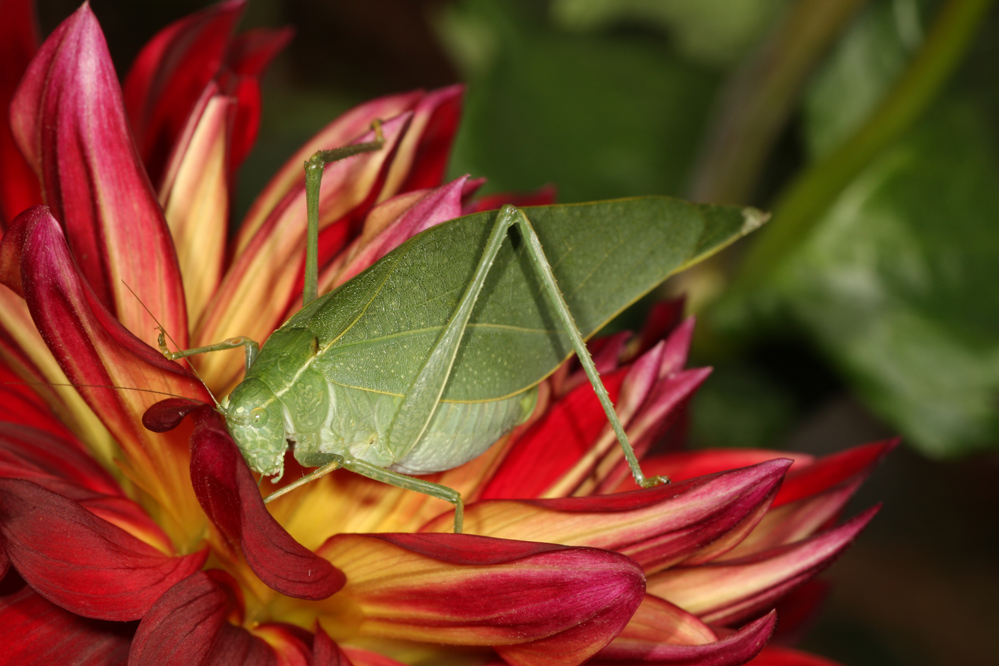
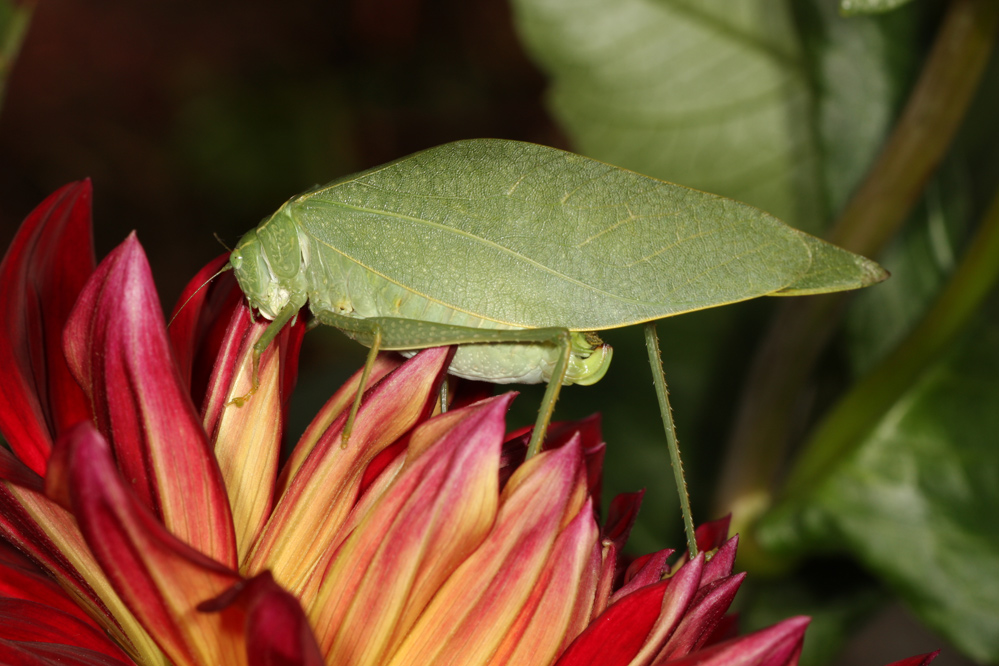
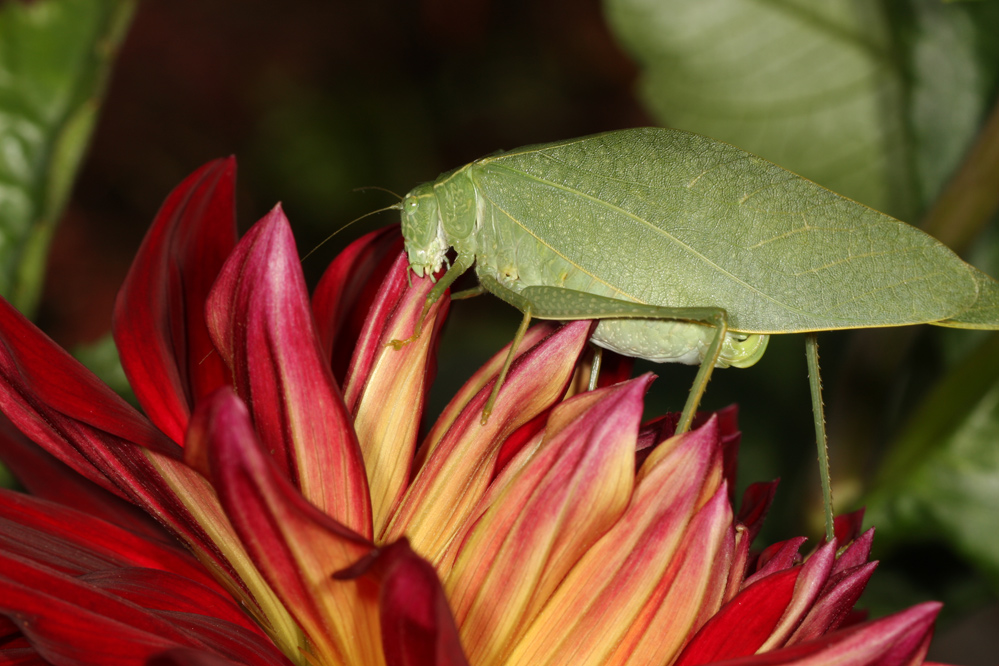
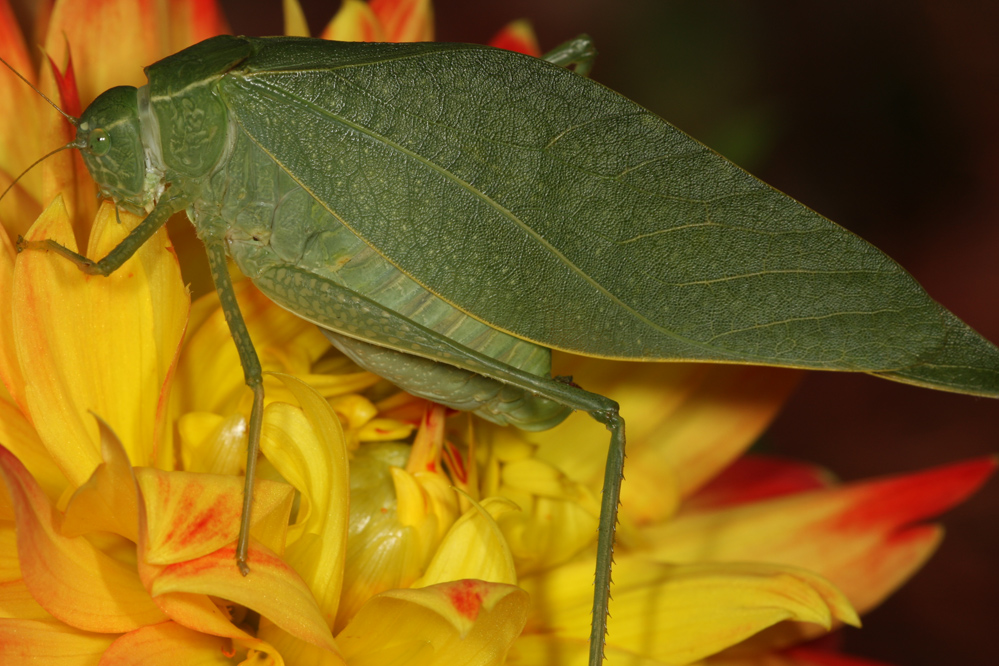
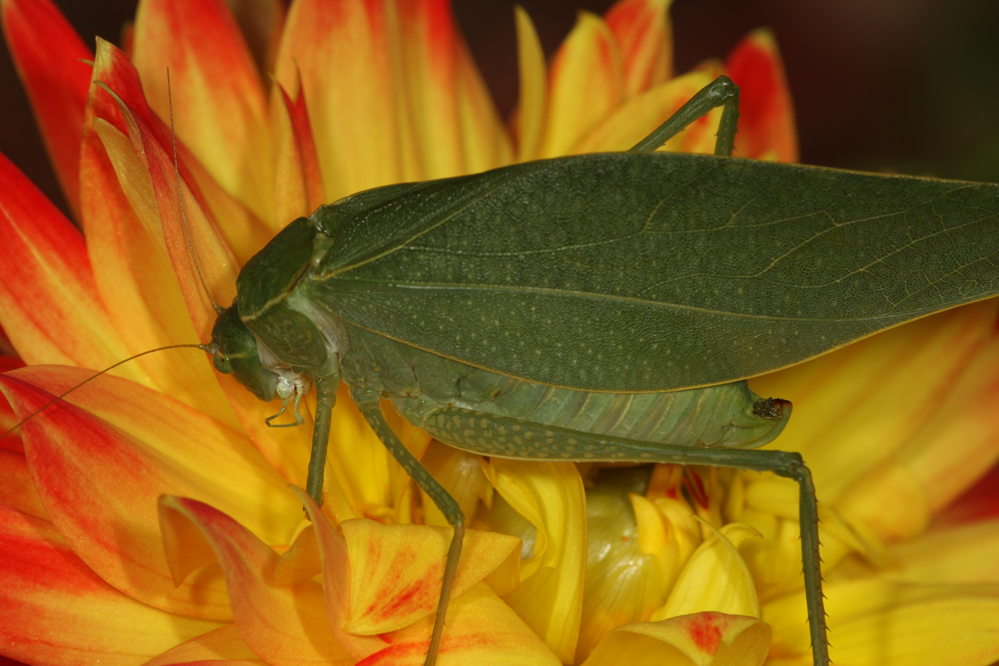
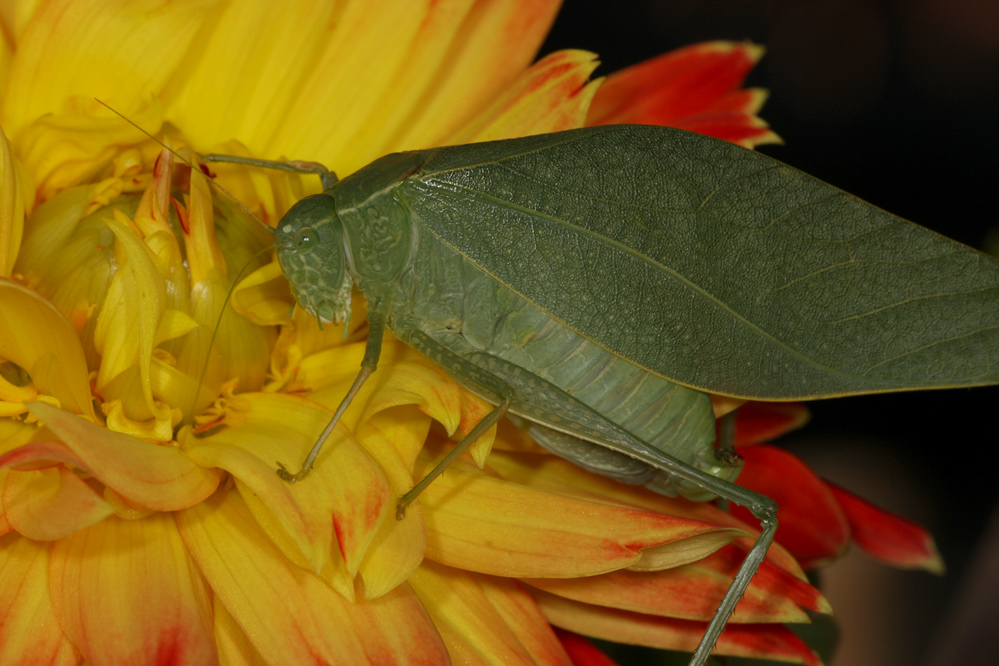
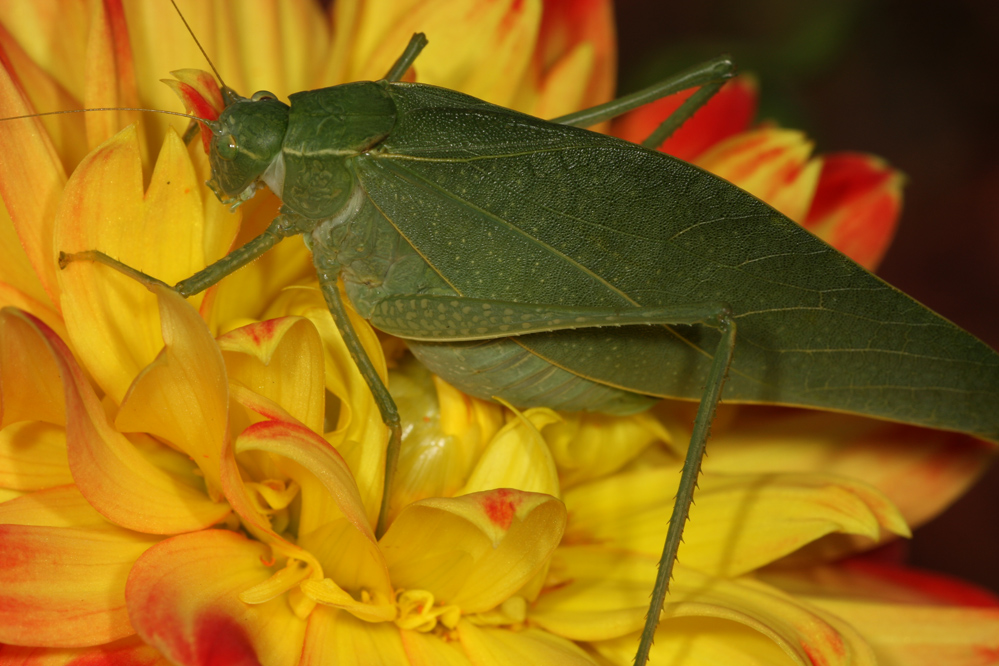
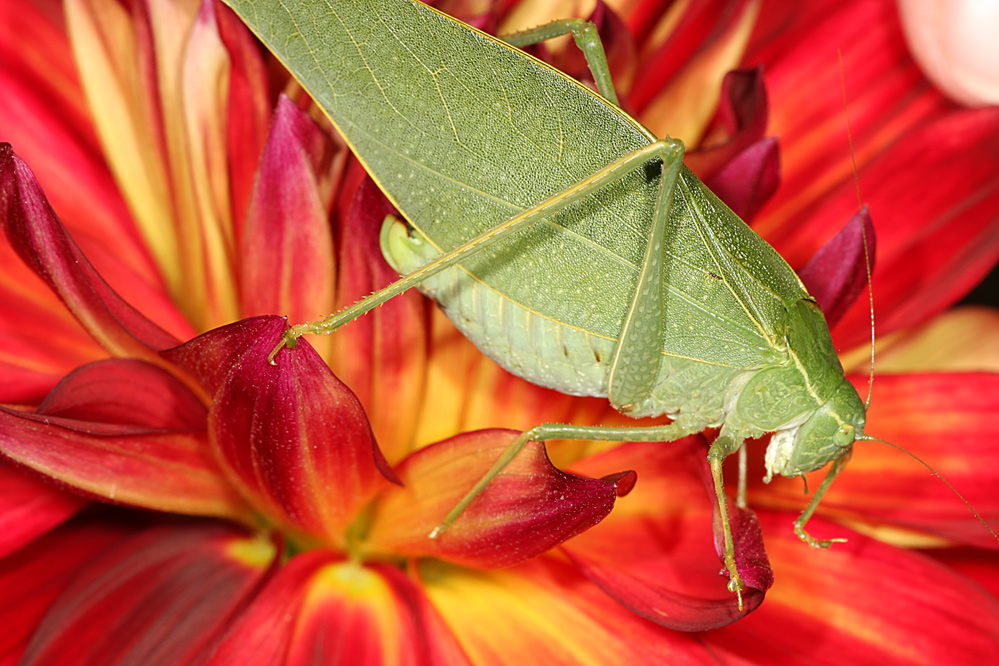
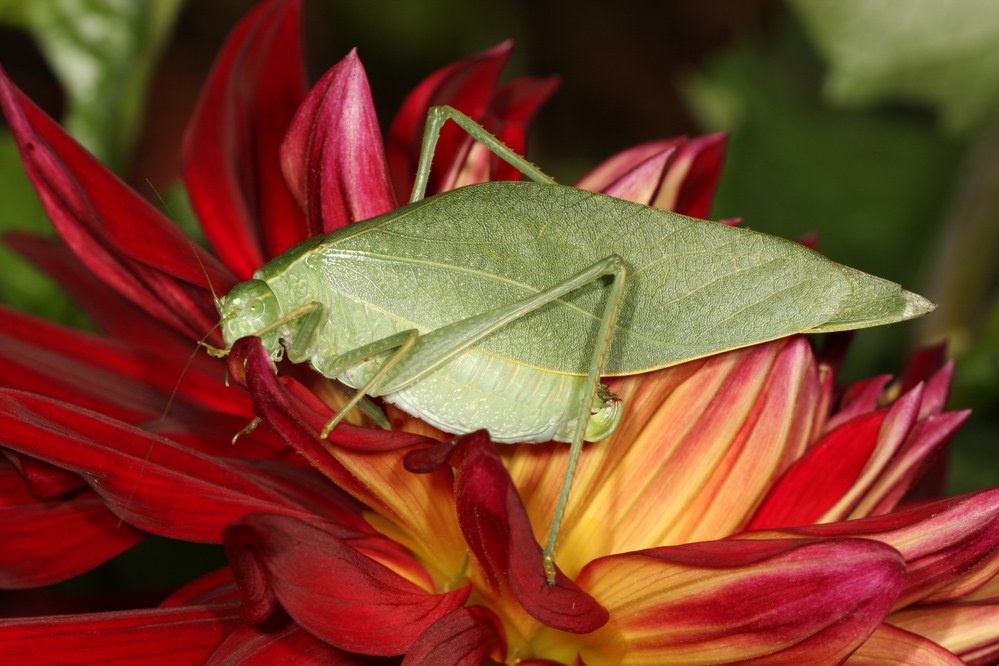

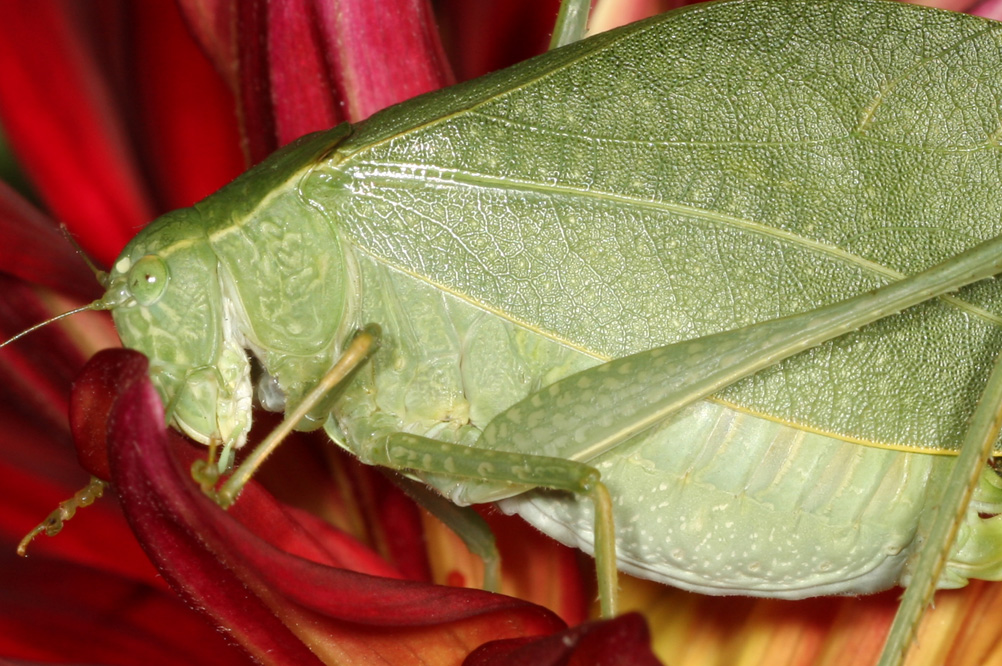
Before releasing her, I fattened her up on greens and took more photos of her on a cone flower and oregano flowers on October 13, 2010. Then I set her free in the garden, where I could hear a male singing.

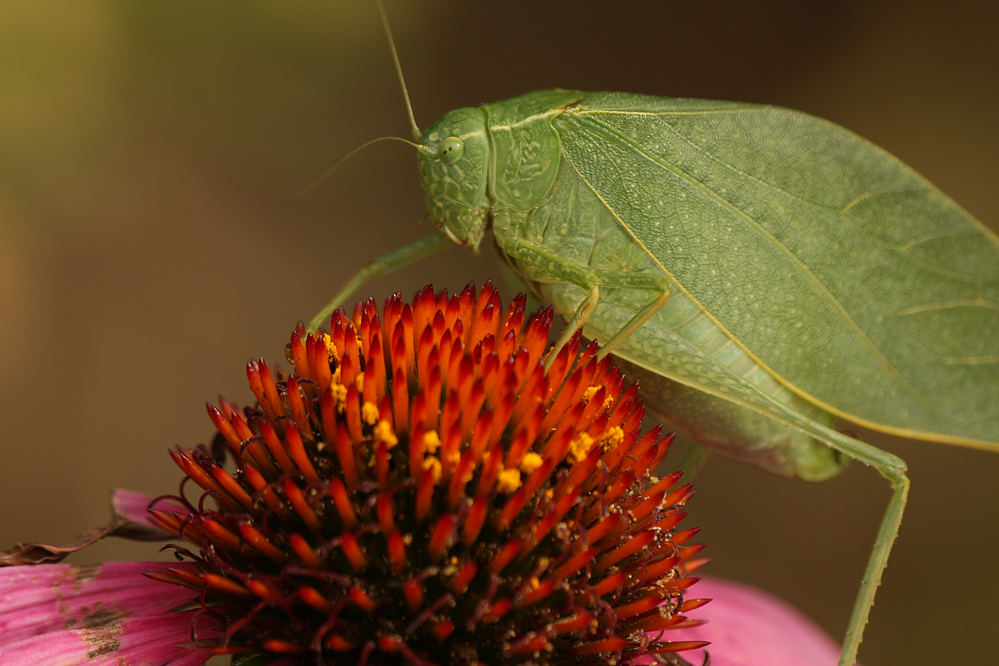
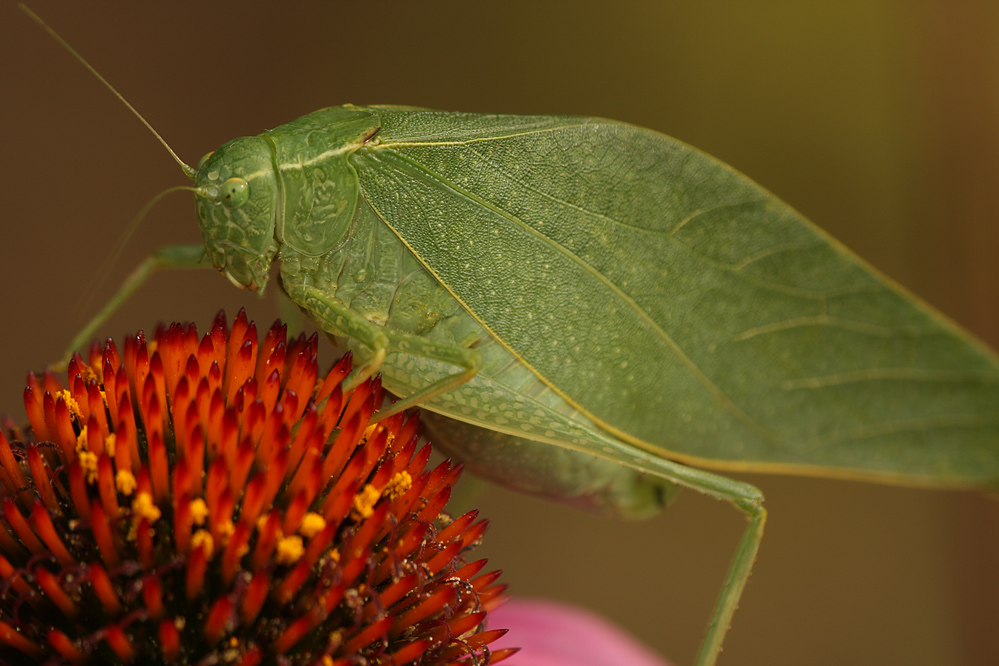
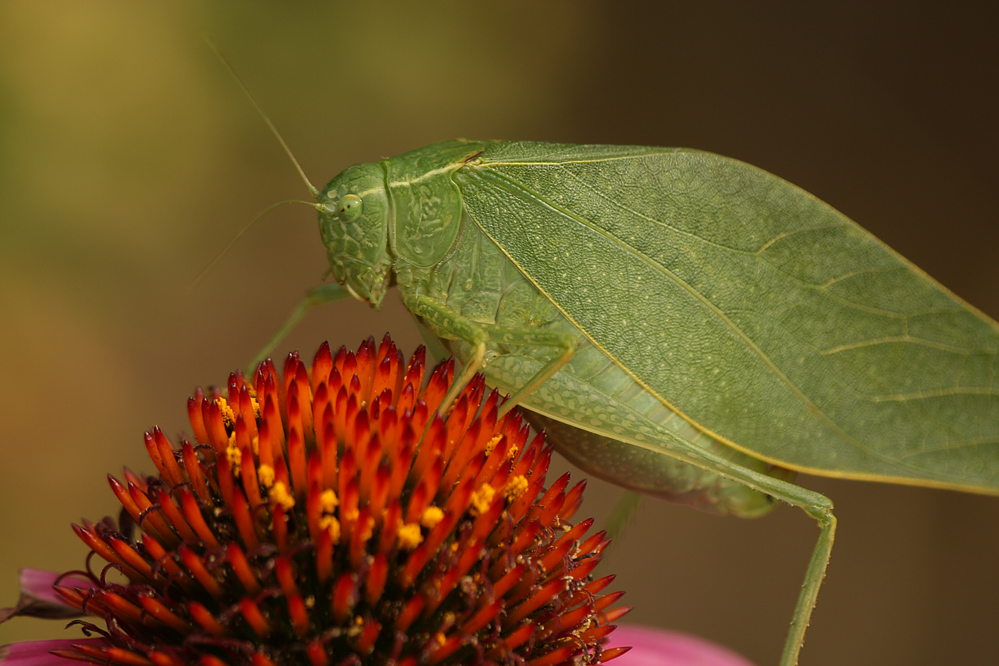
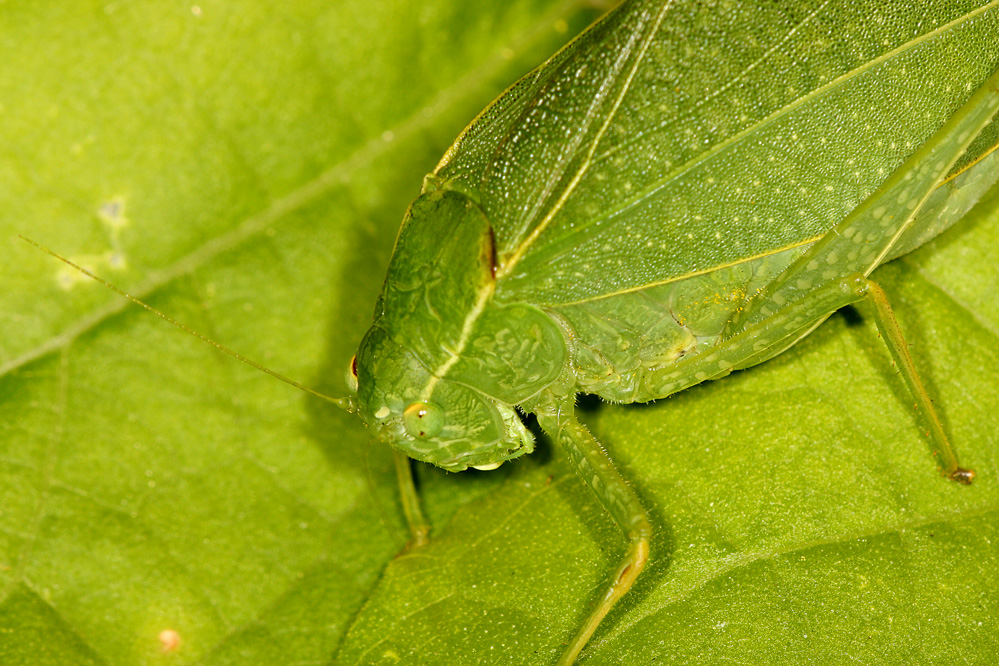
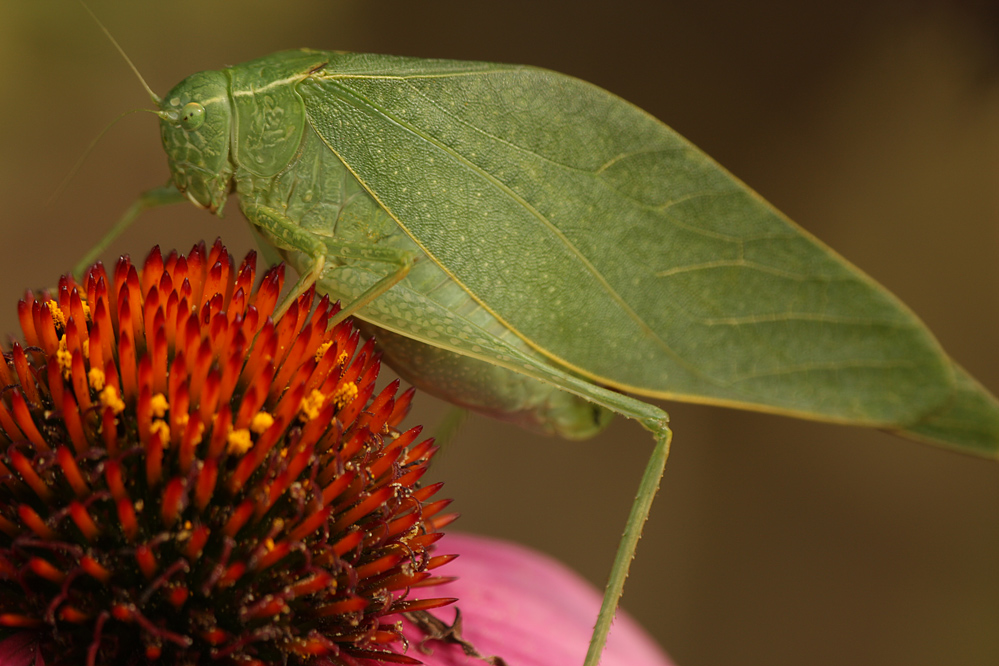
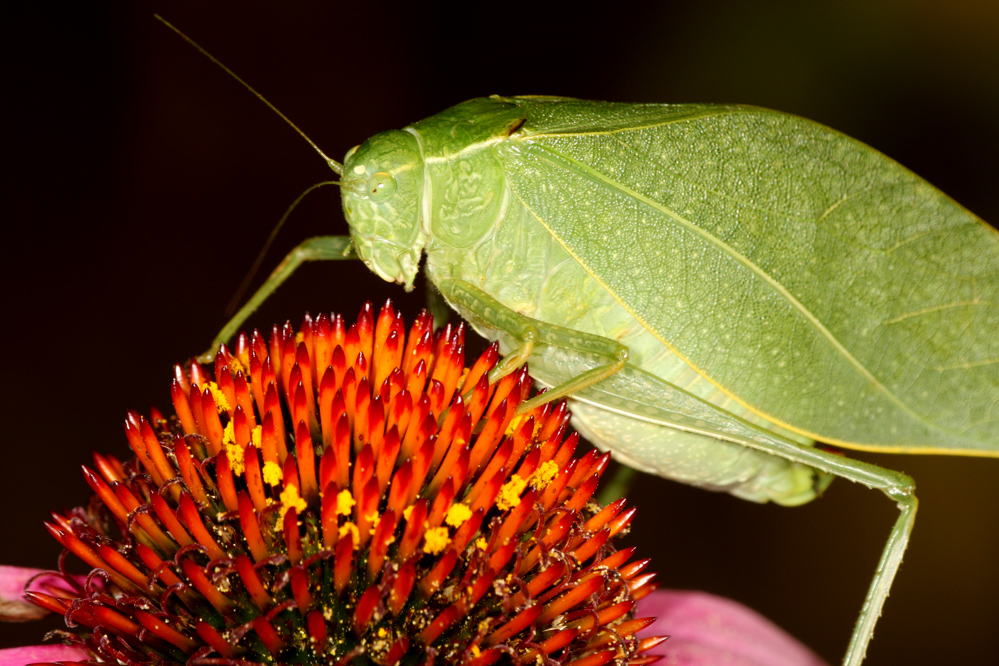
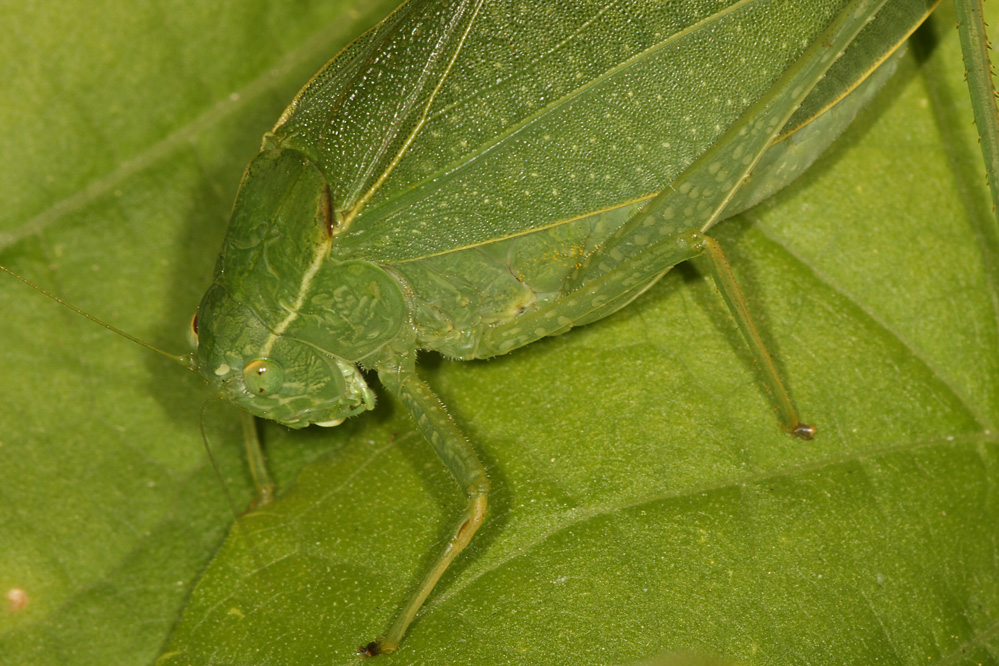
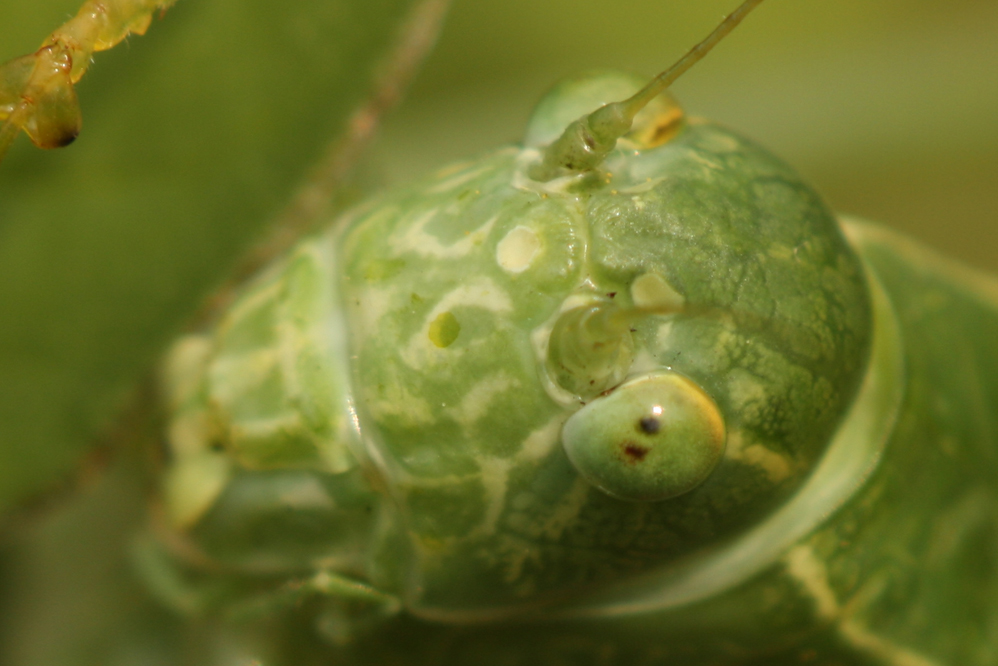

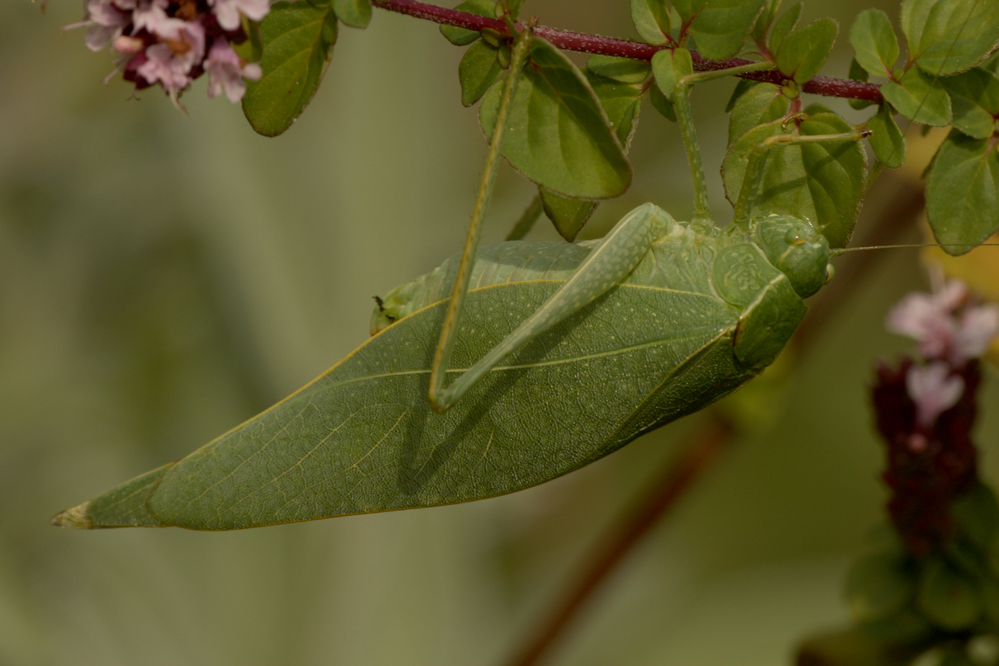
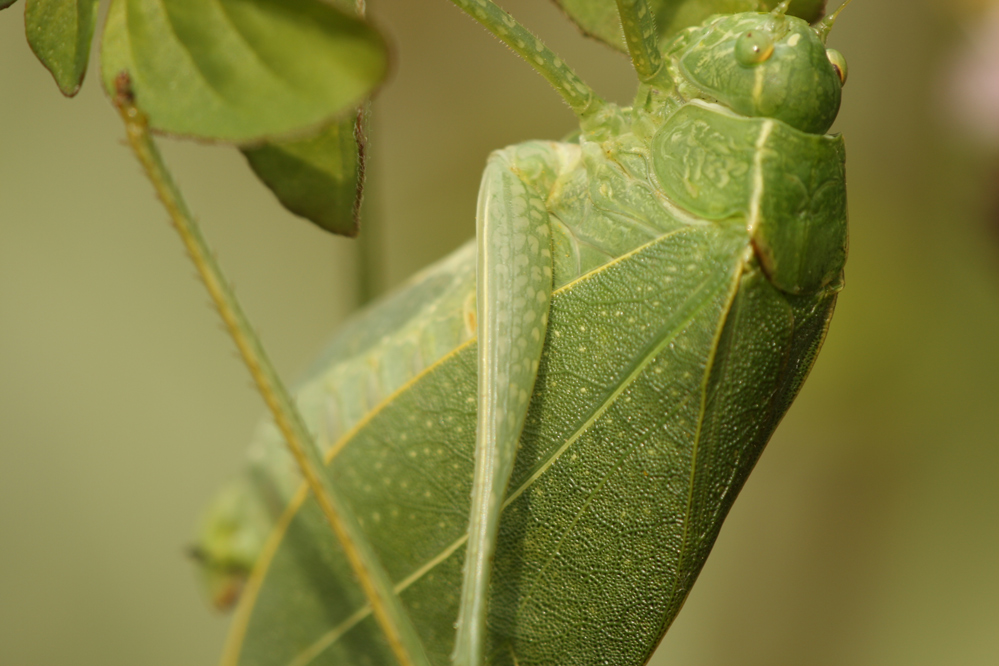
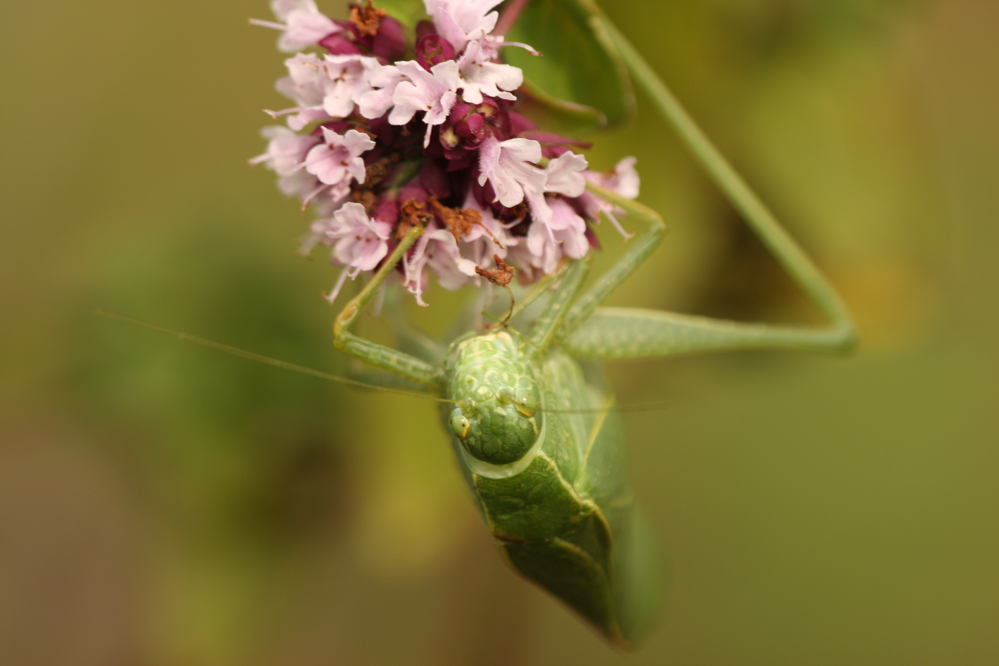
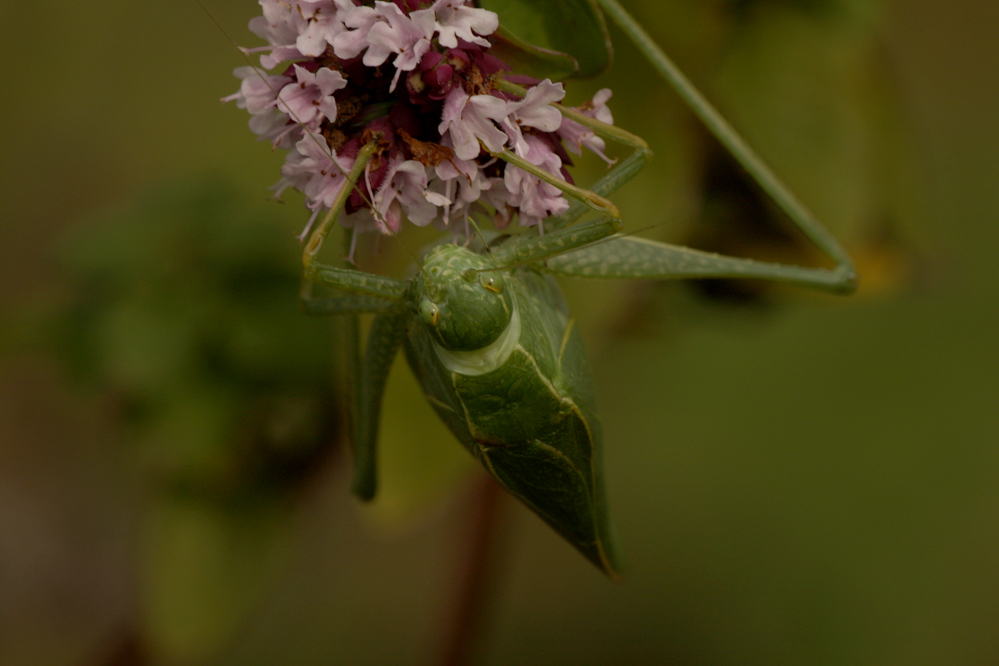

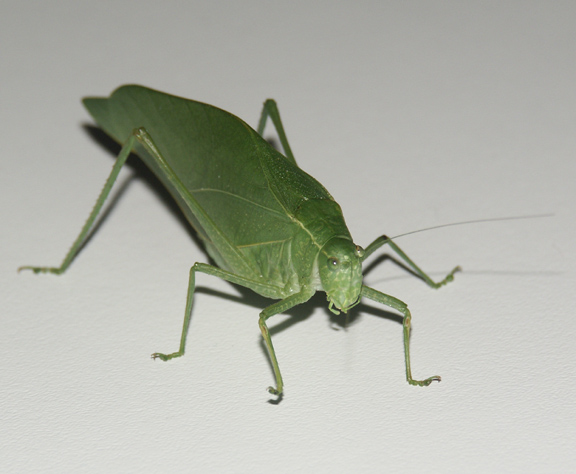
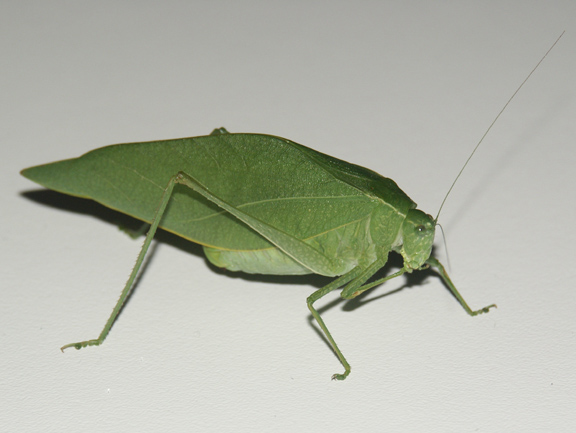
Specimen #2 (male)
This katydid was on my truck in a parking garage on September 9, 2007. I decided to take it home and photograph it the next day.
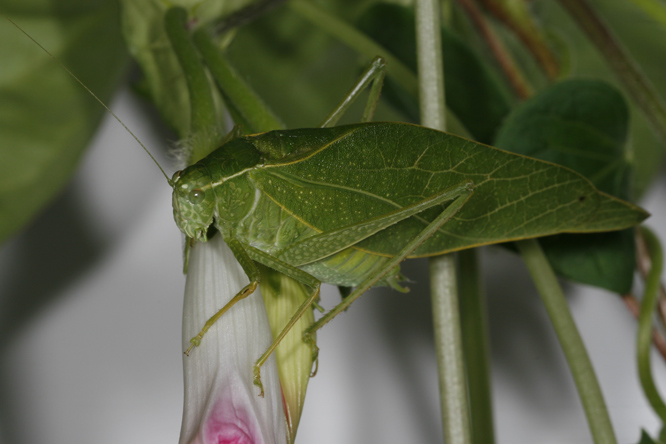
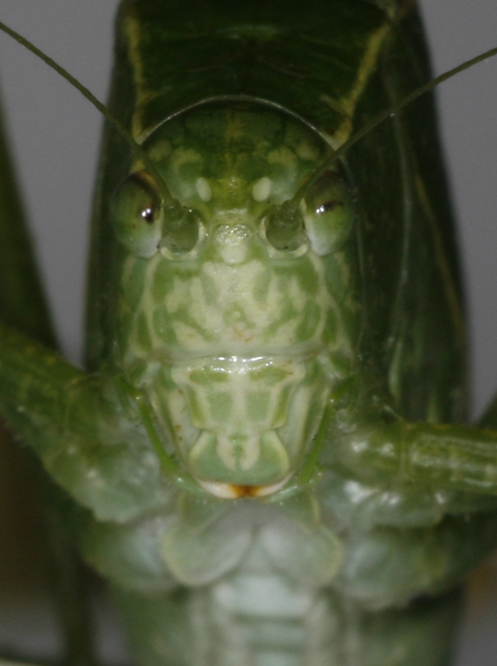
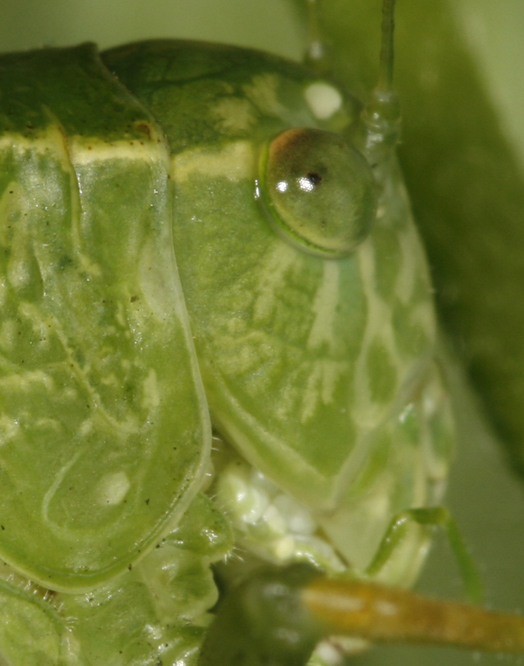
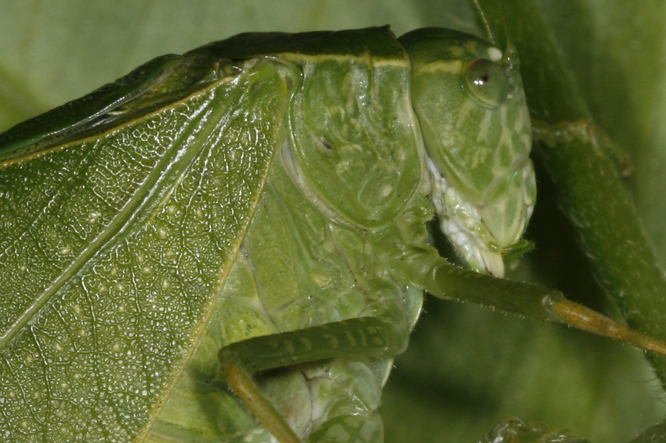
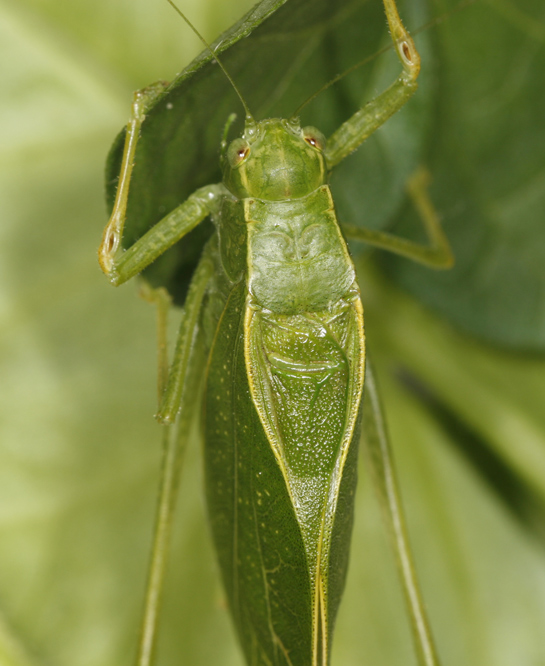
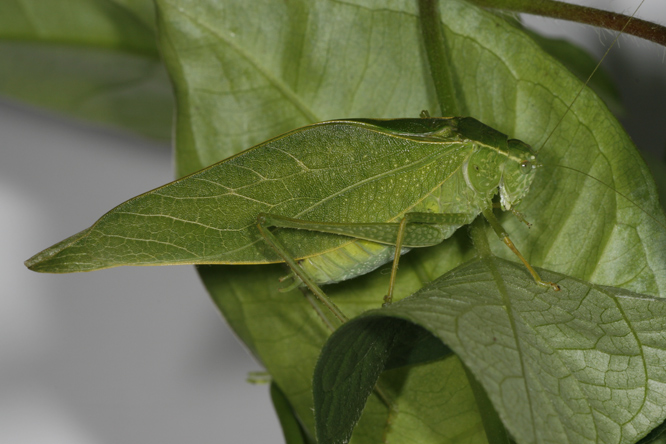
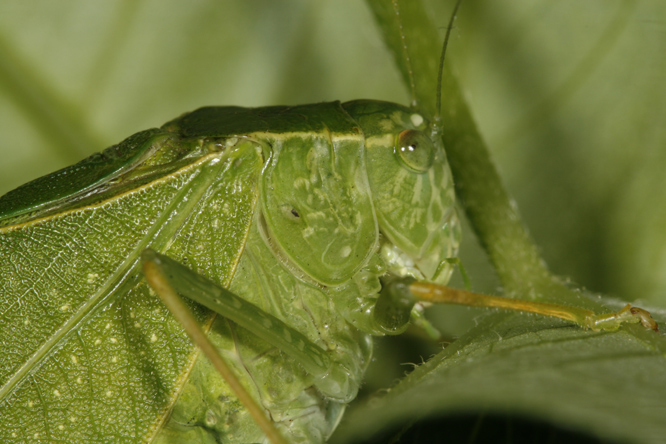
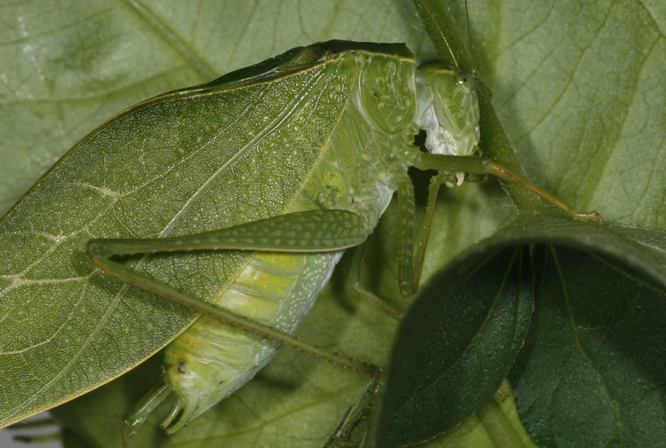

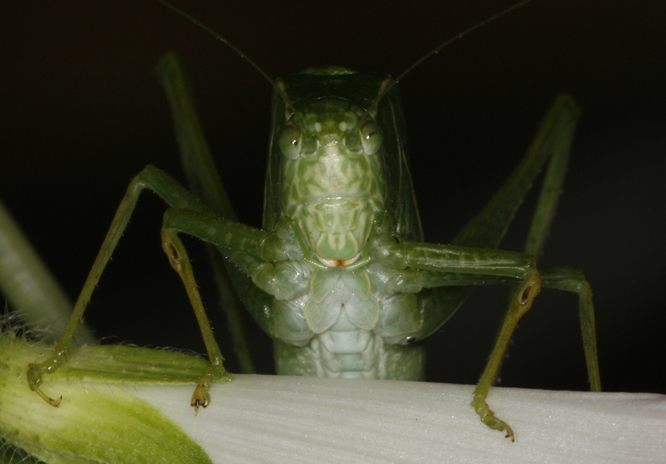
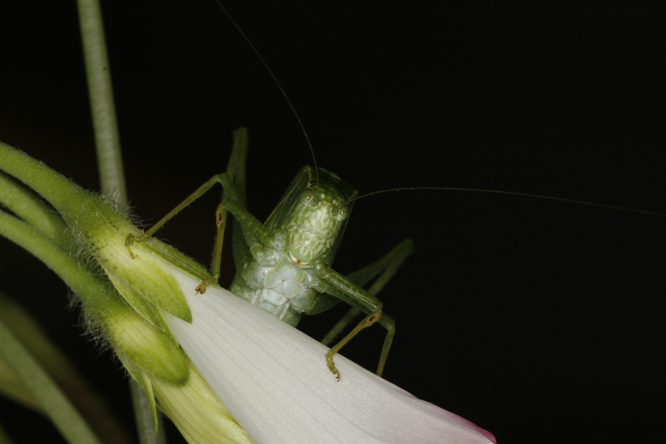
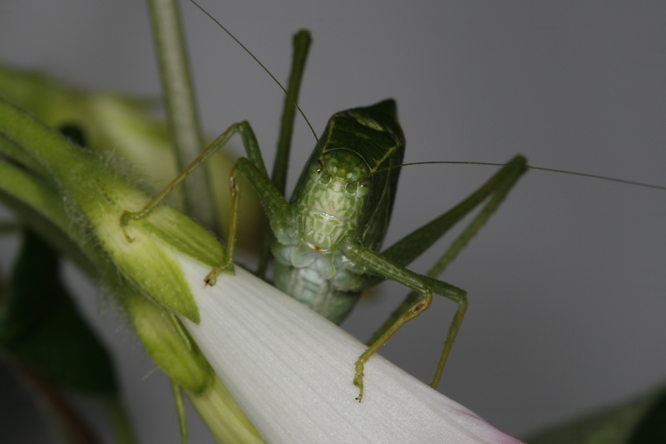
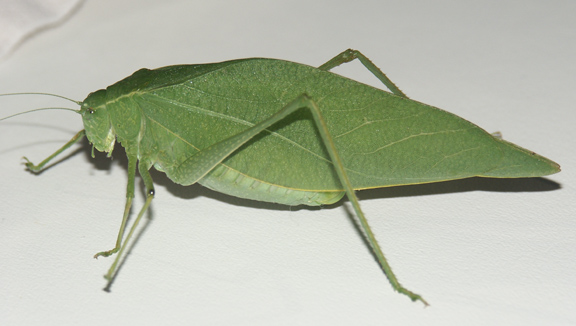
Specimen #1 (male)
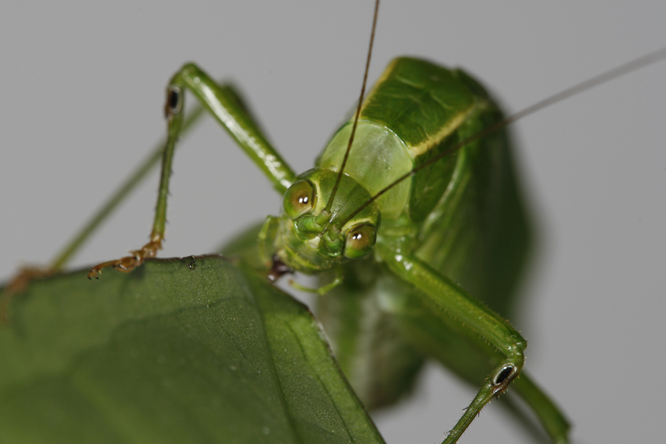
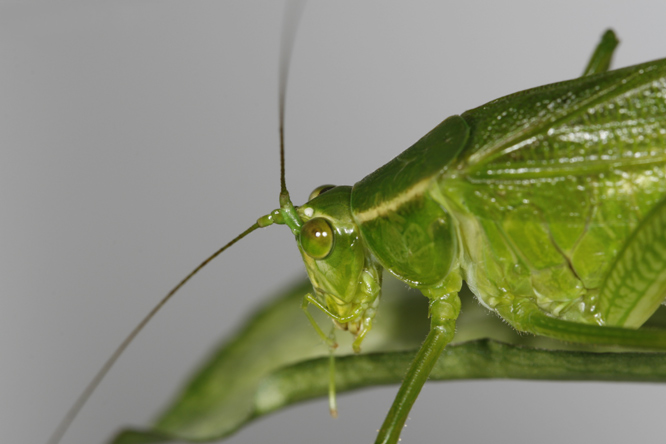
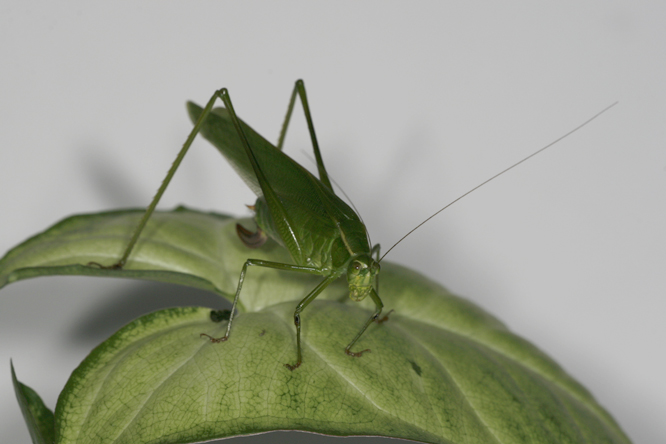
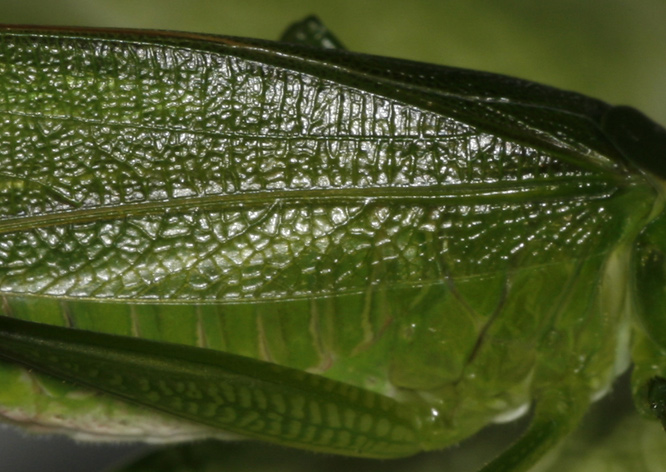
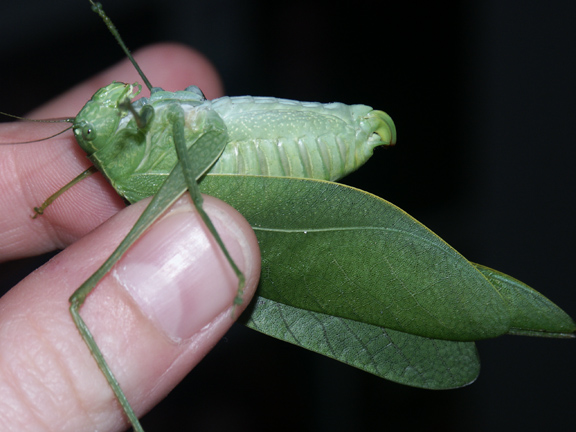
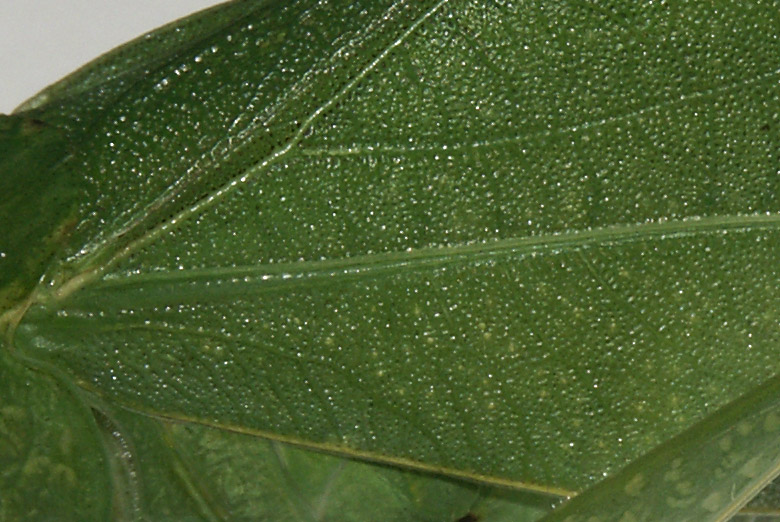
A student brought in this beautiful katydid for me on September 24, 2004. The last photograph is a close-up of its wing.
Go to Insects, Spiders and Other Tiny Creatures Main Page
[ Cicadas ] [ Periodical Cicadas] [ Leaf-hoppers ] [ Ant Lions ] [ Ants ] [ Grasshoppers and Crickets ]
[ Katydids ] [ Weevils ] [ Bumblebees and Carpenter Bees ] [ Honeybees ] [ Wasps ] [ Flies and Other Flying Insects ]
[ Beetles and Other Insects ] [ Praying Mantises ] [ Damselflies and Dragonflies ] [ Centipedes and Millipedes ]
[ Moths ] [ Pandora Sphinx Moth ] [ 5-Spotted Hawk Moth ] [ Polyphemus Moth ]
[ Butterflies ] [ Monarchs ] [ Black Swallowtail ] [ Skippers ]
[ Jumping Spiders Volume 1 ] [ Phidippus Jumping Spiders Volume 2 ] [ Phidippus Jumping Spiders Volume 3 ] [ Baby Phidippus Jumpers ]
[ Biglegs the Jumping Spider ] [ Tufts & Mr. Greenfangs ] [ Phidippus clarus Jumping Spiders]
[ "Radinka Onawa" and other Platycryptus undatus jumping spiders ] [ Platycryptus undatus jumping spiders 2012 - present ] [ Platycryptus Babies ]
[ Zebra Spiders ] [ Miscellaneous Jumping Spiders ]
[ Orb-Weavers Volume 1 ] [ Orb-Weavers Volume 2 ] [ Baby Orb-weavers ]
[ Crab Spiders ] [ Miscellaneous Spiders ] [ Spider Webs ]
[ Home ] [ Artwork ] [ Photography ] [ Art Cars ] [ Virtual Museum ] [ Pets ] [ Favorite Links ] [ What's New / My Blog ] [ Guestbook ] [ For Sale ]
Copyright © 2004-2024 kozmicdreams.com. All rights reserved.
All materials contained on this site, including text, graphics and icons, are the property of
kozmicdreams.com.