
My Digital Photography of
Moths and their Larvae
The following insects were photographed in the Metro-Detroit area, unless otherwise noted. I have identified them by their scientific names, if known. Photographs are sorted so that most recent photos are at the top of the page.
If you know the name of any unidentified moths, please e-mail me at kozmicdreams@ymail.com. Special thanks to John Maxwell for helping me identify many insects on this page from 2008 and before.
Click on any photo to see a larger view!
Unidentified Moth
Inside home
This moth had about 1" wingspan.
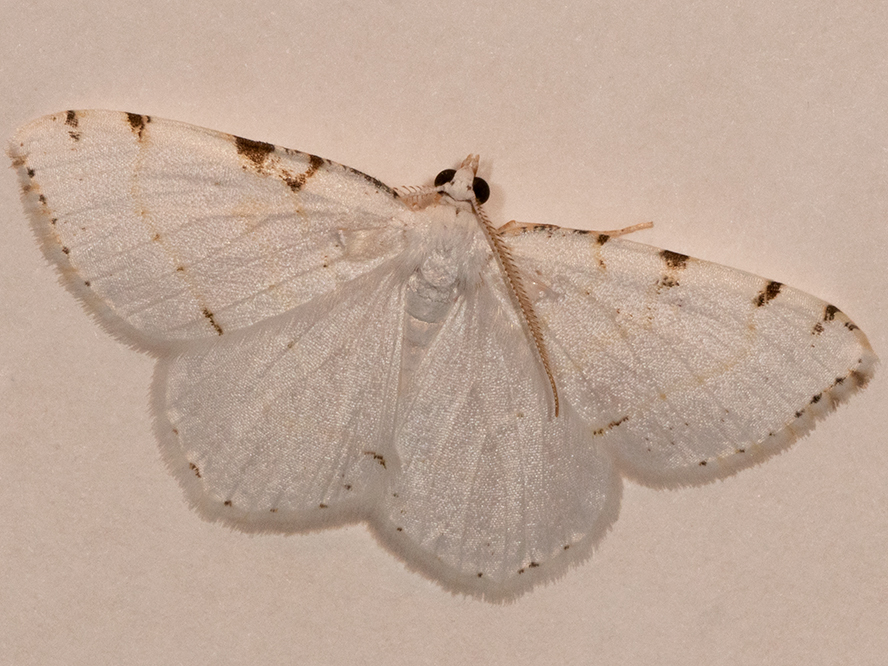
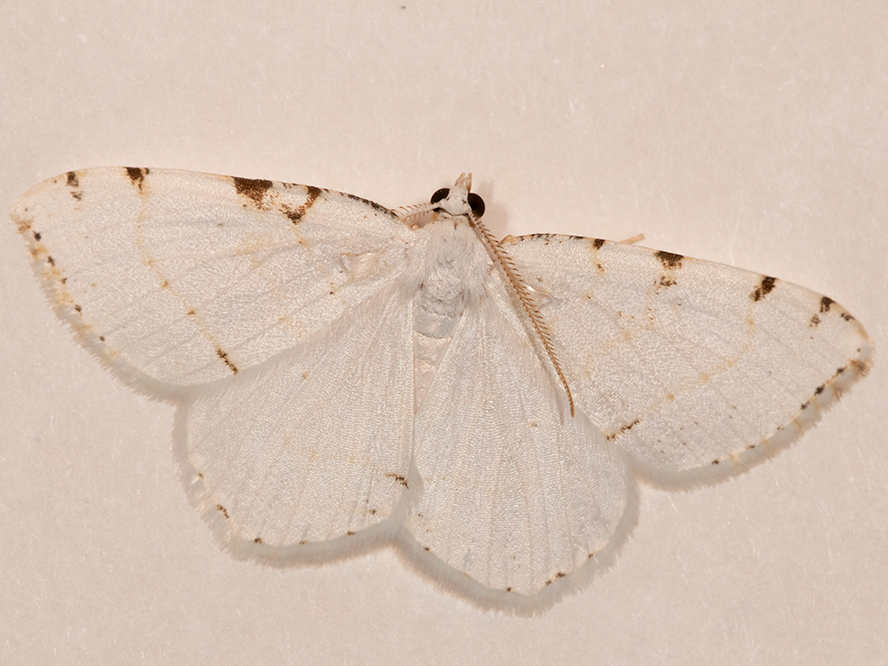
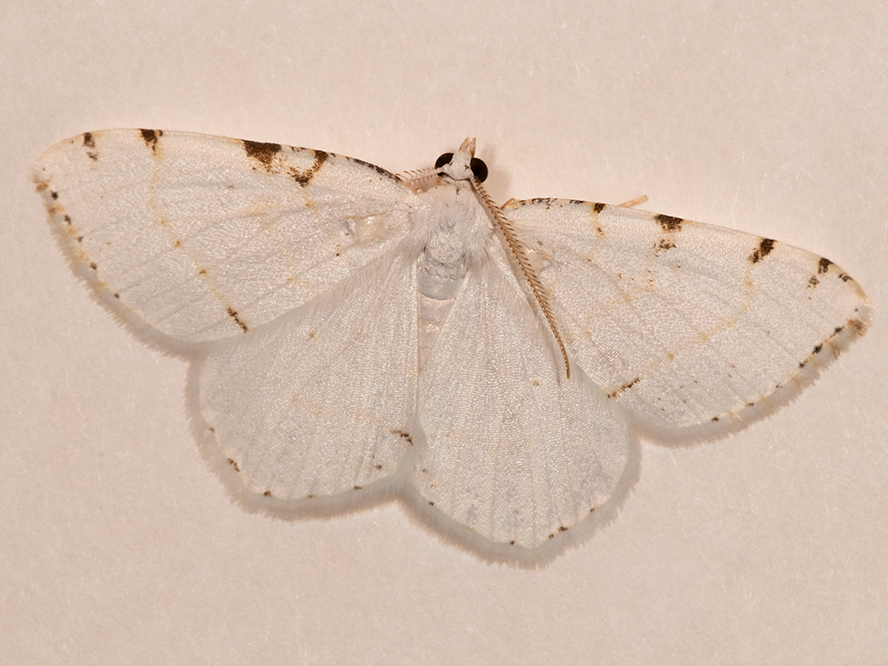
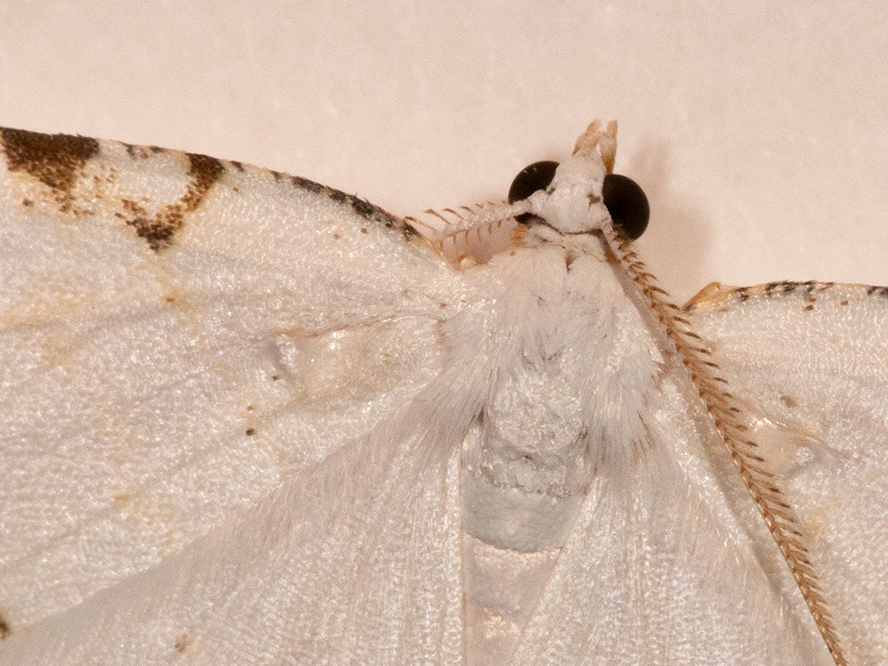
Tuliptree Silkmoth, Callosamia angulifera
Waterloo State Park, Eddy Discovery Center Trails, July 12, 2020
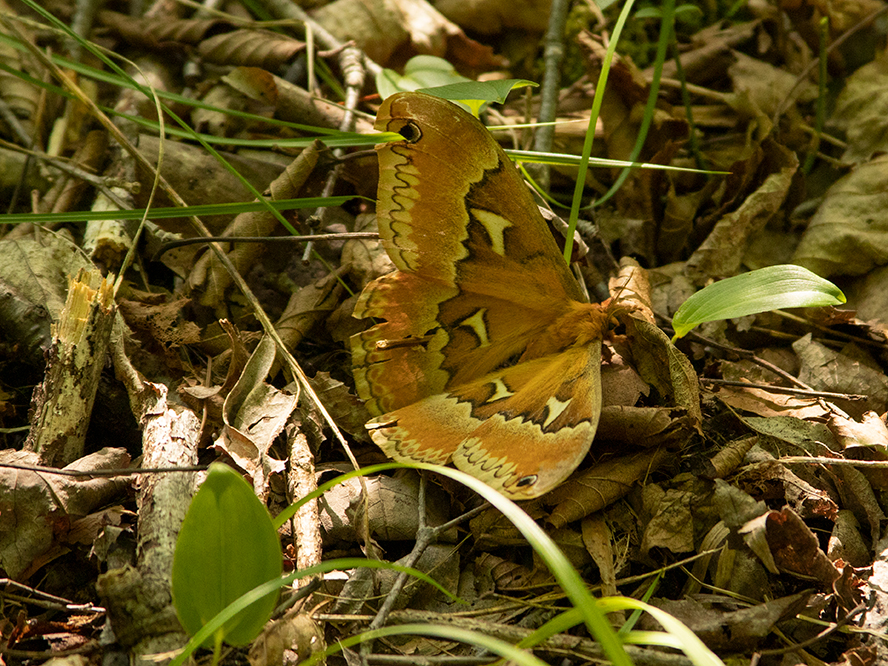
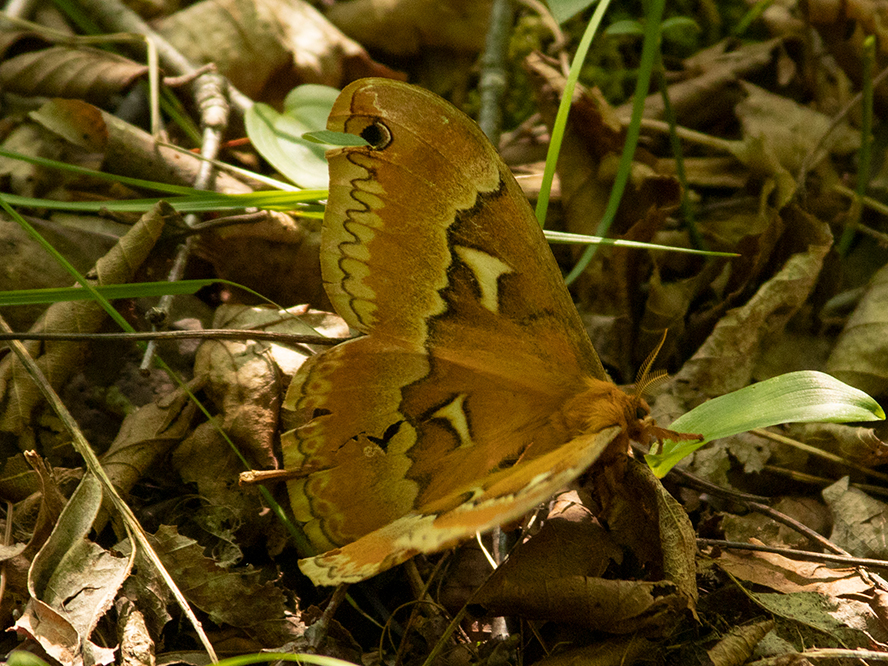
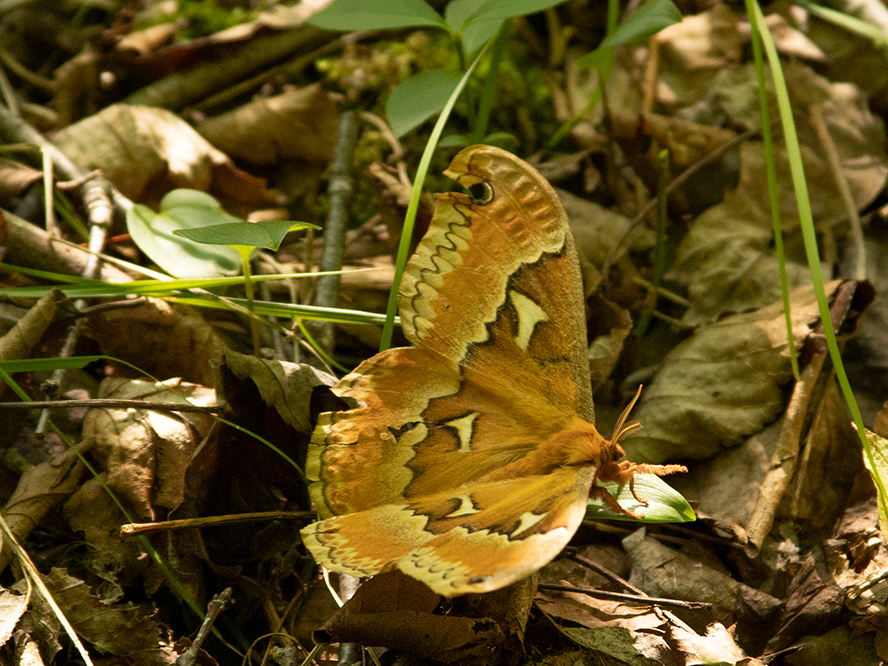
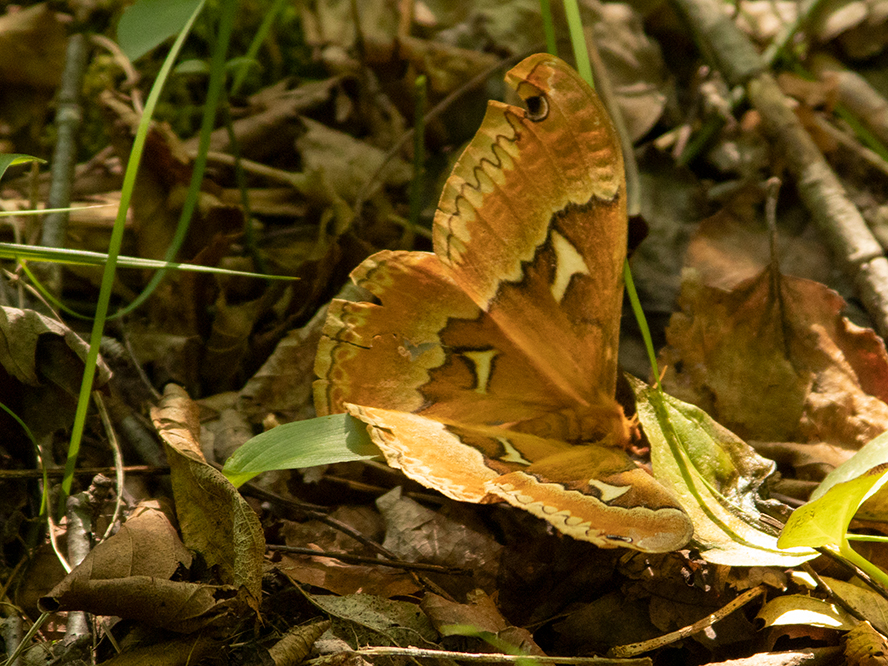
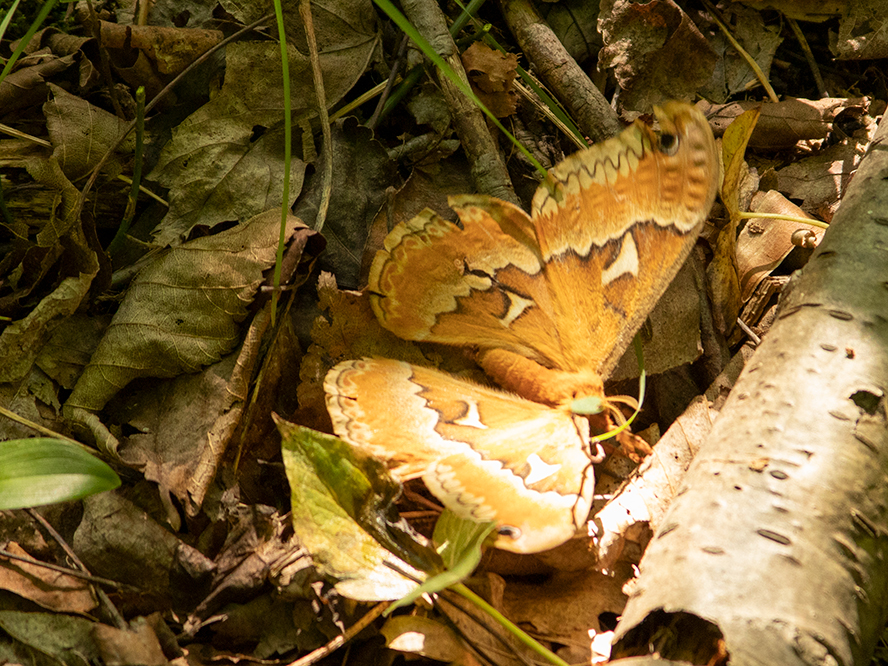
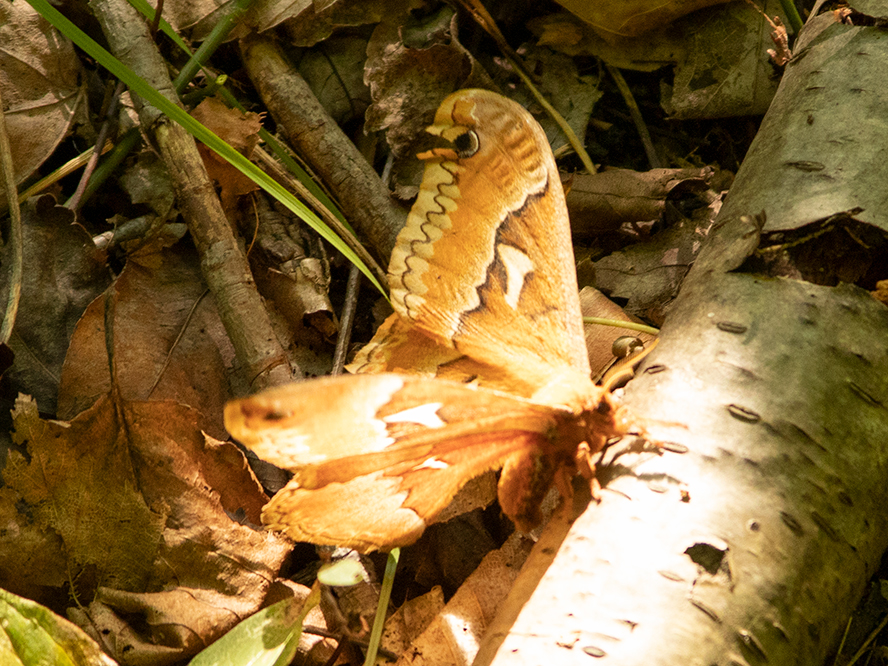
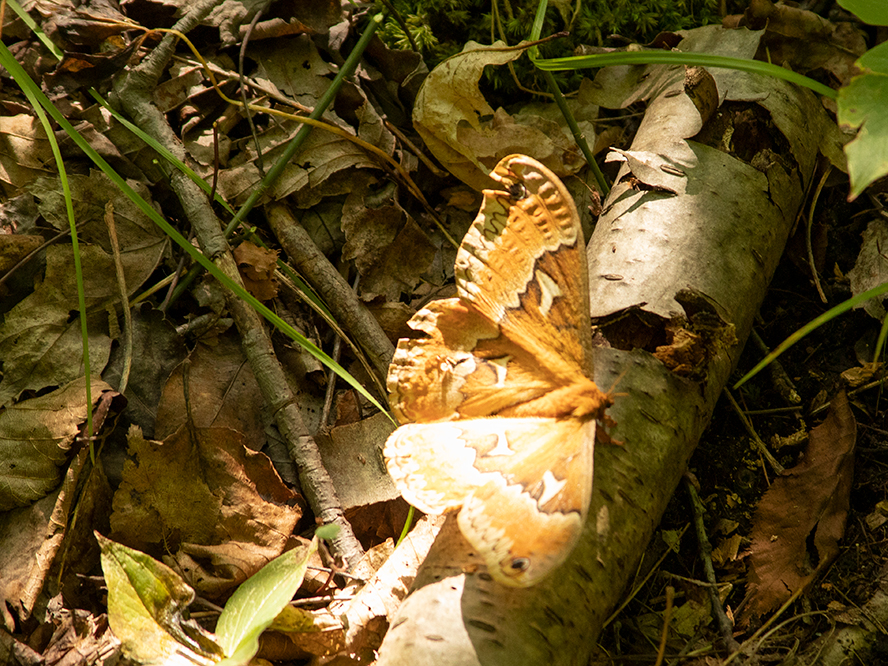
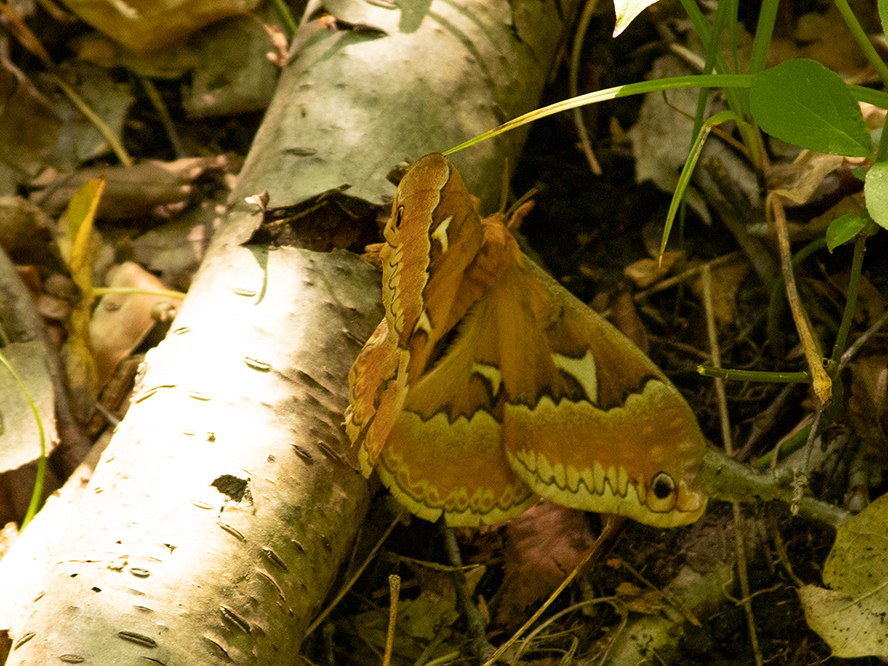
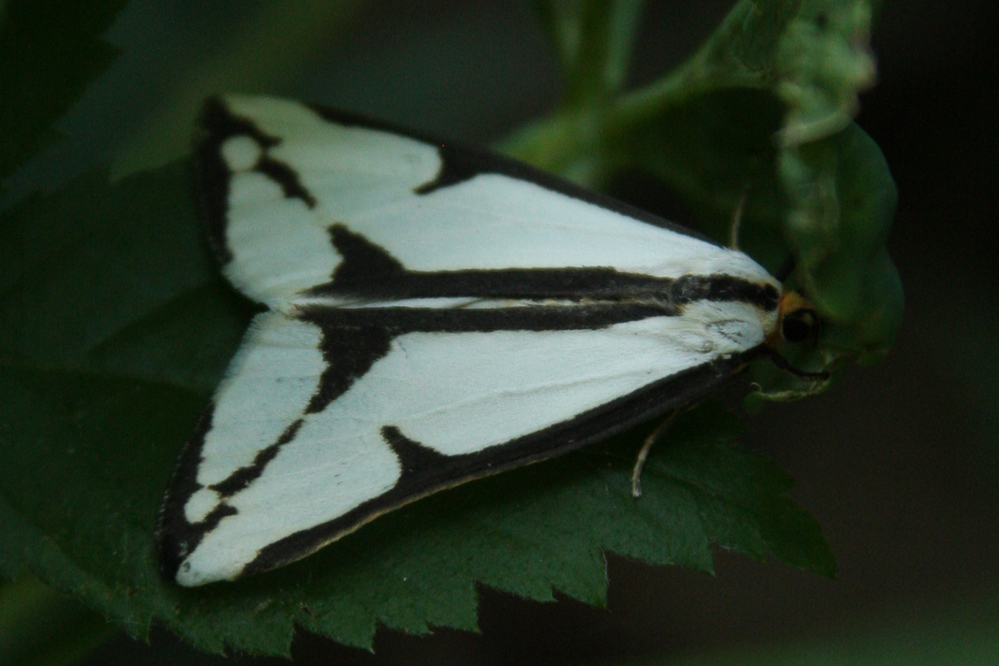
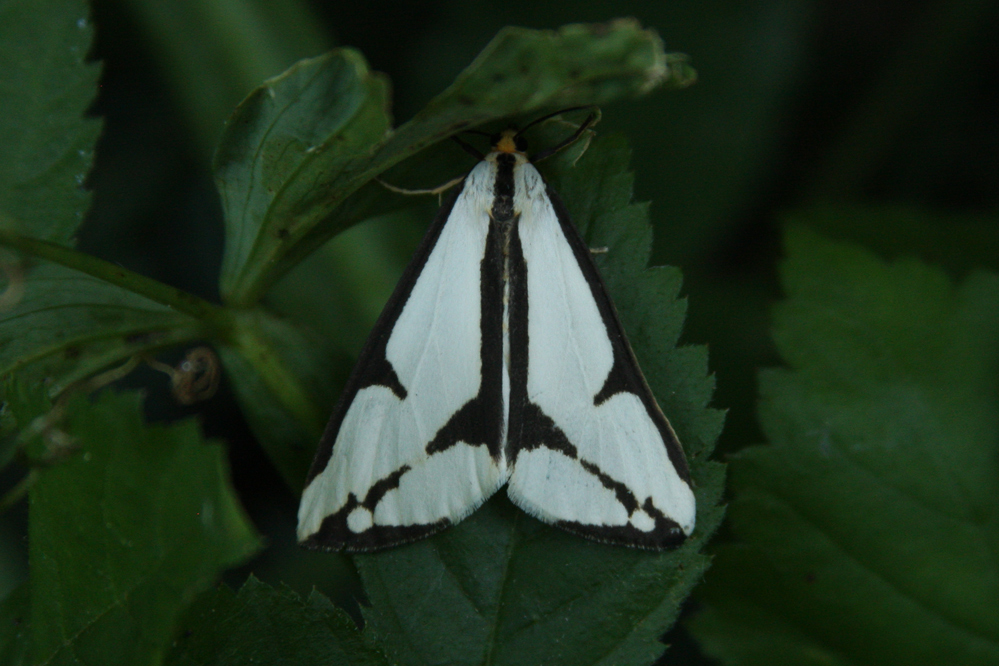
Unidentified Moth
Leonard Preserve, June 21, 2020
There are two specimens shown.
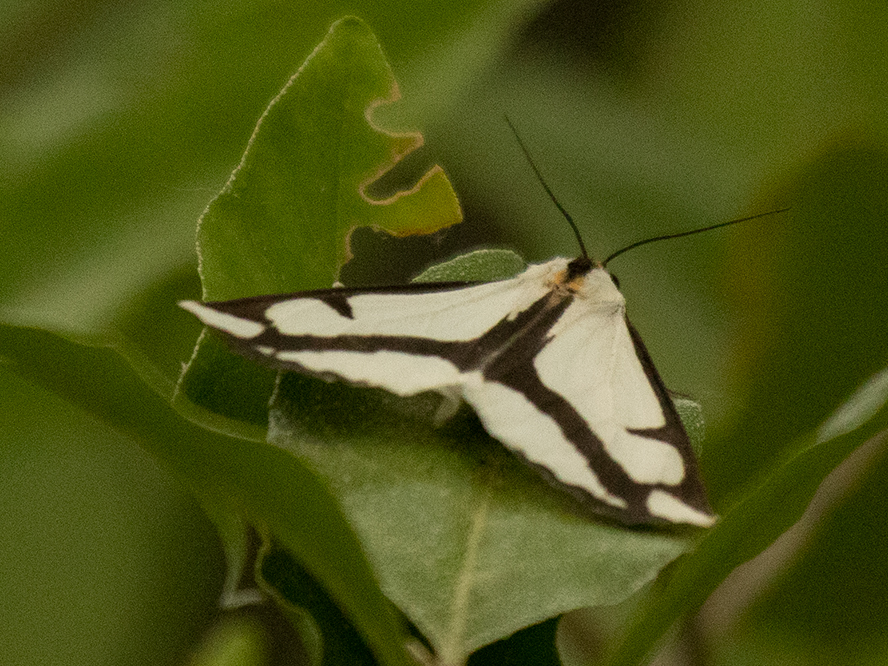
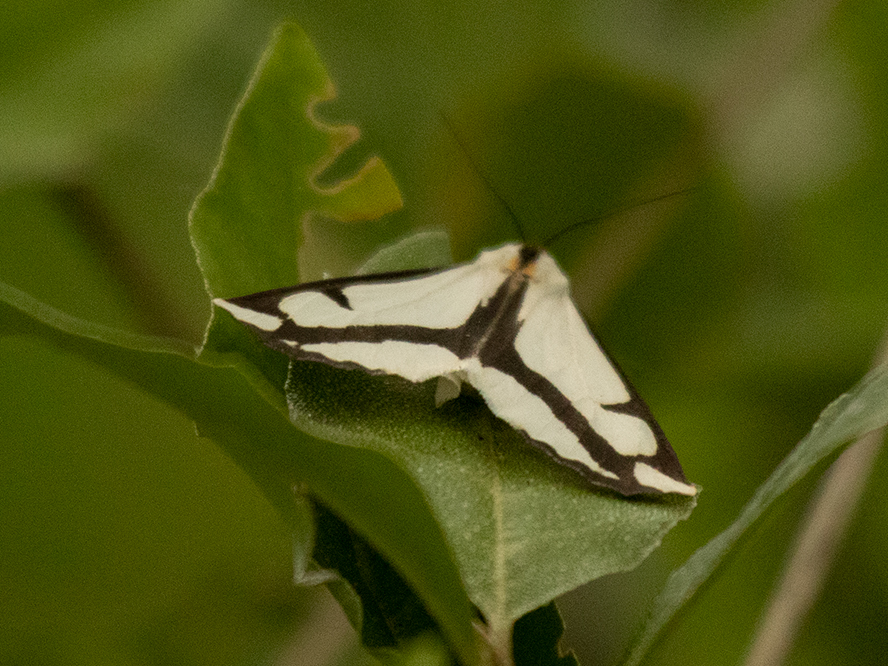
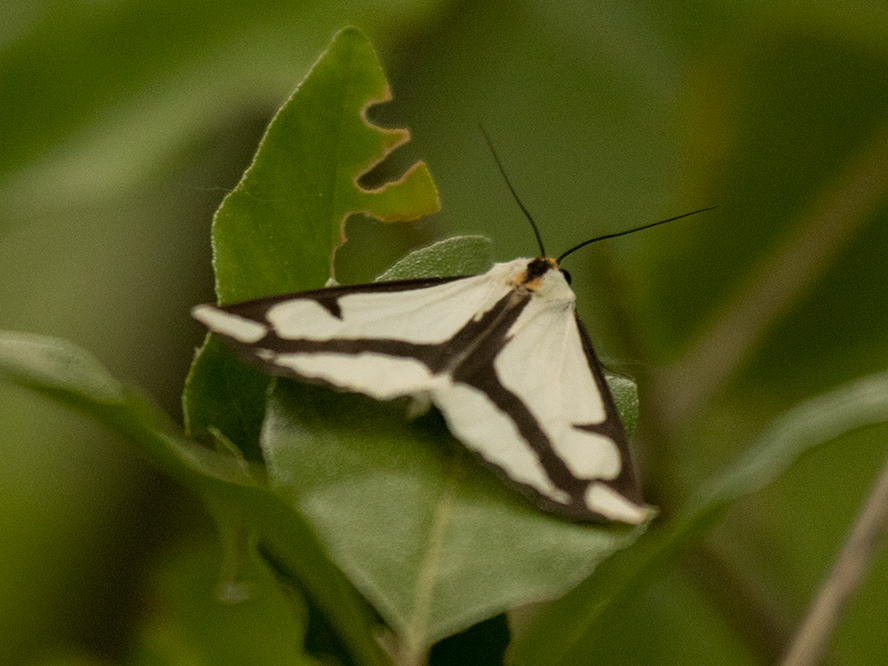
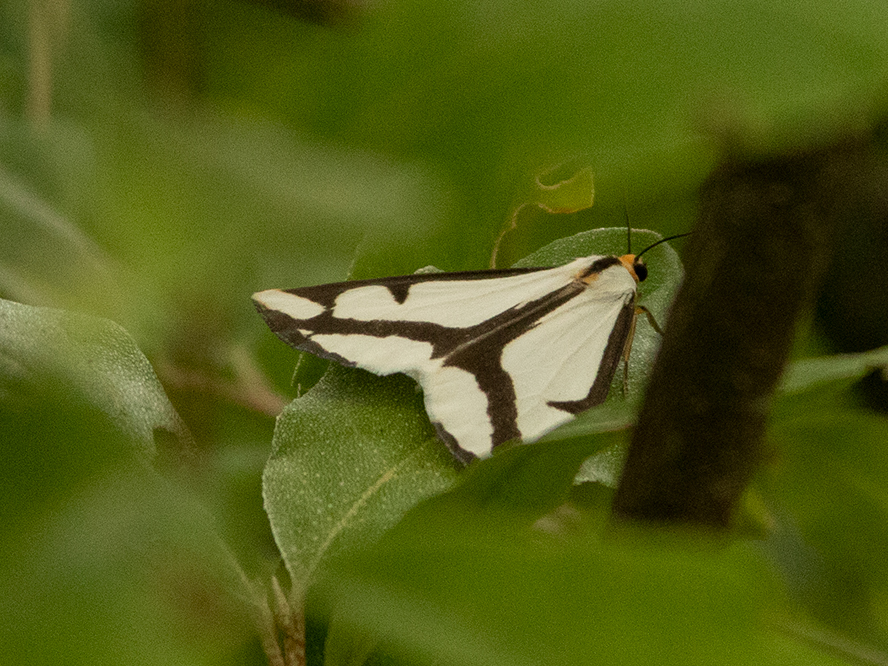
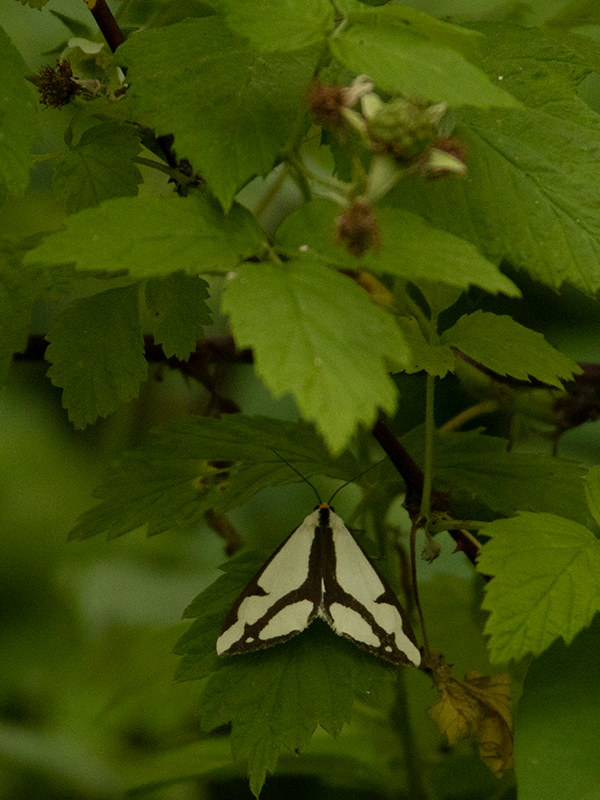
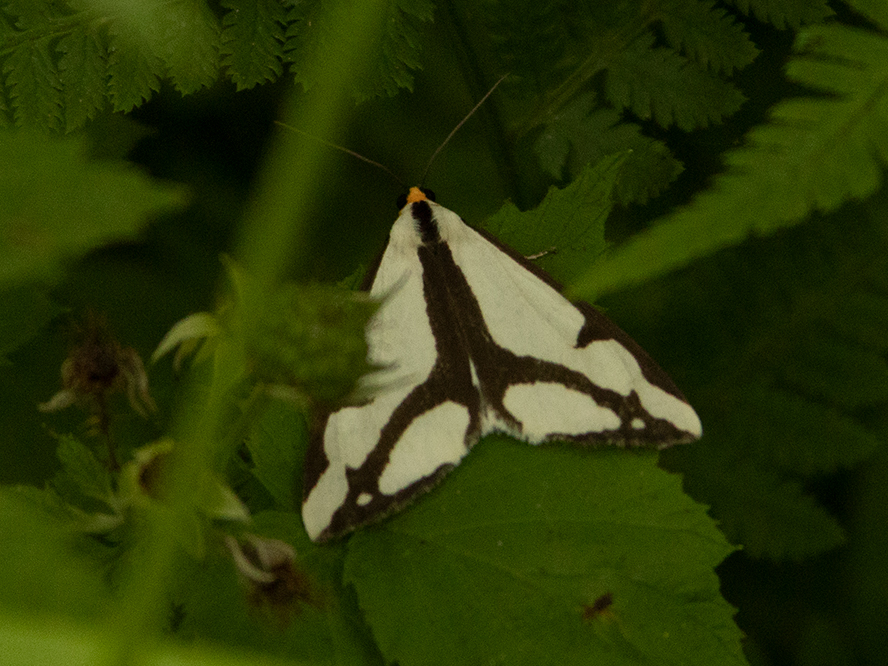
Dauner-Martin Preserve, June 23, 2013

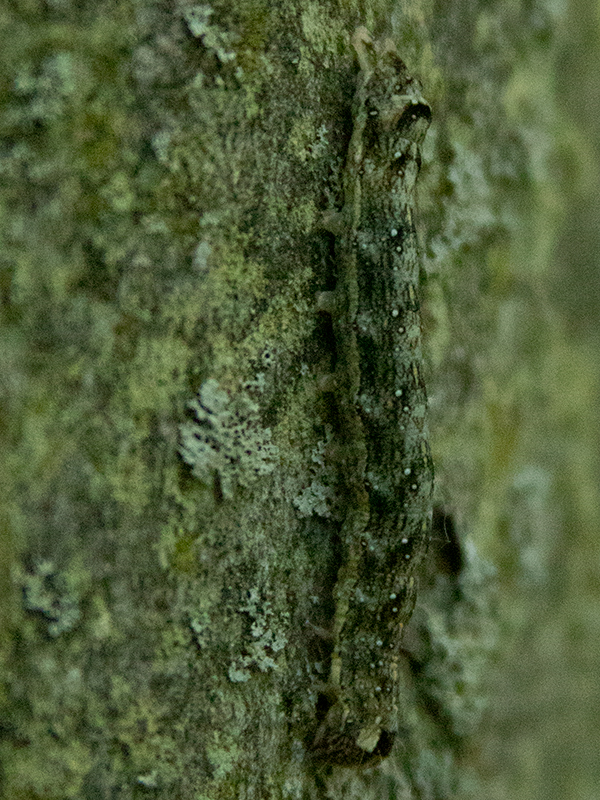
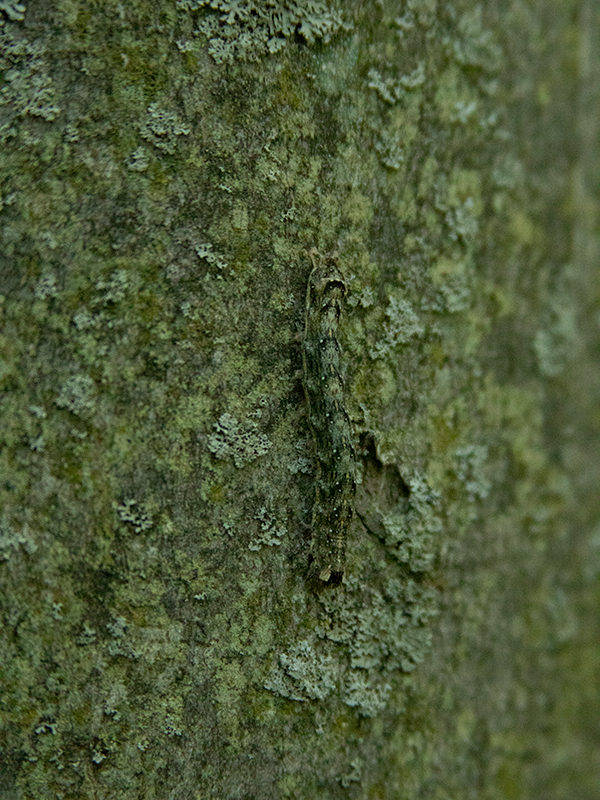
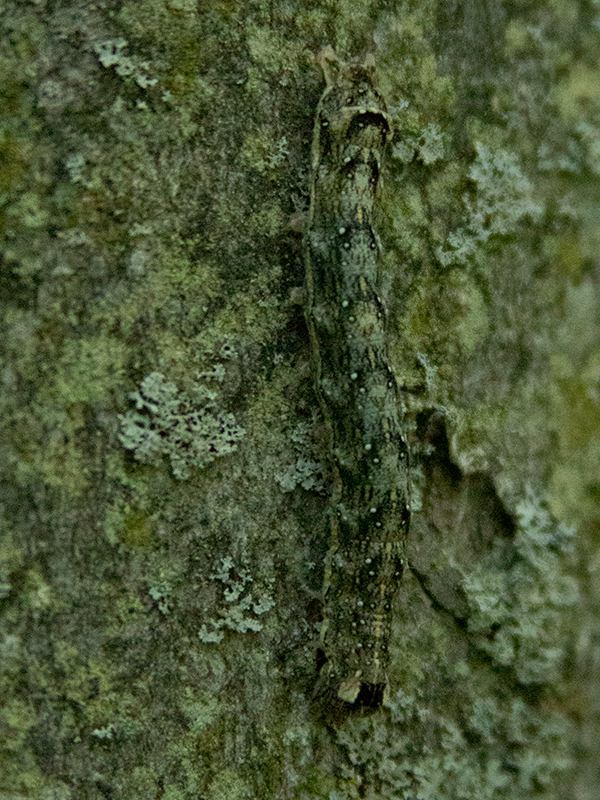
Unidentified caterpillar
Waterloo State Park, June 13, 2020
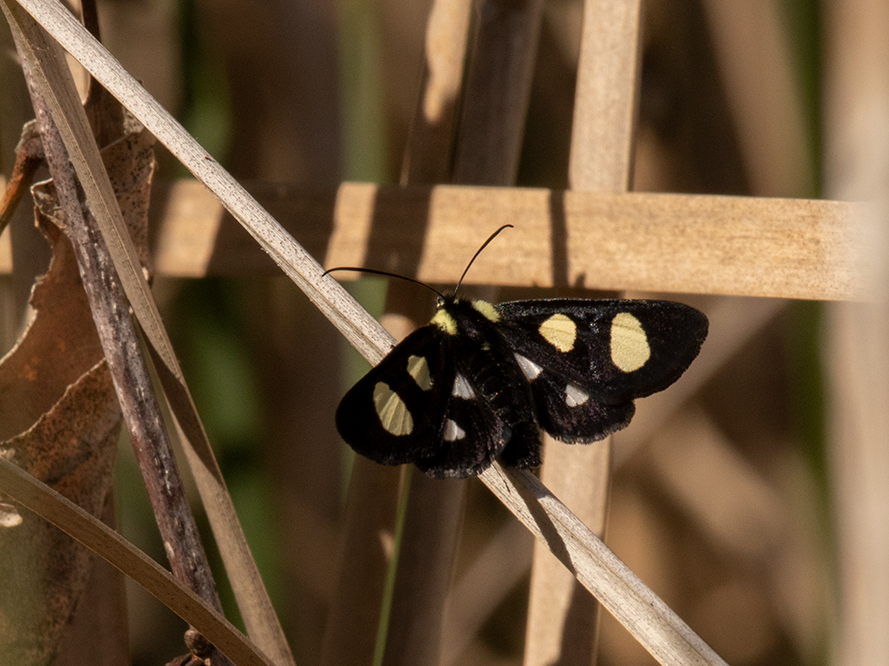
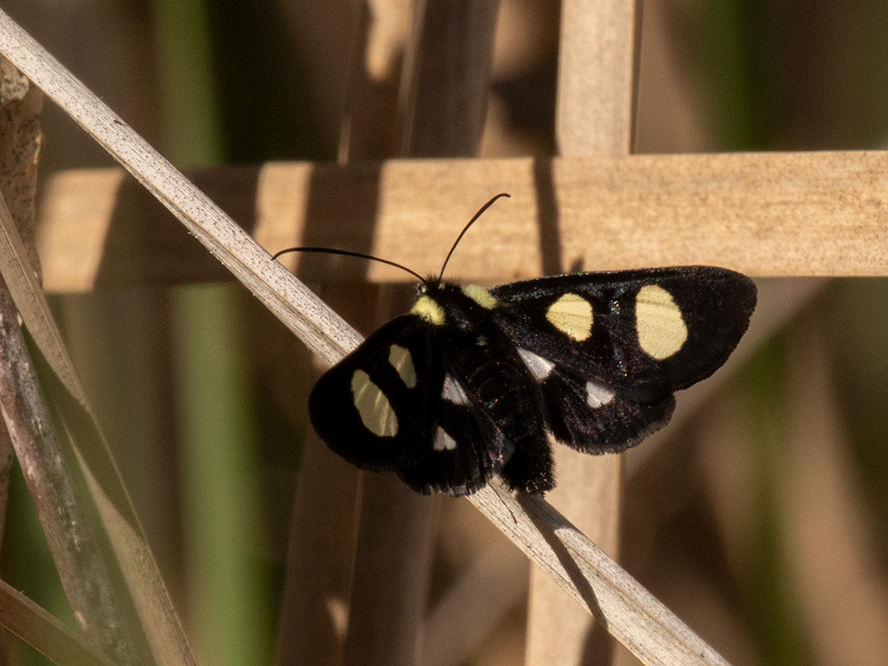
Eight spotted Forester moth, Alypia octomaculata
Highland State Park, May 31, 2020
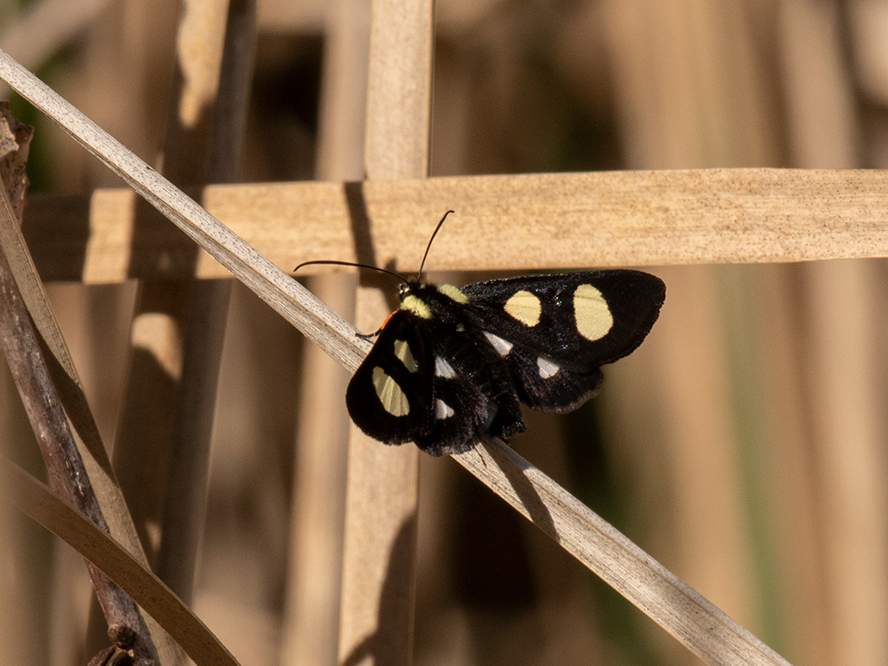
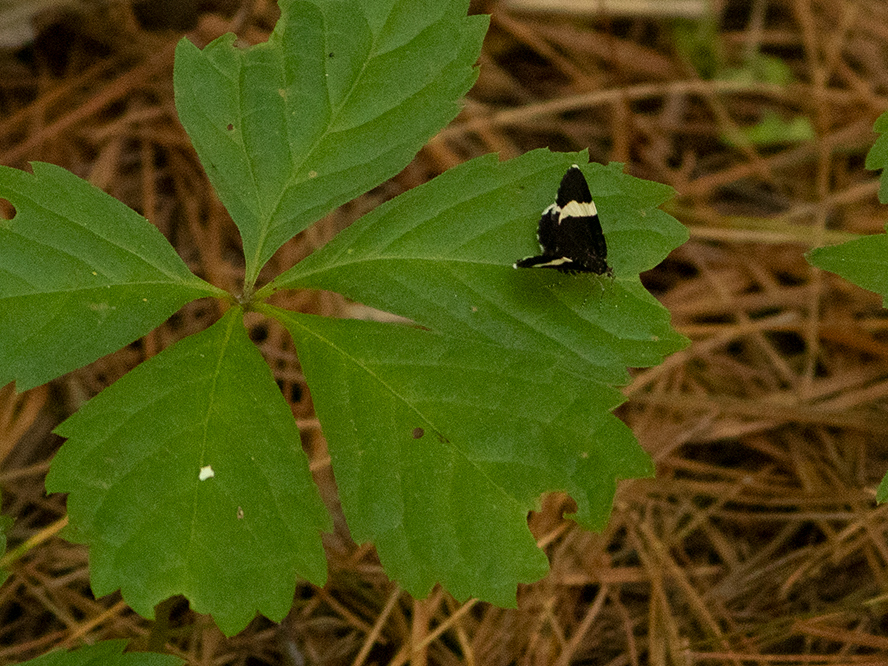
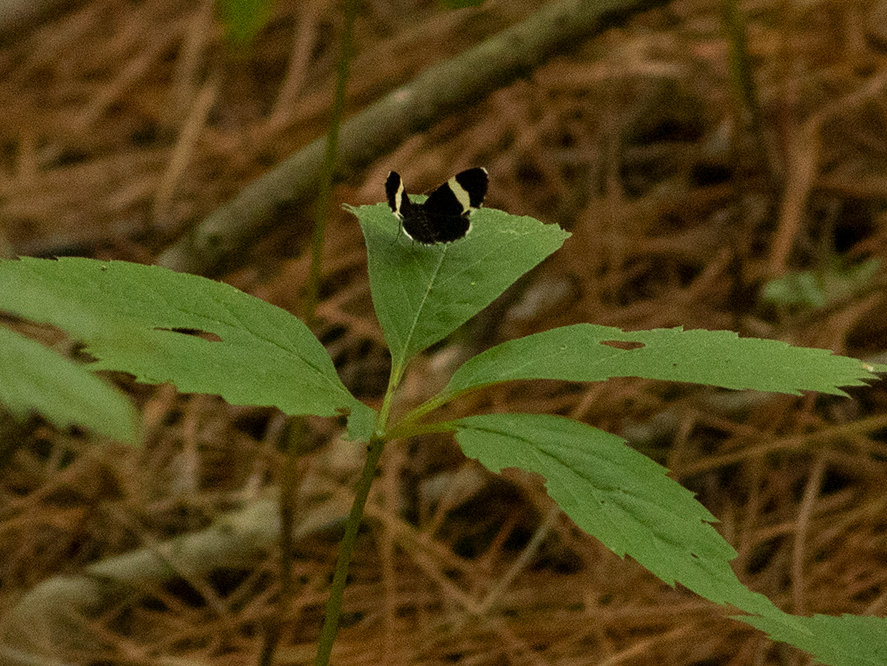
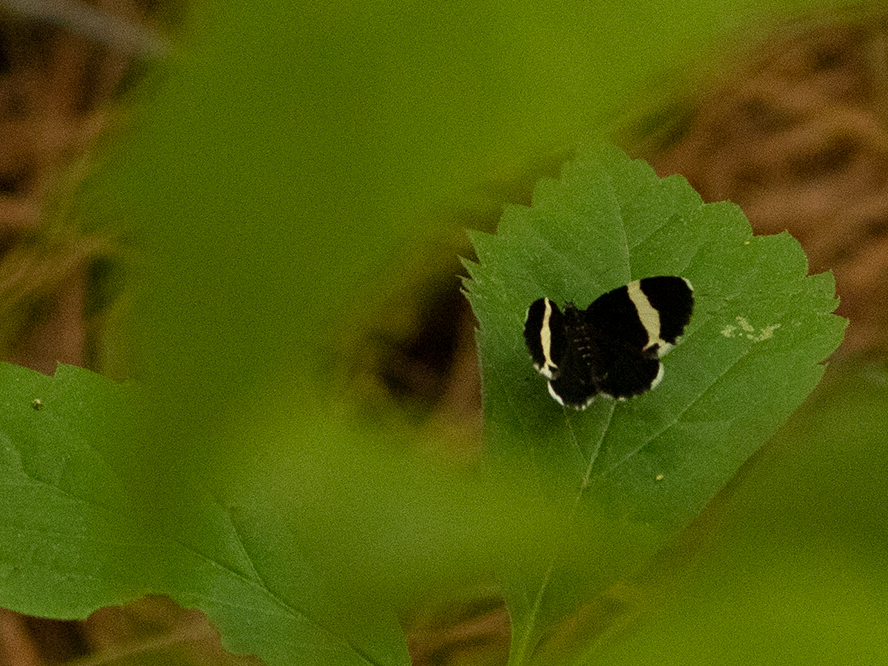
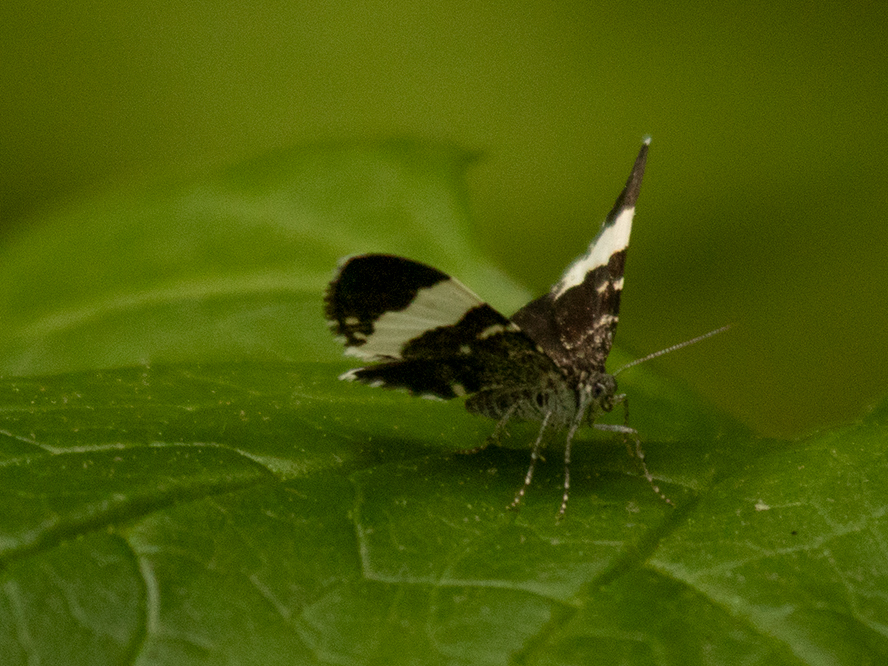
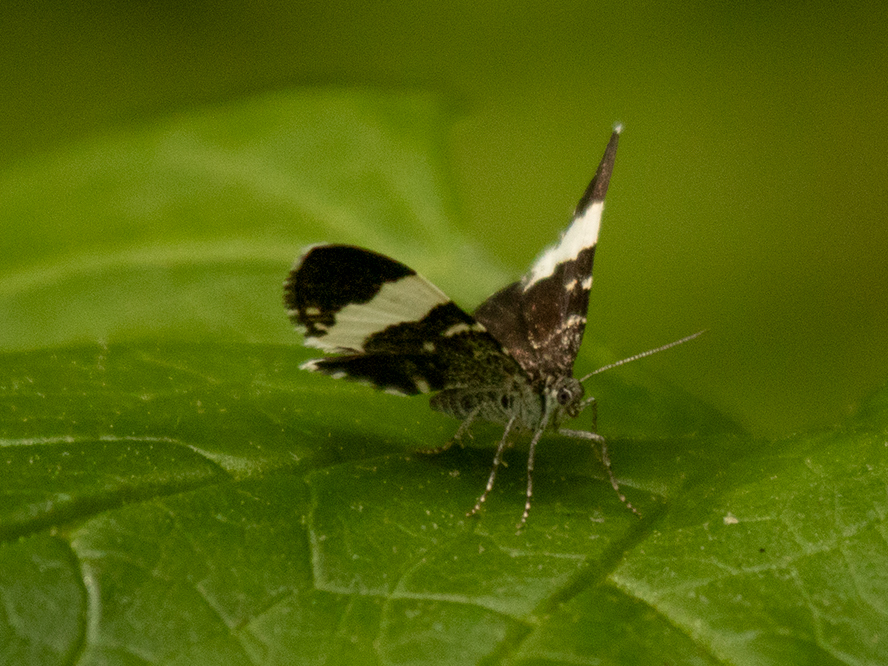
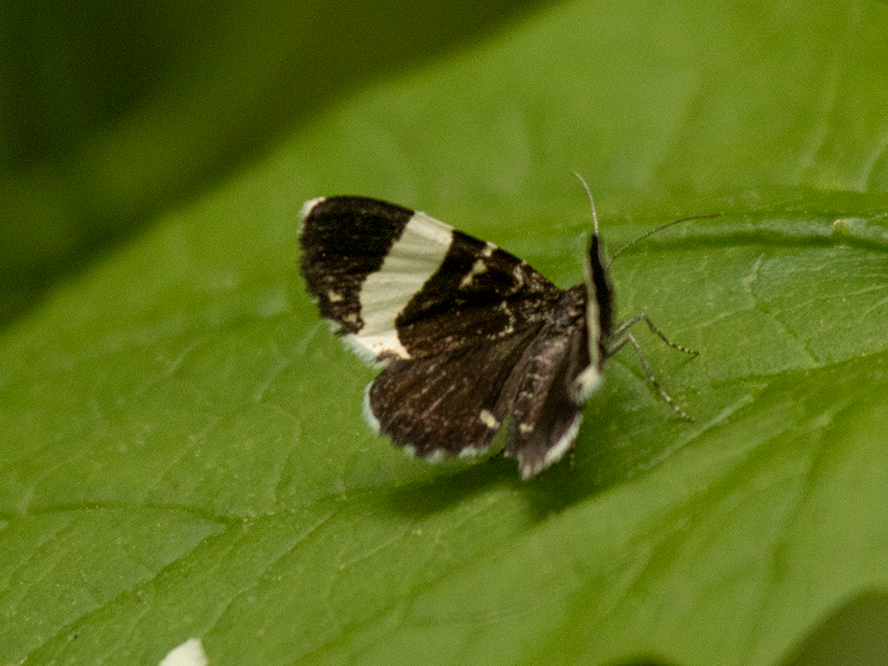
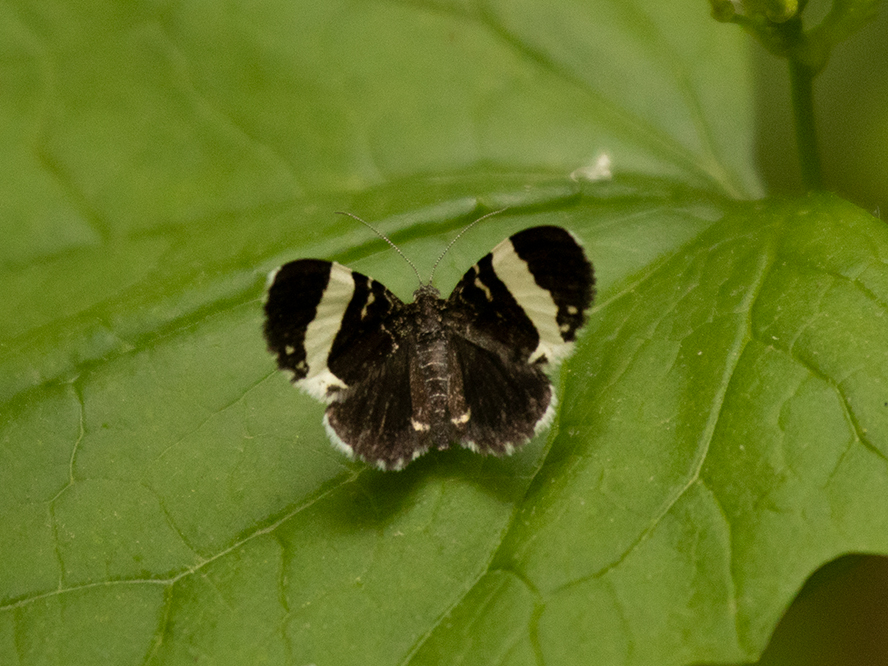
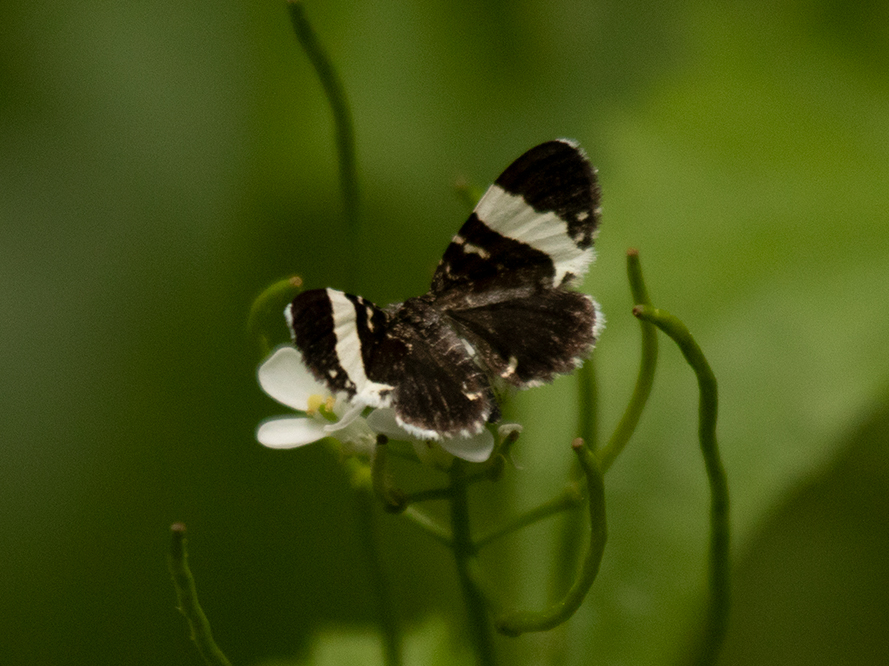
White-striped black moth, Trichodezia albovittata
Stinchfield Woods, May 30, 2020
There were at least 6 of these seen today.
Unidentified moth
Highland Oaks County Park, May 16, 2020
About 1" long.
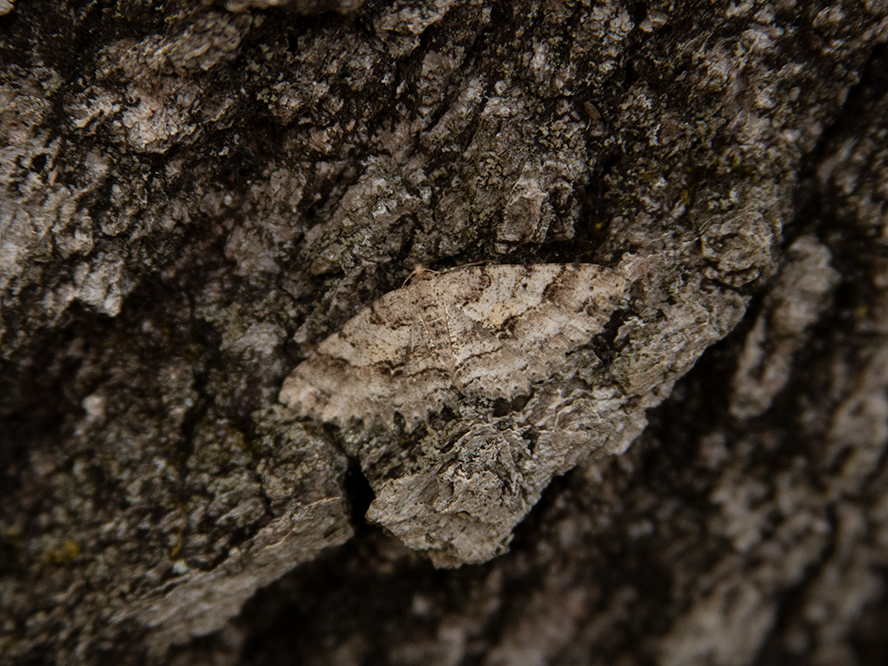
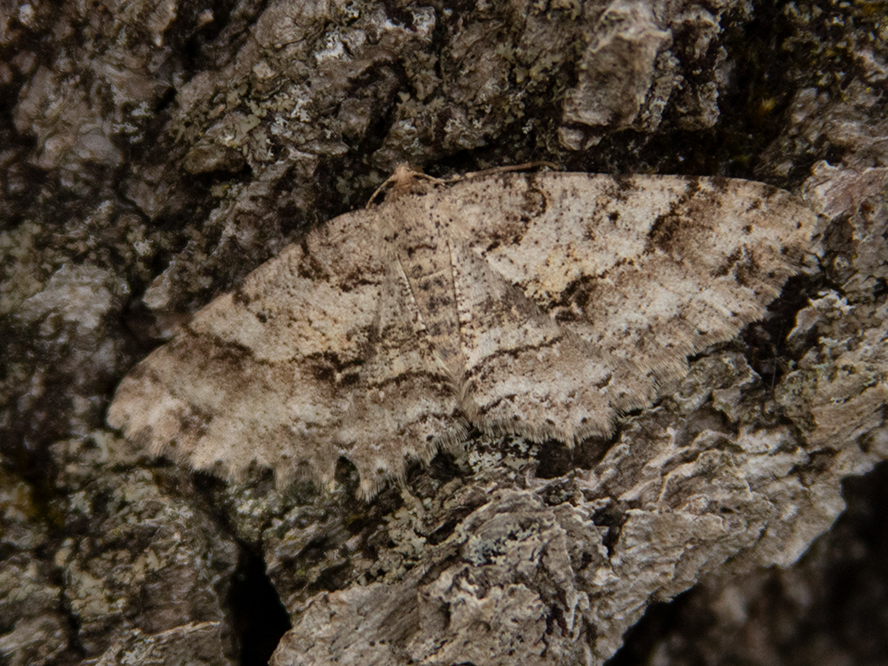
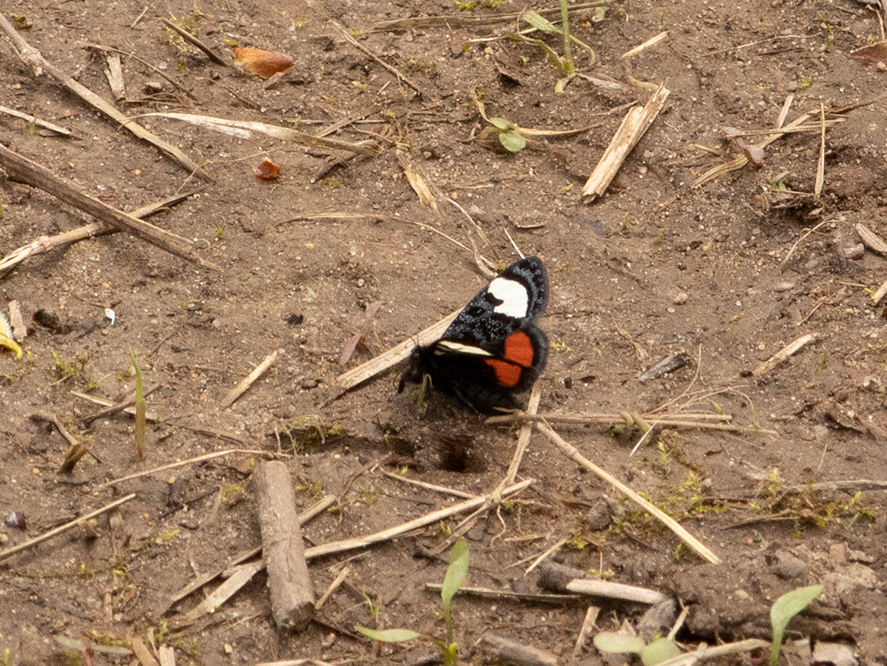
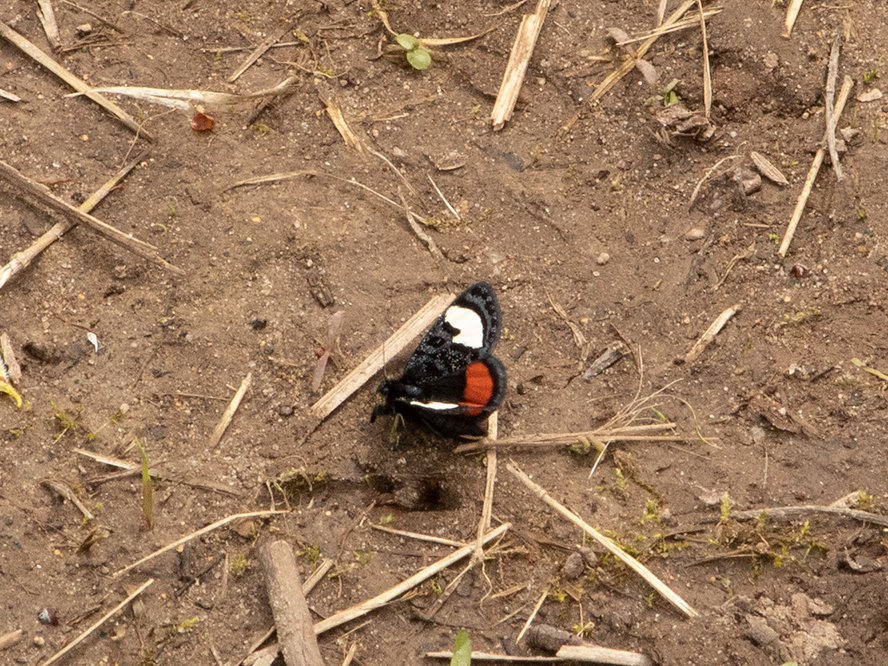
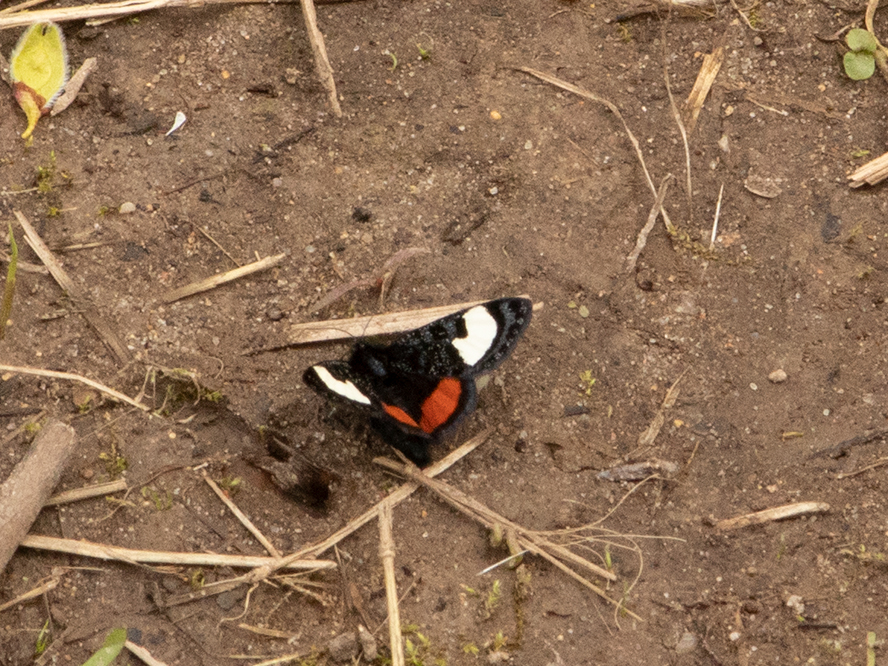
Grapevine Epimenis, Psychomorpha epimenis
Waterloo State Park, Sackrider Hill area, May 2, 2020
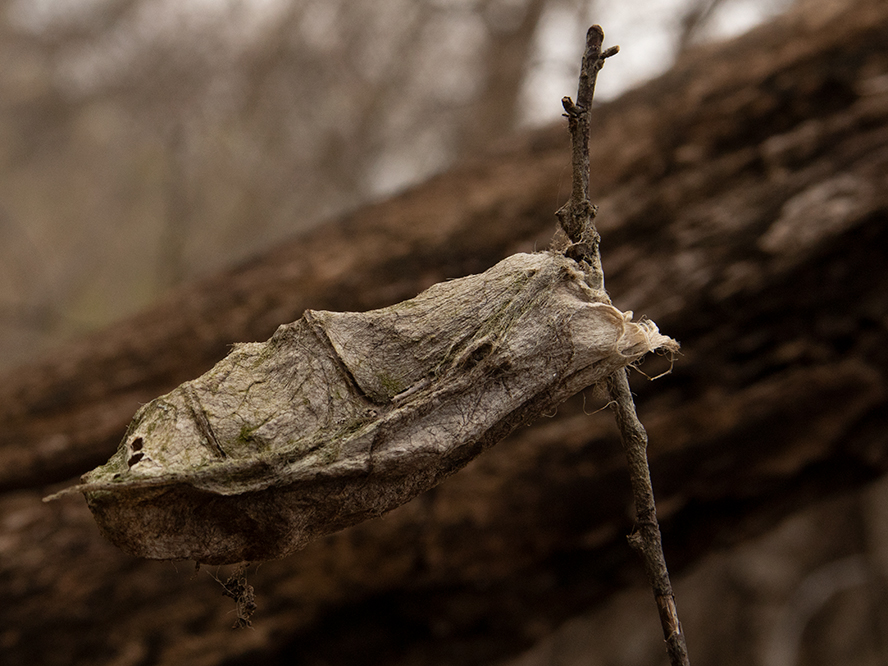
Parasitized Cecropia Moth Cocoon
Dauner-Martin Nature Preserve, April 25, 2020
There are small holes in the end of this cocoon from the exit of the wasps that parasitized the moth pupa. The dead pupa remains were rattling around inside.
Unidentified moth
Waterloo State Park, April 5, 2020
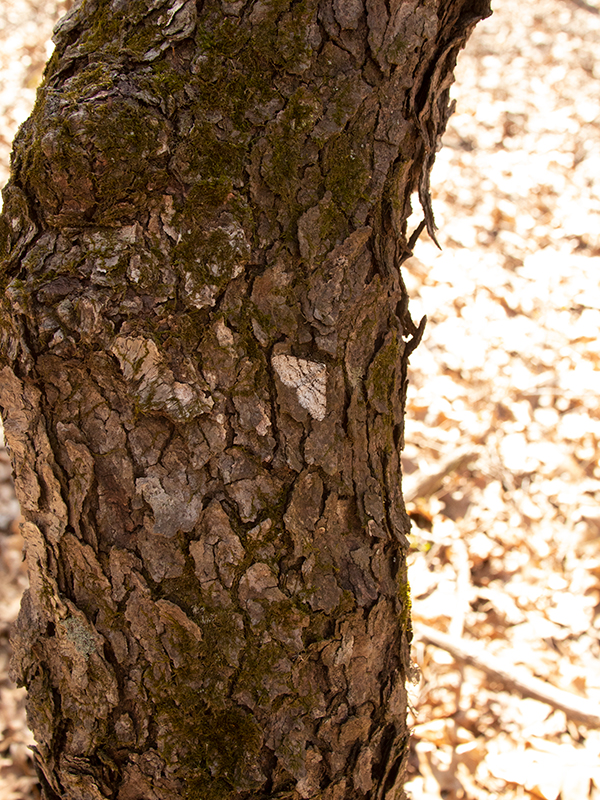
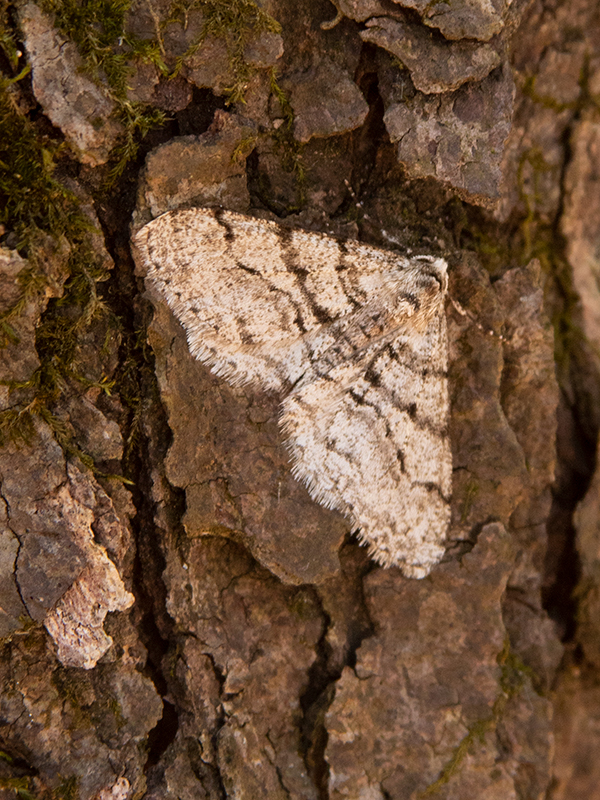
Unidentified moth
Leonard Preserve, October 12, 2019
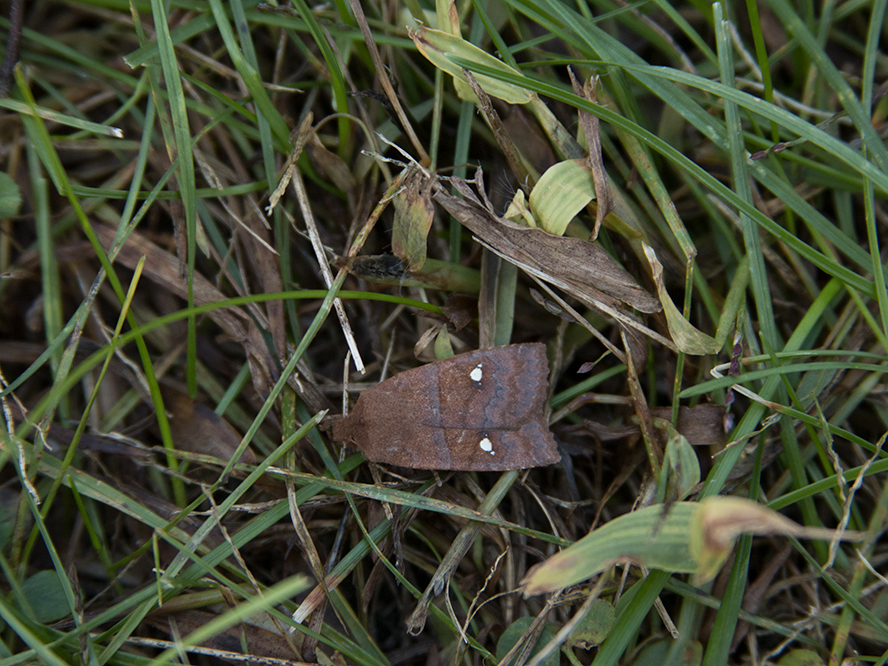
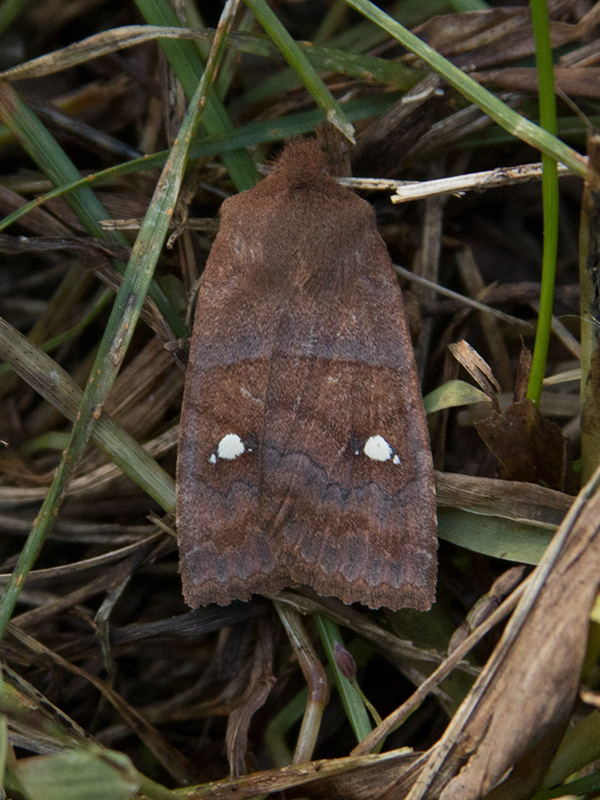
Unidentified caterpillar
Highland Oaks, October 5, 2019
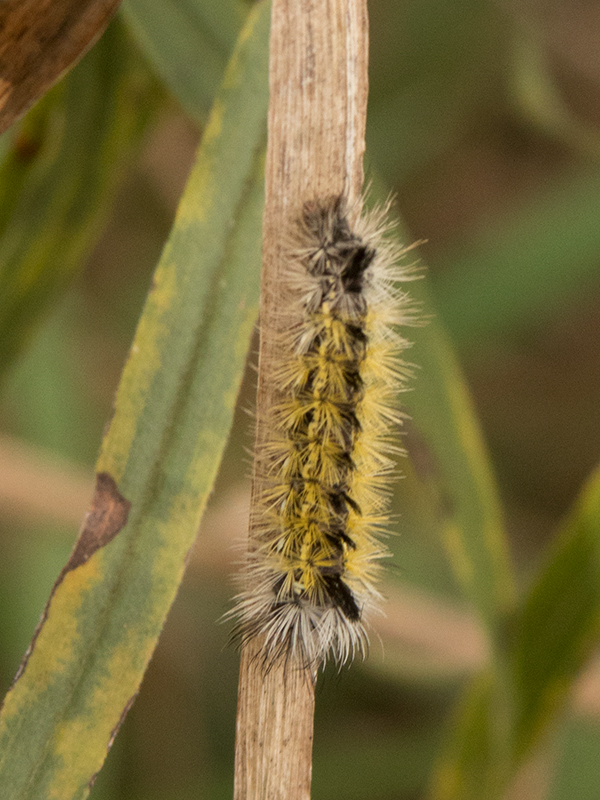
Unidentified caterpillar
Jack R. Smiley Preserve, September 28, 2019
On dogbane.
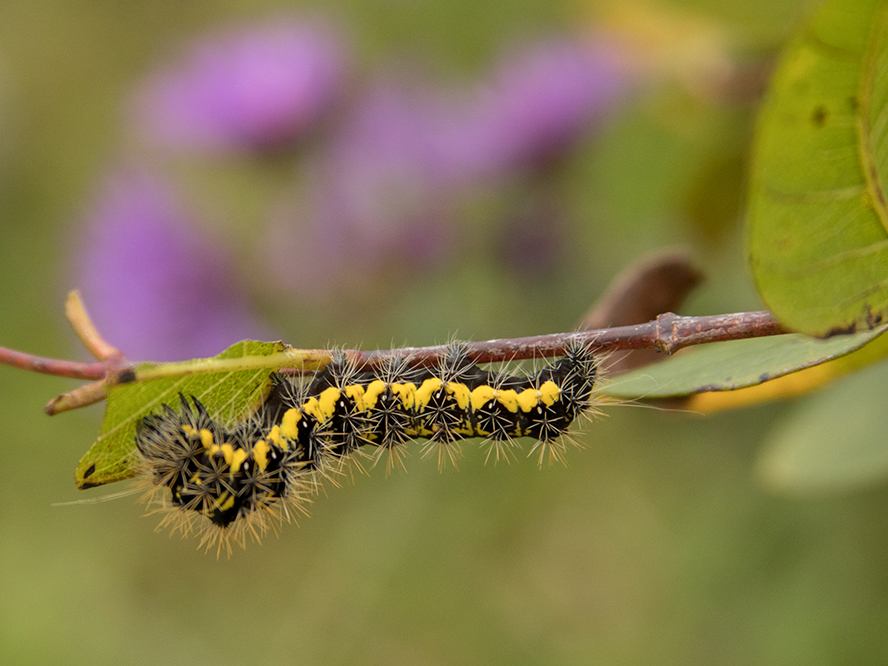
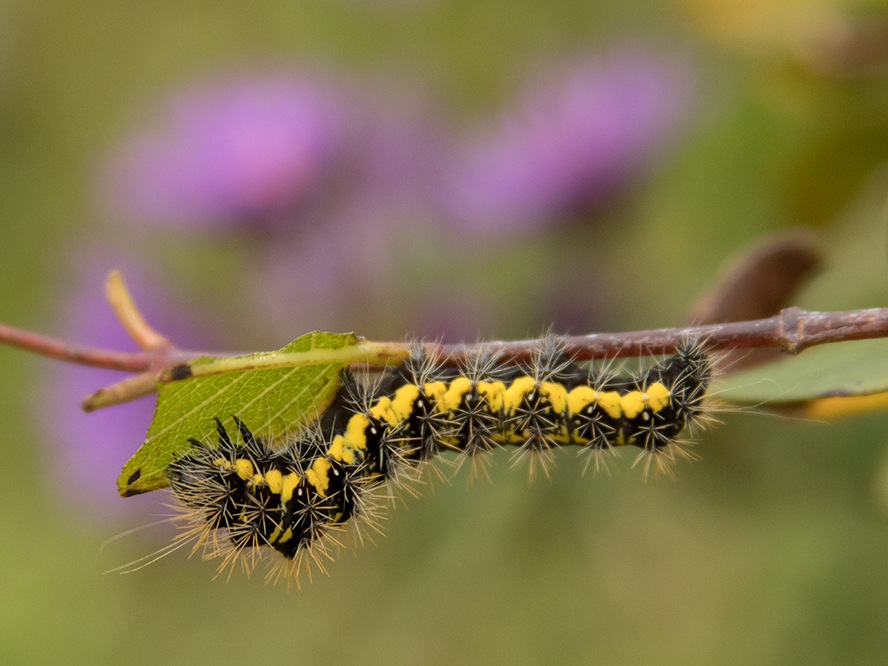
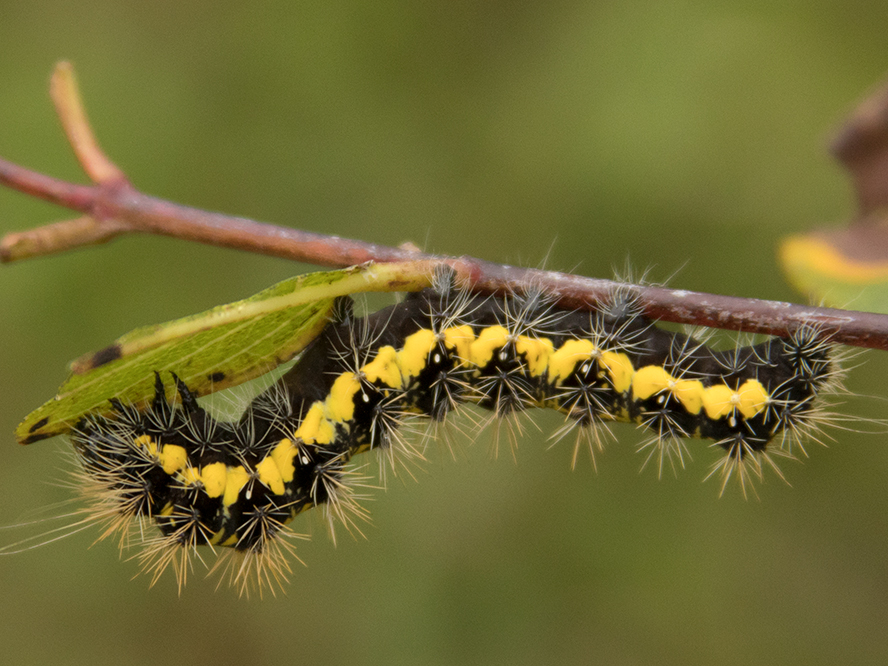
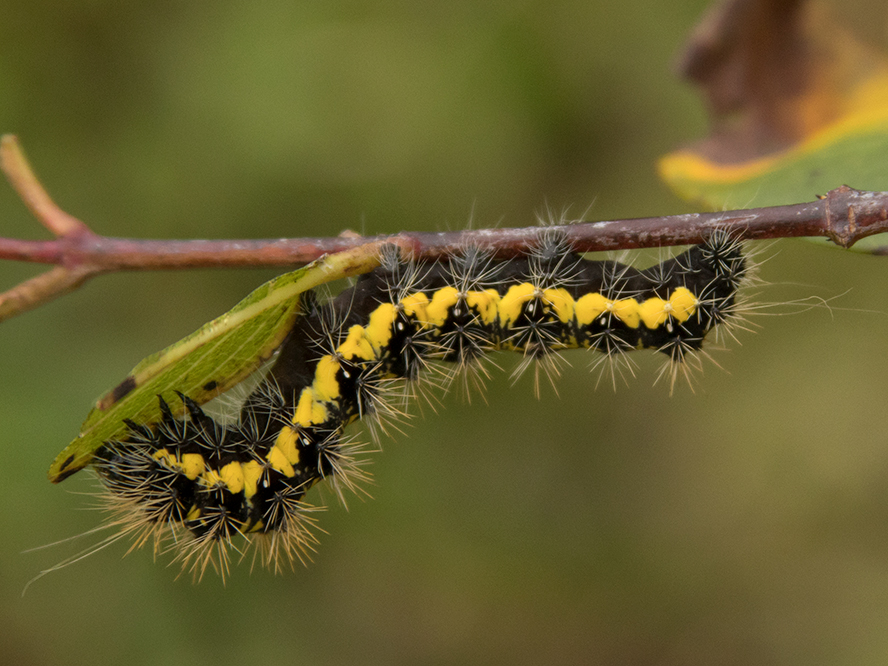
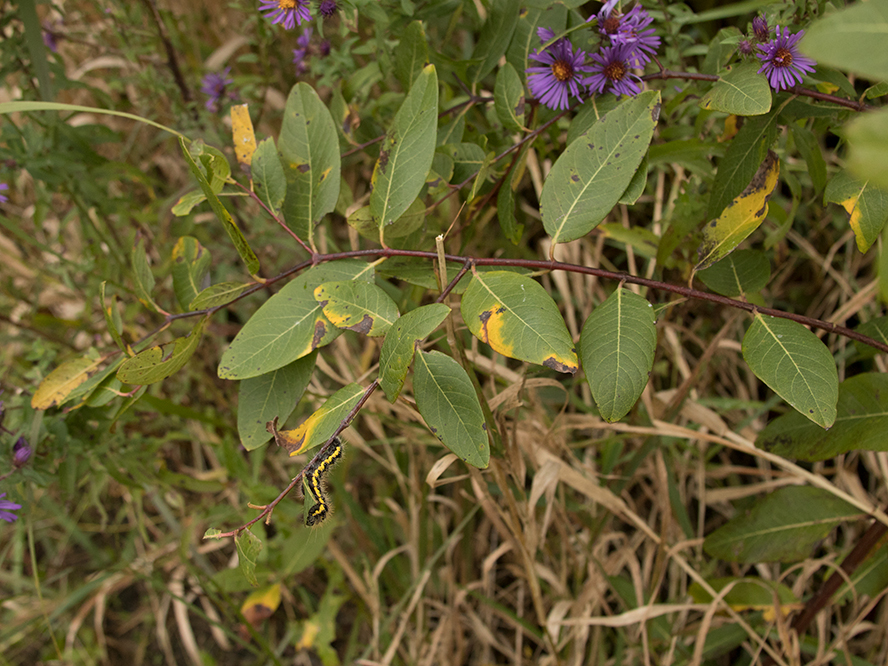
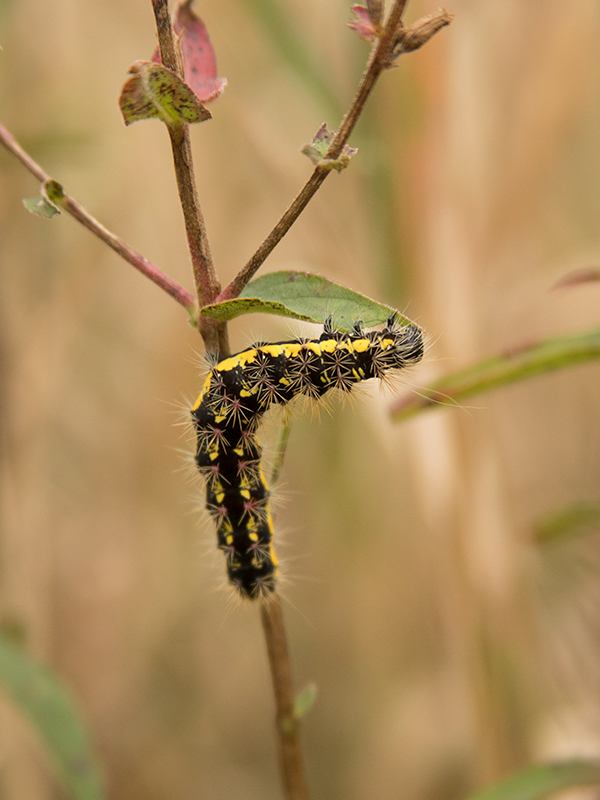
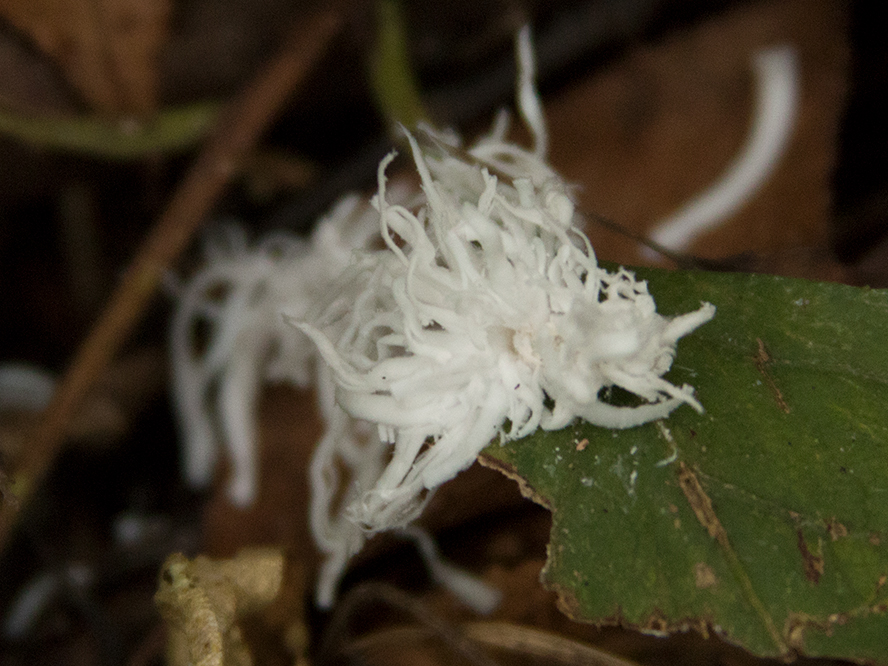
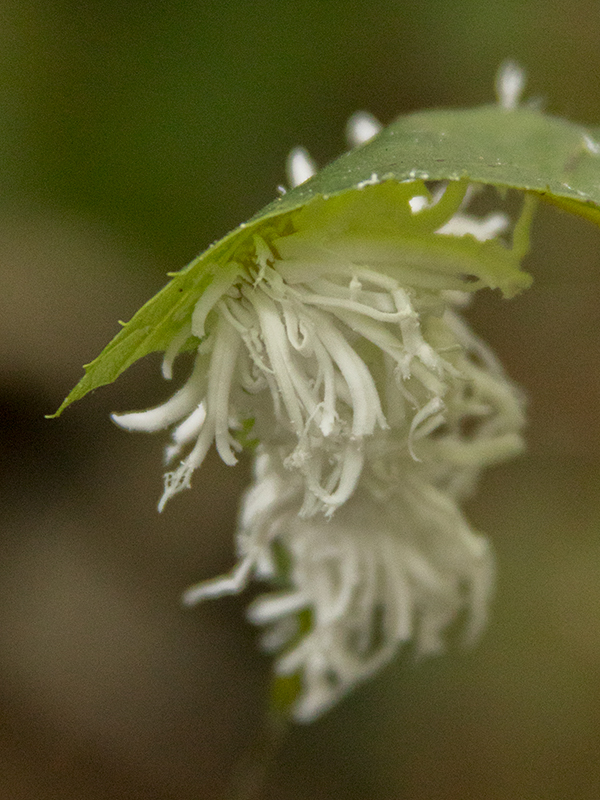
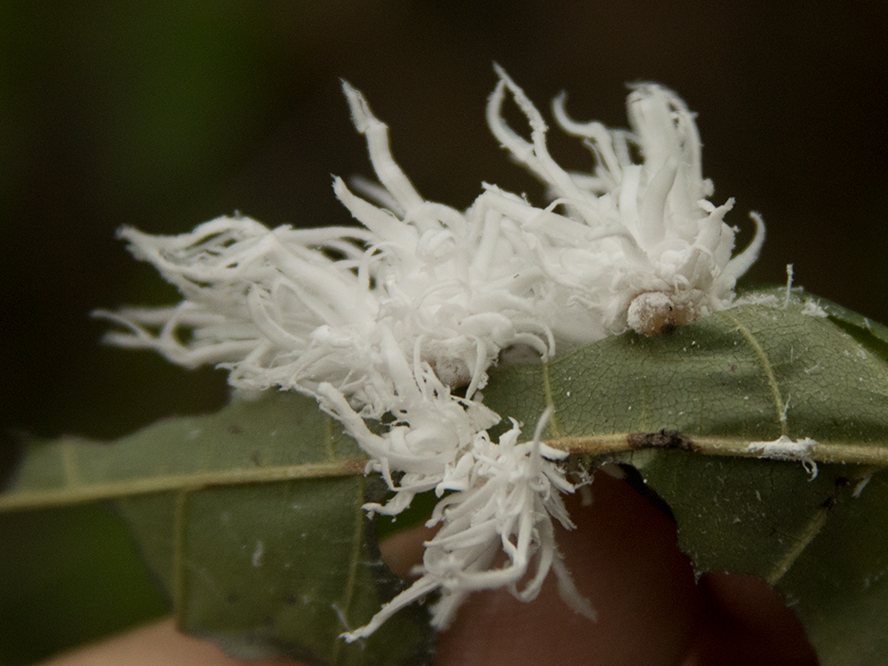
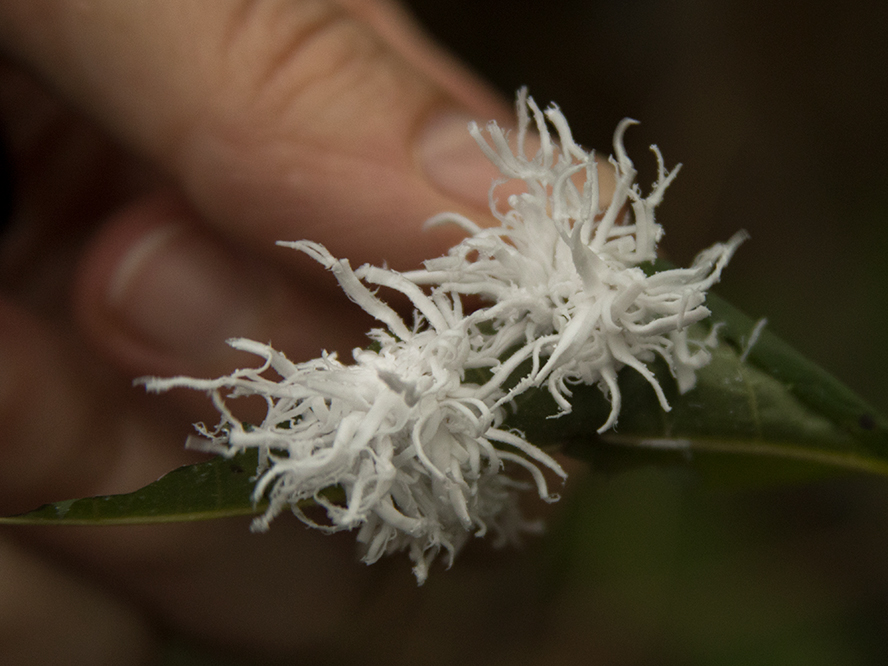
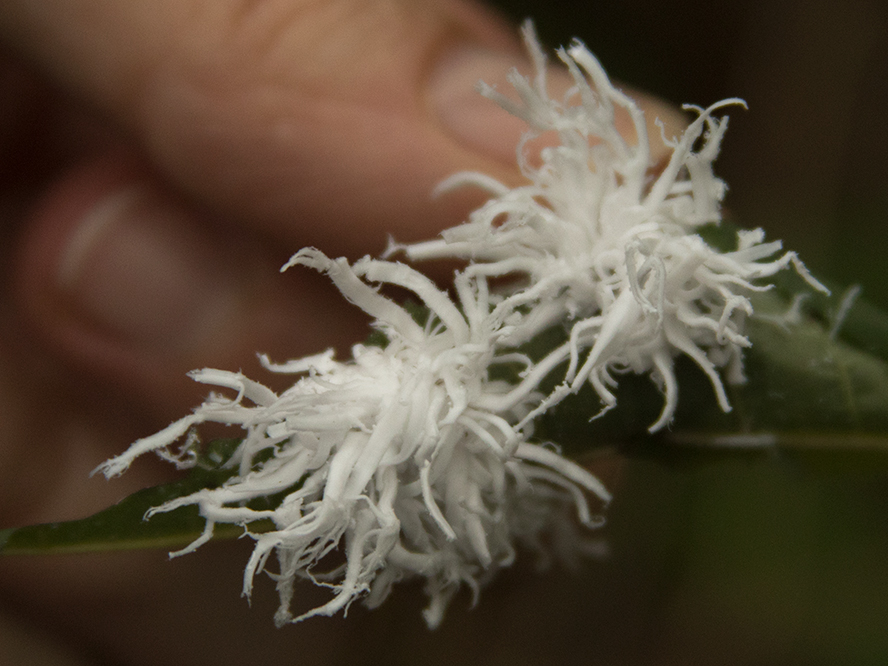
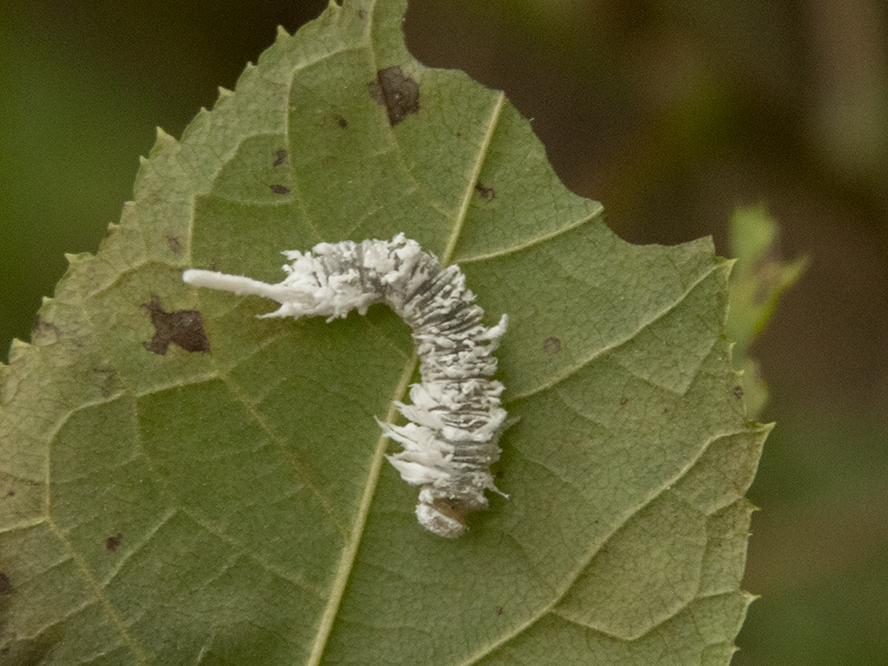
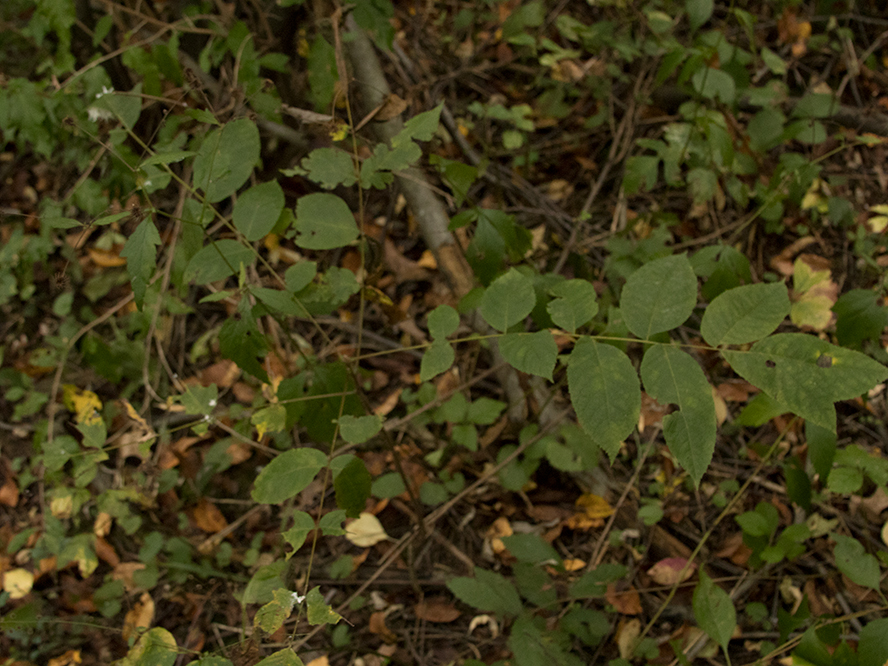
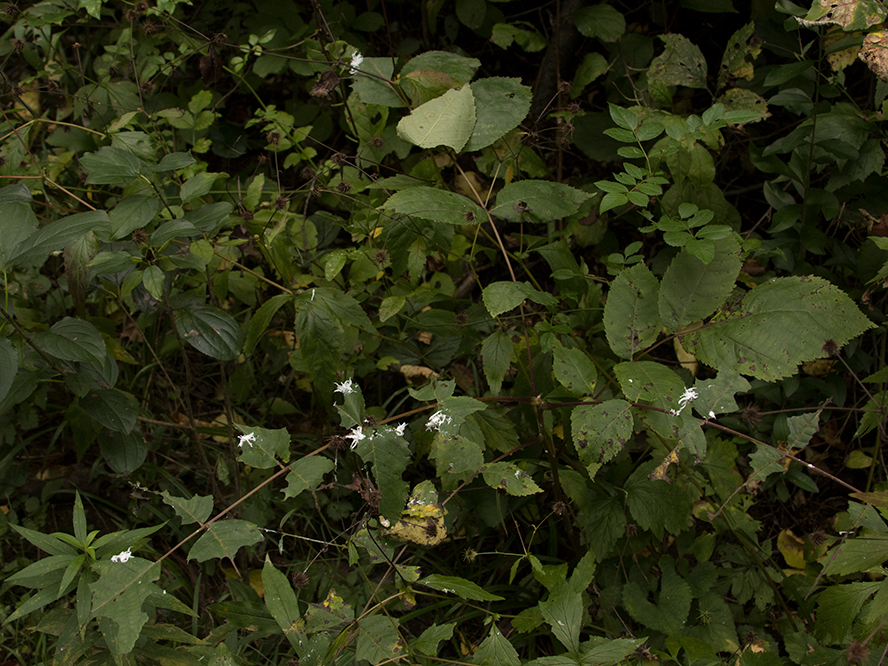
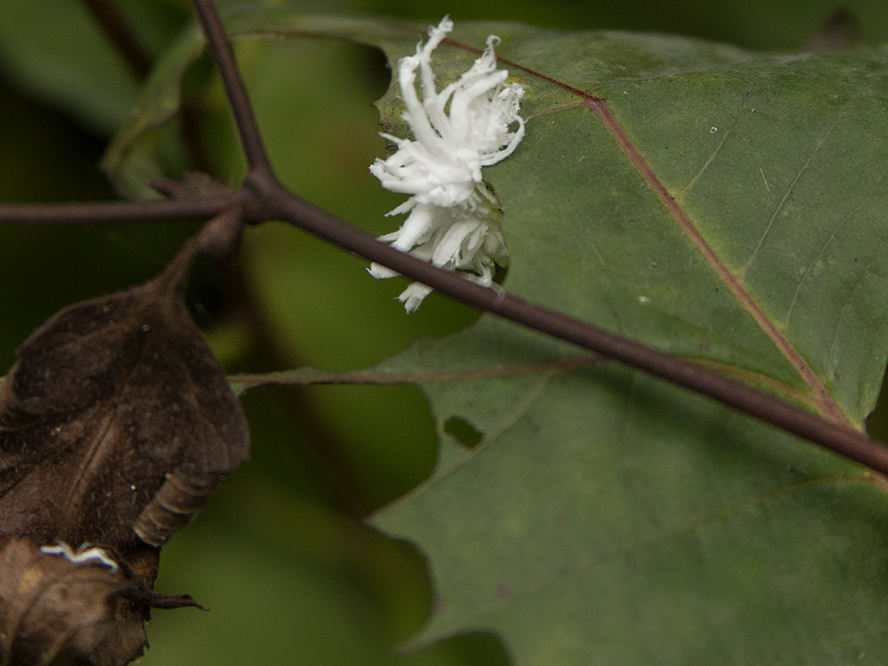
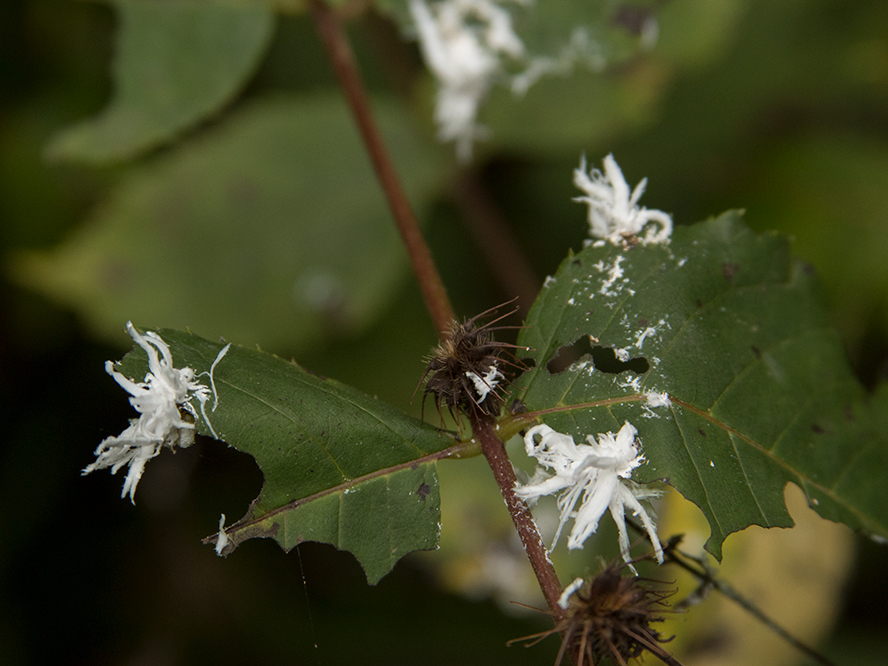
Unidentified "Woolly" caterpillars
Pinckney State Park (Losee Lake), September 22, 2019
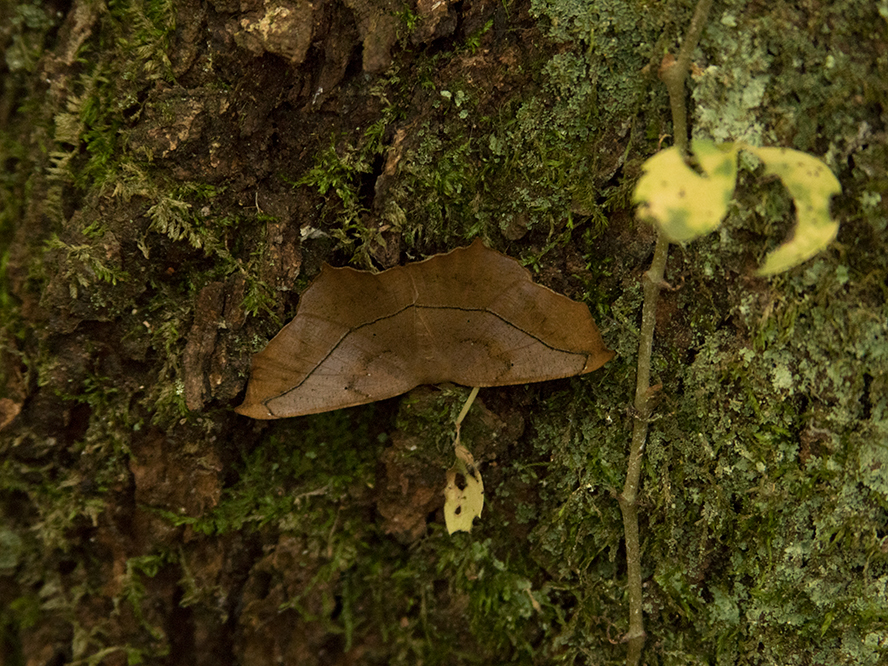
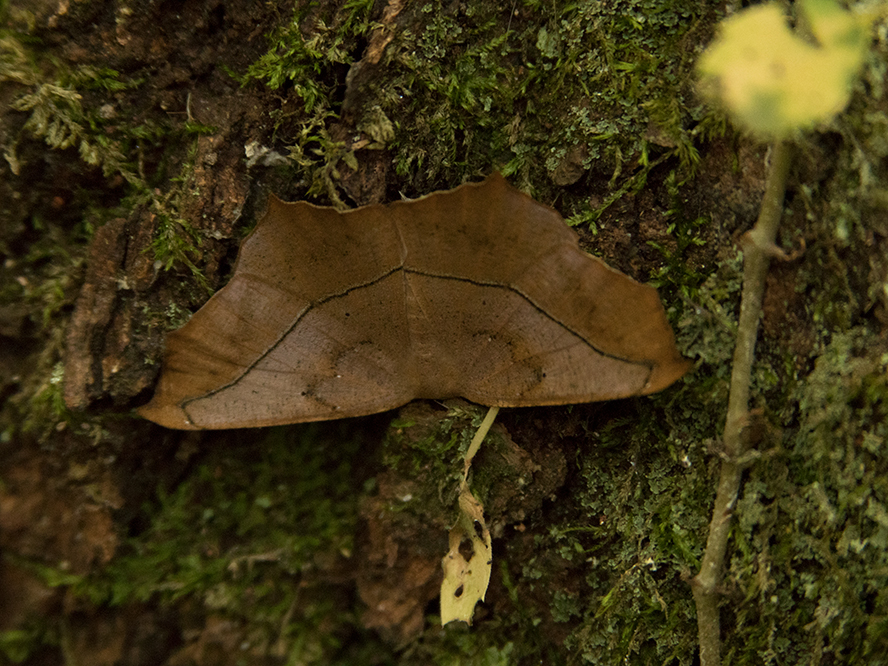
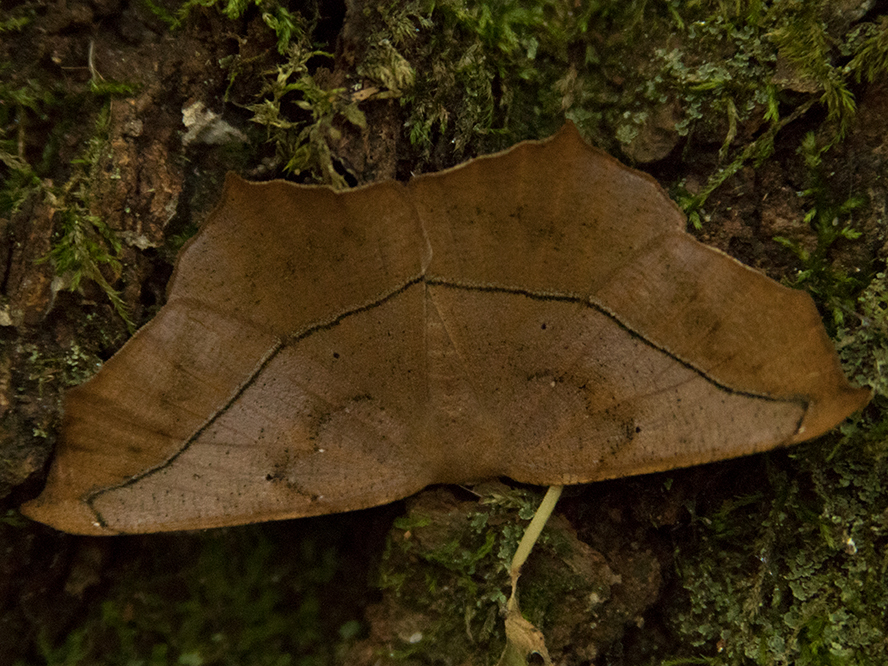
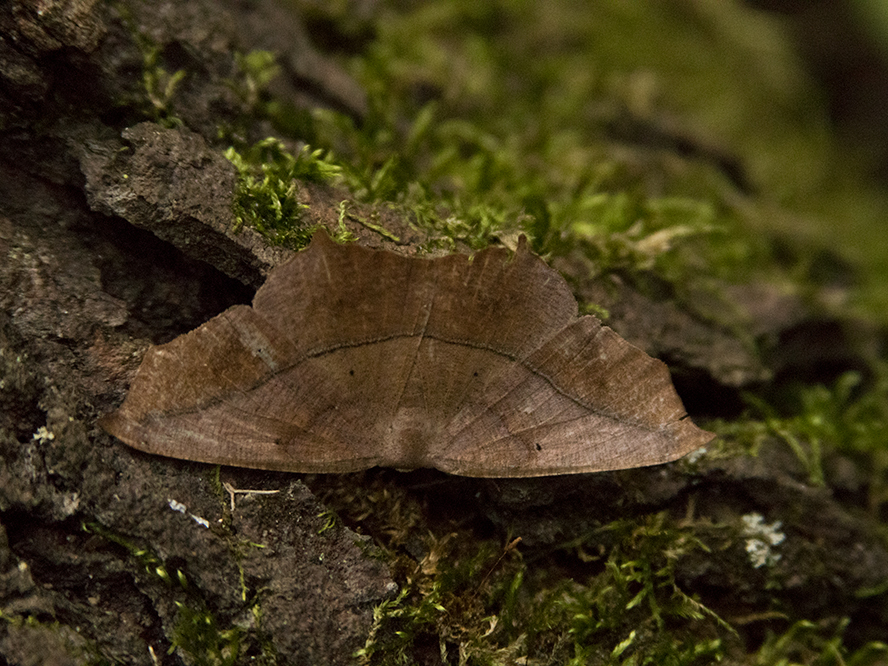
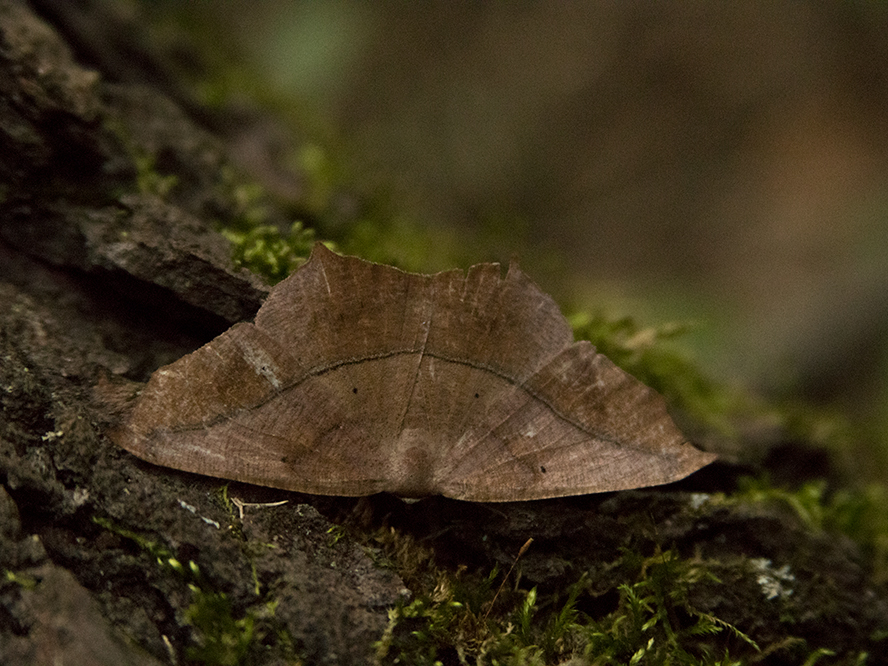
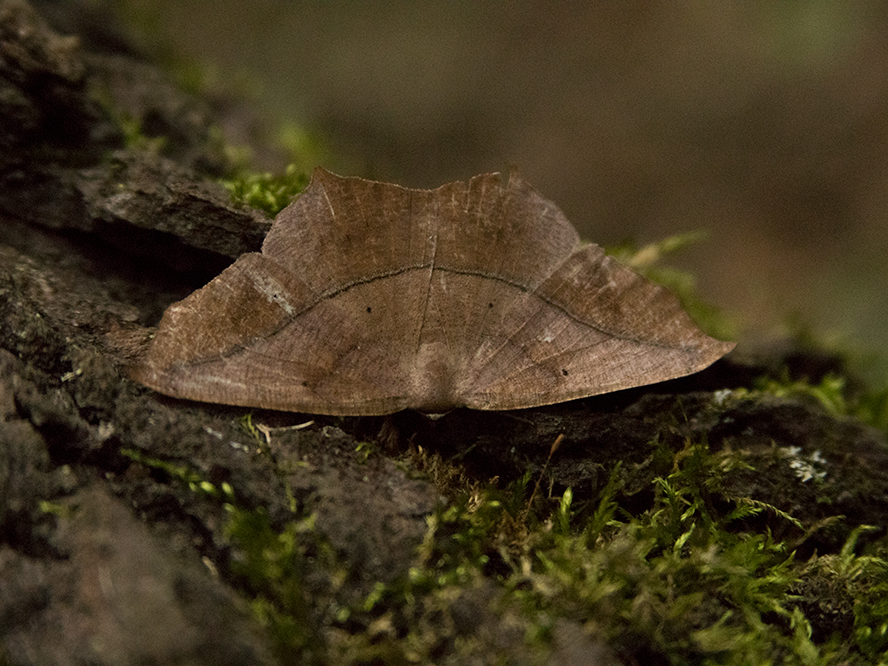
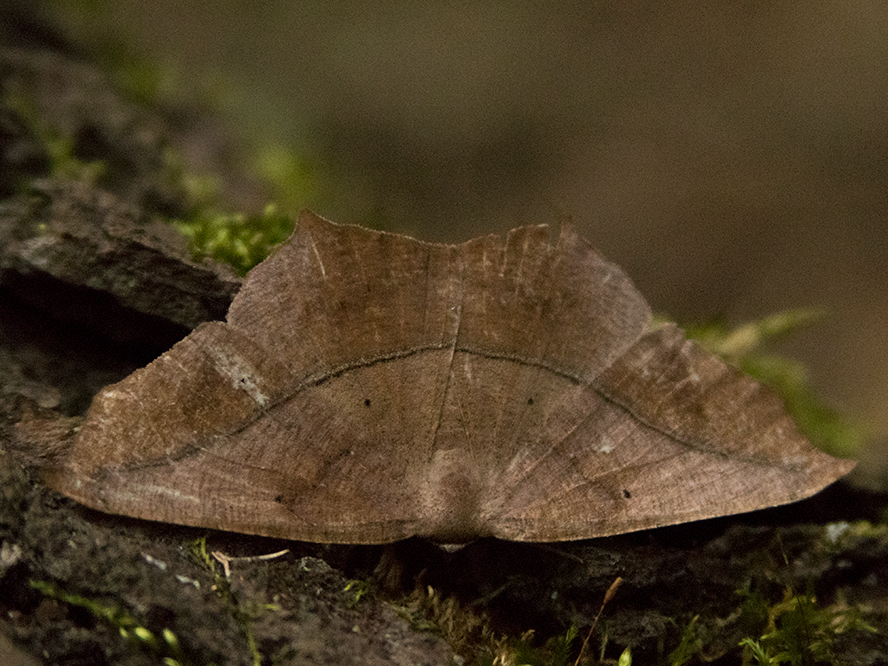
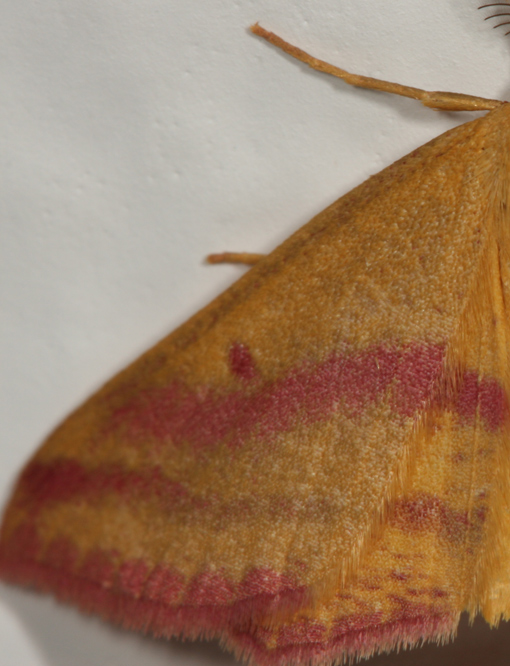
Maple Spanworm Moth, Prochoerodes lineola
Pinckney State Park (Losee Lake), September 22, 2019
Two different specimens.
Unidentified caterpillar
Crosswinds Marsh, September 15, 2019
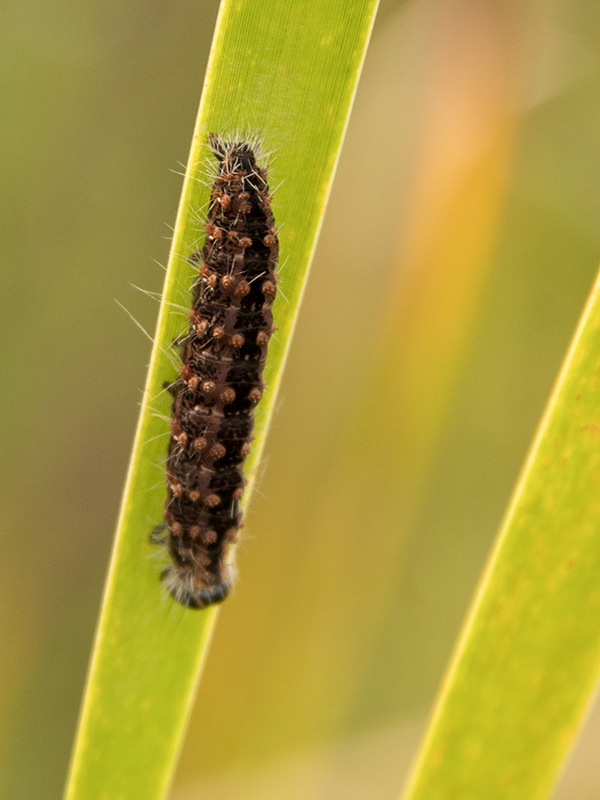
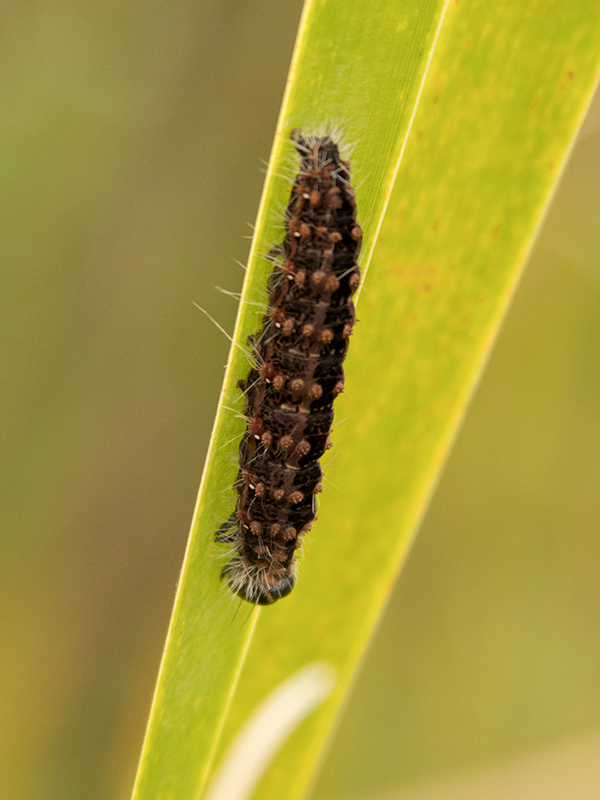
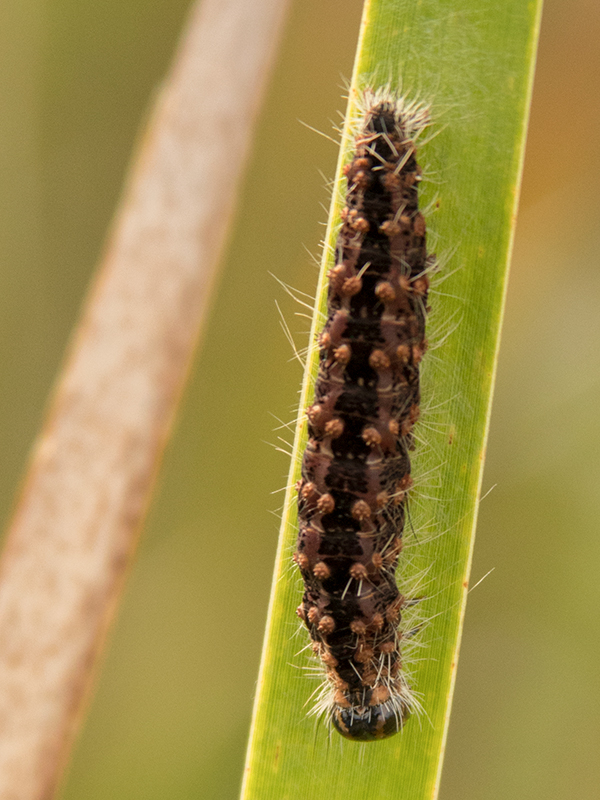
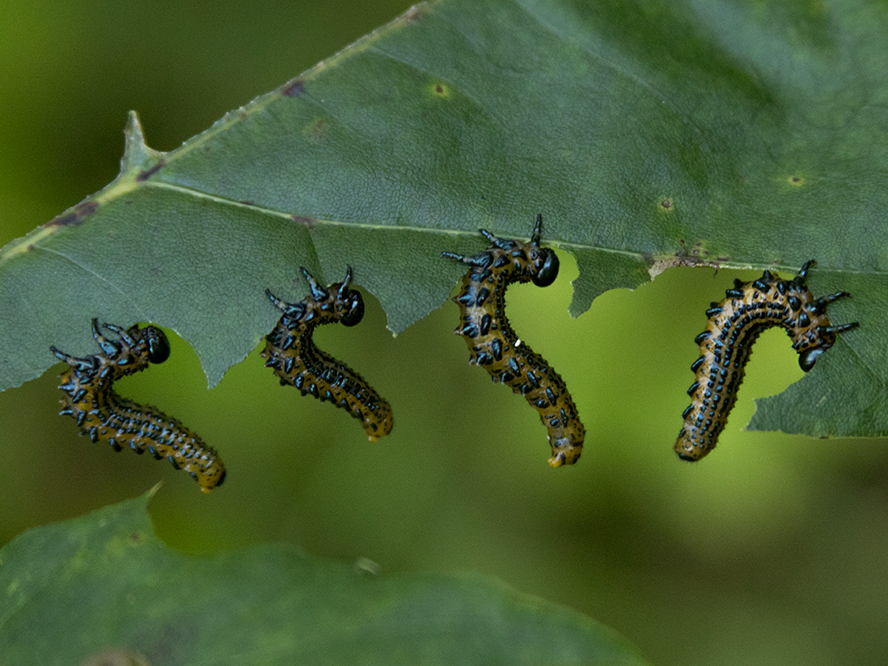
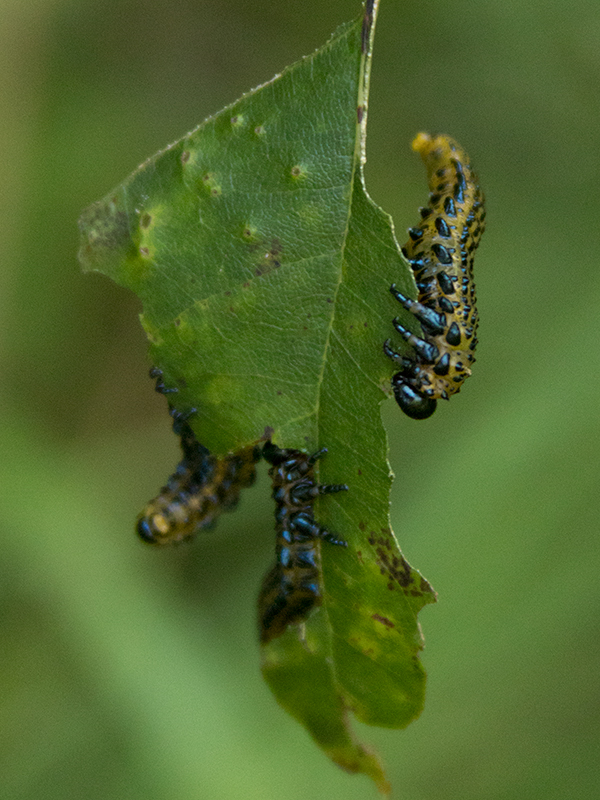
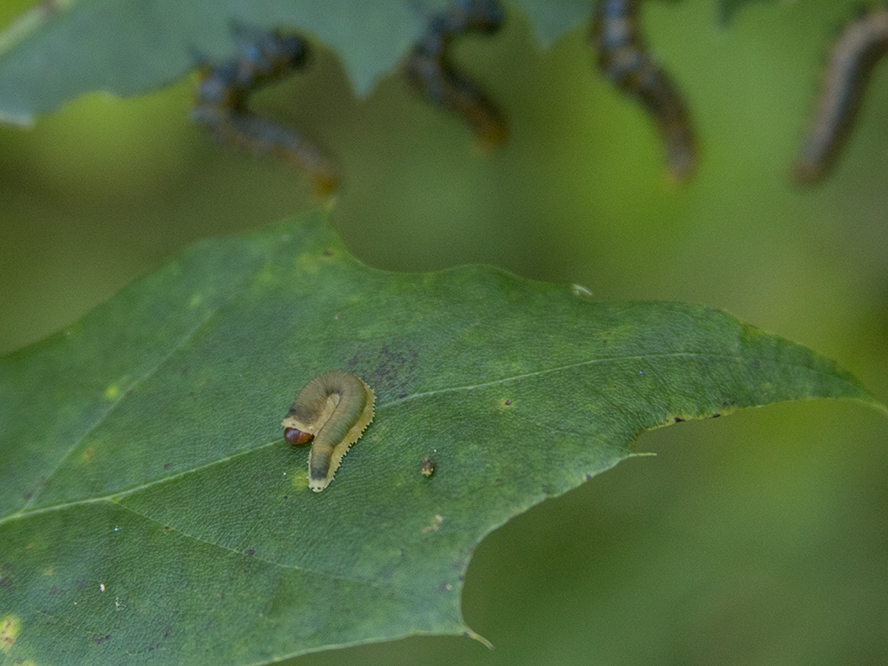
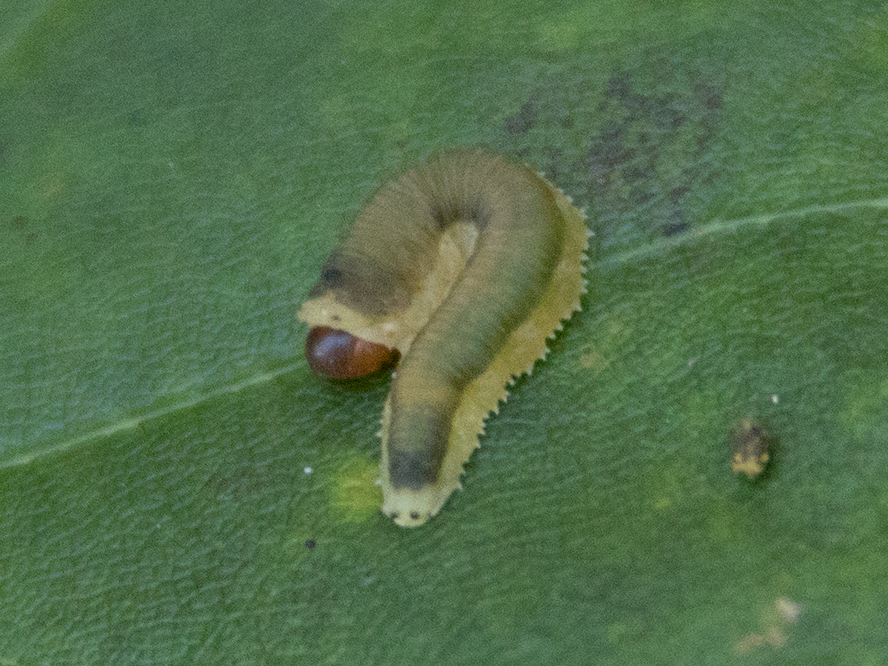
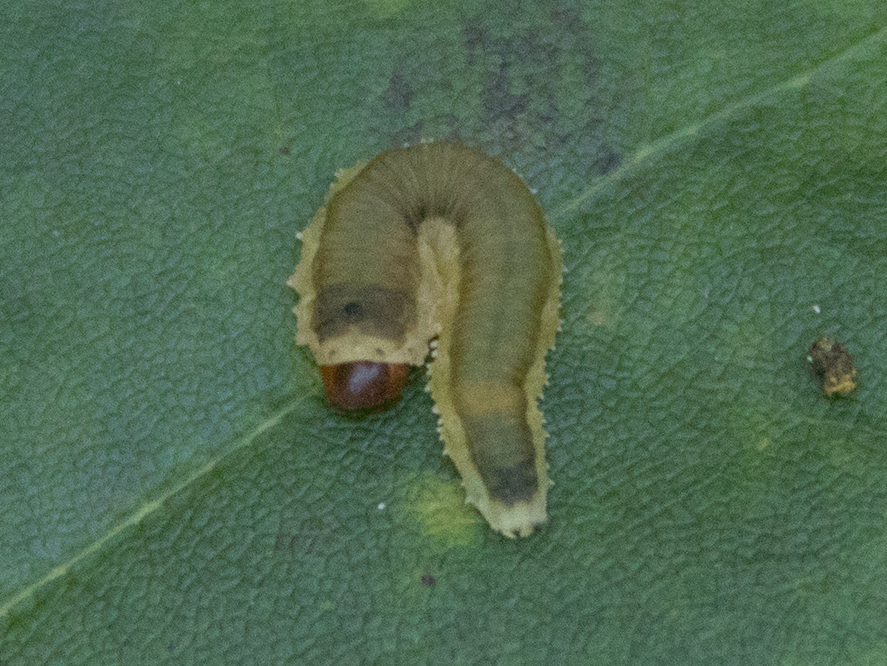
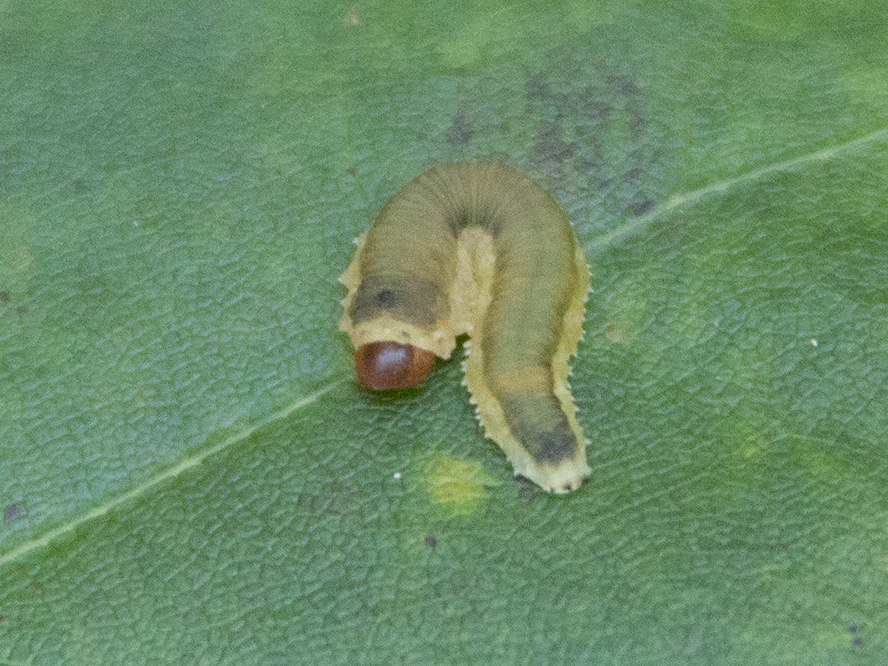
Unidentified caterpillars
Proud Lake State Park, September 14, 2019
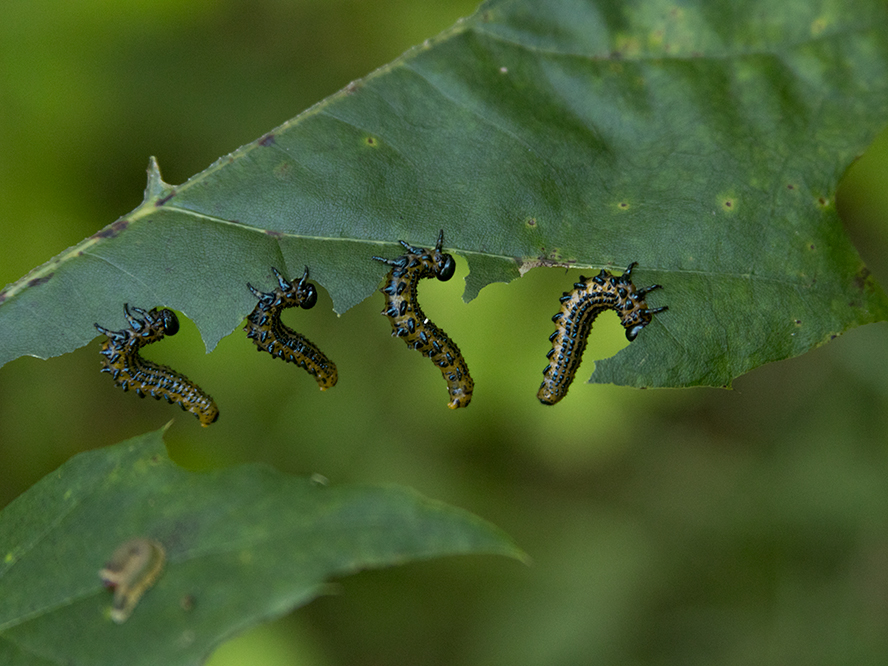
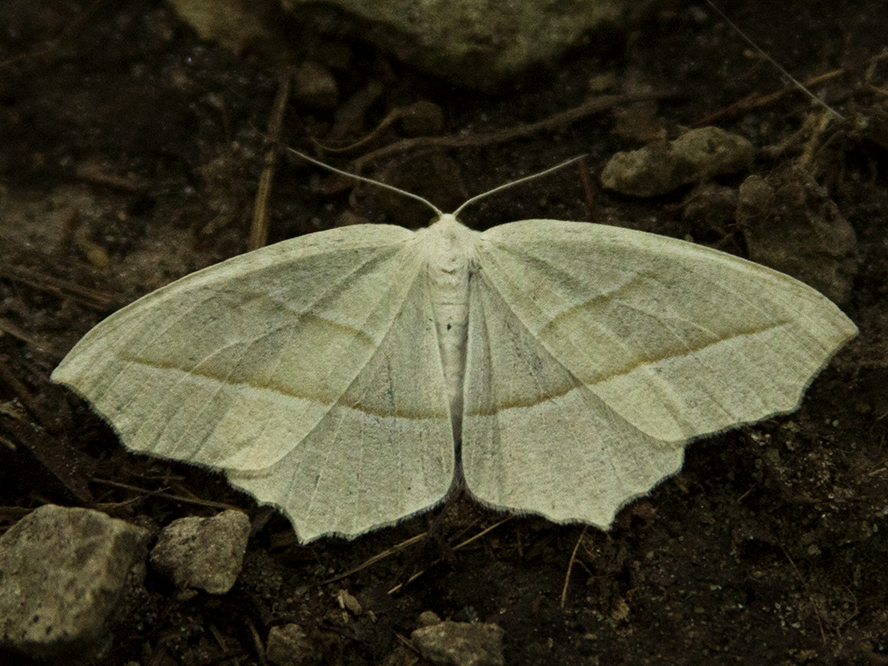
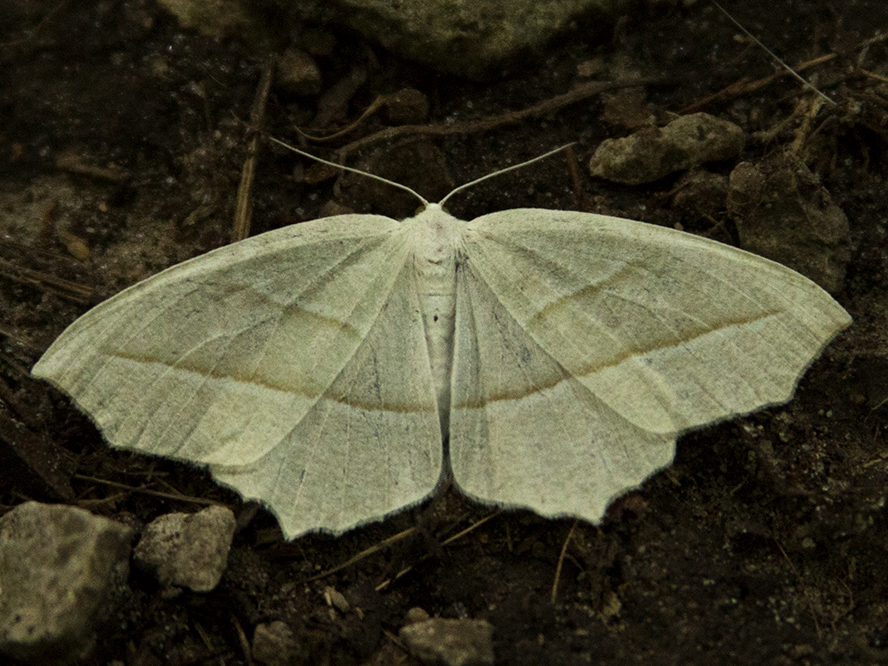
Unidentified moth
Maybury State Park, September 7, 2019
Unidentified fuzzy caterpillars
Maybury State Park, September 7, 2019
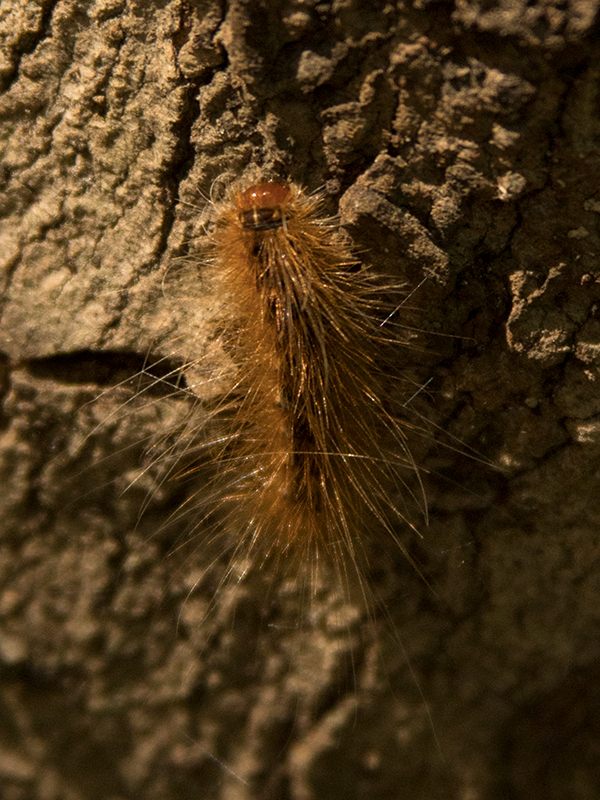
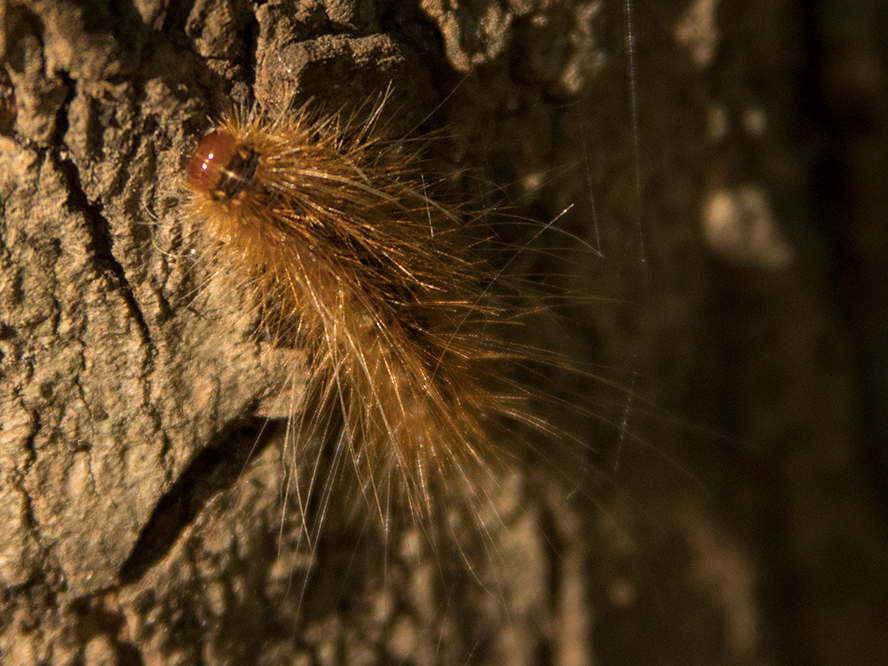
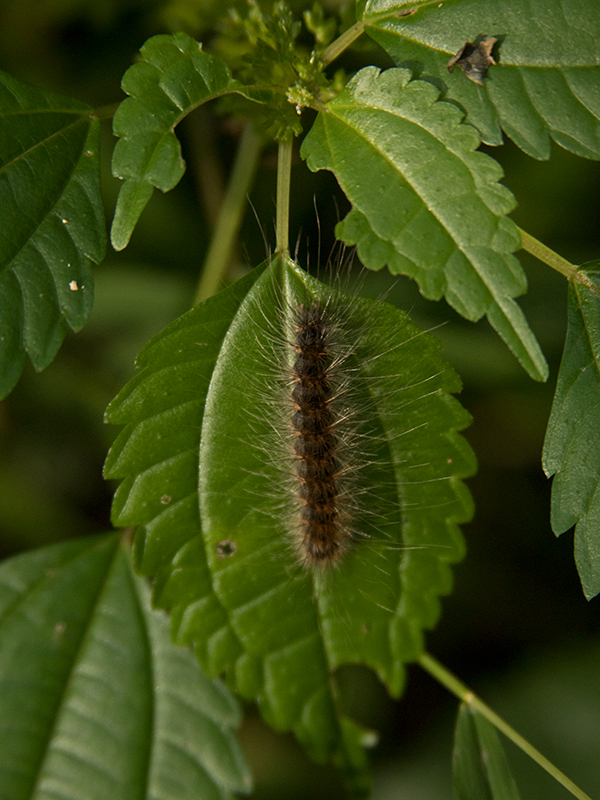
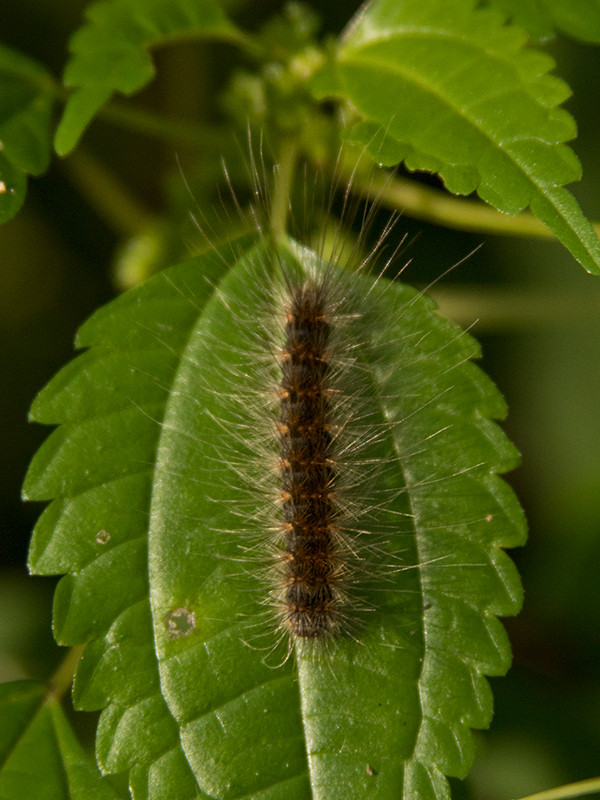
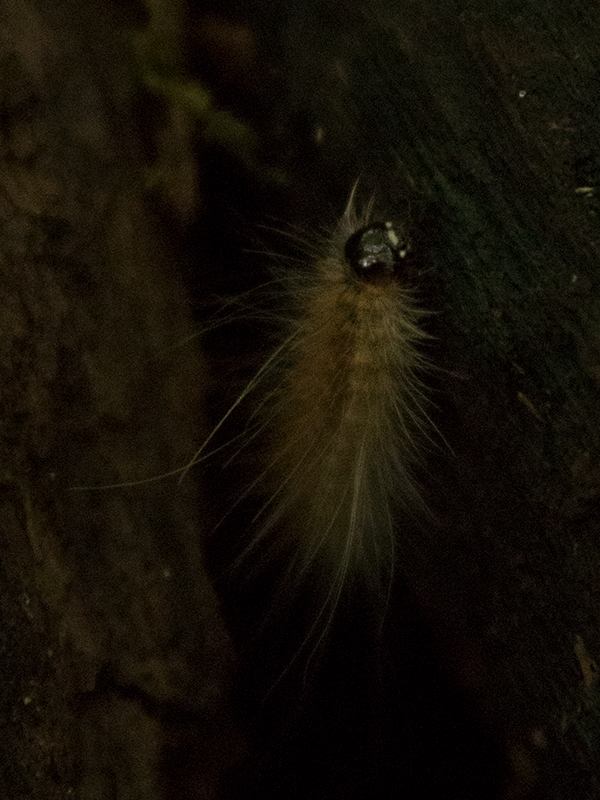
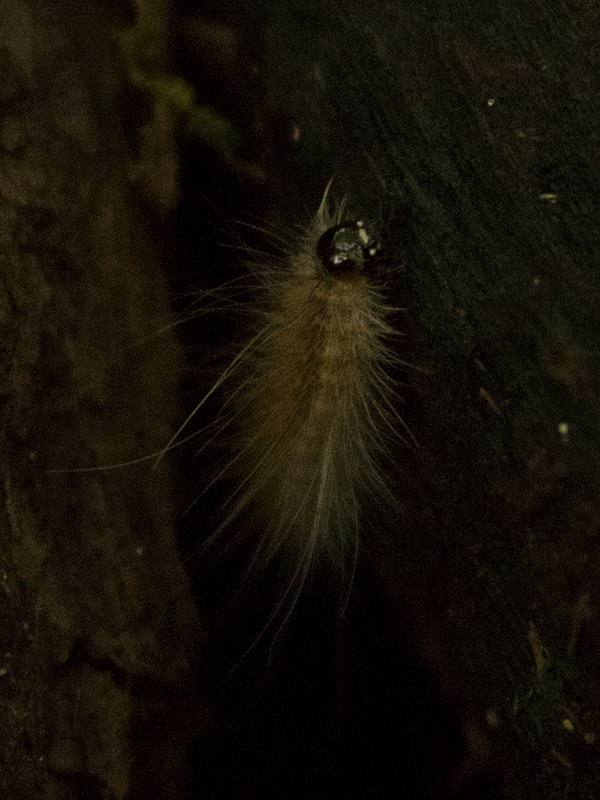
Unidentified fuzzy caterpillars
Pinckney State Park (Losee Lake), September 22, 2019
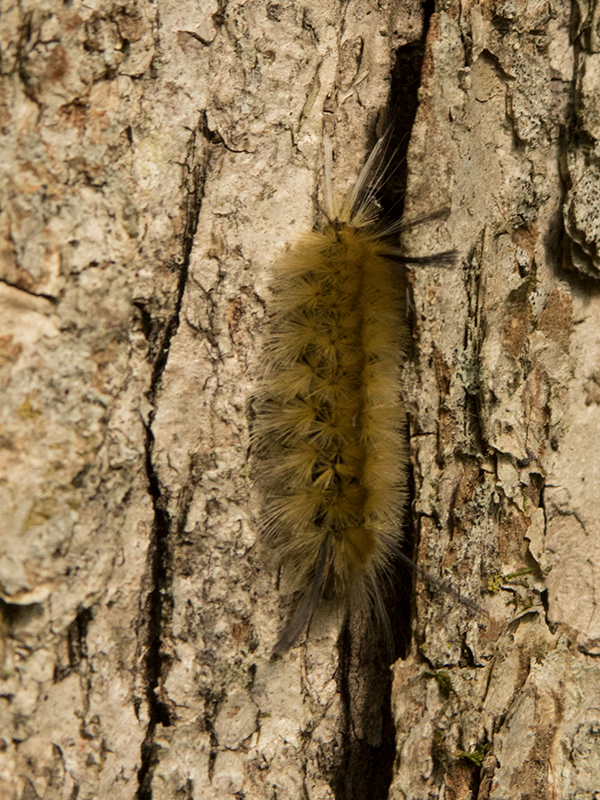
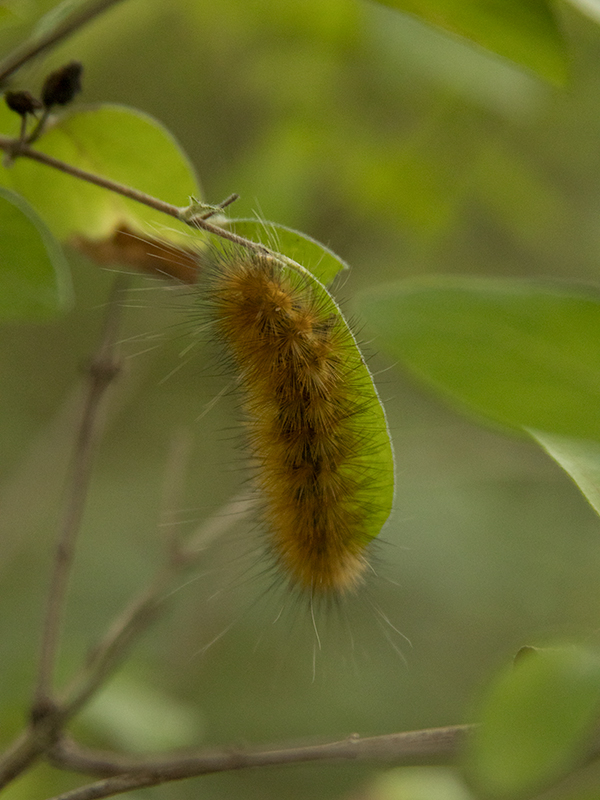
Orangestriped oakworm caterpillar, Anisota senatoria
Yankee Springs State Park, September 16, 2019
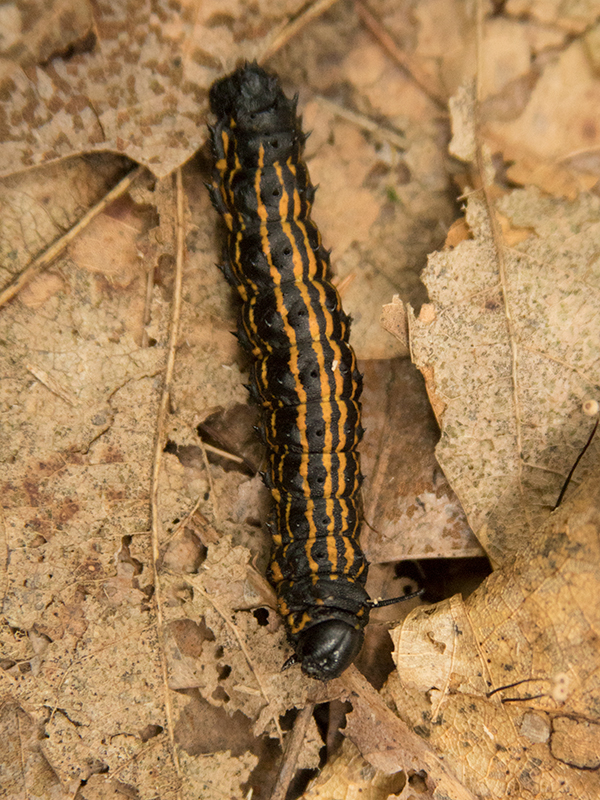
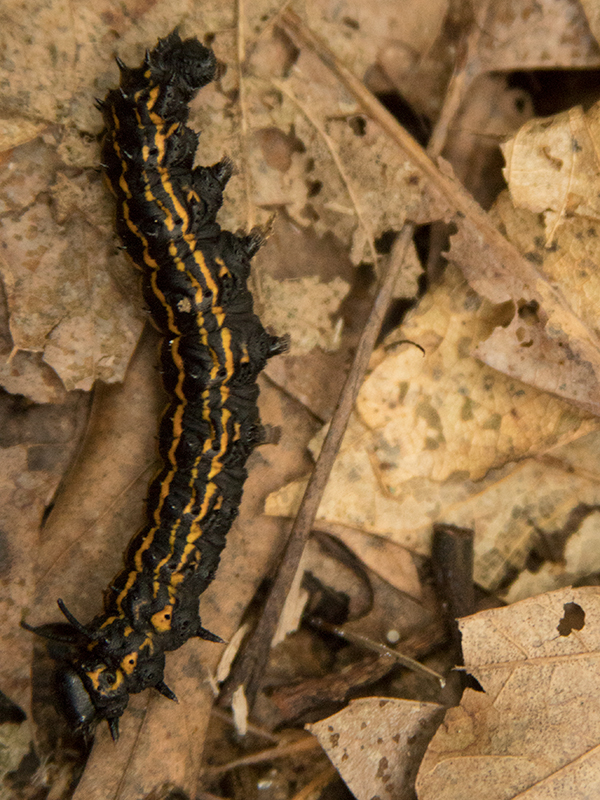
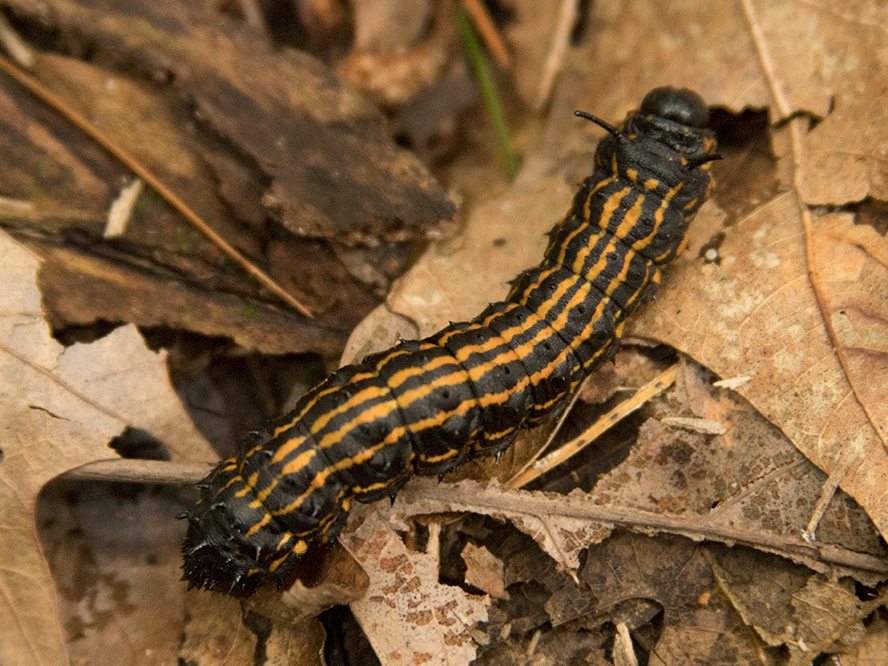
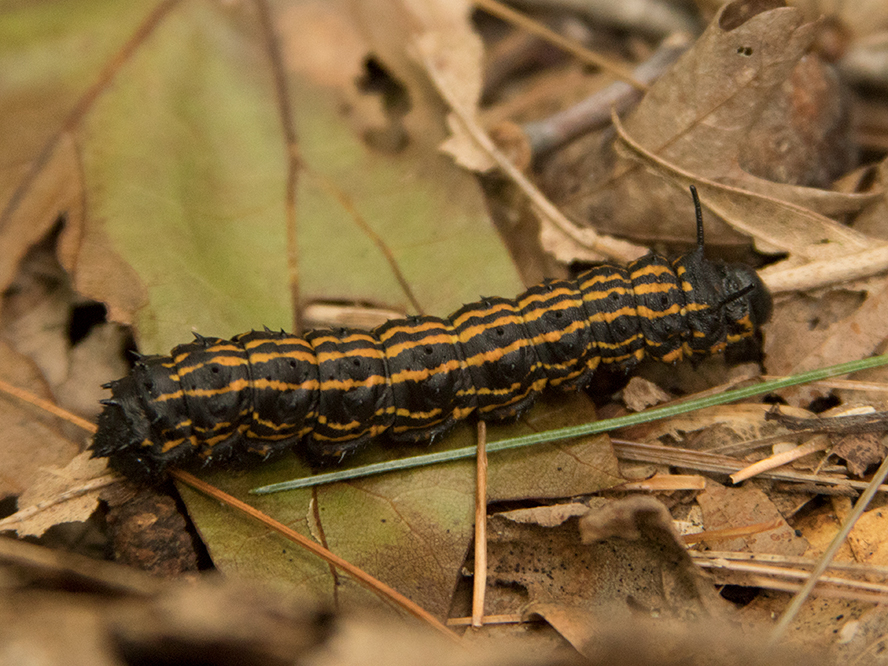
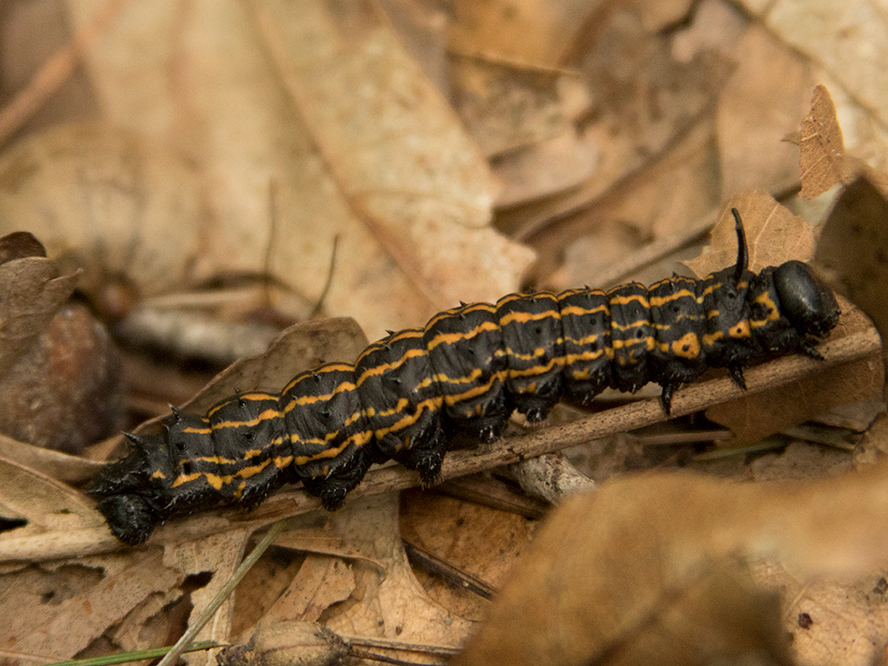
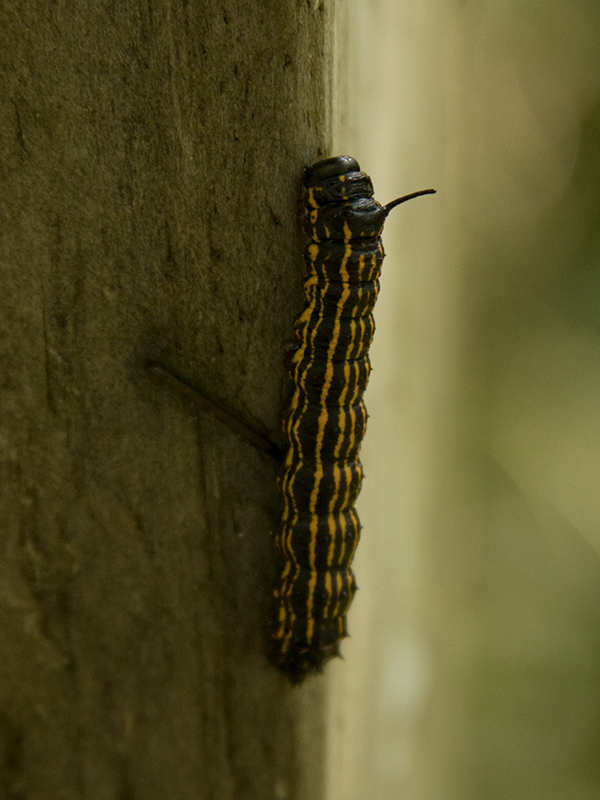
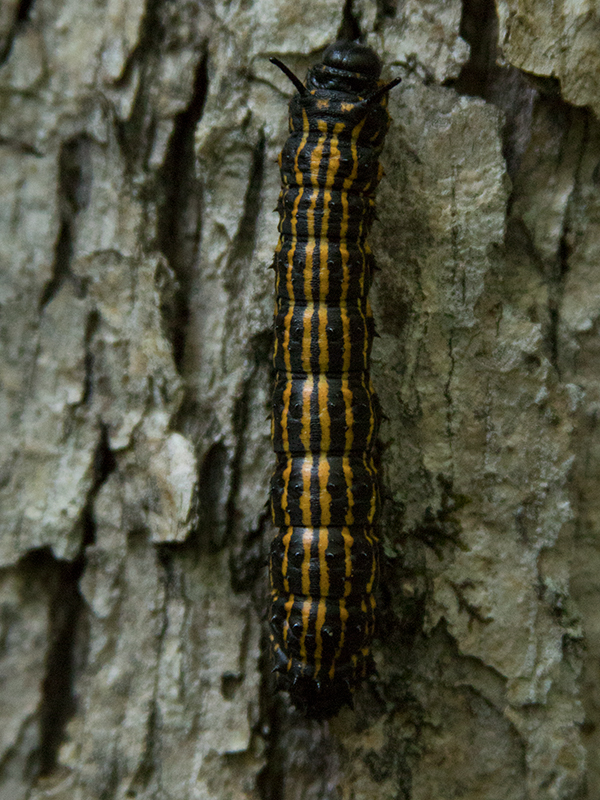
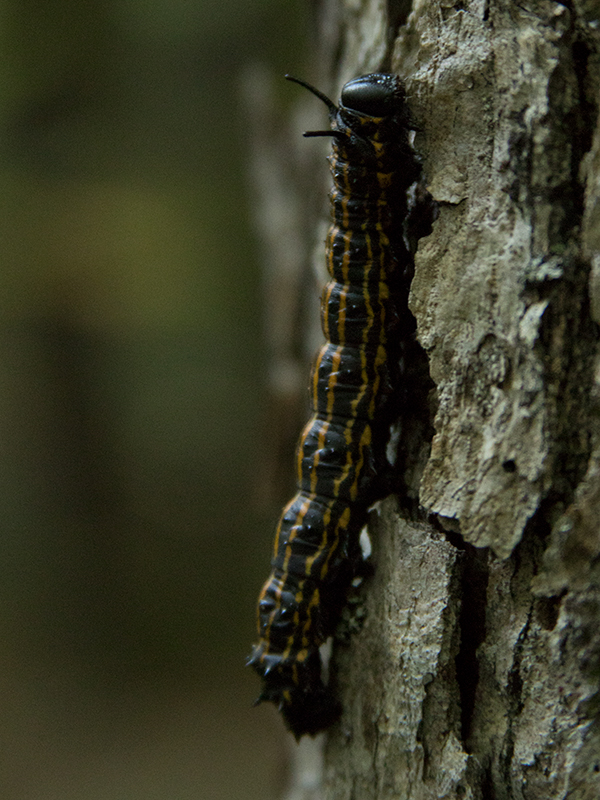
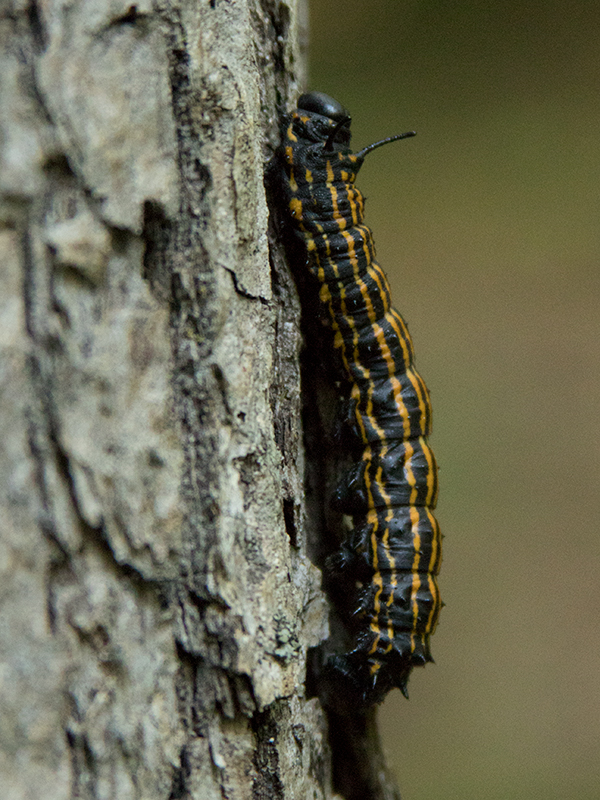
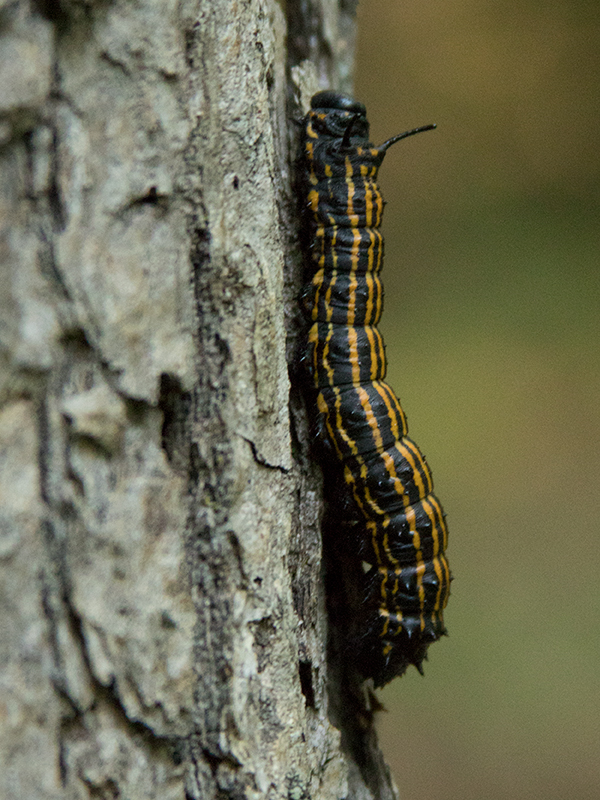
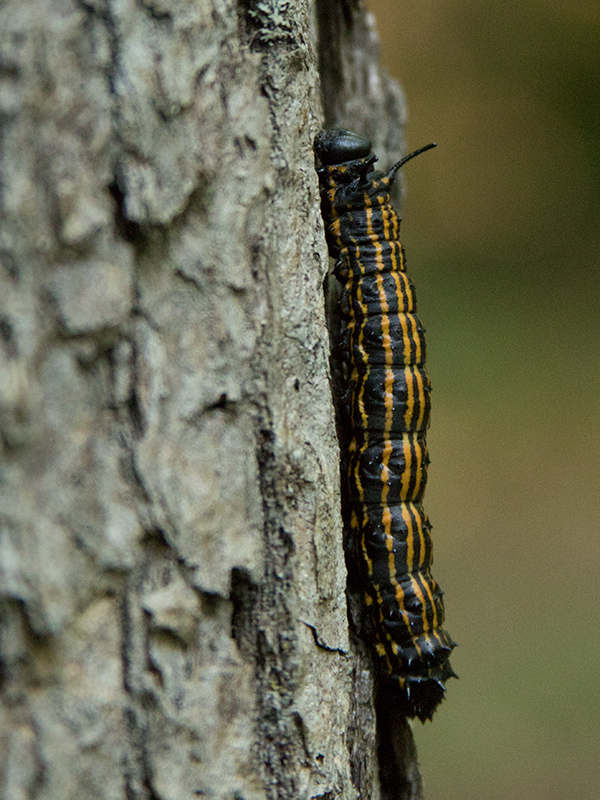
Unidentified caterpillar
Conservancy Farm, September 8, 2019
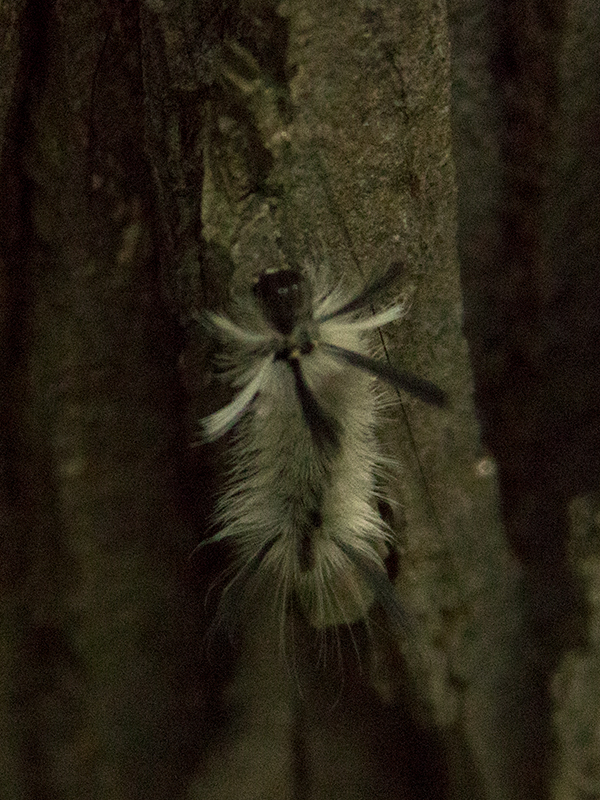
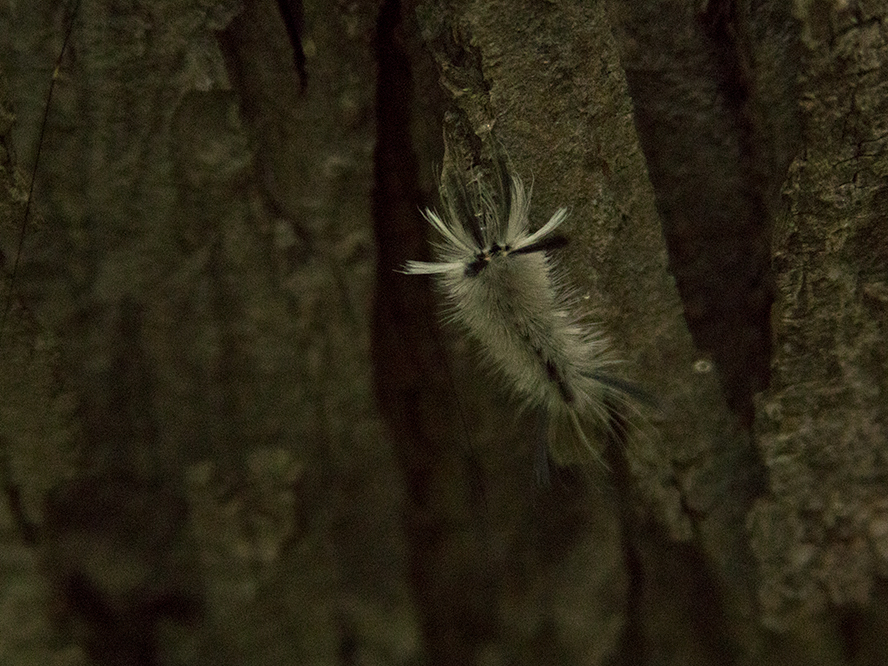
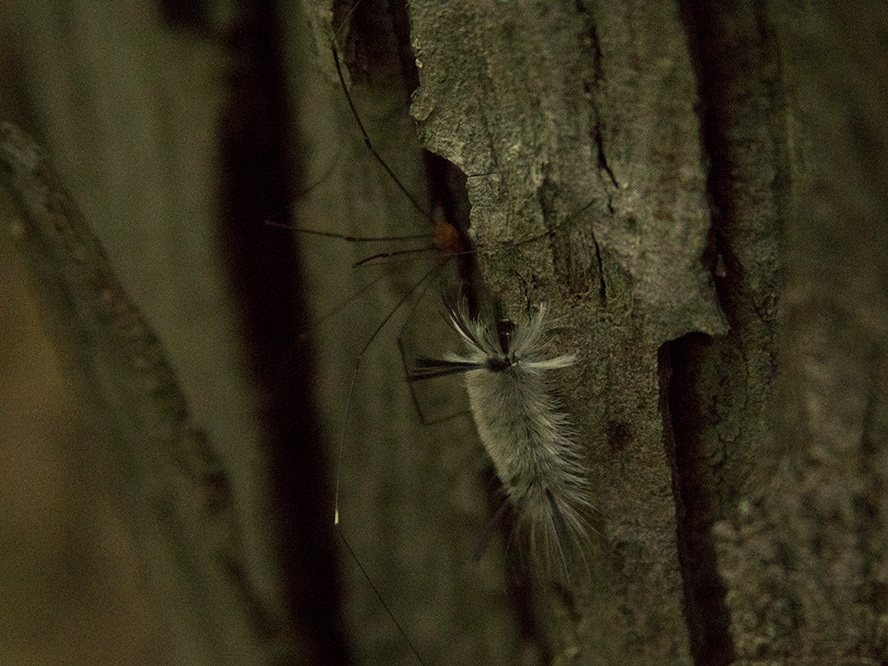
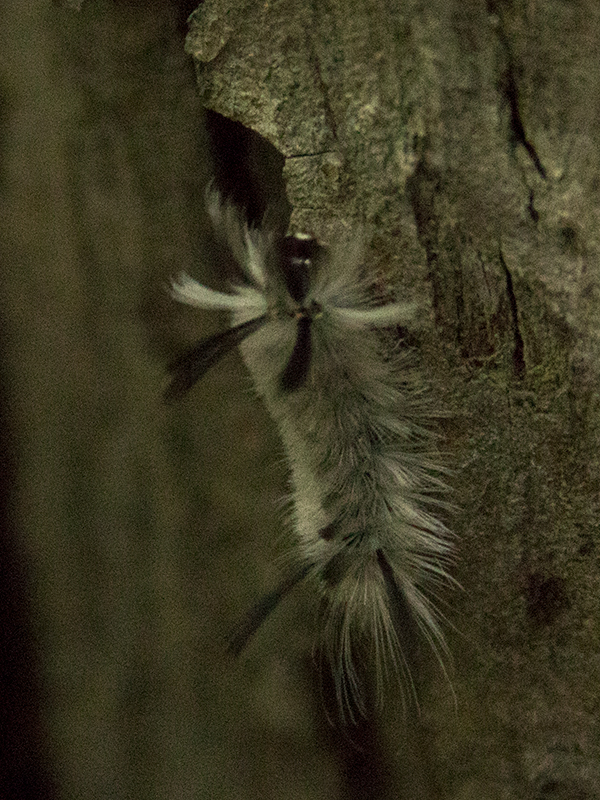
Kensington Metropark, September 2, 2019
This one was hanging from a thread of silk at chest level.
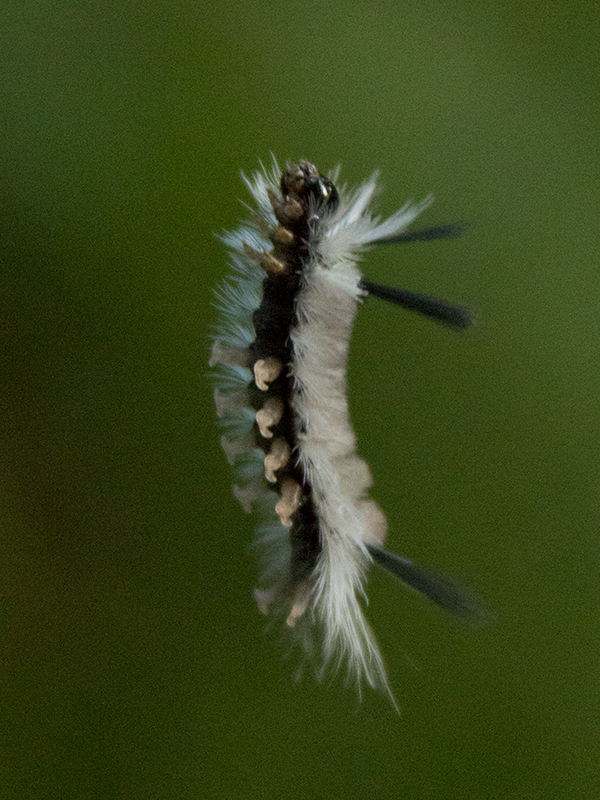
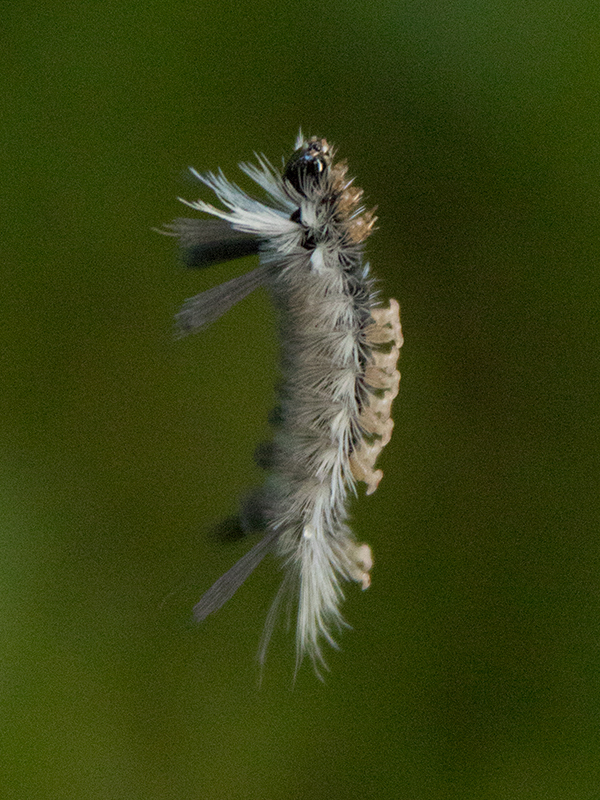
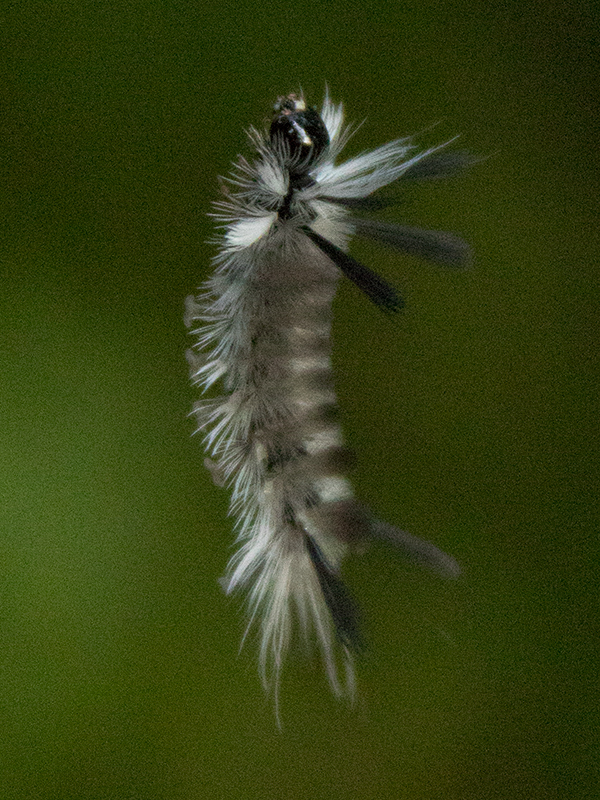
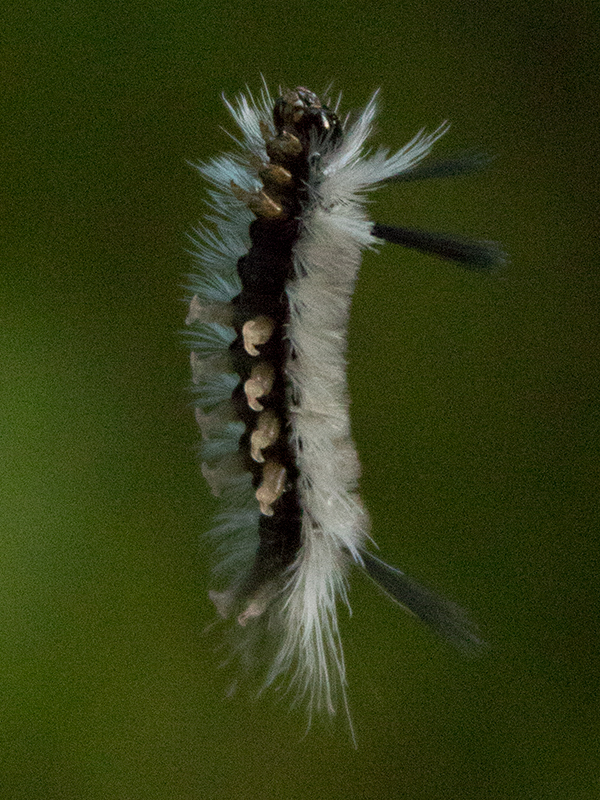
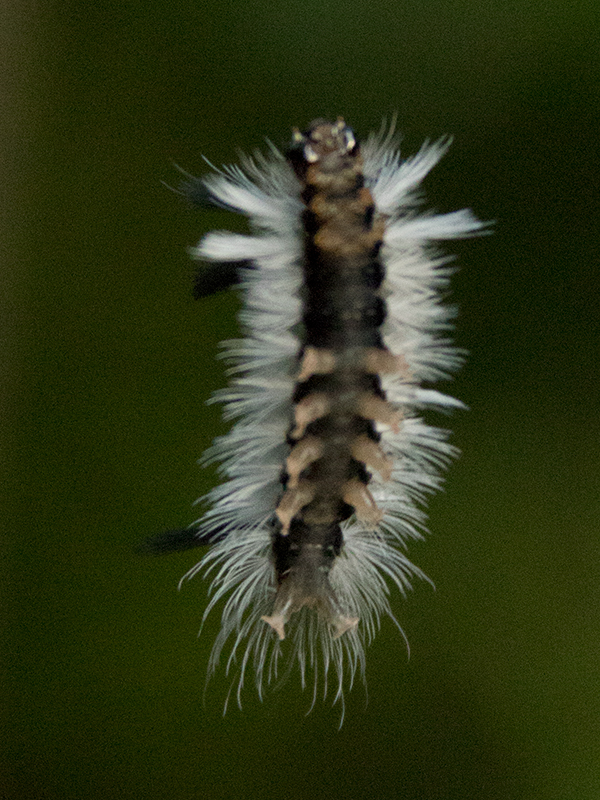
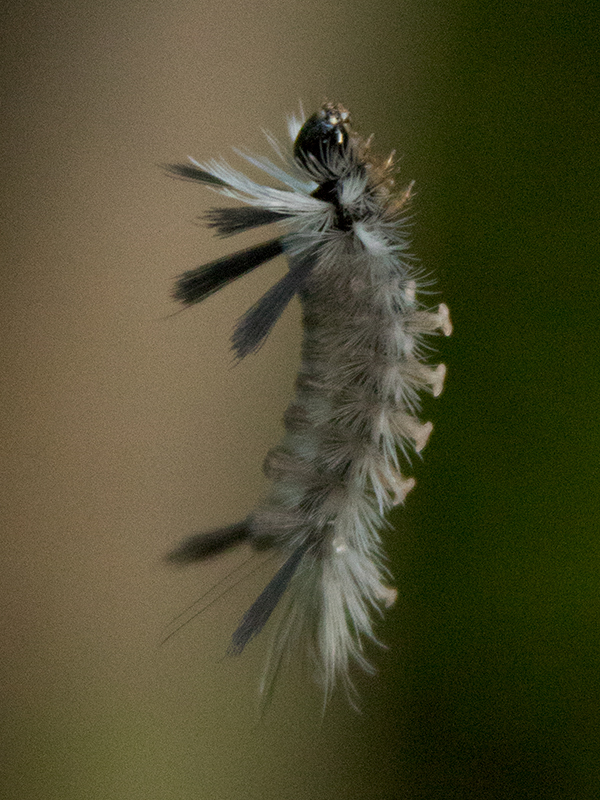
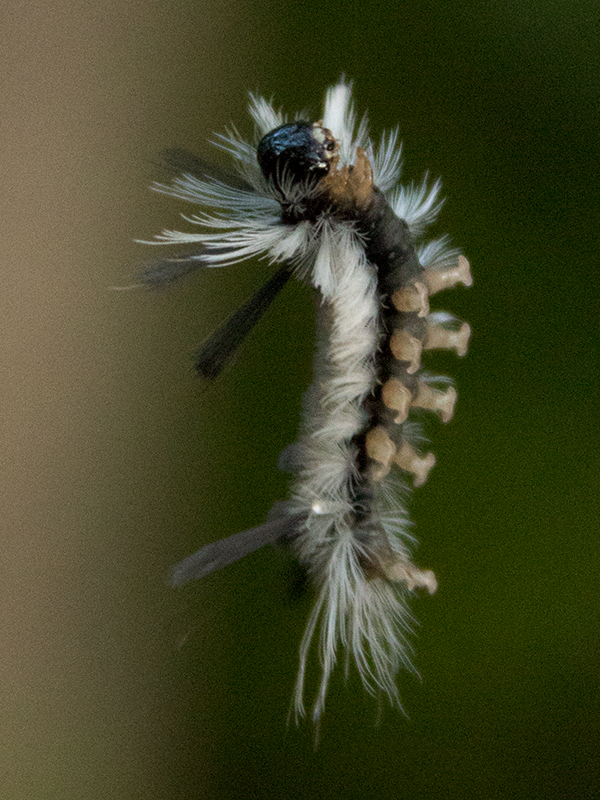
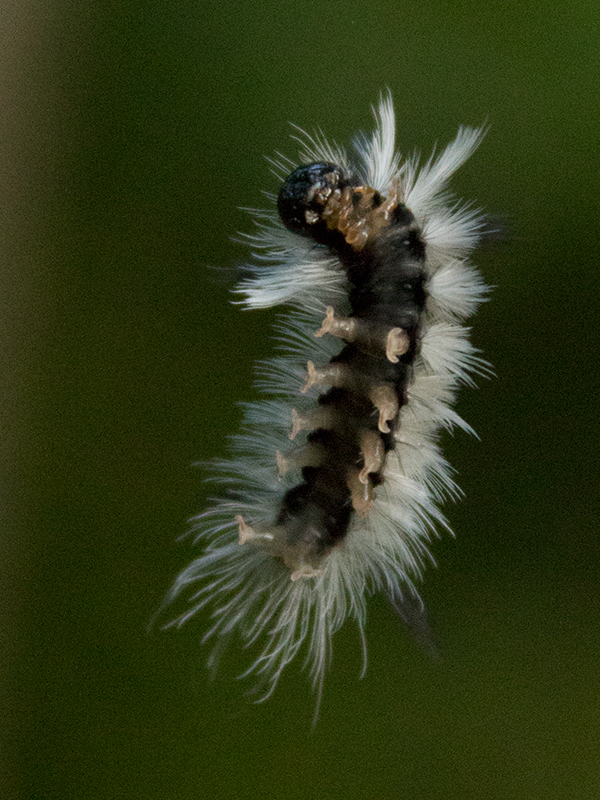
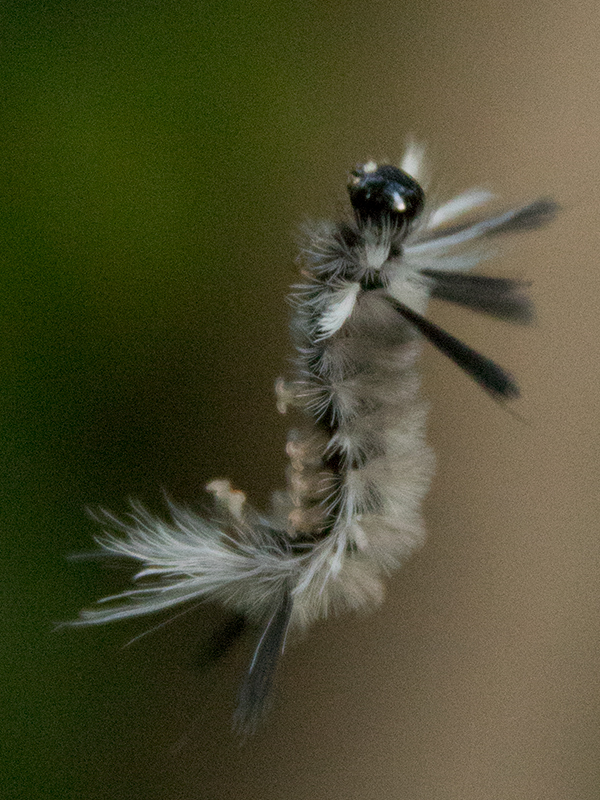
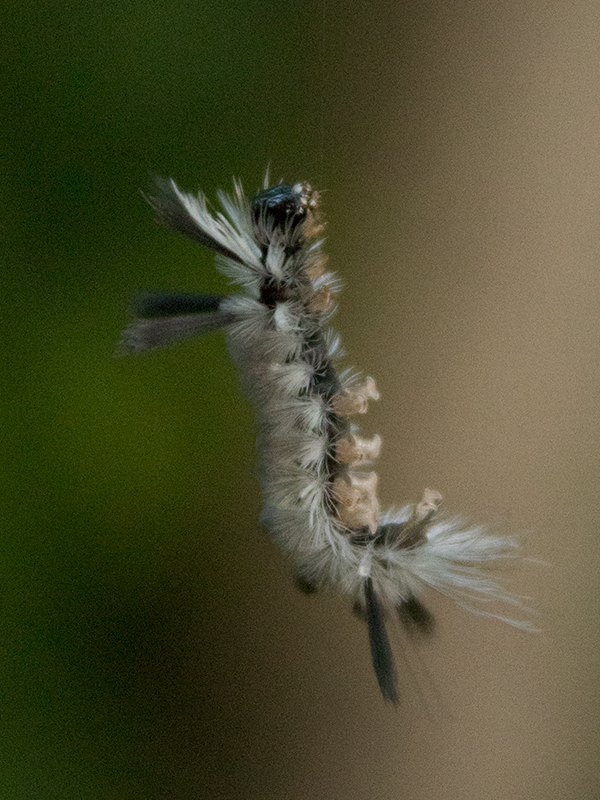
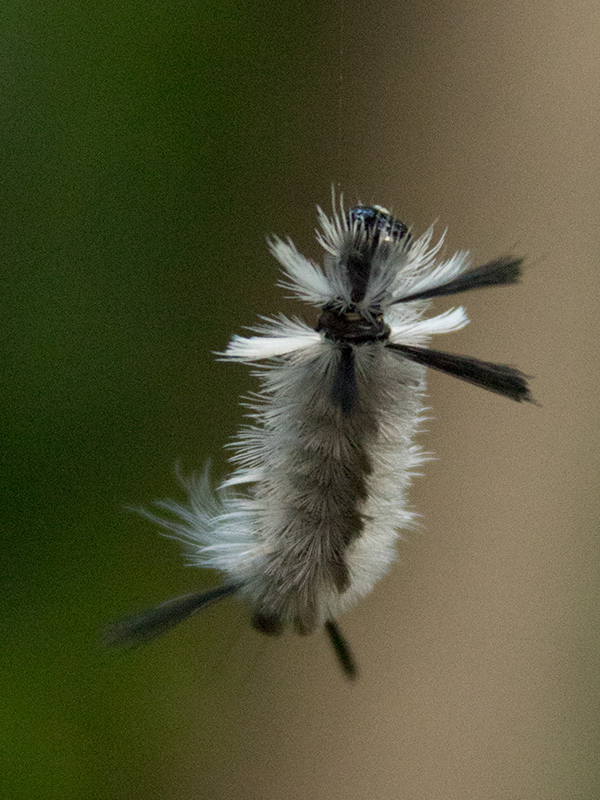
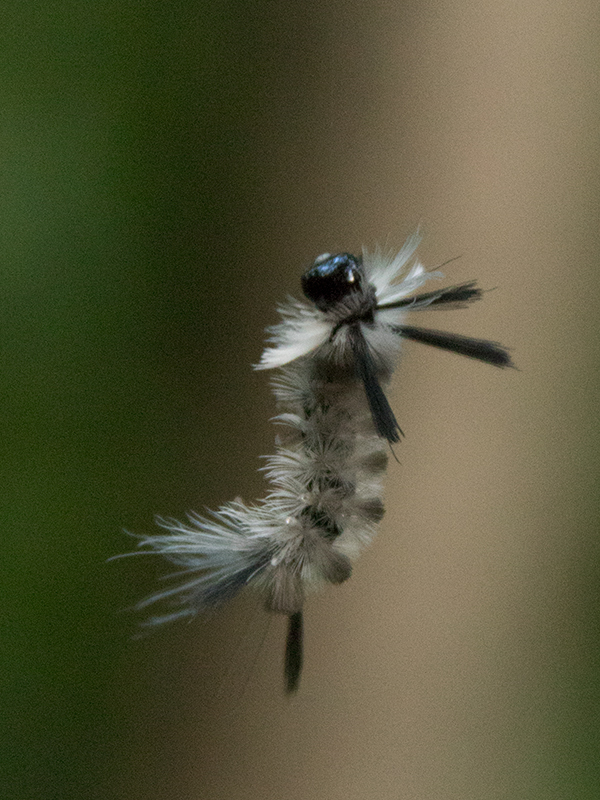
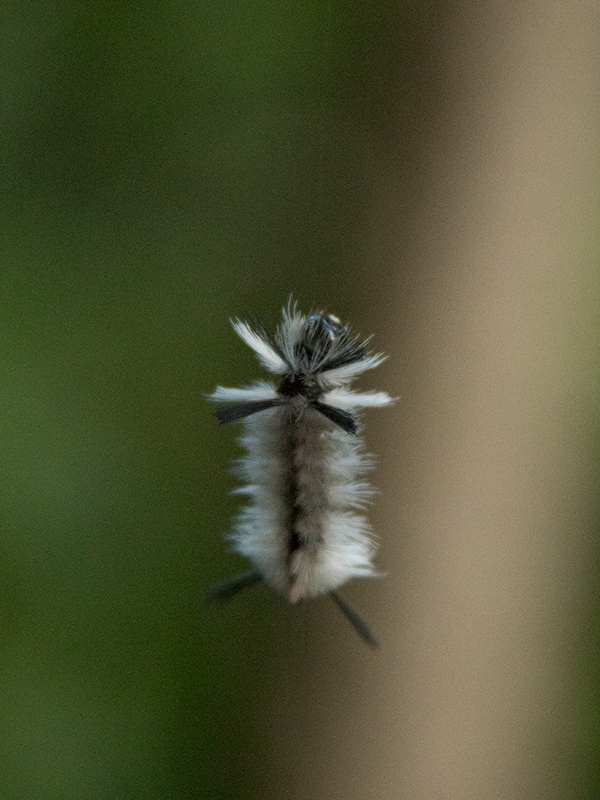
Unidentified caterpillar
Kensington Metropark, September 2, 2019
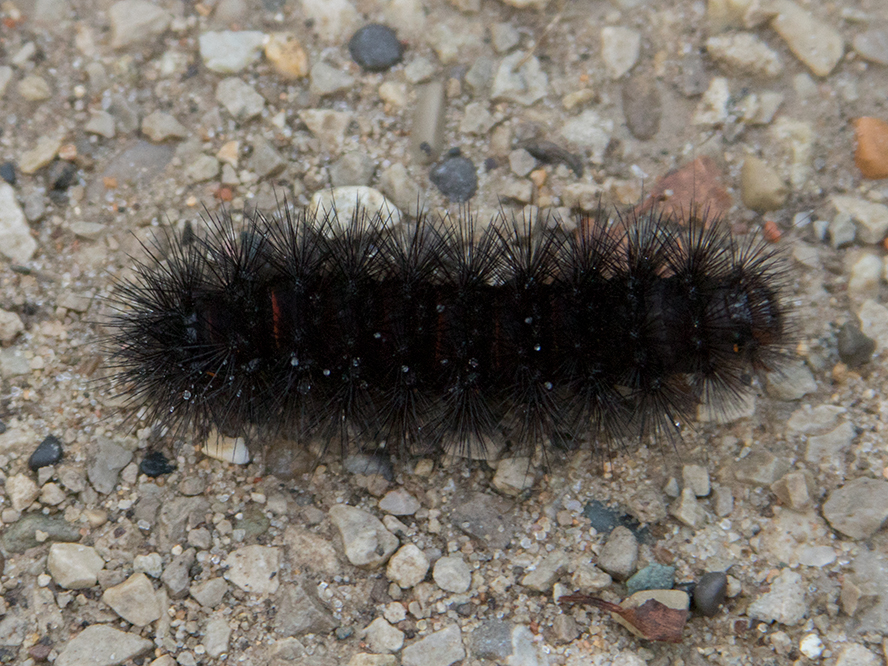
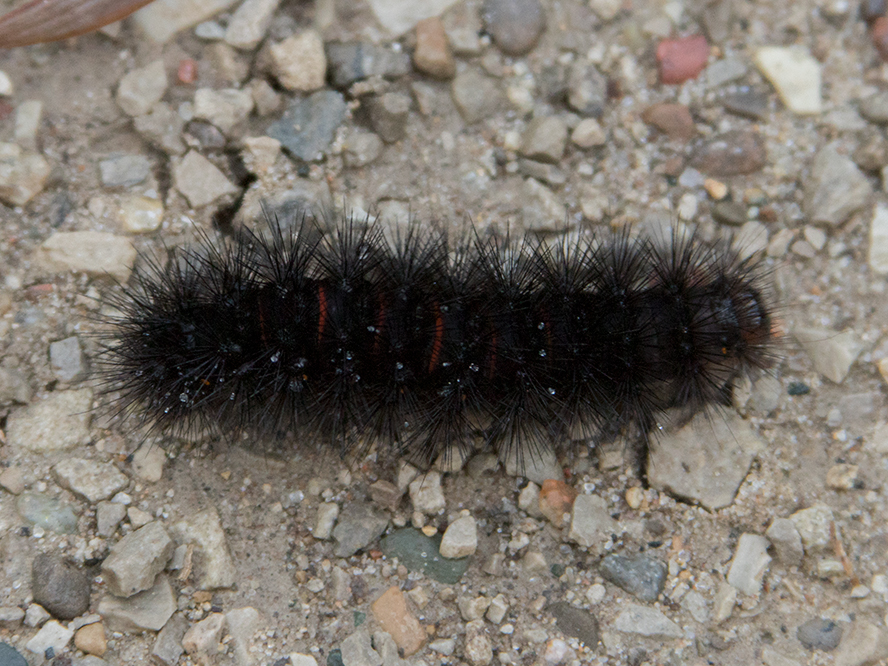
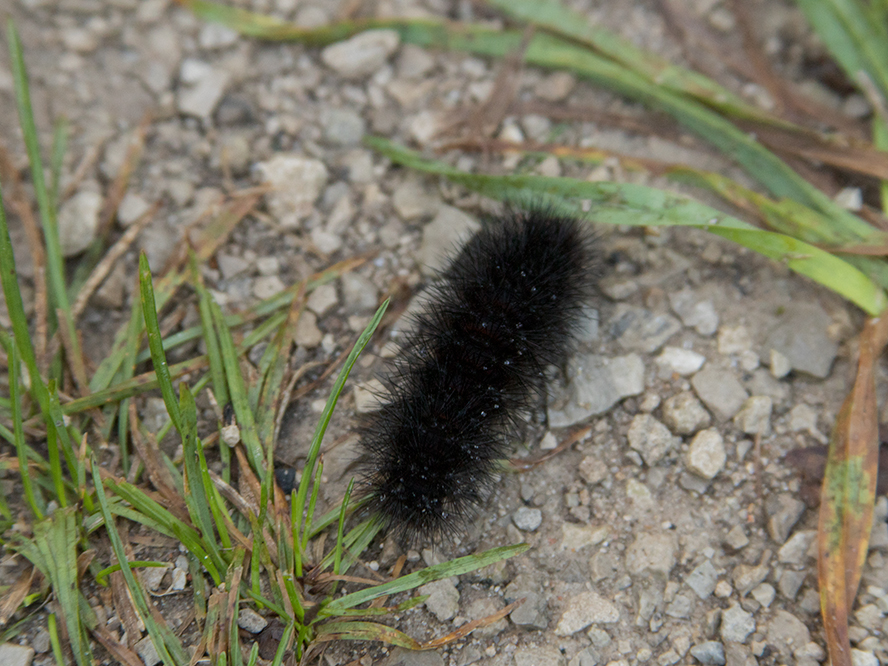
Brown-hooded Owlet caterpillar, Cucullia convexipennis
Hudson Mills Metropark, September 1, 2019
The last photo shows the plant it was on. The caterpillar is near the middle of the photo.
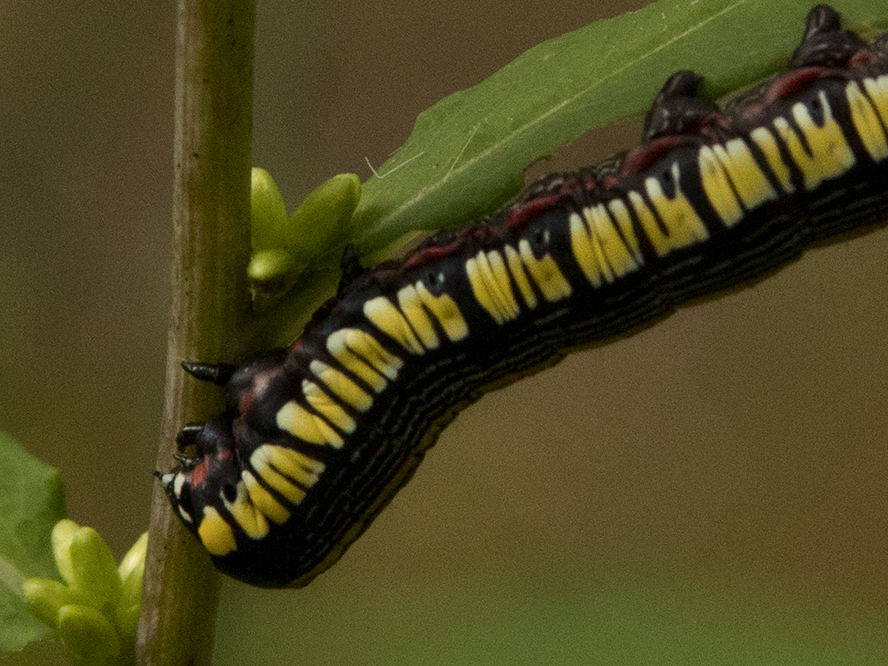
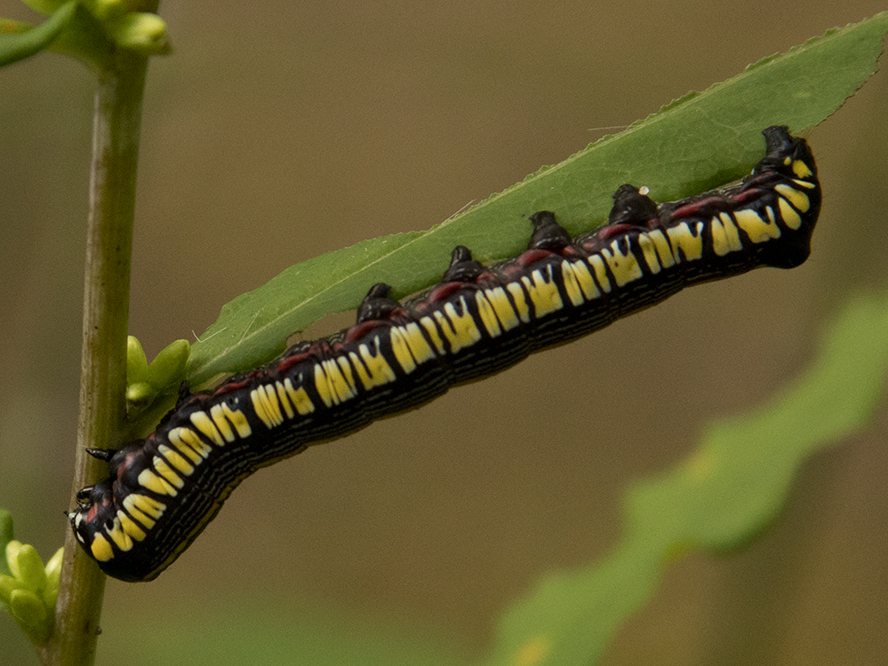
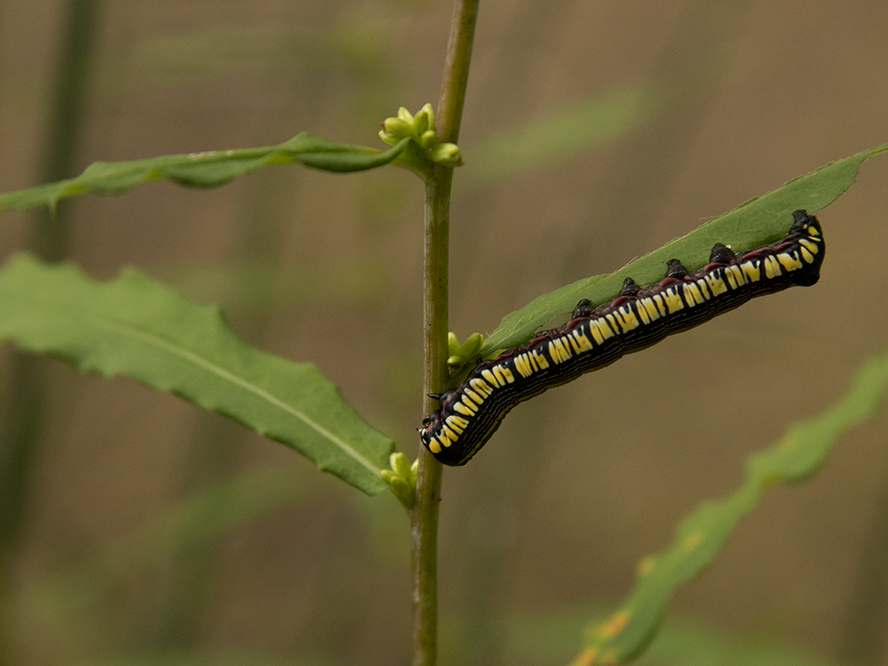
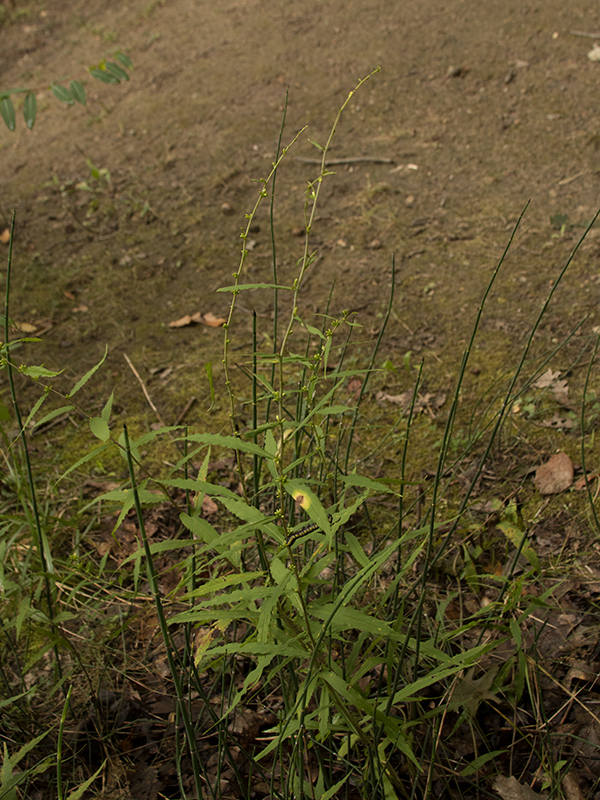
Unidentified caterpillar
Oakwoods Metropark, August 25, 2019
These gray caterpillars were all over the dogbane in the area by the railroad tracks.
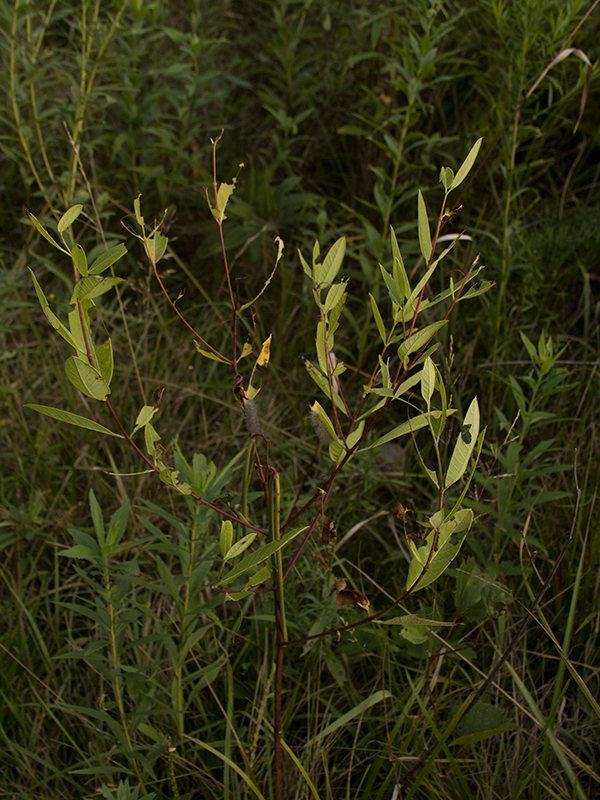
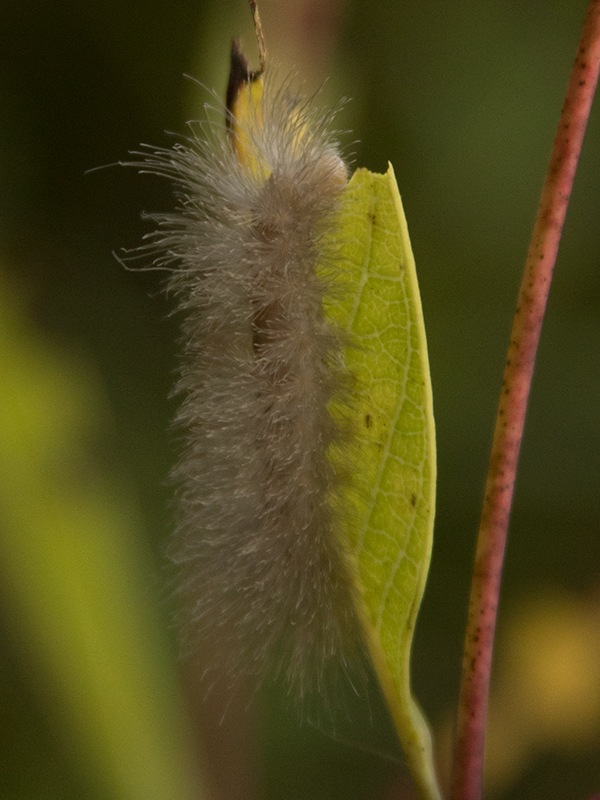
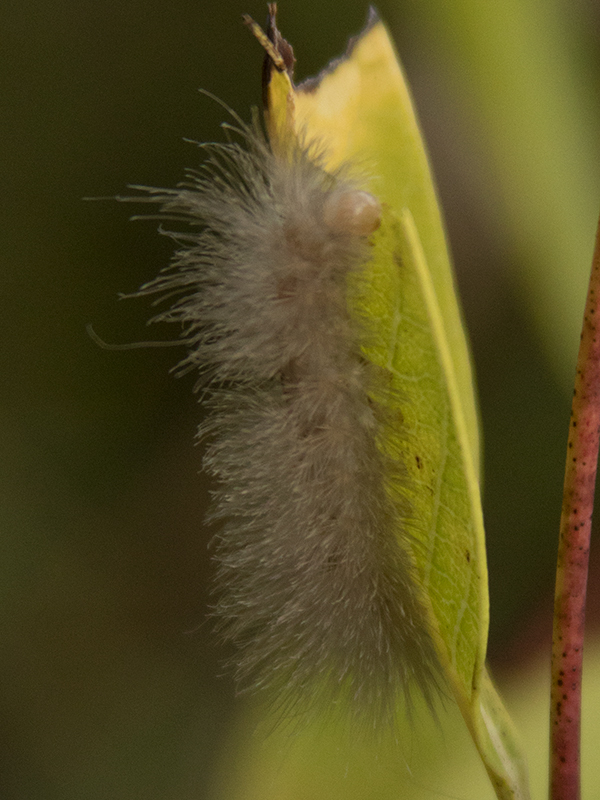
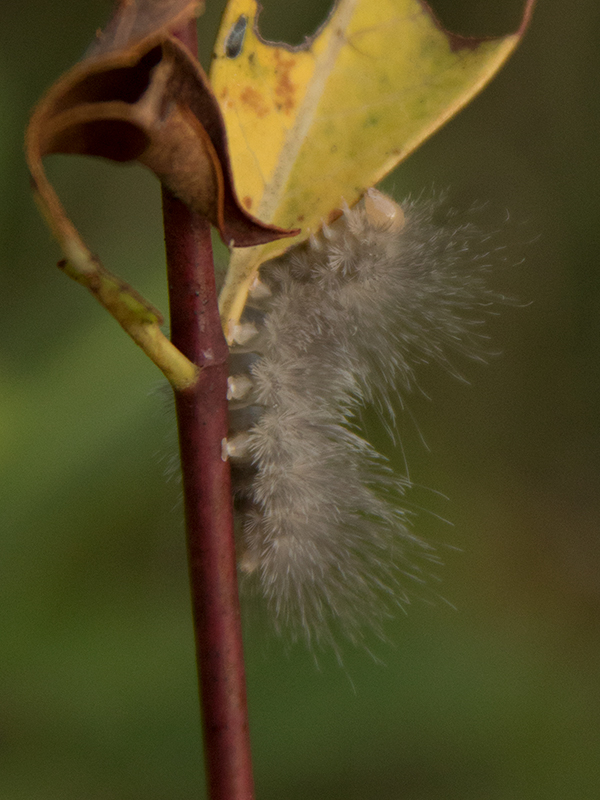
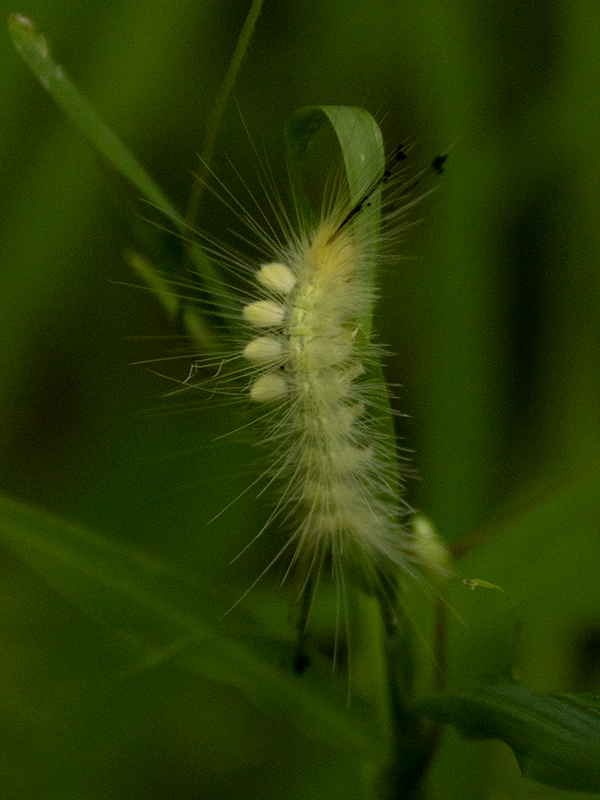
Unidentified caterpillar
Jerry's Run, Covington, VA, July 15, 2021
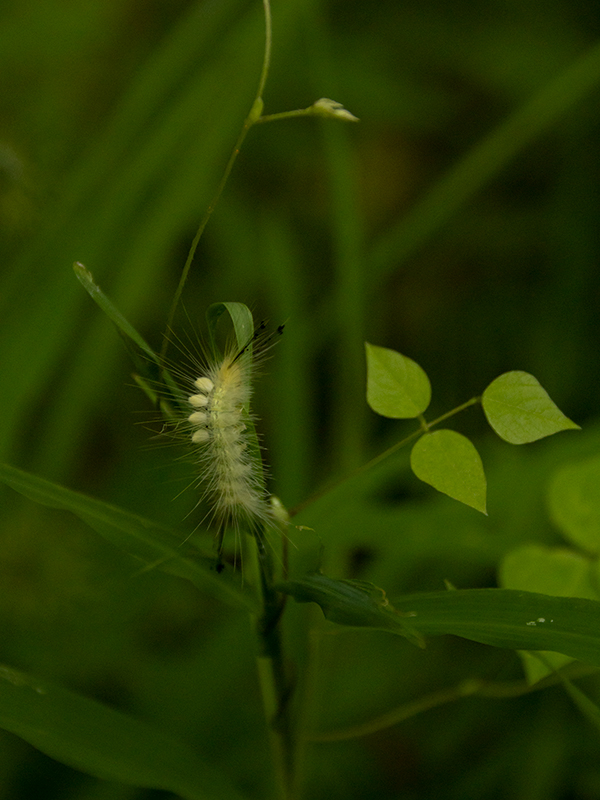
American Dagger Moth caterpillar, Acronicta americana
Pinckney State Park (Losee Lake), September 22, 2019
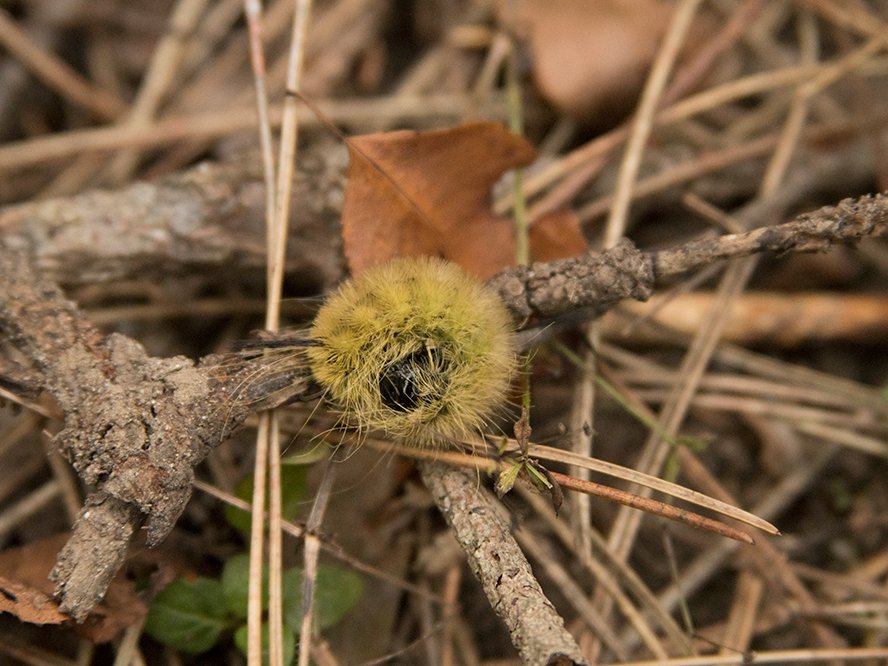
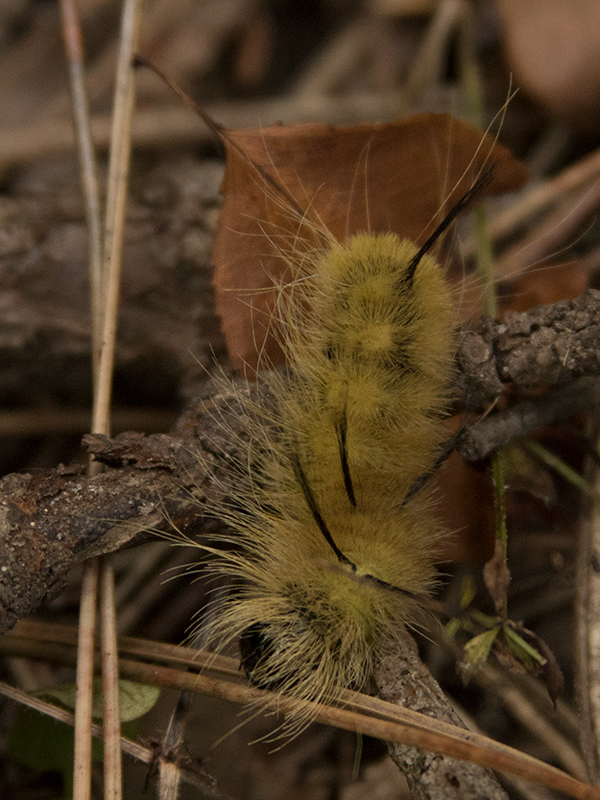
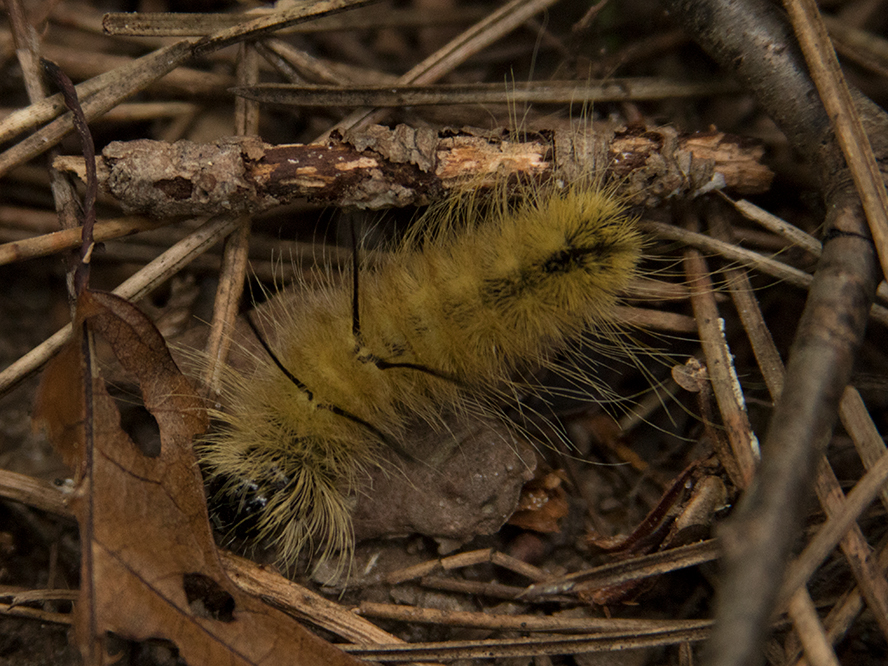
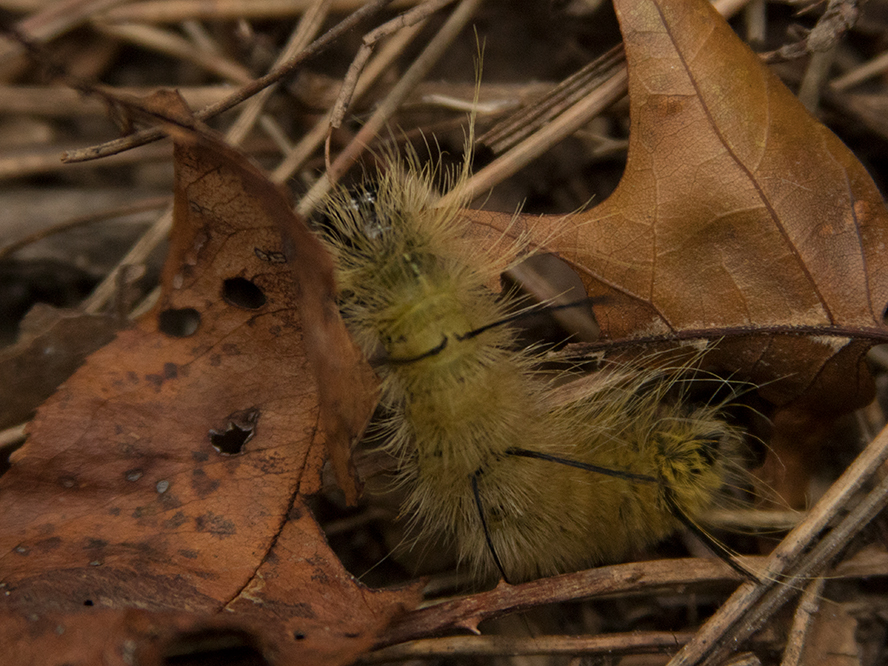
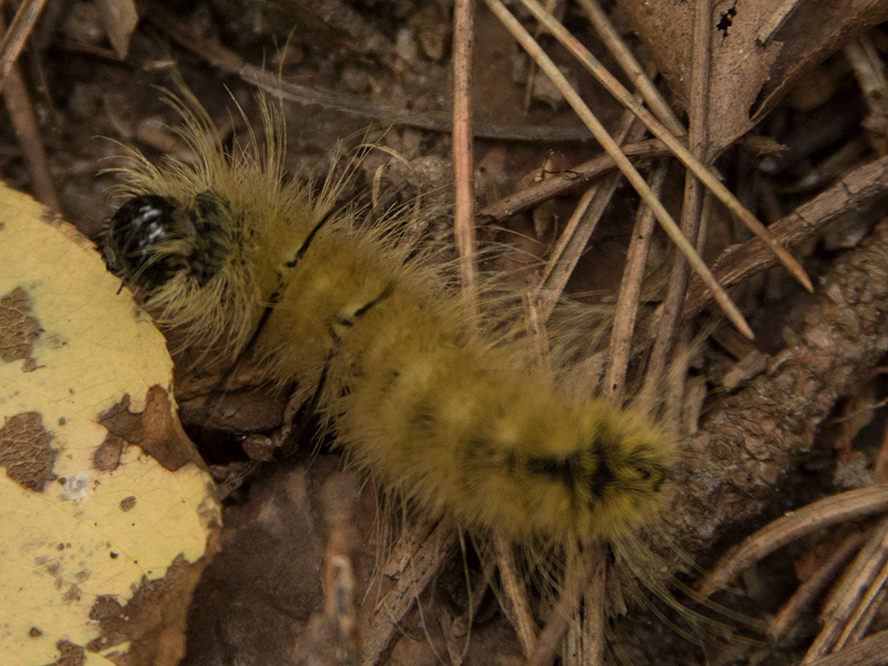
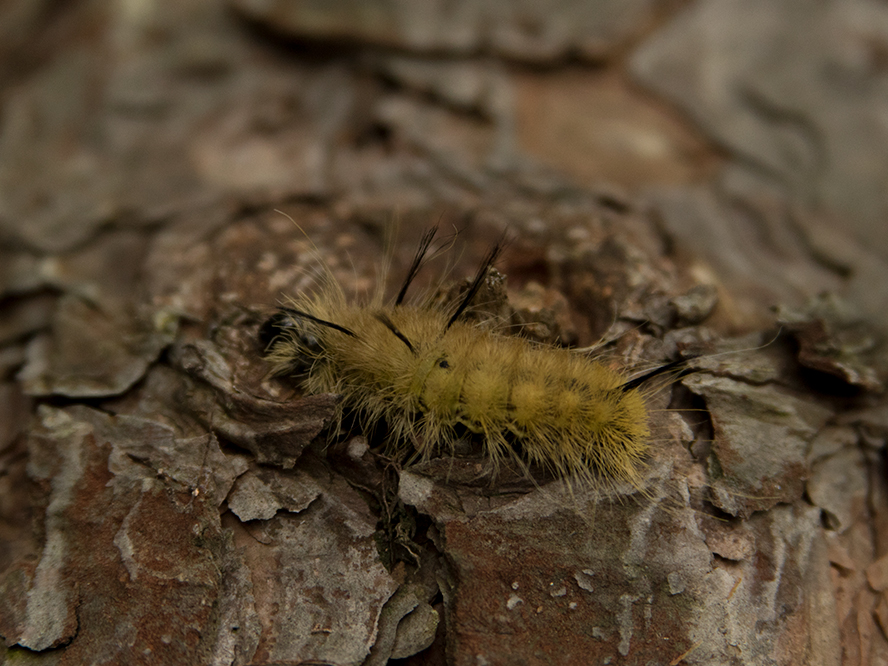
Orion Oaks County Park, August 10, 2019
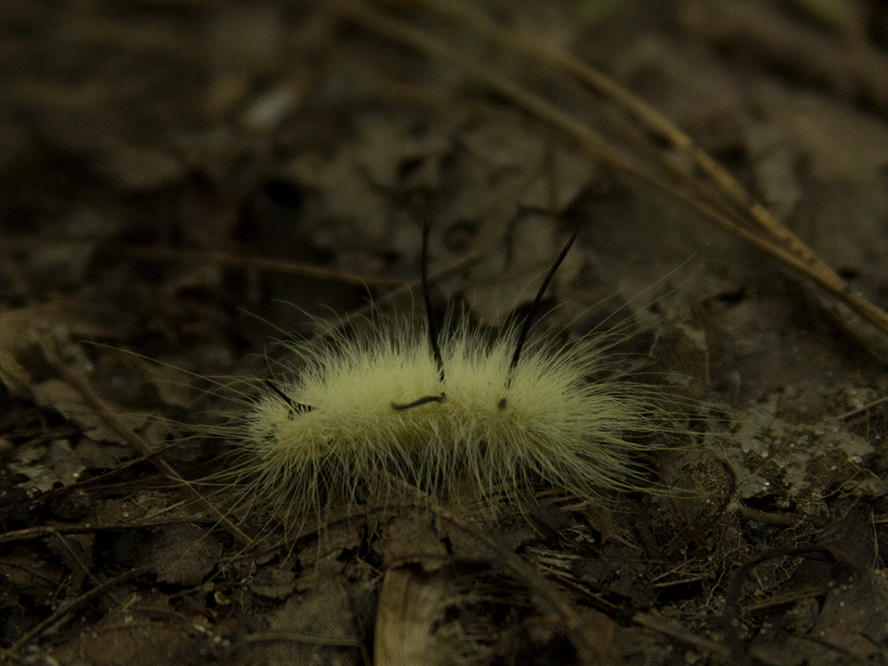
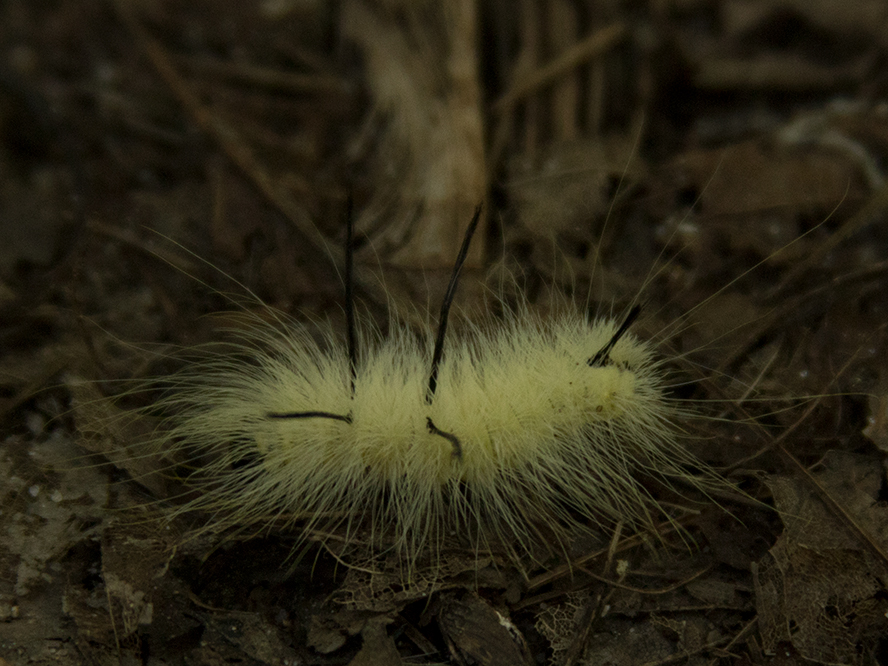
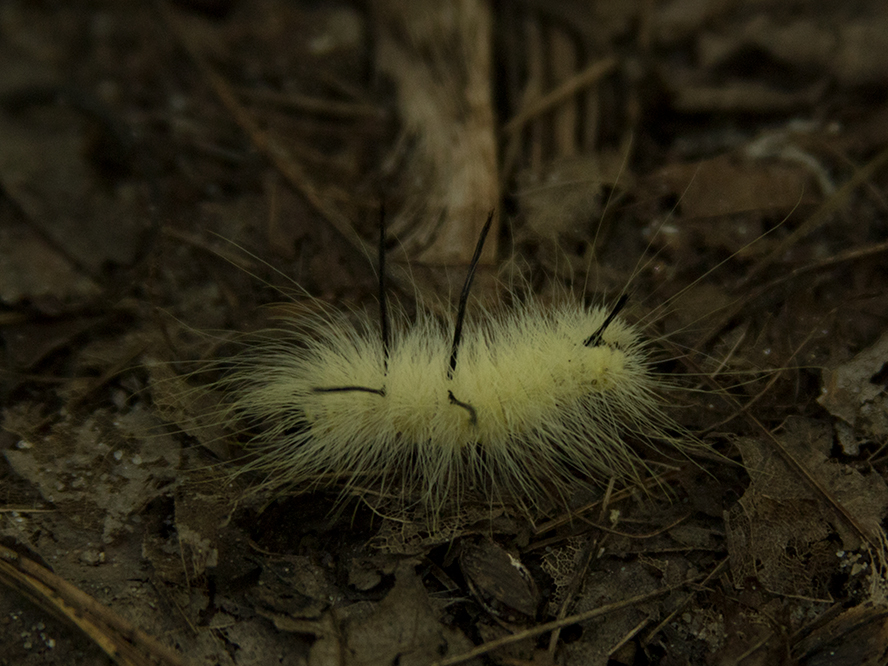
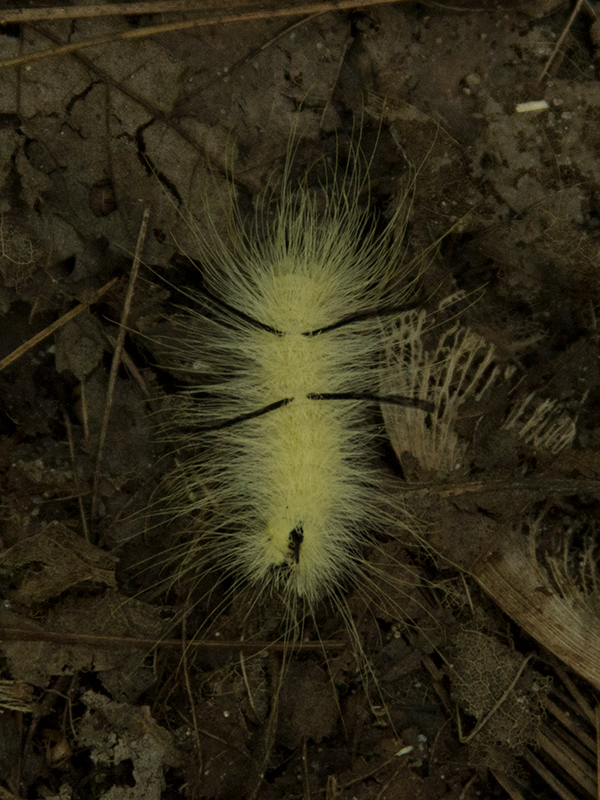
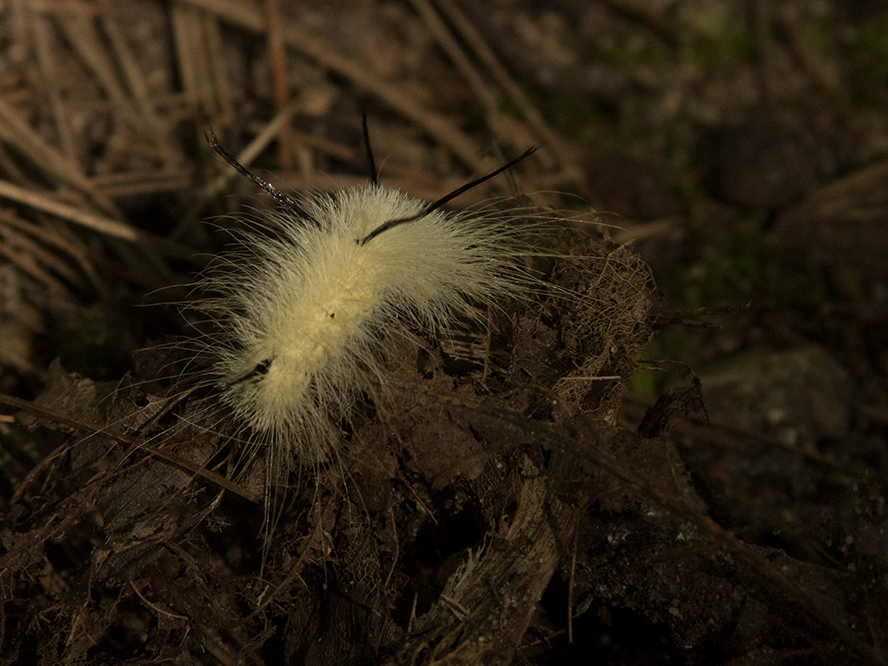
Kosch-Headwaters Preserve, July 6, 2019
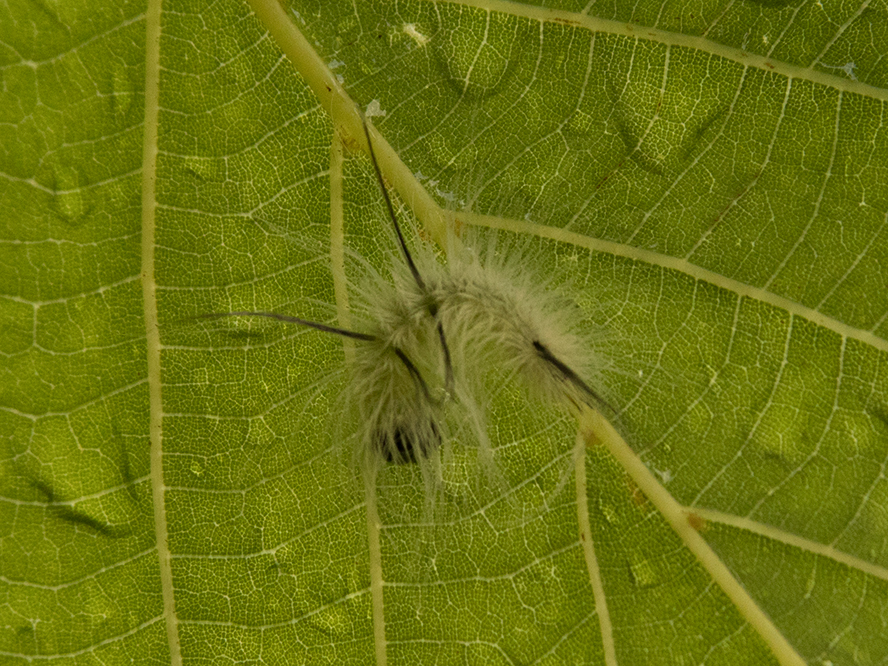
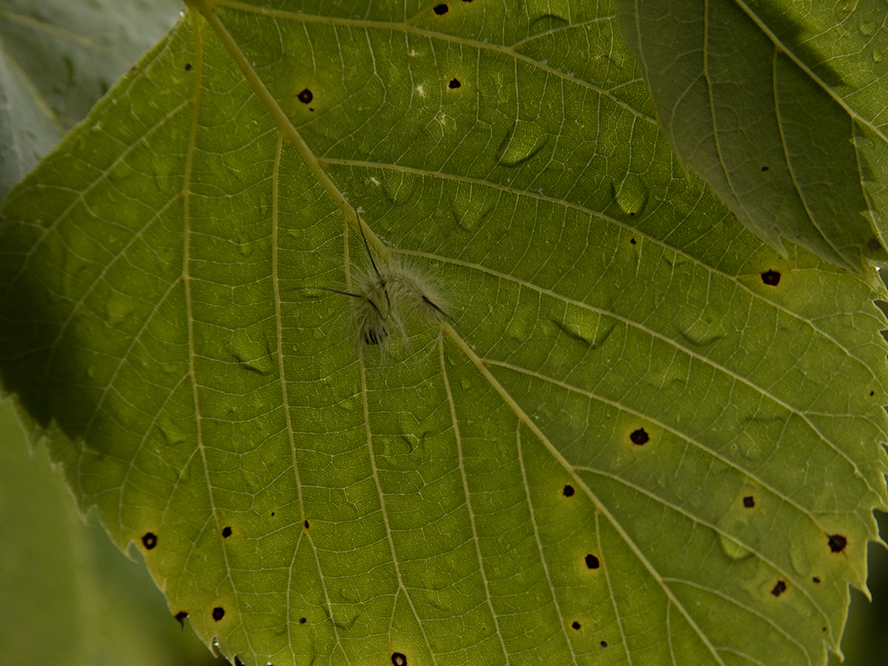
Unidentified moth
Orion Oaks County Park, August 10, 2019
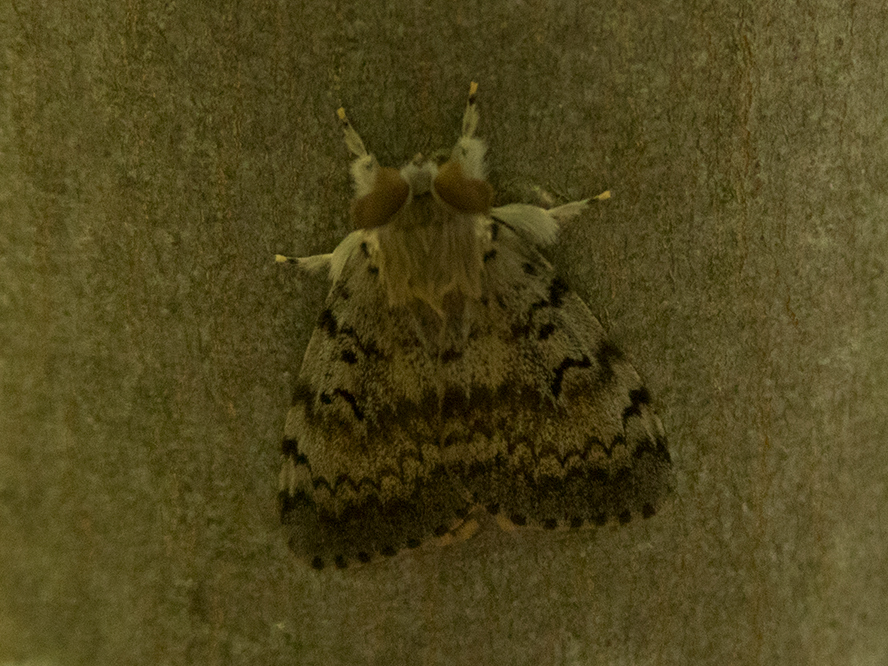
Unidentified caterpillar
Metamora-Hadley State Park, July 27, 2019
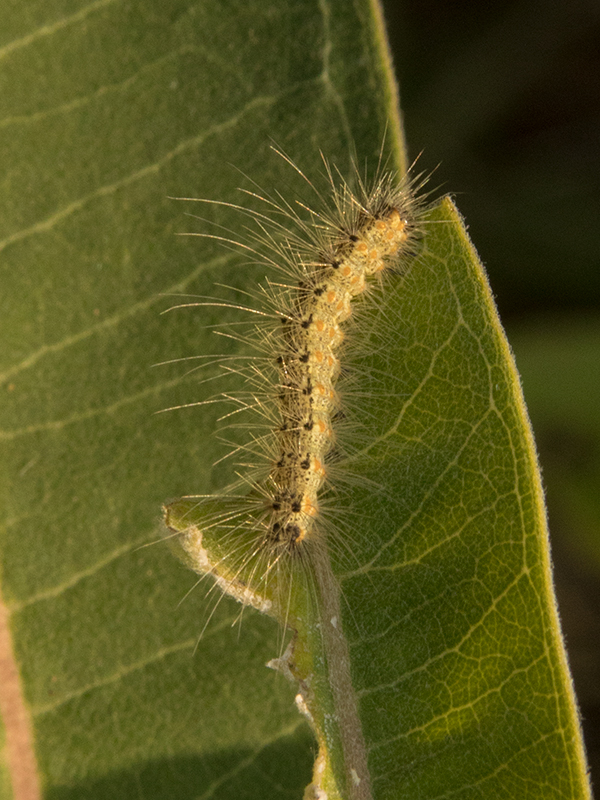
Unidentified caterpillar
Waterloo State Park, Baldwin Flooding, June 28, 2020
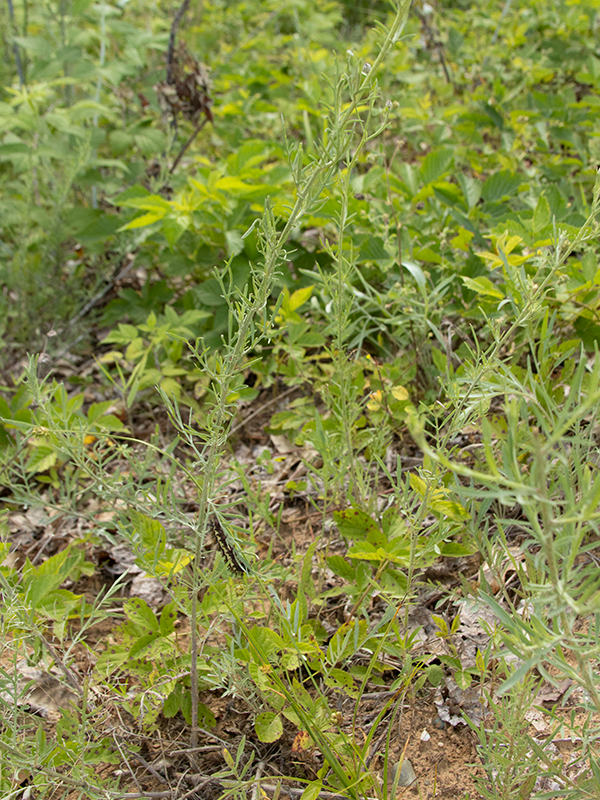
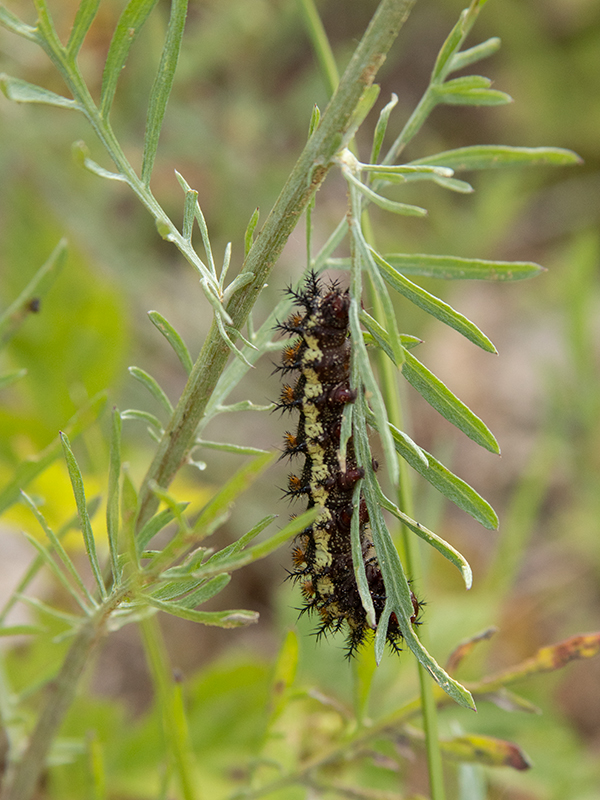
Leonard Preserve, June 21, 2020
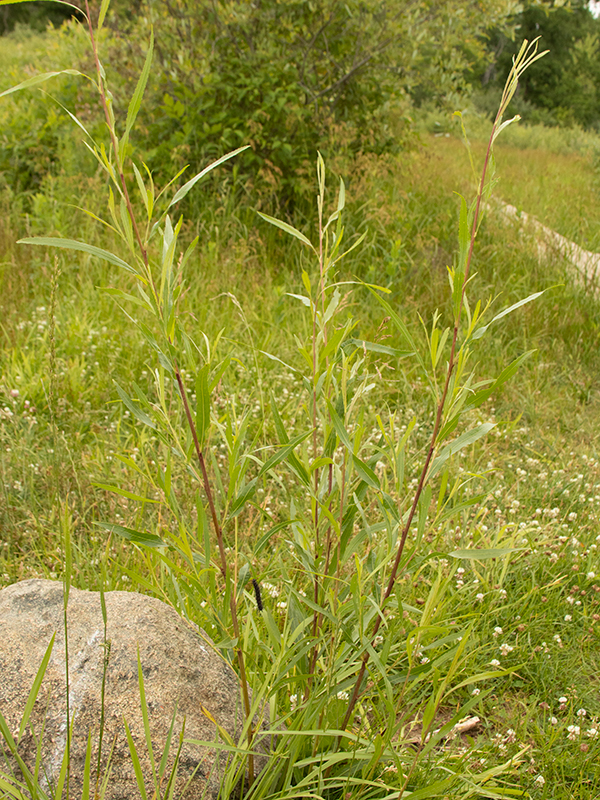
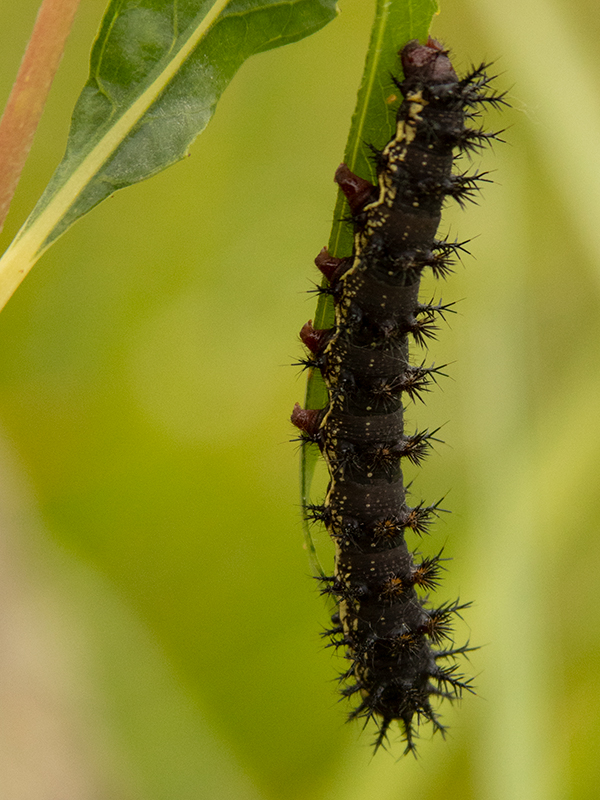
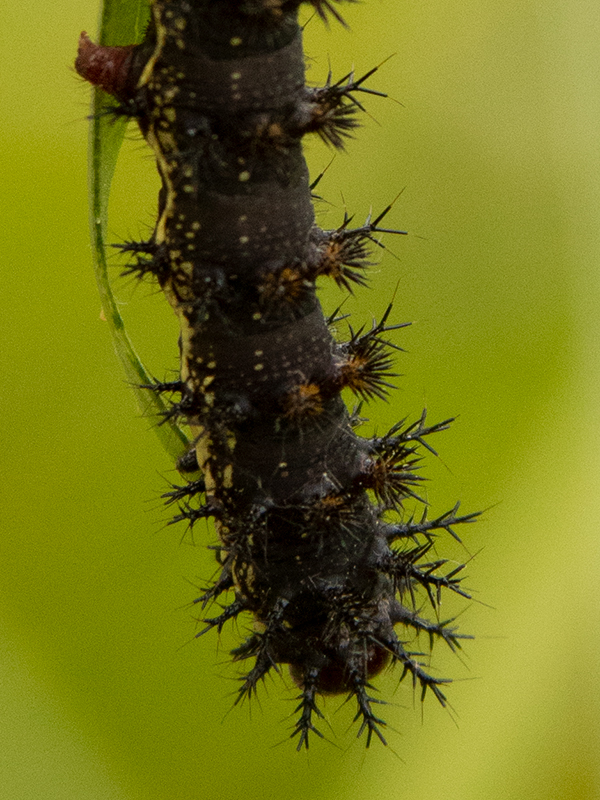
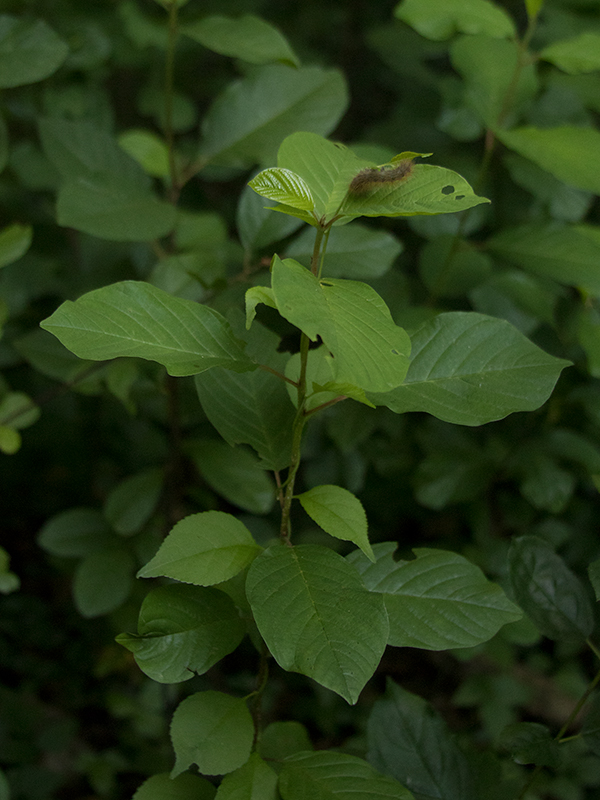
Deerfield Hills, July 14, 2019
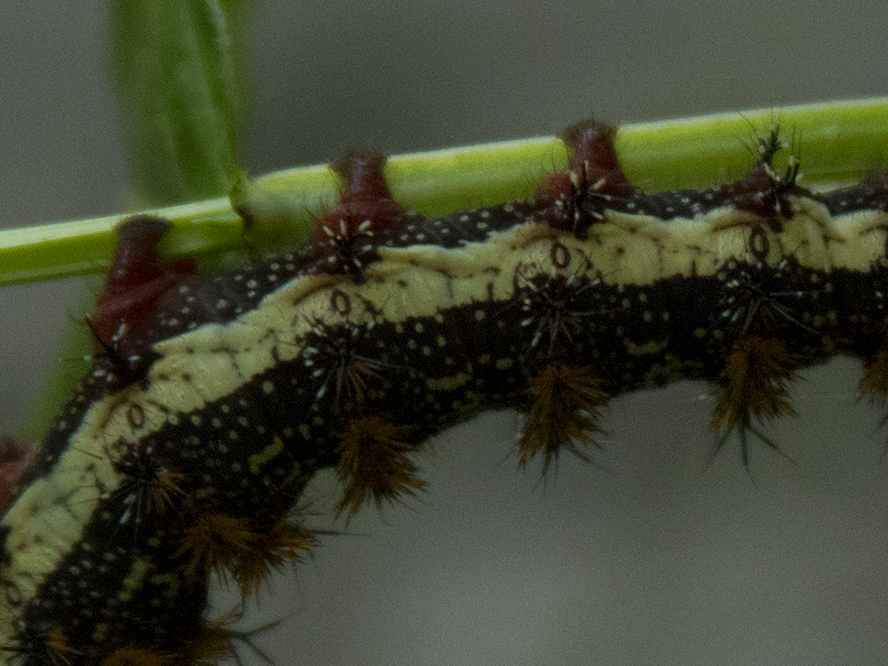
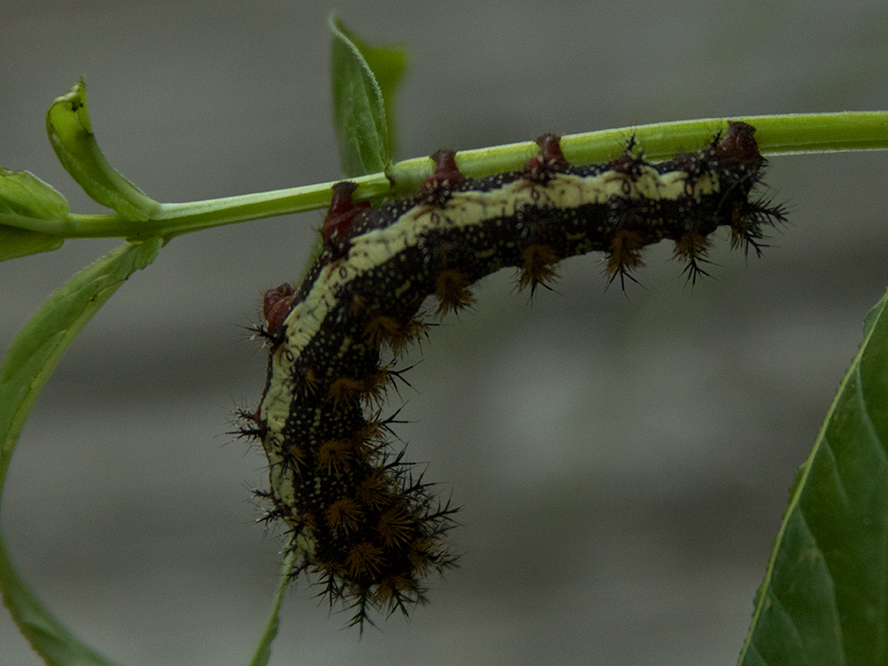
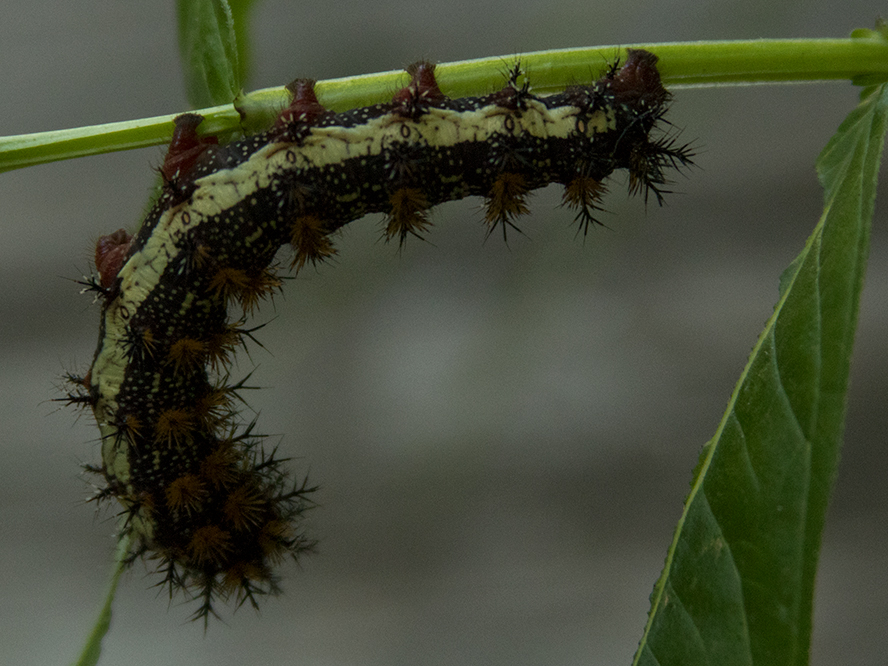
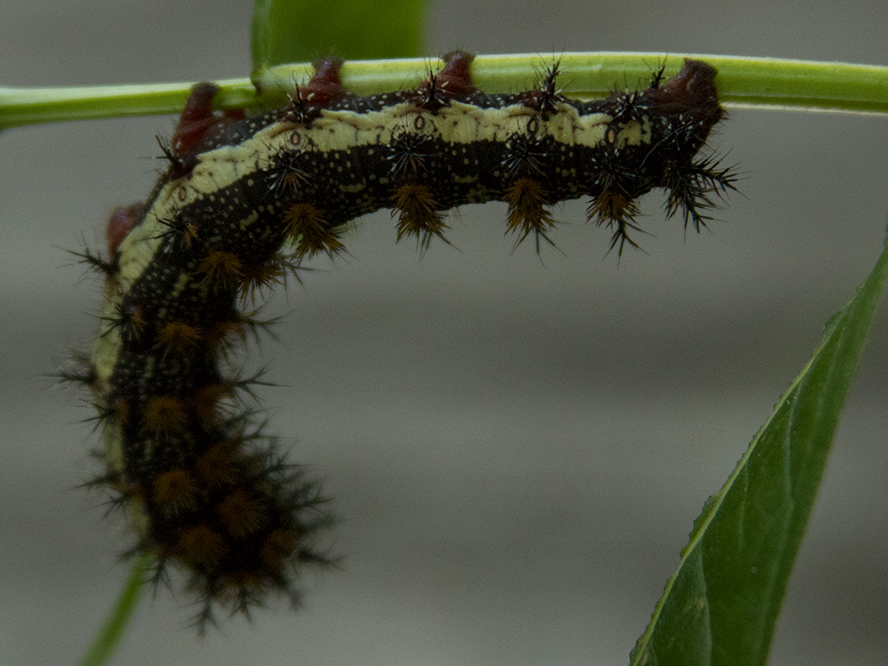
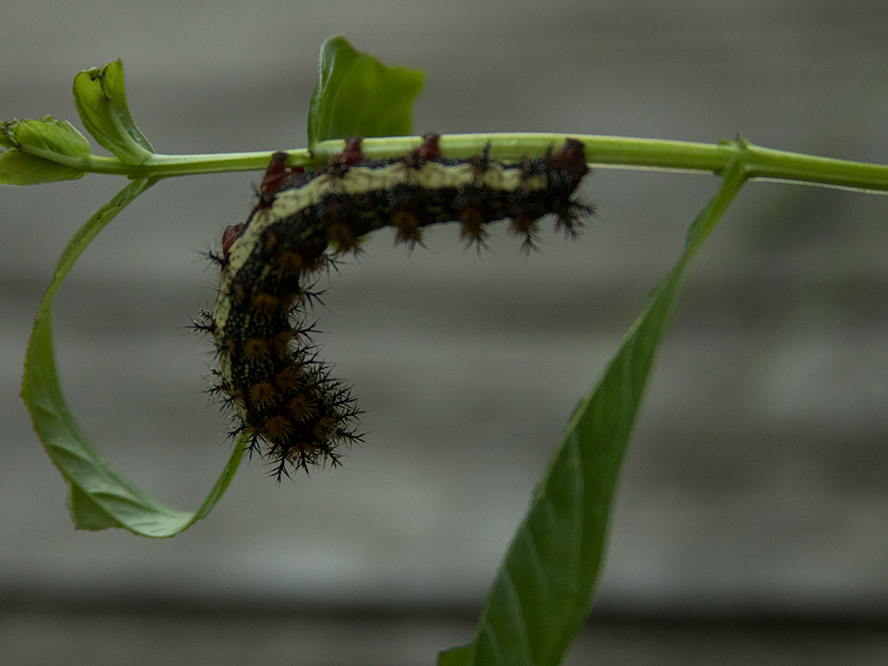
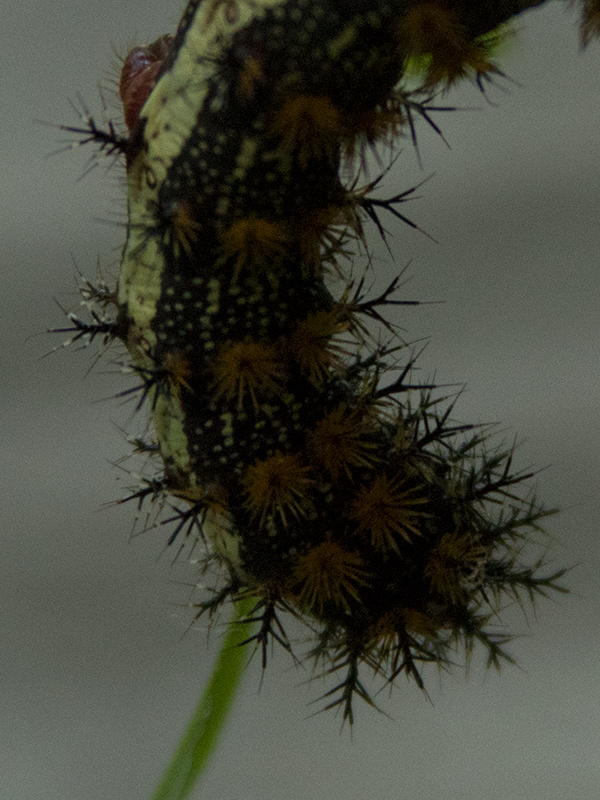
Unidentified caterpillar
Dahlem Conservancy, July 13, 2019
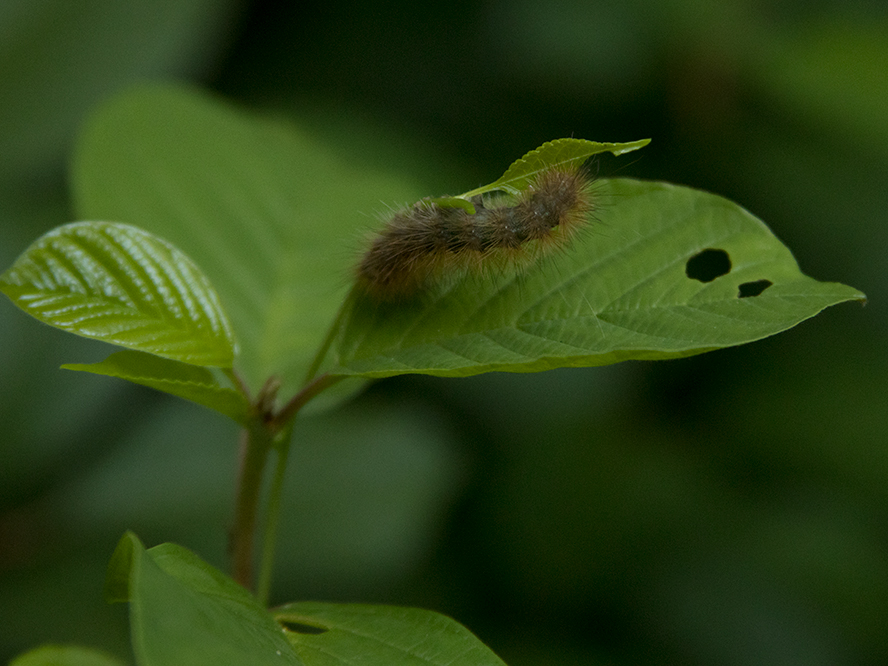
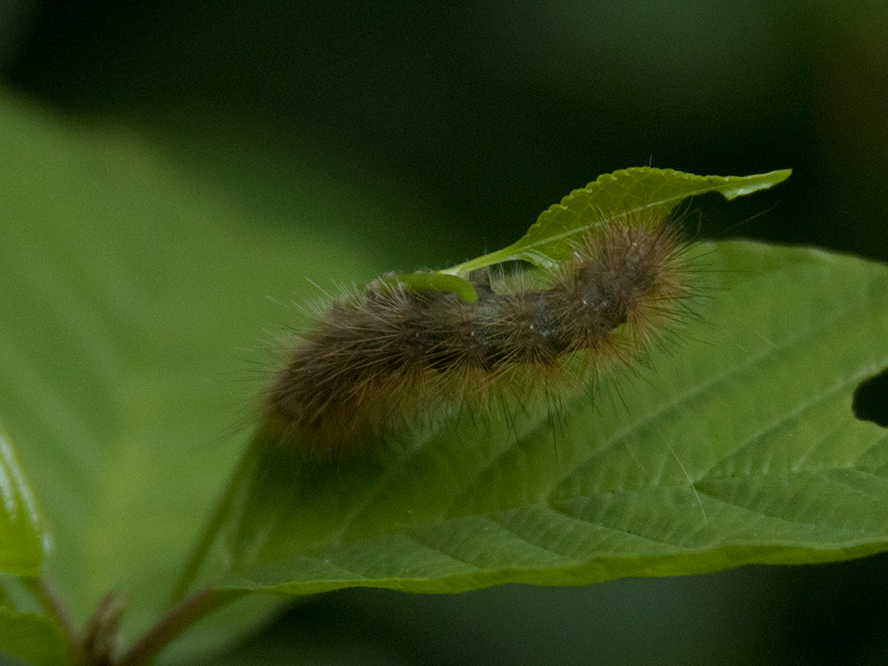
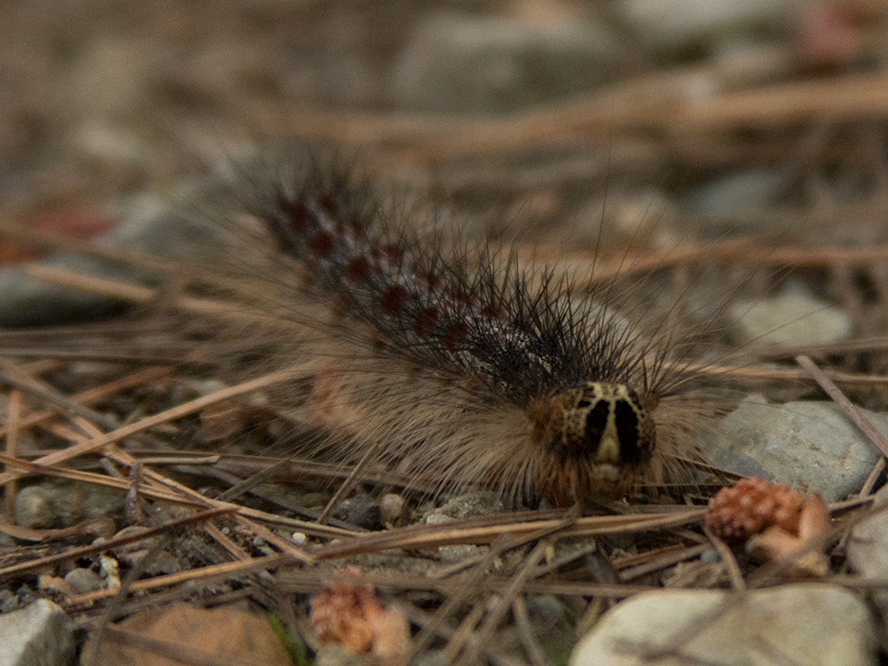
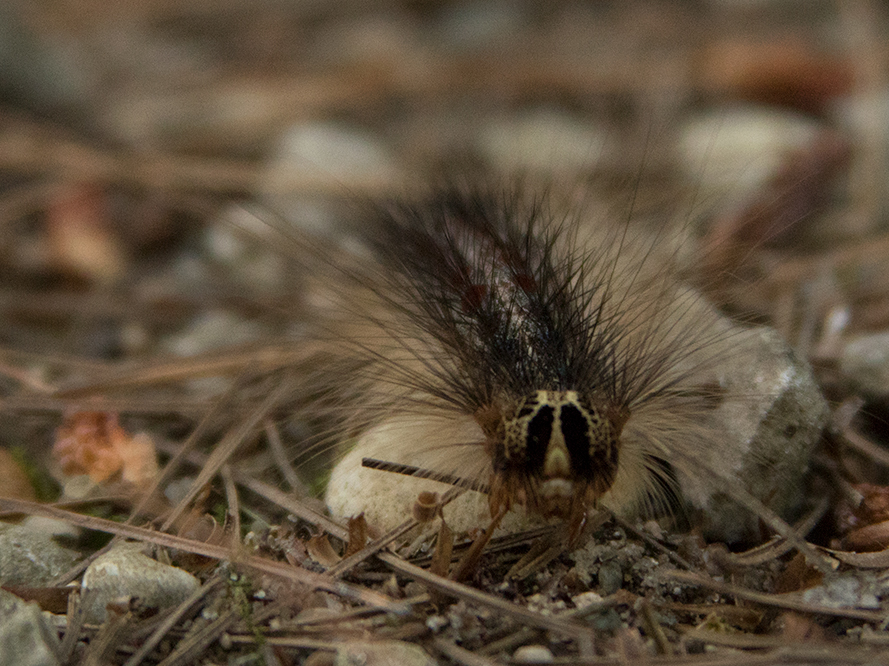
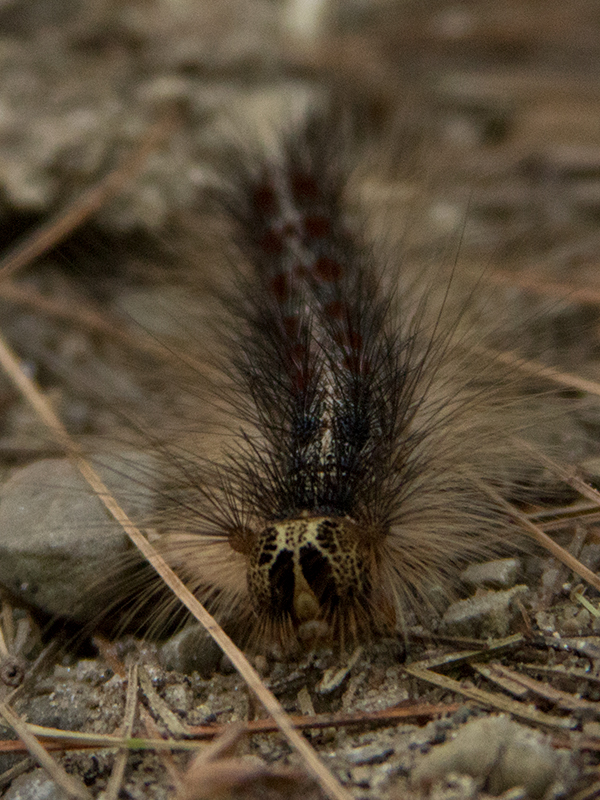
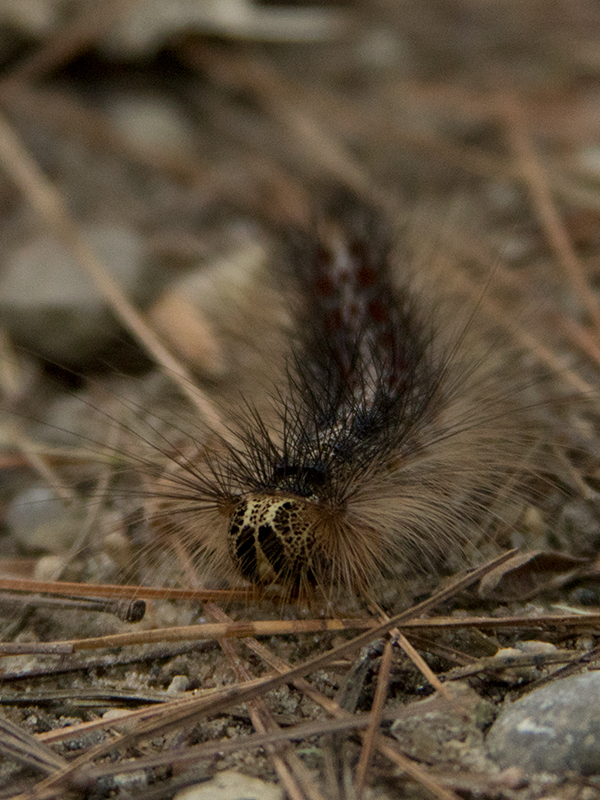
Asian Gypsy Moth, Lymantria dispar asiatica
Orion Oaks County Park, October 31, 2020
Vacated pupae.
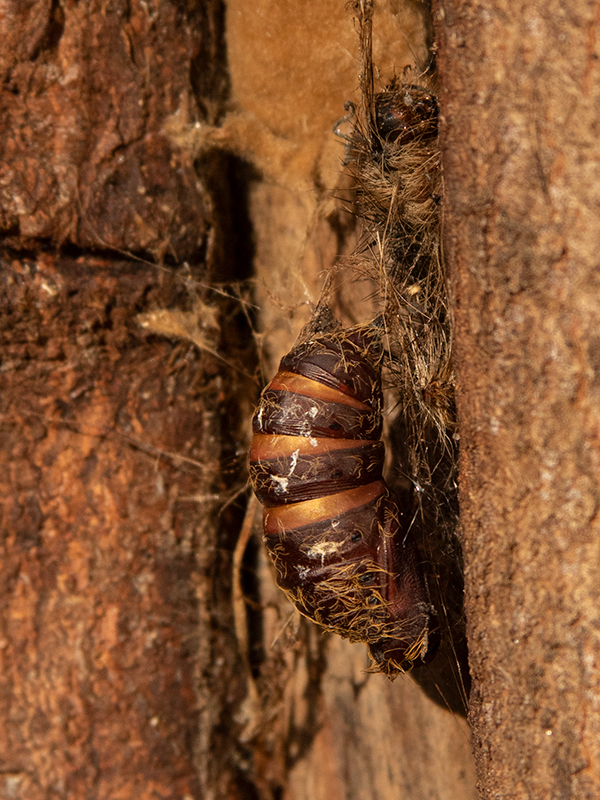
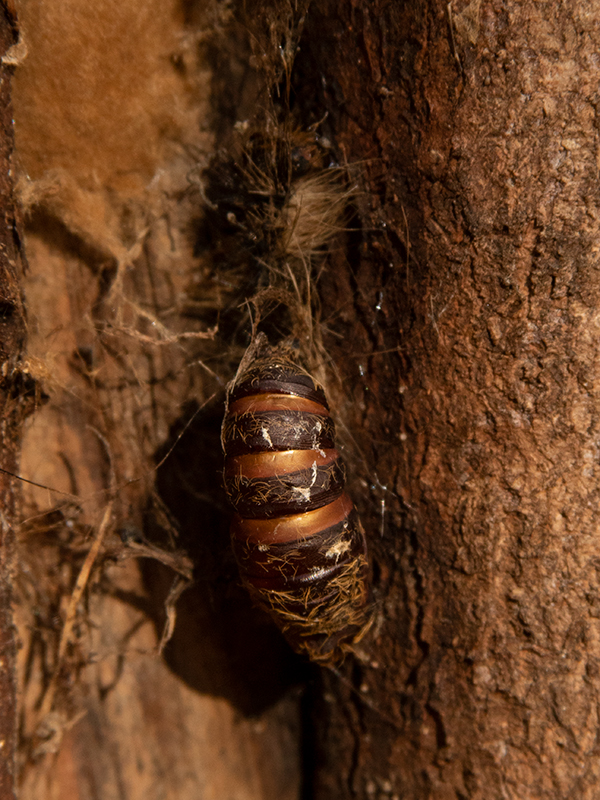
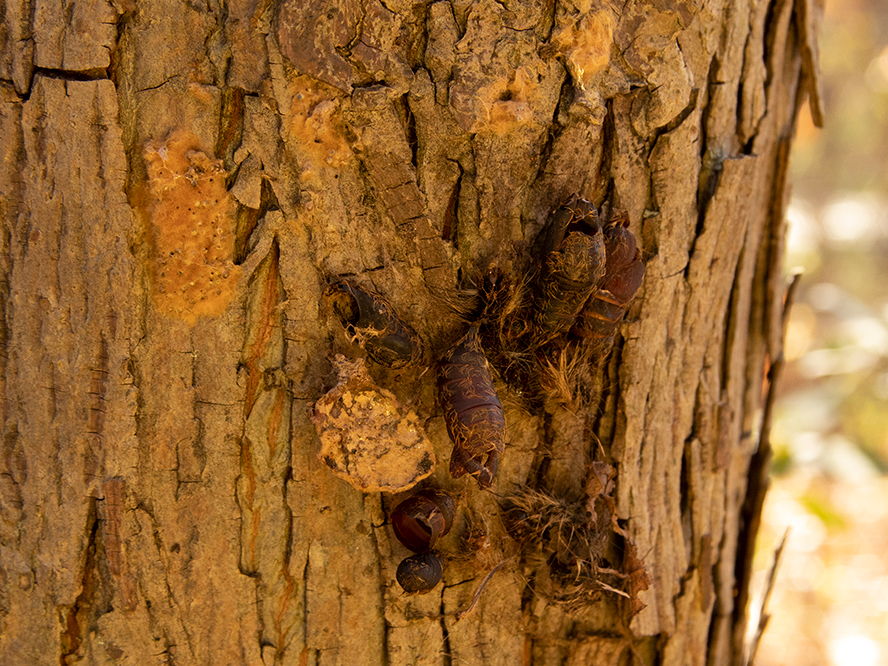
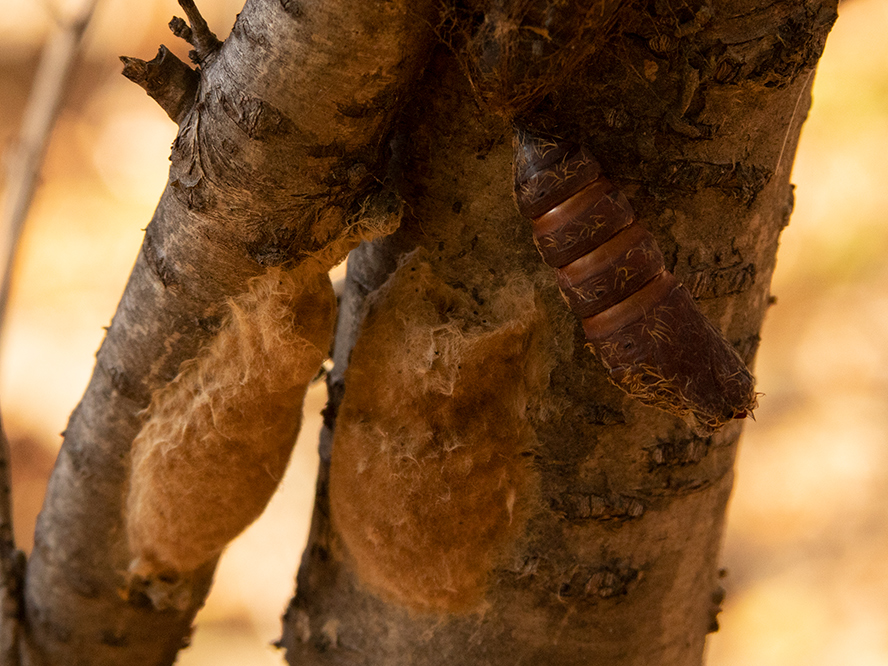
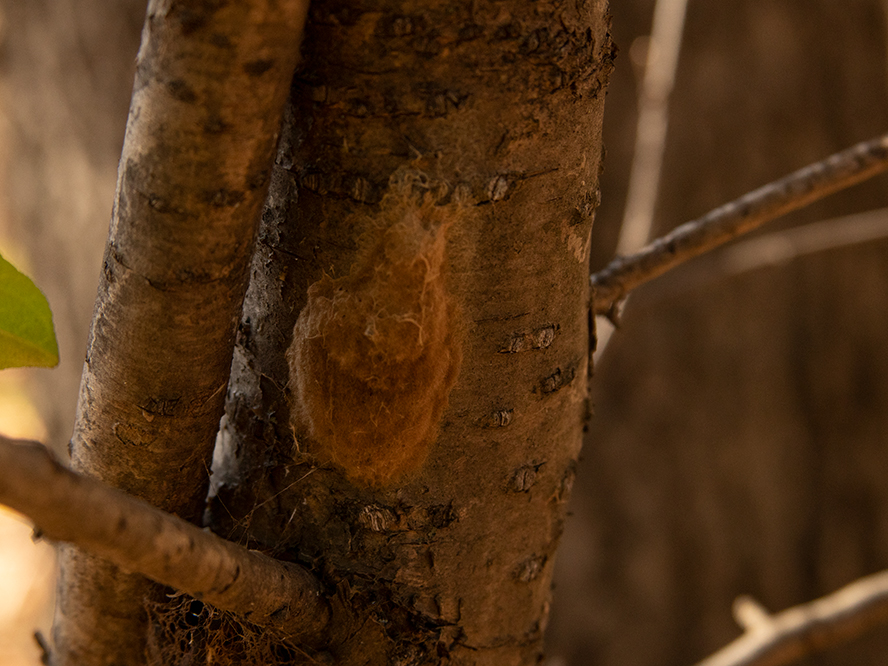
Waterloo State Park, July 12, 2020
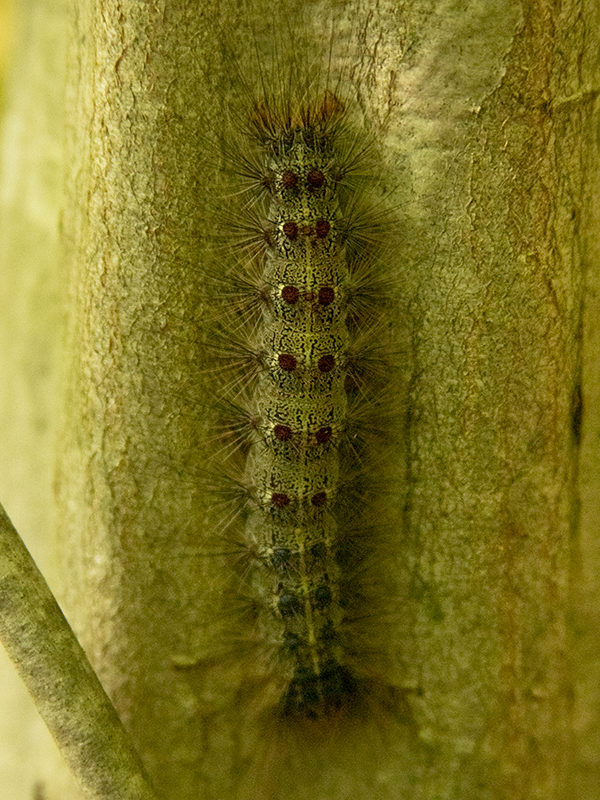
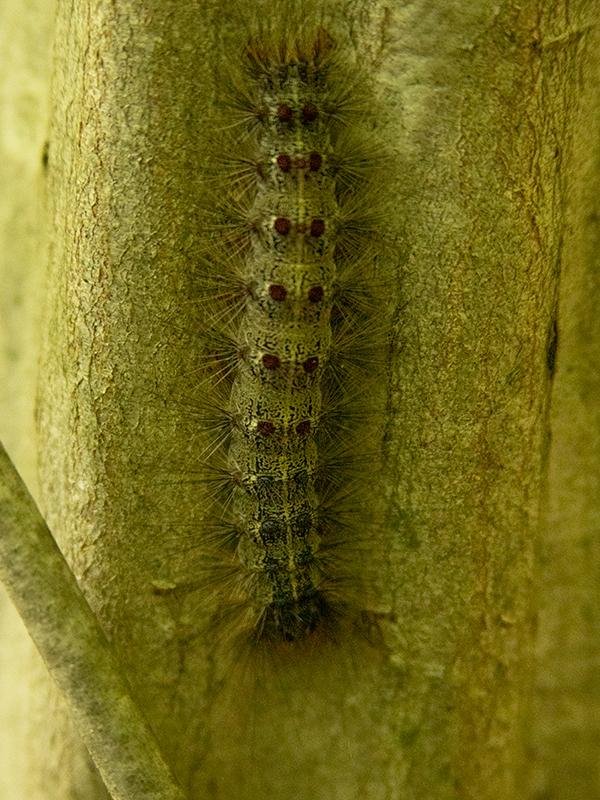
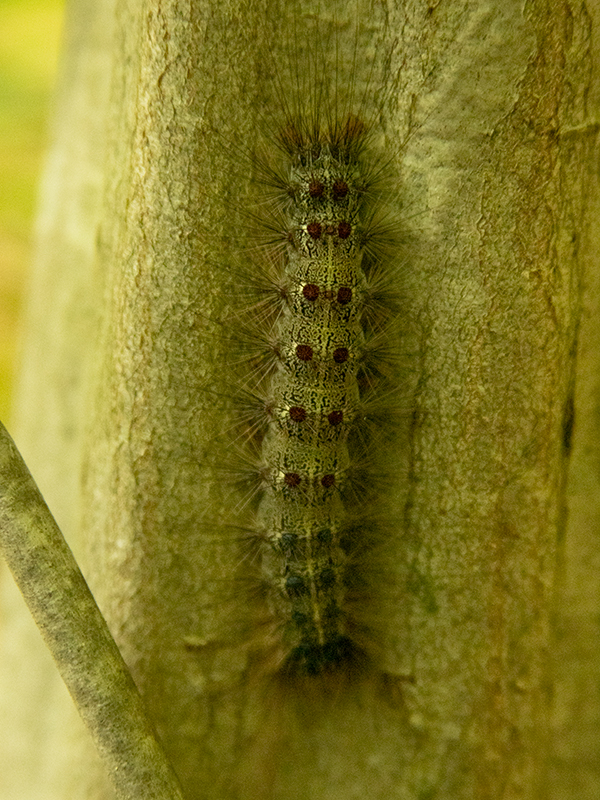
Stinchfield Woods, June 30, 2019
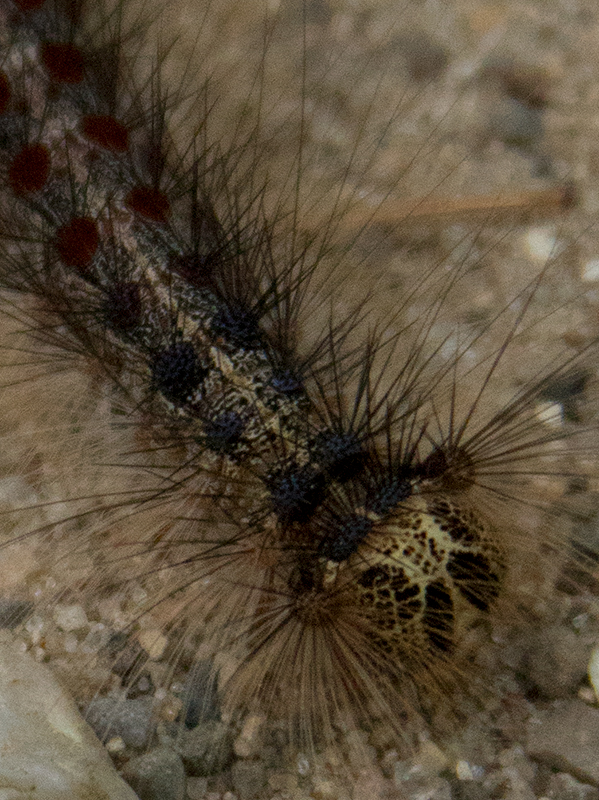
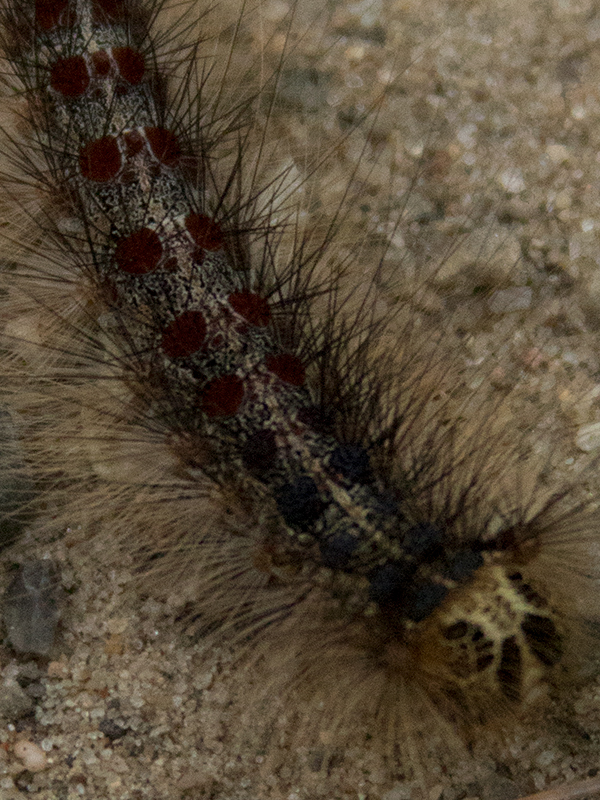
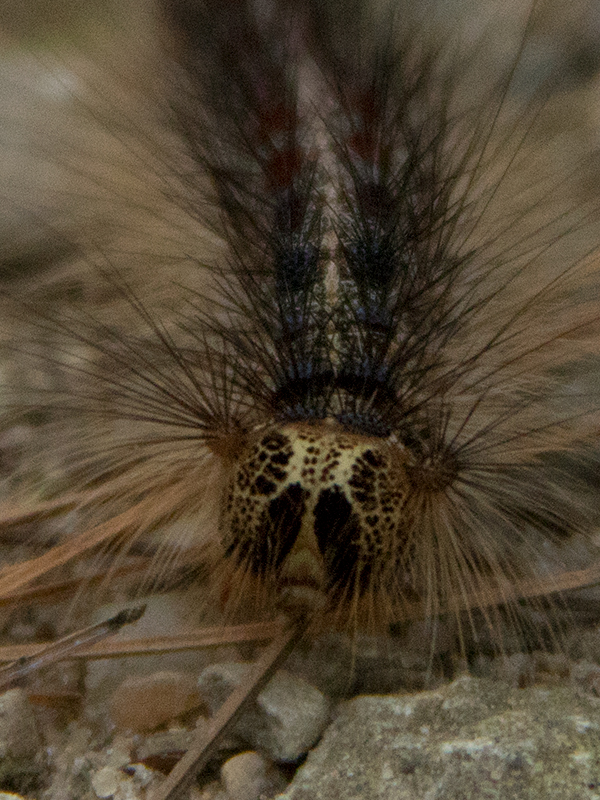
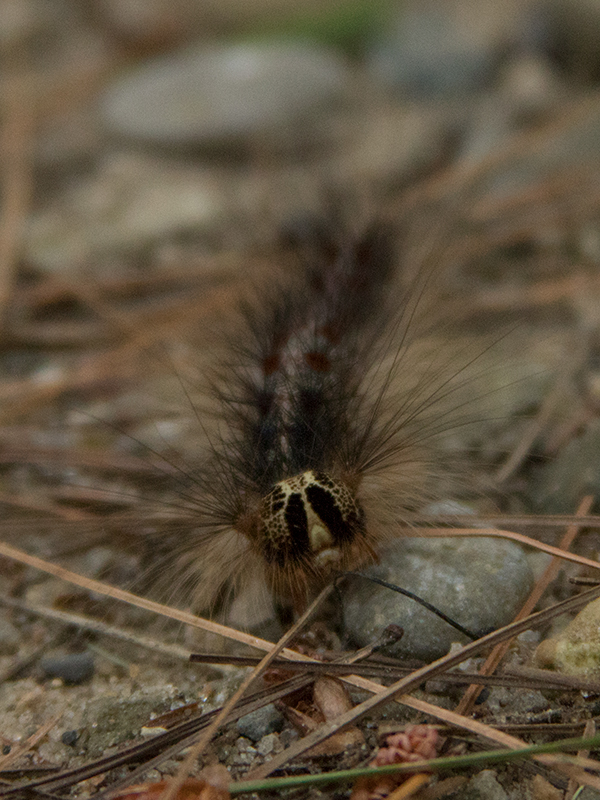
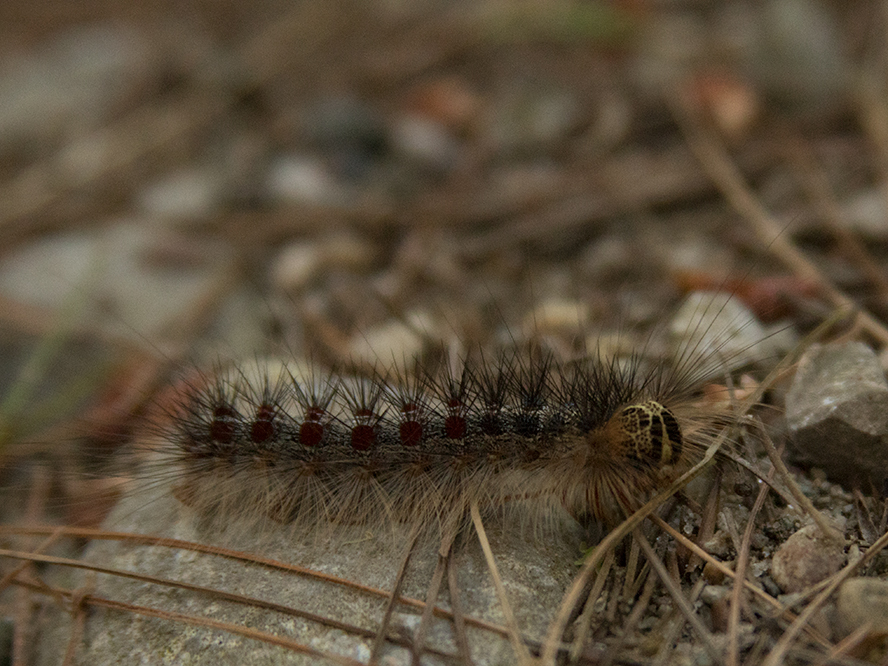
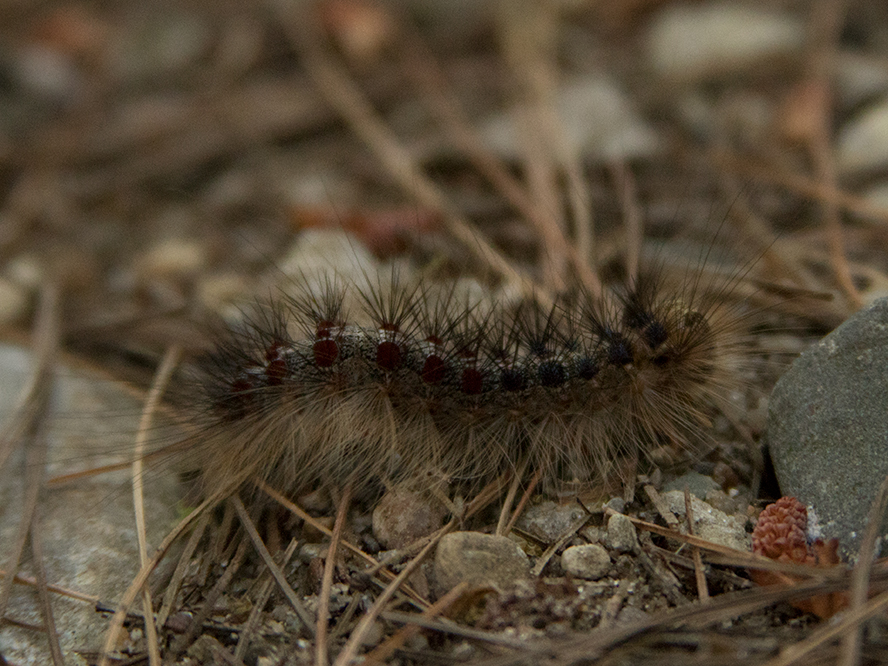
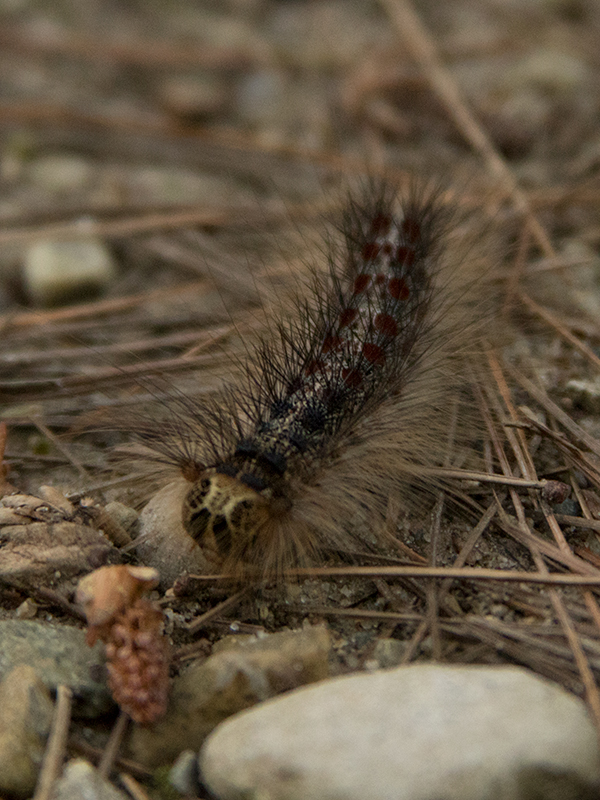
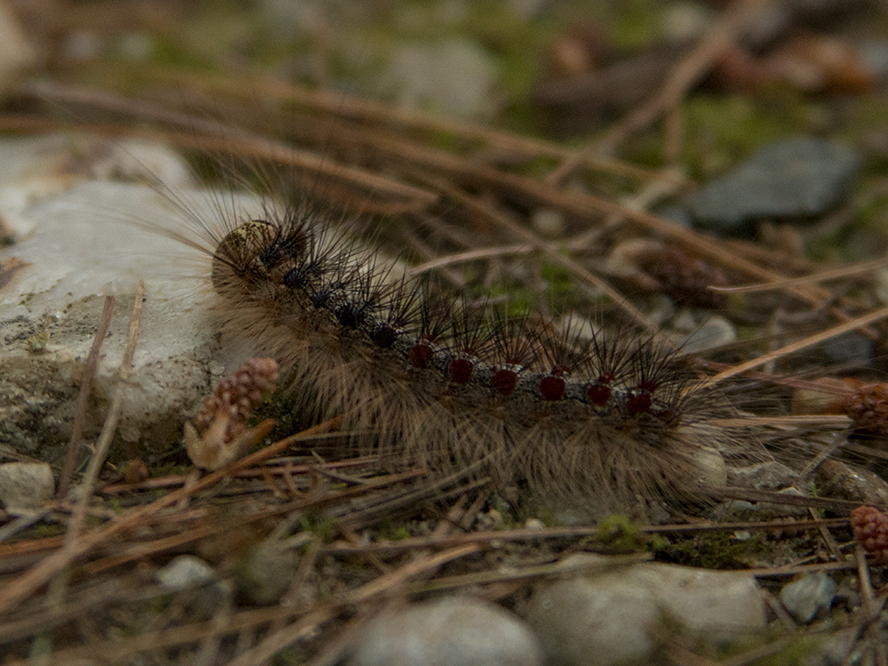
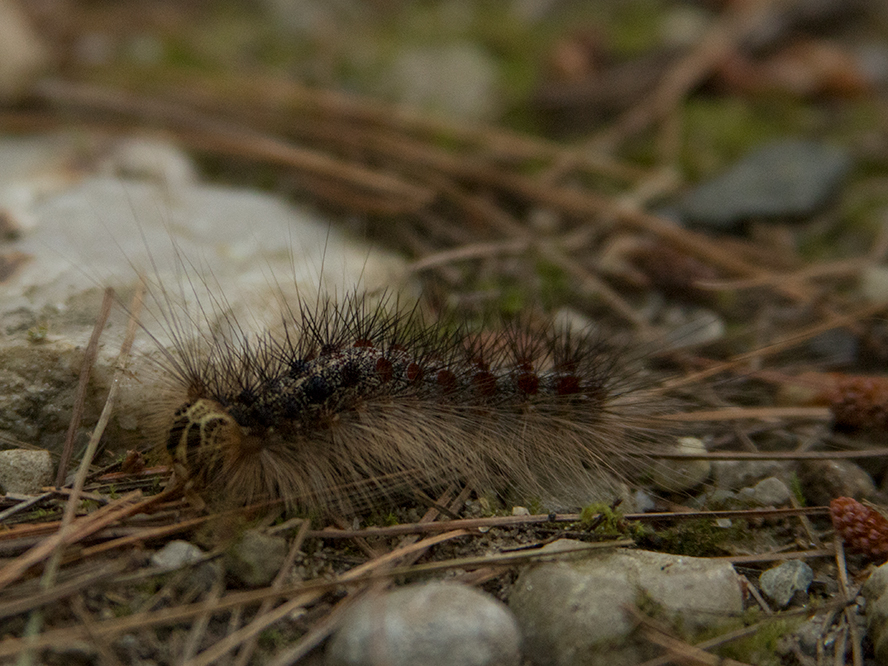
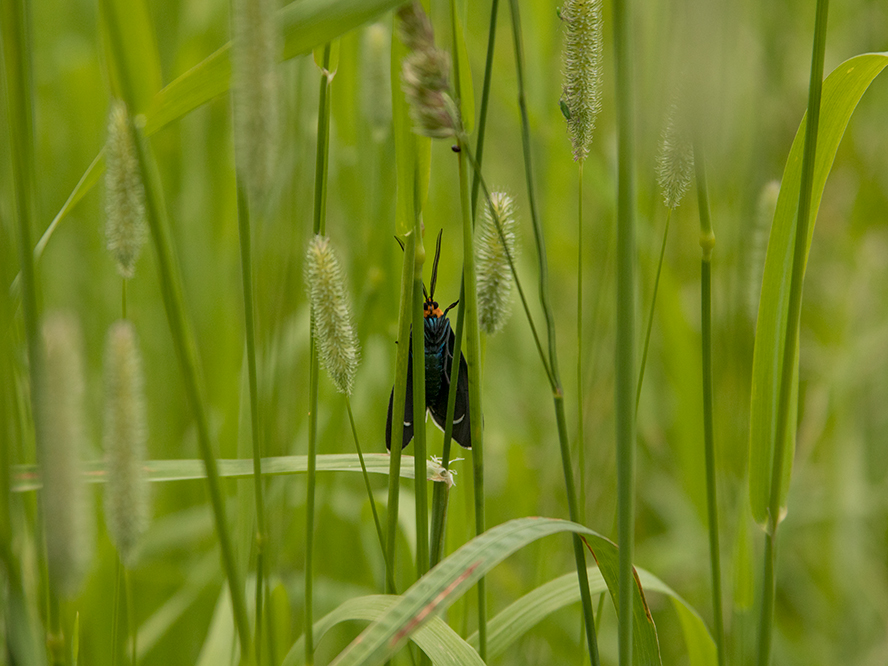
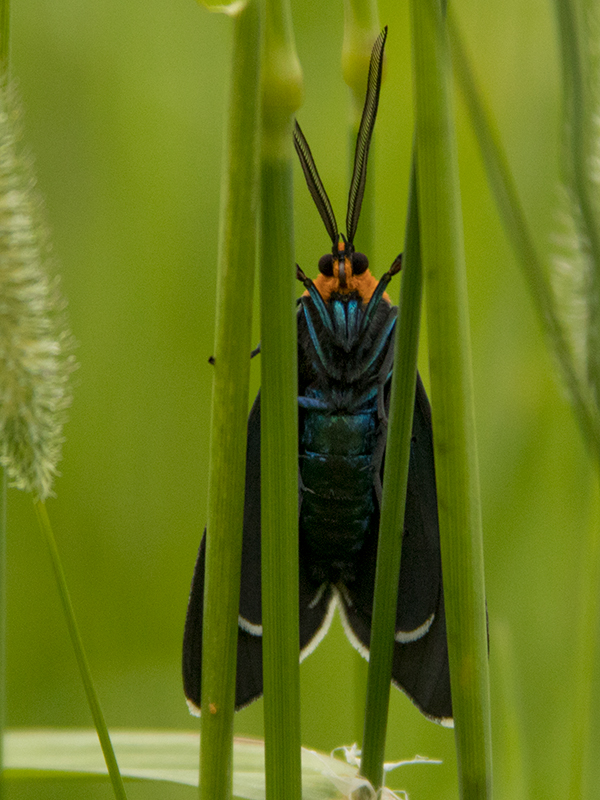
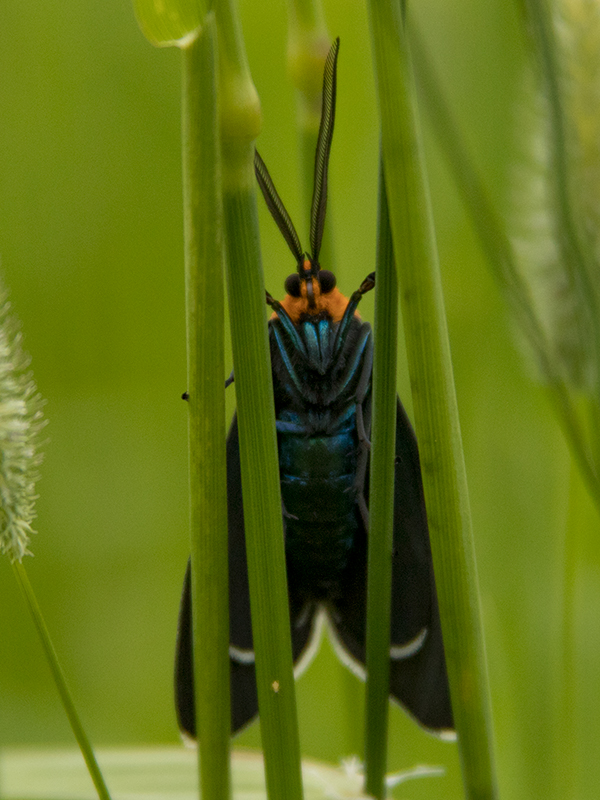
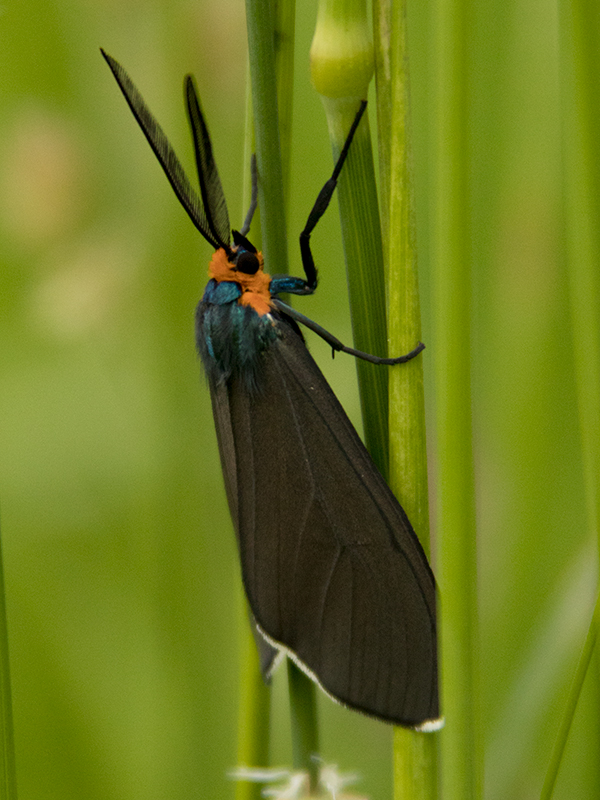
Ctenucha virginica
Conservancy Farm, July 3, 2020 (three were observed, one photographed)
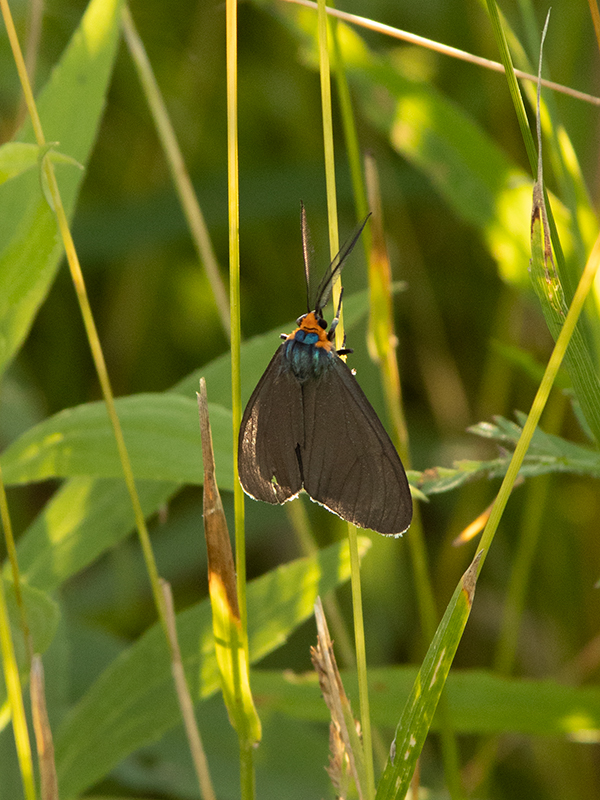
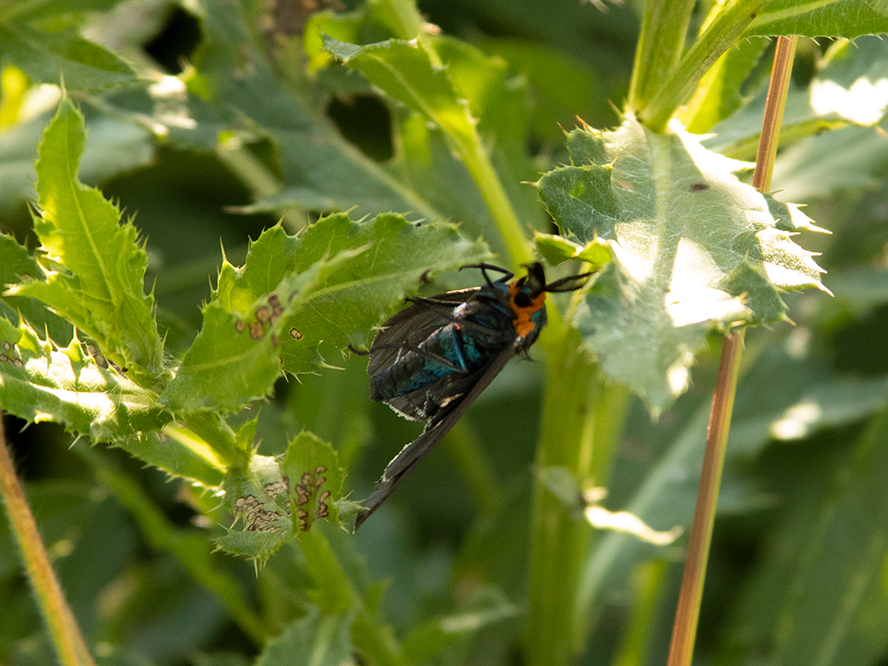
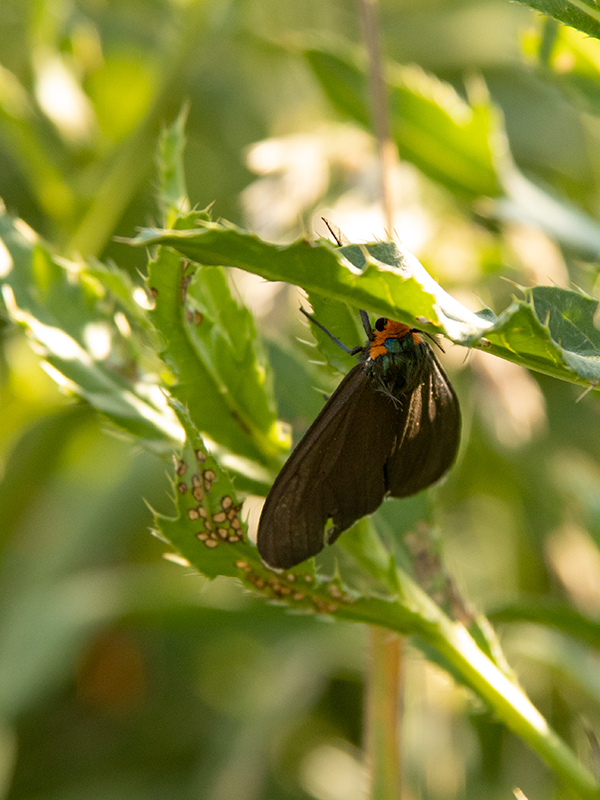
Kosch Preserve, June 15, 2019
Unidentified cocoon
Crosswinds Marsh, June 8, 2019
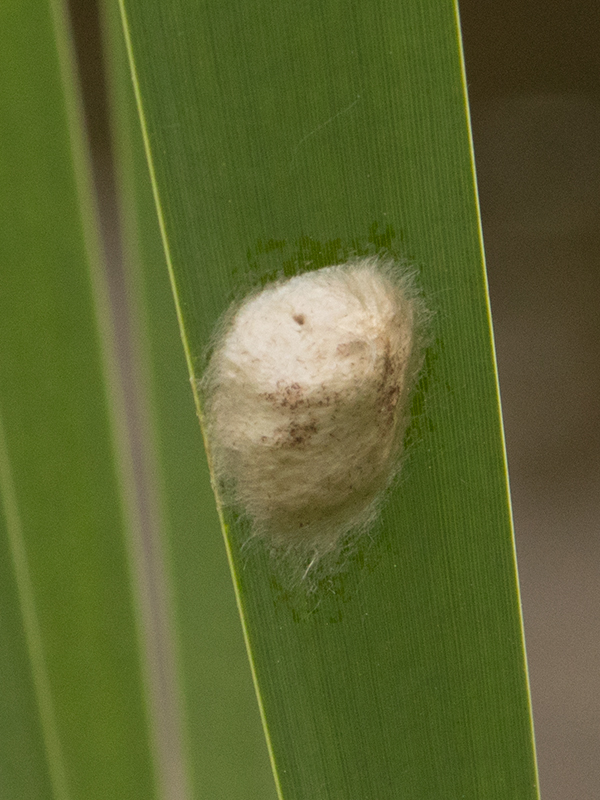
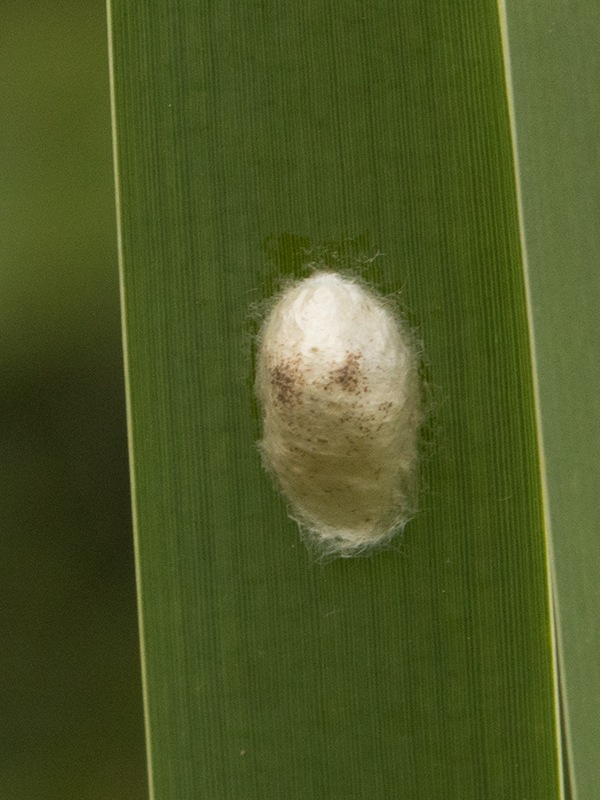
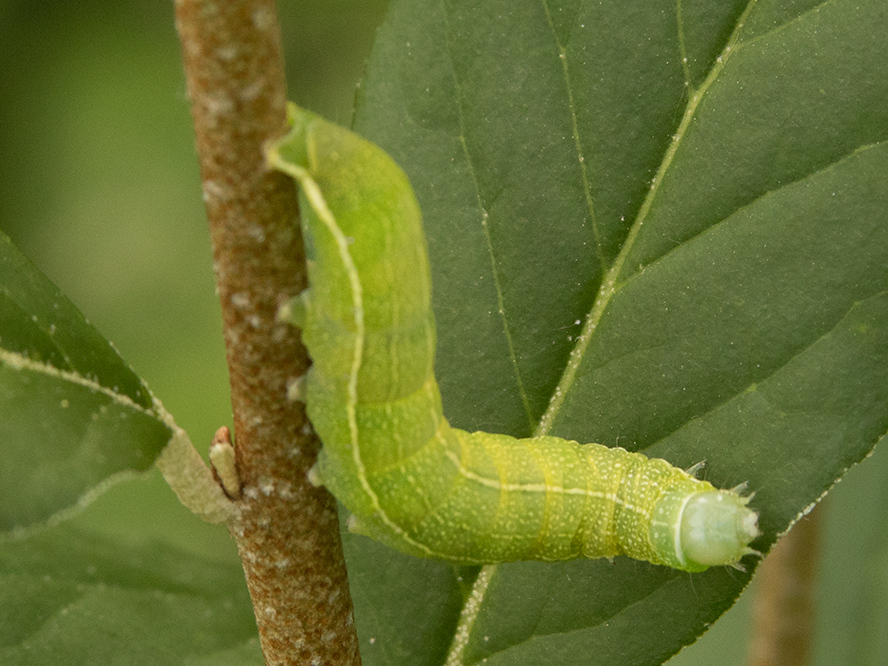
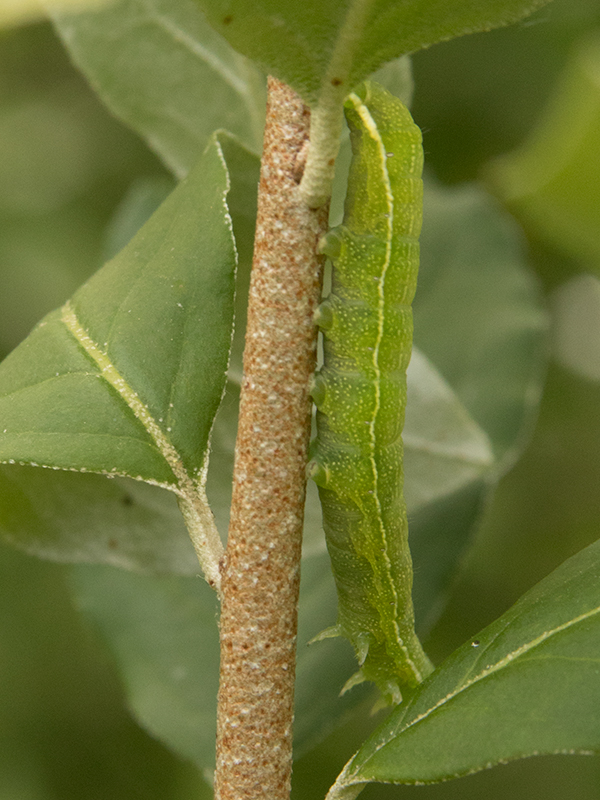
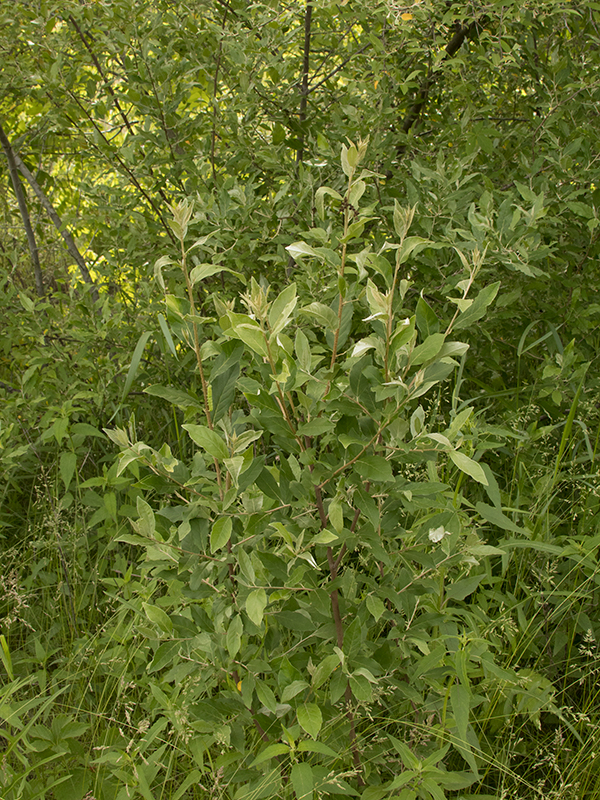
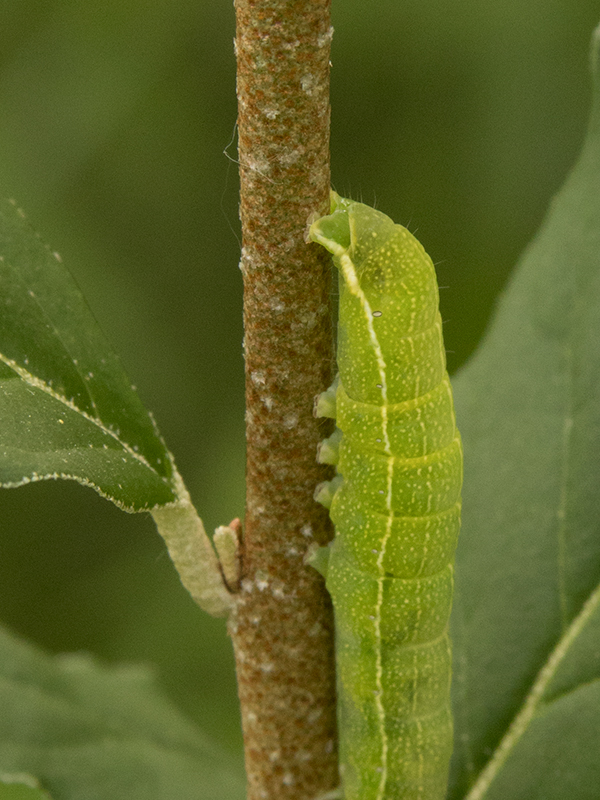
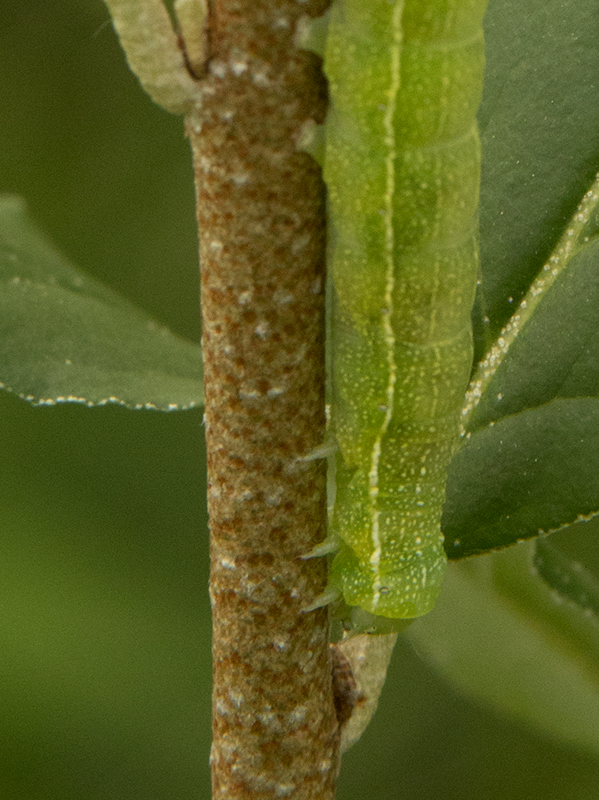
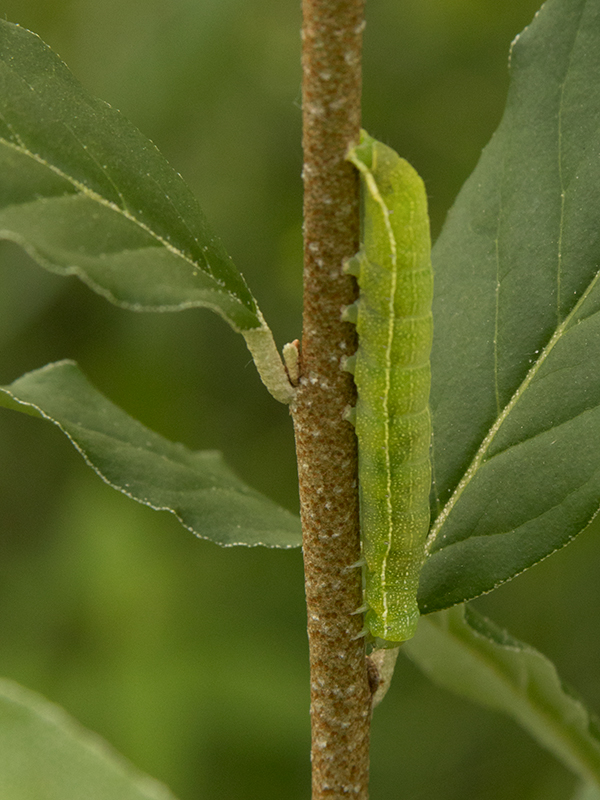
Unidentified caterpillar
Crosswinds Marsh, June 8, 2019
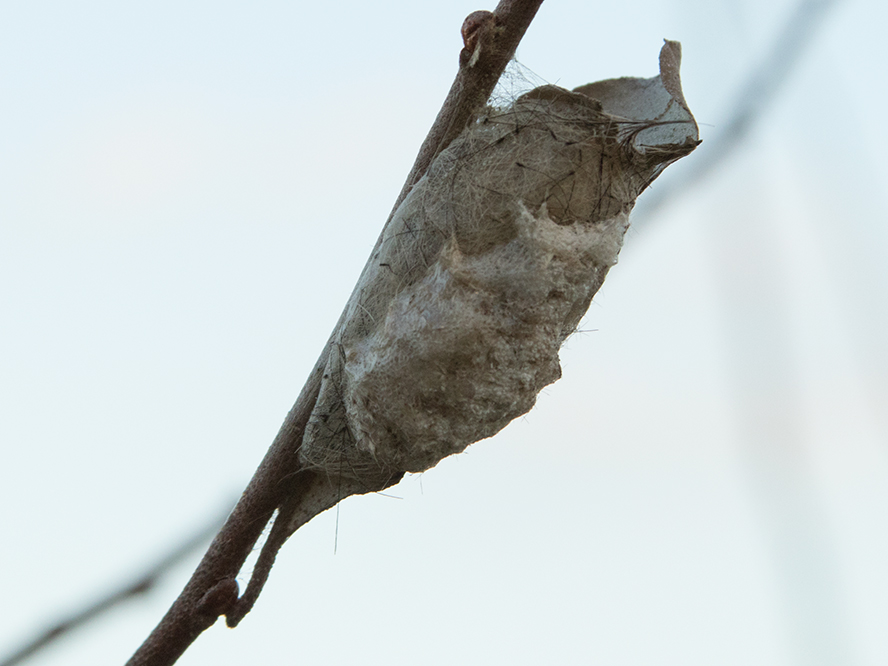
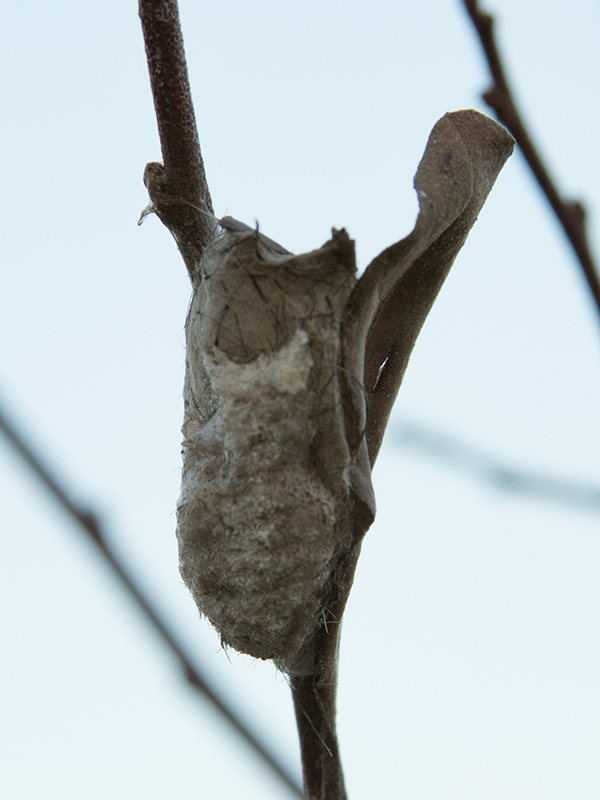
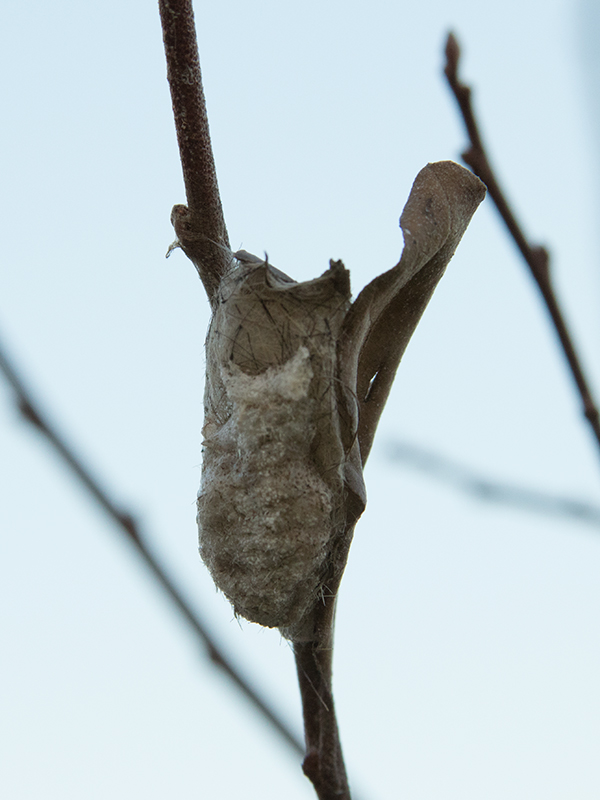
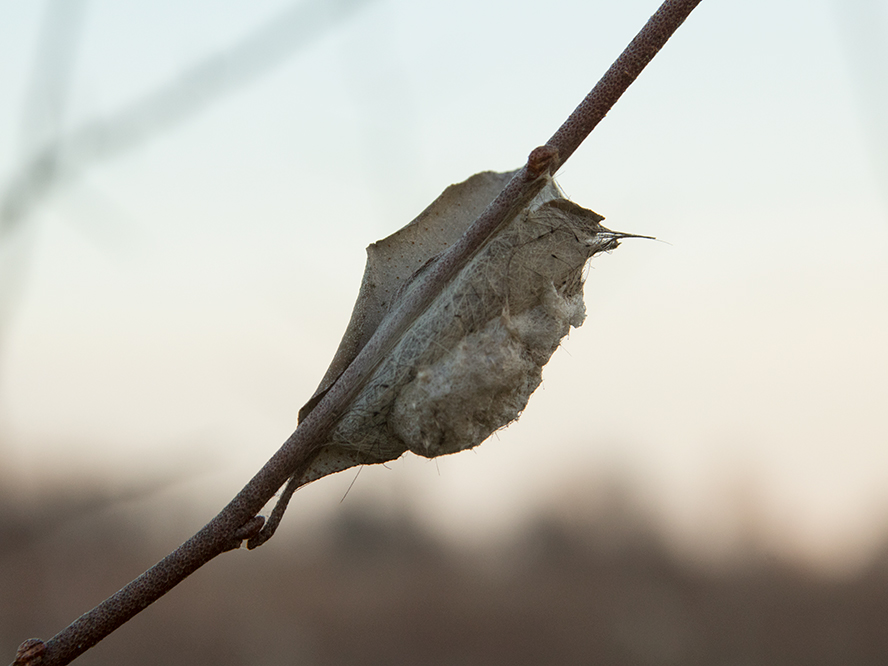
Unidentified cocoon
Lake Erie Metropark, December 8, 2018
On the side of the field trail.
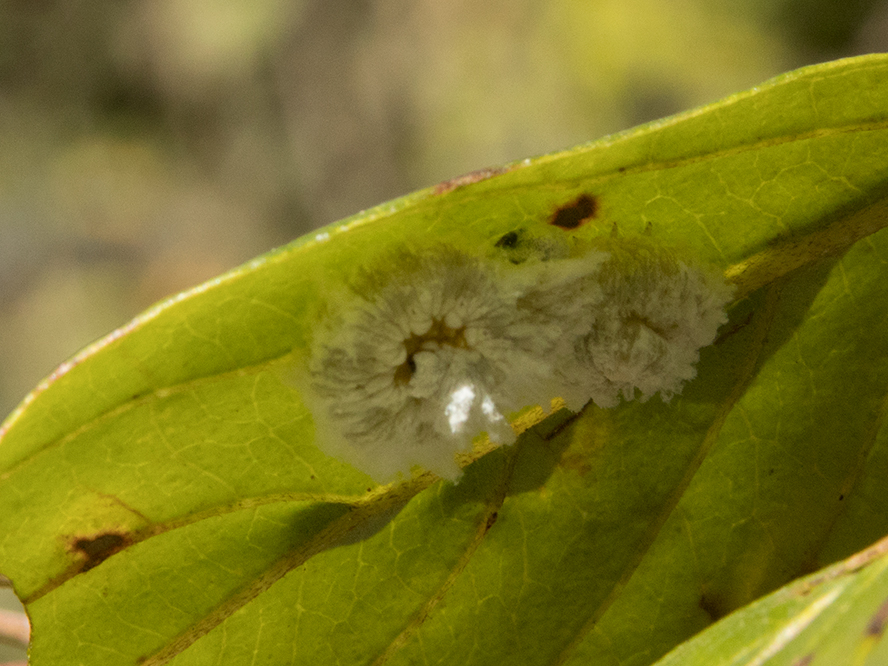
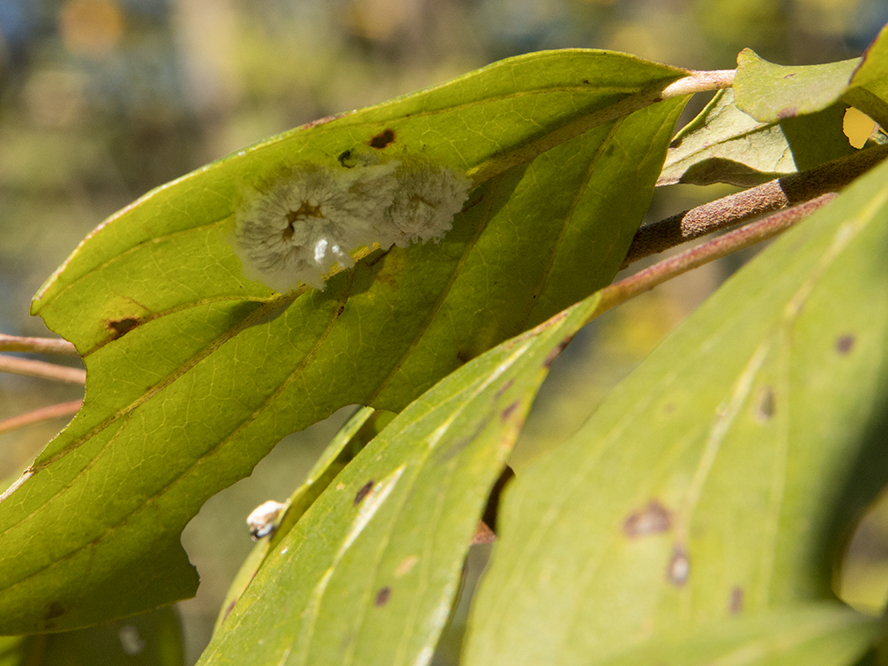
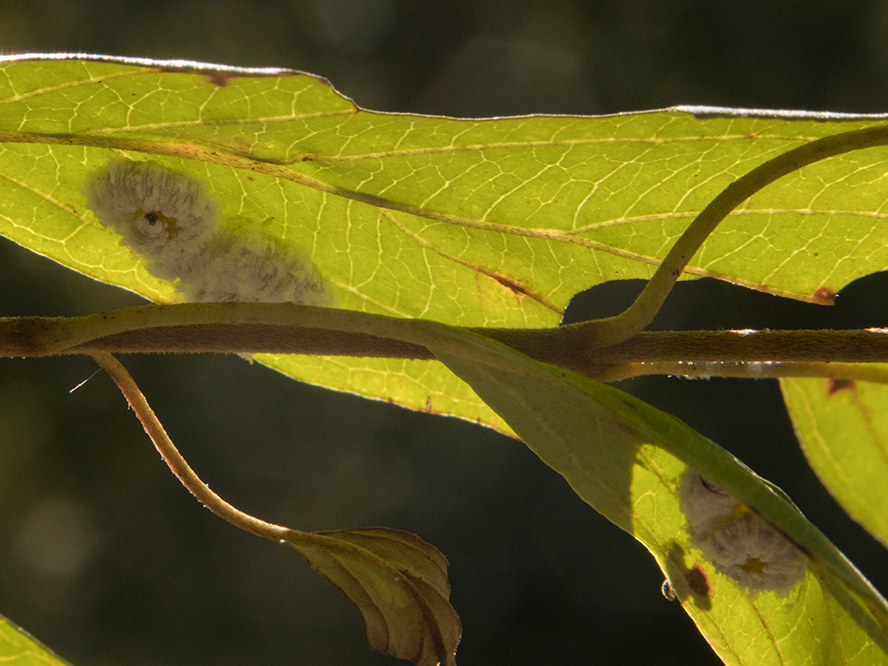
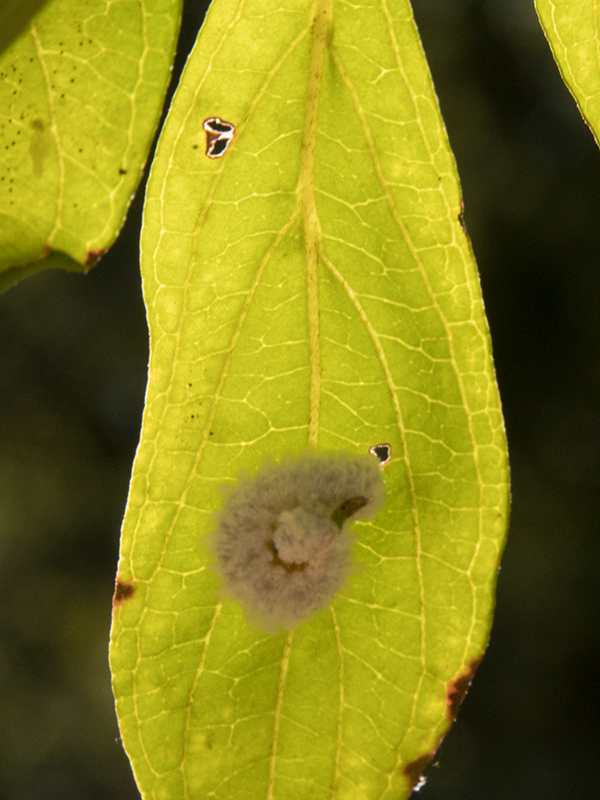
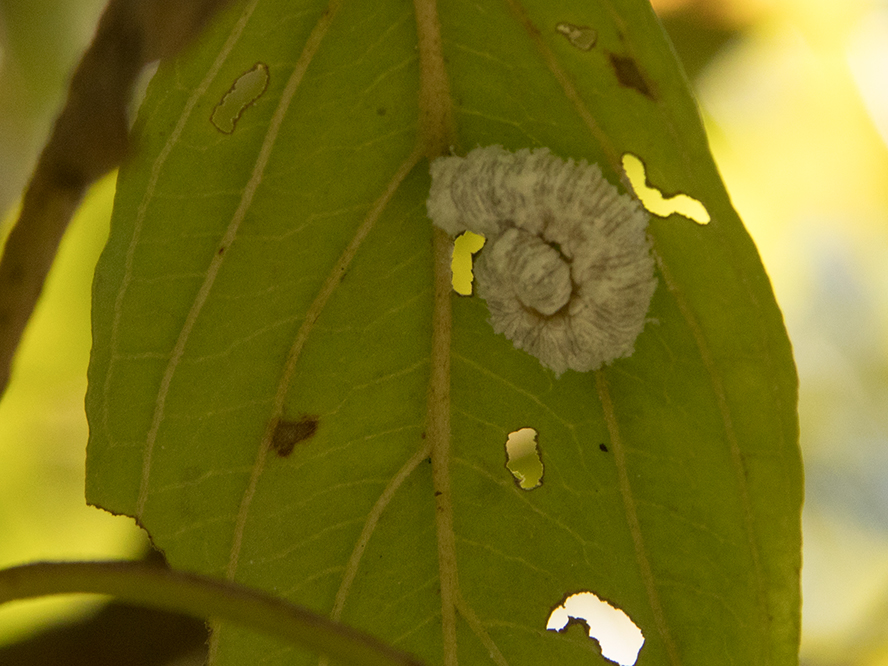
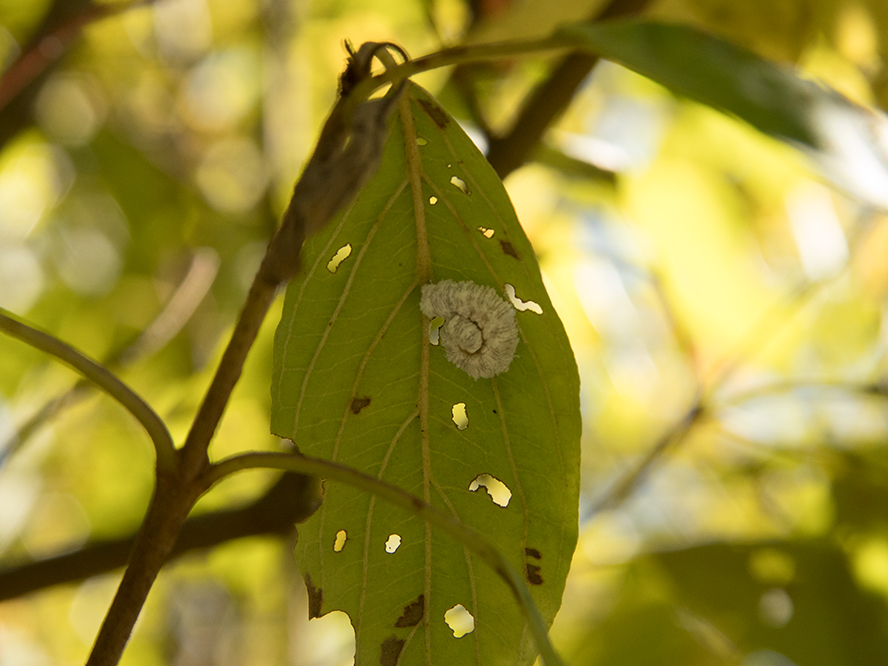
Unidentified larvae
Crosswinds Marsh, September 16, 2018
These caterpillars were coiled up underneath a tree's leaves.
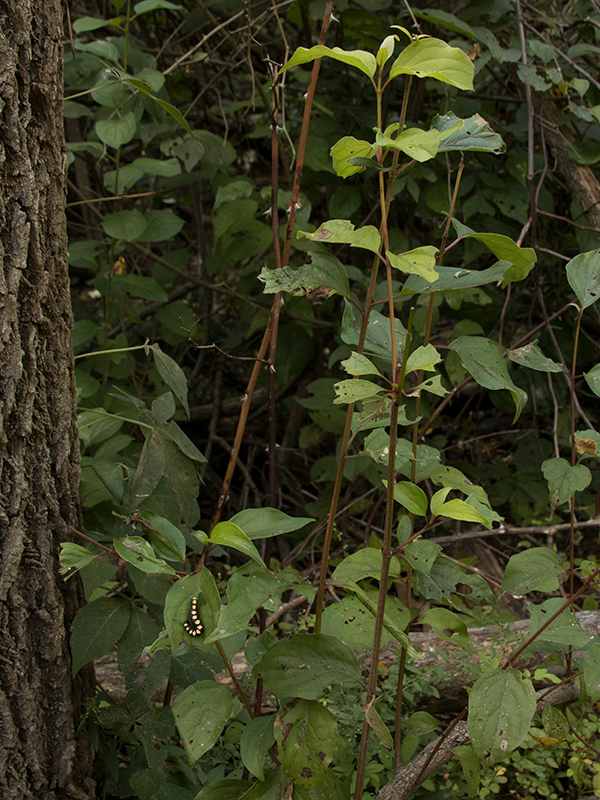
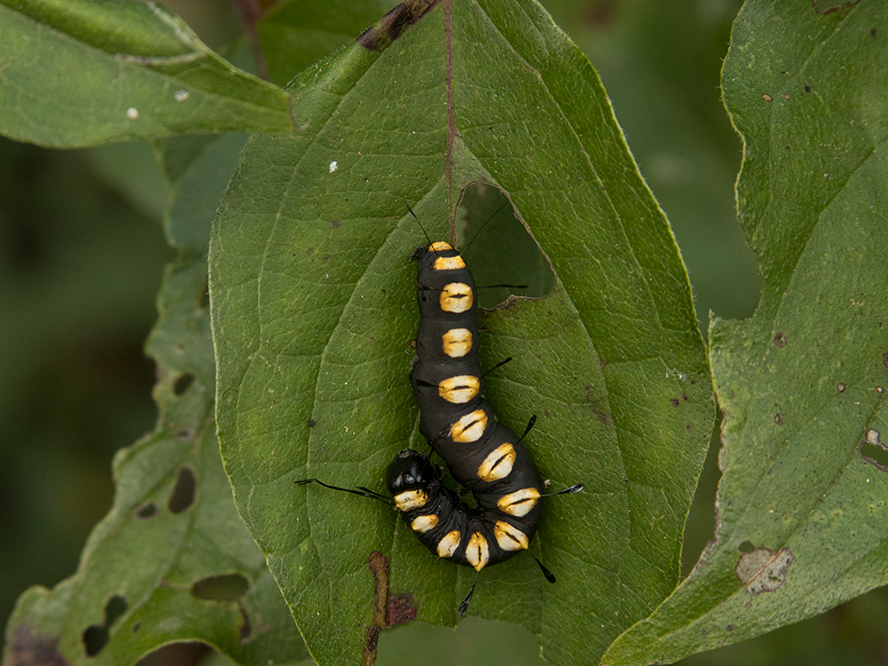
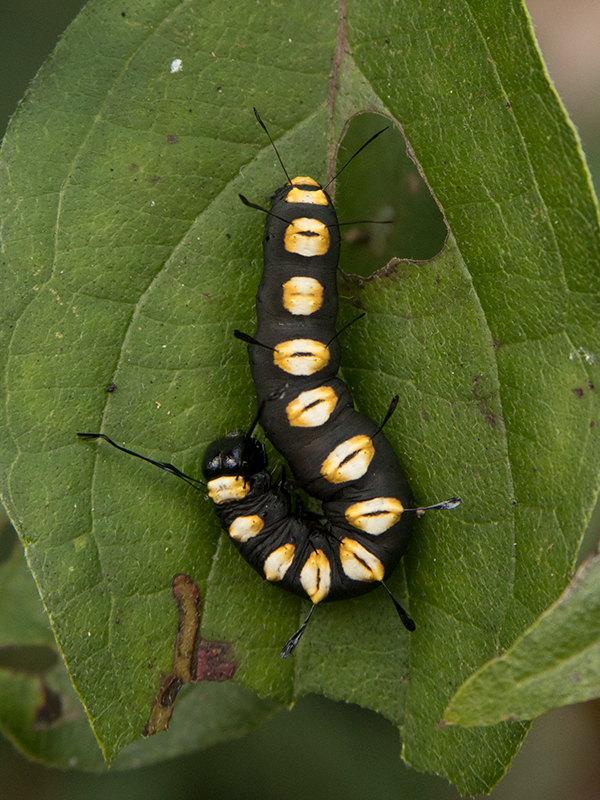
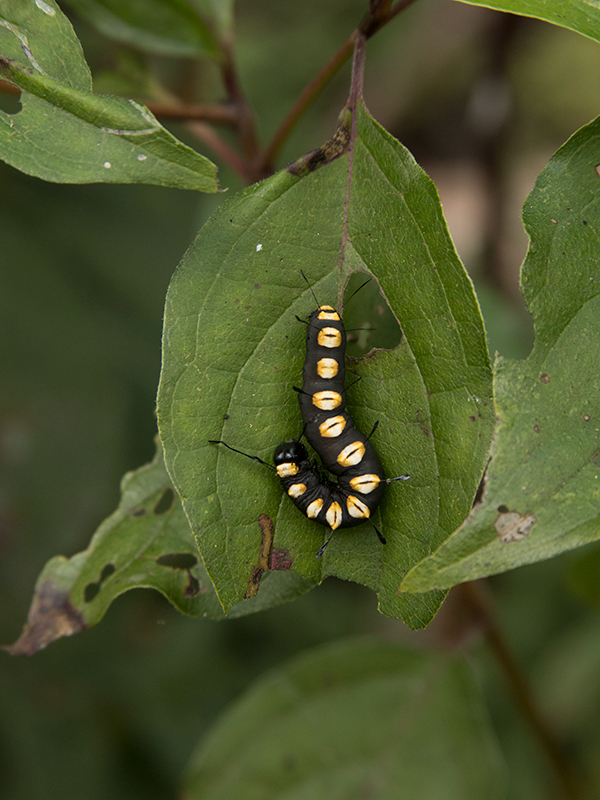
Paddle Caterpillar (of the Funerary Dagger Moth)
Acronicta funeralis
Oakwoods Metropark, August 30, 2018
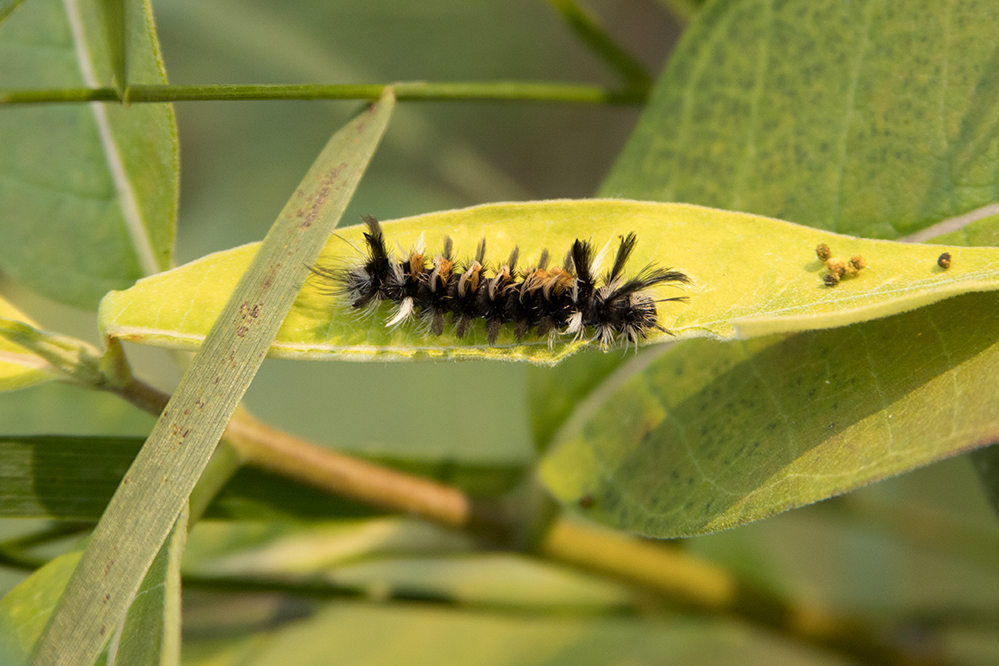
Milkweed Tussock Caterpillar, Euchaetes egle
Metamora State Park, August 24, 2018
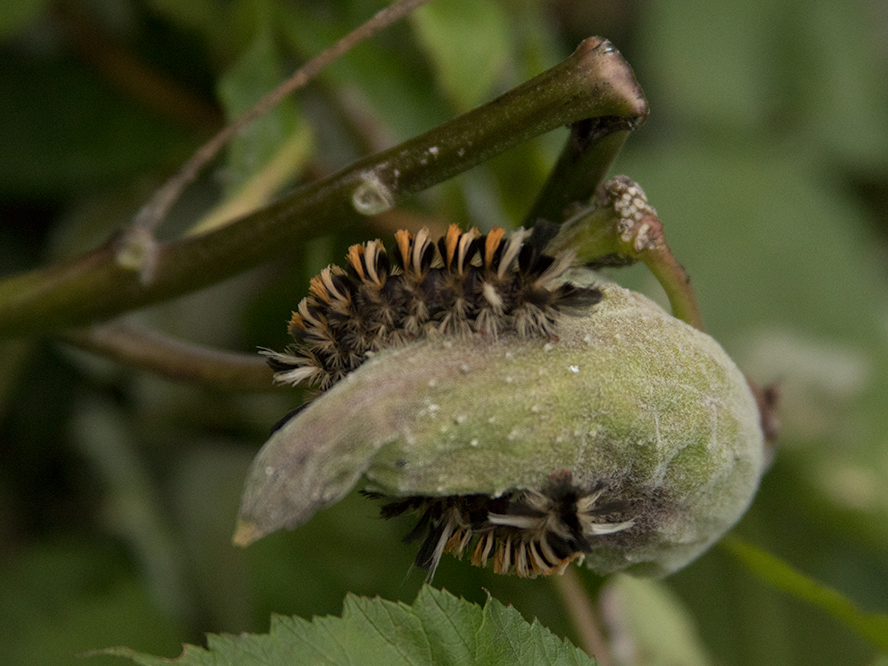
Holland Ponds, August 11, 2018
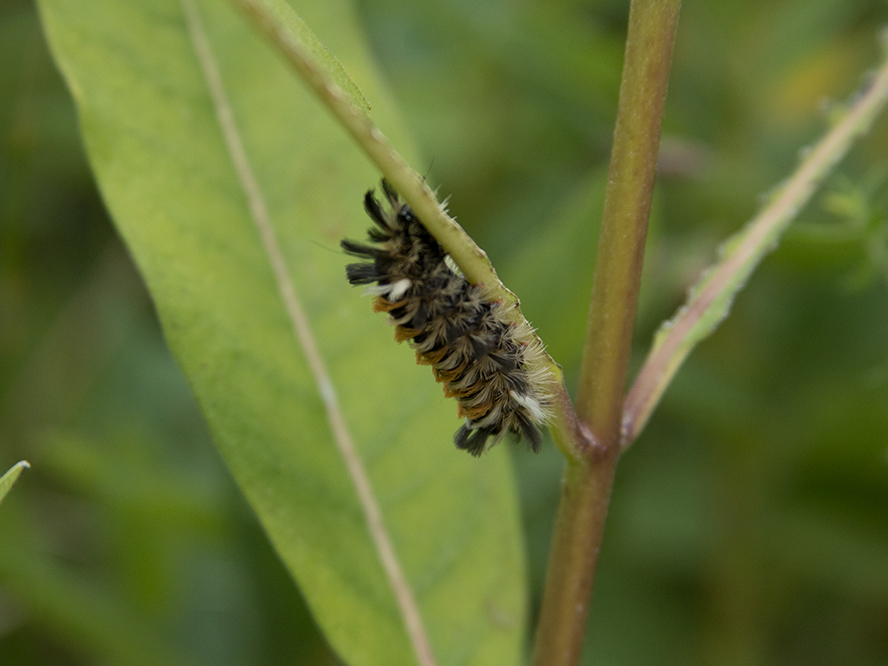
Wolcott Mill Metropark, July 28, 2018
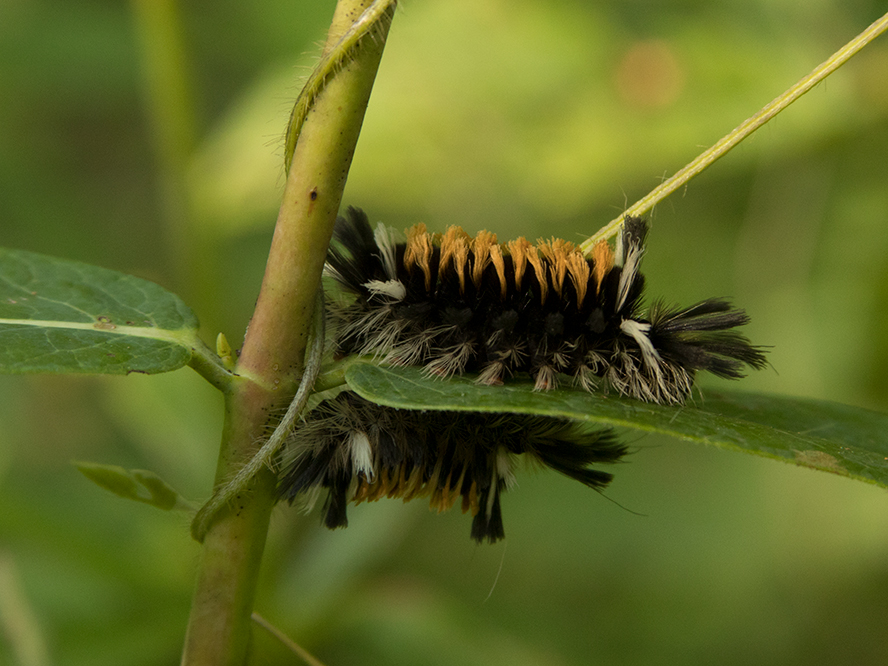
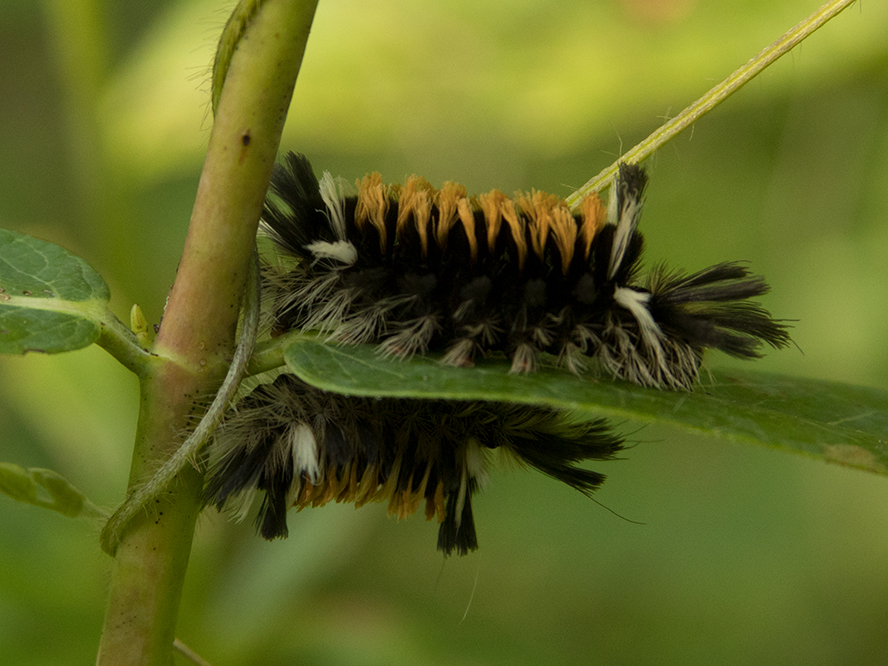
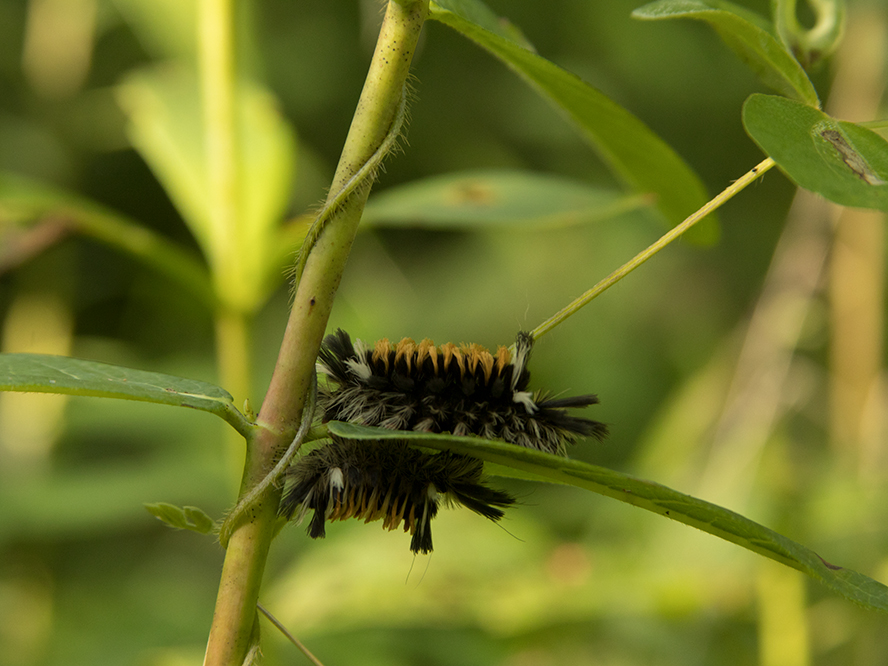
Kensington, September 17, 2017
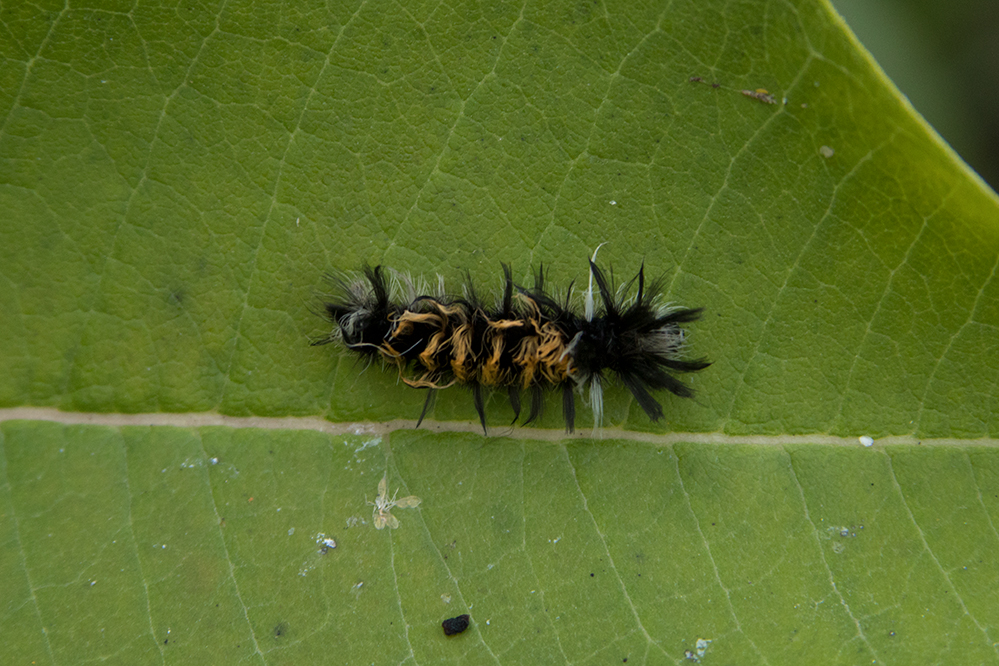
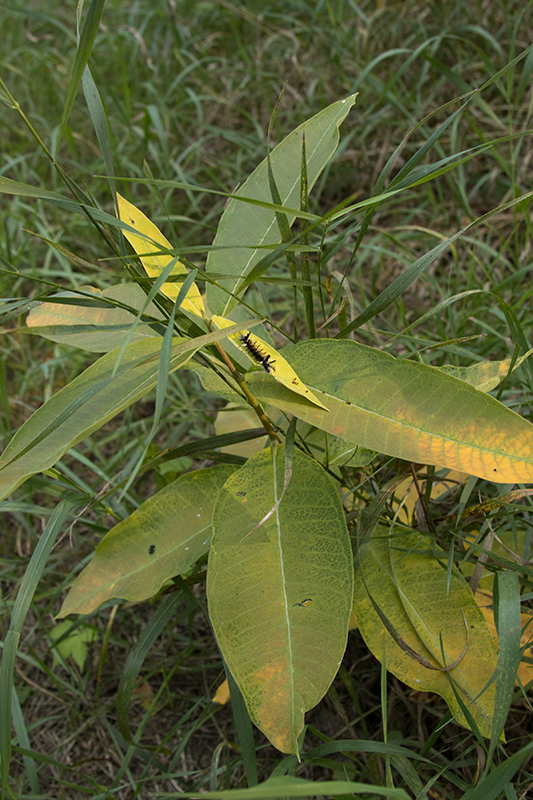
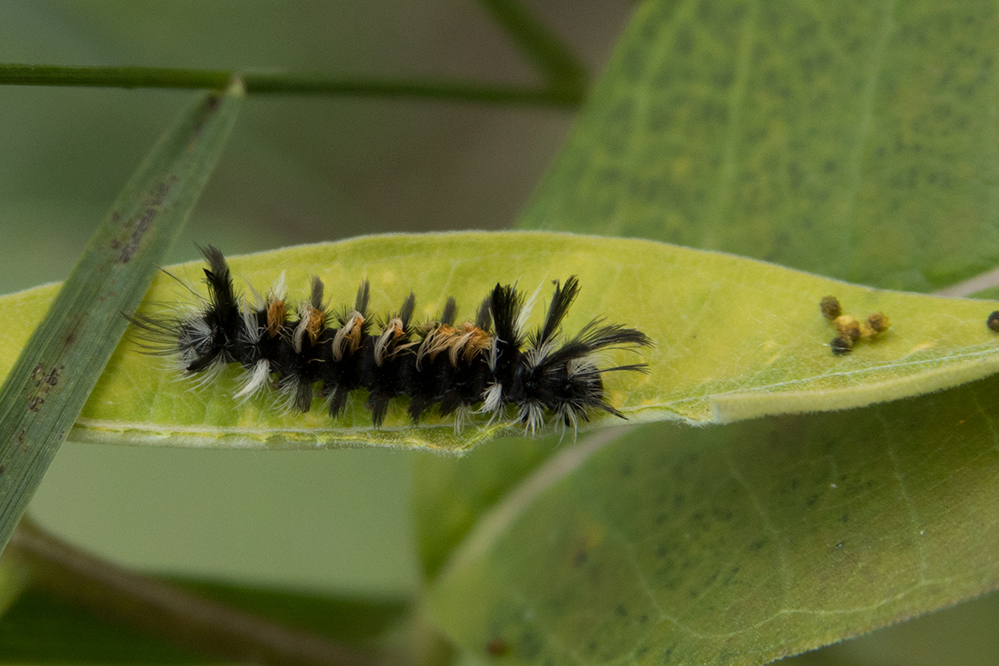
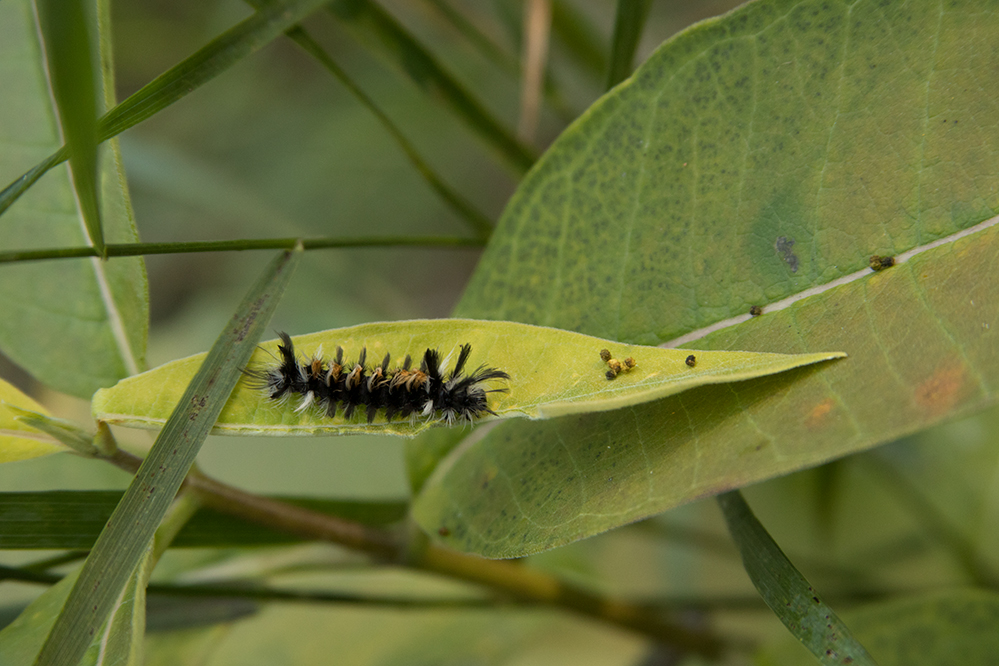
Metamora, September 2, 2013
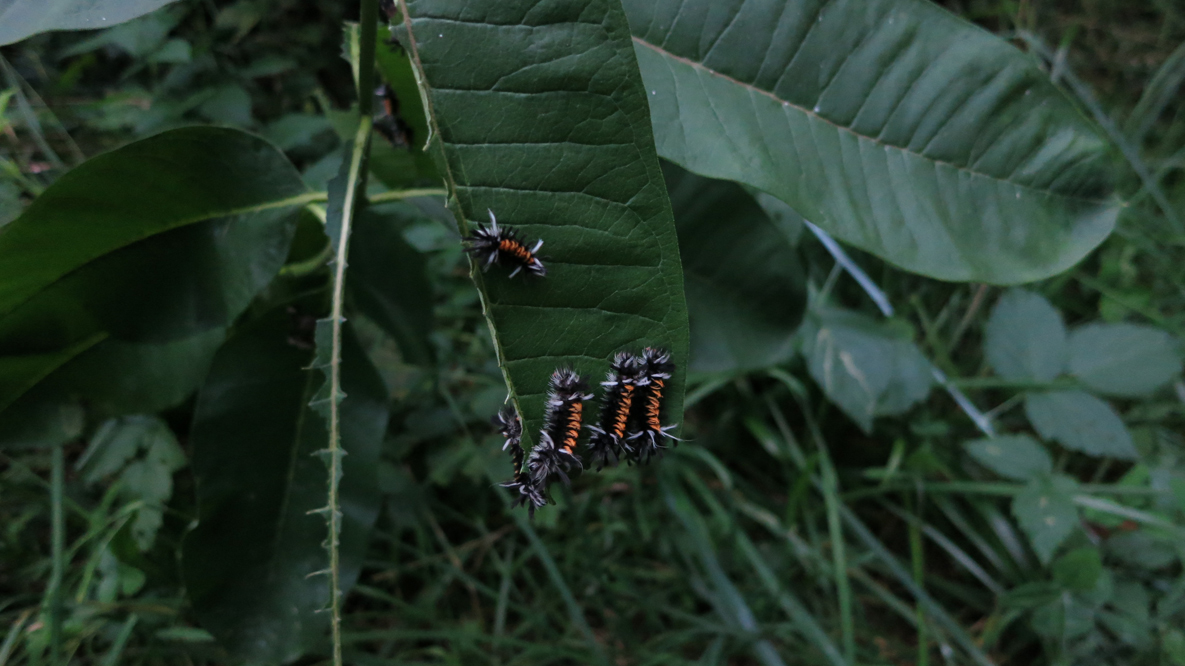
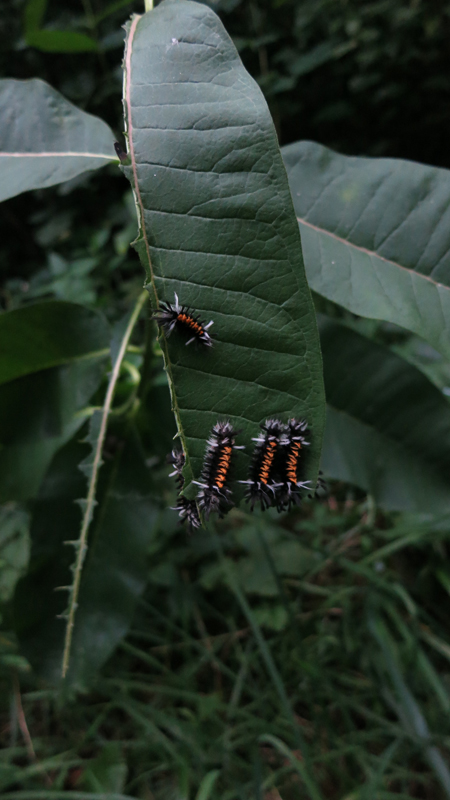
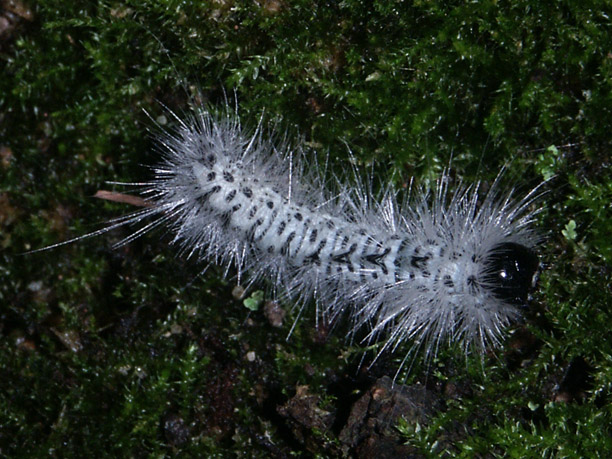
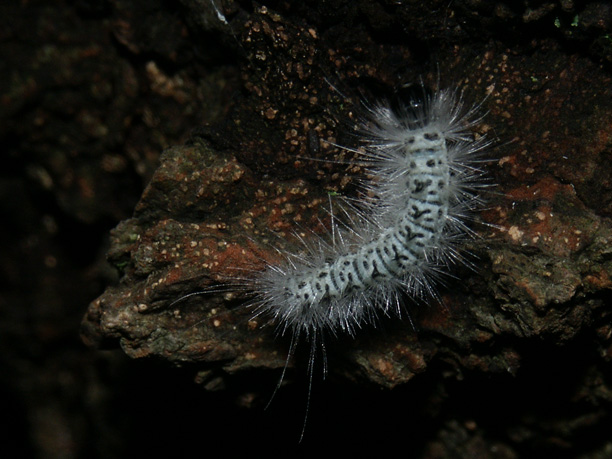
Hickory Tussock Moth Caterpillar, Lophocampa caryae
Pinckney State Park (Losee Lake), September 22, 2019
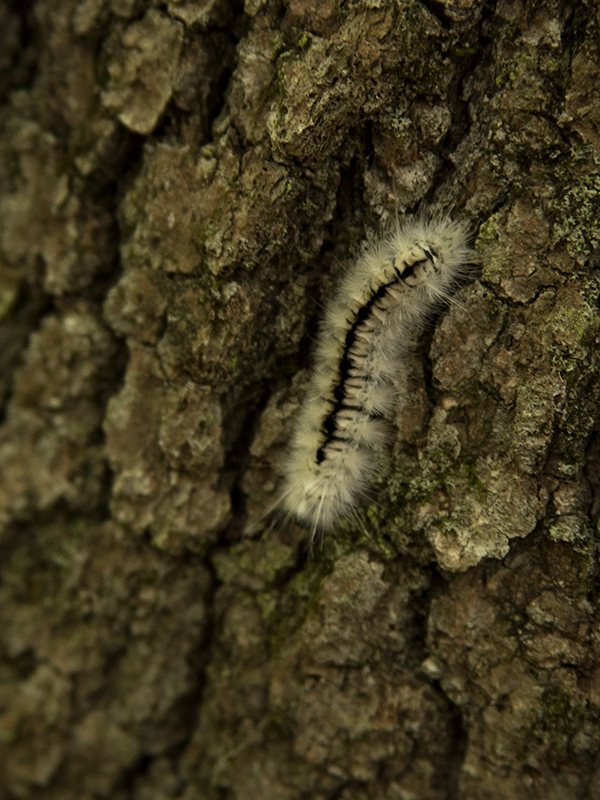
Proud Lake State Park, September 14, 2019
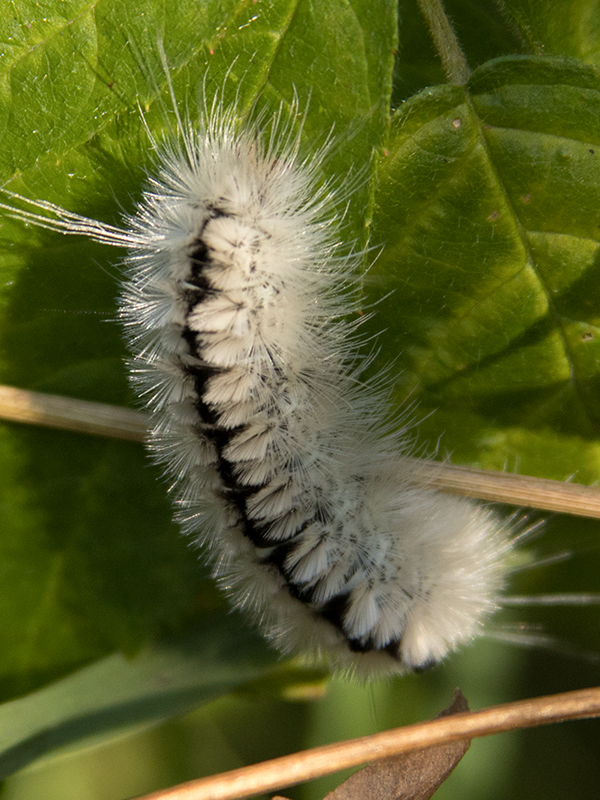
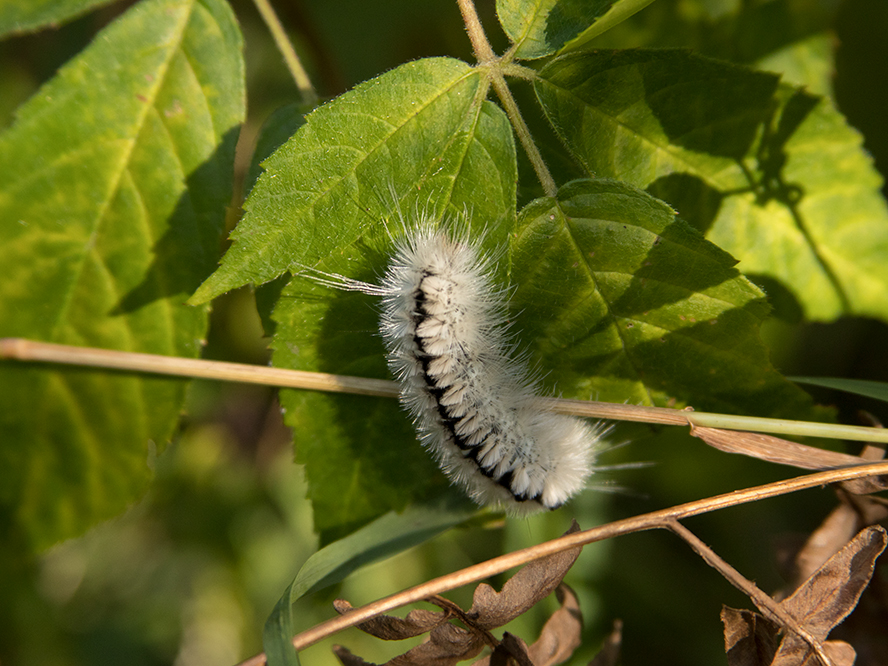
Rose Oaks County Park, October 7, 2018
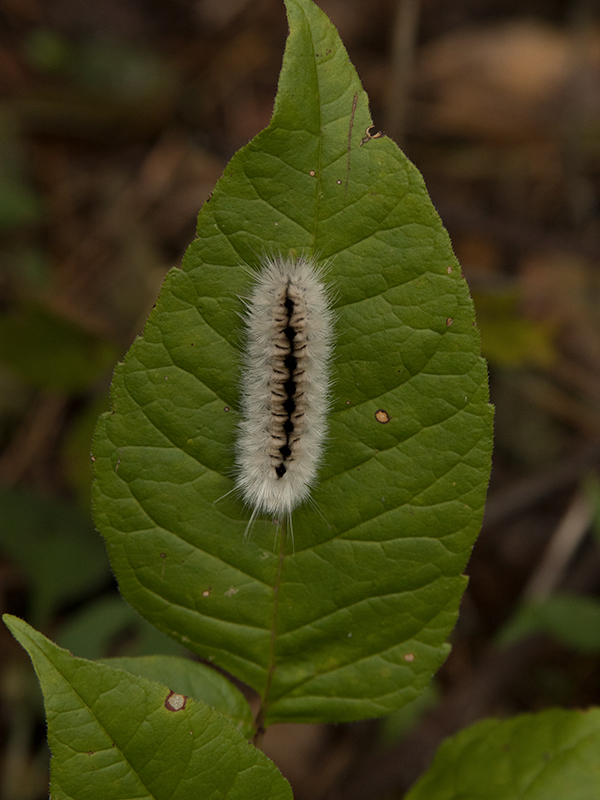
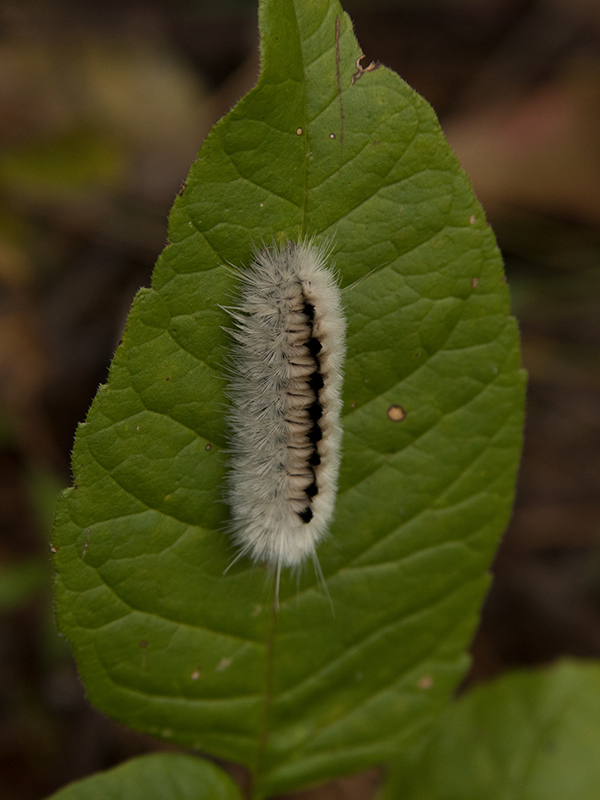
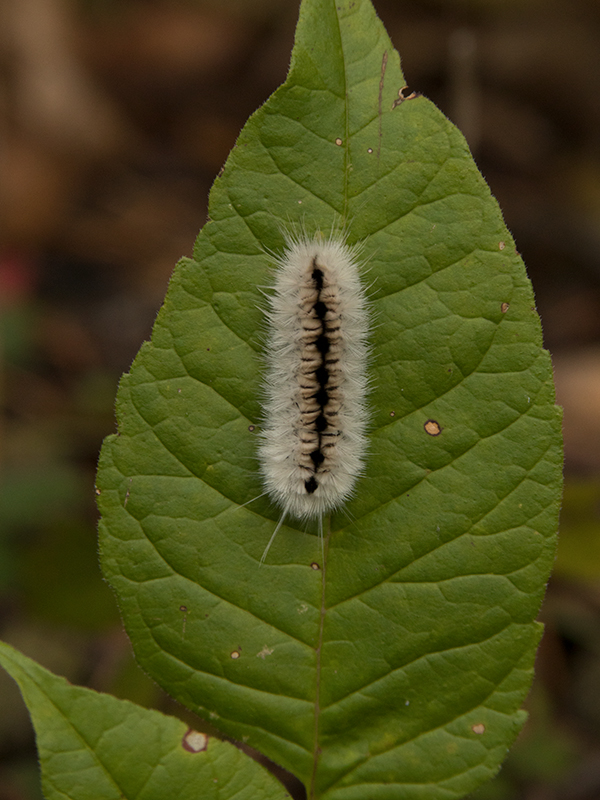
LeFurge Preserve, September 1, 2018
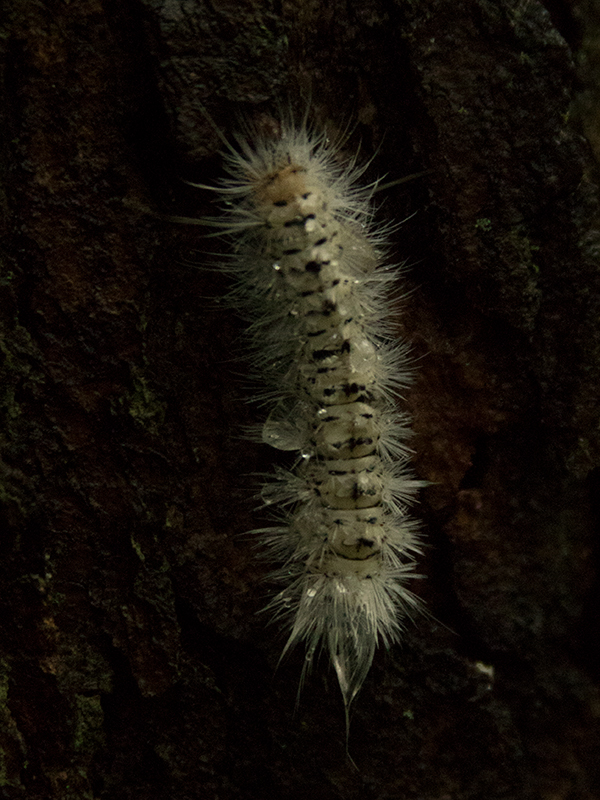
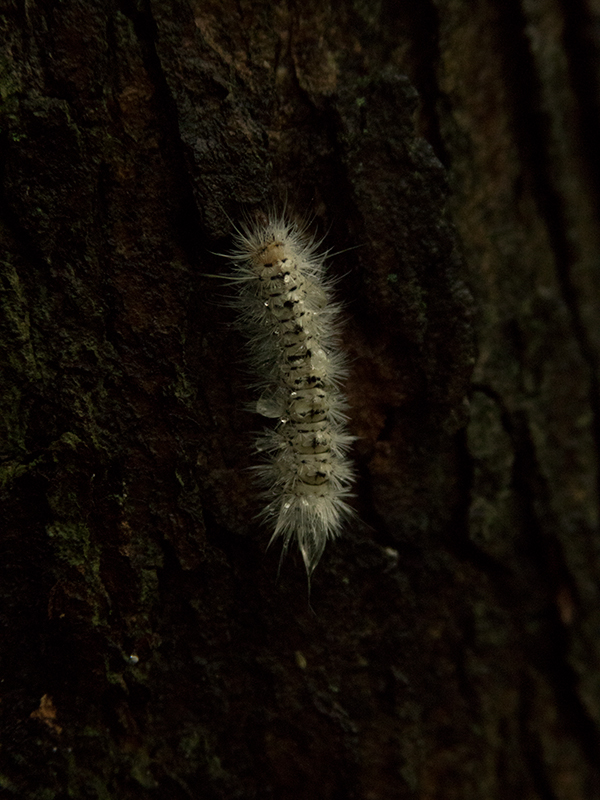
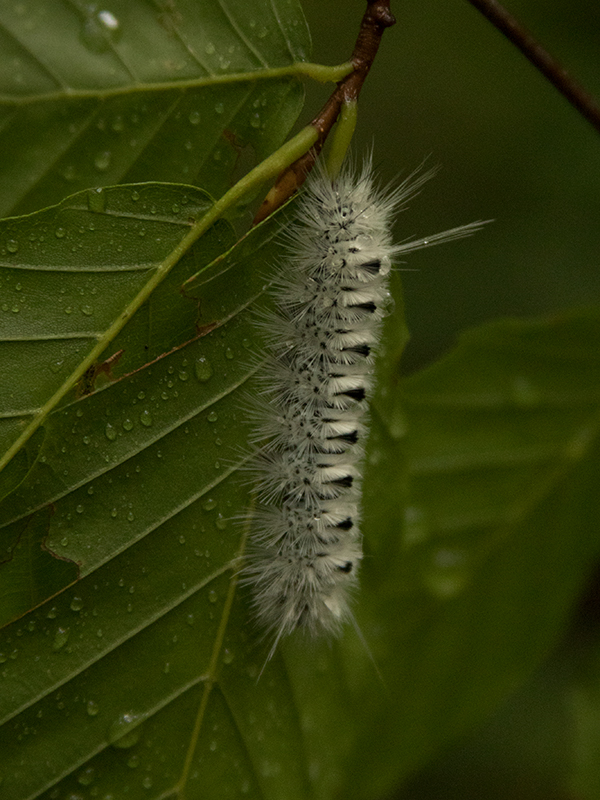
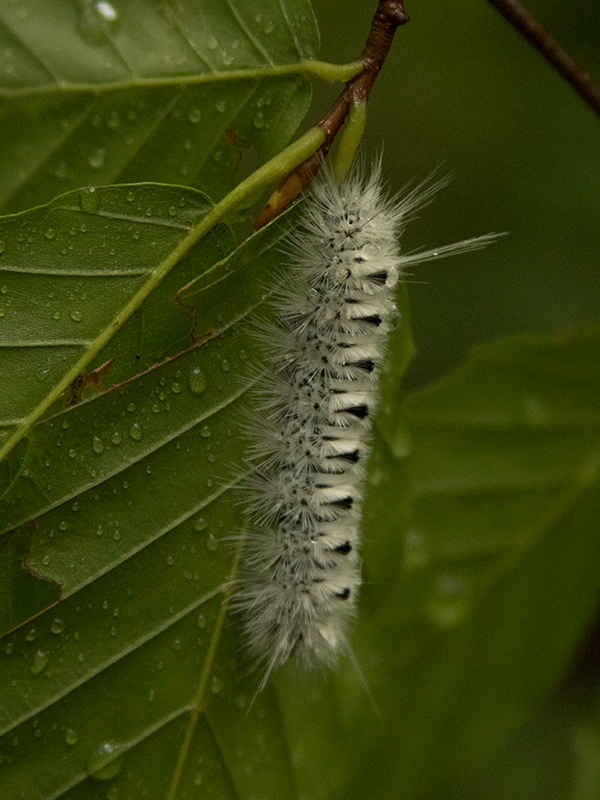
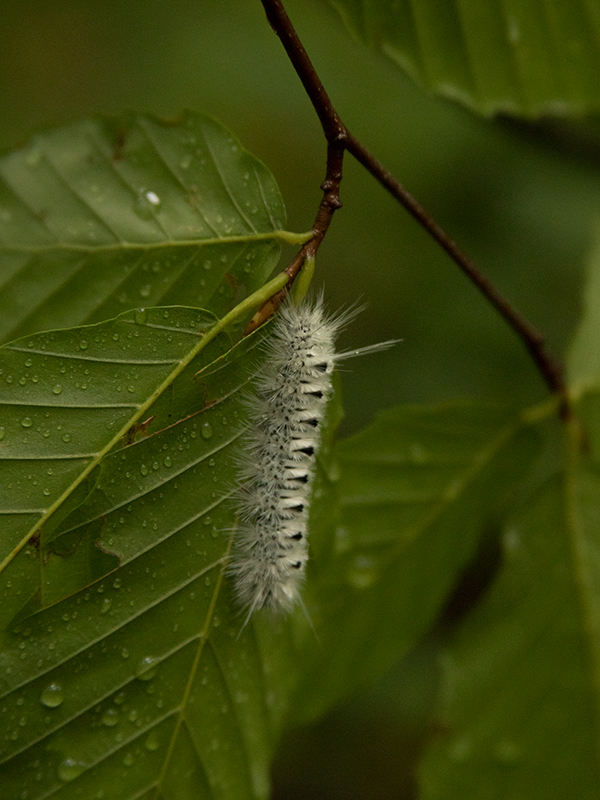
Oakwoods Metropark, August 30, 2018
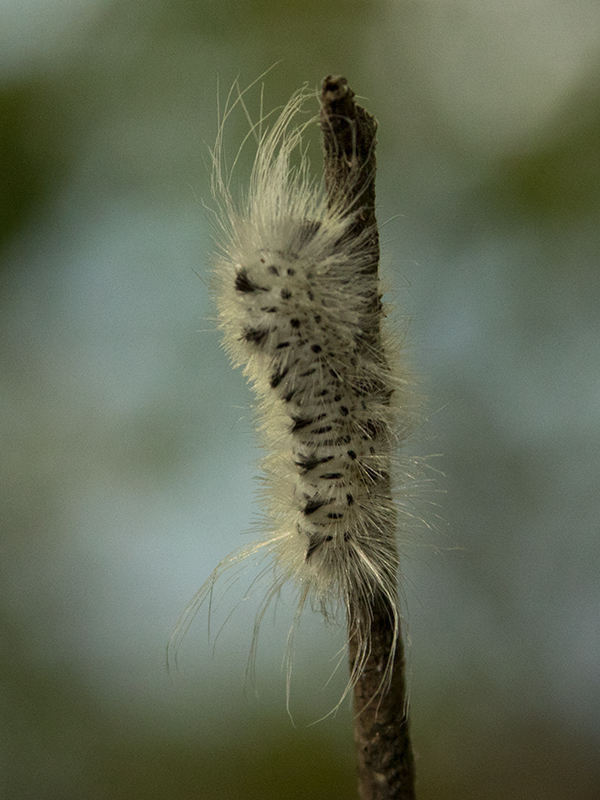
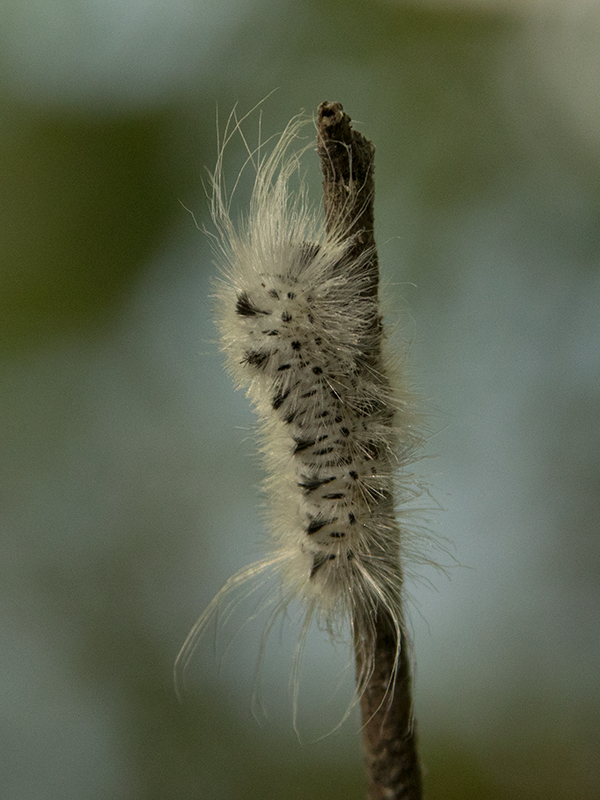
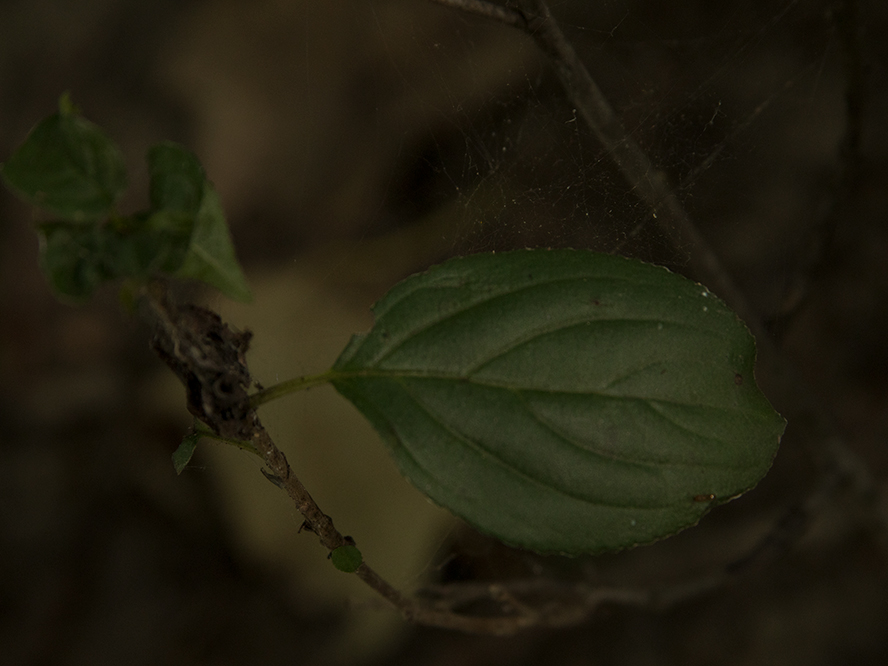
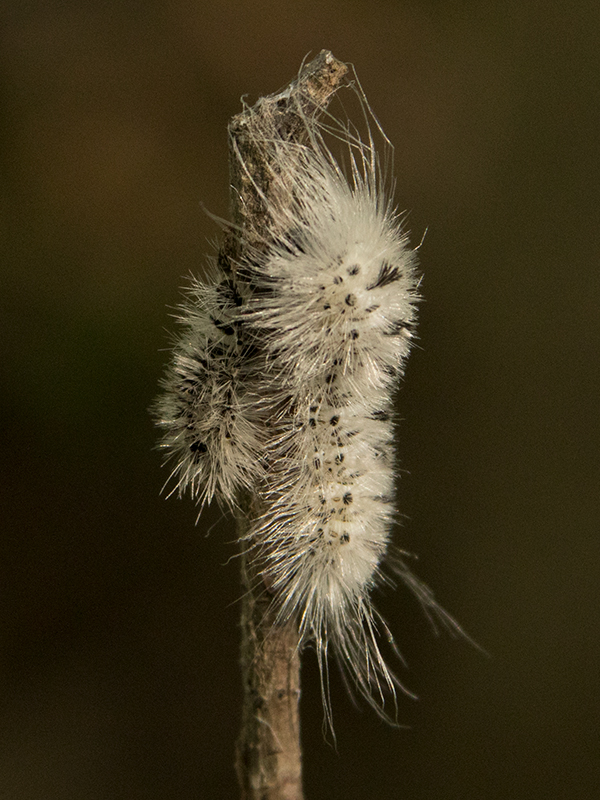
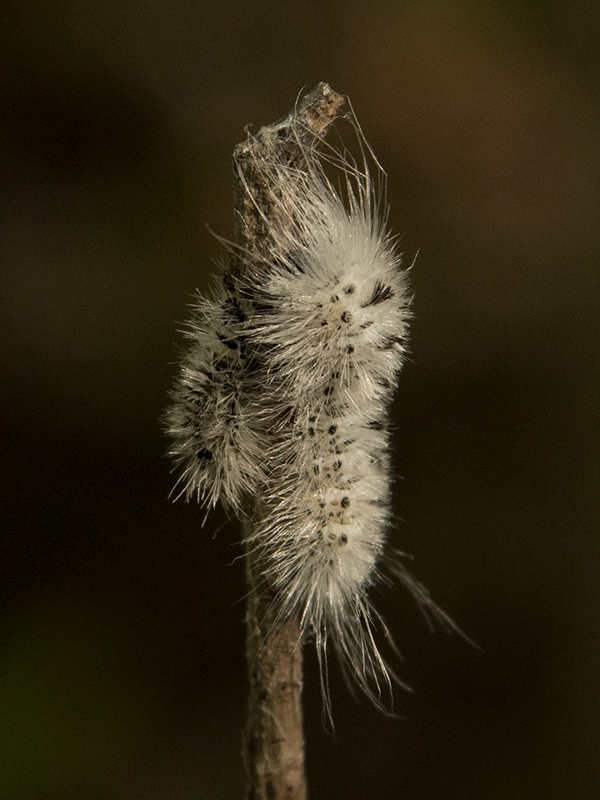
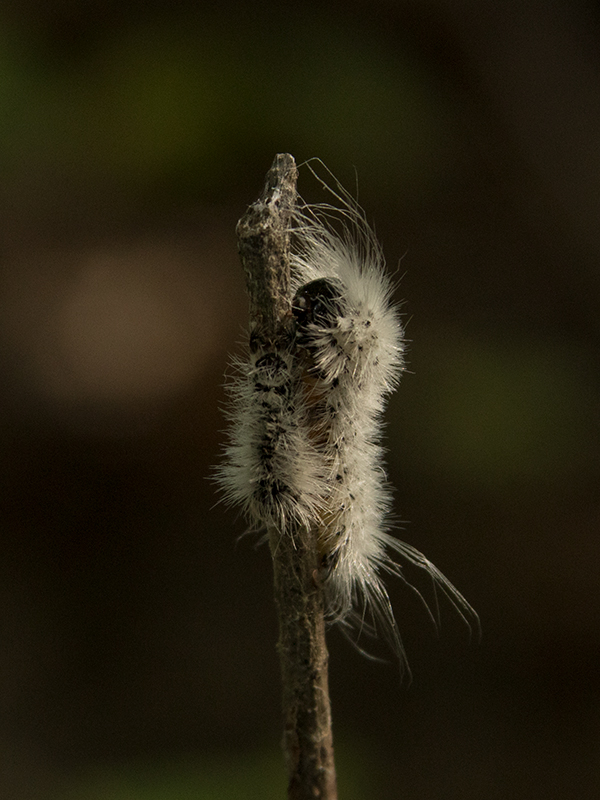
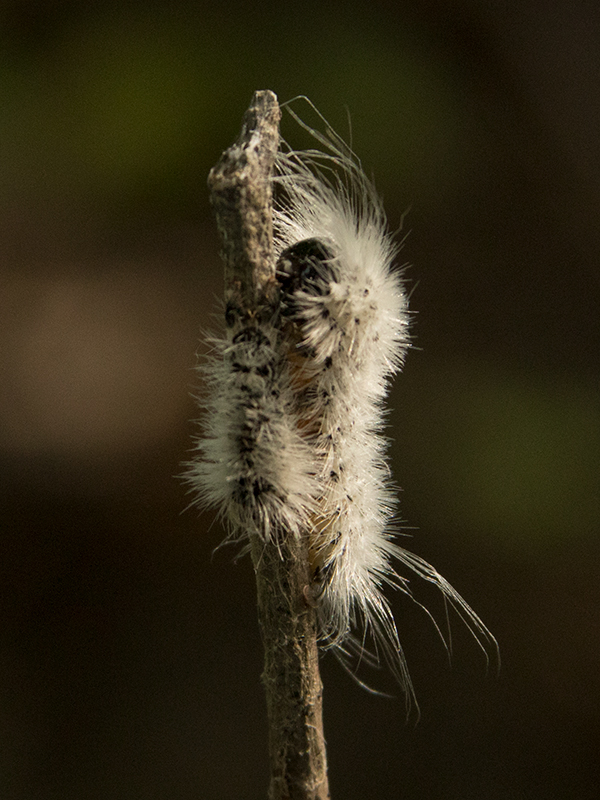
Nelson, Ohio. July 29, 2006
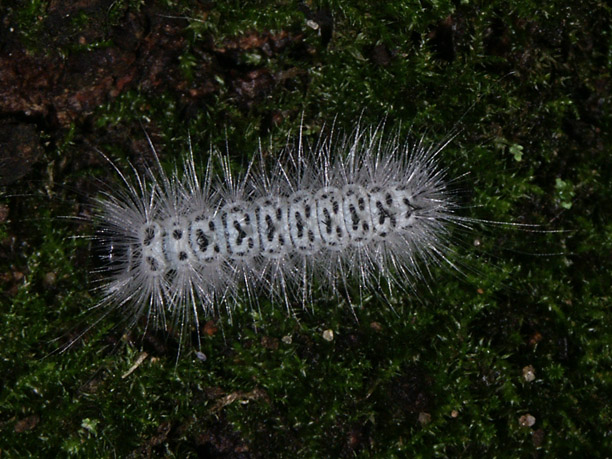
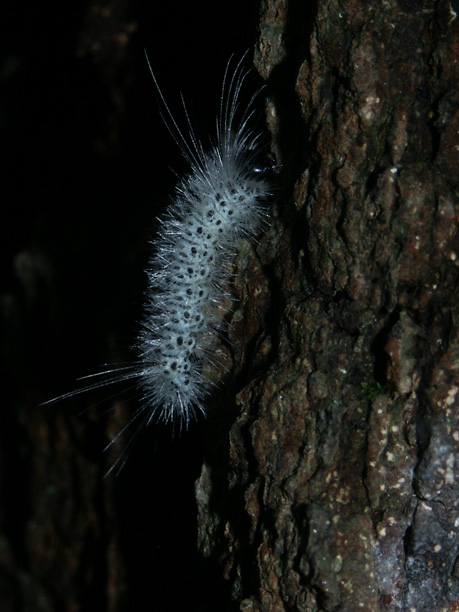
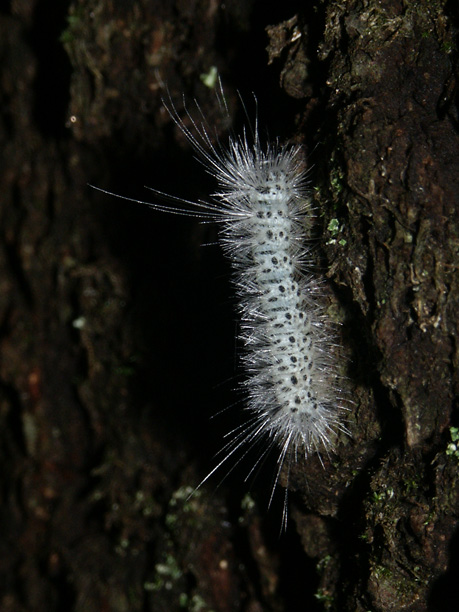

Unidentified larva
Pinckney State Park (Losee Lake), September 22, 2019
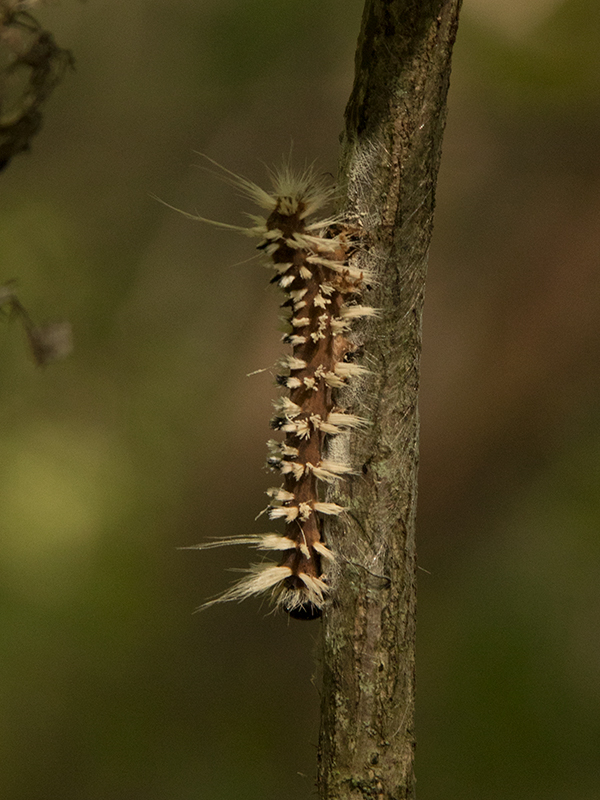
Hudson Mills Metropark, September 1, 2019
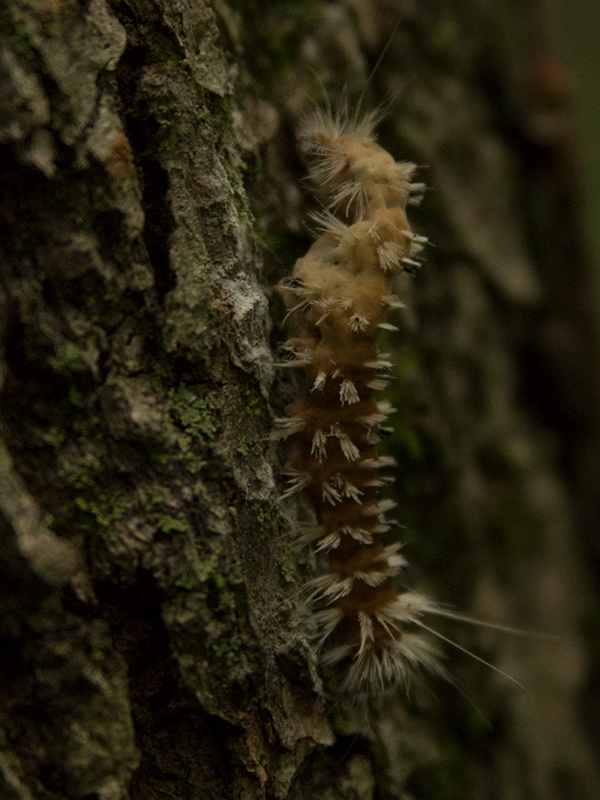
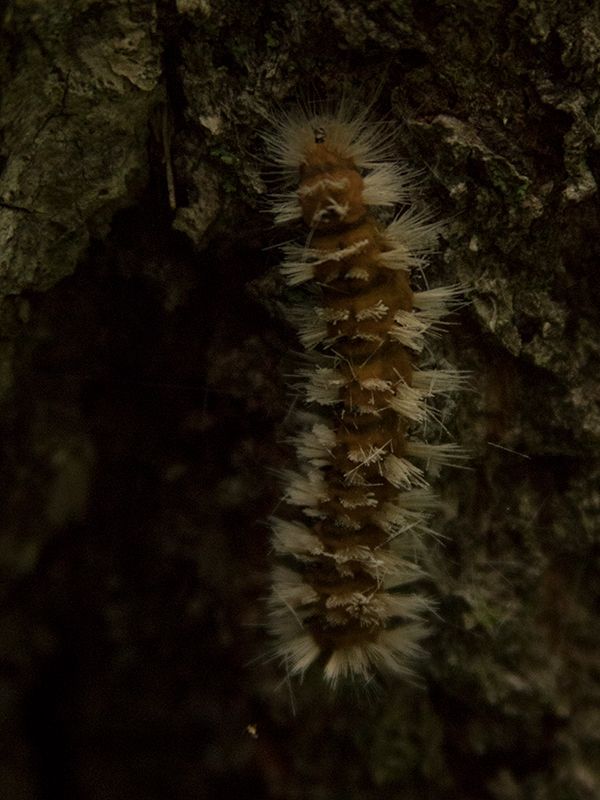
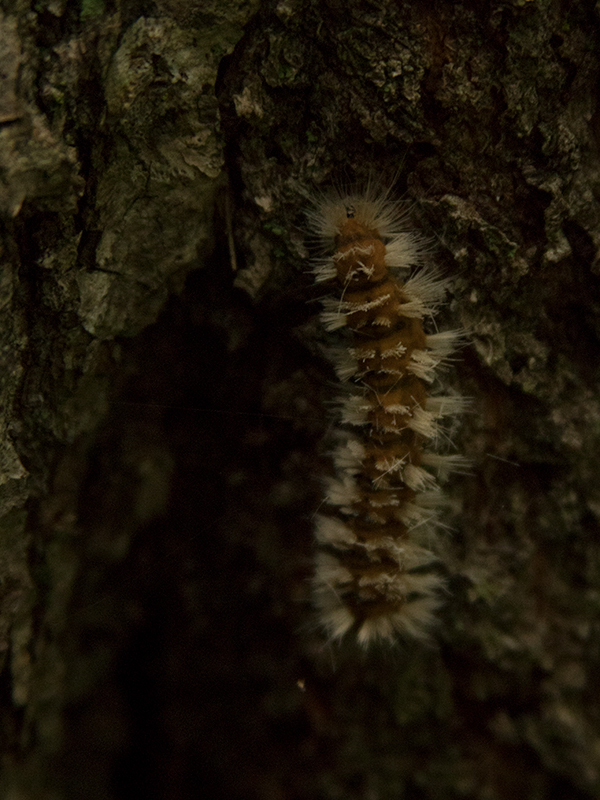
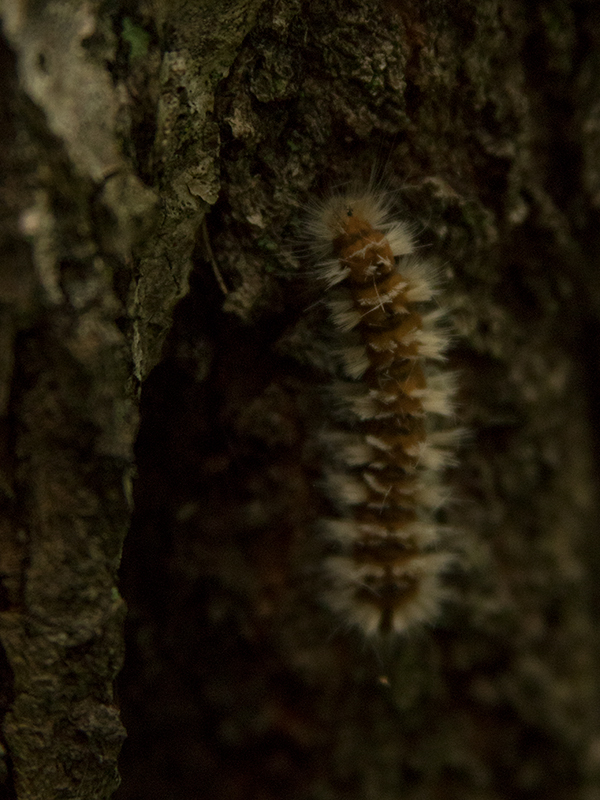
Lyon Oaks, September 2, 2018
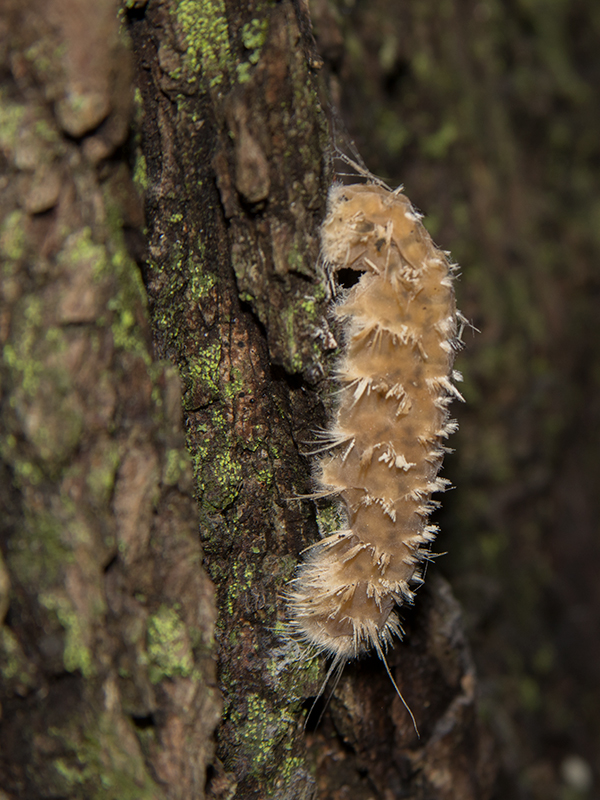
Unidentified moth
Highland State Park, July 29, 2018
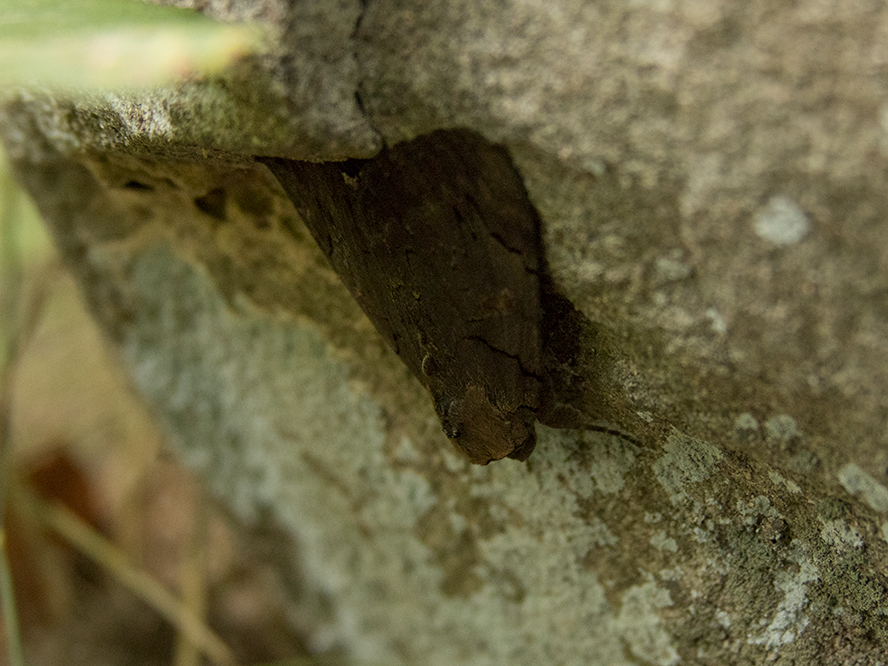
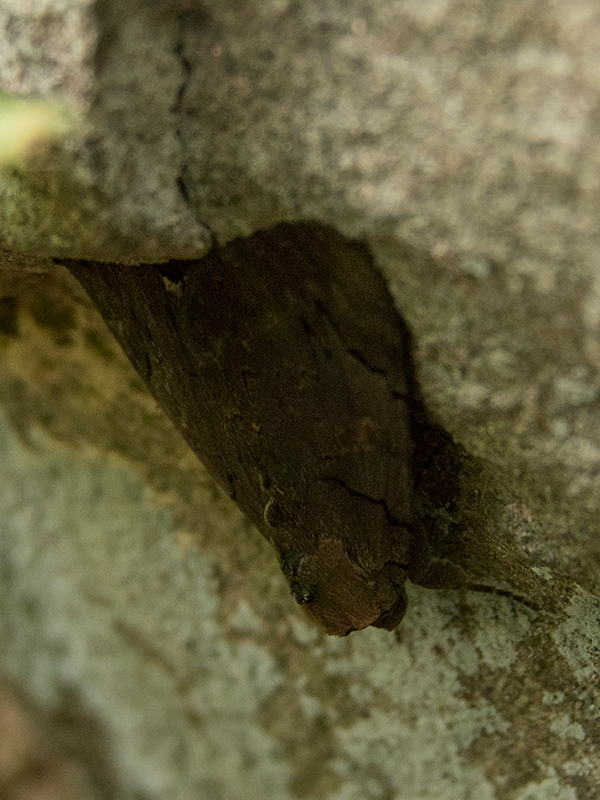
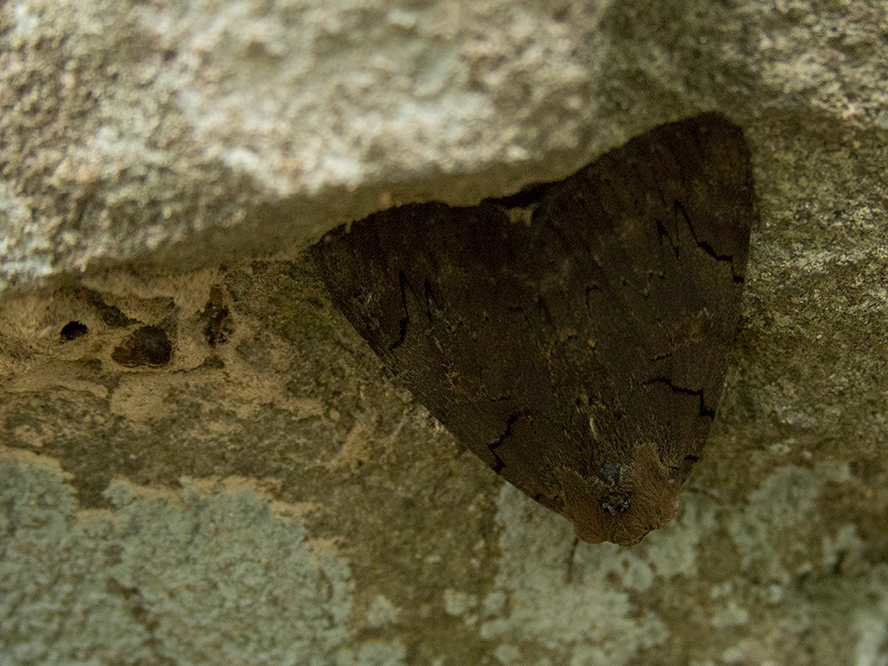
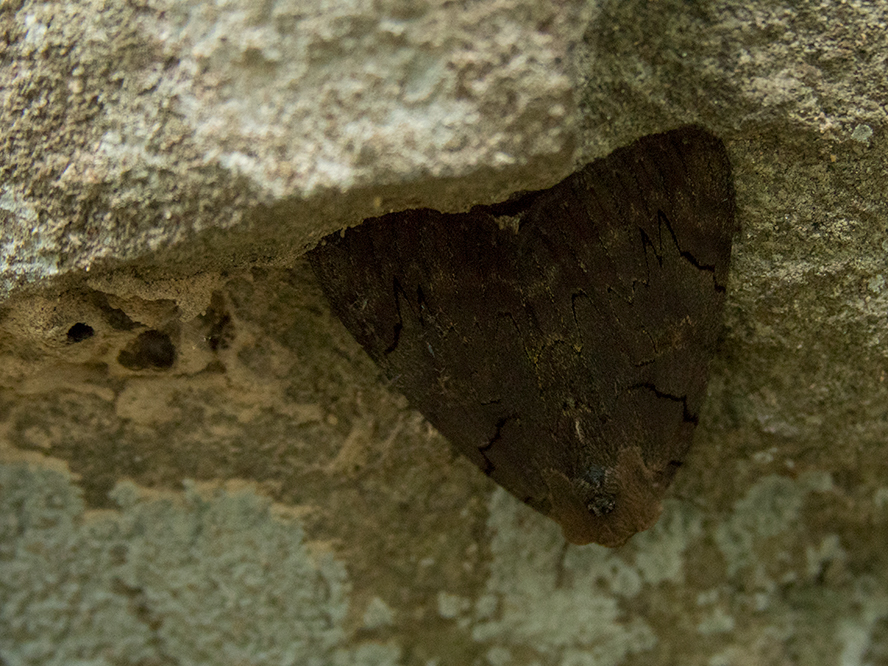
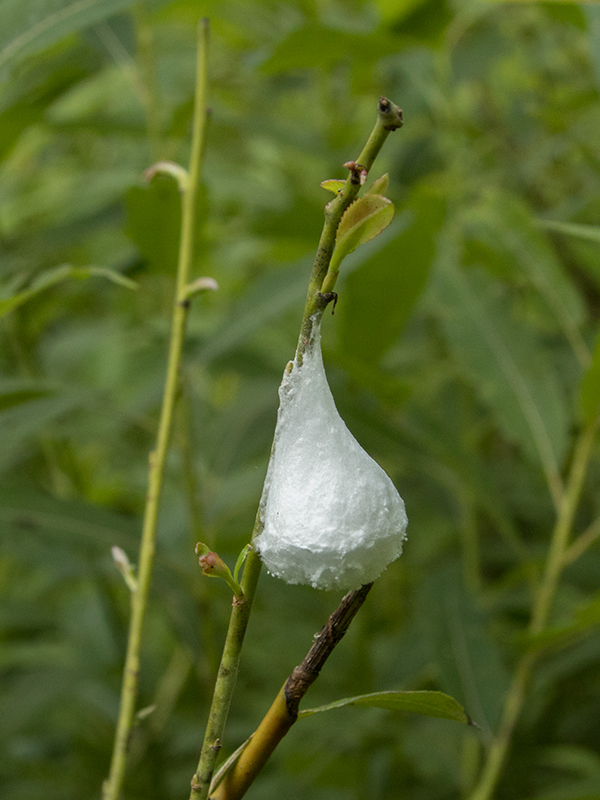
Unidentified cocoon
Highland Oaks, October 5, 2019
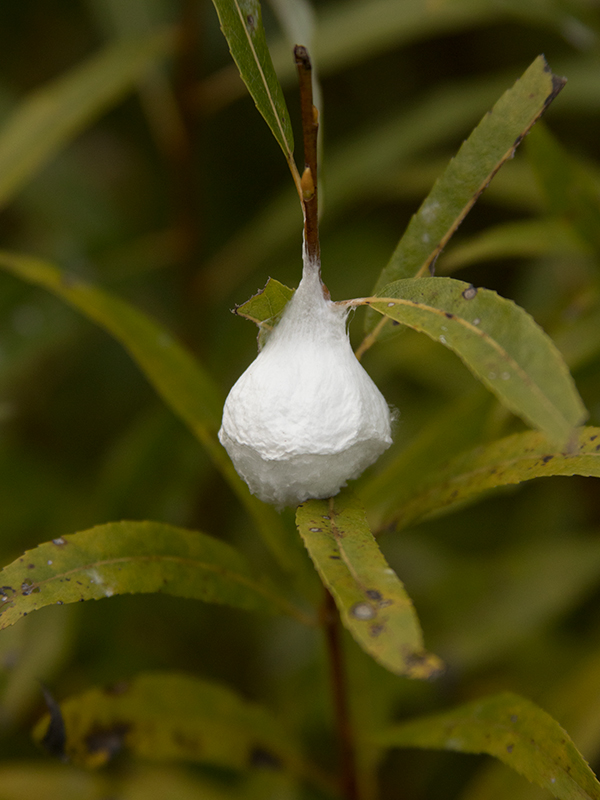
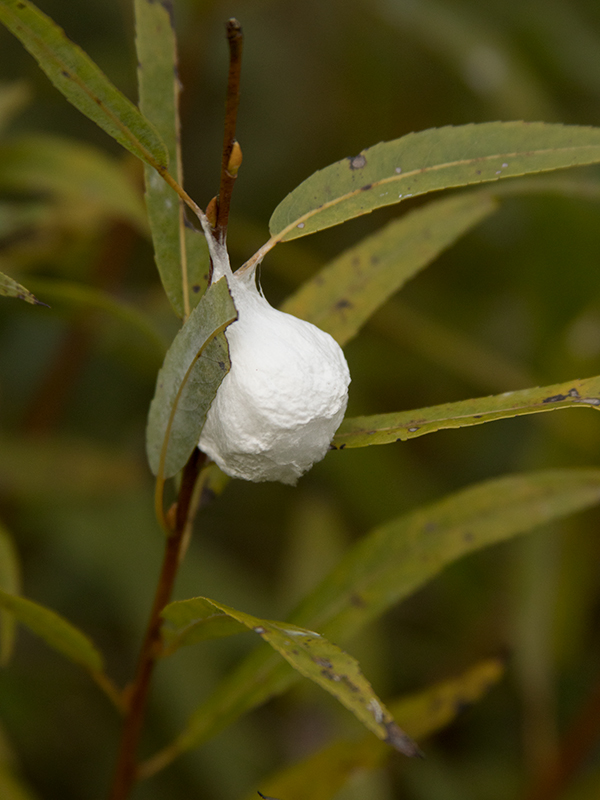
Wolcott Mill Metropark, July 28, 2018

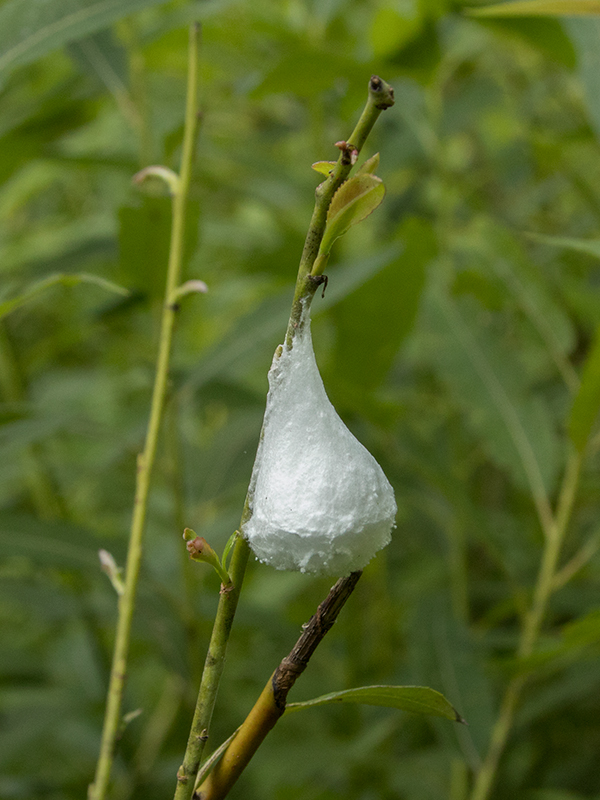
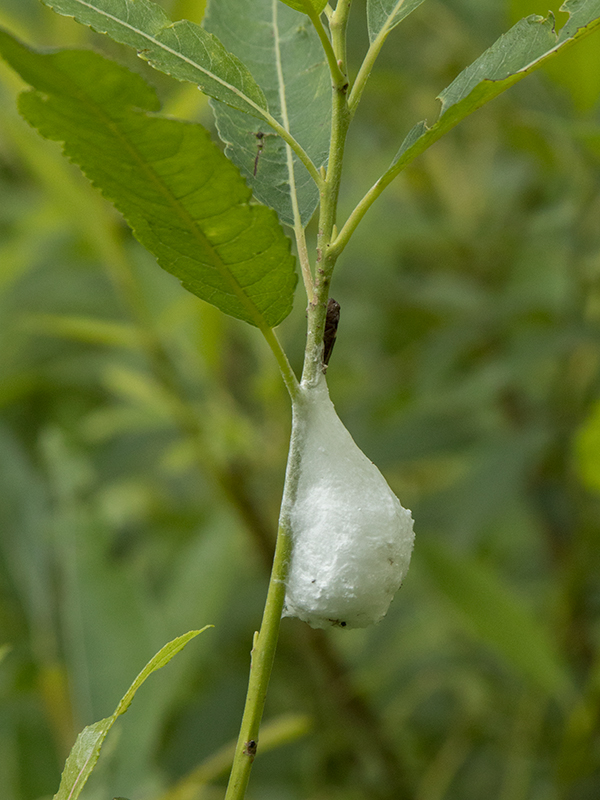
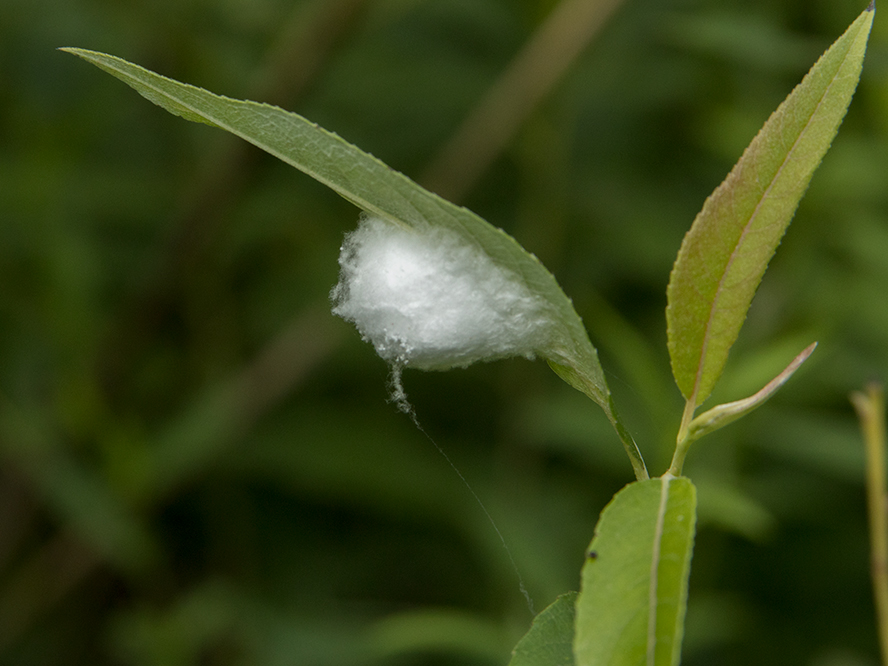
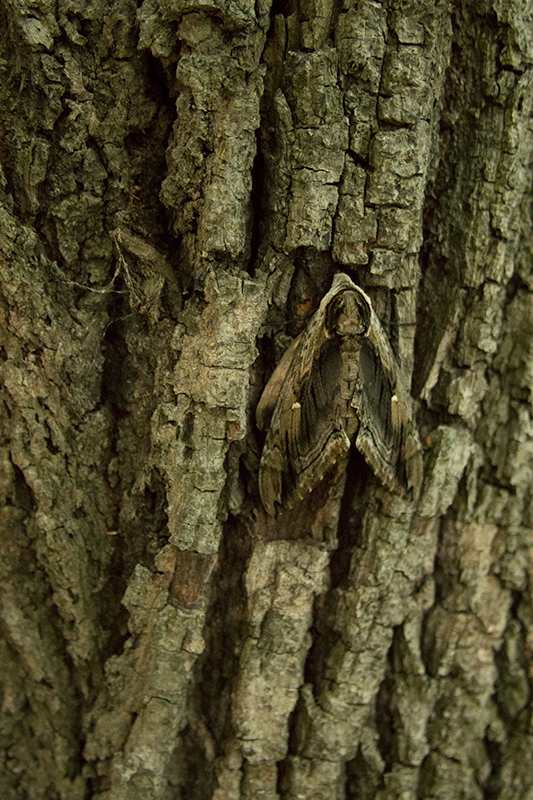
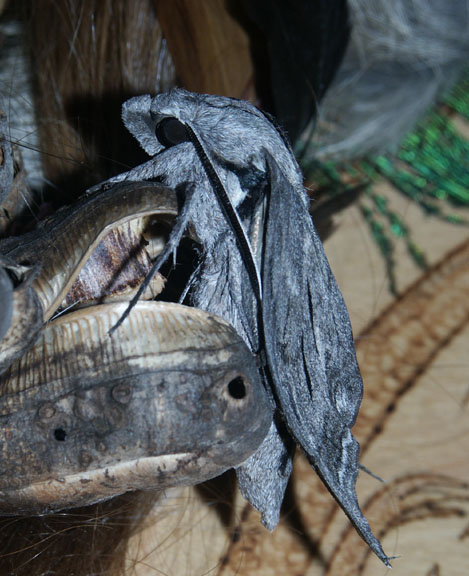
Unidentified Hawkmoth
Proud Lake, June 18, 2017
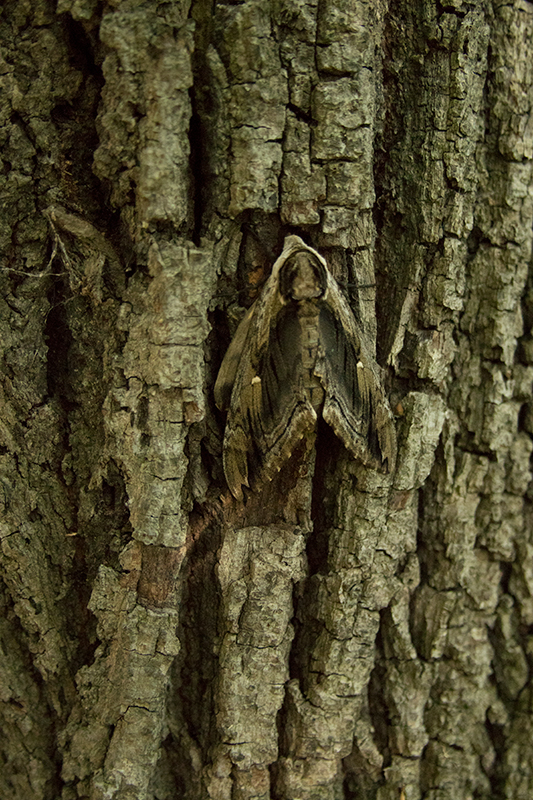


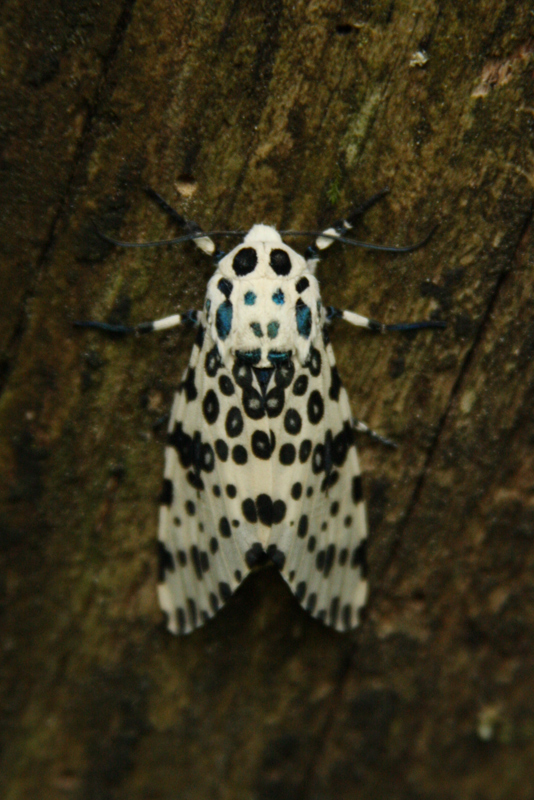
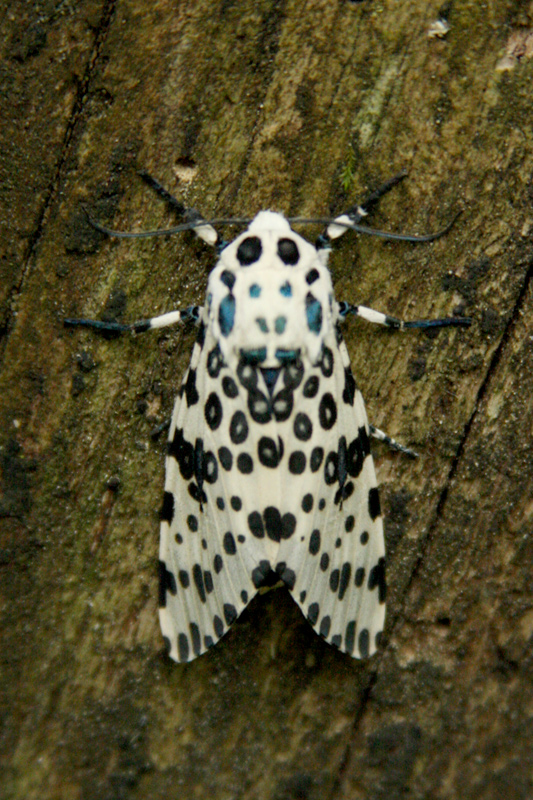
Unidentified Moth
Proud Lake, June 18, 2017
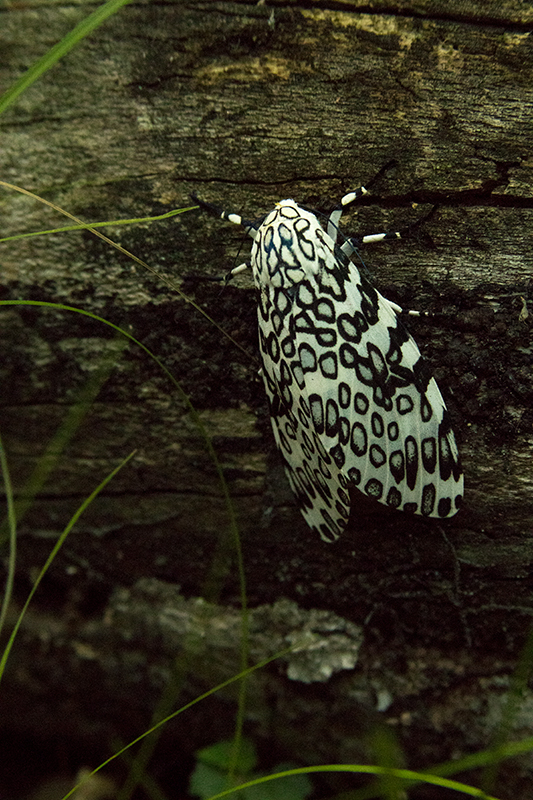

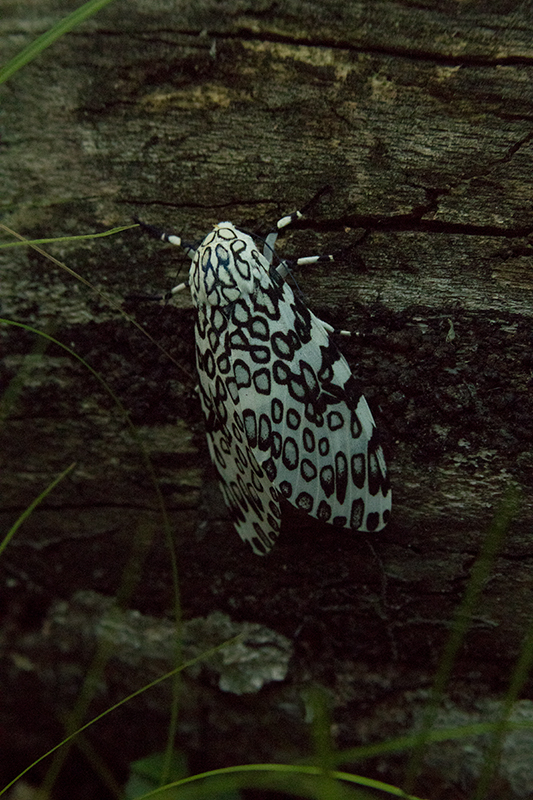
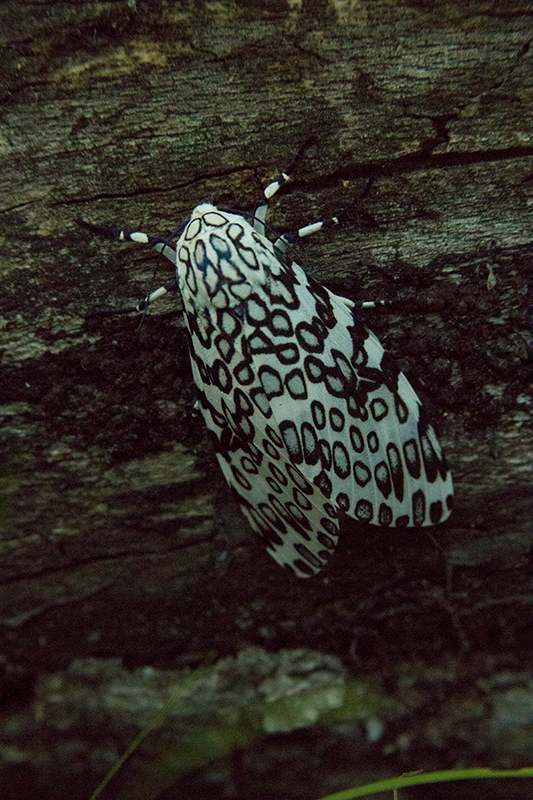
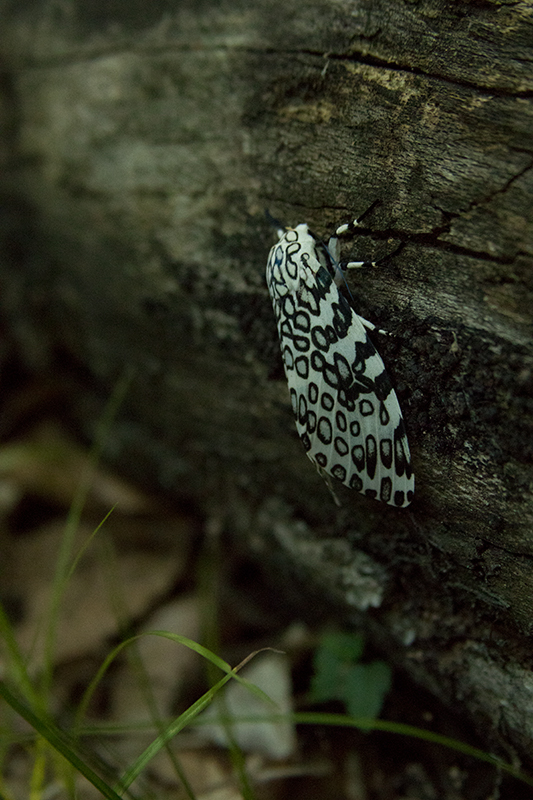
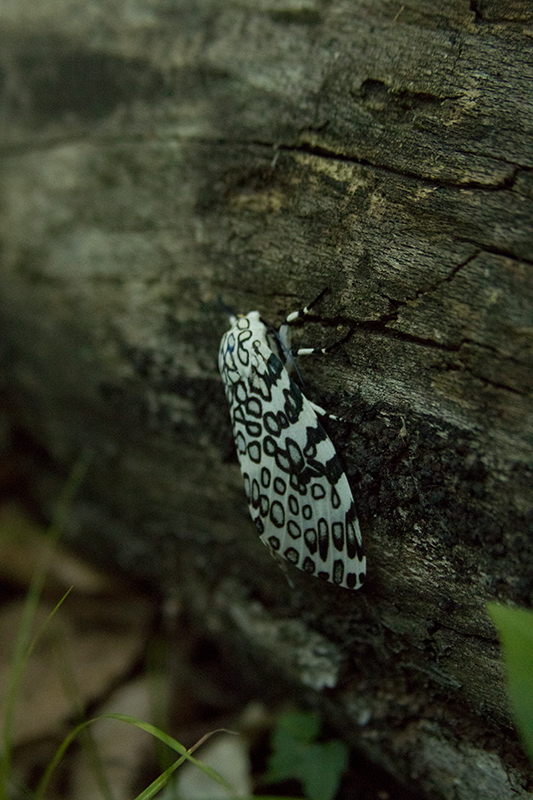
Pinckney, MI. June 17, 2012.
Similar to one above, but enough differences to possibly be another species.

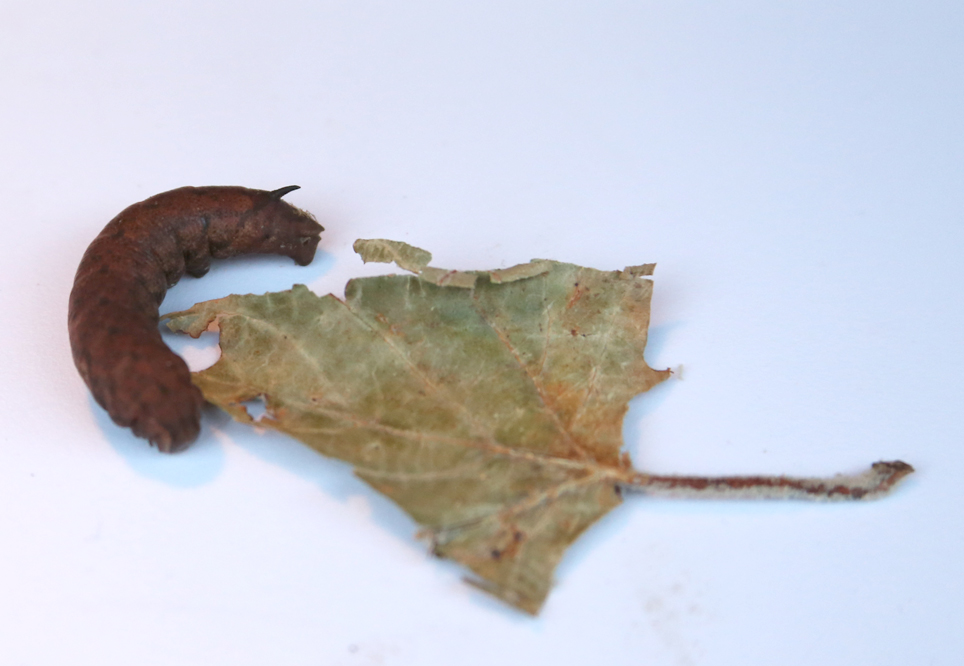
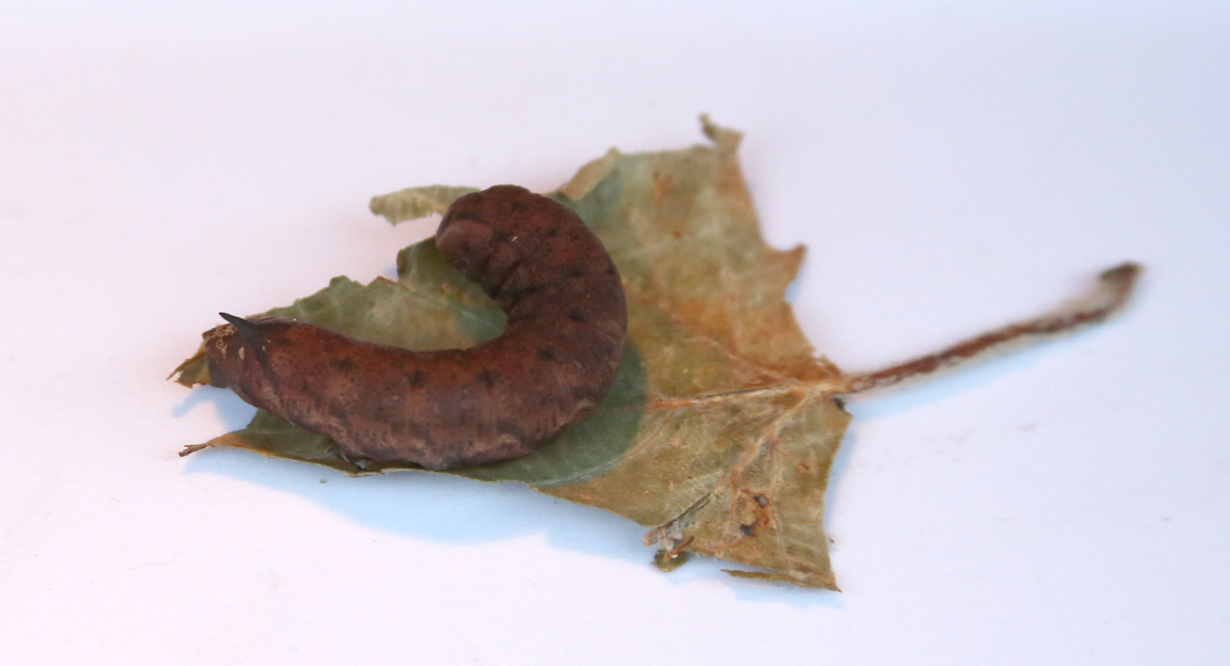
Unidentified Hornworm
Oak Openings, July 7, 2016
Lyle discovered this caterpillar right by the rear tire of the car and saved its life. I didn't have my macro lens, but I took these photos to at least document it. This was the first time I've ever heard a caterpillar make a hissing sound like this one did.



Hummingbird Moths
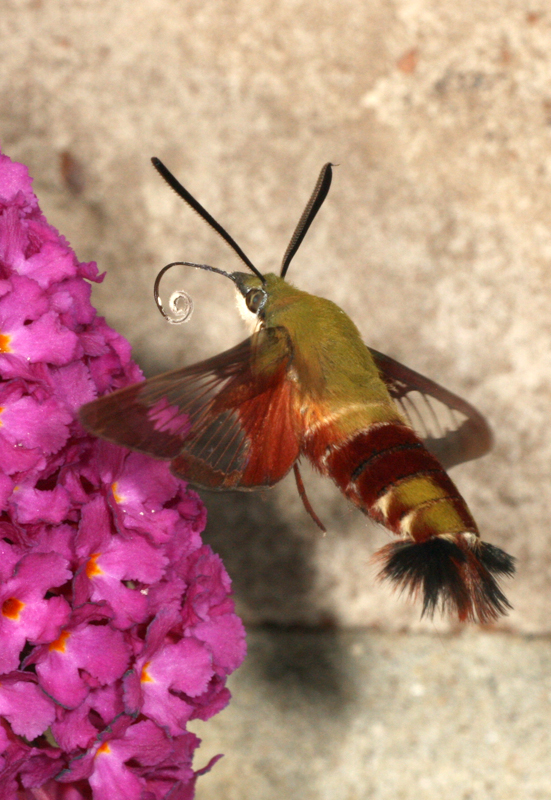
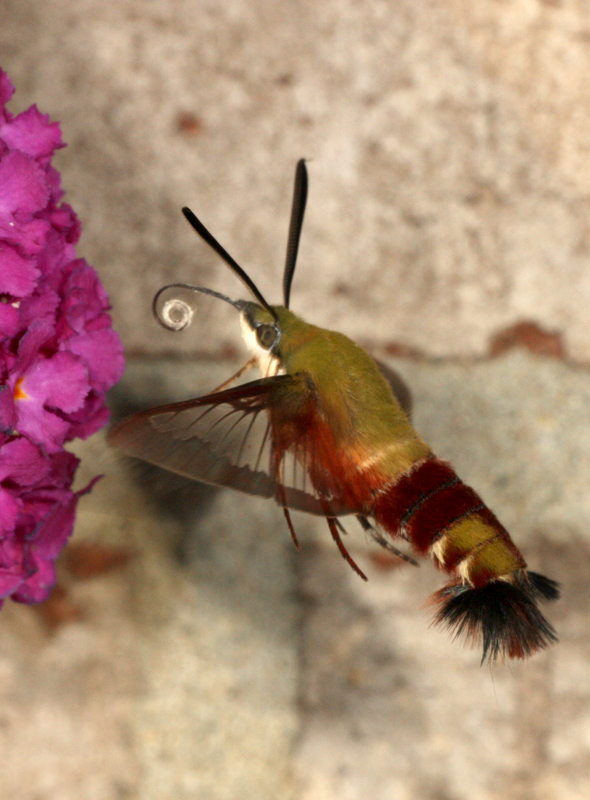
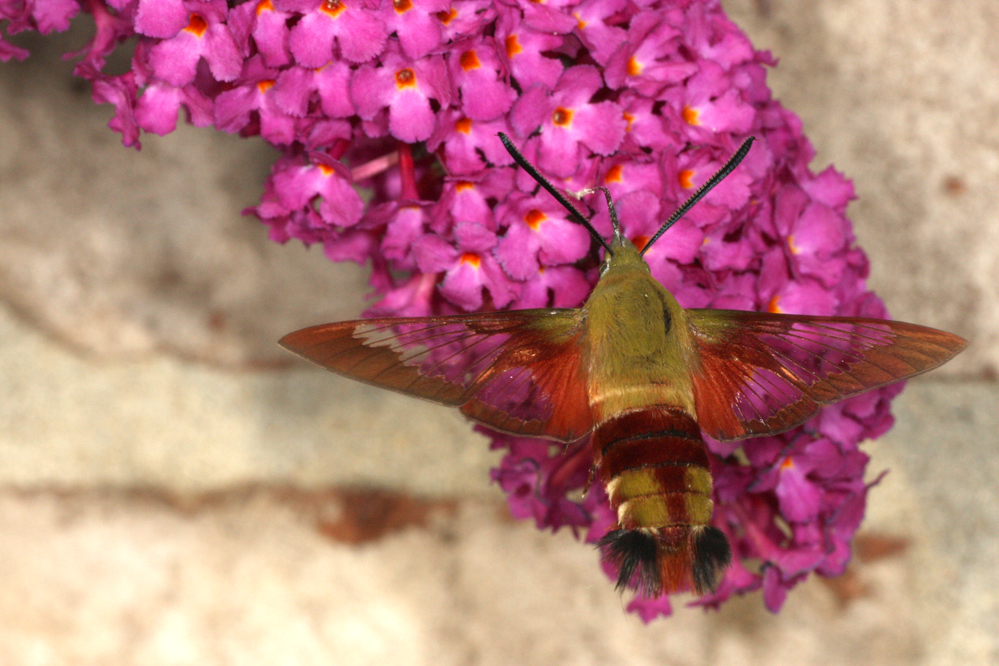
Hummingbird Clearwing, Hemaris thysbe
July 7, 2016 on phlox just after a rain and rainbow.
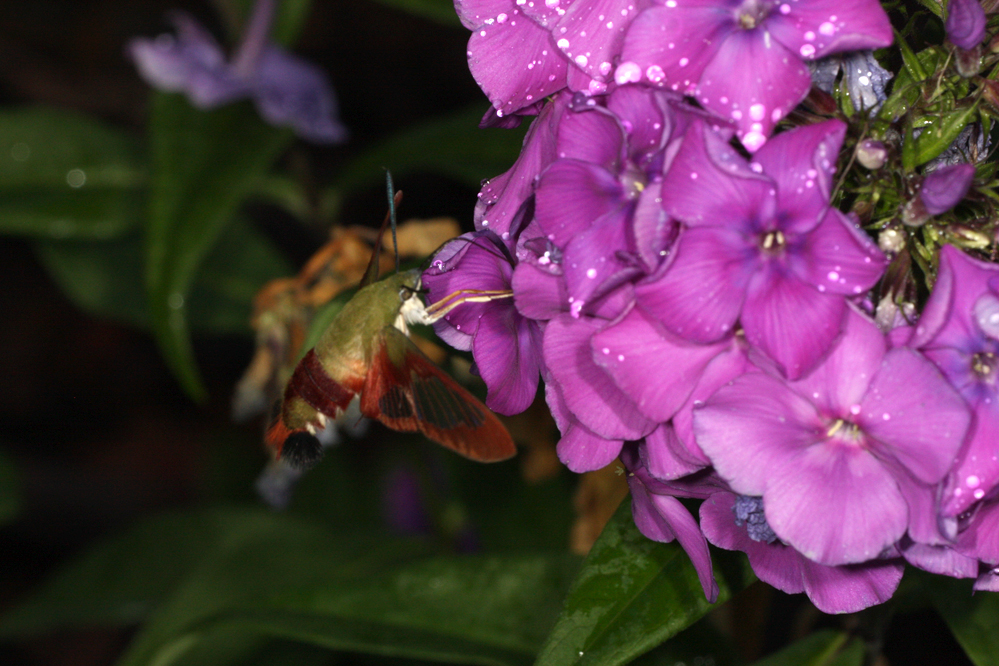
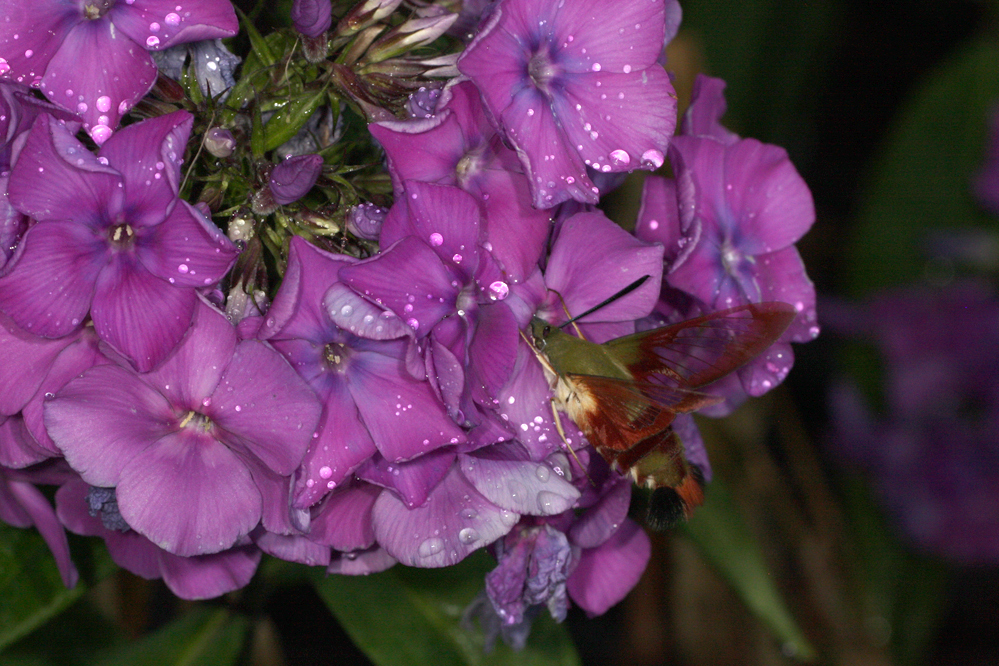
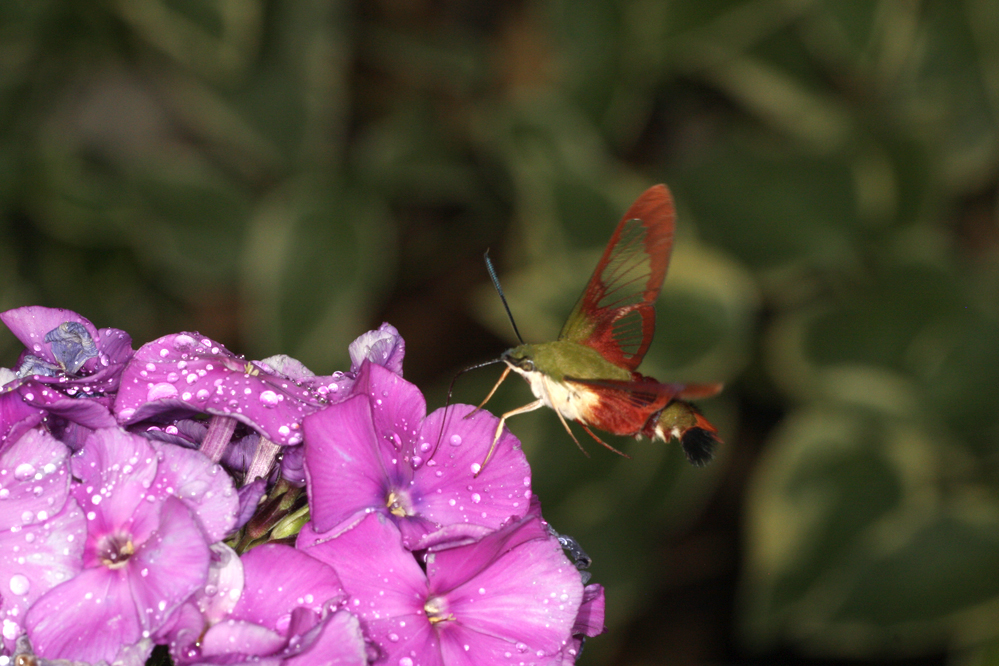
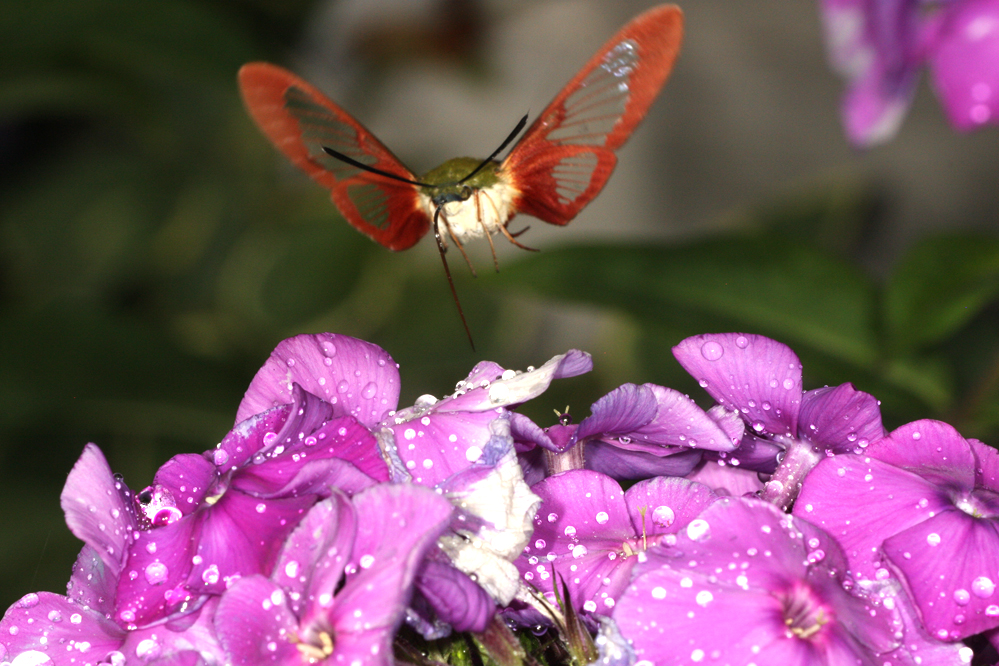
I was photographing an interesting spider on July 22, 2015, in the backyard when along came this moth. This is the first time I have successfully photographed a moth of this species, as they move very quickly and it is very hard to get them focused before they move on.
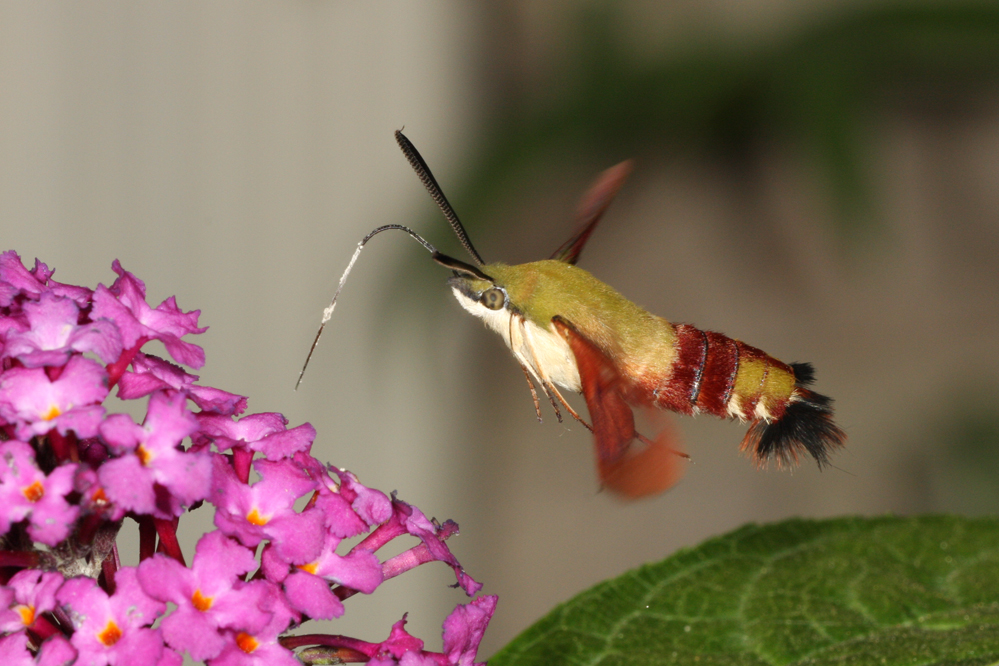
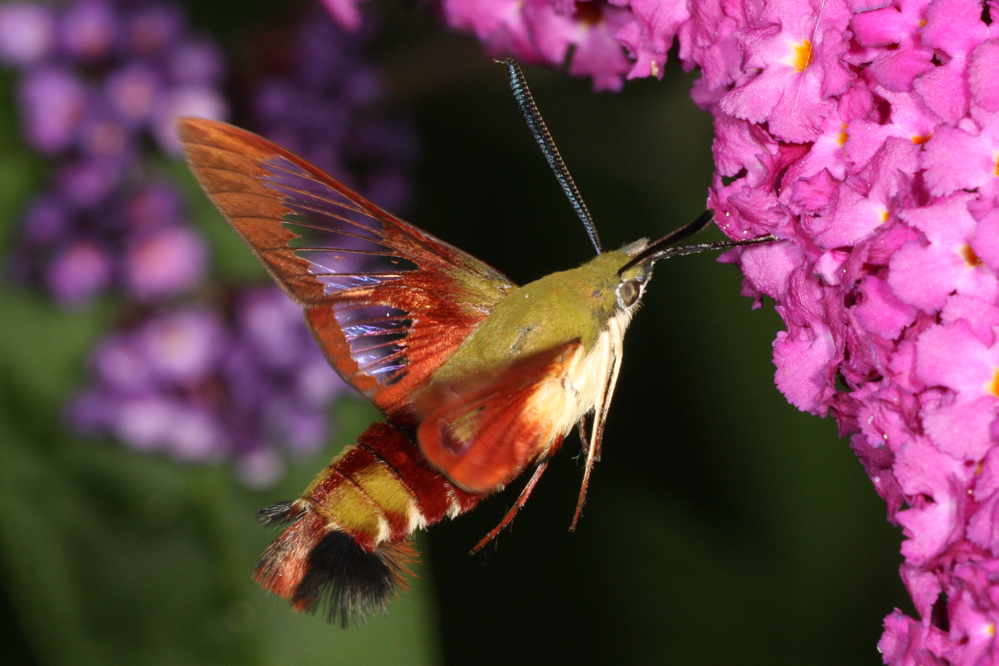
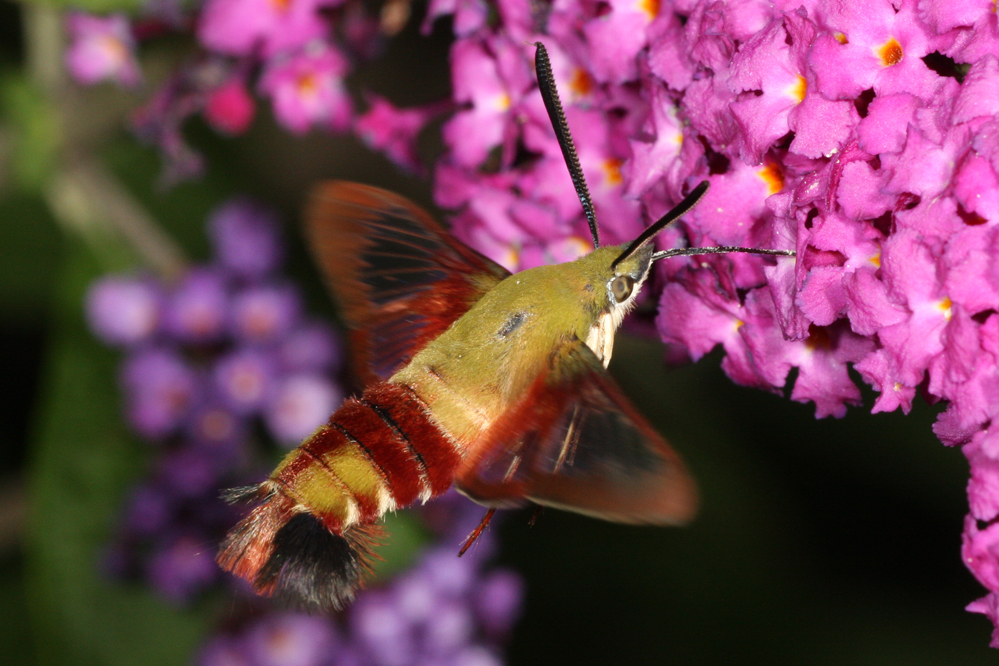
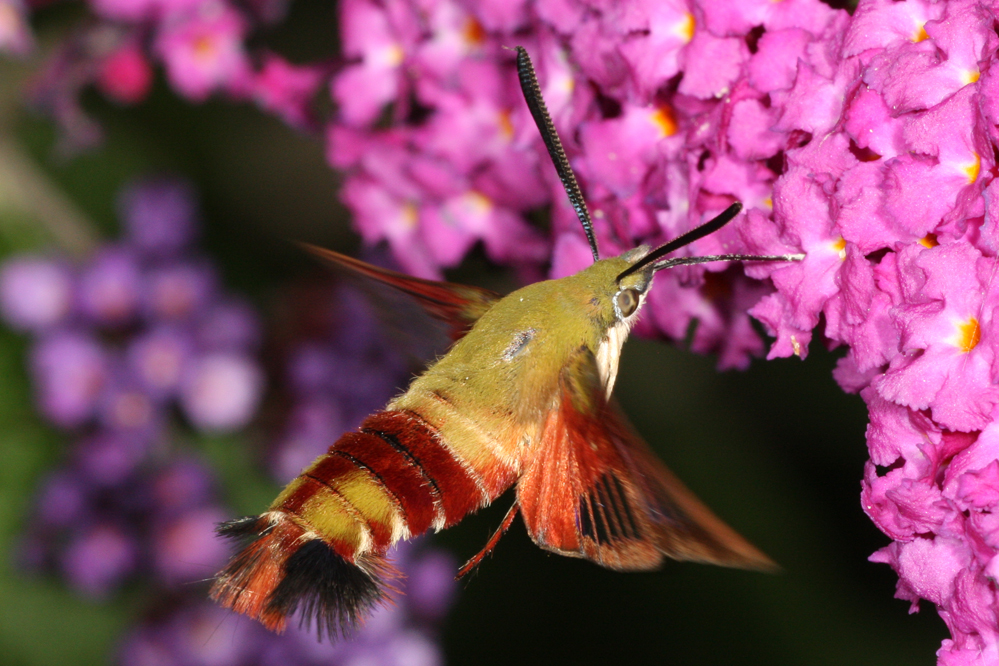
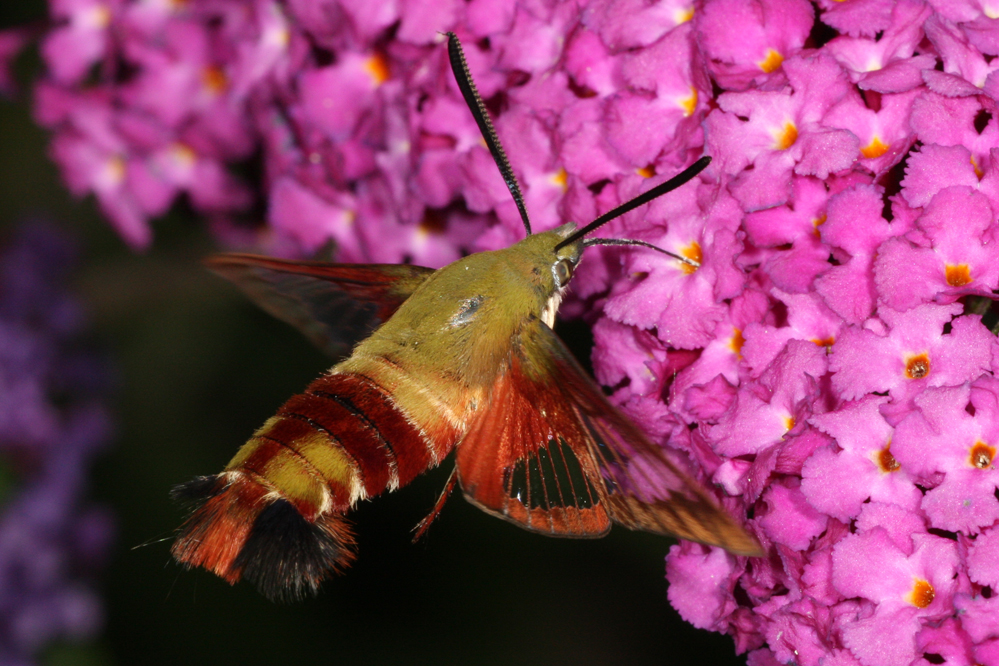
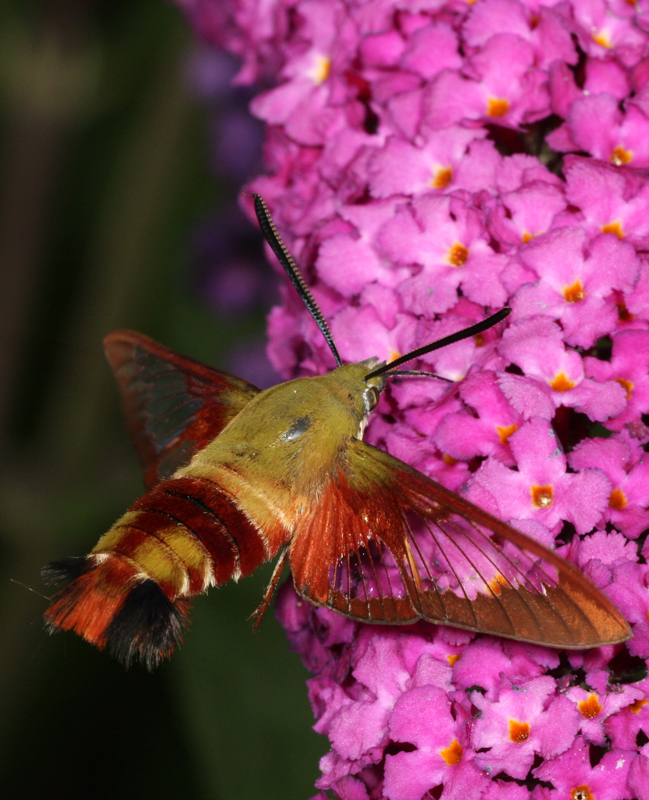
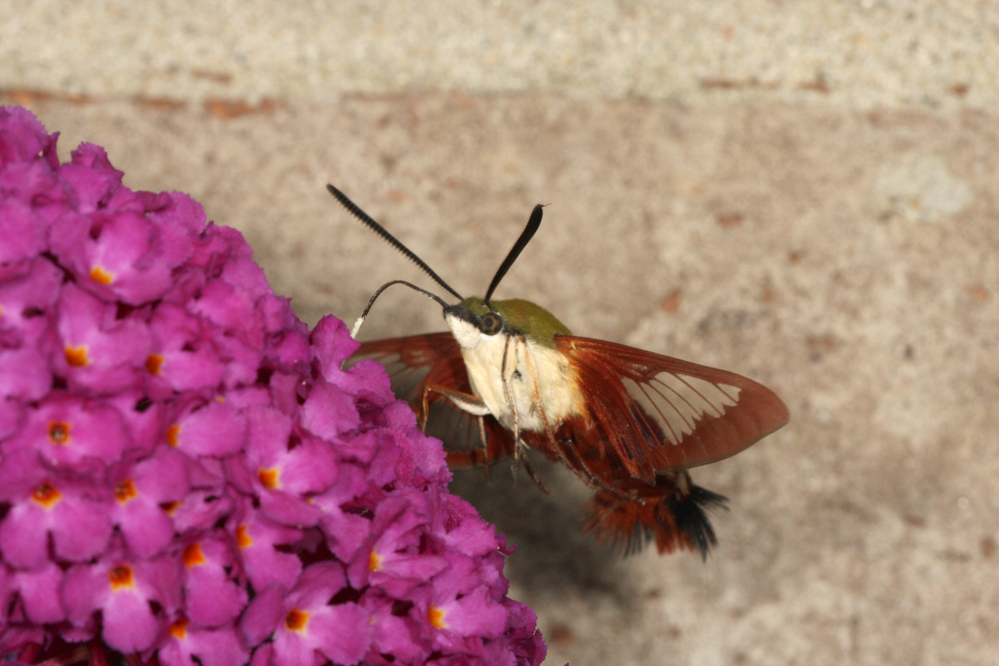
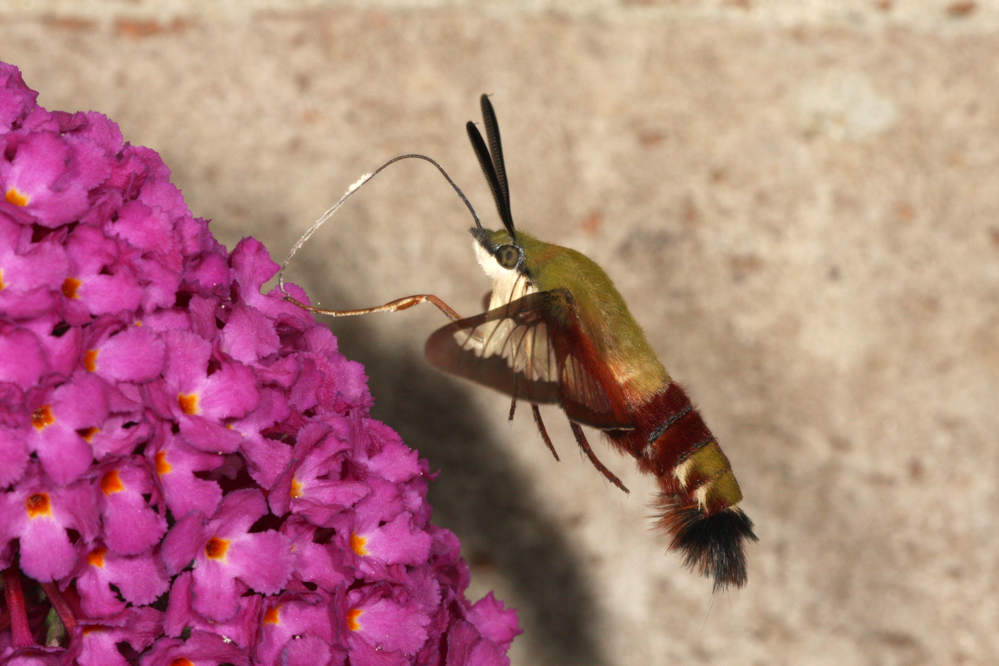
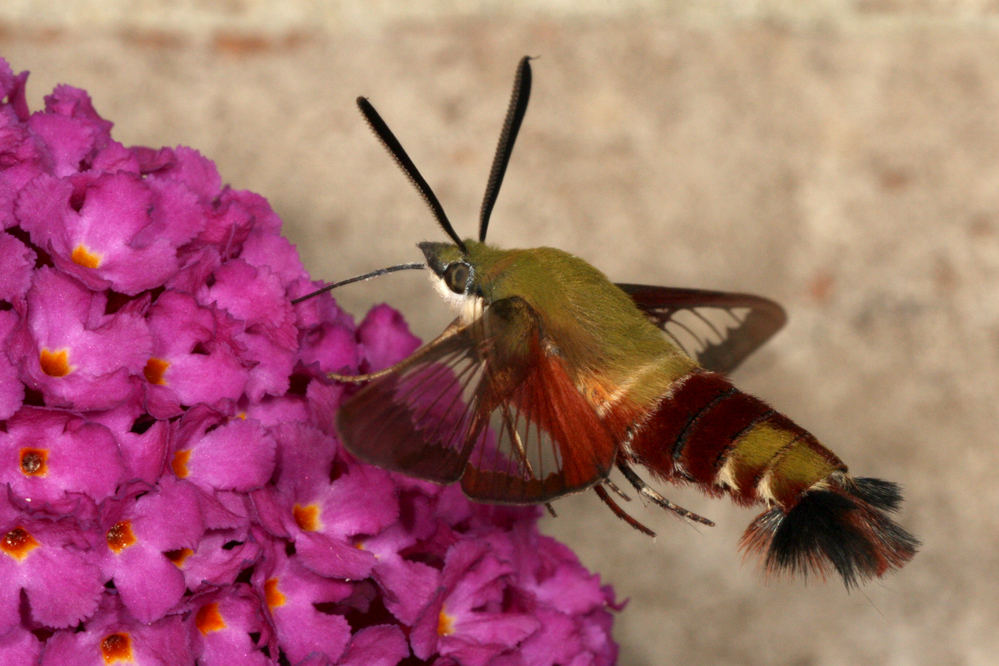
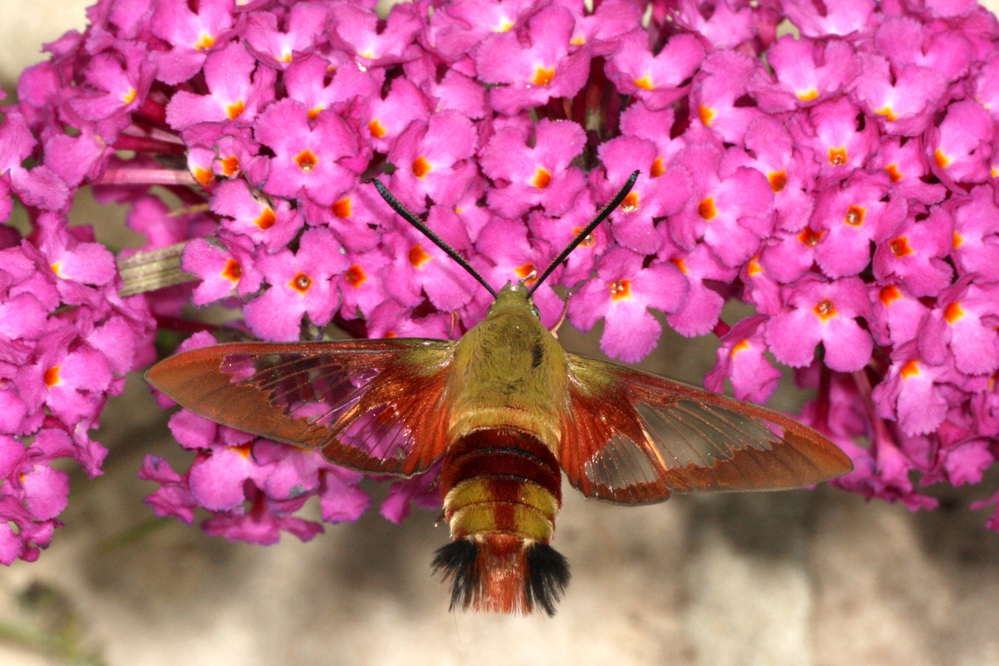
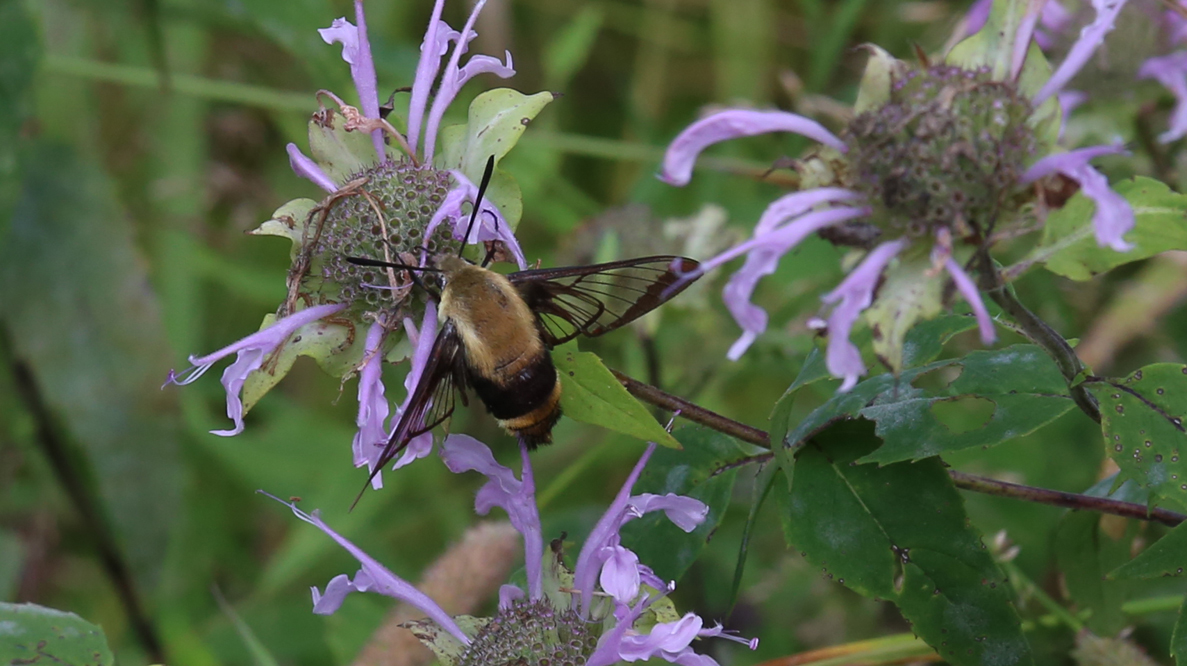
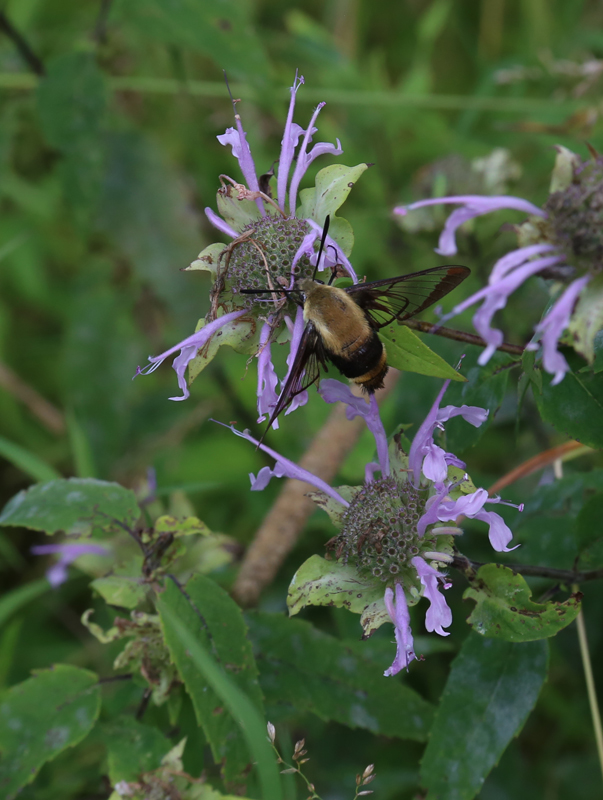
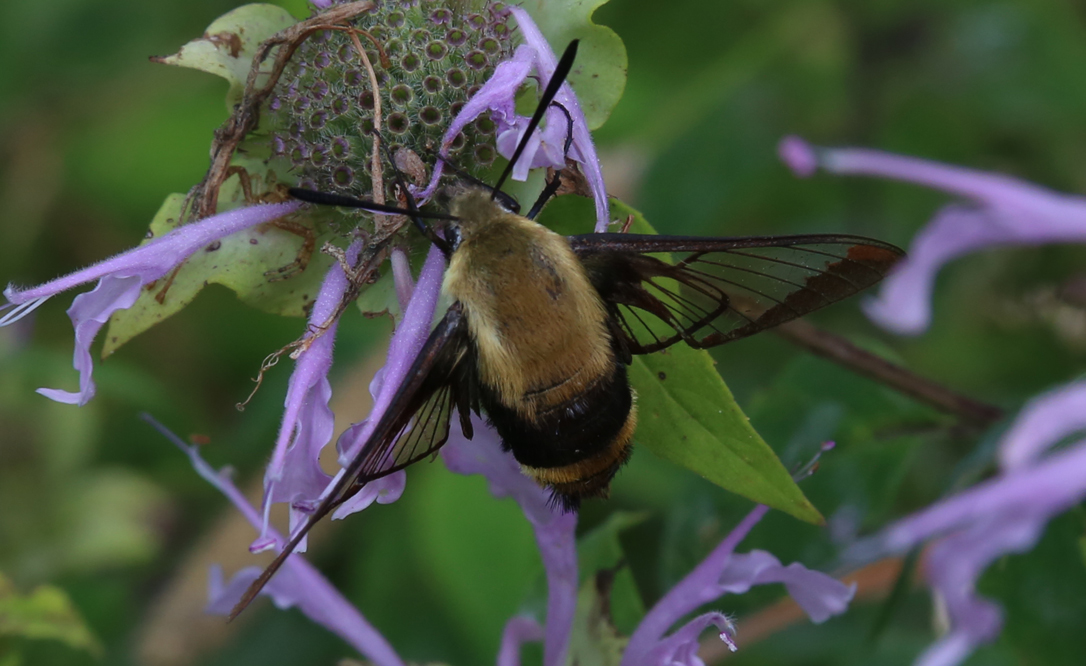
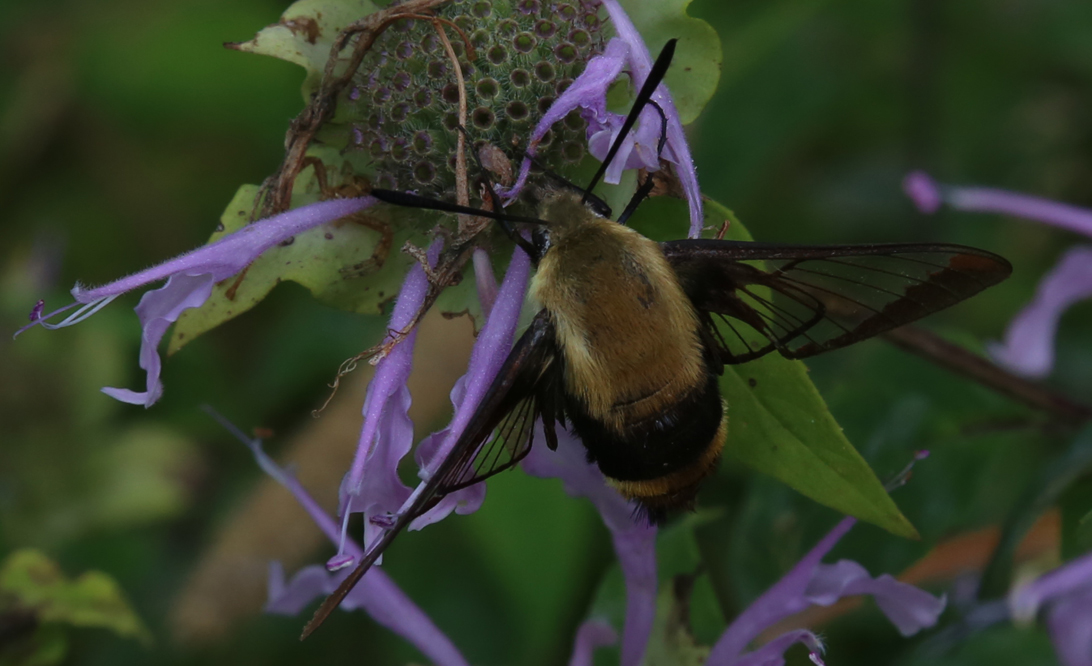
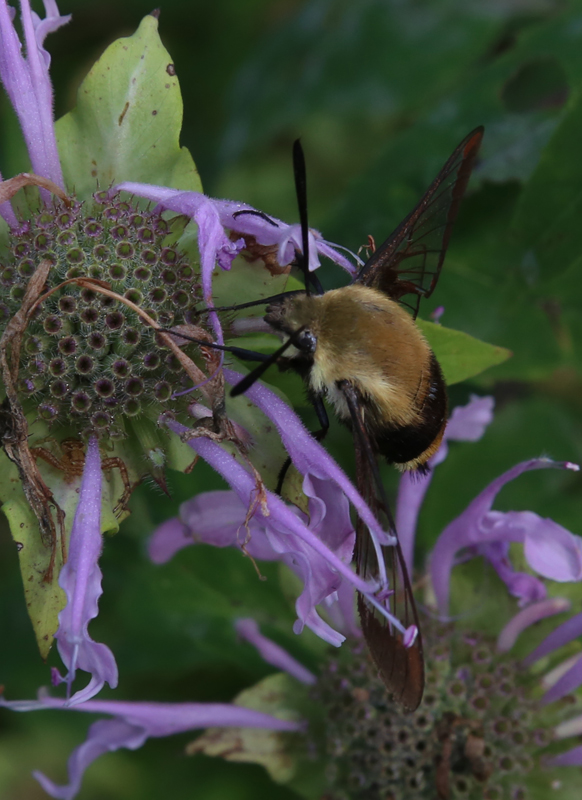
Snowberry Clearwing, Hemaris diffinus
Kosch Headwaters Preserve, August 2, 2014 (non-macro).
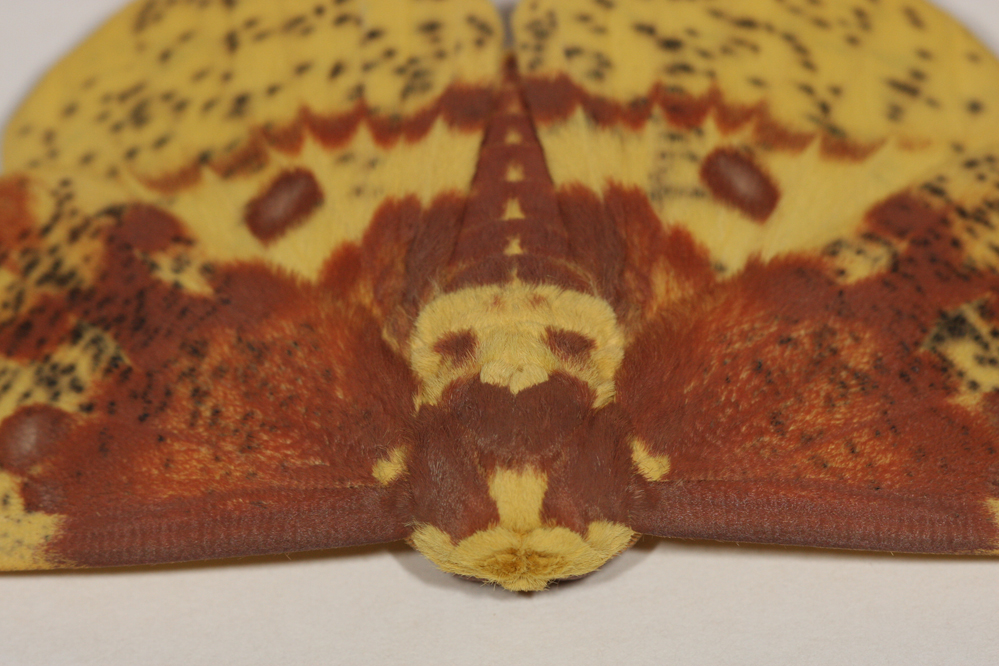
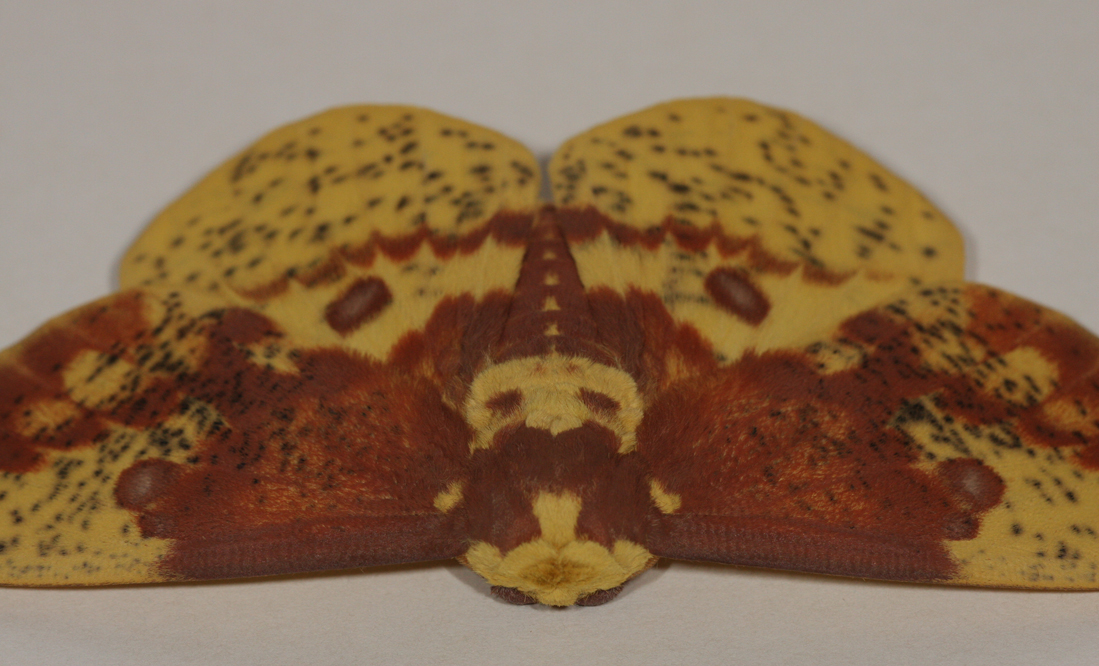
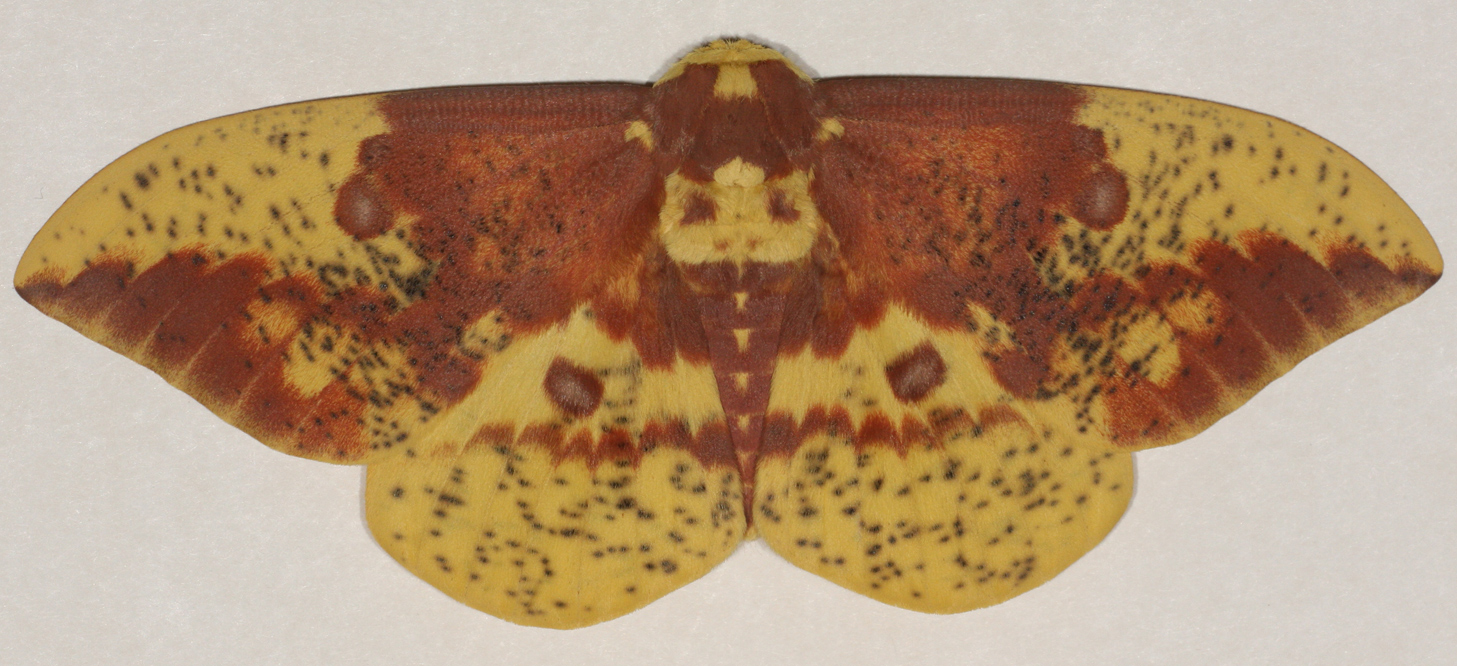
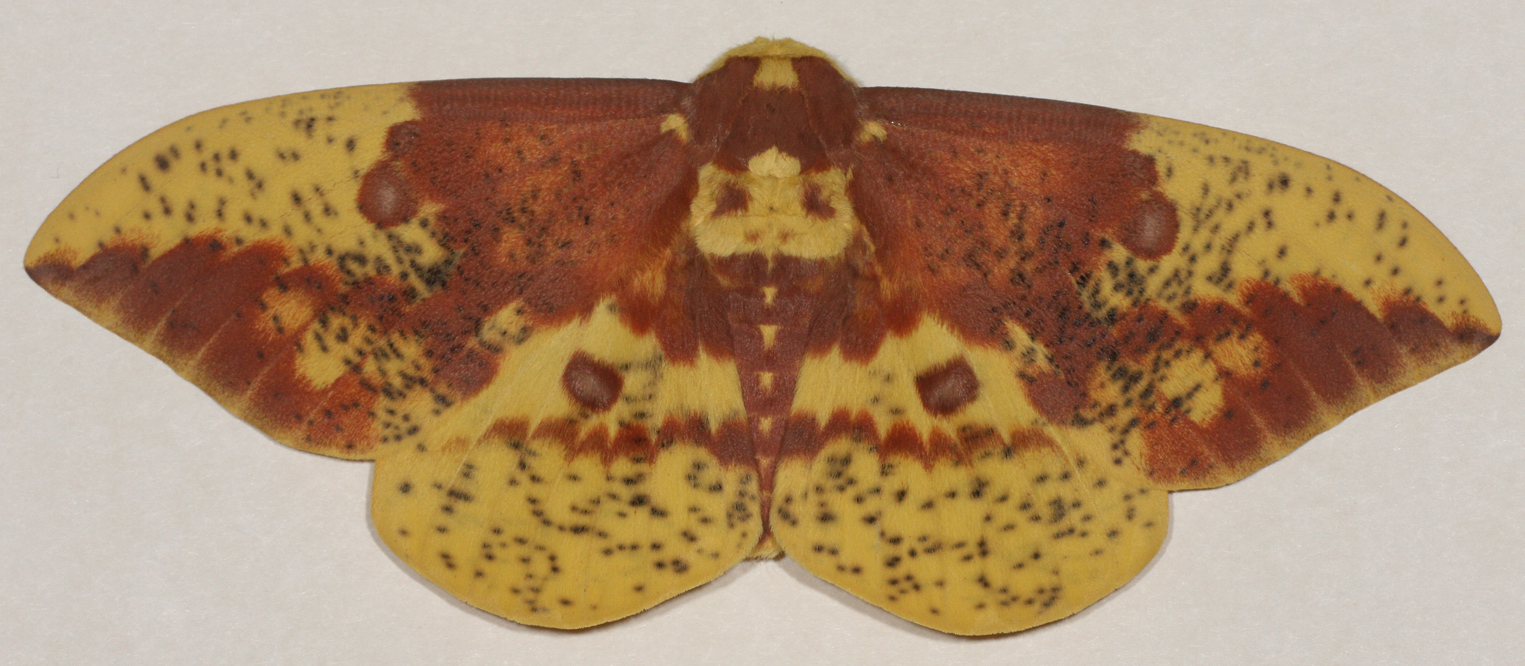
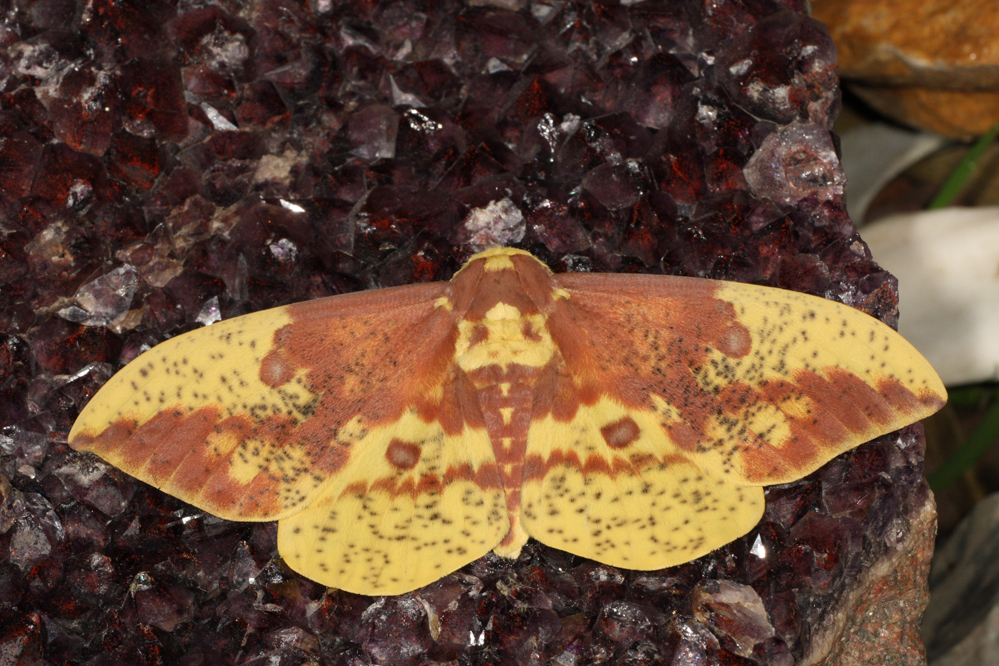
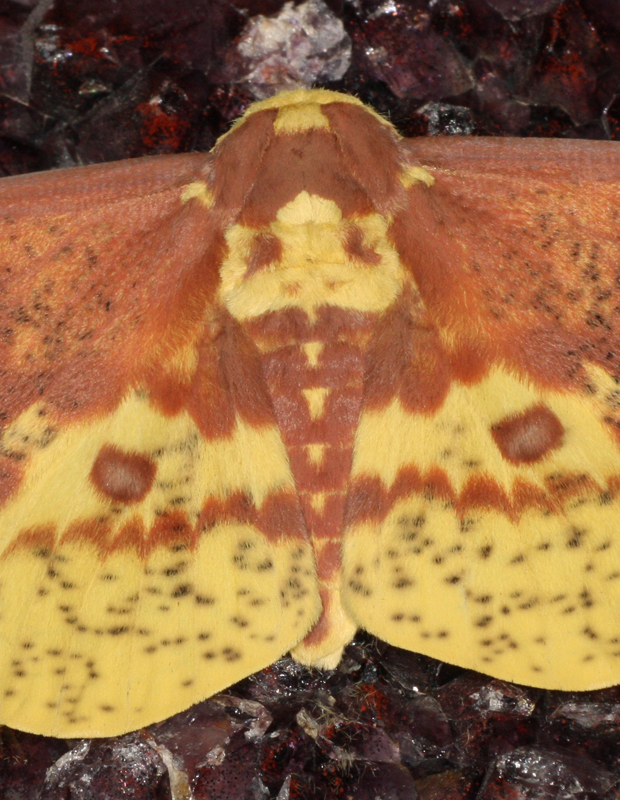
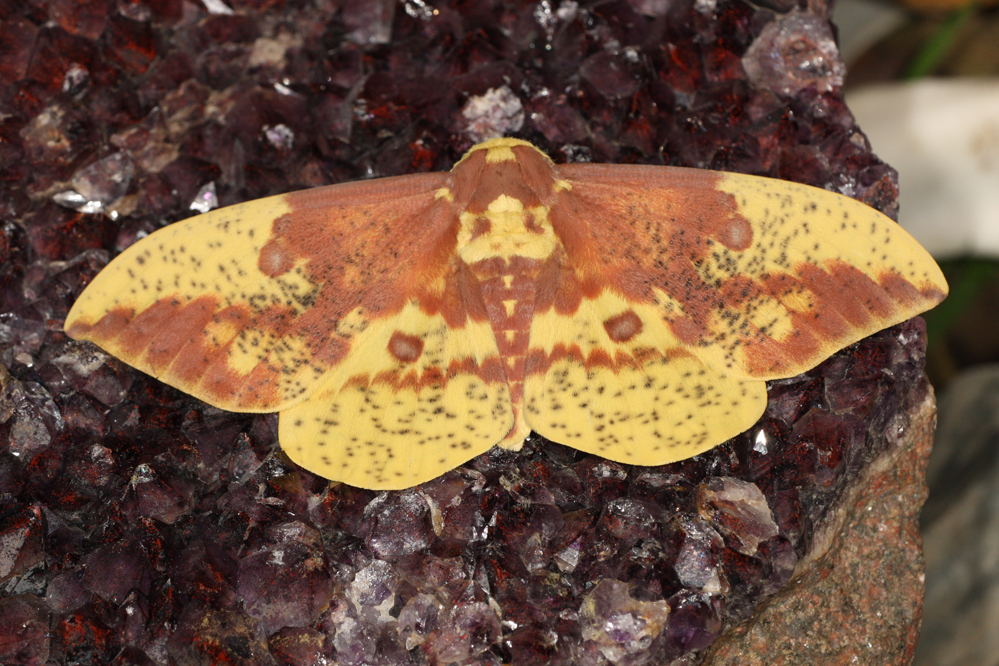
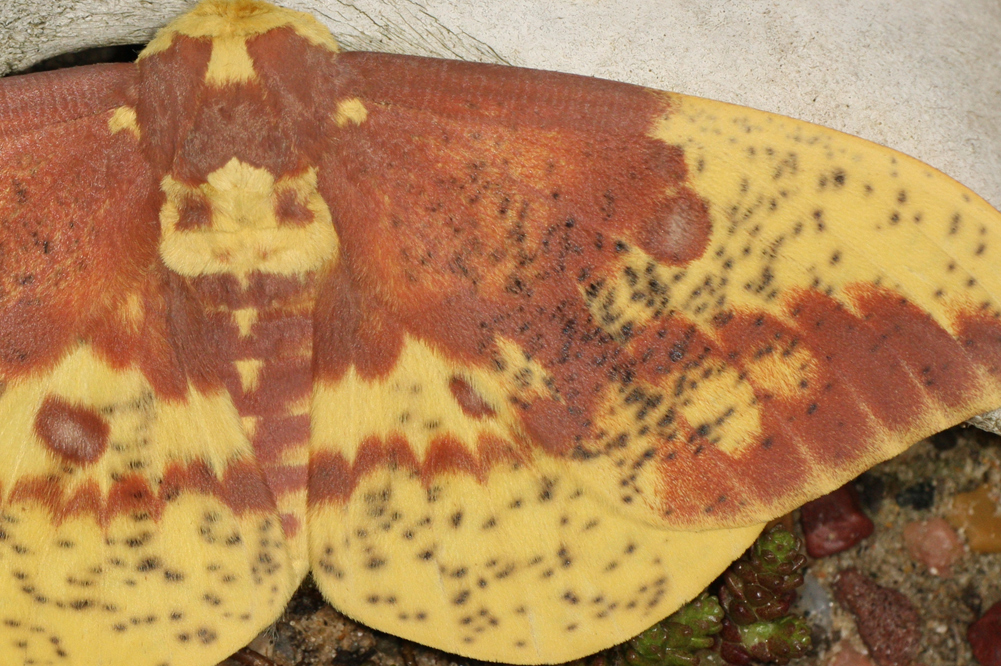
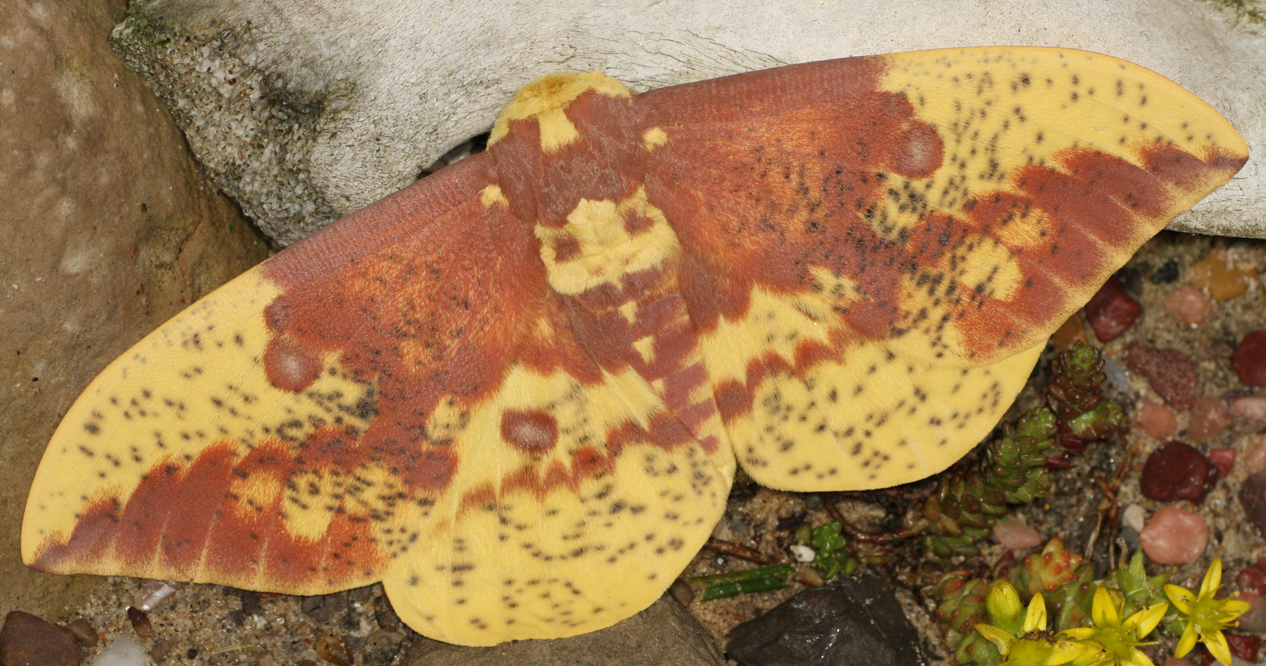
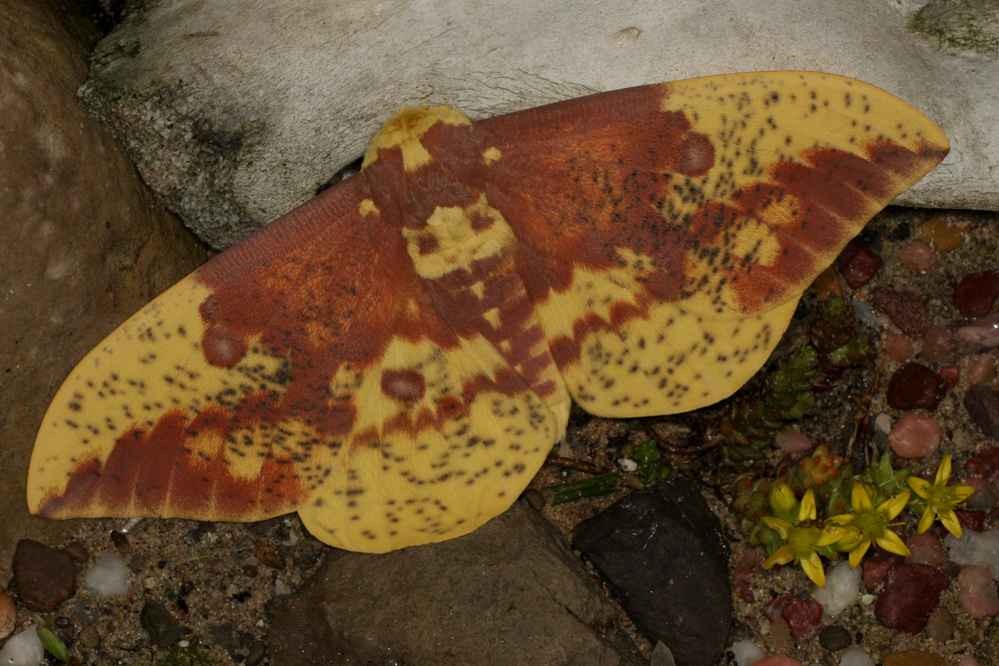
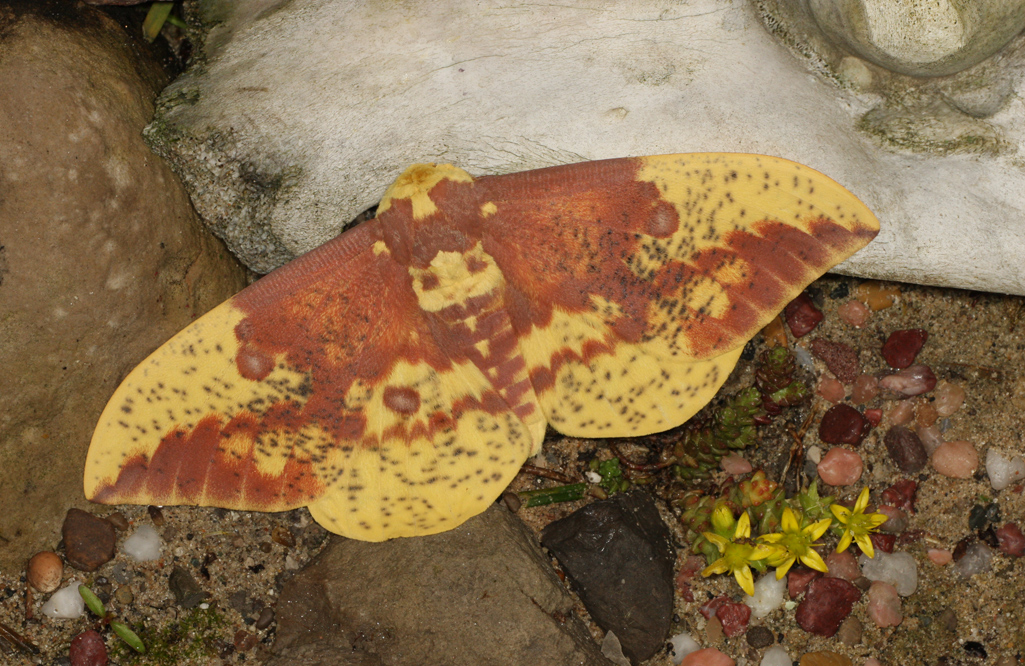
Imperial Moth, Eacles imperialis
On June 17, 2015, I found a large pupa laying at the base of my maple tree in the front of my yard. It measured about 2 ¼” long by ¾” wide. After doing a little research, I determined that it was going to be an imperial moth. I had expected the moth to emerge midsummer, as my research had indicated that it would do. Also, the last time I saw moths of this species, it was July 24, 2004. I set up the pupa is about 2 inches of soil, with another inch and a half or so of leaves on top, in a large plastic terrarium with a lid. I misted the leaf covering with water every day. I hung a piece of cloth on one side for them to climb on and dry its wings. I put it outside so it would be exposed to the normal temperatures in the environment, in a shady spot on my porch. Only one brood of these moths emerges per year, so it was important that it emerged at a time when other imperial moths were also emerging. Unfortunately, I did not get a chance to take photographs of the pupa, because the moth surprised me and emerged only four days later, on June 21, 2015.
When I found it at about eight o'clock at night, it was at the top of the terrarium, hanging out underneath the lid. Fortunately, its wings had dried normally, but it didn't have any energy, and when I removed the moth from the lid, rather than climbing onto my hand, it just flopped around as if it was half dead. It squirted out a bunch of orange-brown liquid, which I had expected would happen after having read about it on the internet. It is just the leftover waste product from the pupal stage. It almost got on the wings of the moth though. It did four separate squirts and I had to hurry up and put clean paper underneath the moth so it wouldn’t get the liquid on itself. I took some photographs of the moth, and then I managed to get it to hold onto a piece of paper towel, which I suspended from my light fixture in the kitchen. I took a few photos of its underside while it was hanging.
At around 6 AM, the sun was beginning to rise. I had read that these moths usually emerge just before sunrise, so I thought this would be a good time to take the moth outside. It had hung suspended, motionless, all night. I determined that it was a male, which is important to know, because if it had been a female, hanging around would have been normal. A male moth, however, is supposed to sense the females’ pheromones on its antennae and fly to her. So my male moth should have wanted to fly. I thought maybe he was just hanging around because he was saving his energy until he sensed female pheromones. I had only been outside about 5 min., and snapped a few photos of him on some nicer backgrounds, when all of a sudden, he got energized and started flapping his wings. I covered my hands over him to calm him down, as this sometimes works to prevent a moth flying away, but he just kept flapping. So I took my hands off, and away he flew up into the morning sky, clearly on a mission. It was a great experience. I’m glad I was able to ensure his pupal stage was successful. He could have easily gotten stepped on just setting on the city property in front of the house.
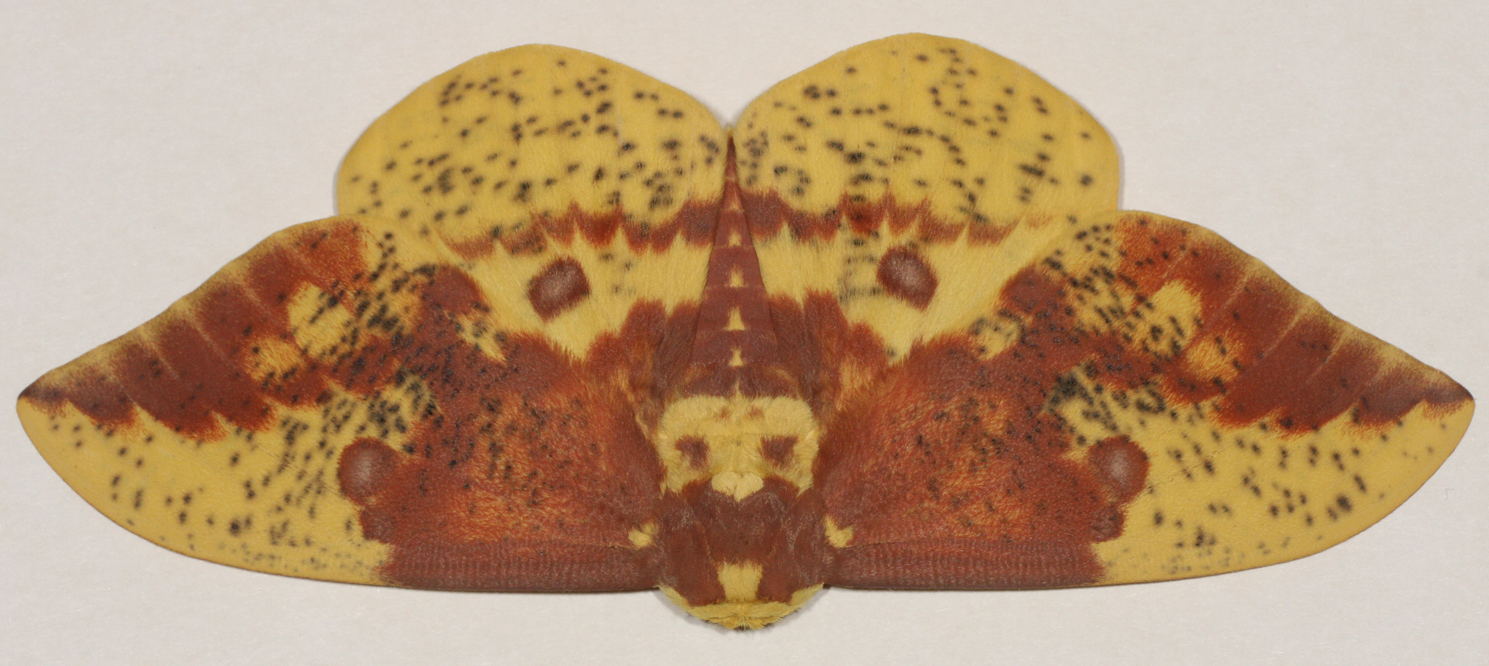
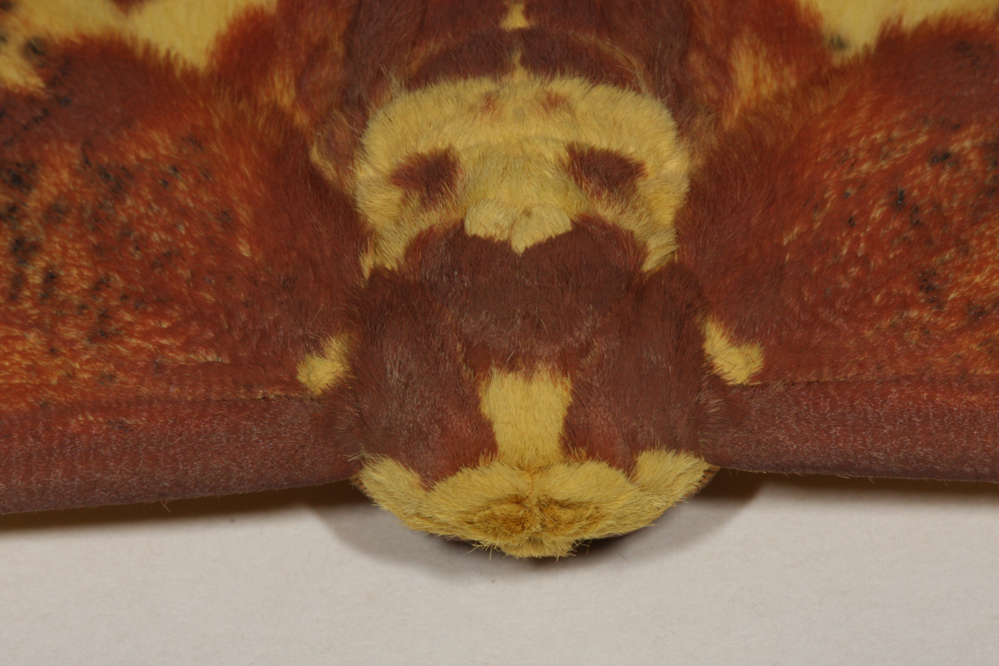
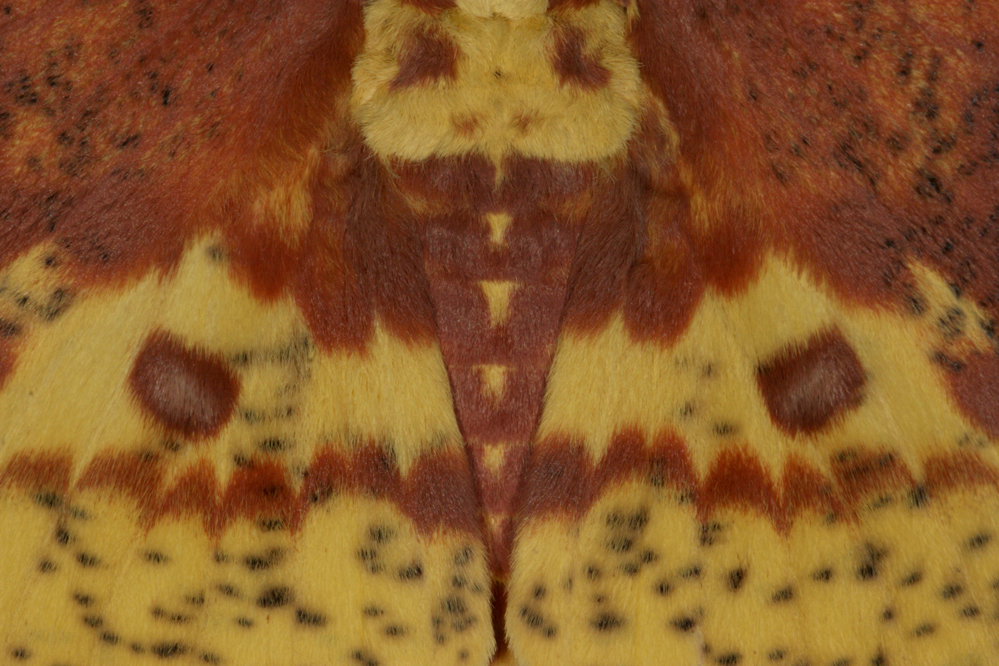
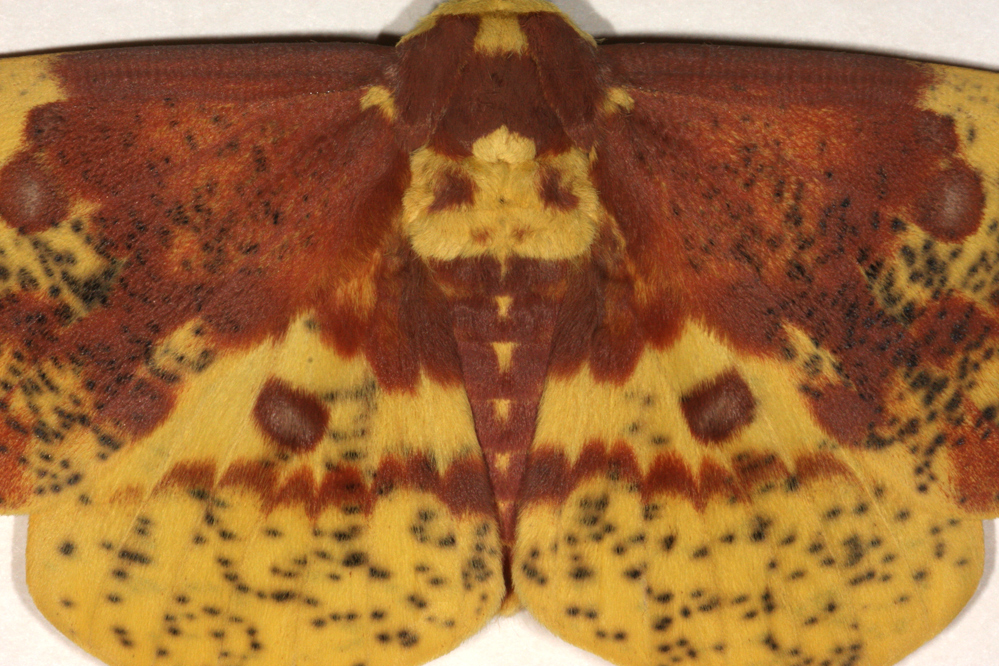
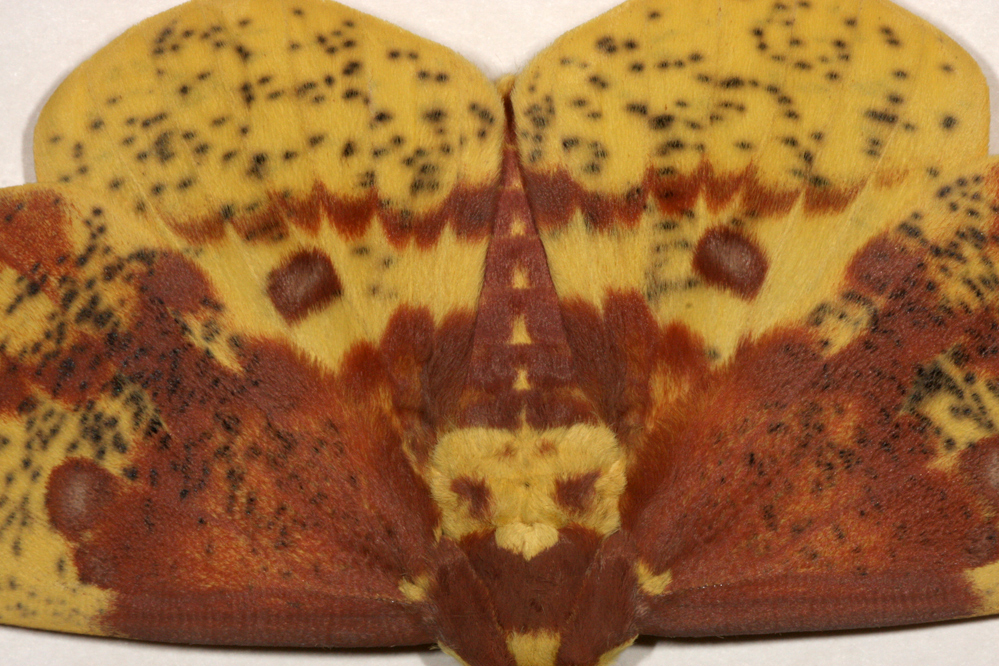

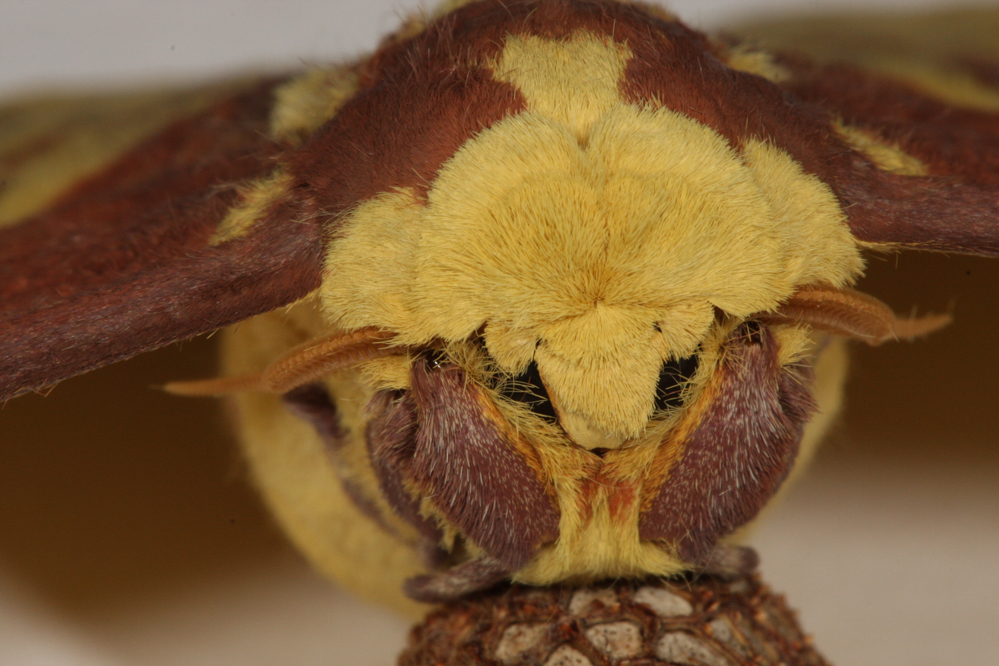


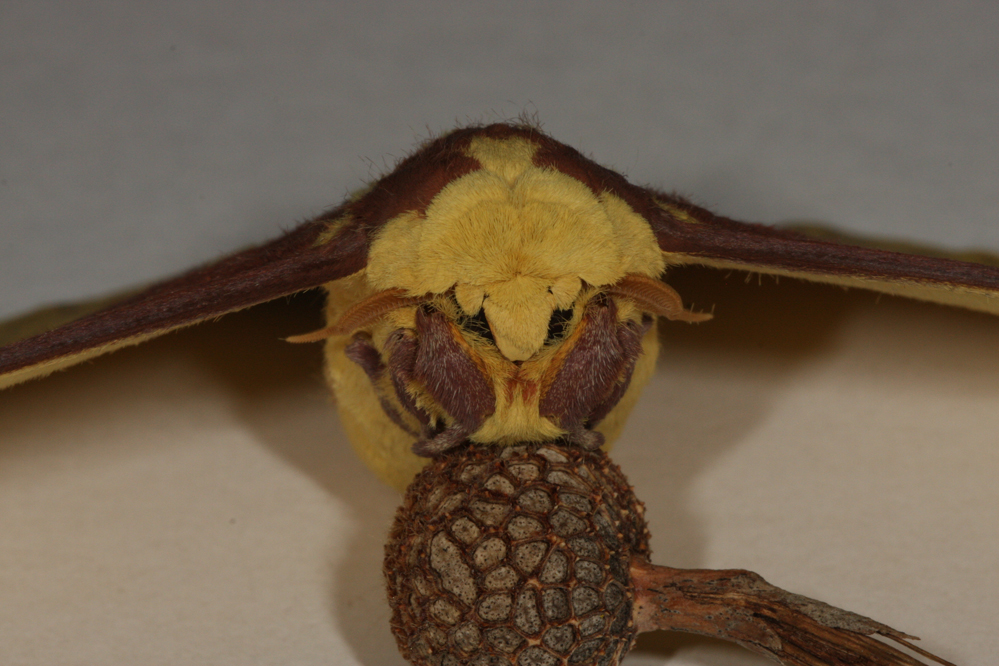
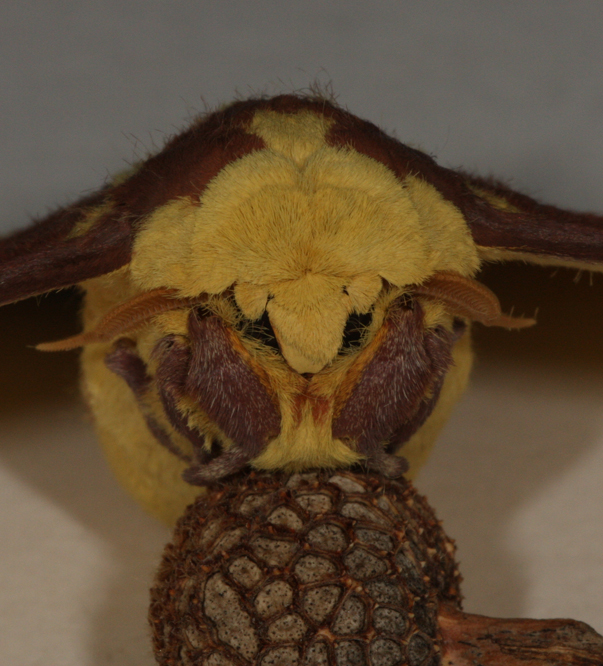
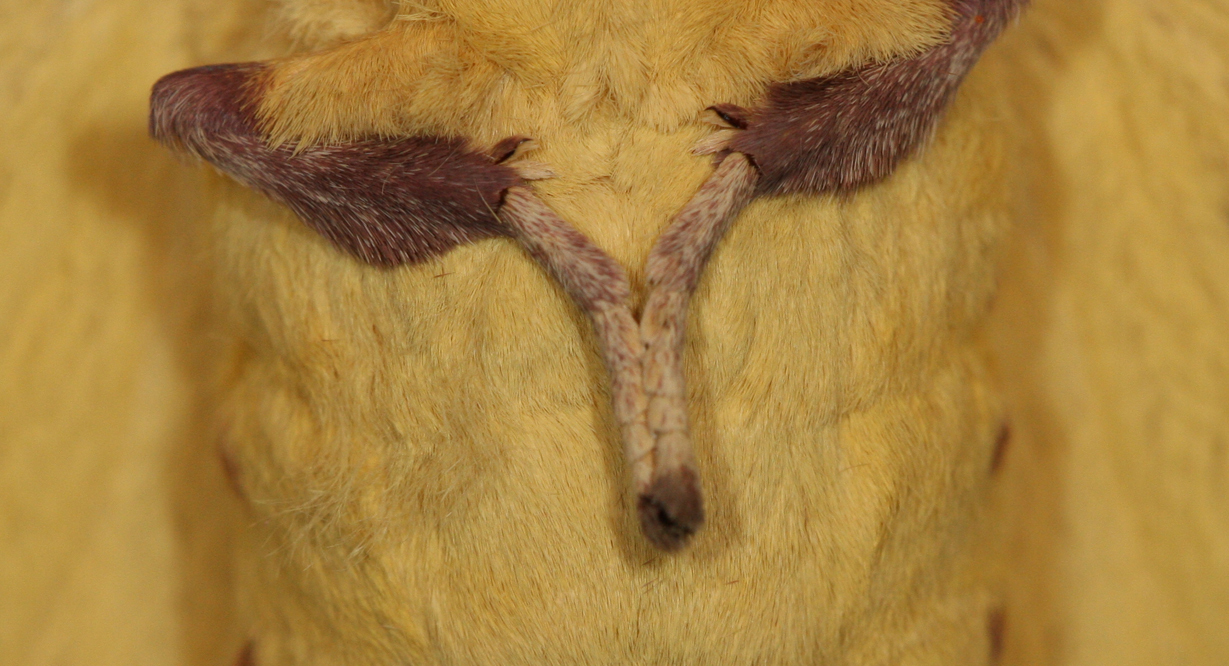
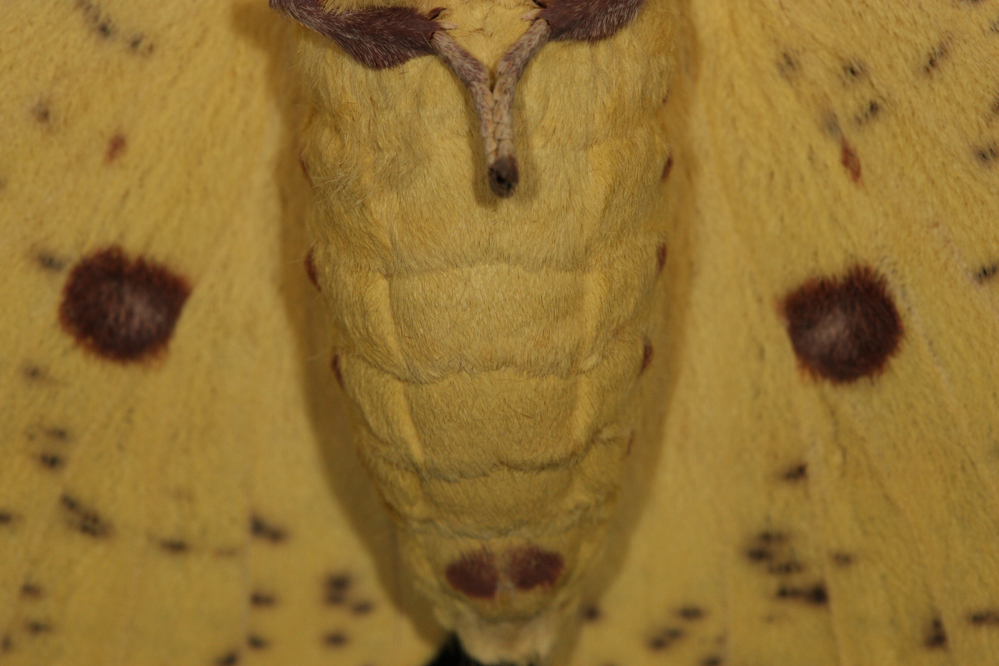
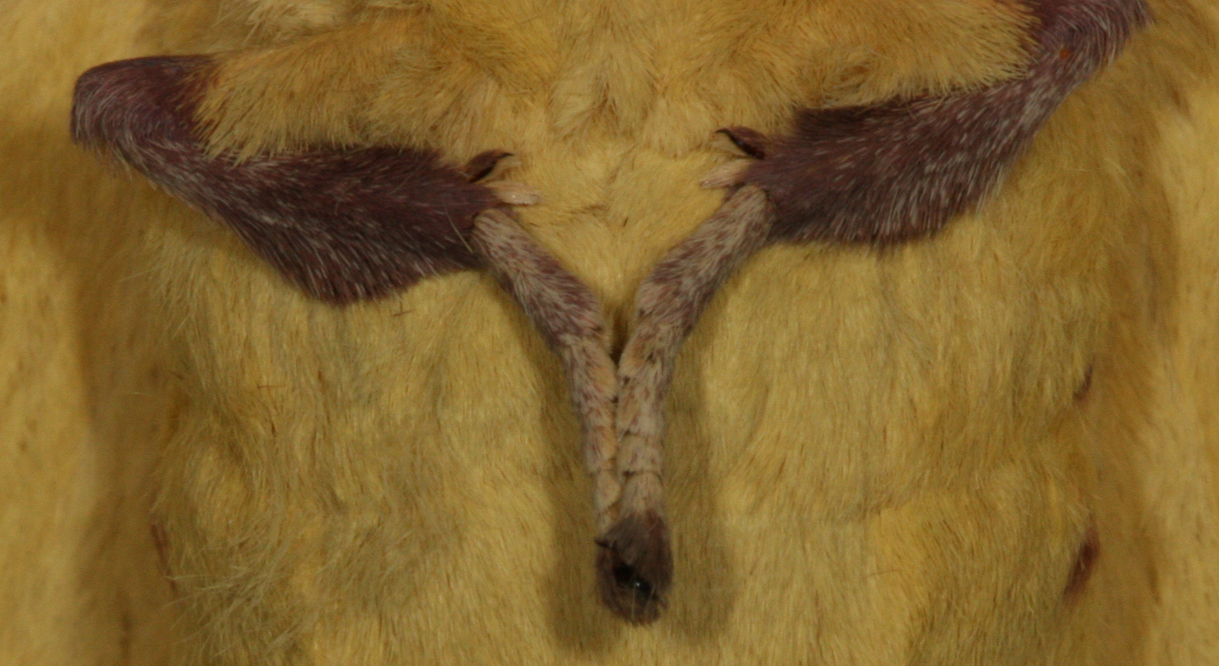

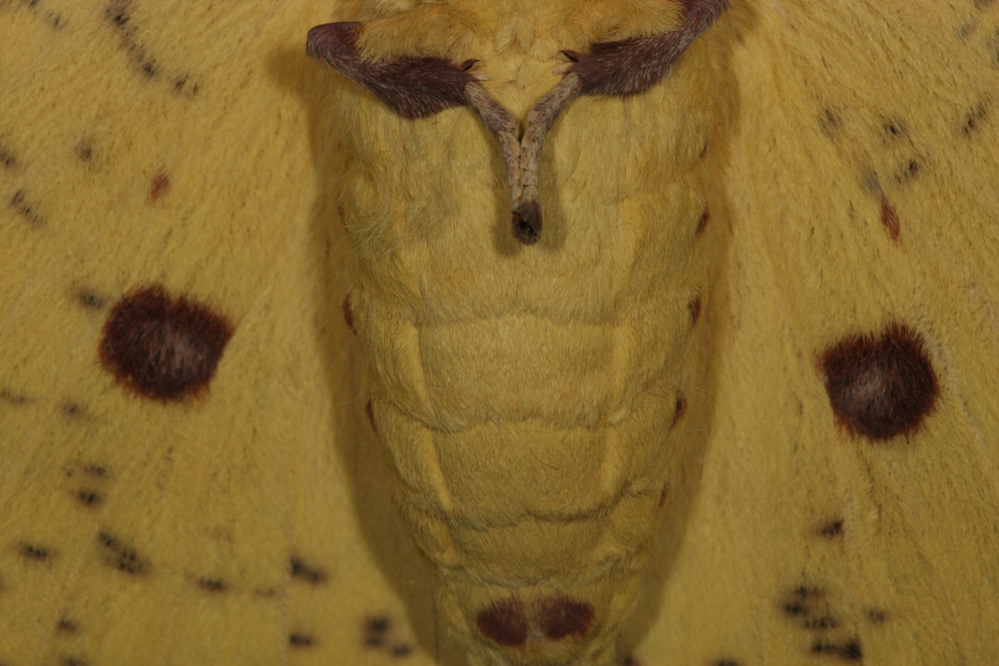
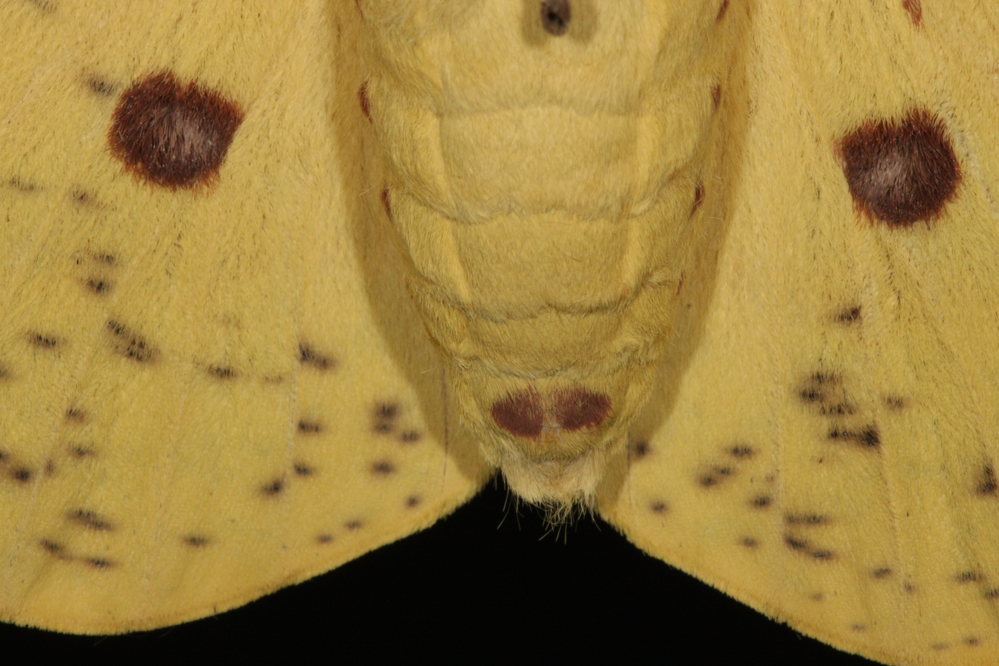
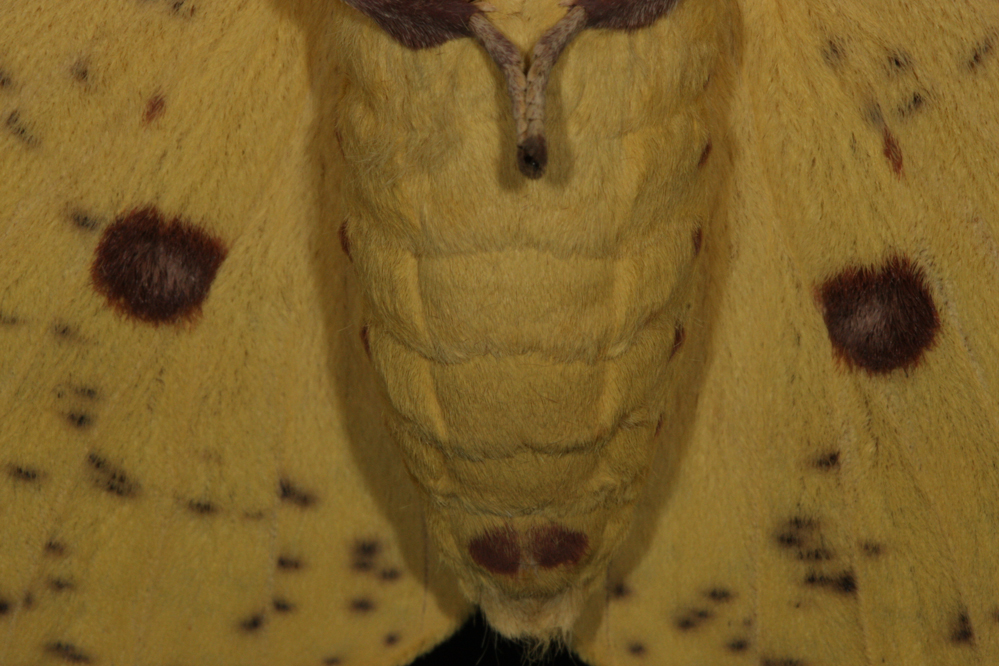
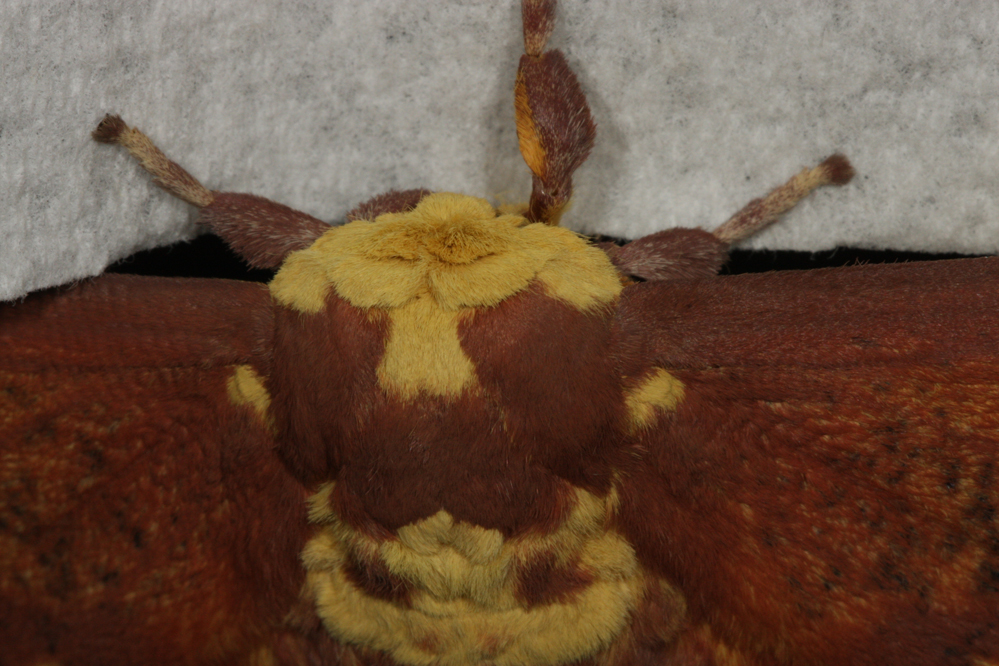
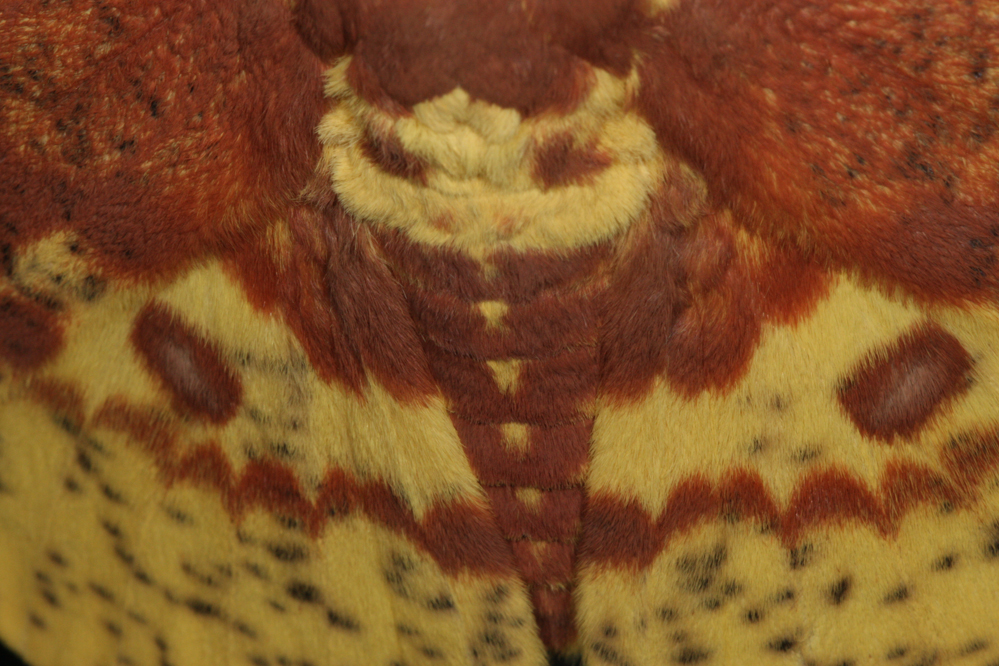
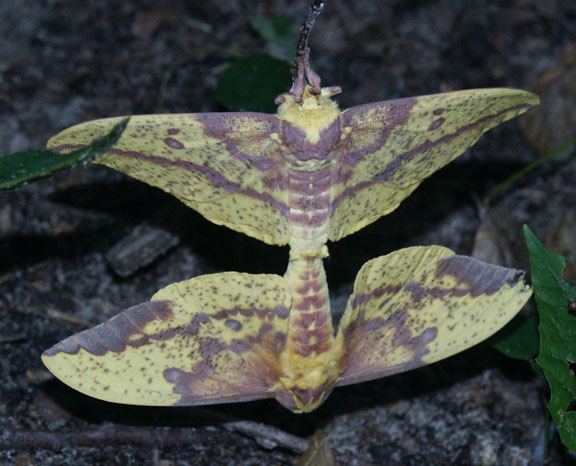
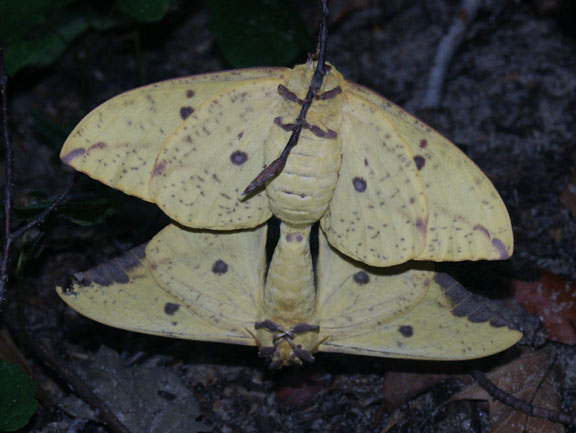
These moths looked like diseased and dying leaves at first glance. This particular mating pair was spotted in the Saugatuck Dunes on the west side of Michigan on 7-24-04.
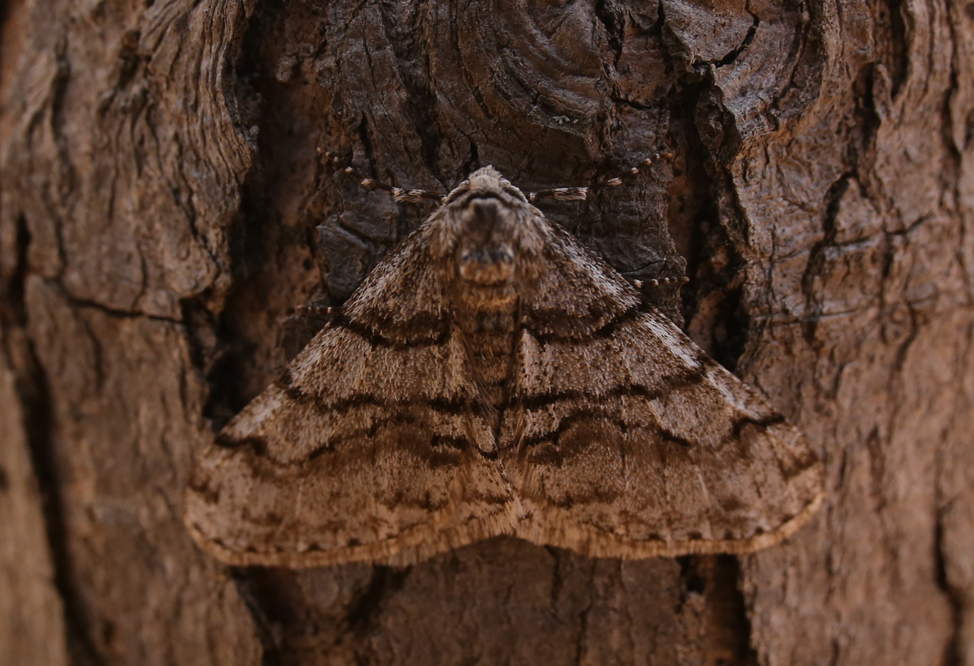
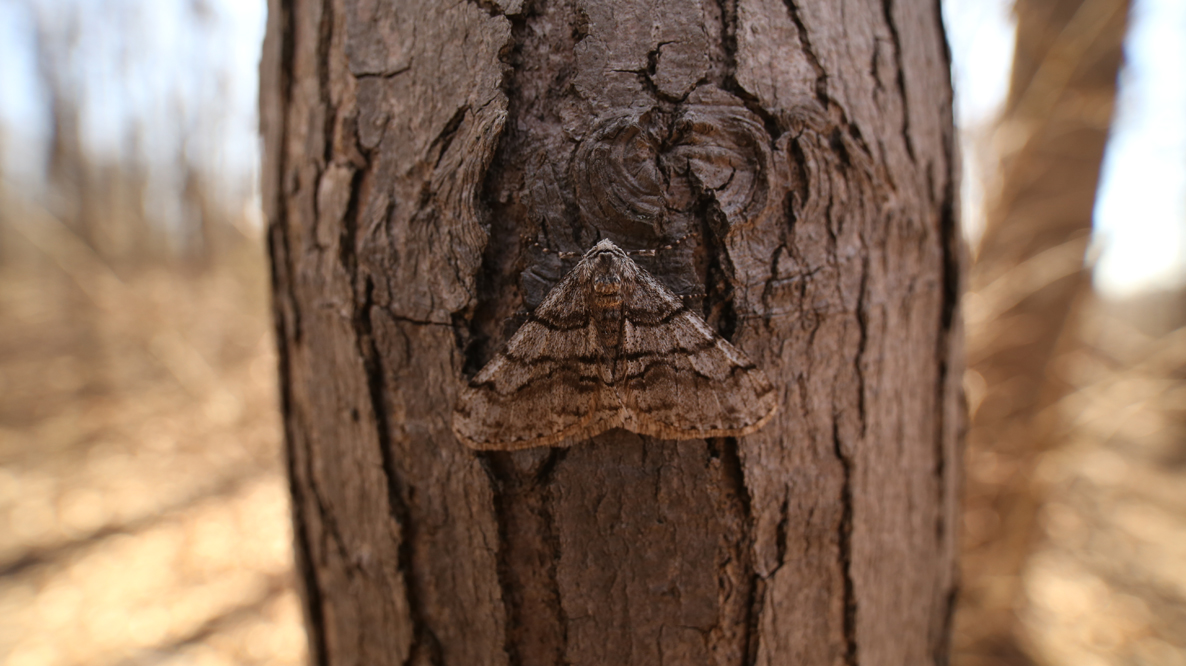
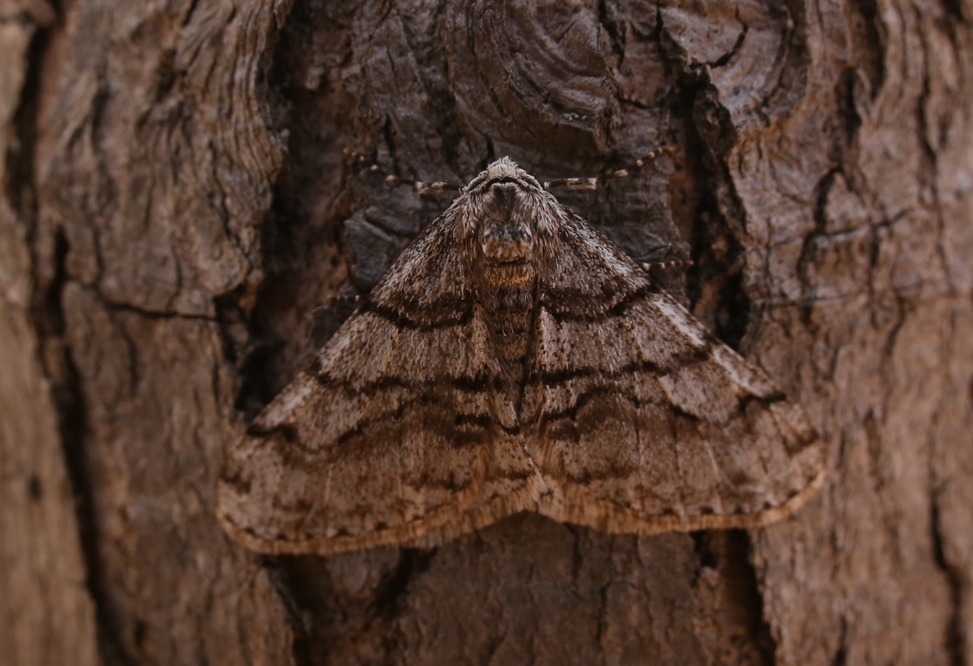
Unidentified Moth
Waterloo State Park, April 16, 2016. Wide angle macro. Wingspan about 1 1/4".
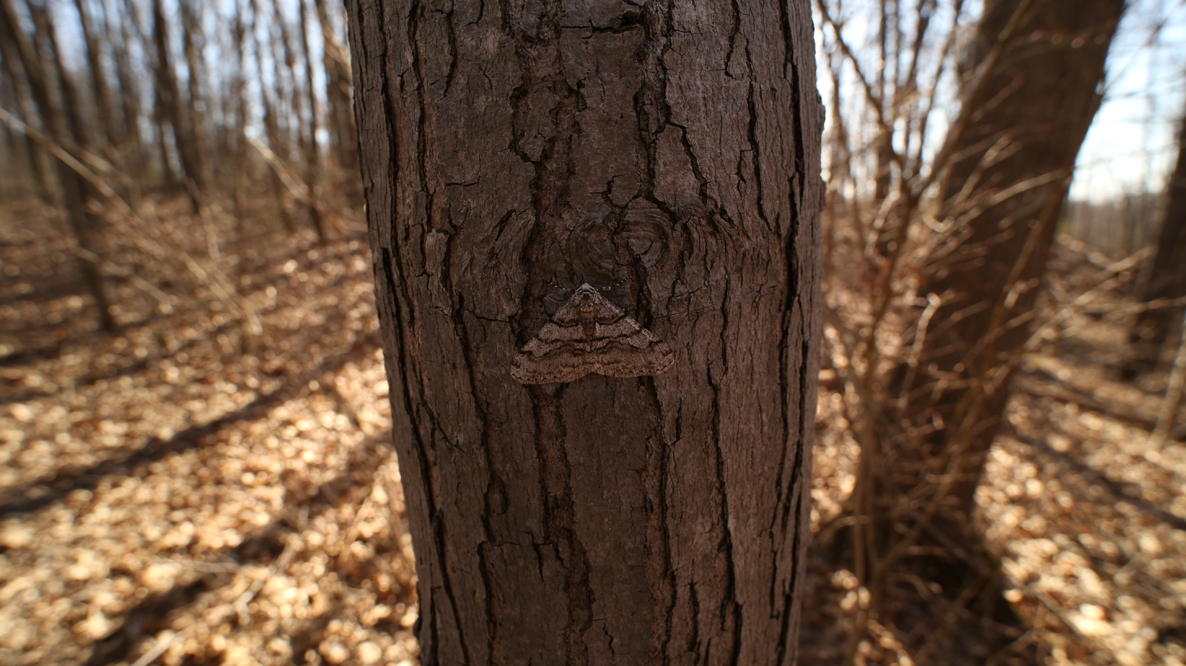
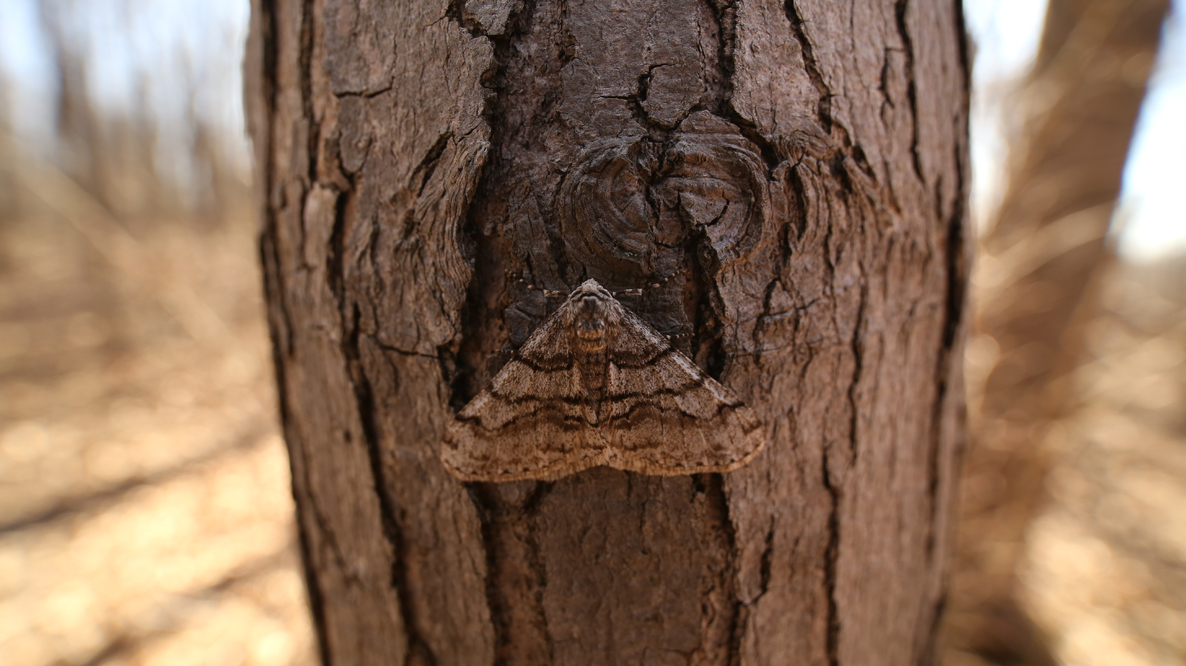
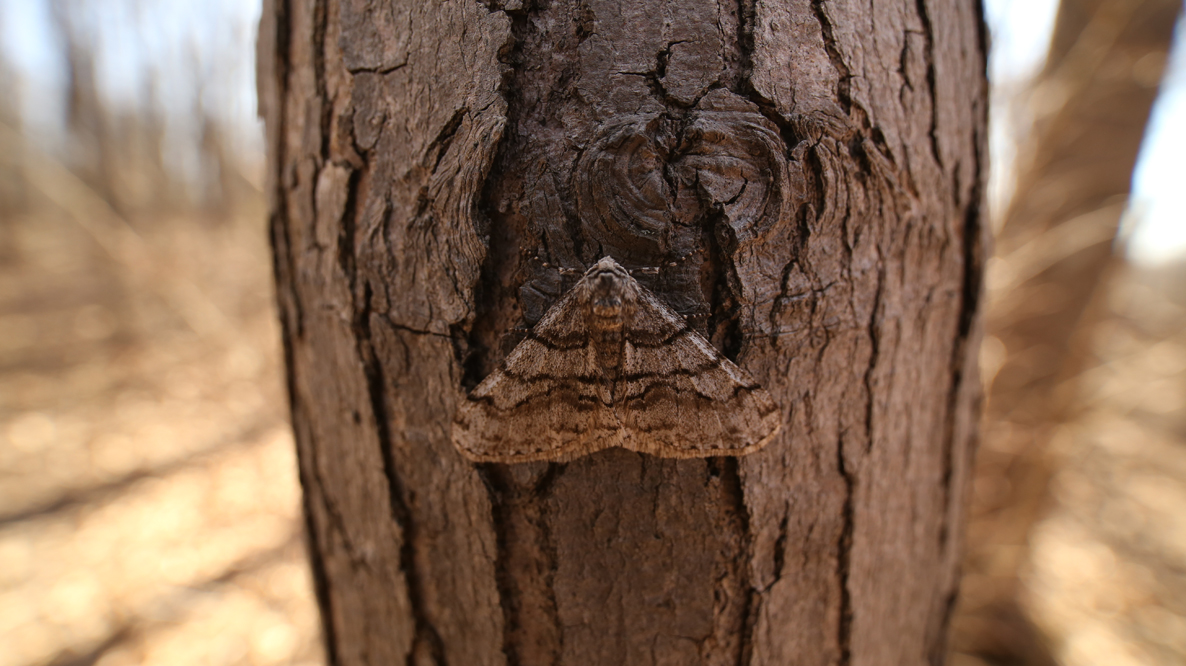
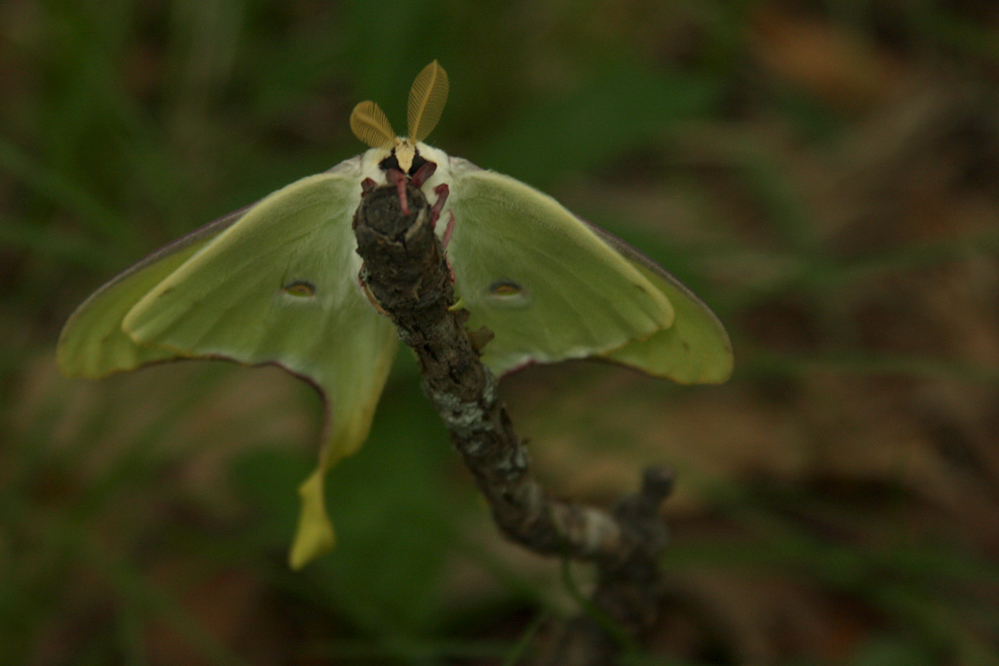
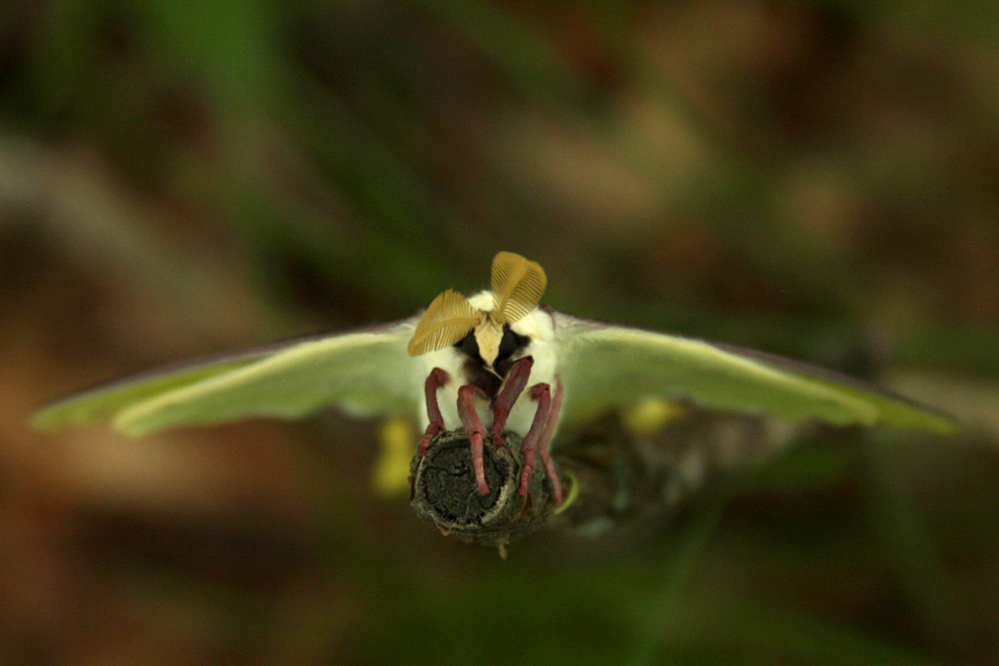
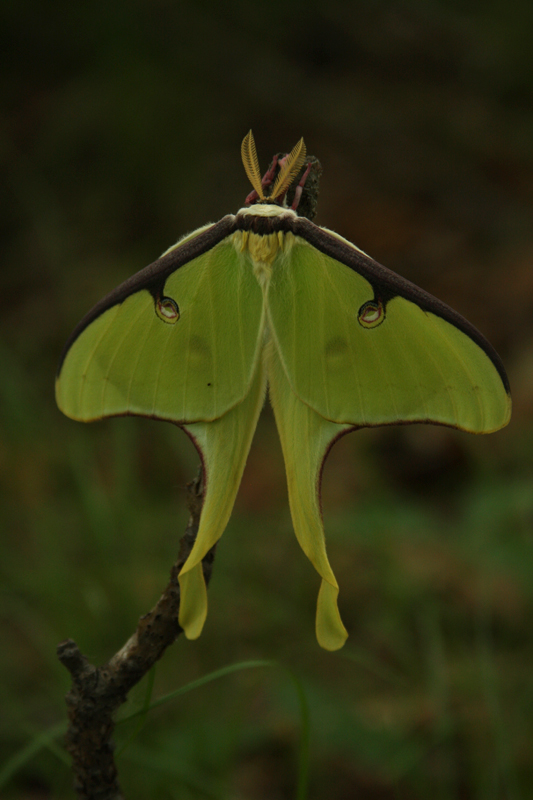
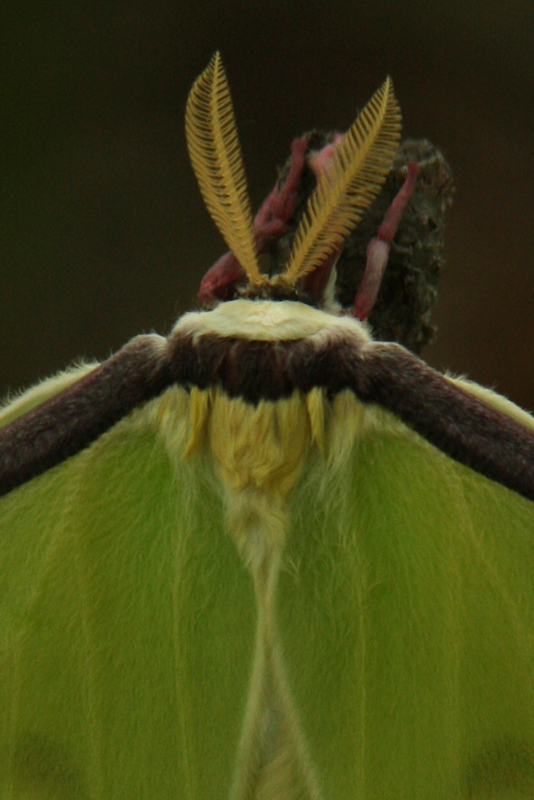
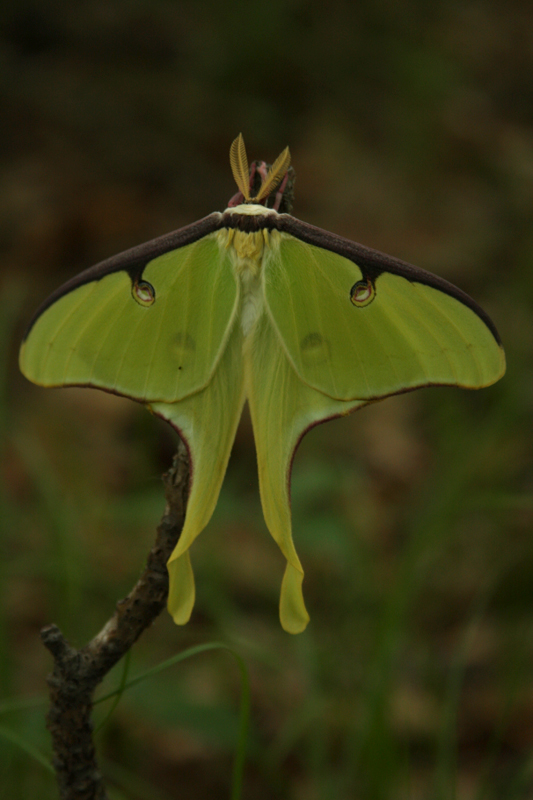
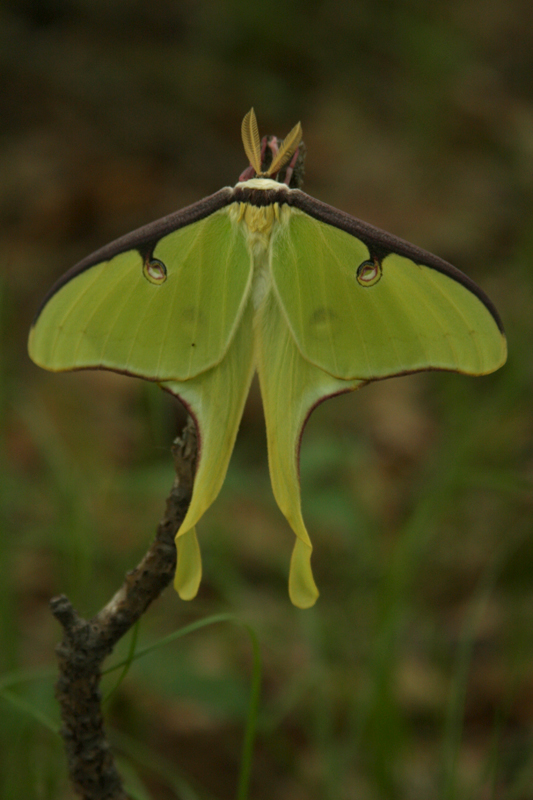
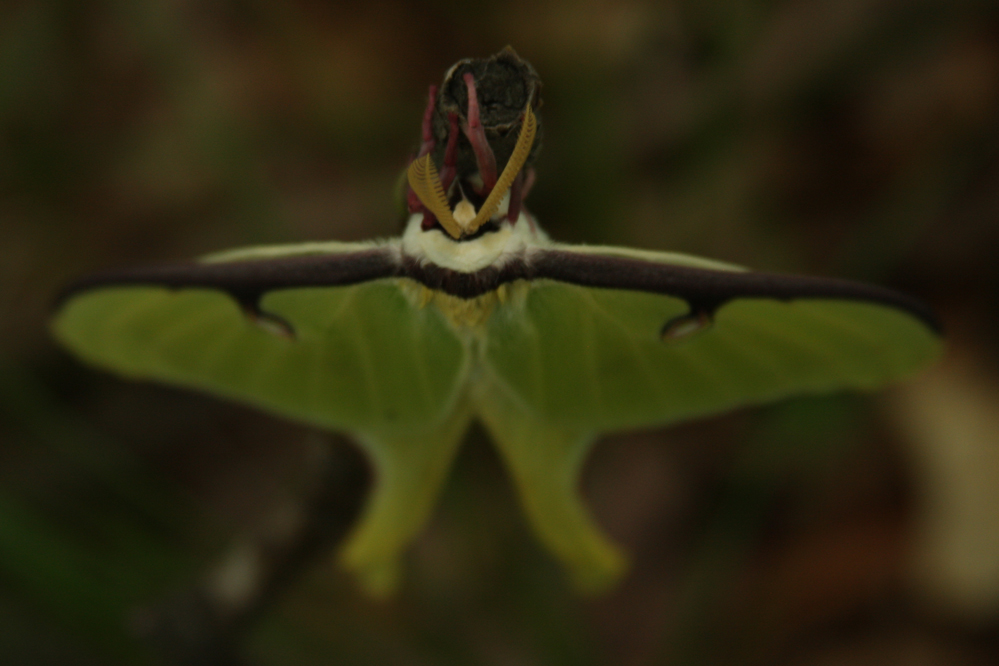
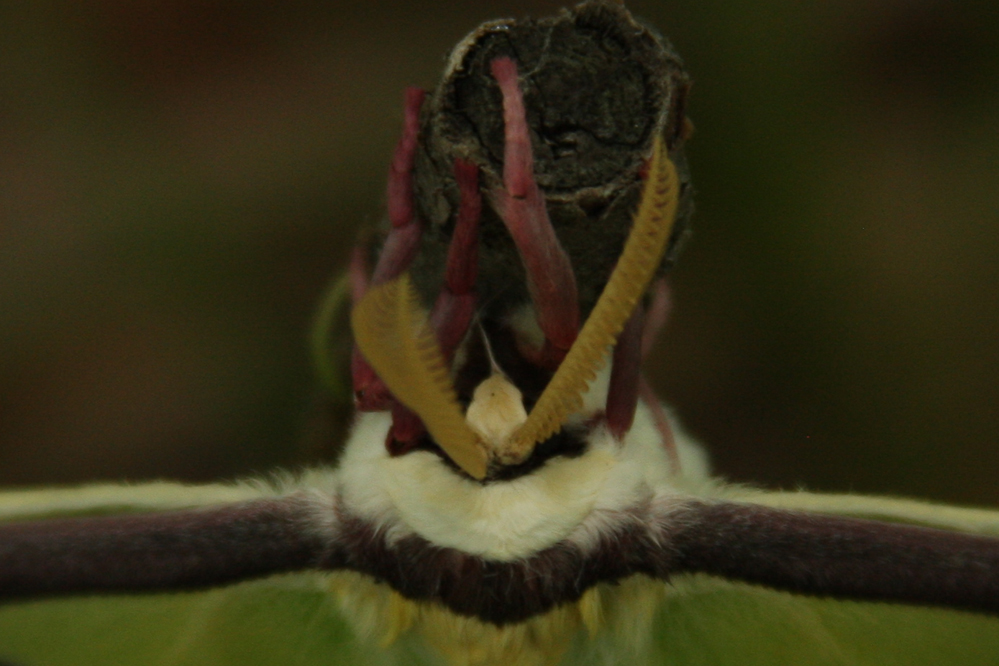
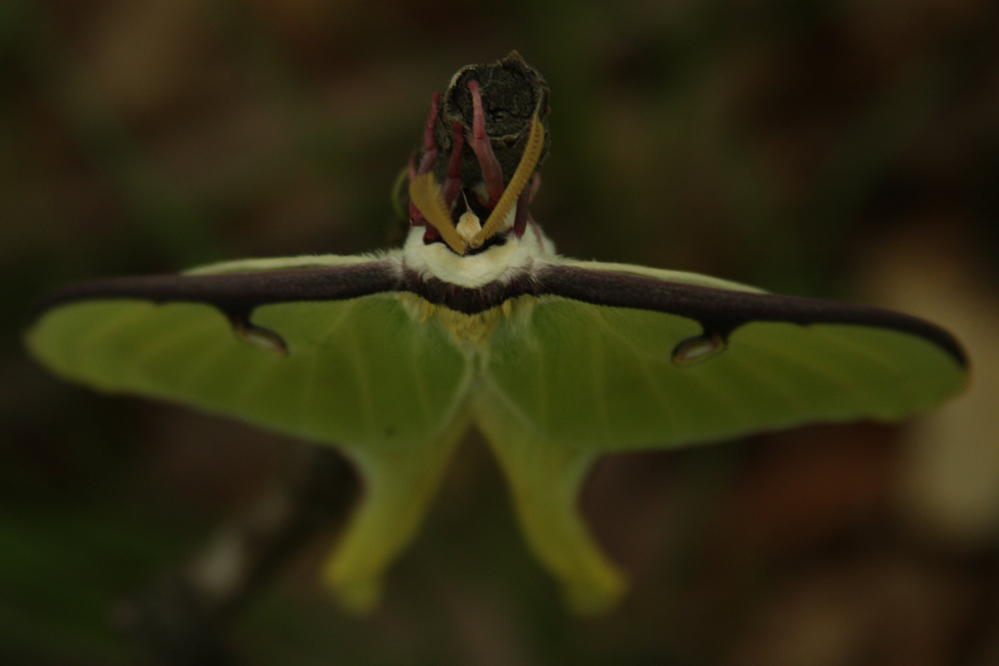
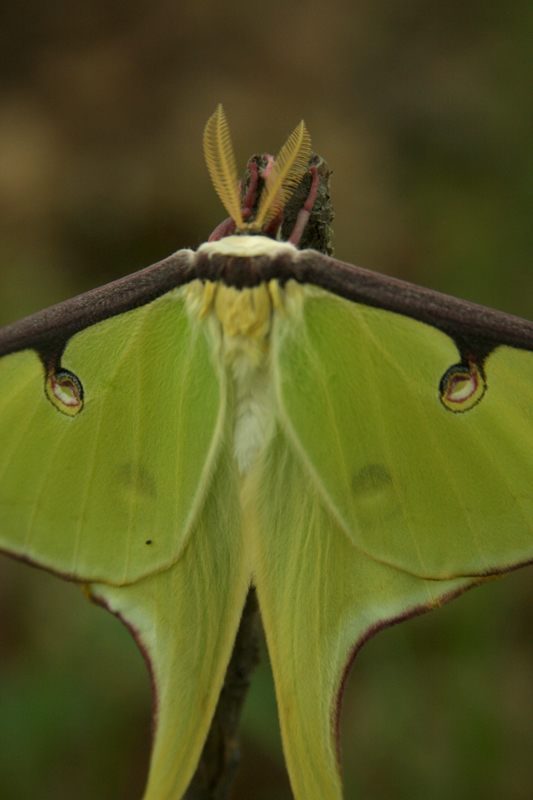
Luna Moth, Actias luna
Eddy Discovery Center, May 31, 2013
Along the bog trail was this luna moth that had just recently emerged from its cocoon and was drying its wings.


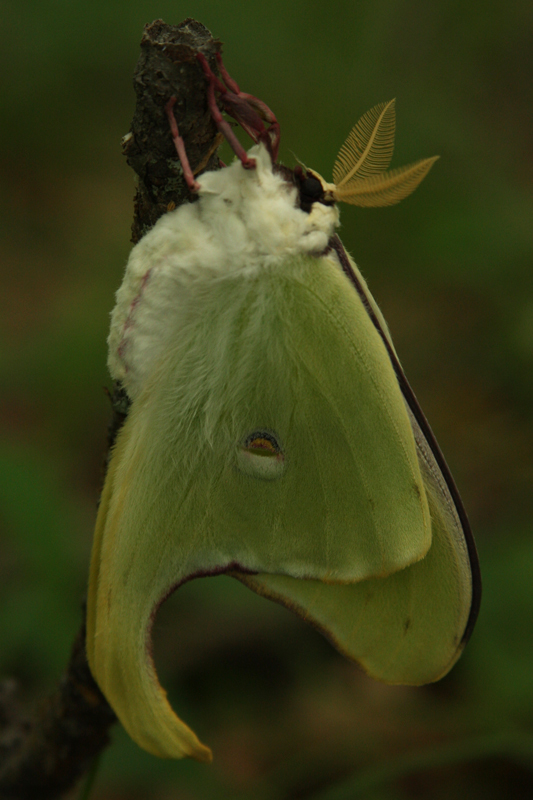
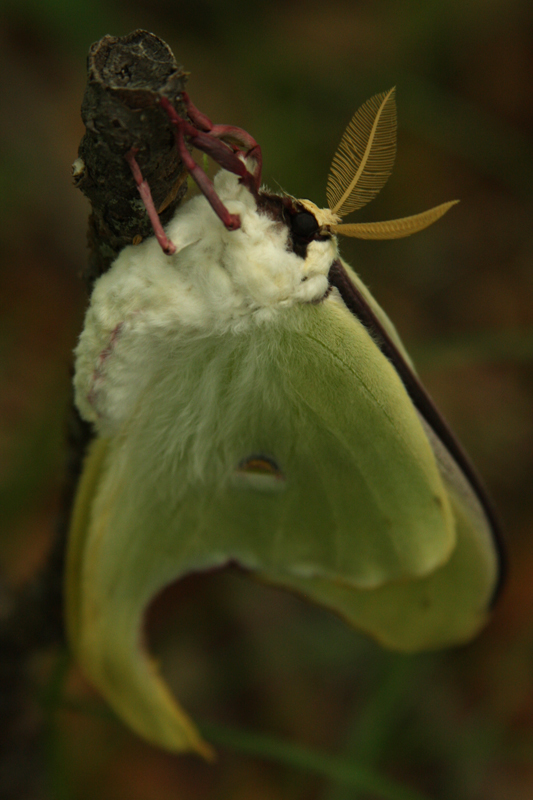
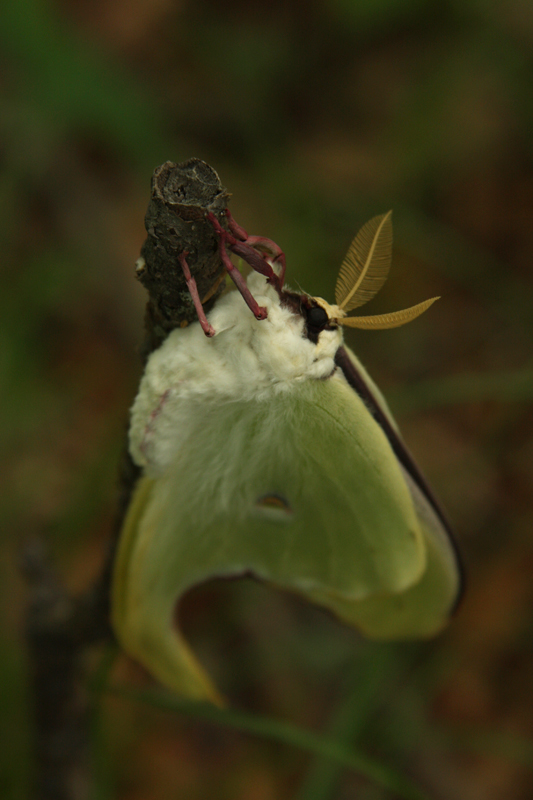
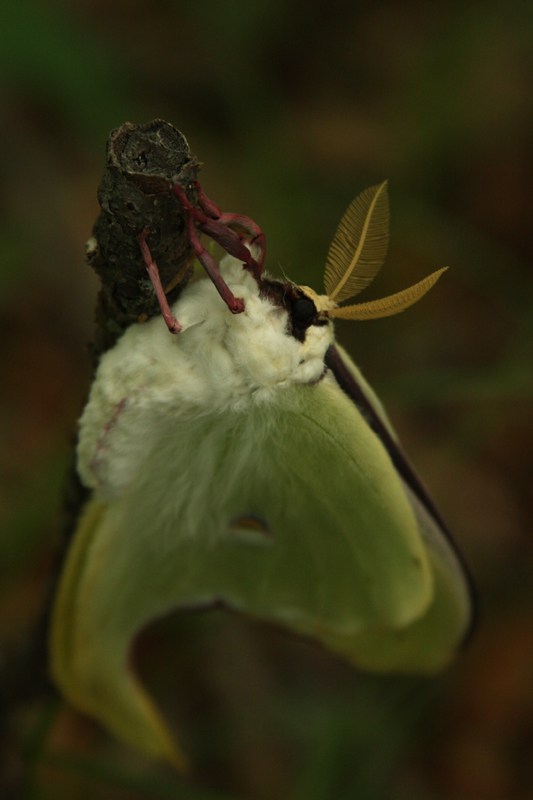
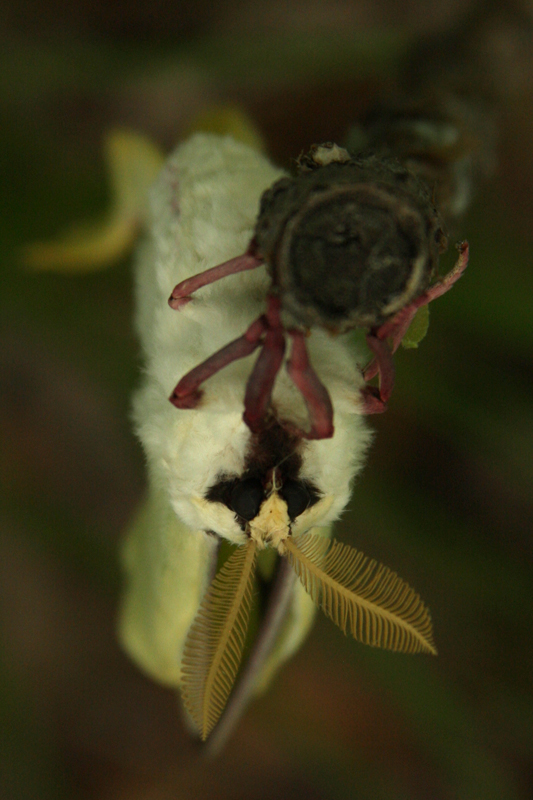
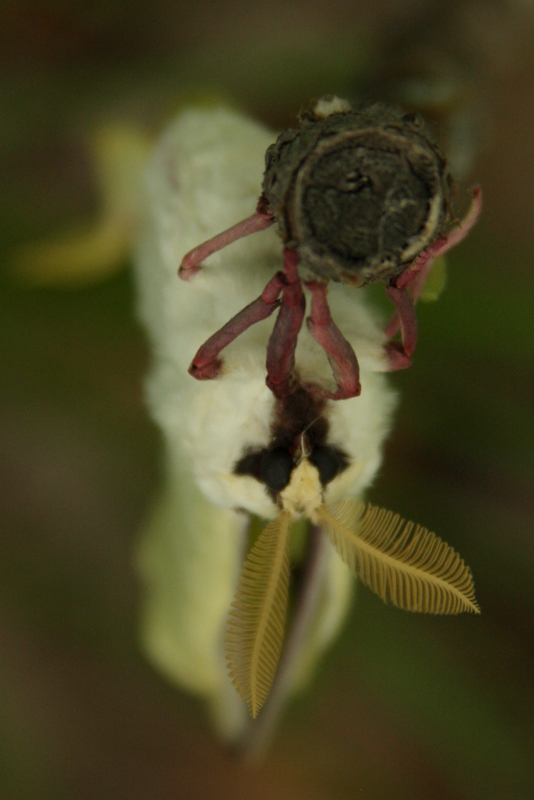
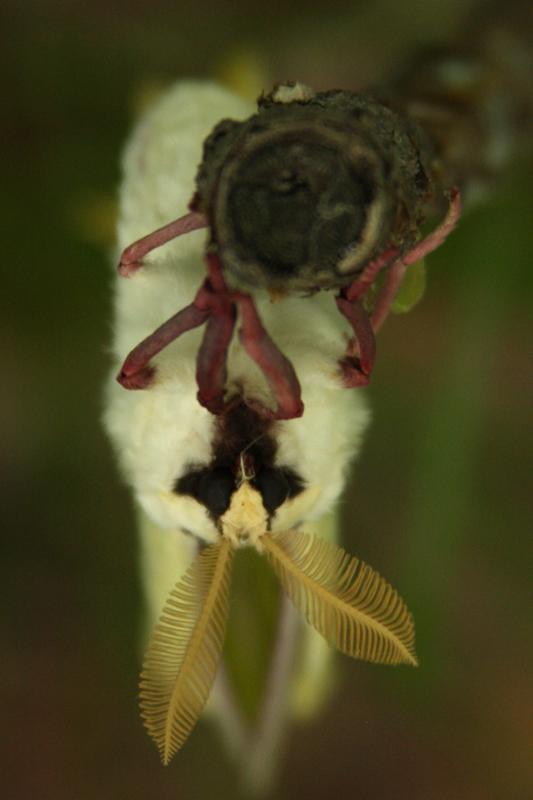
After about an hour, I returned and it now had its wings spread.


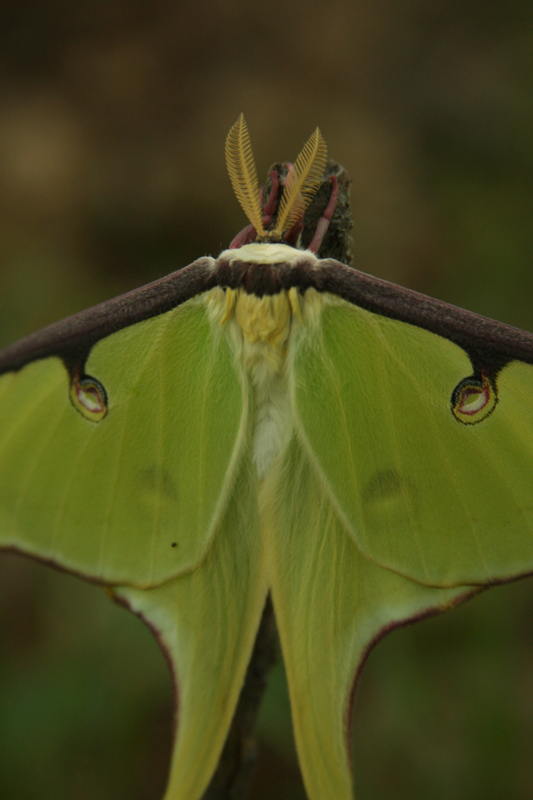
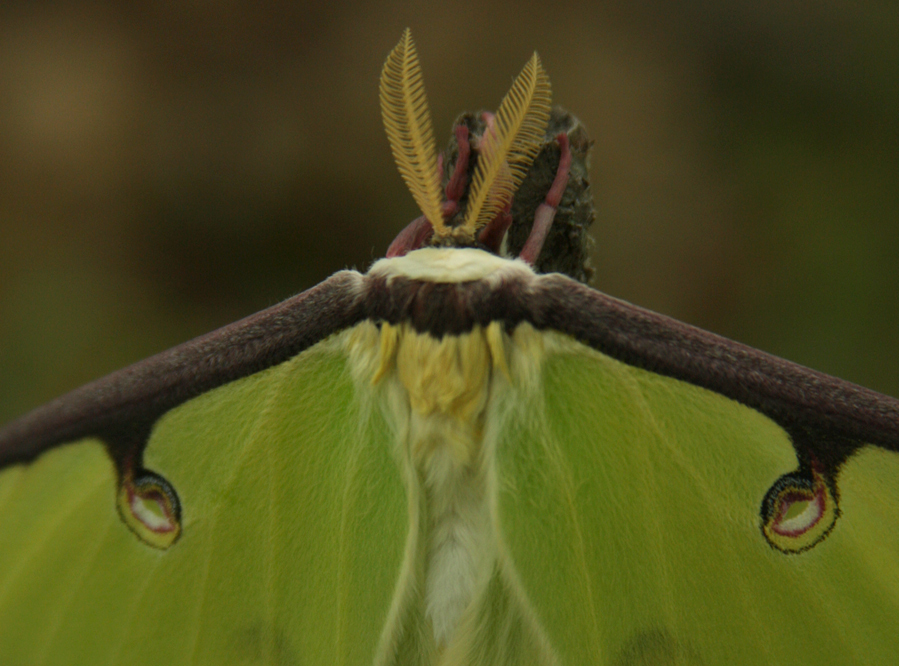
Unidentified moth
Clarkston, MI. May 19, 2013.

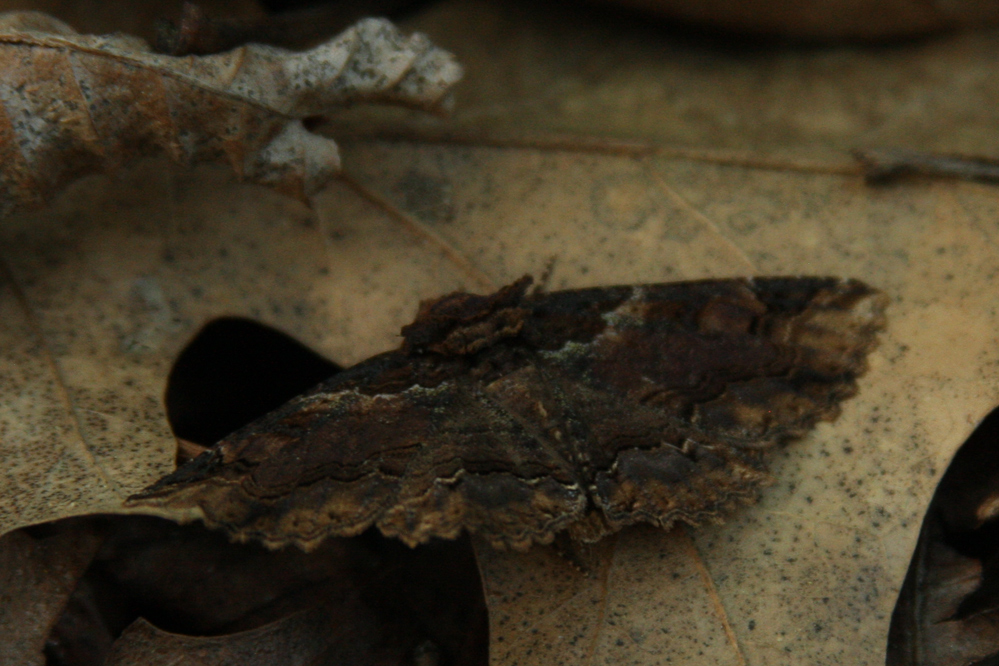
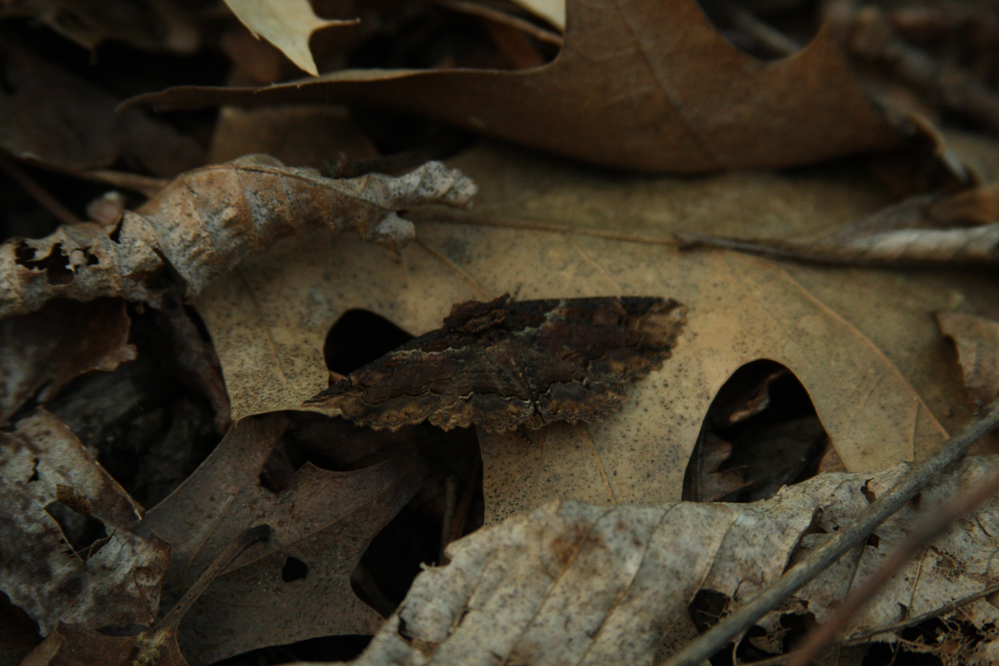
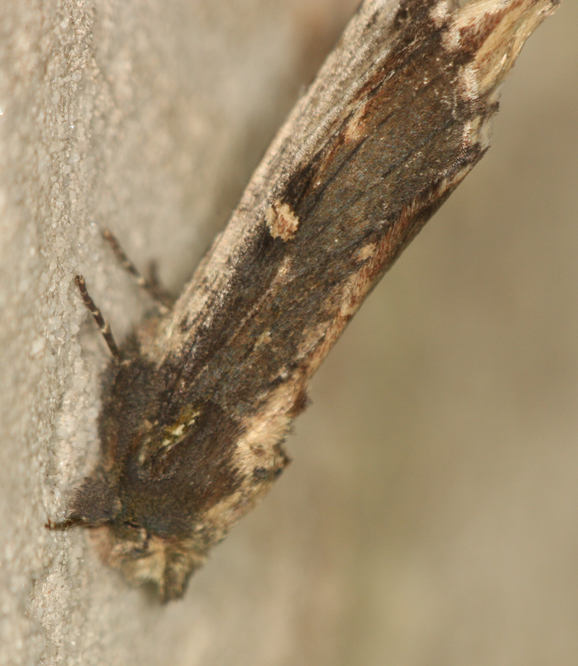
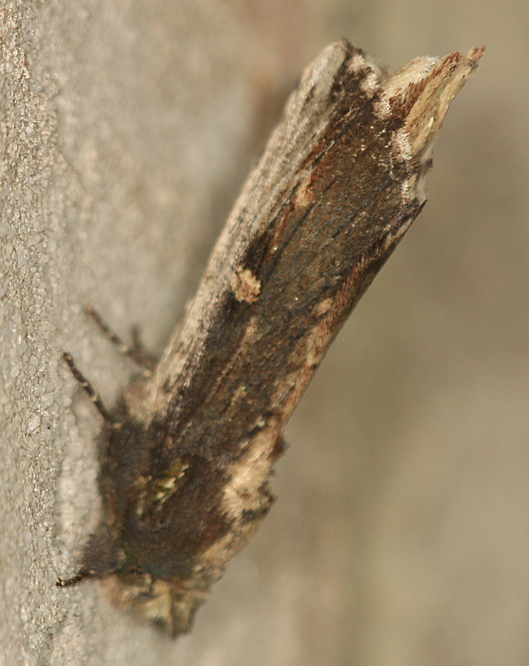
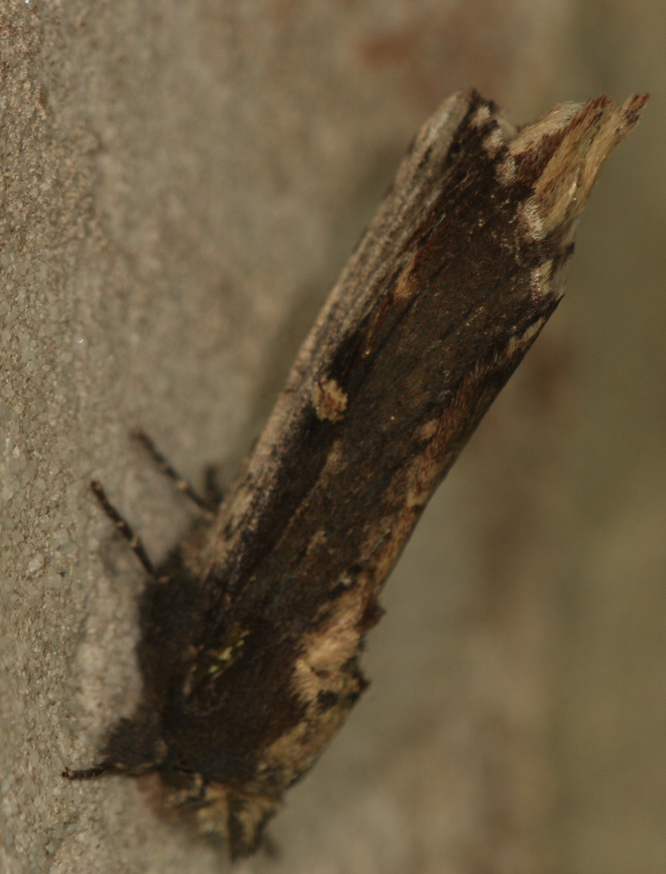
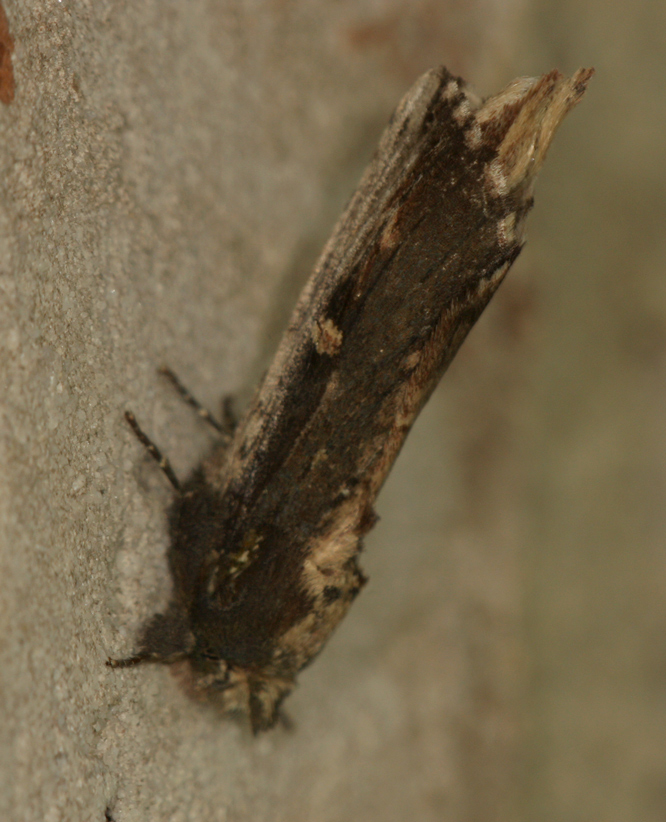
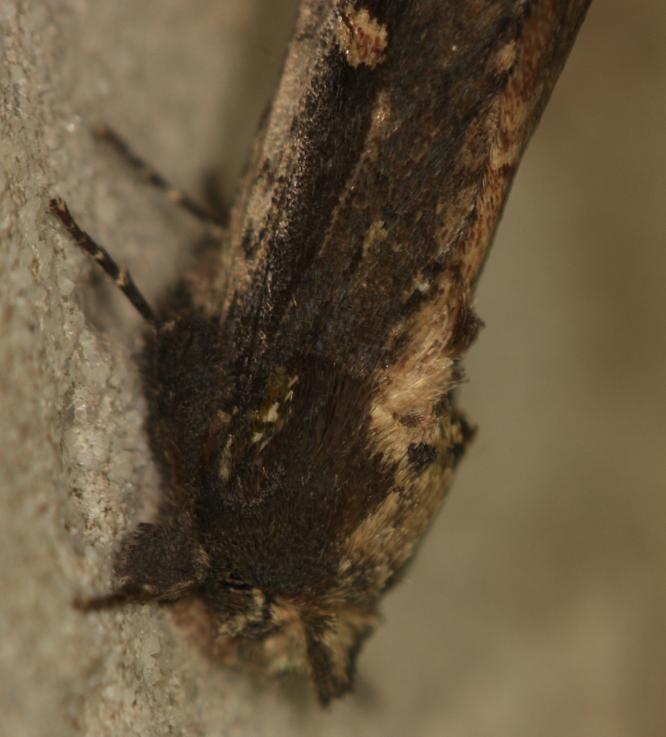
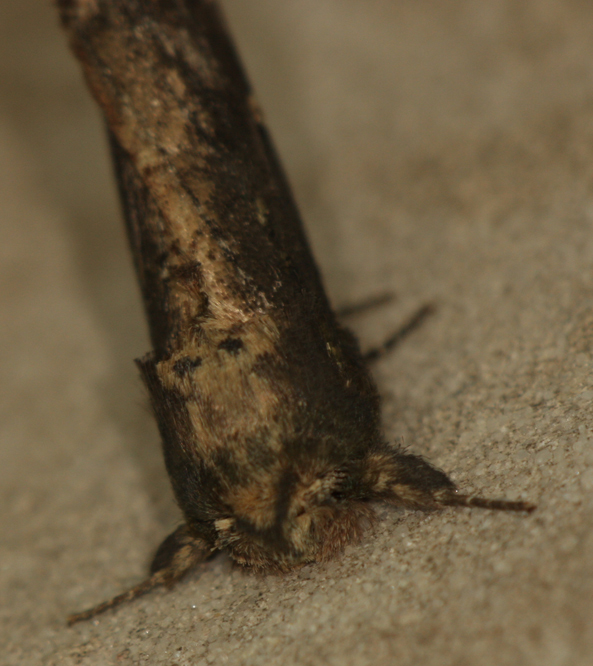
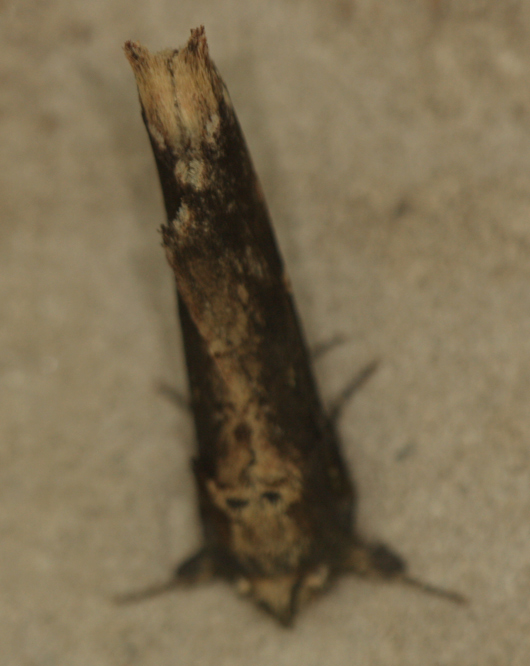
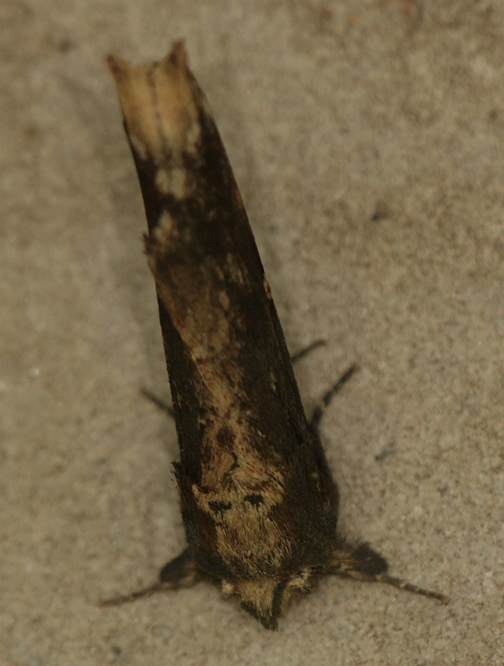
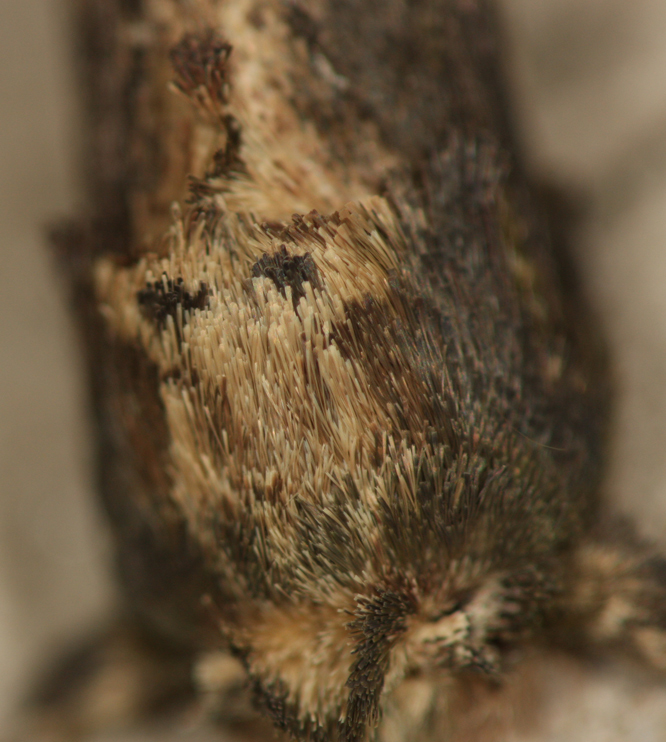
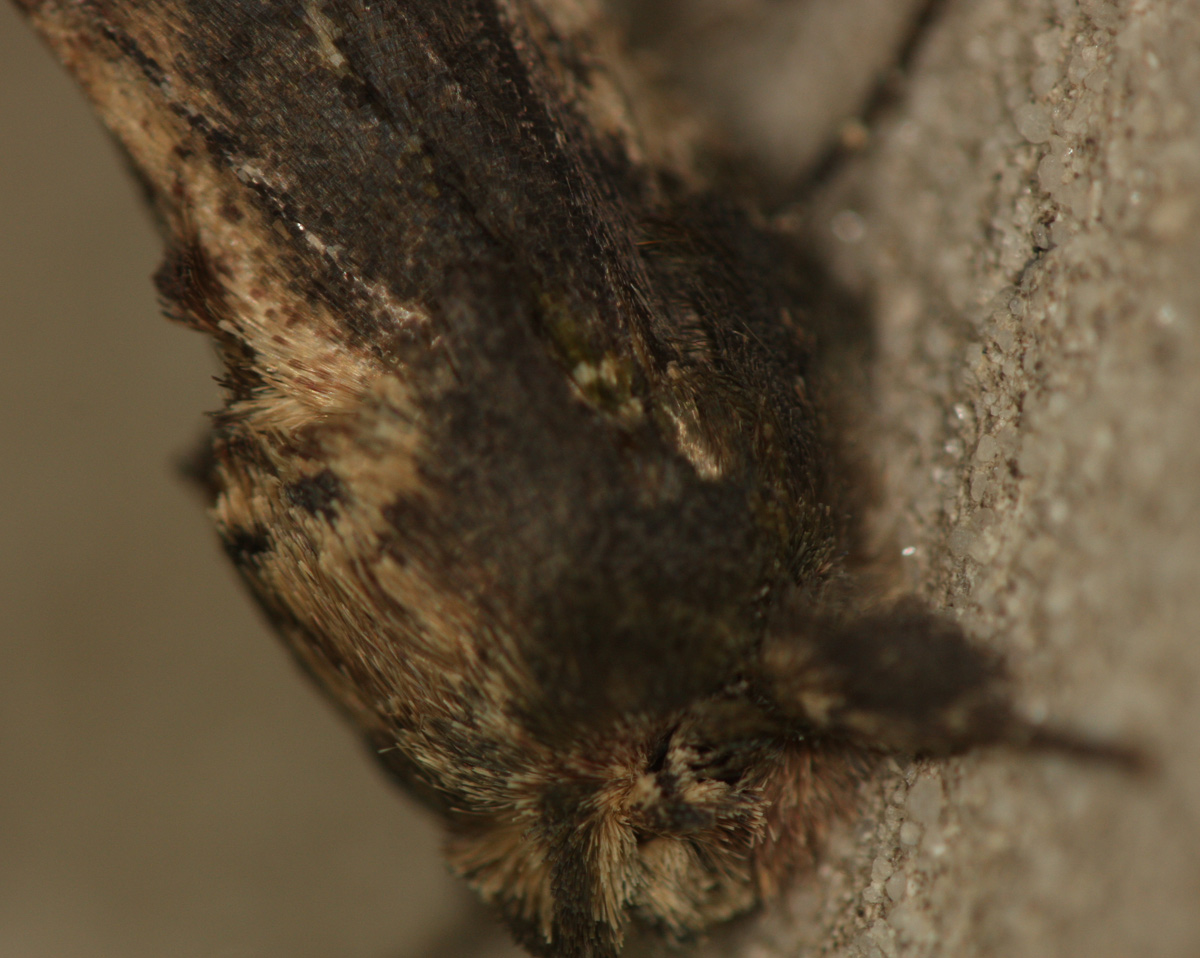
Unidentified moth that looks like a broken twig
This unusual moth was found on my bricks outside during the day on August 4, 2010. They aren't as good of photographs as I would have liked---many are out of focus. It was hard to get the whole twig in view and have it all be in focus because of the angle the moth was resting.



Salt Marsh Moth (a.k.a. Salt Marsh Tiger and Acrea Moth), Estigmene acrea
Wetzel State Park, August 12, 2018
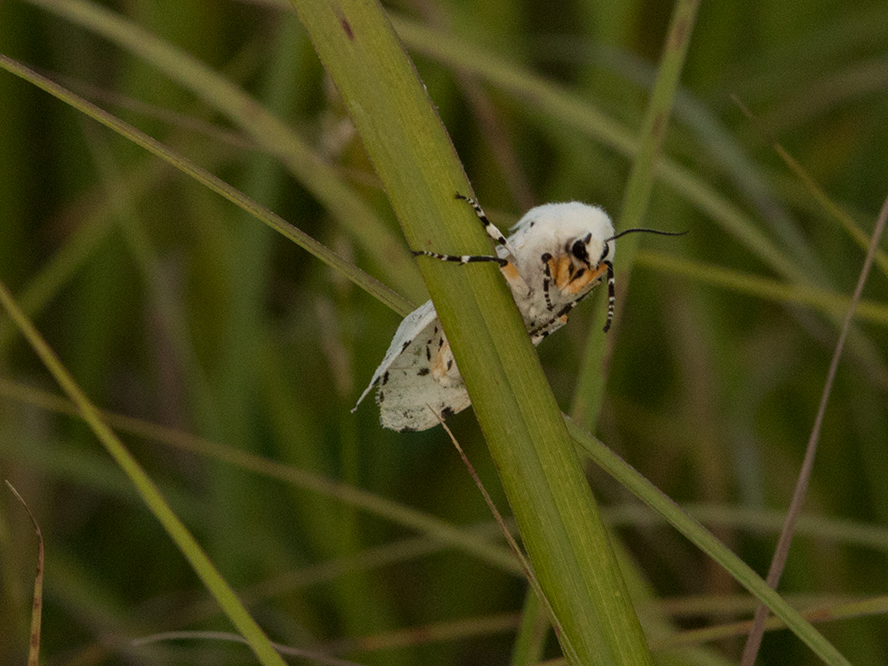
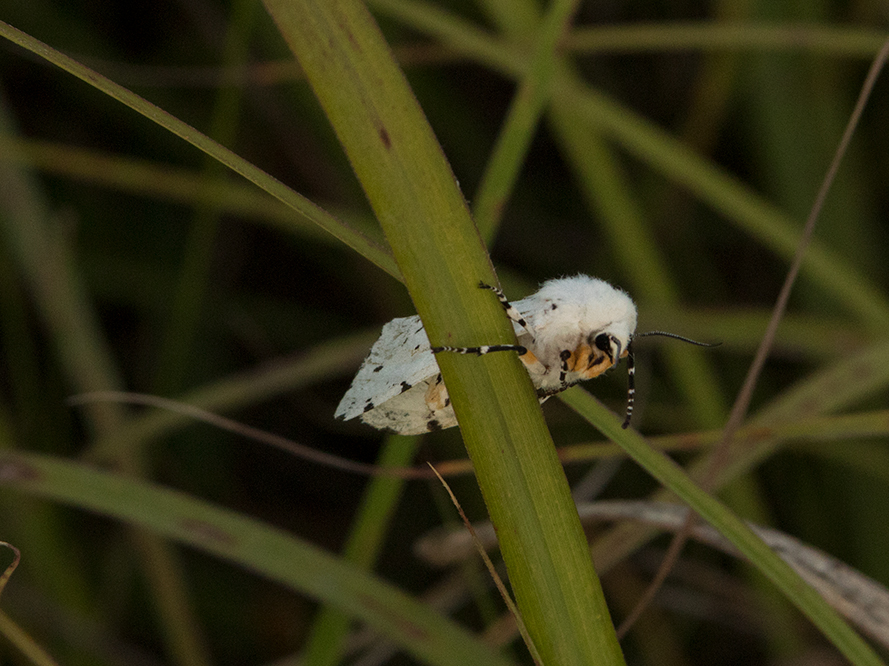
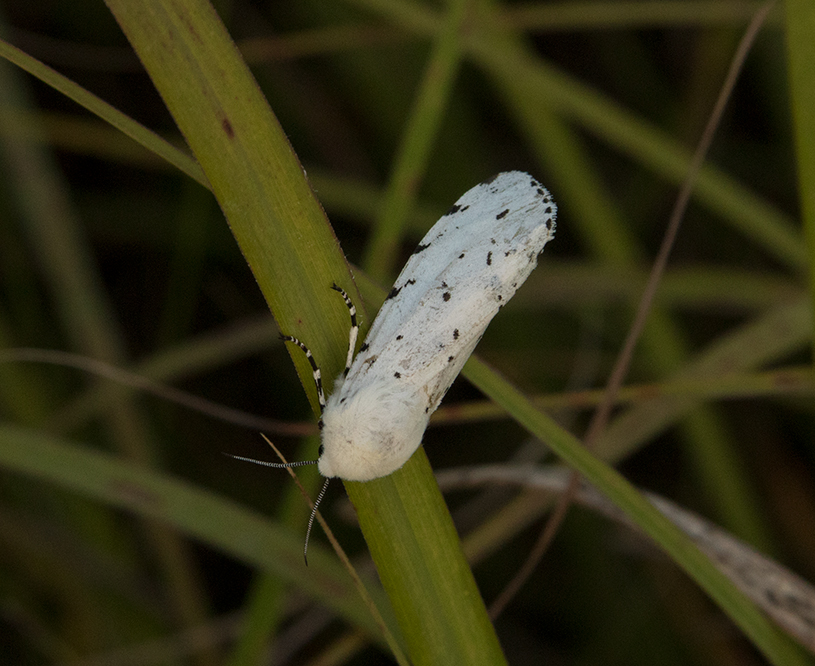
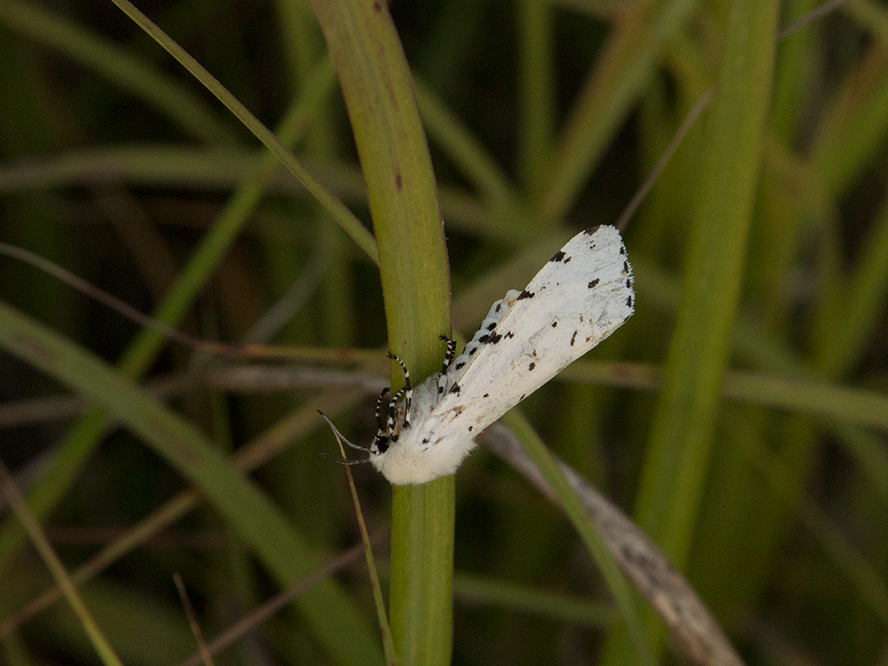
This unusual moth was found on my bricks outside during the day on July 18, 2009.


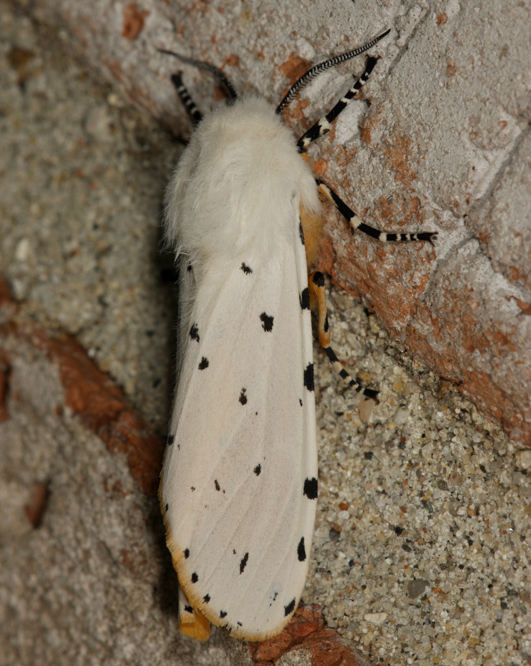
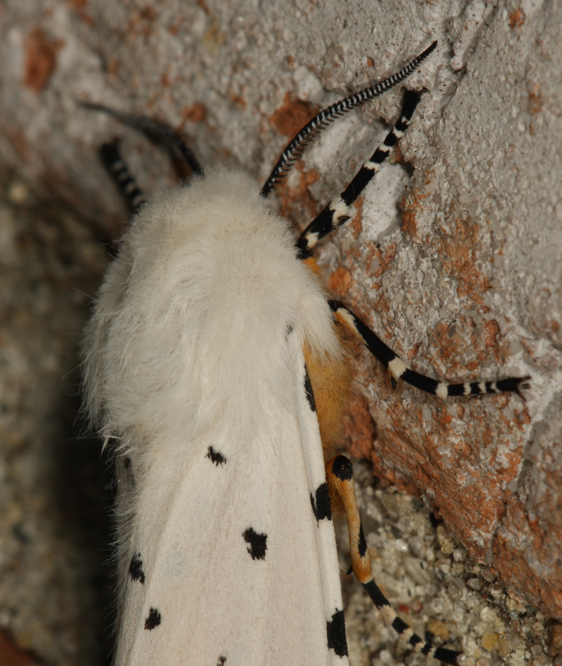
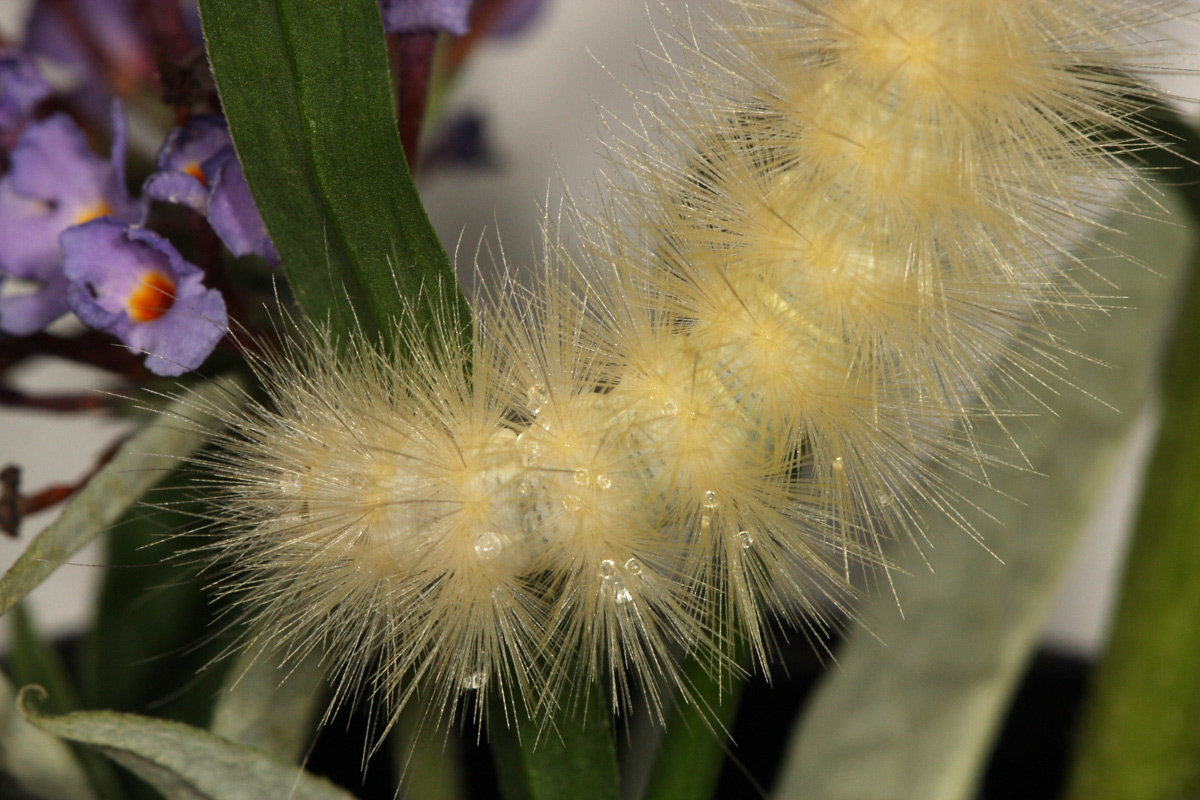
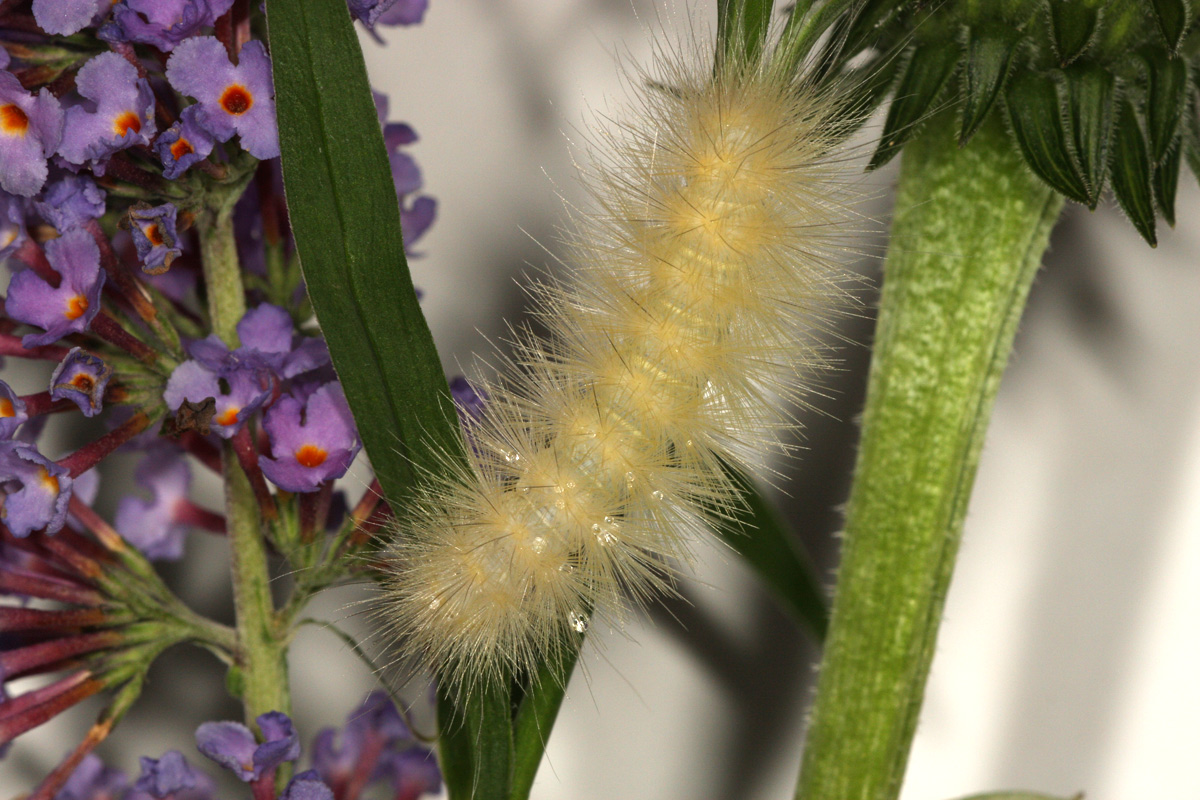
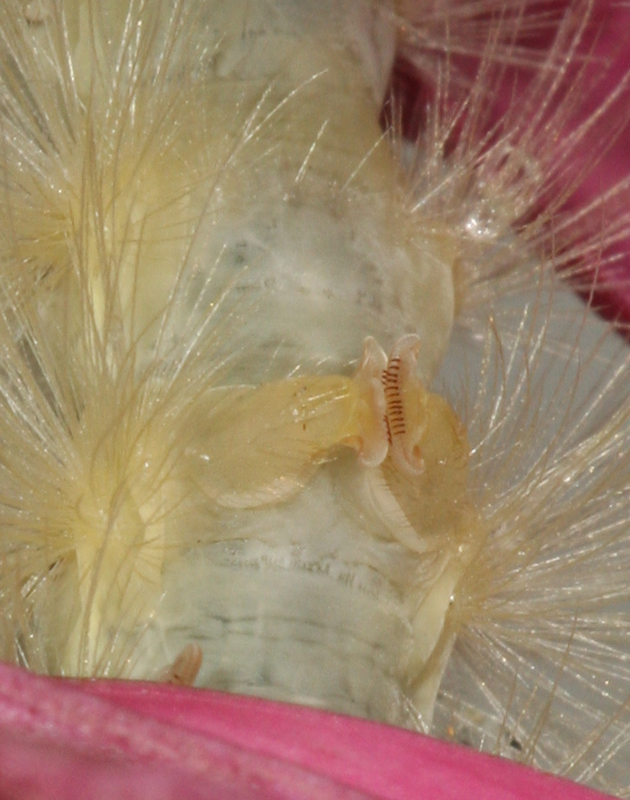
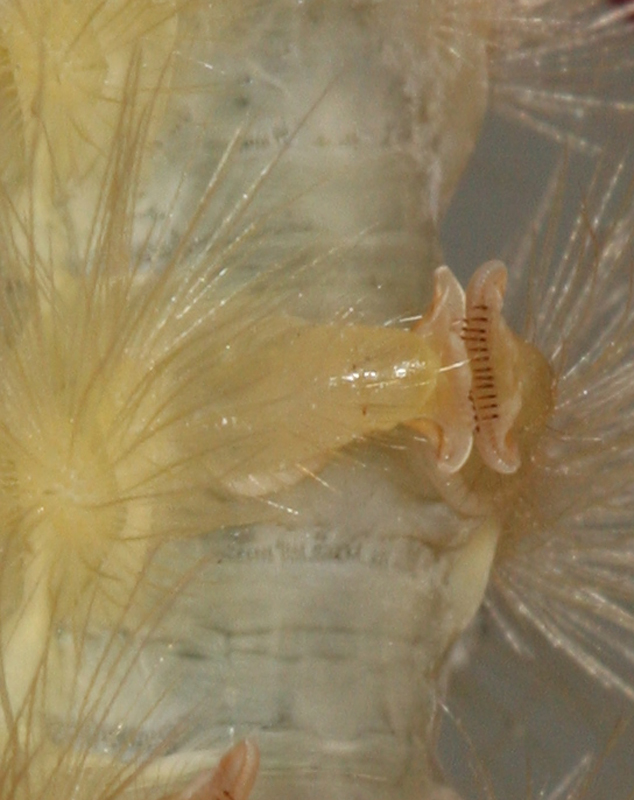
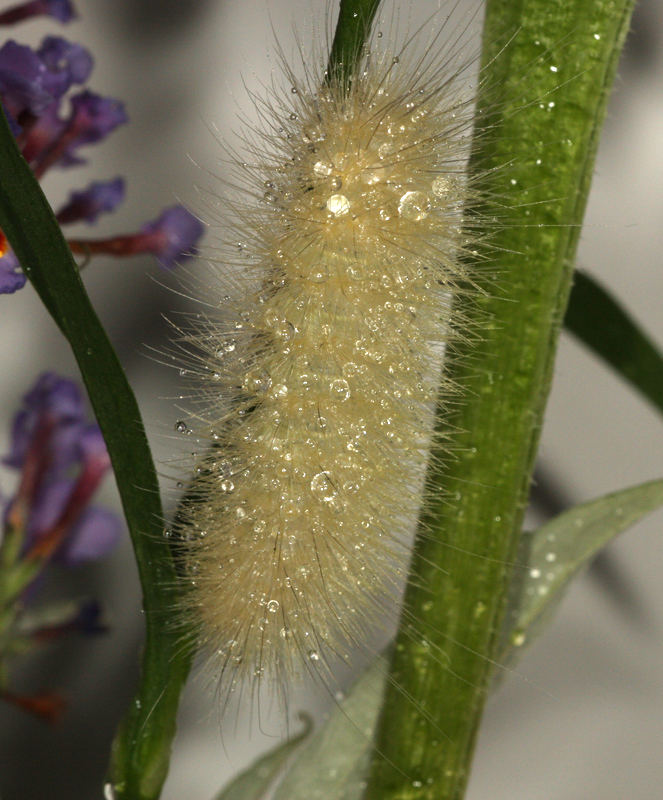
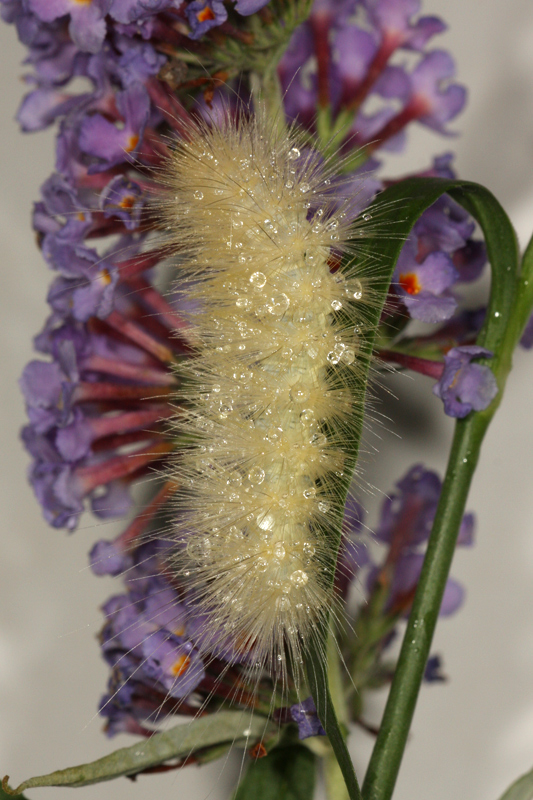
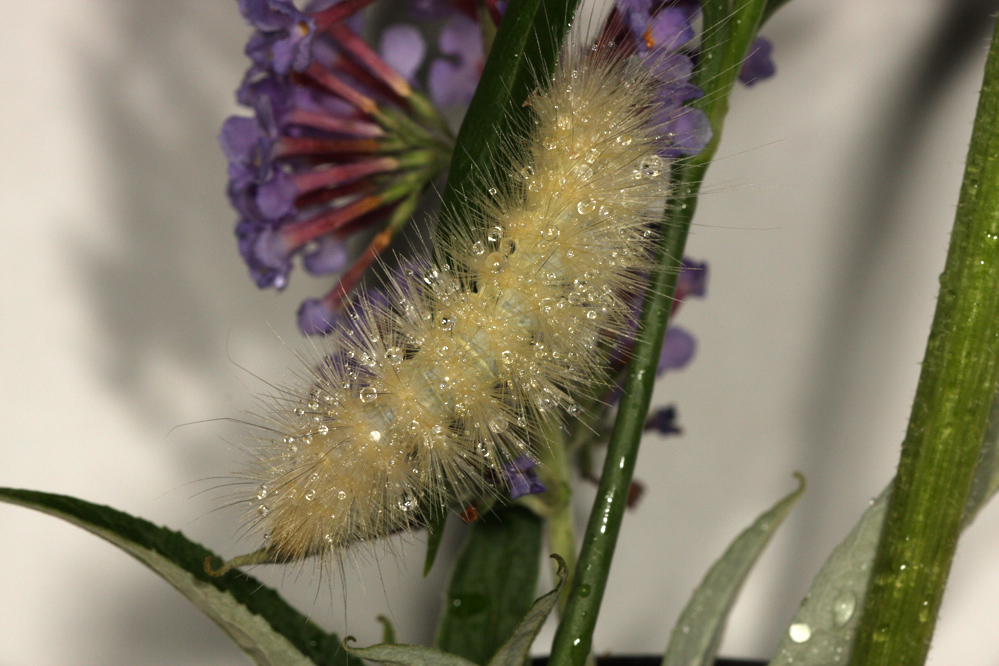
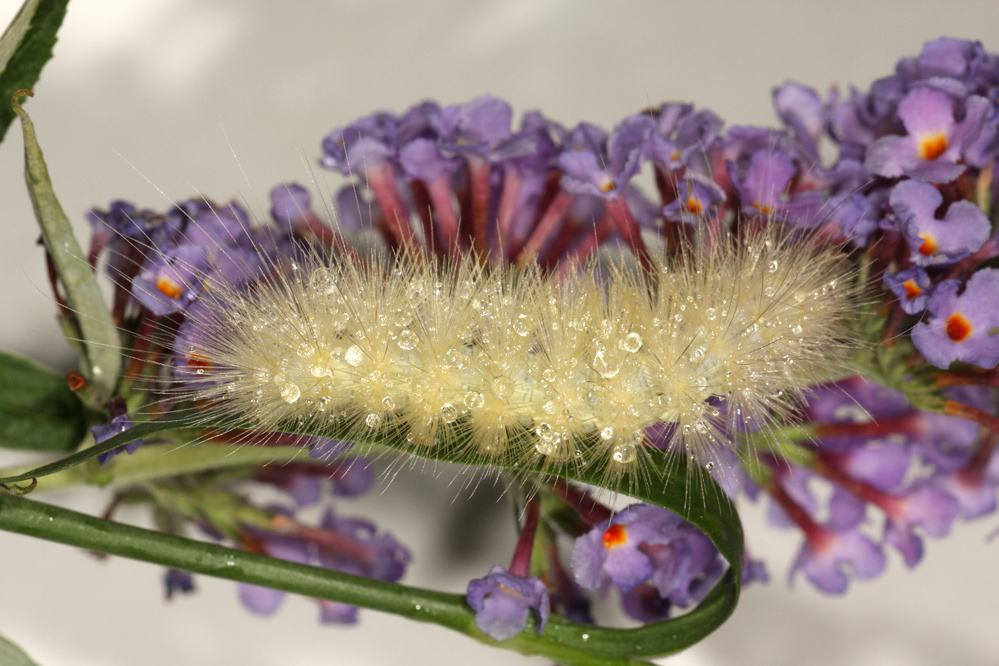
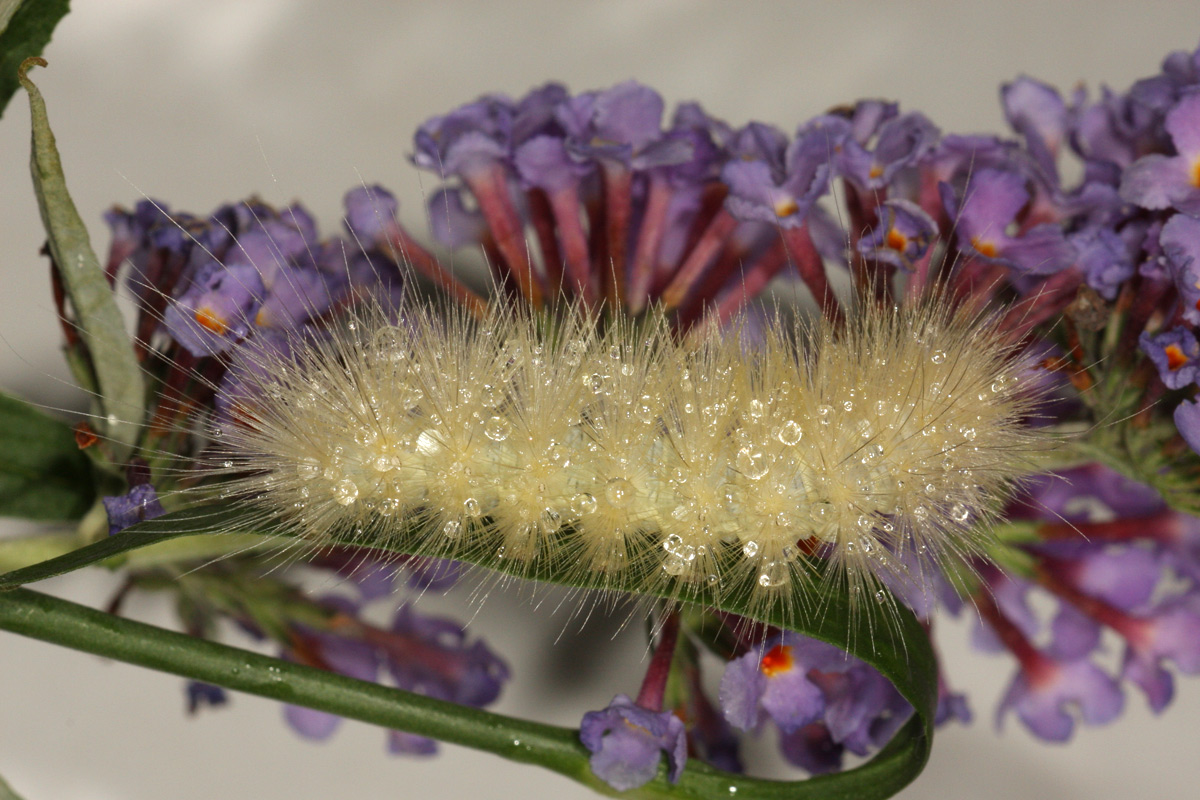
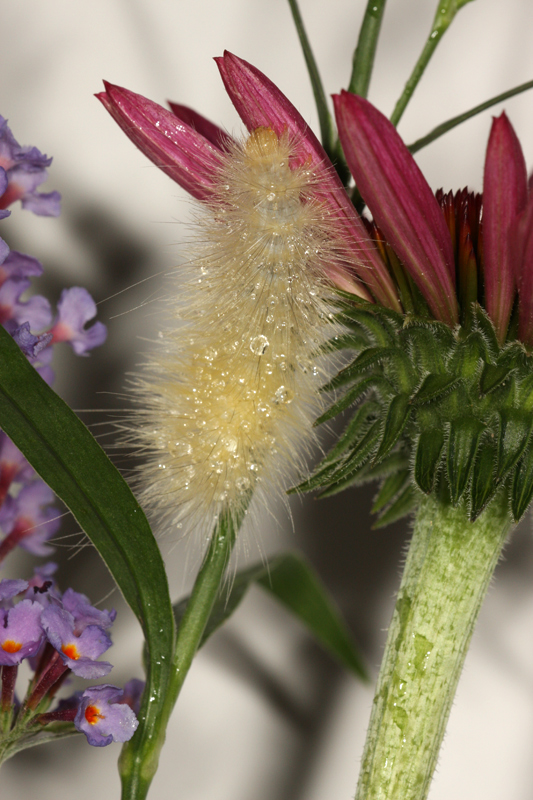
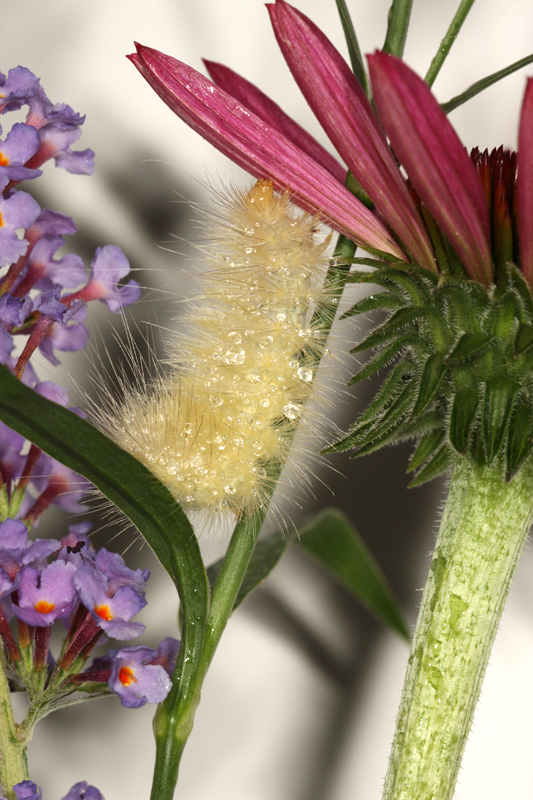
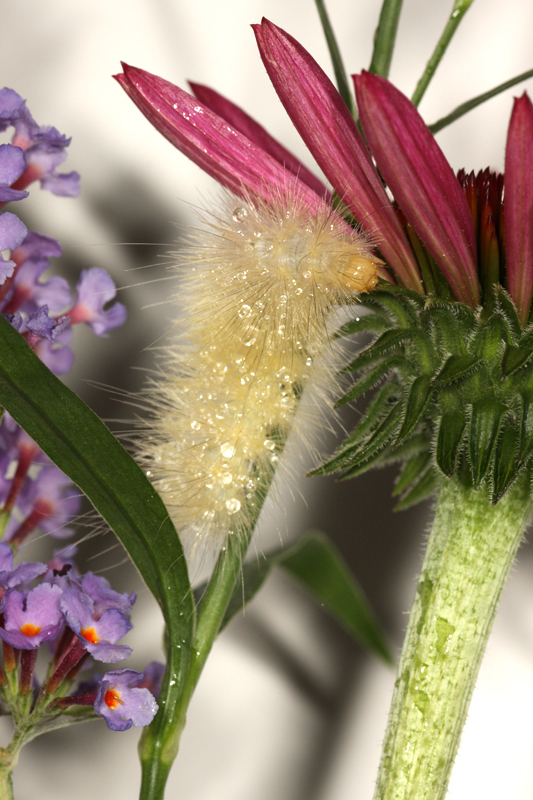
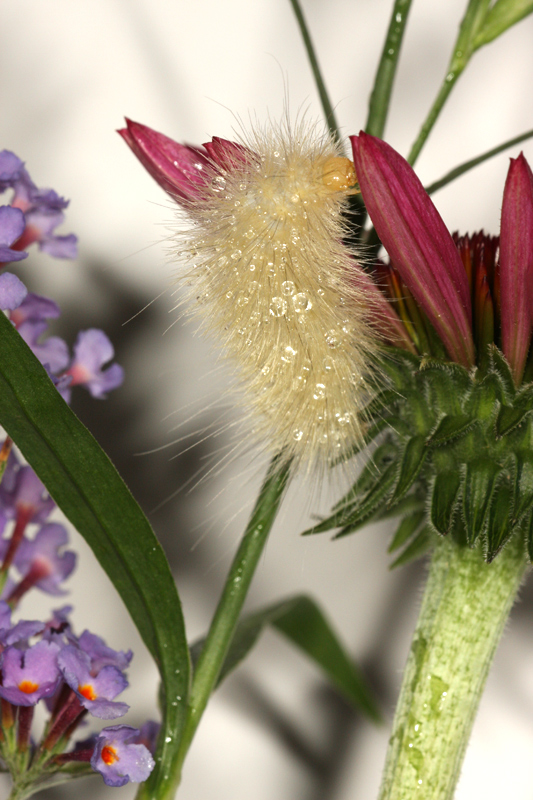
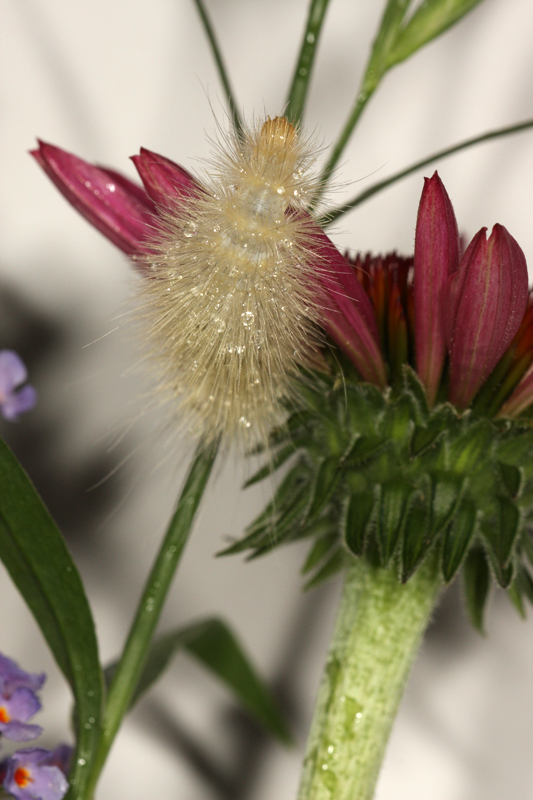
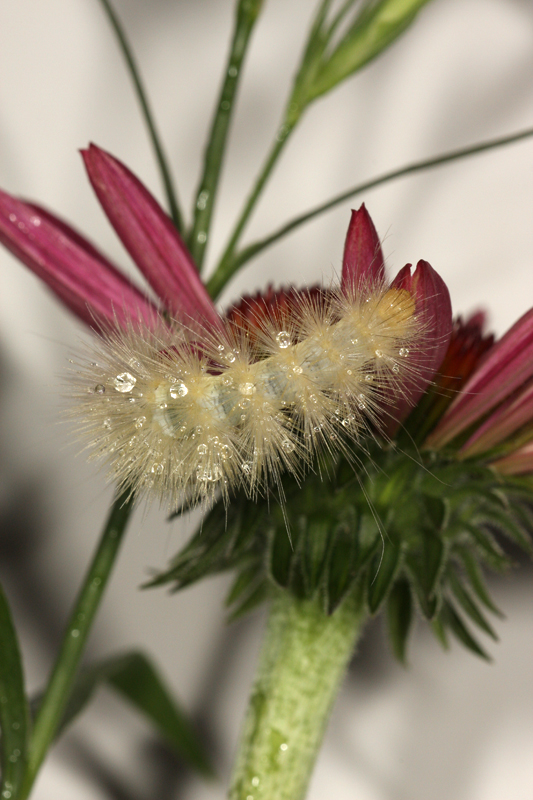
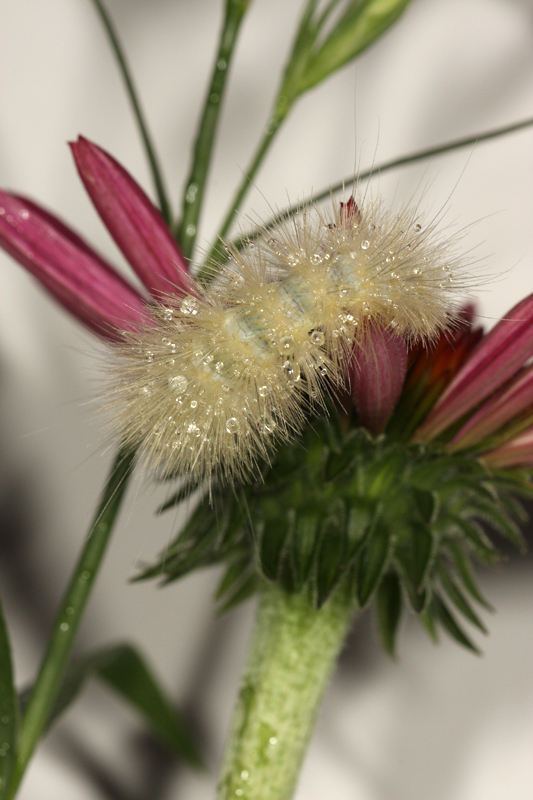
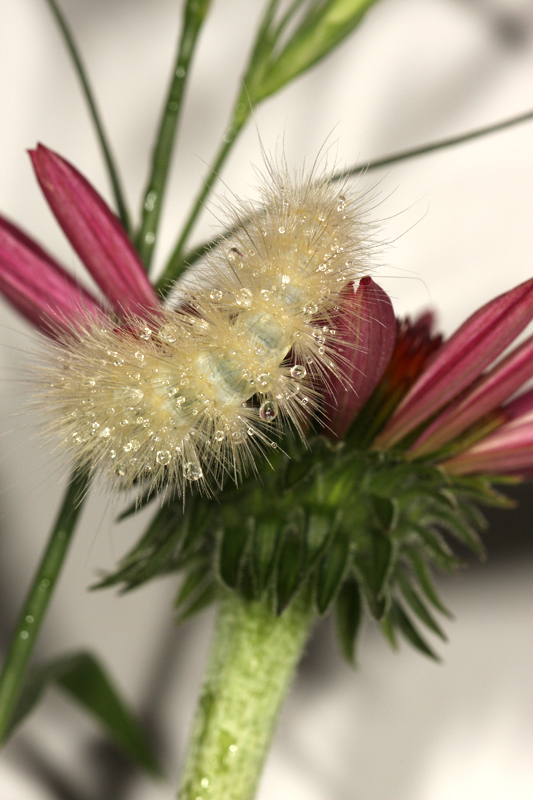
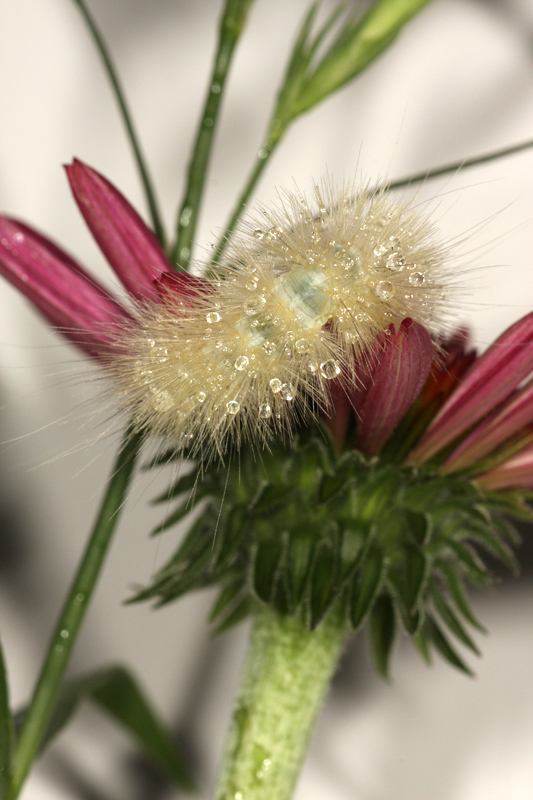
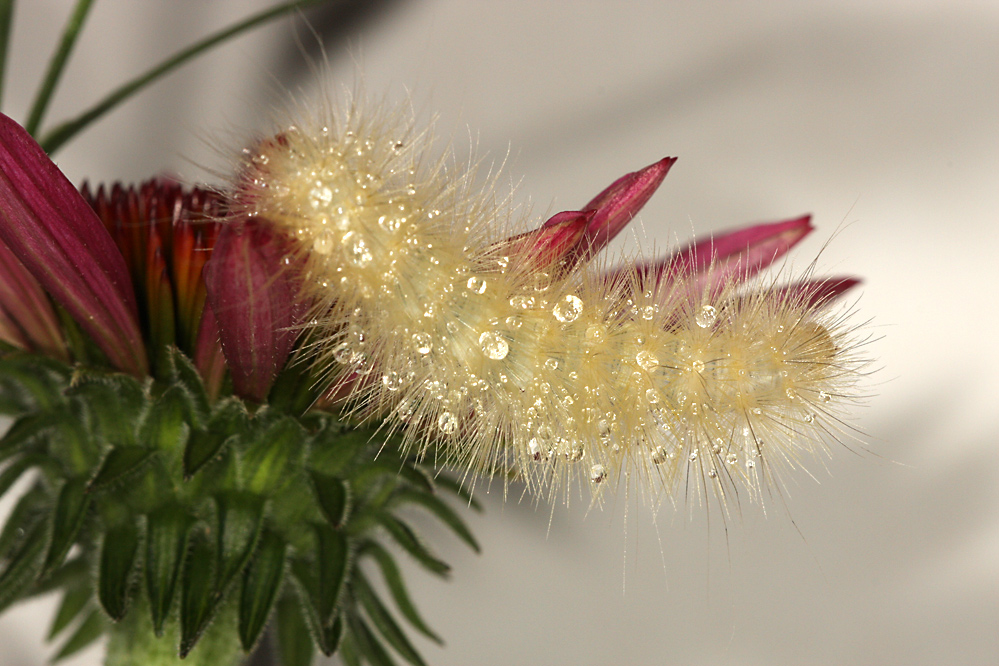
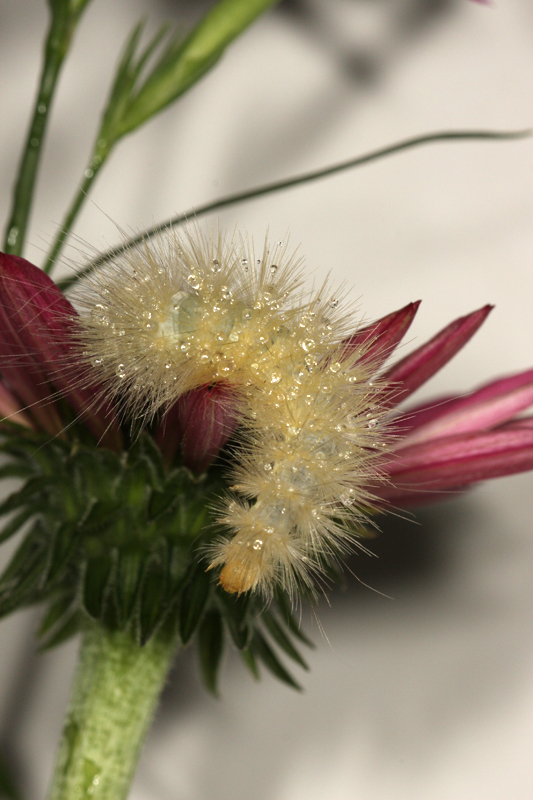
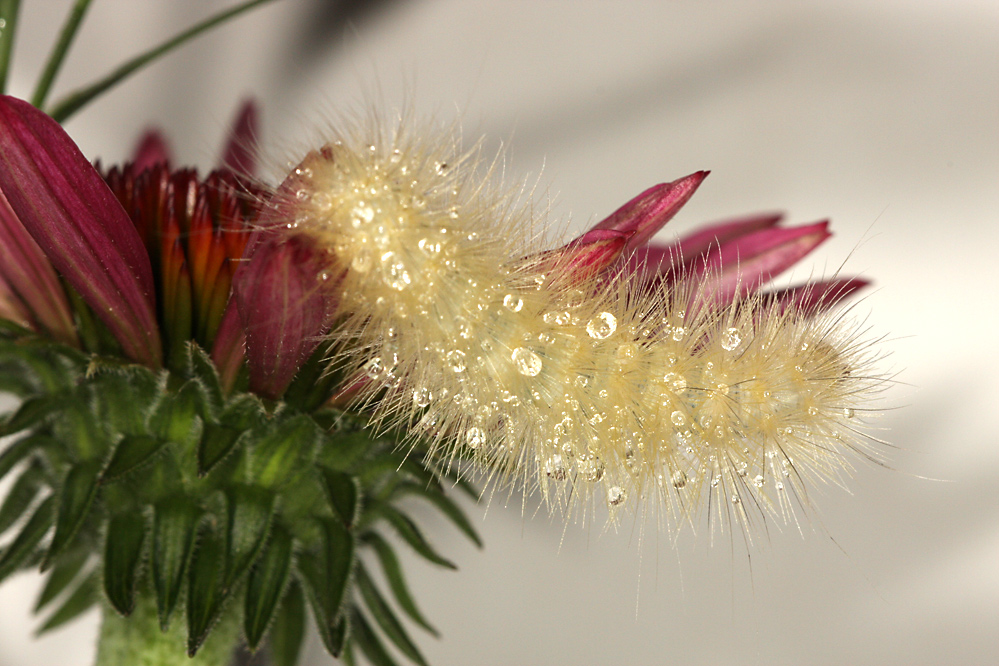
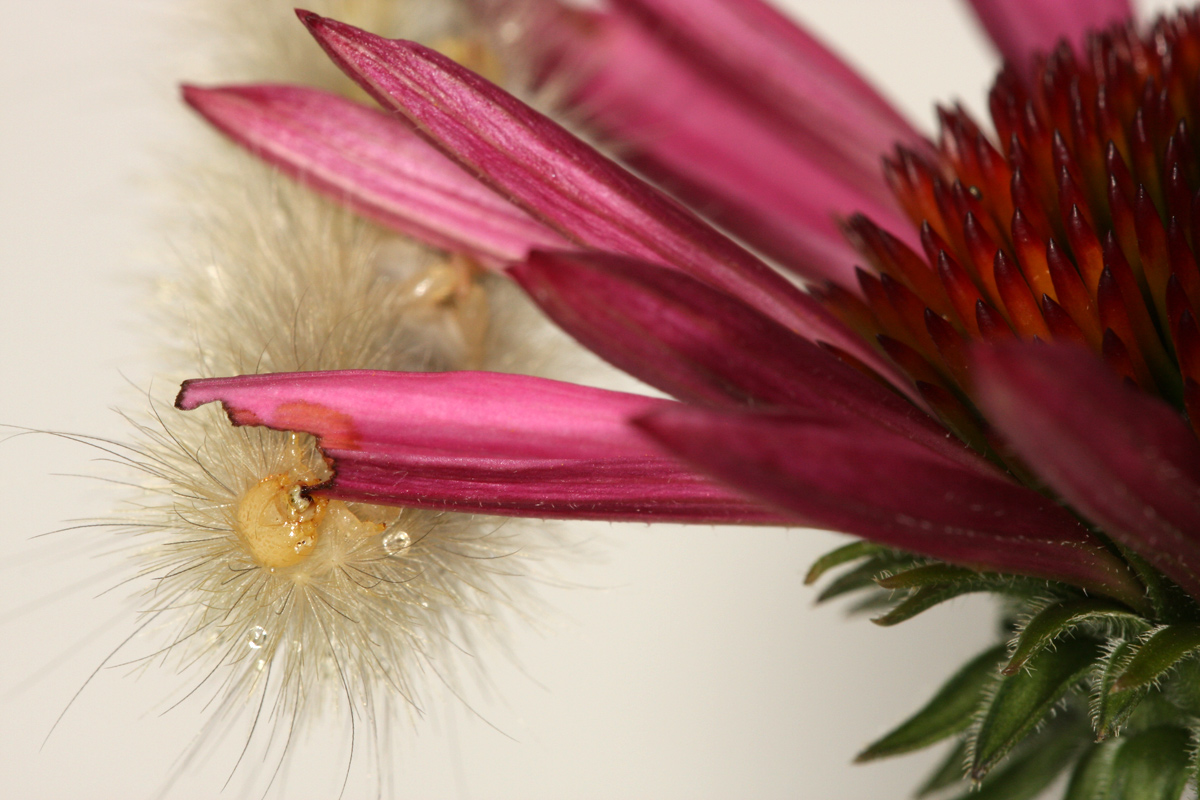
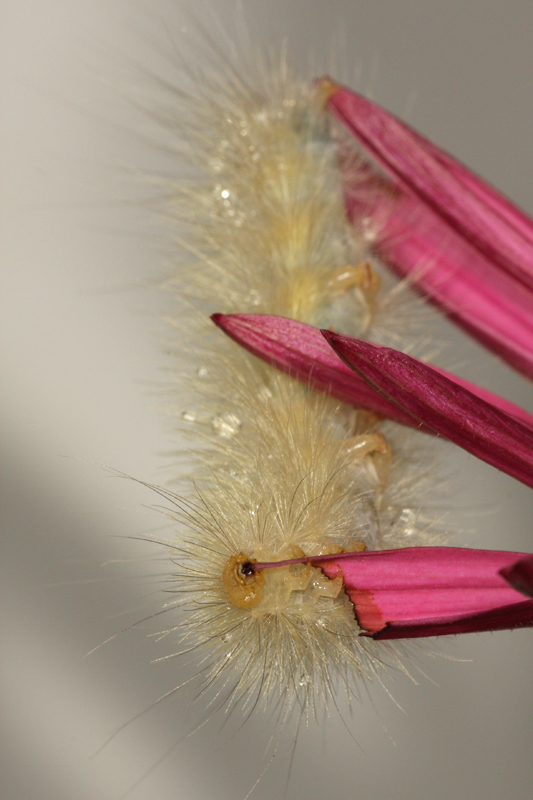
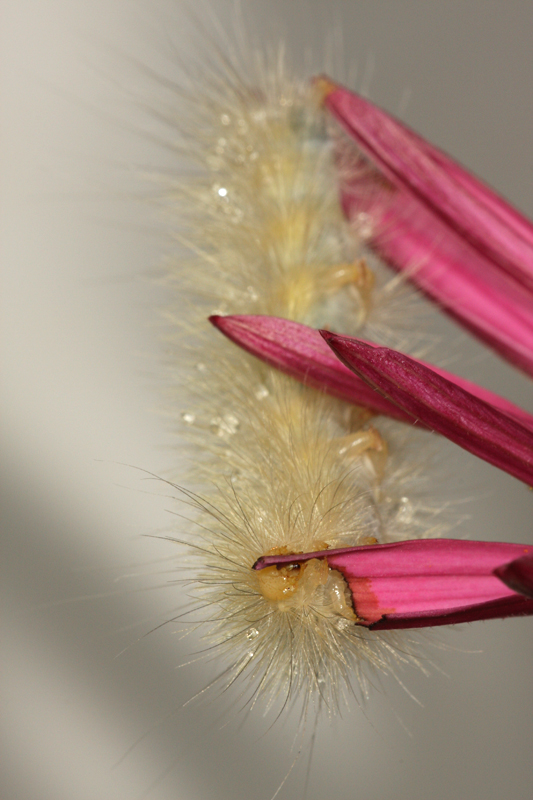
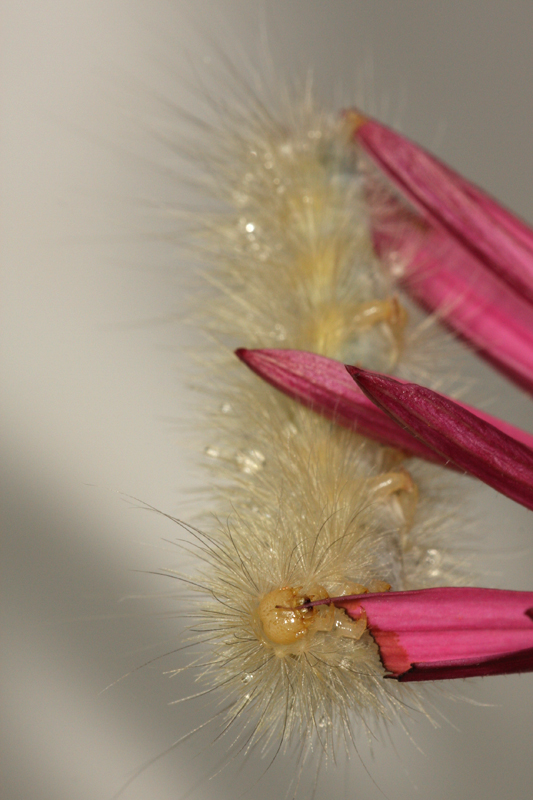
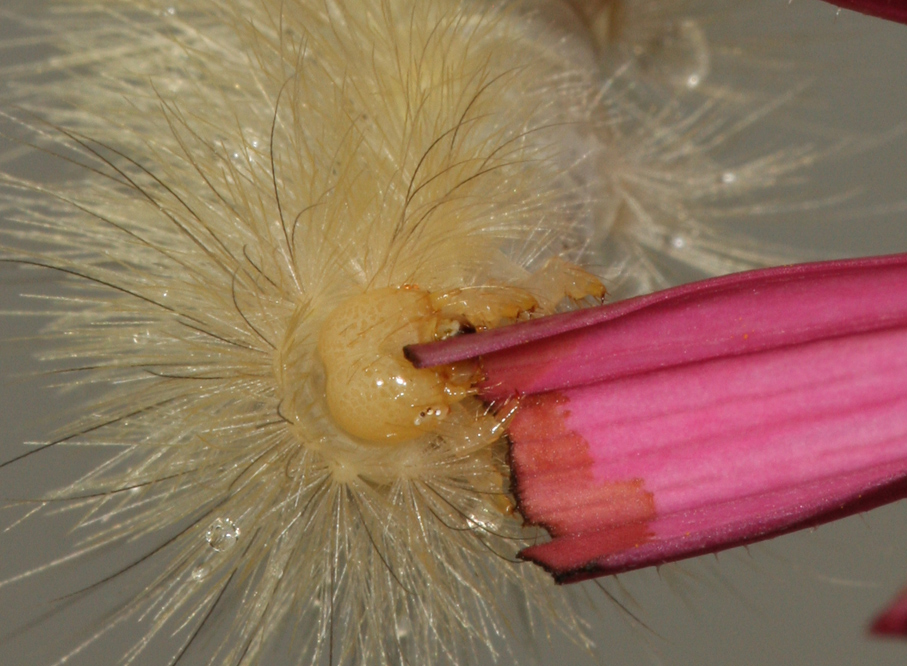
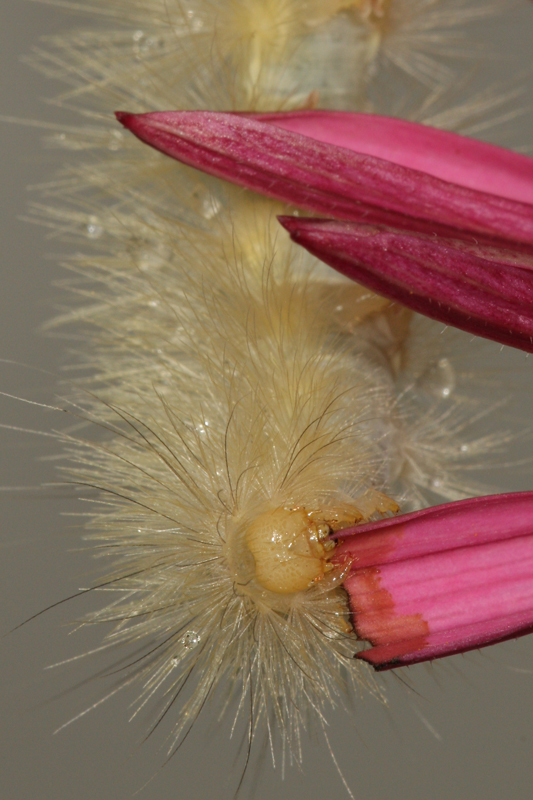
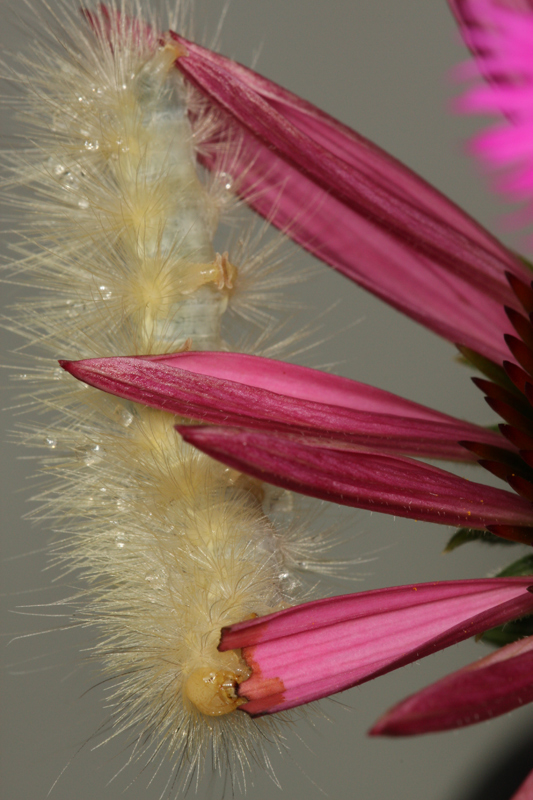
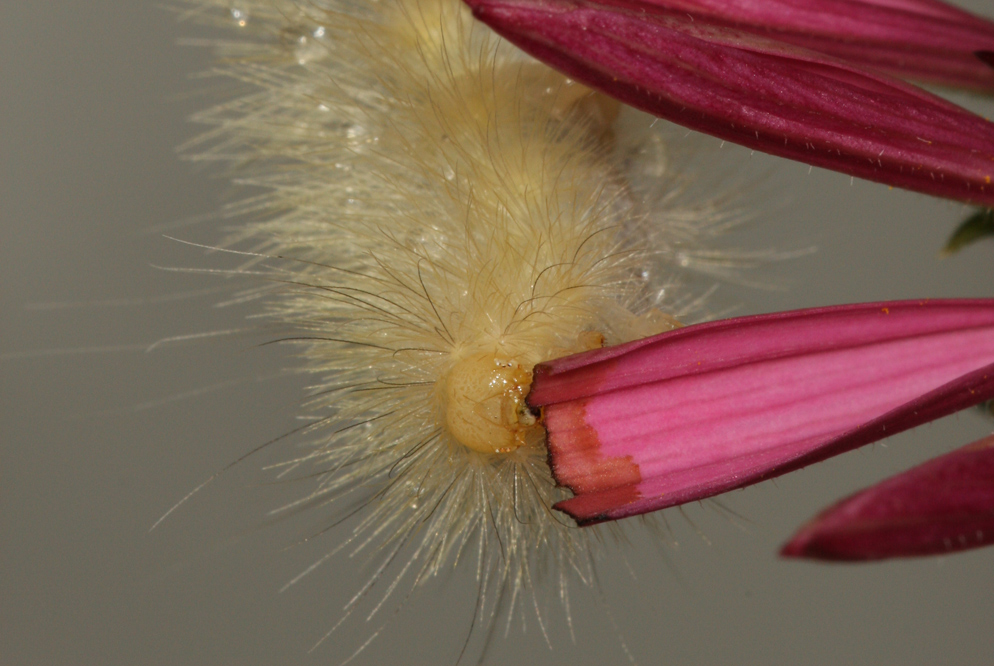
Possibly Salt Marsh Moth Larva
This caterpillar was discovered on some oregano in the garden and photographed on July 16, 2011. I think it is a salt marsh moth caterpillar, but I'm not sure---there seems to be a lot of variety in the coloration of these caterpillars. I misted it with water for an interesting effect. I was hoping to photograph the cocoon and resulting moth, but unfortunately, a few days after its photo shoot, this one escaped from its enclosure and was never found.



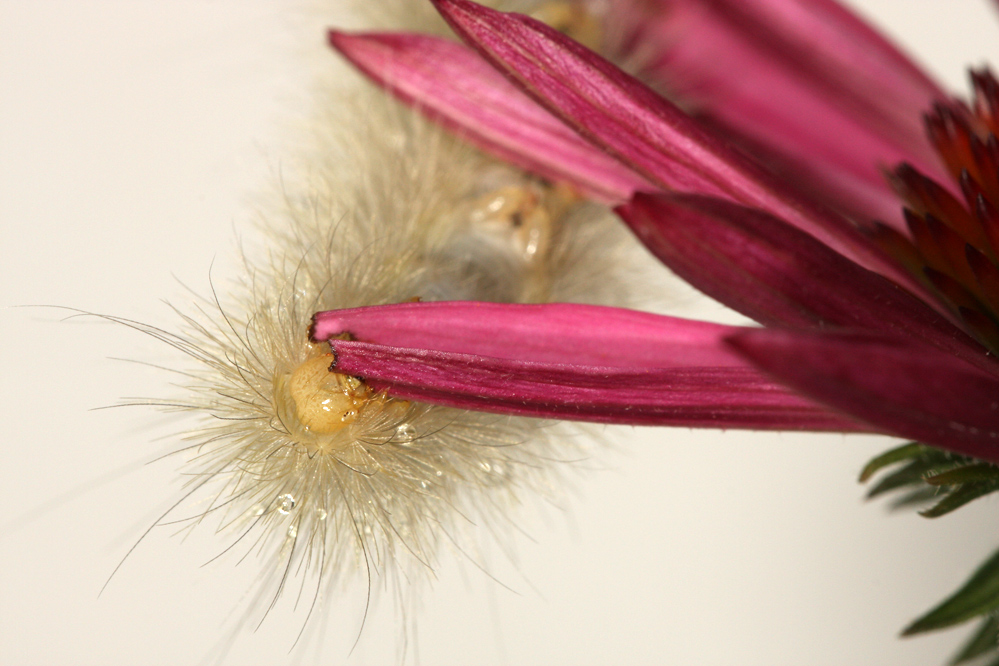


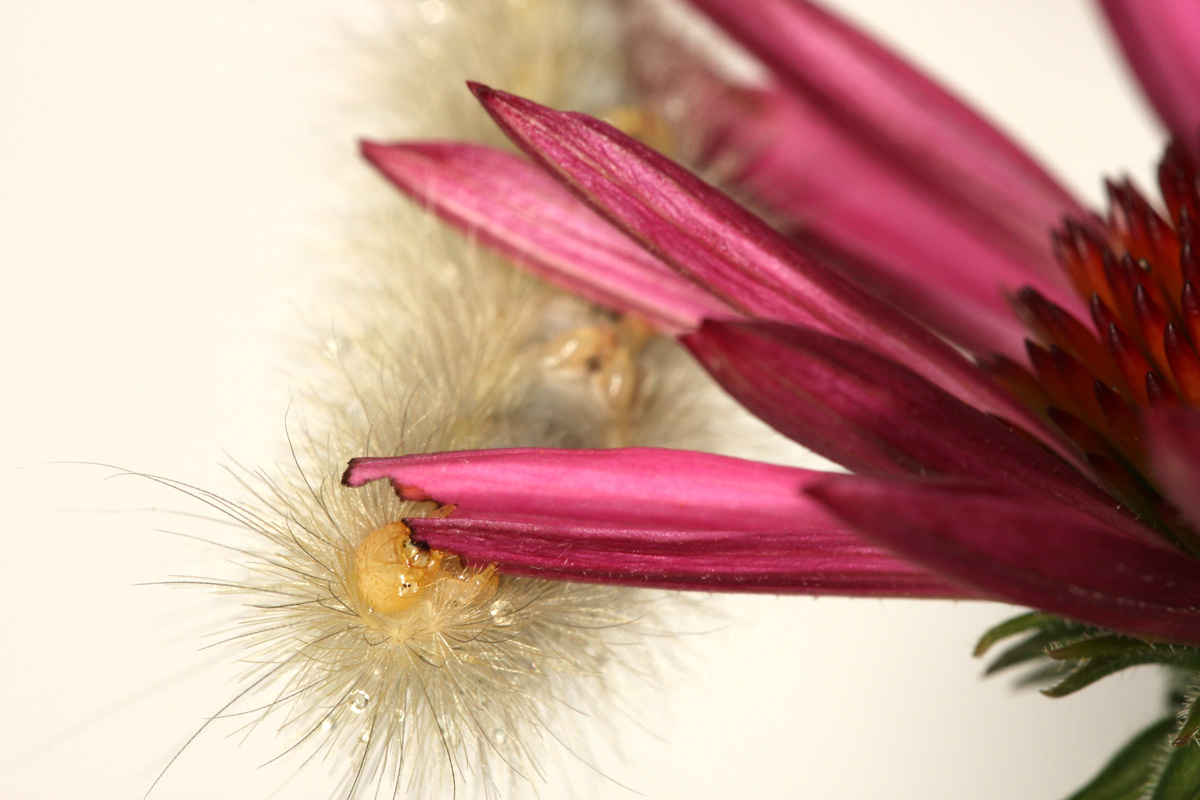
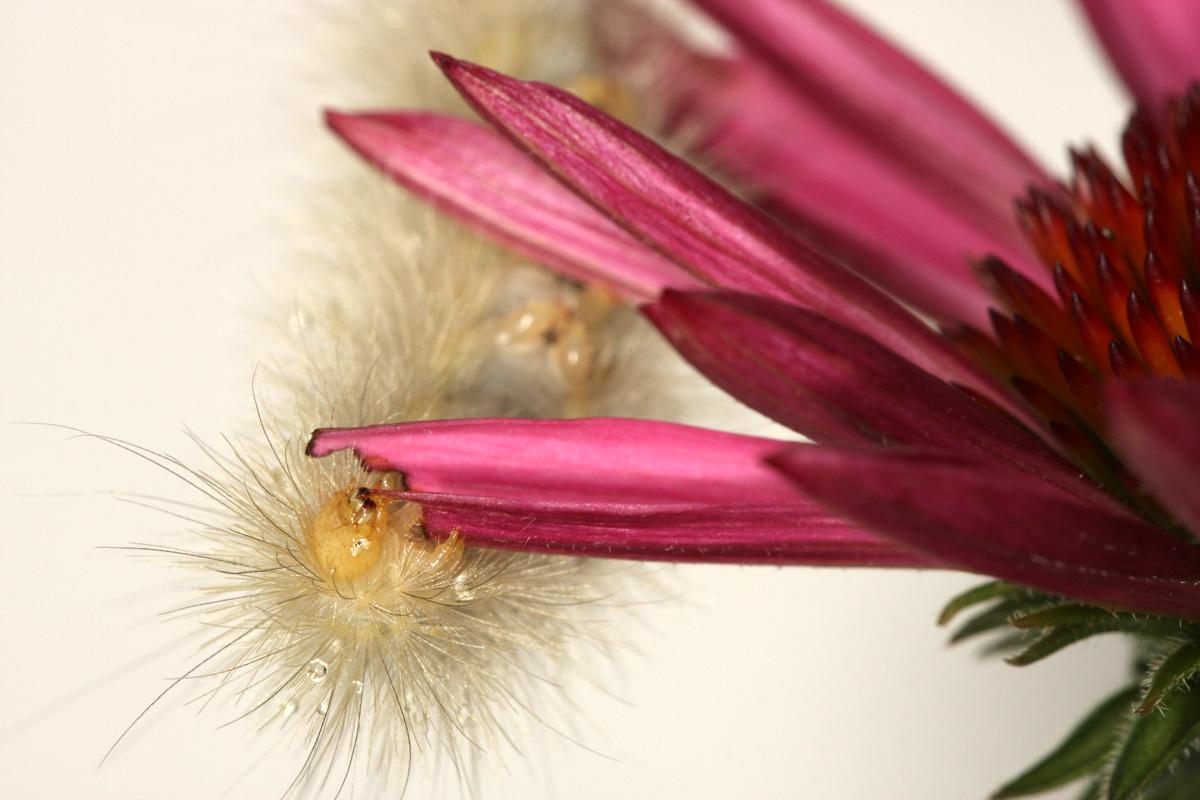


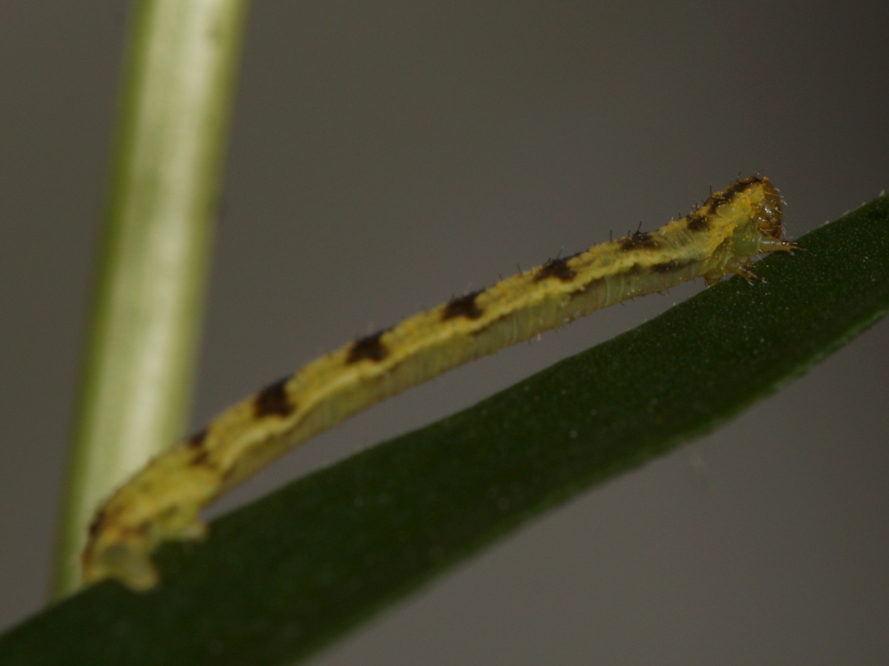
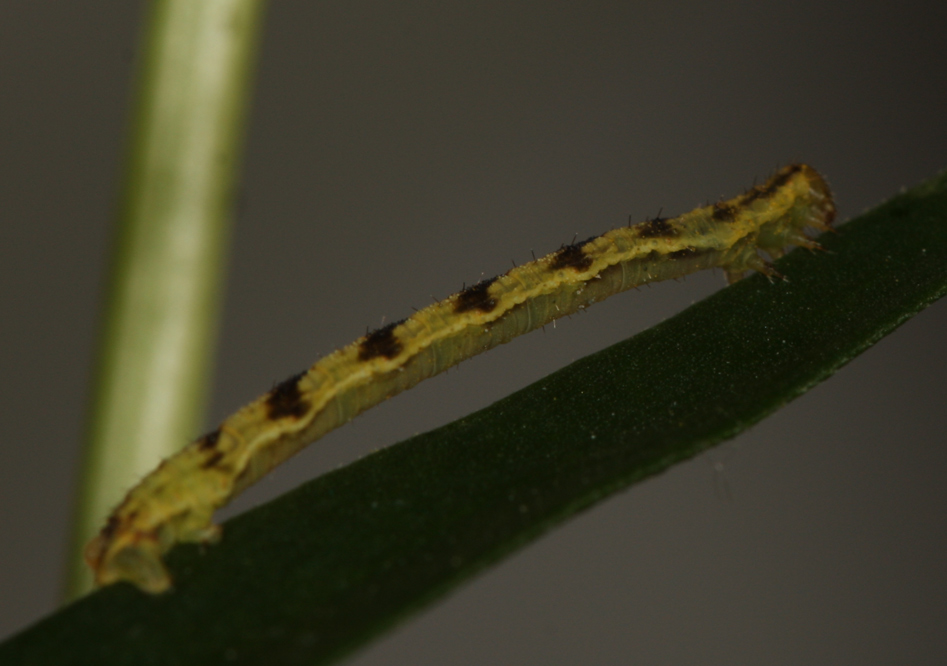
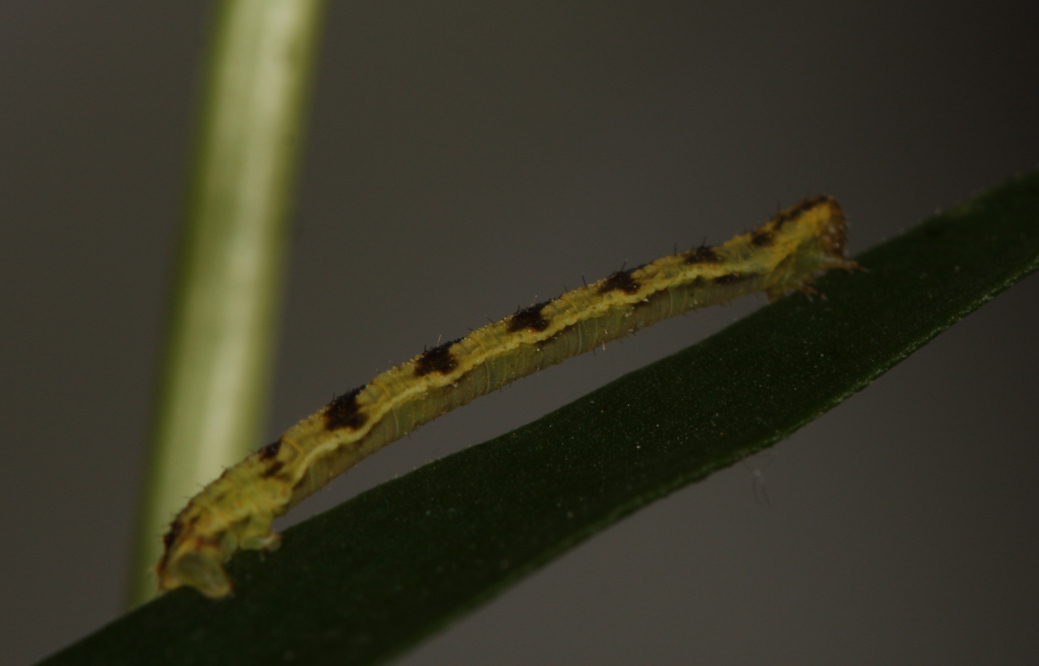
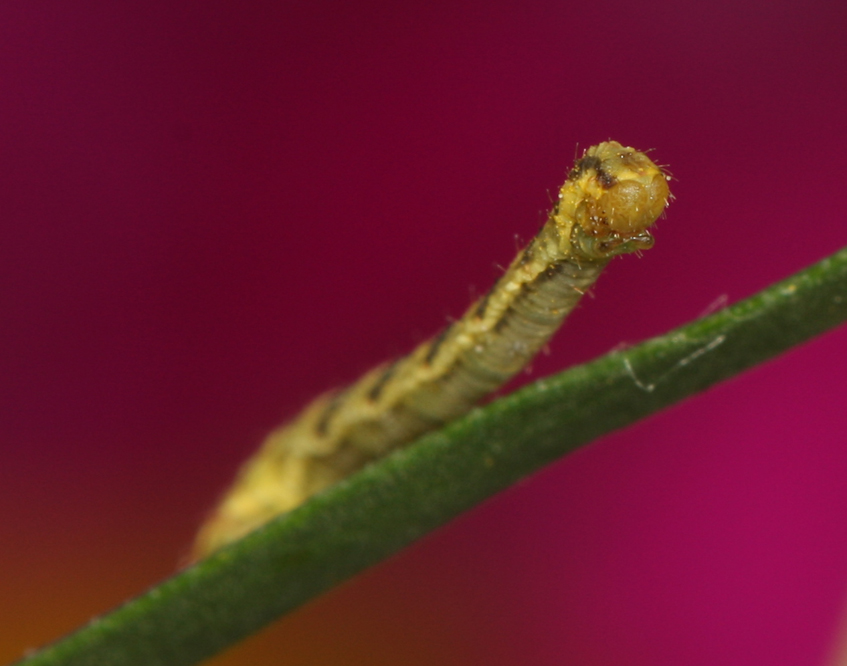
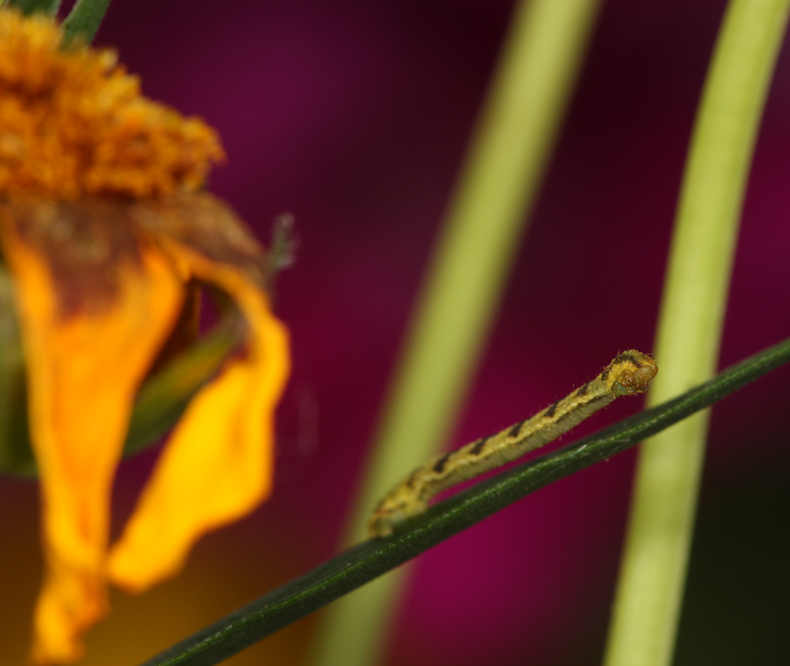
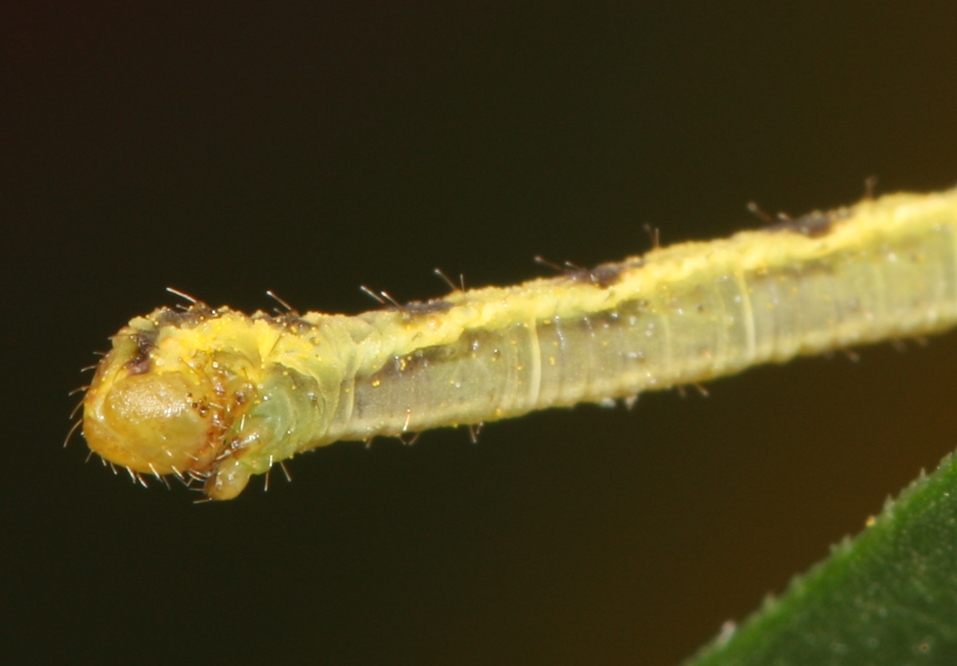
Unidentified inchworm
This inchworm was discovered on some coreopsis flowers I brought inside and had in a vase. I actually probably wouldn't have discovered it had it not been for noticing that one of my free-roaming pet jumping spiders, Solara, was on the vase, munching on another unlucky one of its species. It was photographed on June 30, 2009.



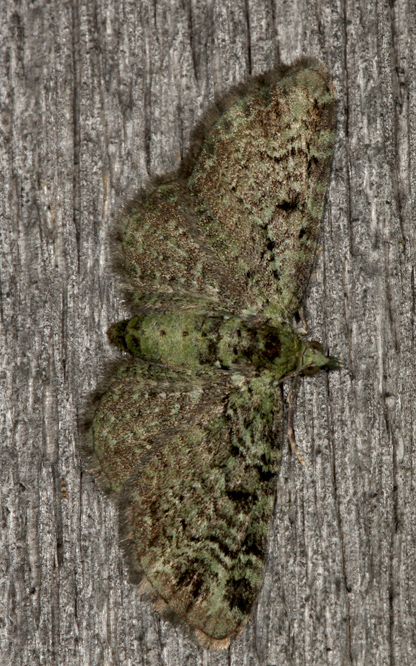
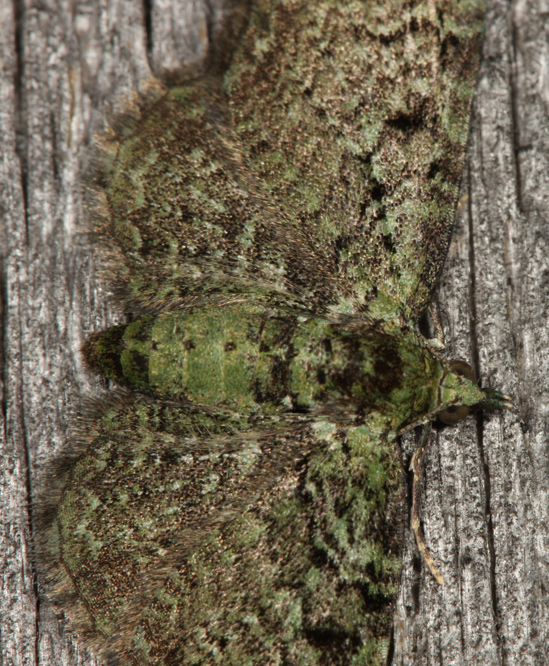
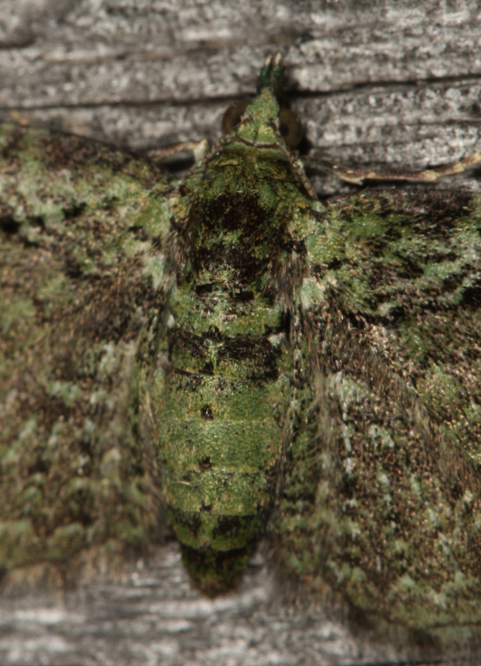
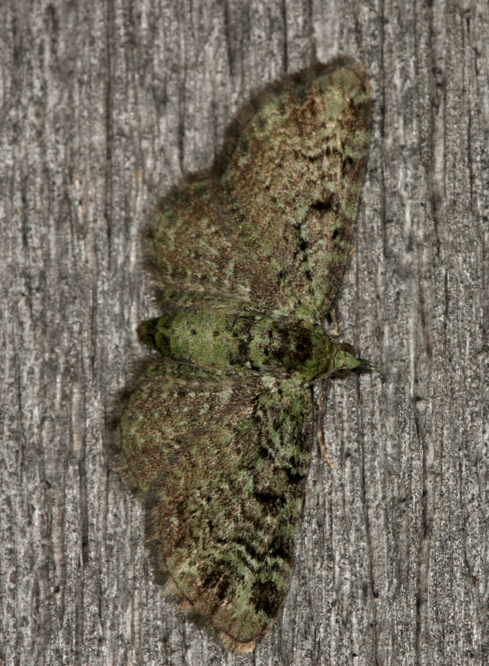
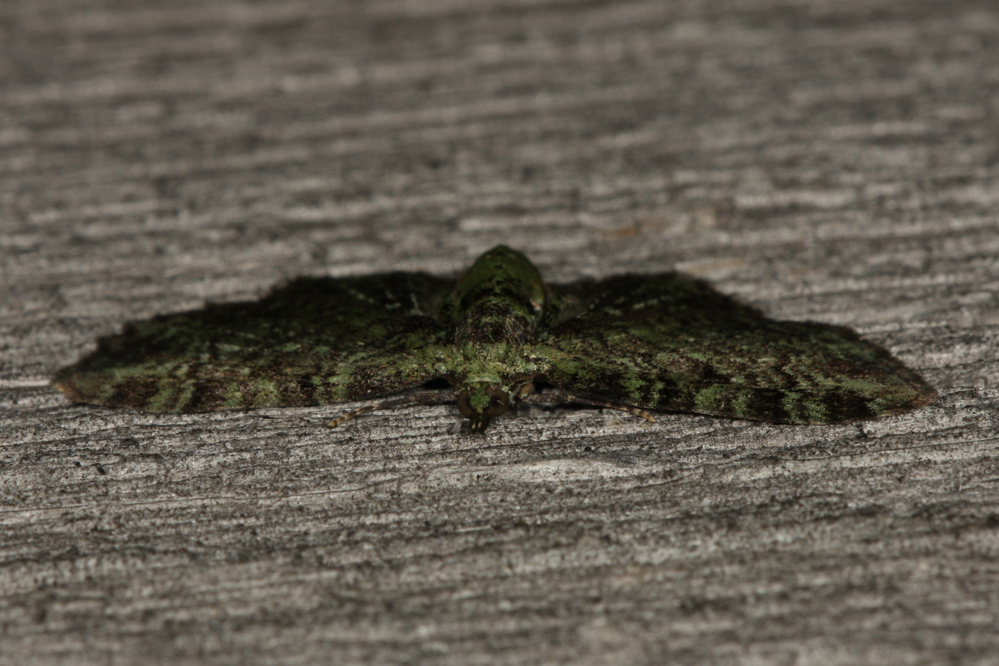
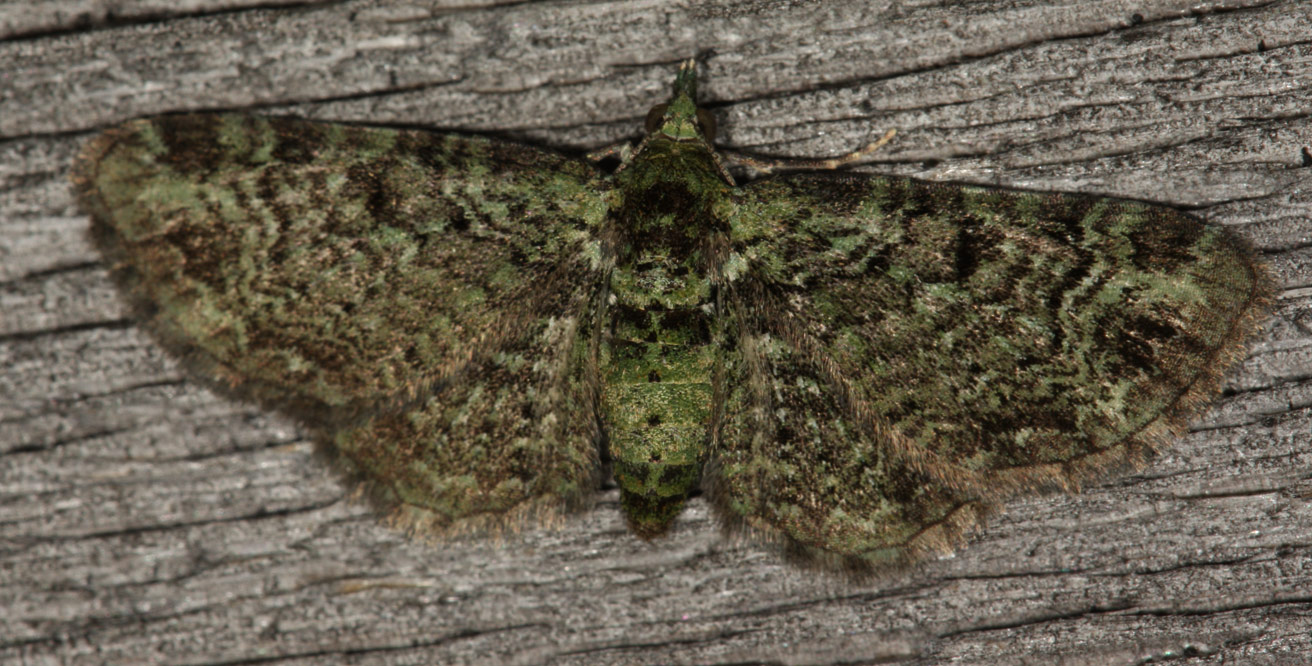
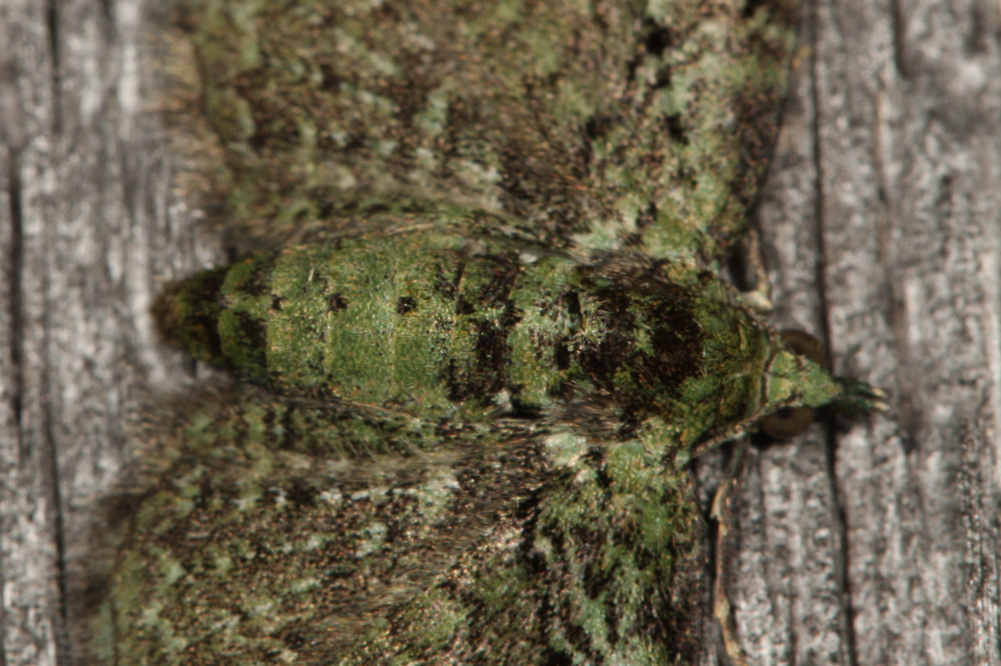
Green Pug Moth, Pasiphila rectangulata, a.k.a. Chloroclystis rectangulata
I found this strange moth on my fence on June 13, 2009. I have never seen anything like this before in Michigan. When I researched it and discovered what it was, it made me kind of worried and although I rarely kill anything but mosquitoes and the beetles that eat my artwork, I wondered if I should have killed this one. Unfortunately, I hadn't the time to research it until it had already flown away. I found that it was a green pug moth and that they are common in the UK and have been an introduced species in North America just recently (within the last 20-25 years). The larvae feed on the flowers of various Rosacea including apple, blackthorn, cherry, hawthorn, pear and quince. It said that they overwinter as an egg. After reading that, I think I know where it came from. About a month ago, I got a special dwarf grafted apple tree with 4 different varieties of apple on one tree. I am guessing it arrived on there. I hope it doesn't infest this area. From what I can find, it is already been spotted in New York, New England, Maine and Pennsylvania and really devastates fruit trees. Too bad such a neat-looking moth can be so bad.

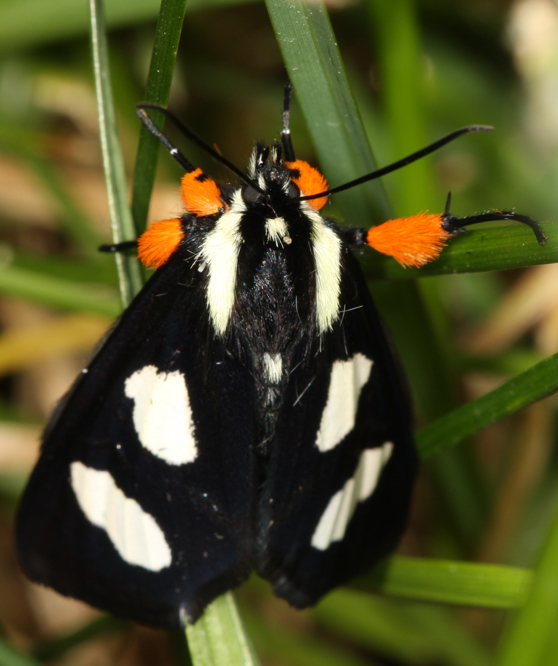
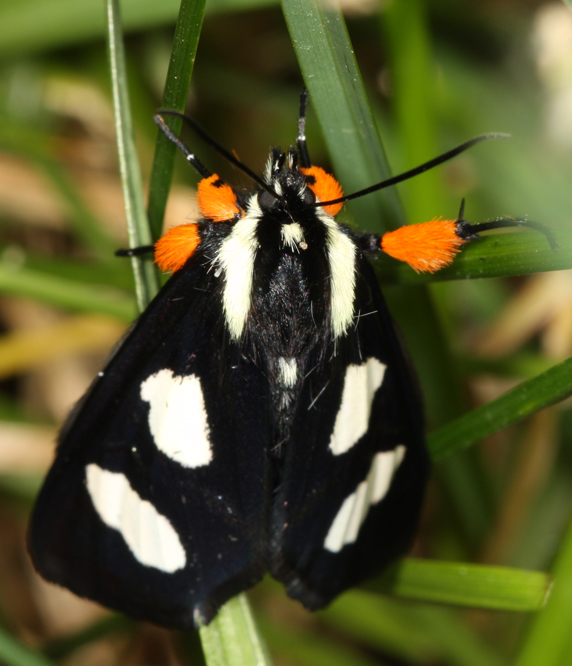
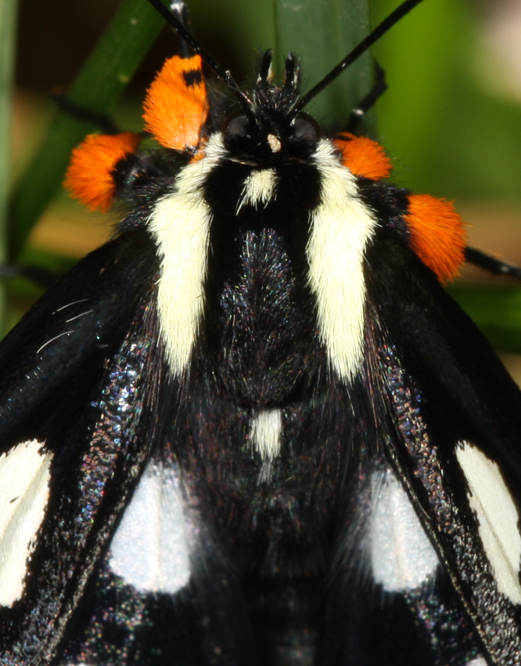
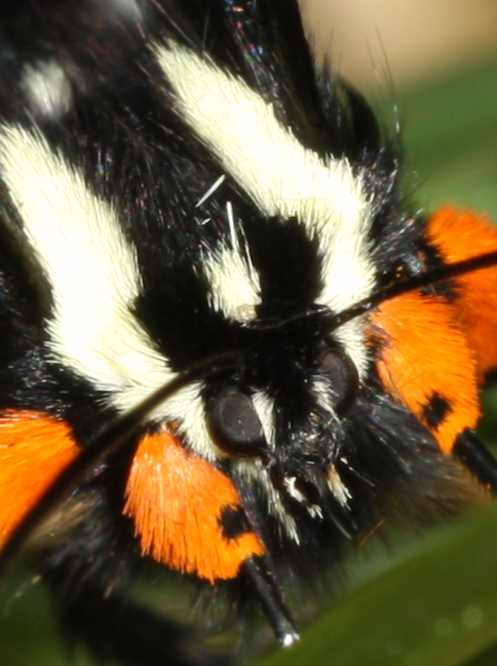
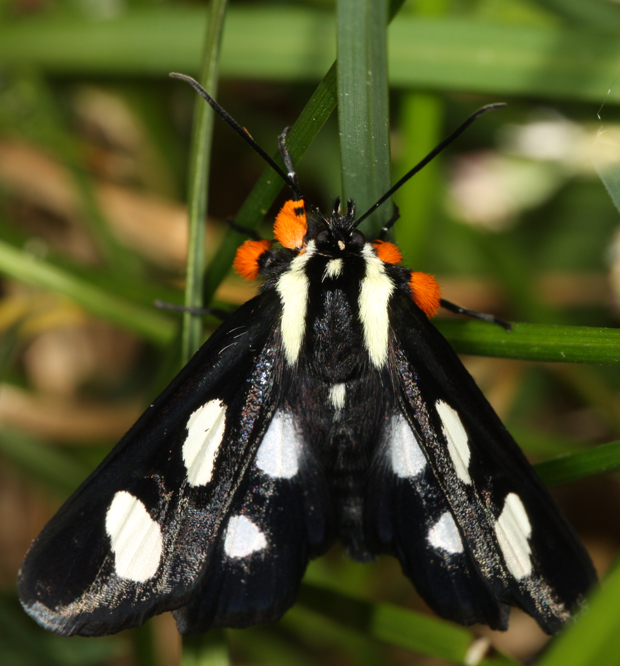
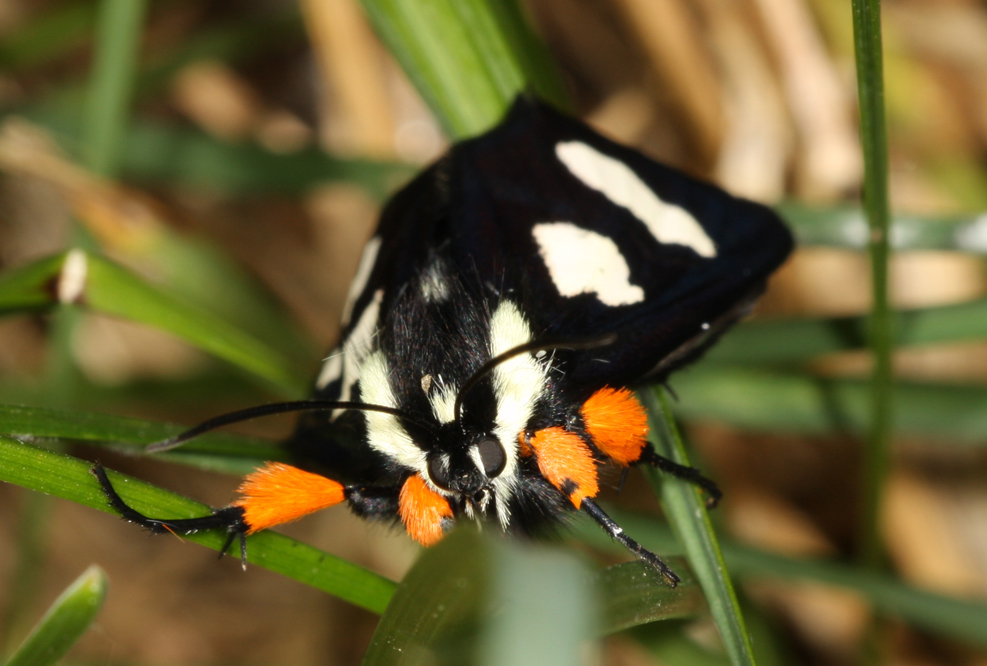
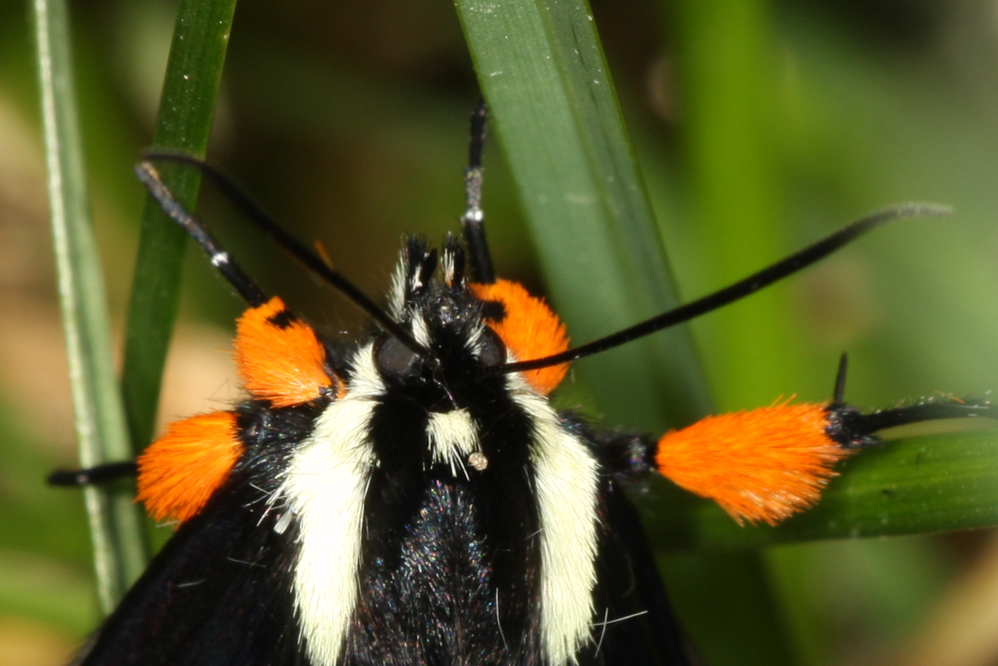
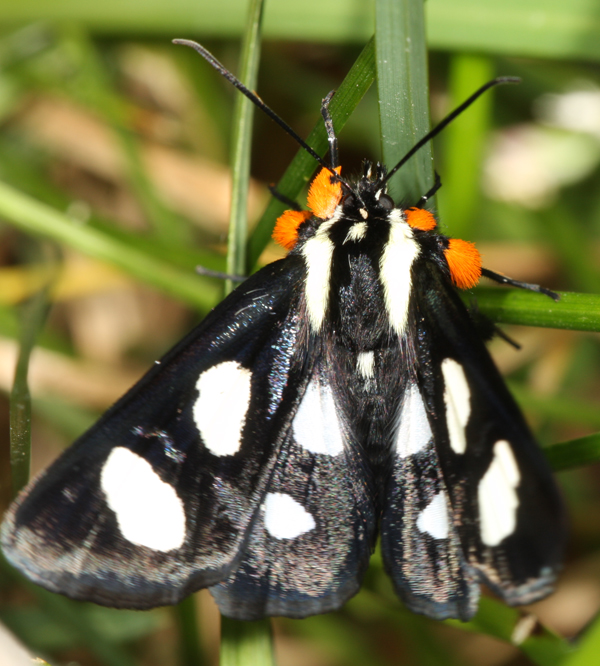
Eight-spotted Forester, Alypia octomaculata
I have never seen one of these moths until June 6, 2009. Apparently, their larvae feed on grapevines, which are quite abundant at the edge of my property. Still, I was surprised to have not seen them at my previous home because I also had a lot of grape vines there. This one was in my lawn just outside the doorwall.




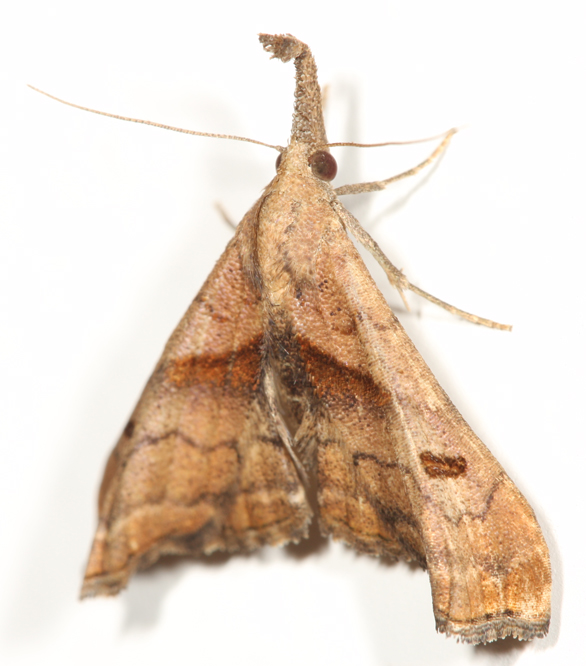
Dark-Spotted Palthis Moth, Palthis angulalis
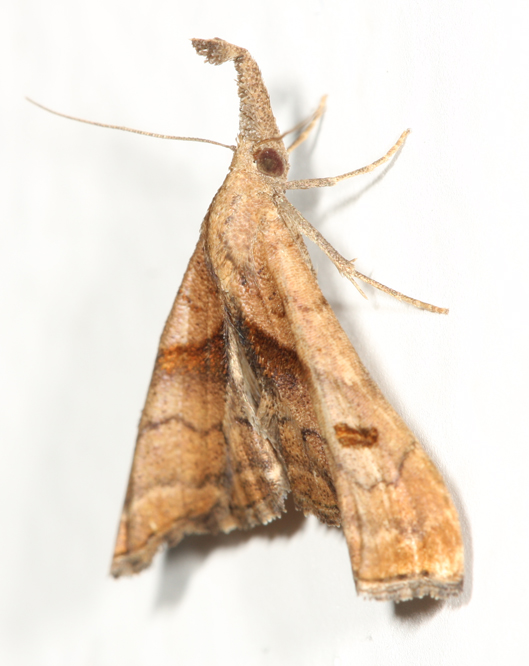
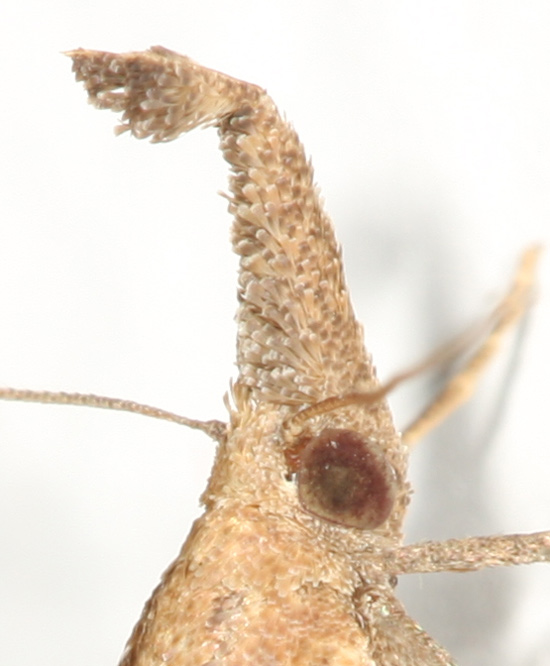
This moth was found in the kitchen on July 27, 2008. It was about 1/2" long. It has a very unusual protrusion coming out from its head that looks like a nose of some sort.



Unidentified Moth
I found this moth in the kitchen on July 19, 2008. It was about 3/4" long.

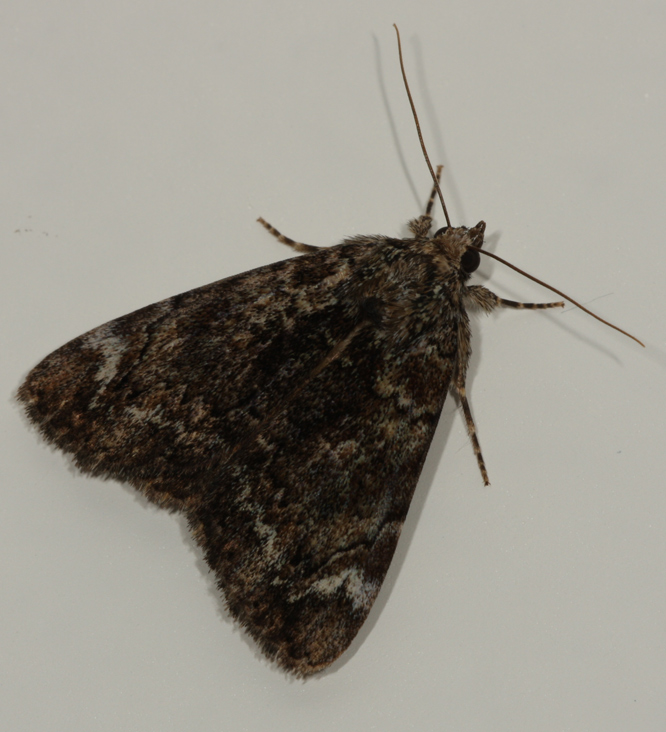
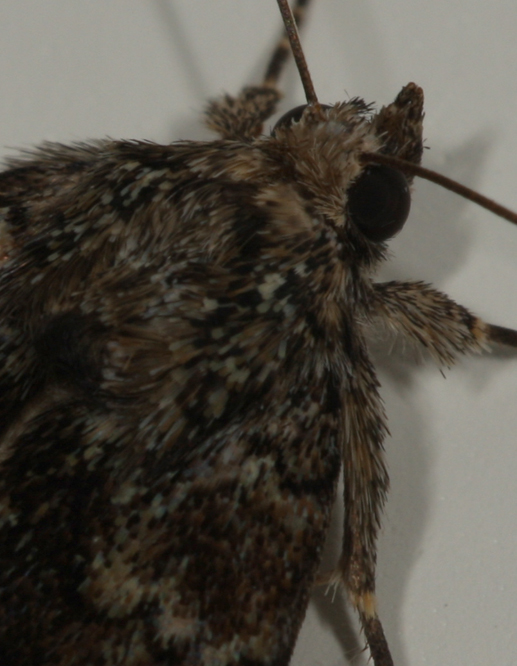
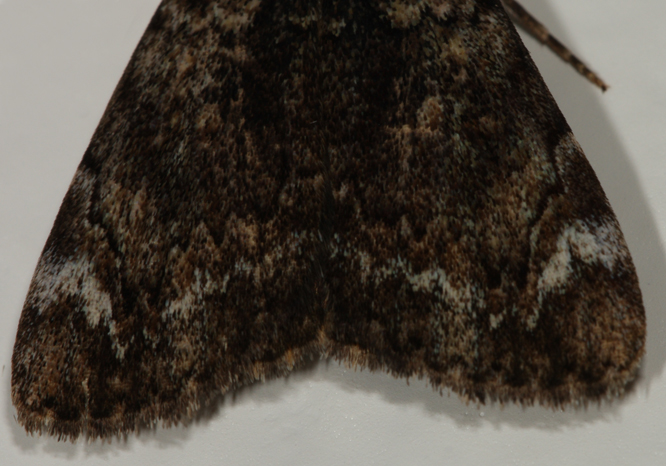
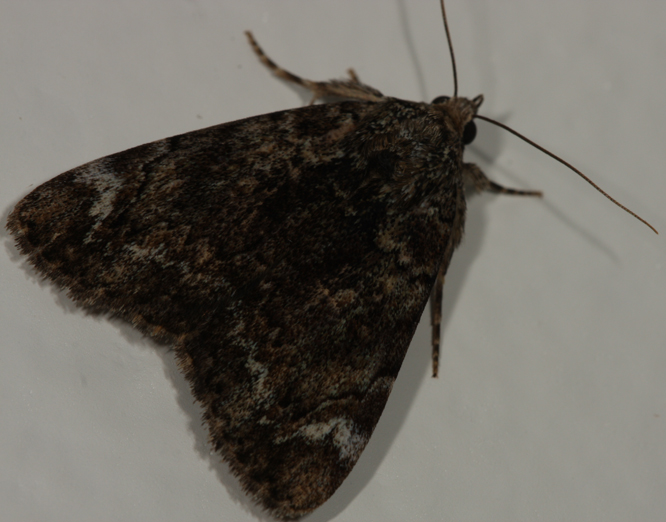

I found this interesting-looking moth in the kitchen on July 7, 2008. It is only about 1/2 inch long.


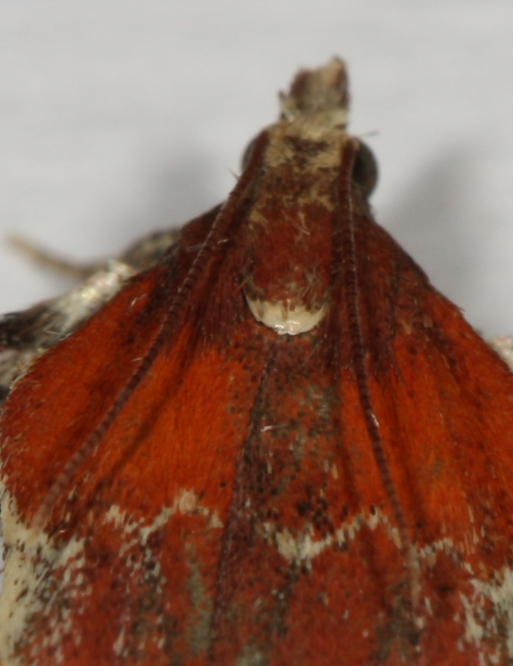
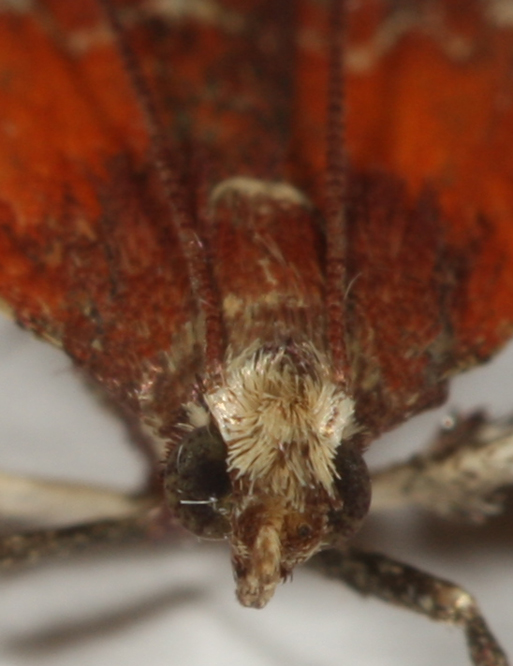
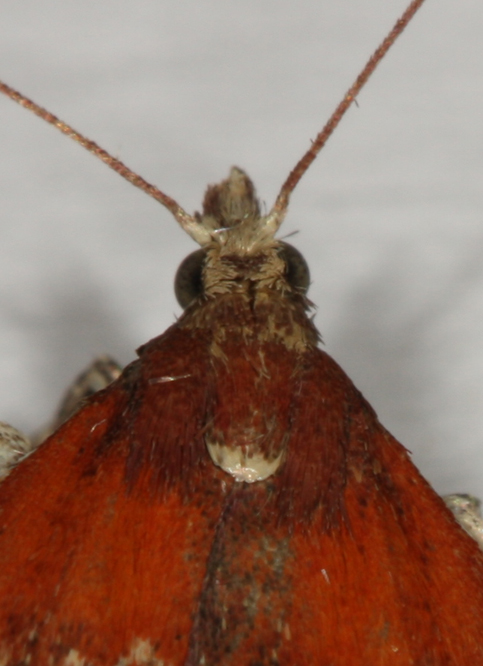
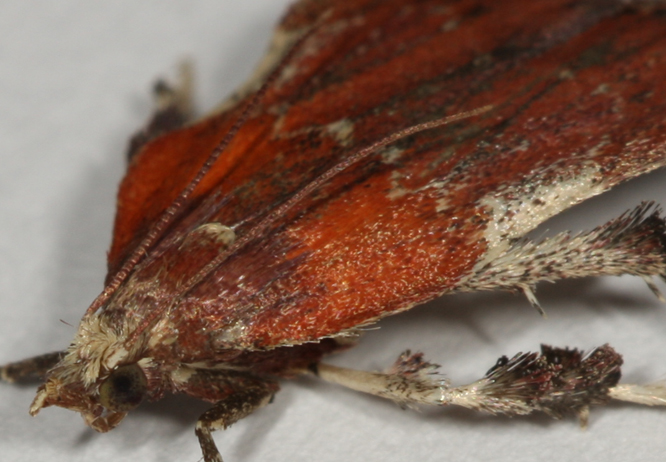
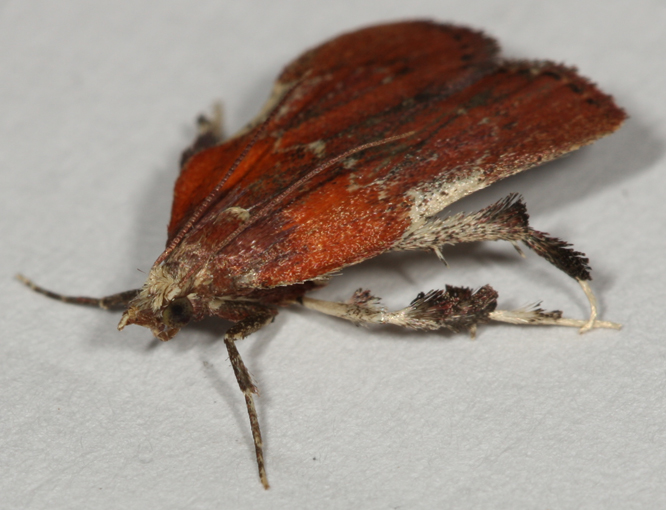
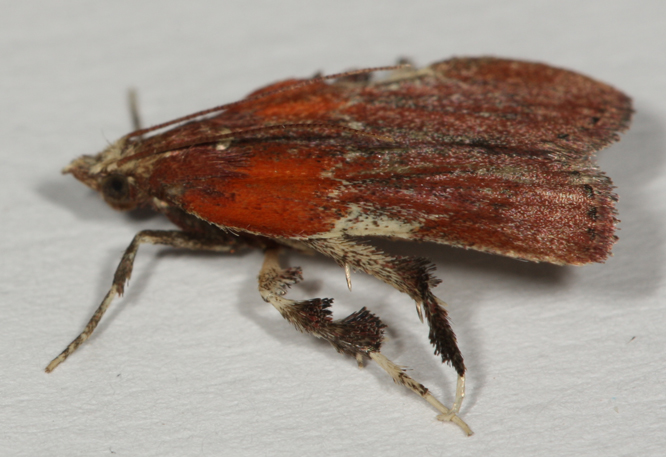
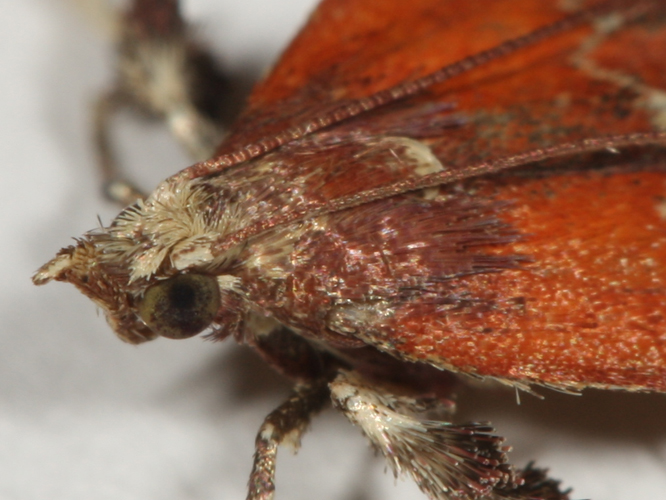
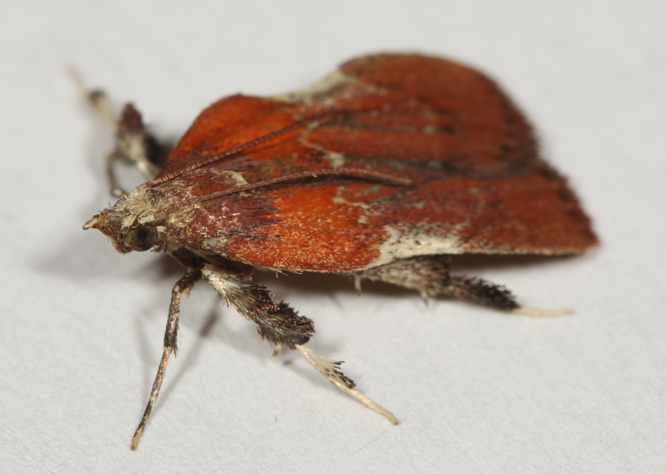
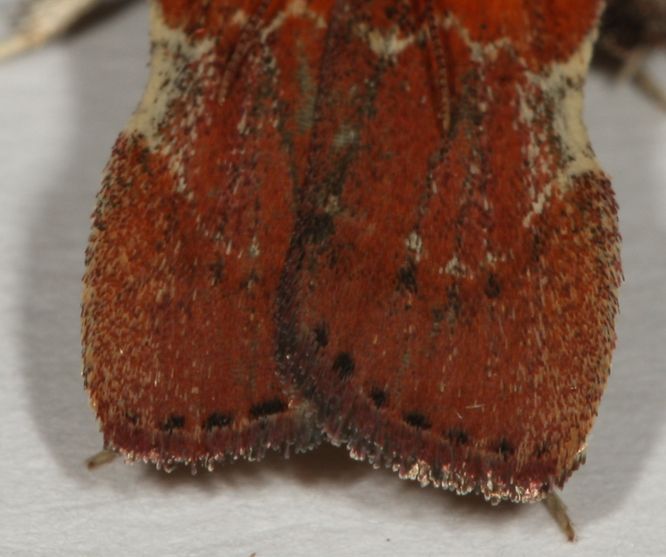
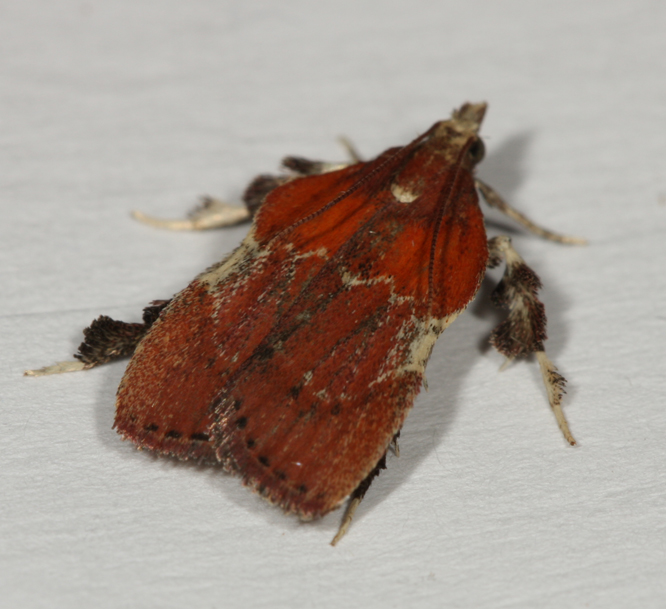
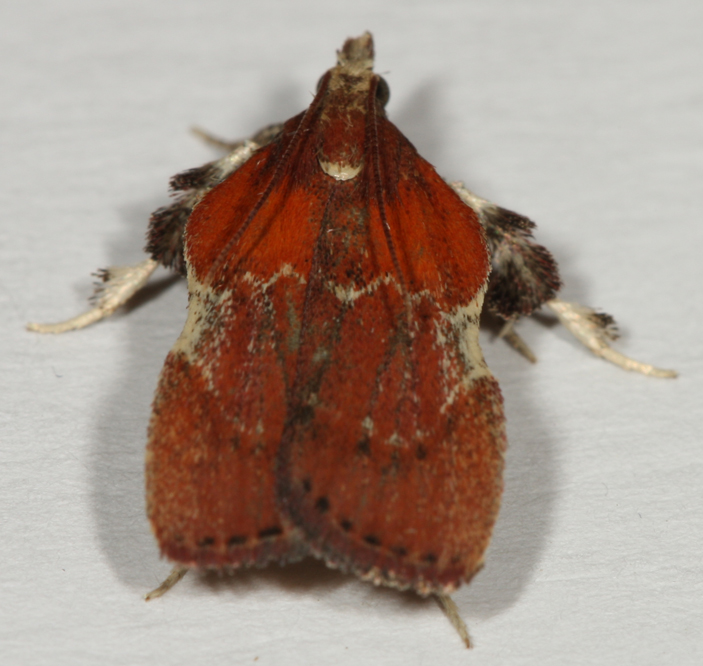
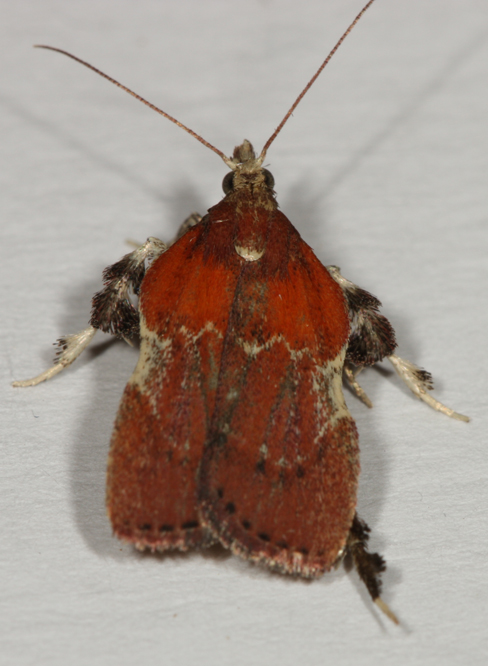

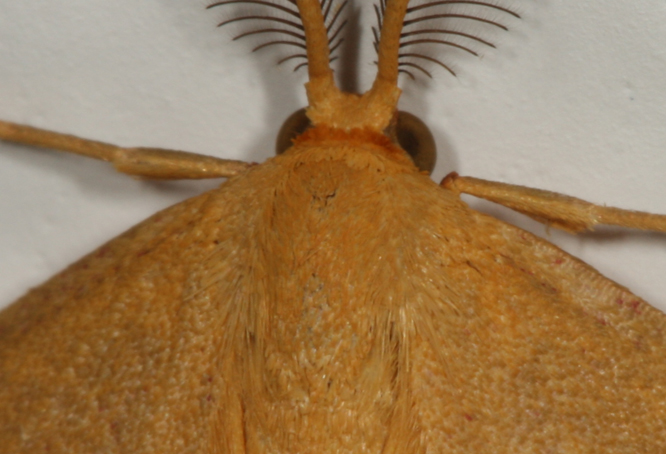
Chickweed Geometer, Haematopis grataria
Crosswinds Marsh, September 16, 2018
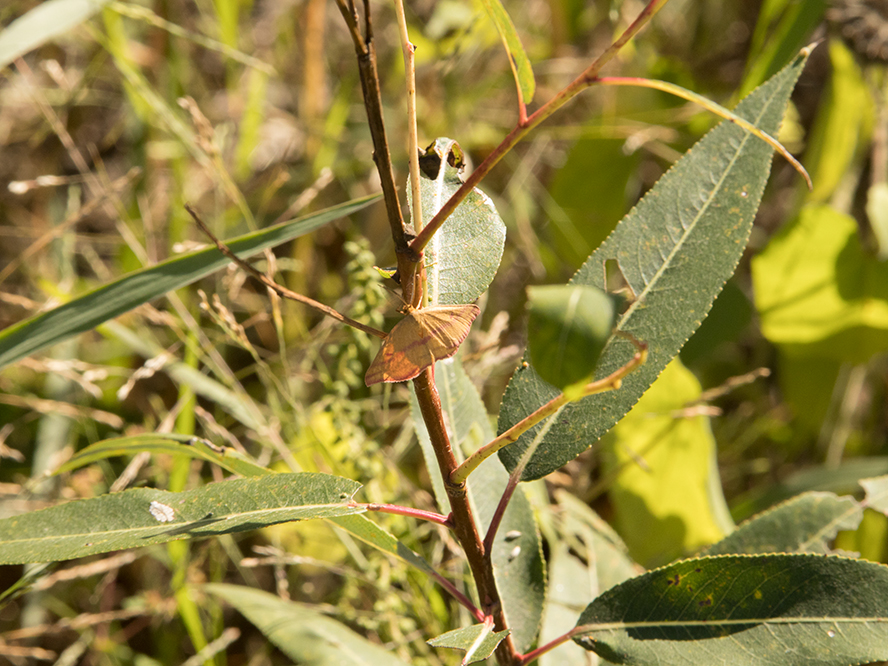
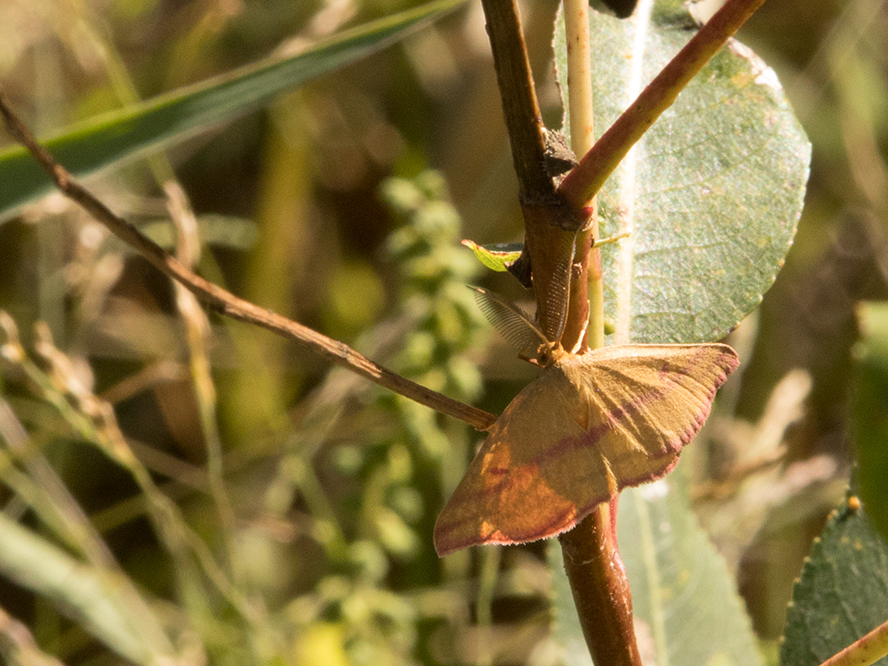
Here is a male chickweed geometer moth. His antennae have lots of receptors for female pheremones. This one was photographed on June 15, 2008 on my wall in the kitchen.
Click here to see the female I photographed previously.
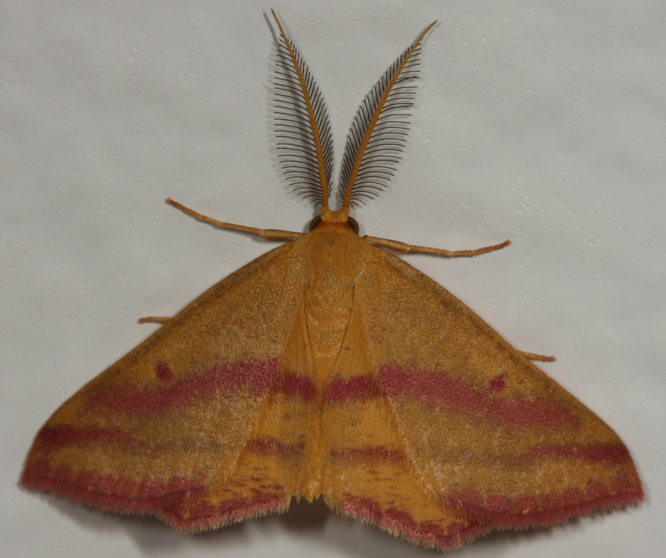

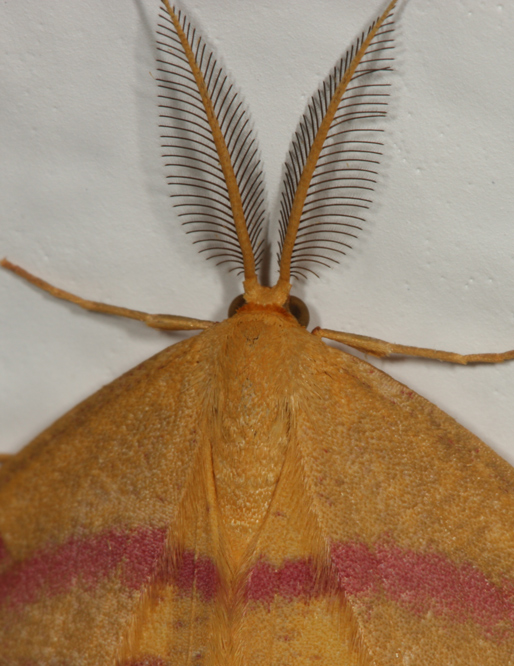
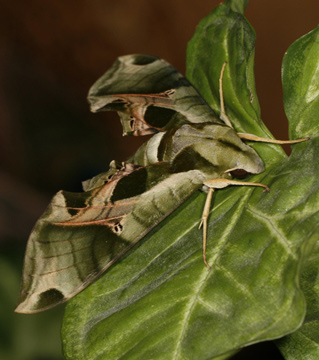
Pandora Sphinx Moth, Eumorpha Pandorus
On October 8, 2007, I took so many photos of this moth it needed its own page.
Visit my Pandora Sphinx Moth Page to see an extensive collection of photos. Just click on the photo below.
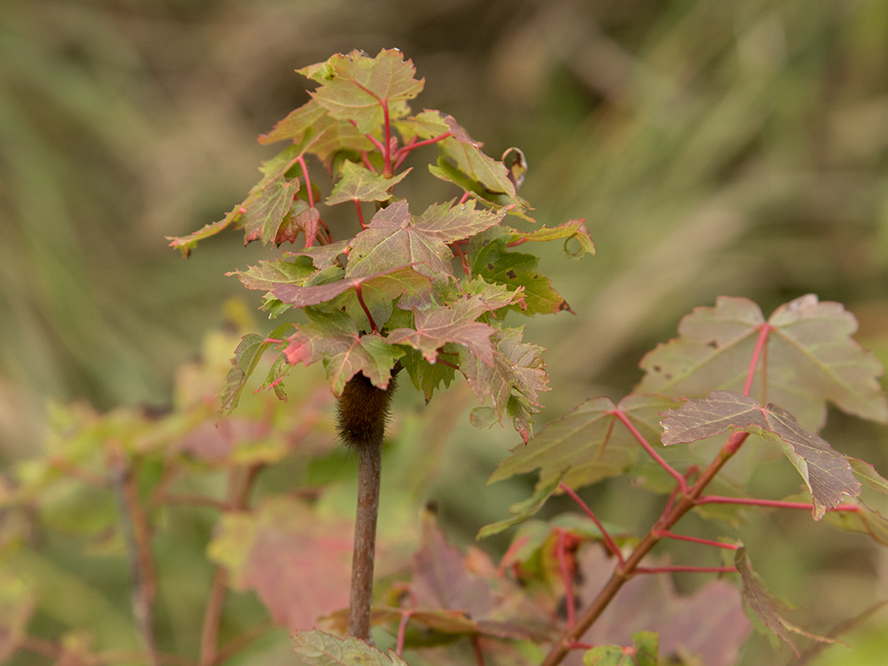
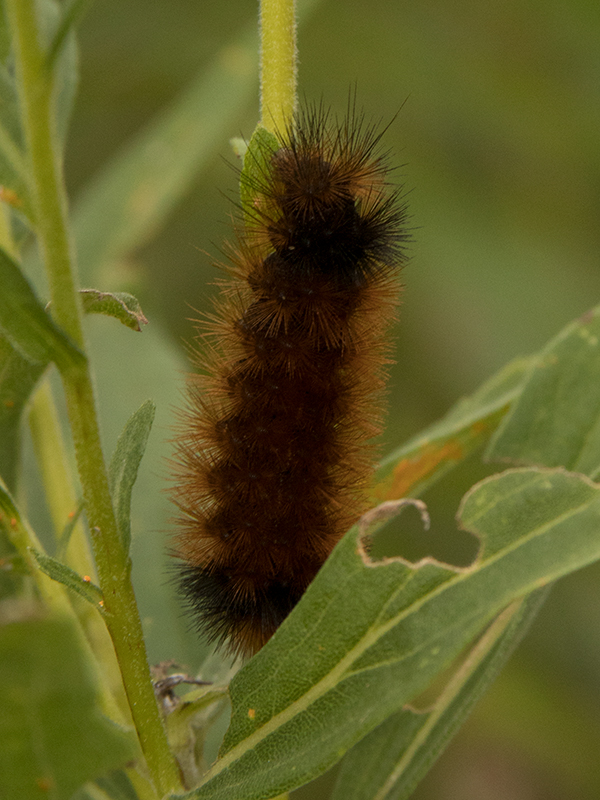
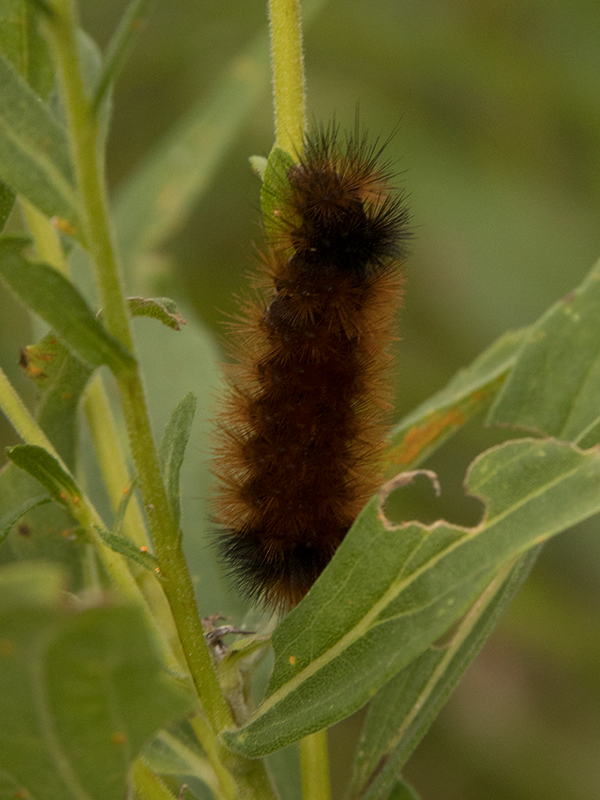
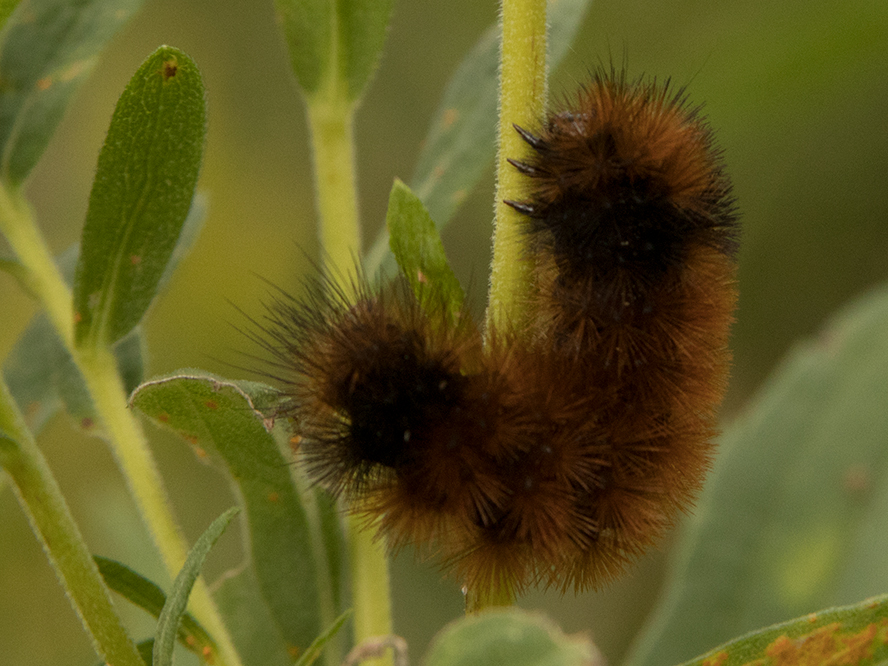
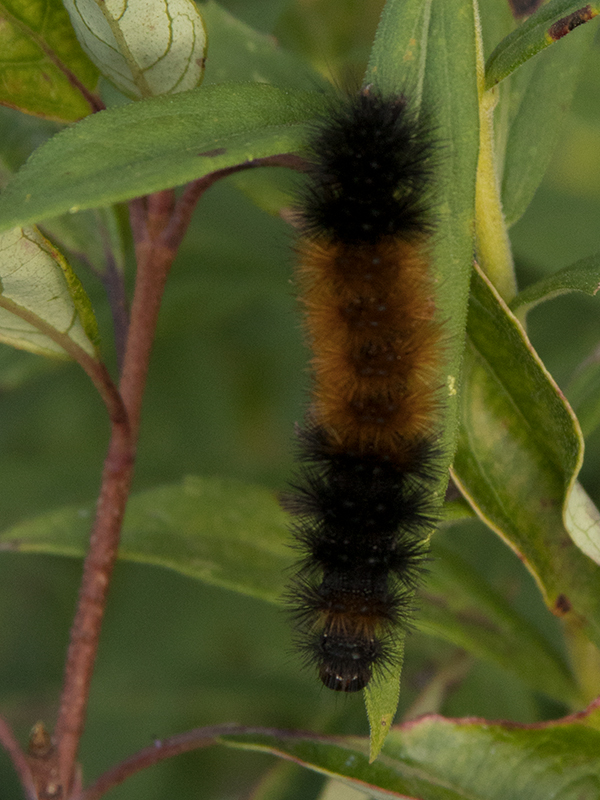
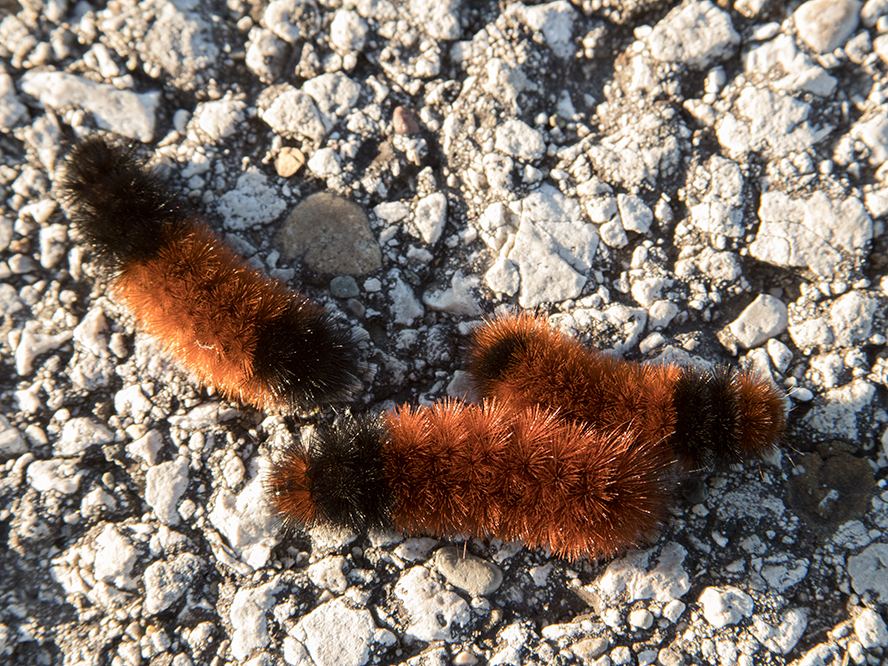
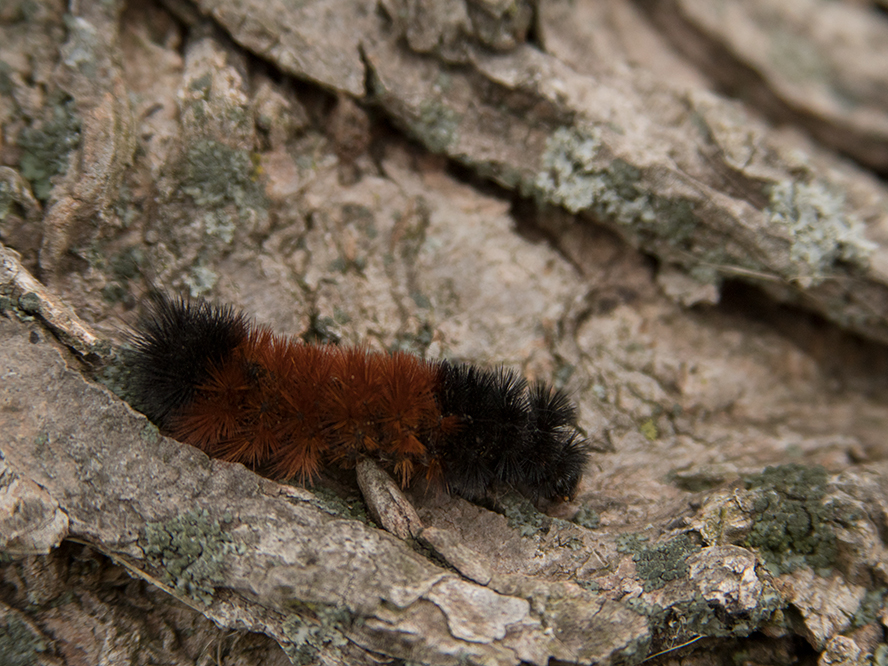
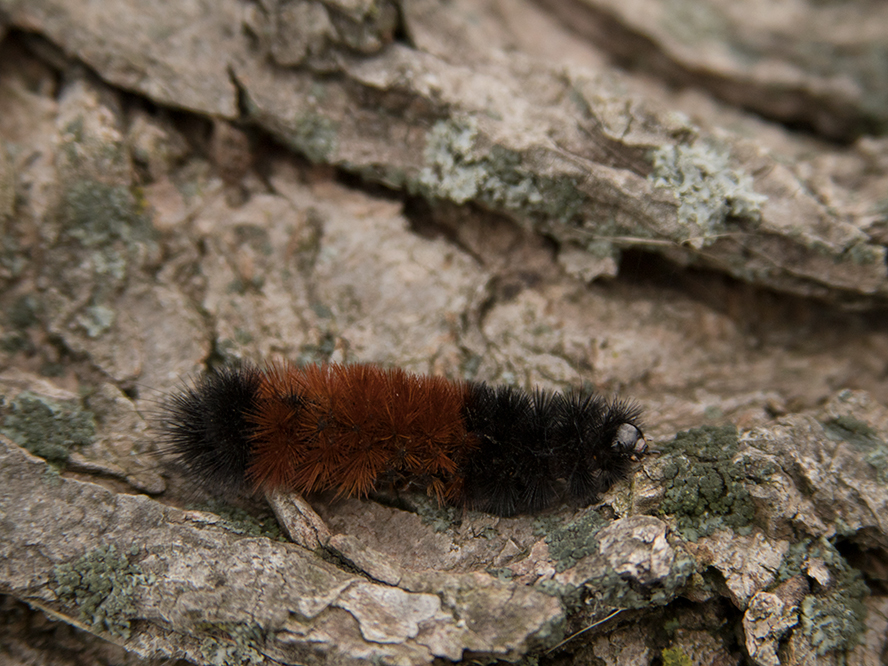
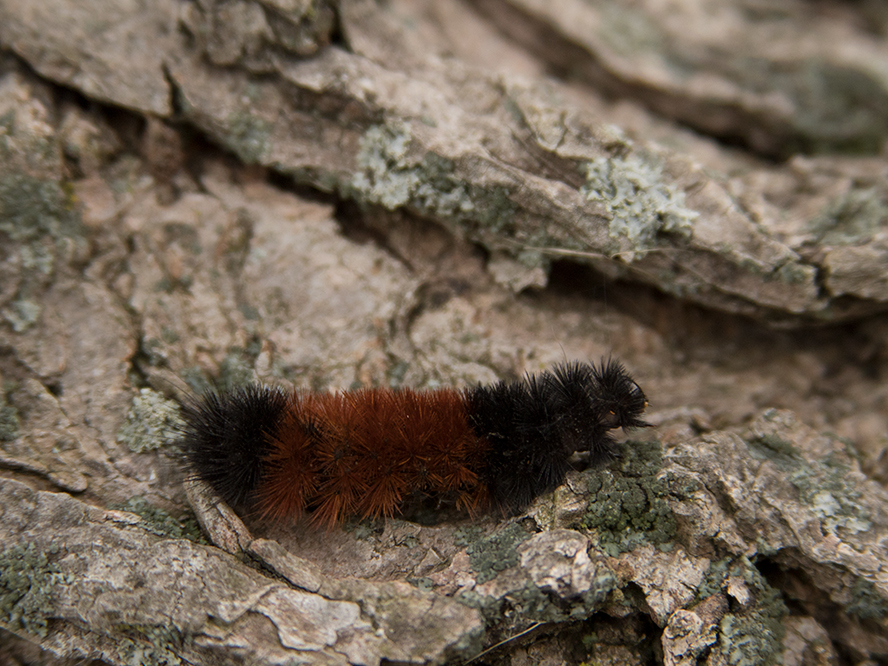
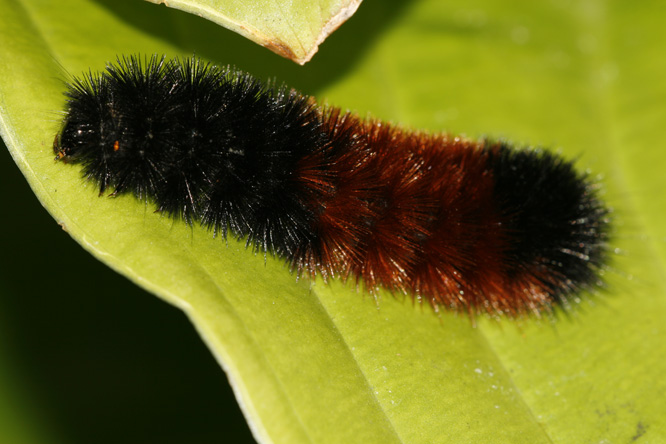
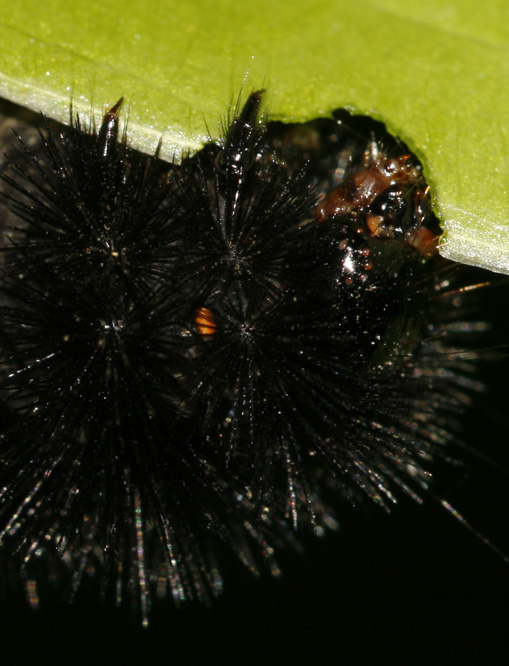
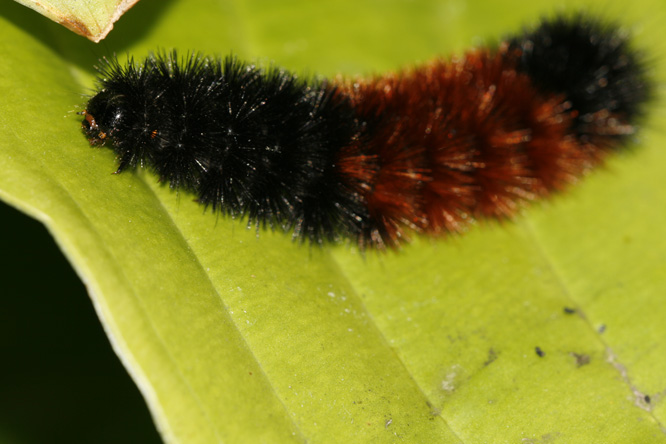
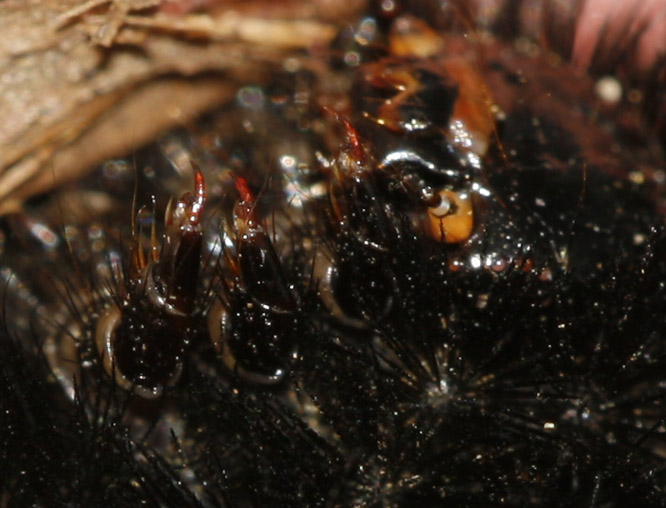
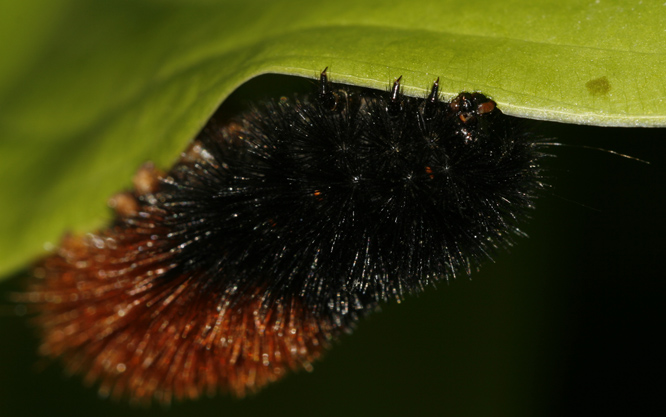
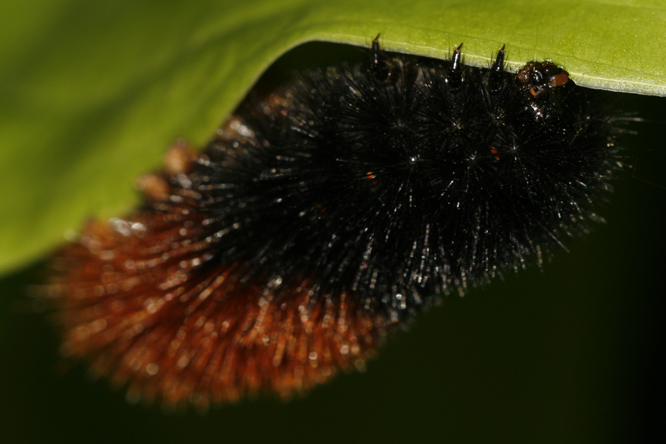
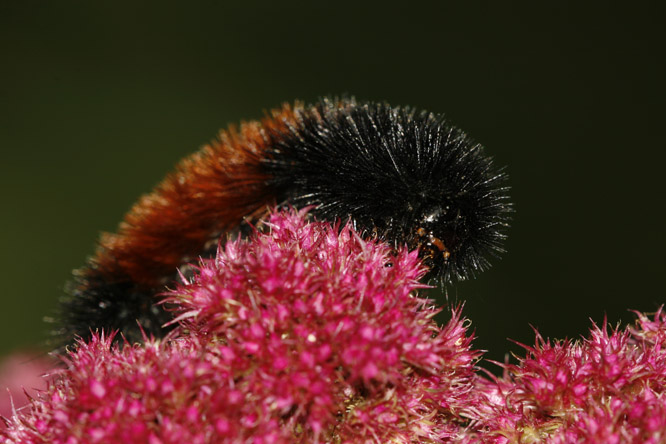
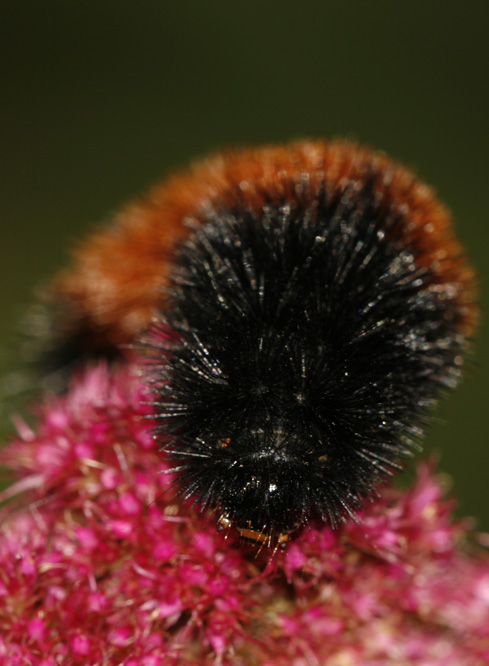
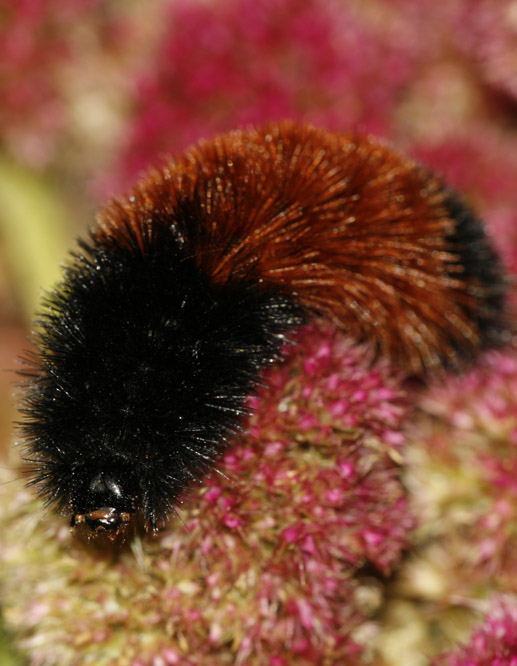
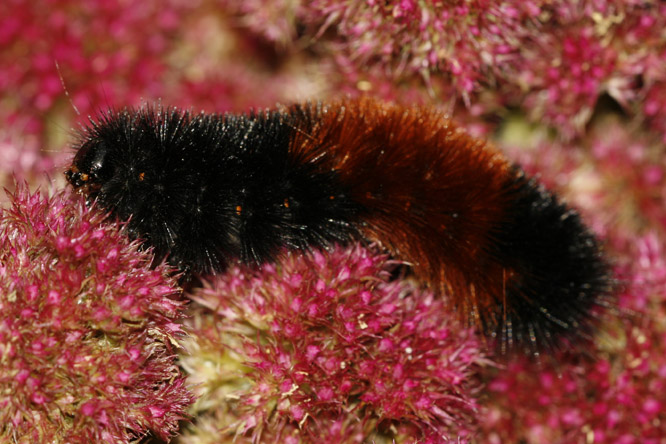
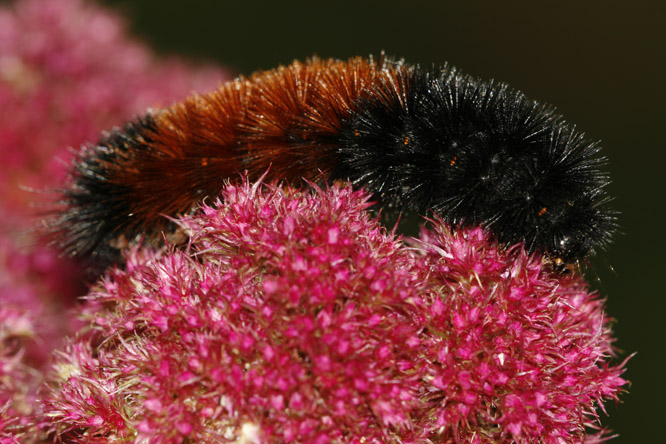
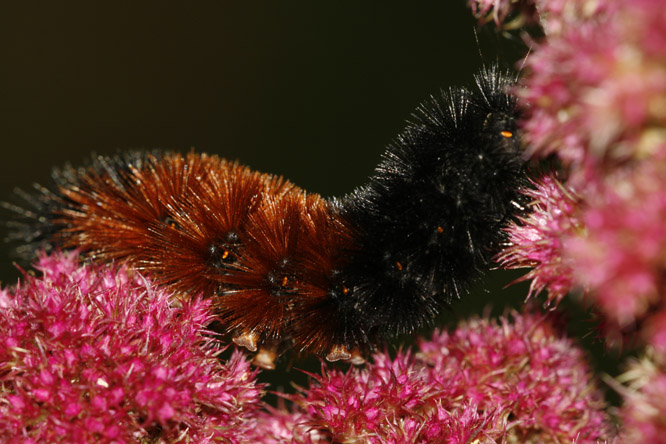
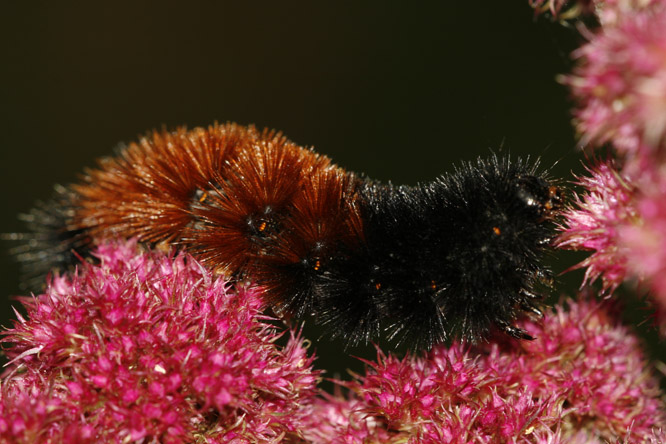
Woolly Bear, Pyrrharctia isabella Caterpillar (turns into Isabella Tiger Moth)
Maybury State Park, September 7, 2019
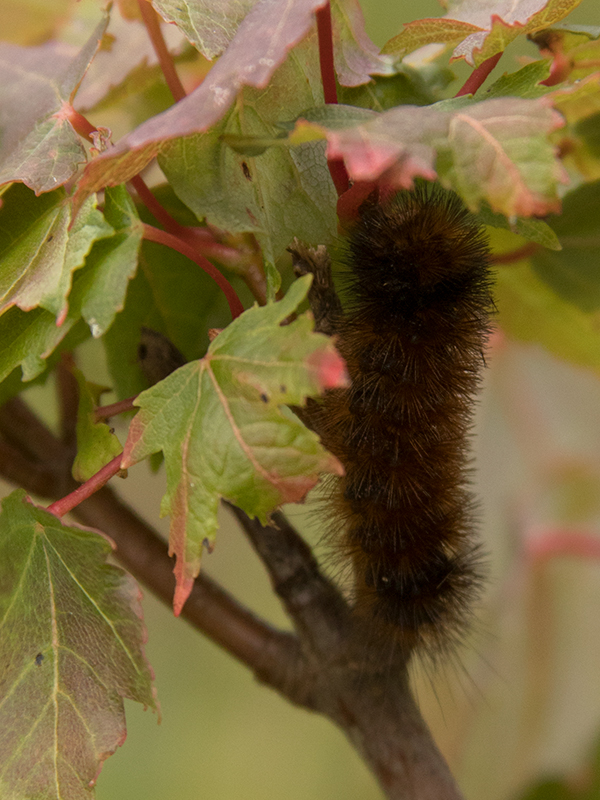
Maumee Bay State Park, December 19, 2018
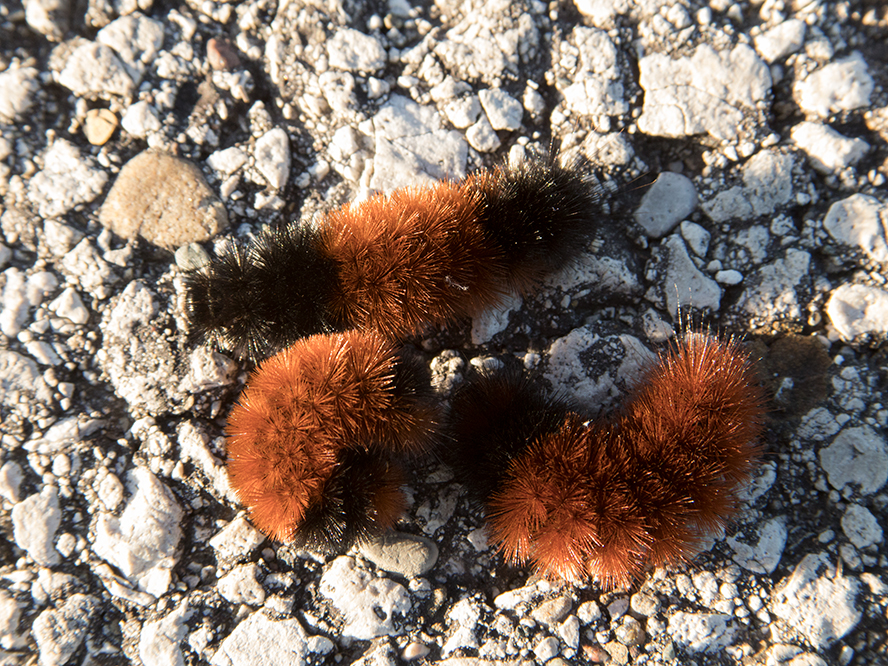
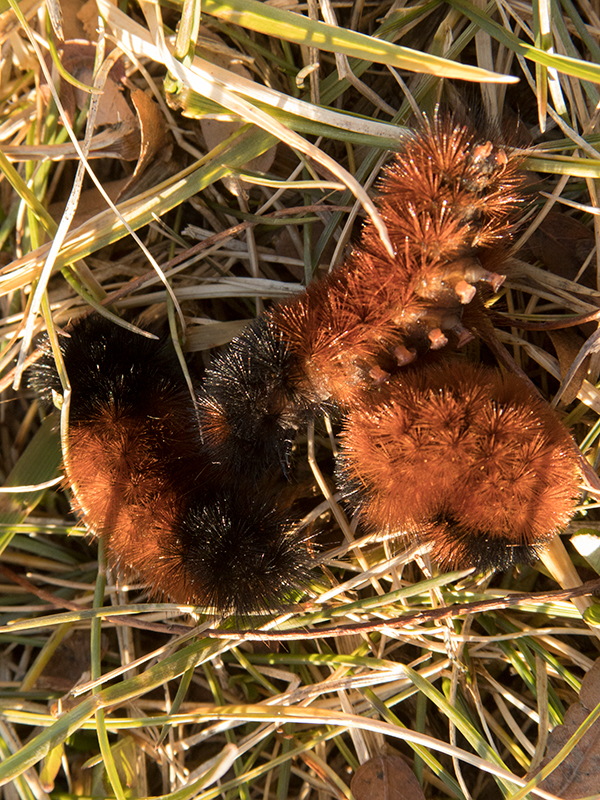
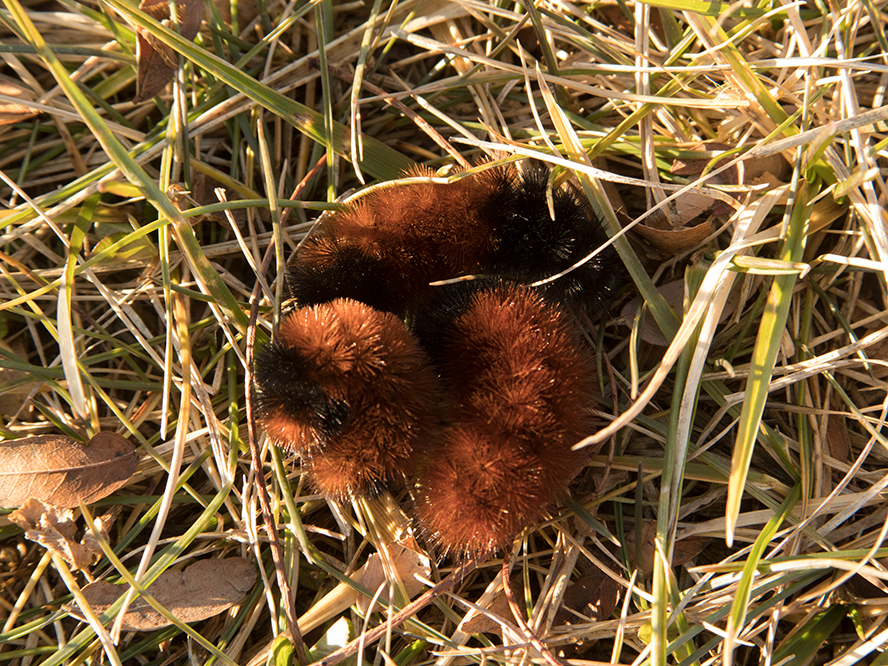
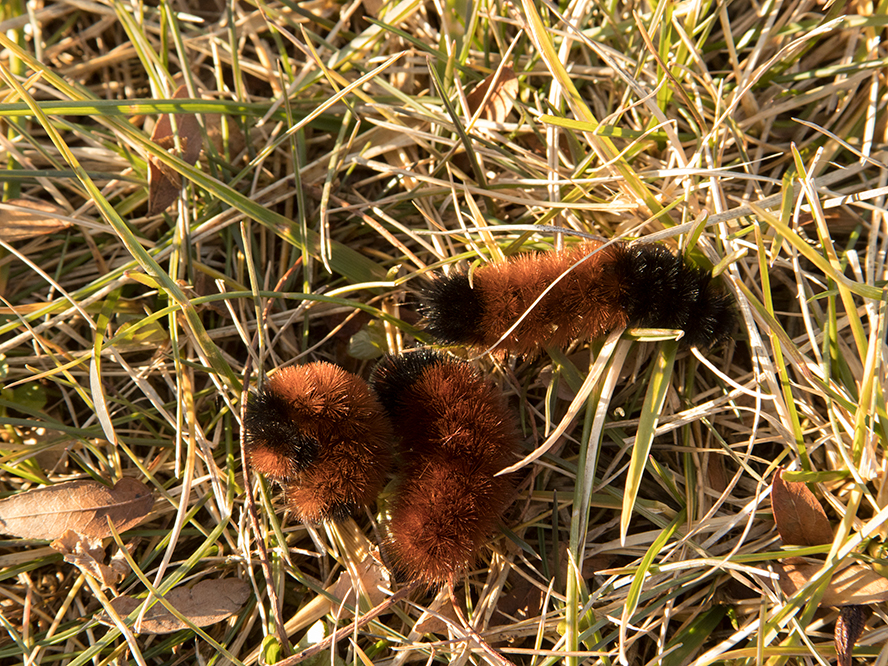
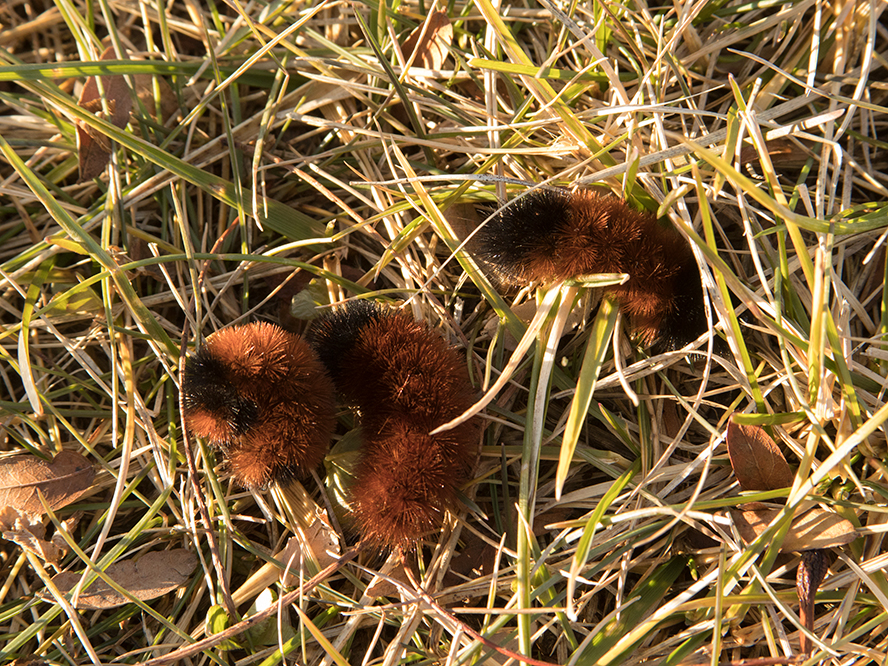
Sterling State Park, November 25, 2018
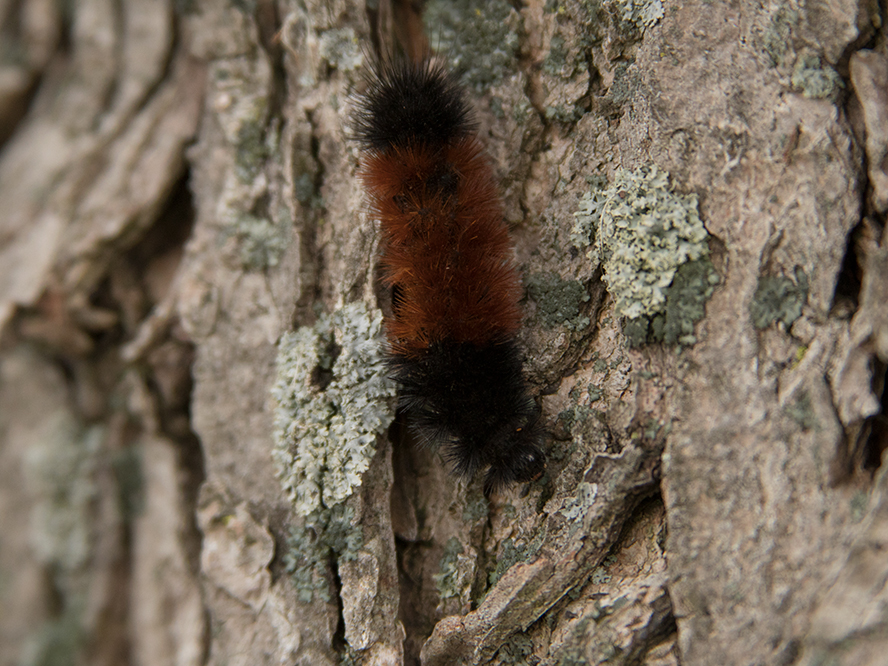
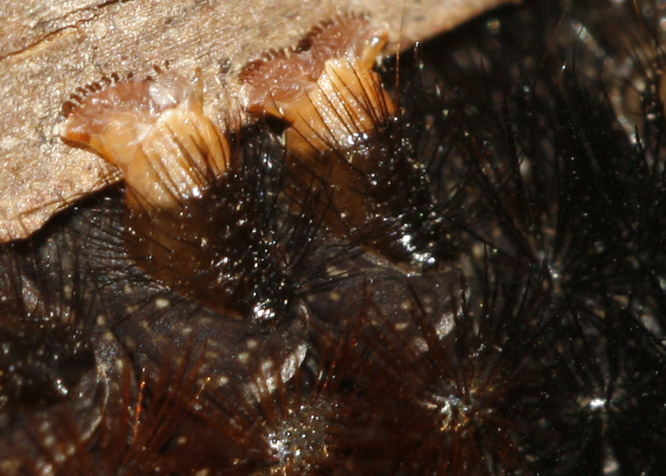
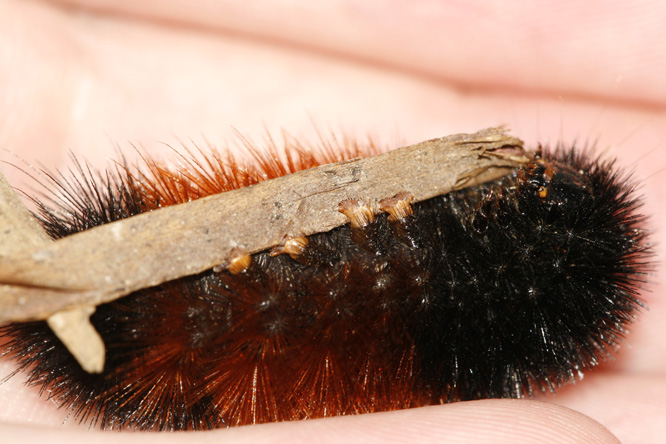
This caterpillar was found on 9-17-06 under a fabric dropcloth I had left outside in the driveway the previous night. It was photographed on a hasta leaf and summer poinsettia flowers. I found it quite fascinating to see the hind feet magnified to such an extent. I had no idea that each foot had 15-20 smaller hooks.



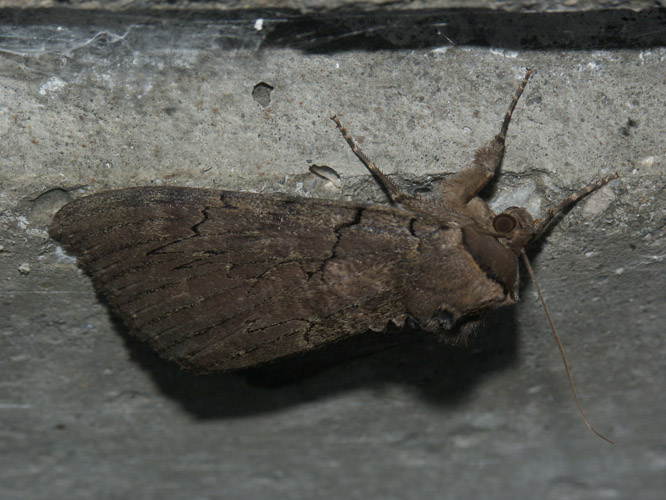
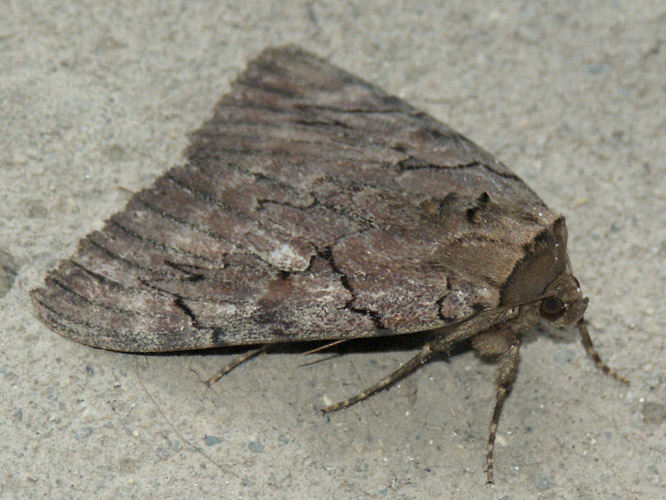
Unidentified Moth
This moth was found on my canoe trip on the Huron River on 8-29-06. It was underneath a bridge.

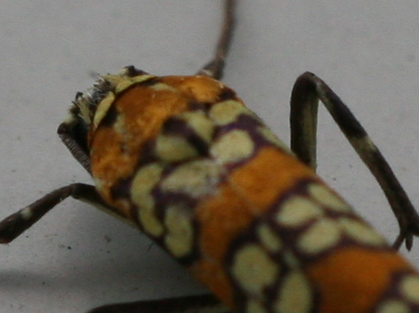
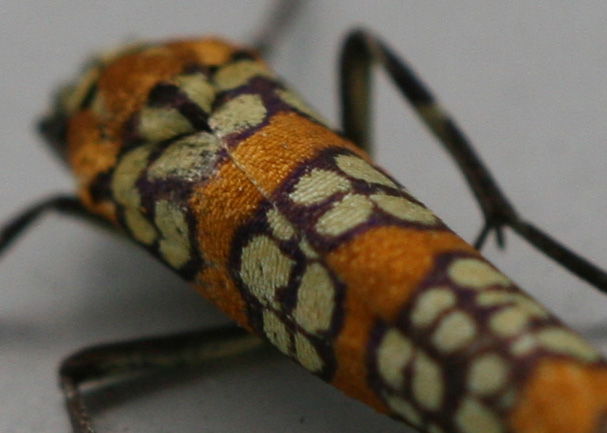
Ailanthus Webworm Moth, Atteva punctella
Lake Erie Metropark, August 4, 2018
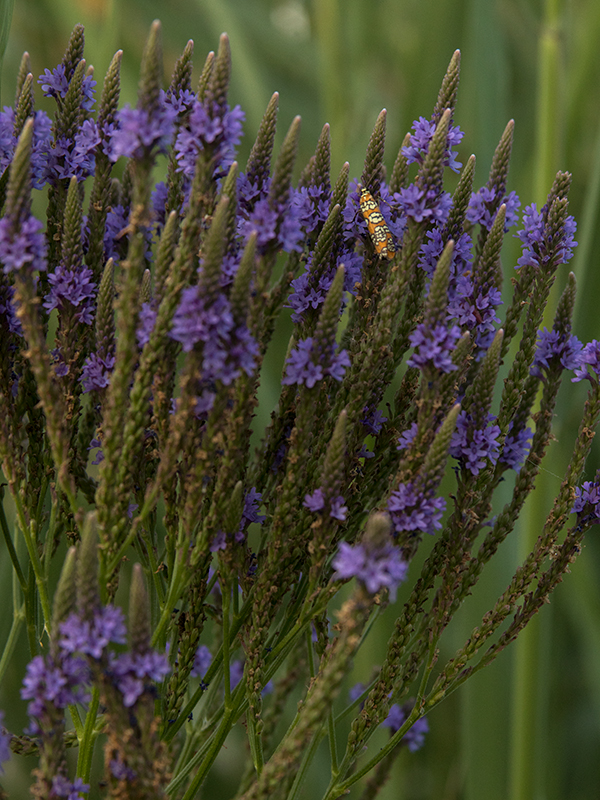
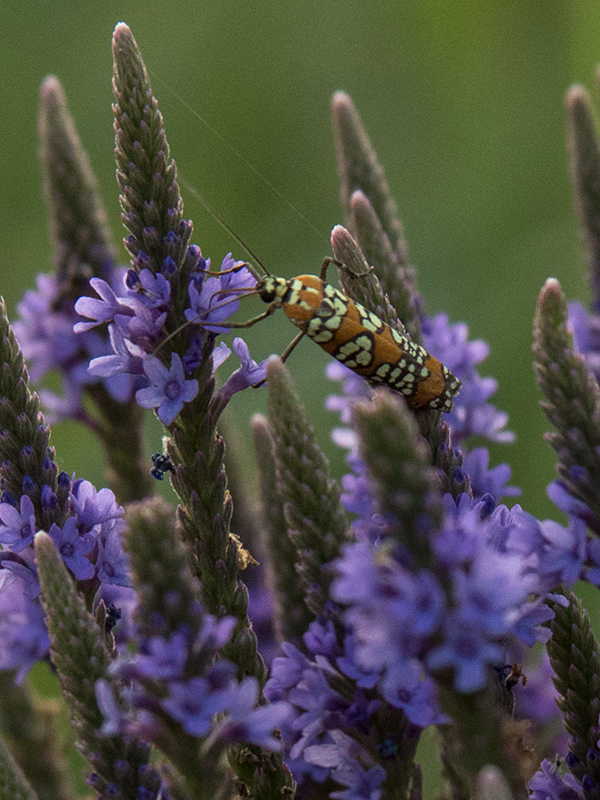
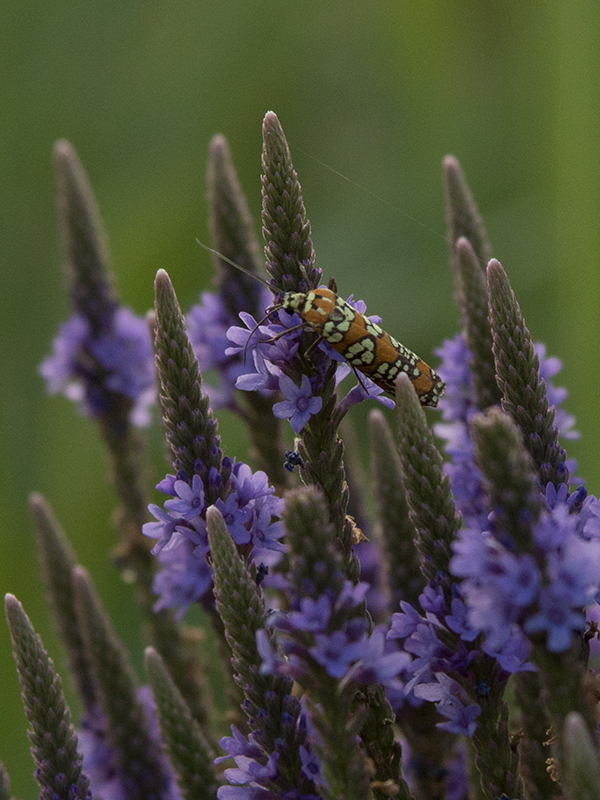
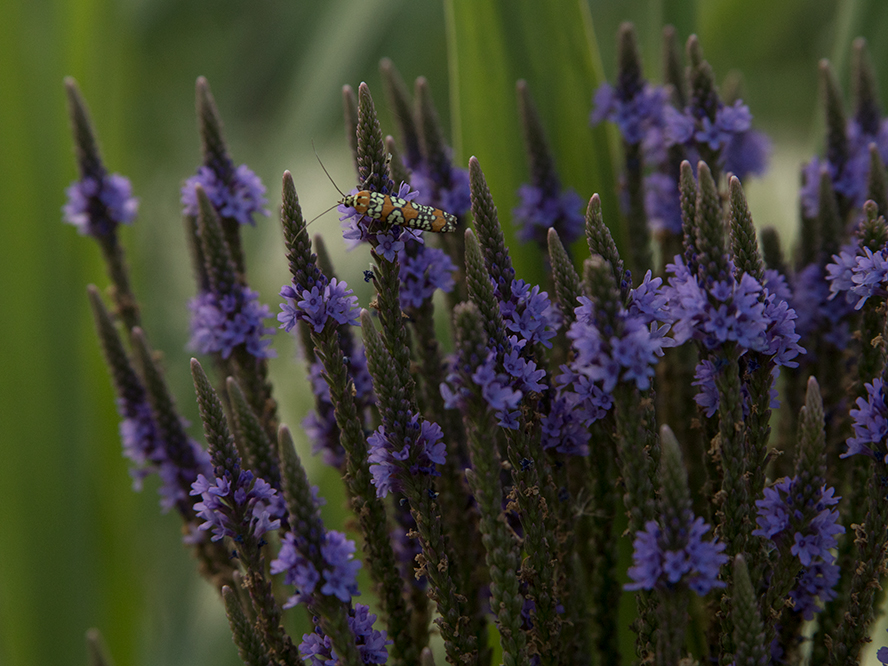
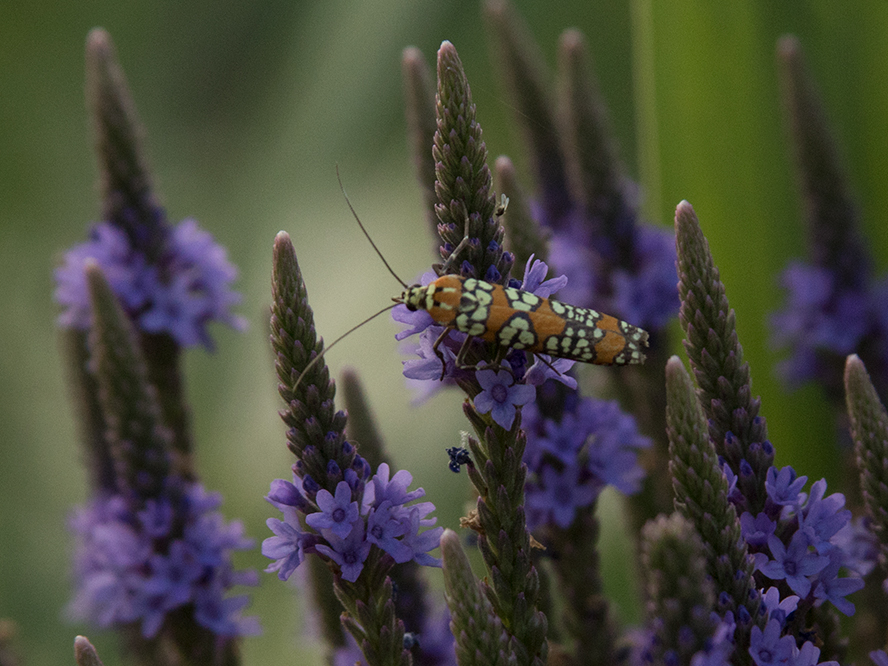
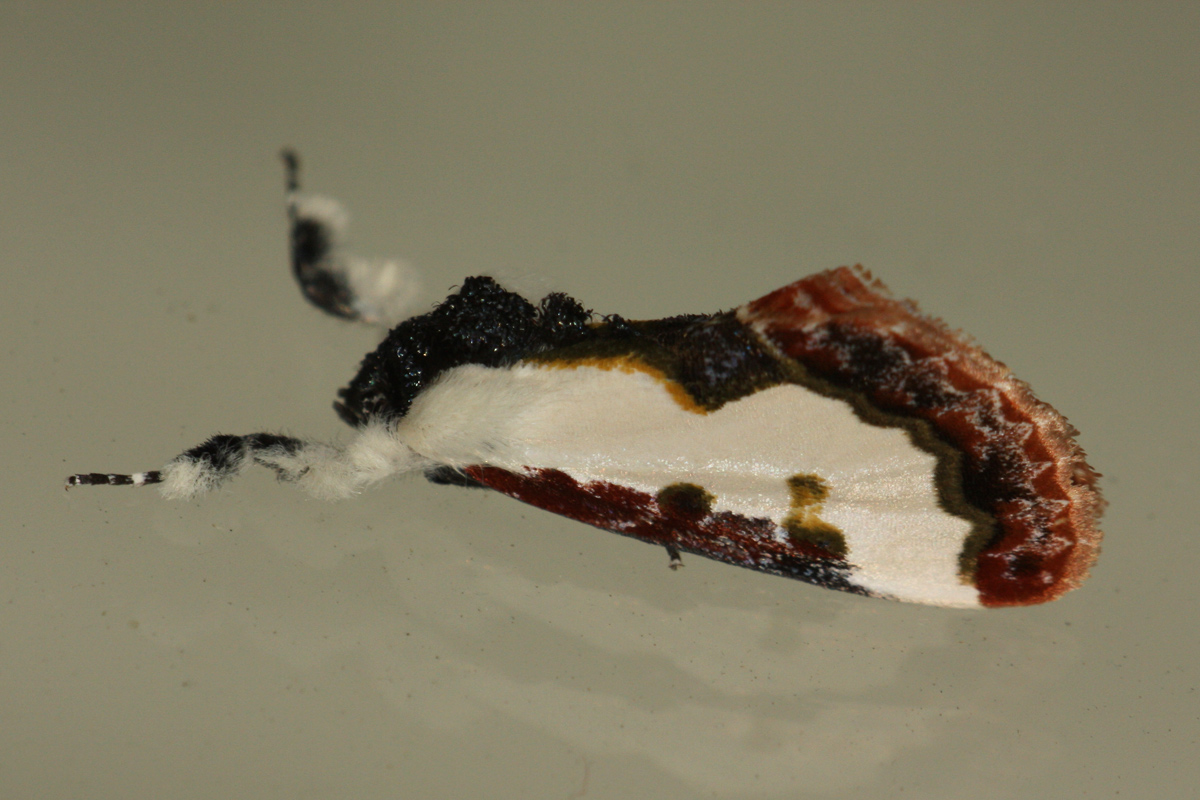
This moth was on my side door on 8-24-06. It was about 1/2 inch long.

Geometer Moth of Genus Xanthotype (possibly Xanthotype attenuaria)
Lake Erie Metropark, August 4, 2018
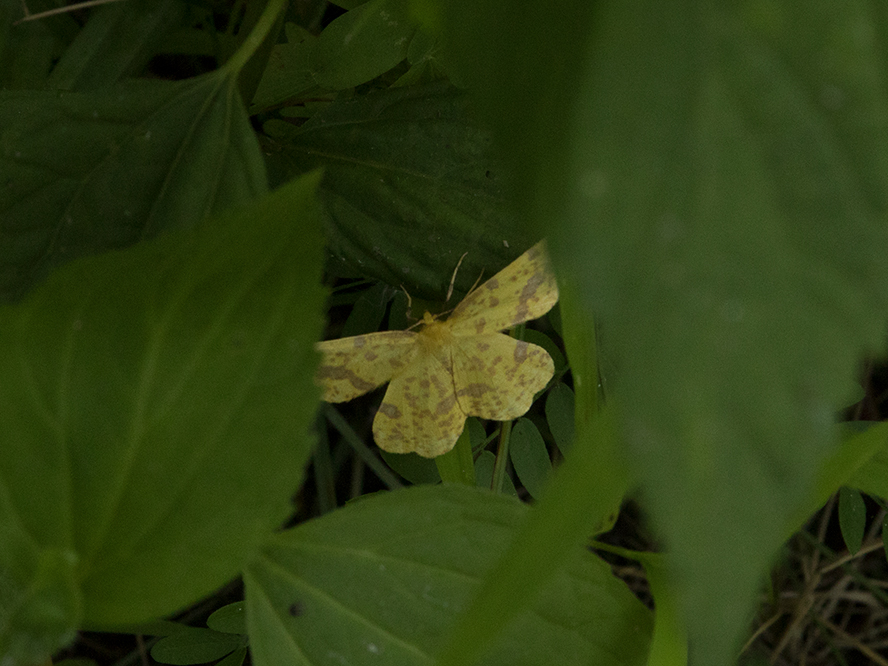
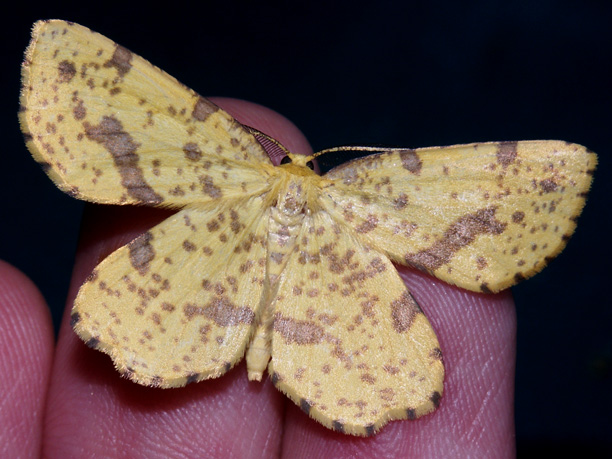
While camping in Nelson, Ohio on July 29, 2006, this moth came to my lantern during the night. I was able to get it to land on my hand and stay there for several minutes while I took it's photo.
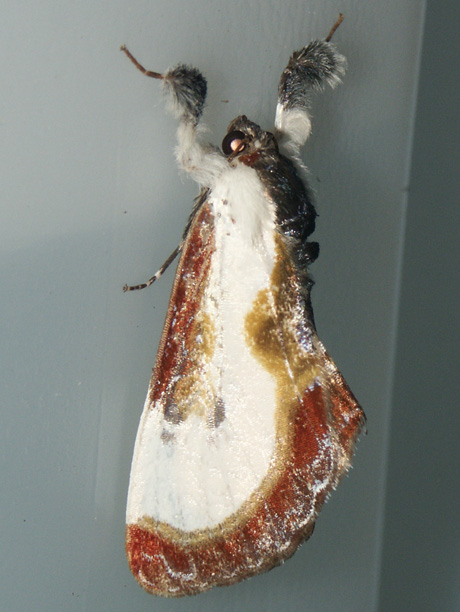
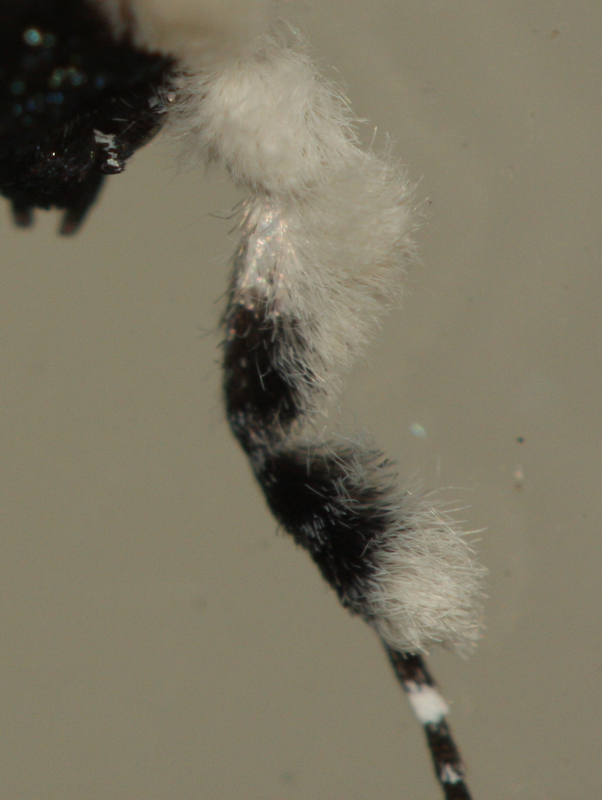
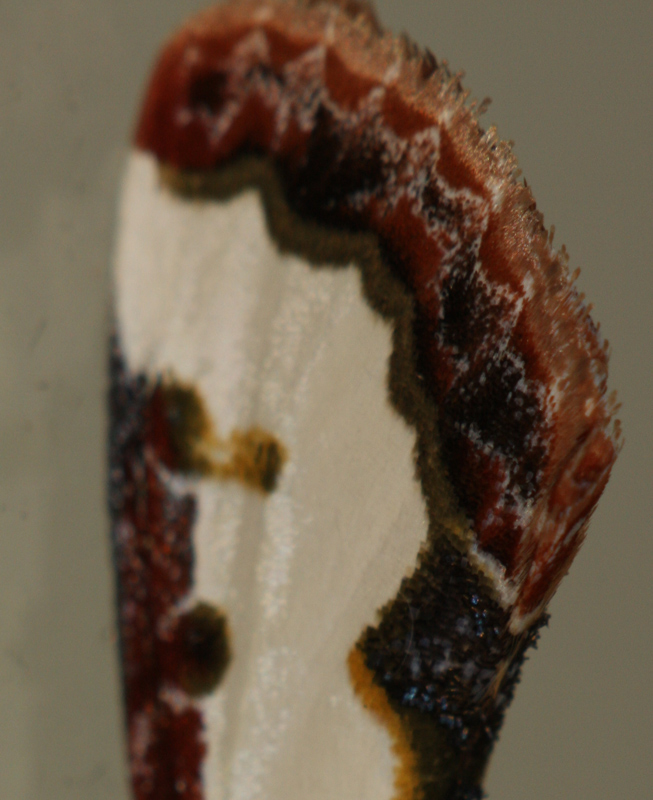
While camping in Nelson, Ohio on July 29, 2006, this moth also came to my lantern. It was less than an inch long. I love the little tufty hairs on its front legs. I've never seen such a fuzzy-legged moth before.
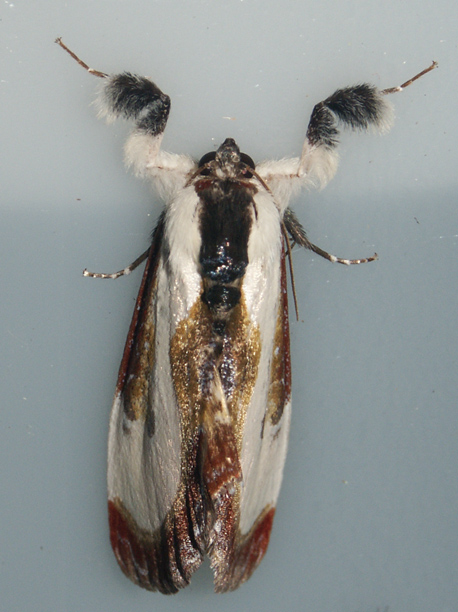
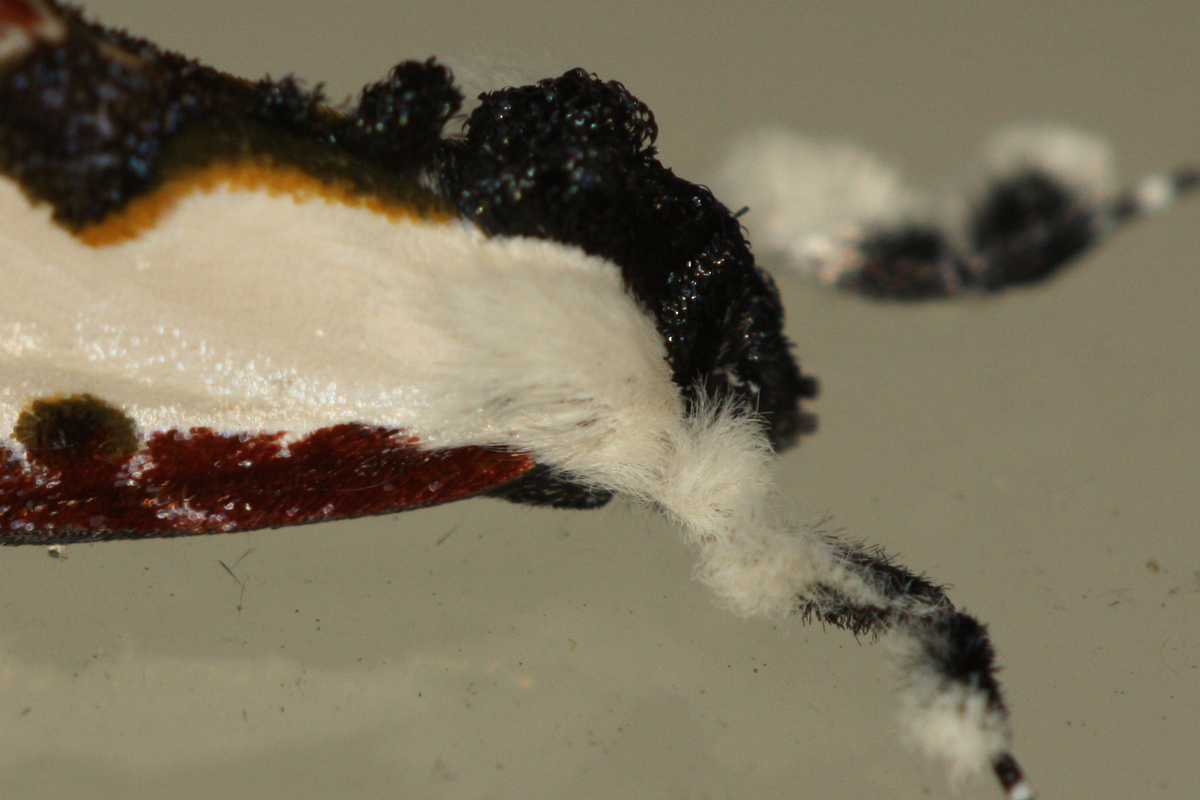
I found another one on August 4, 2011, in Michigan this time, right on my front storm door glass. I got some much better pictures than the last moth. Look closely at the top of the head and thorax---there is something that looks like kitchen scrubbies! I would have never seen that with my naked eye.
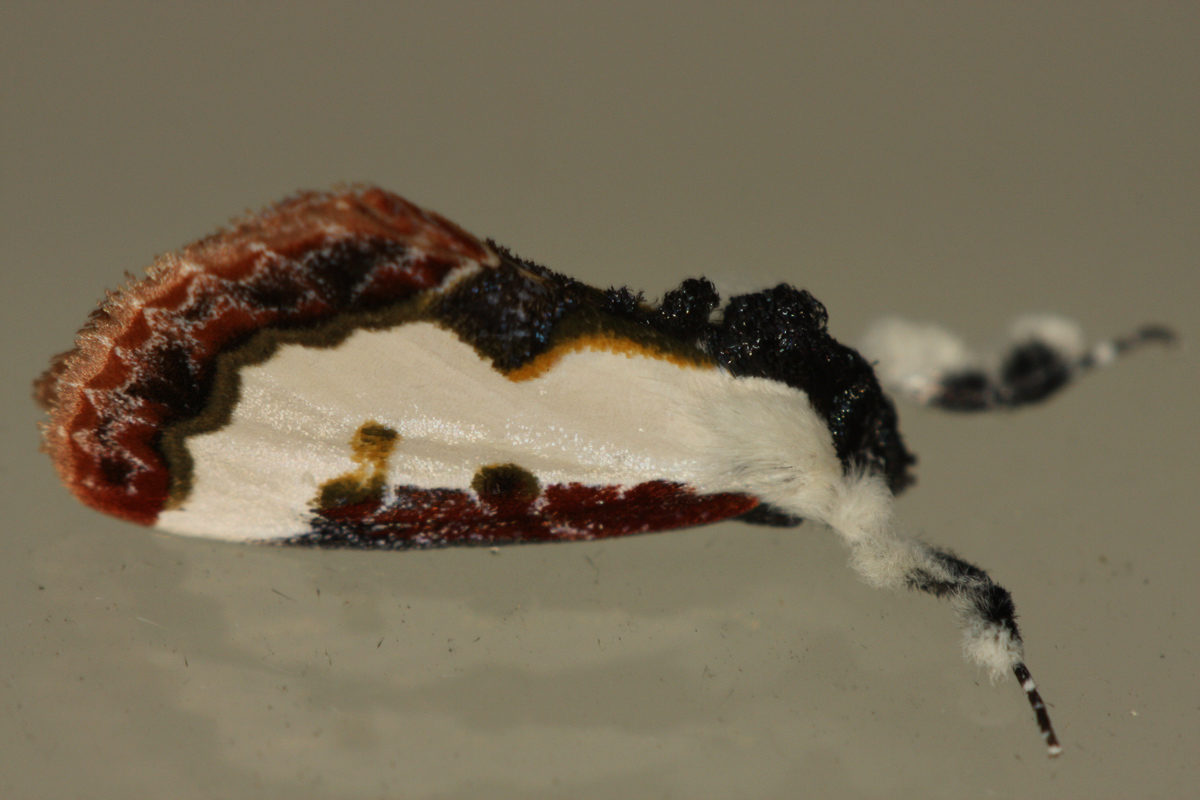
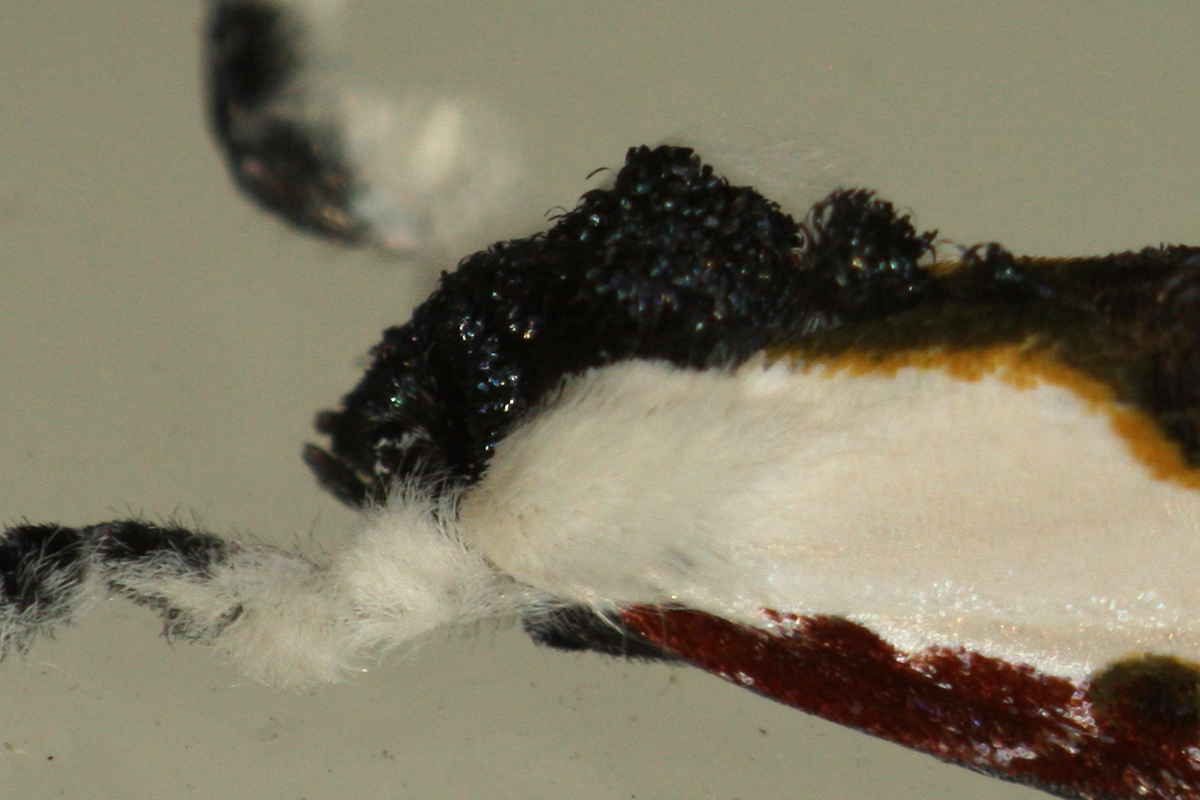
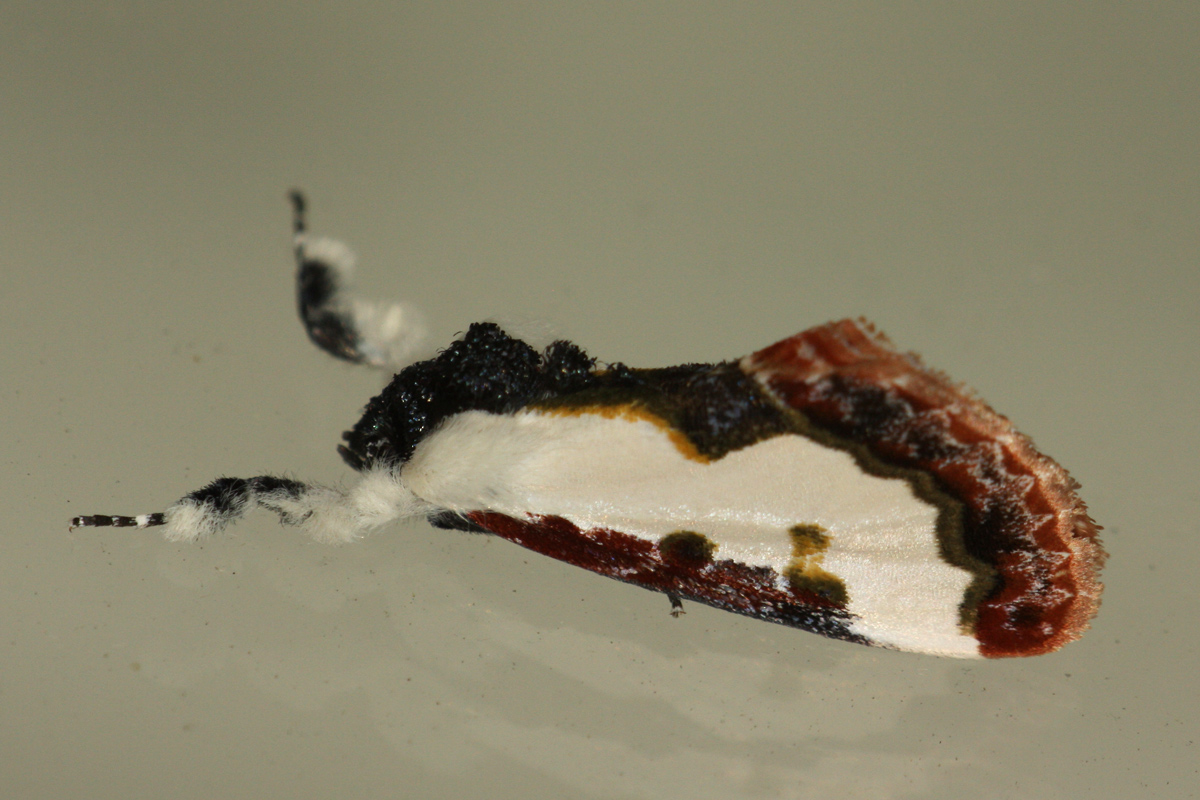
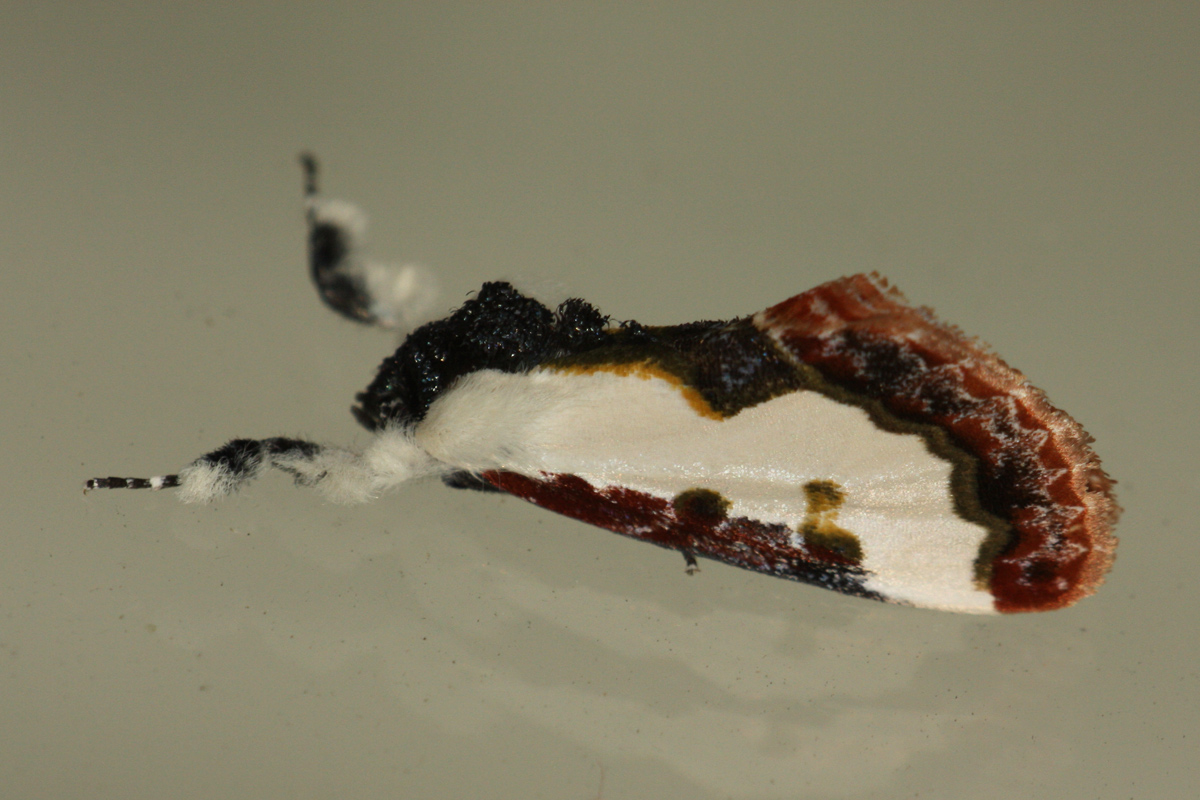
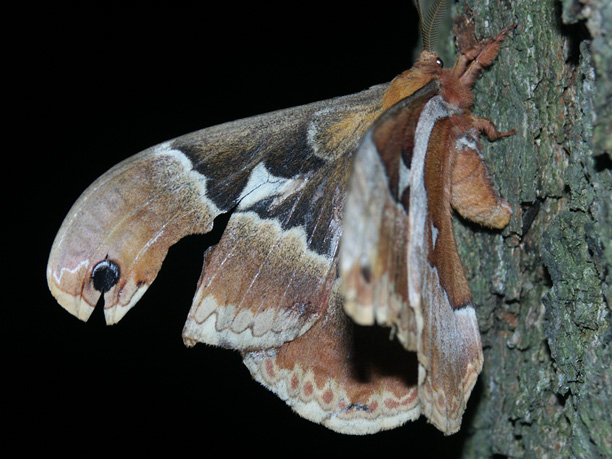
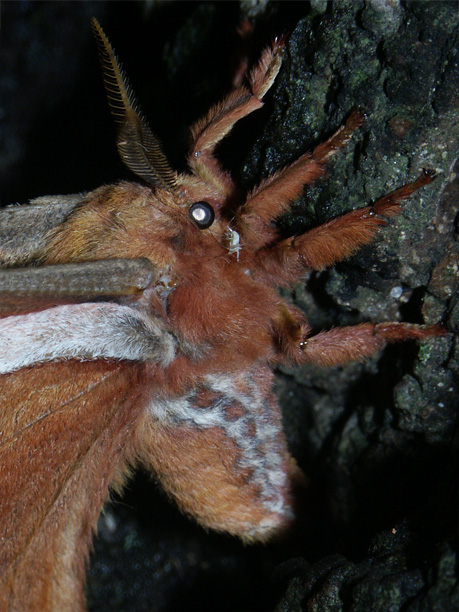
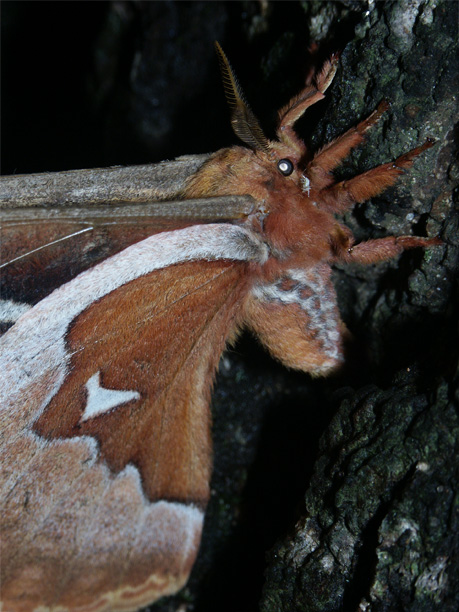
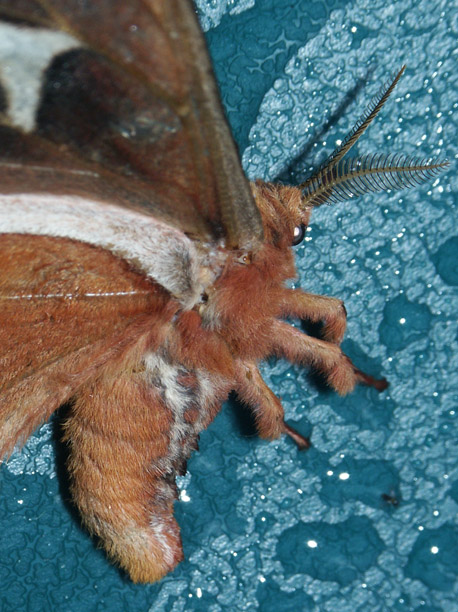
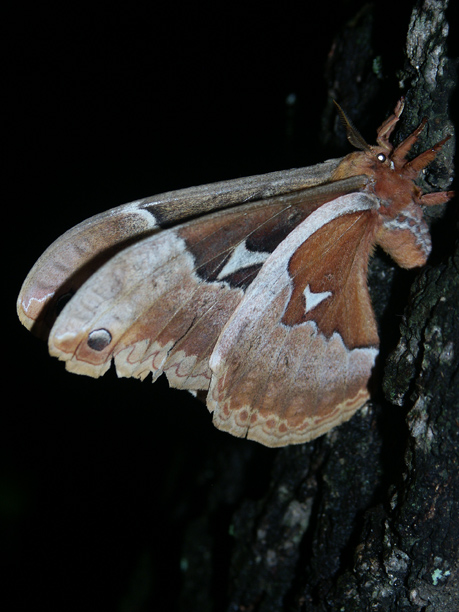
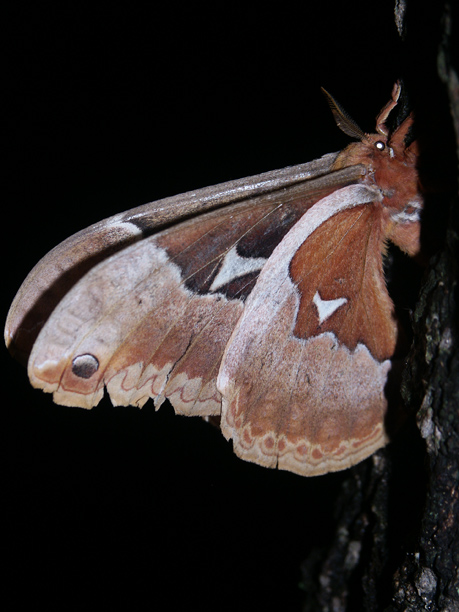
Tulip-tree Silkmoth, Callosamia angulifera
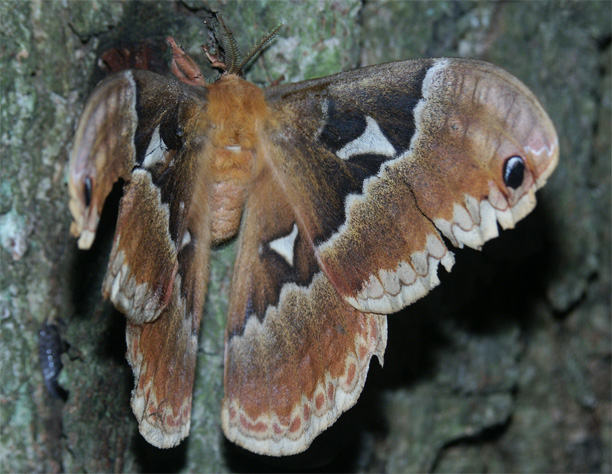
While camping in Nelson, Ohio on July 28, 2006, this beautiful moth came out on a rainy night. Of course, I had to try to get some photos of it. The poor thing had a large tear in one wing. The rain was beating it up too, so before photographing it, I let it dry underneath the lift gate of the car. It stayed there for a few hours while it rained. When the rain stopped, I took it out and put it on a tree trunk and photographed it. Sadly, in the morning, I found it on the ground with a yellow-jacket eating its abdomen. It was already dead.

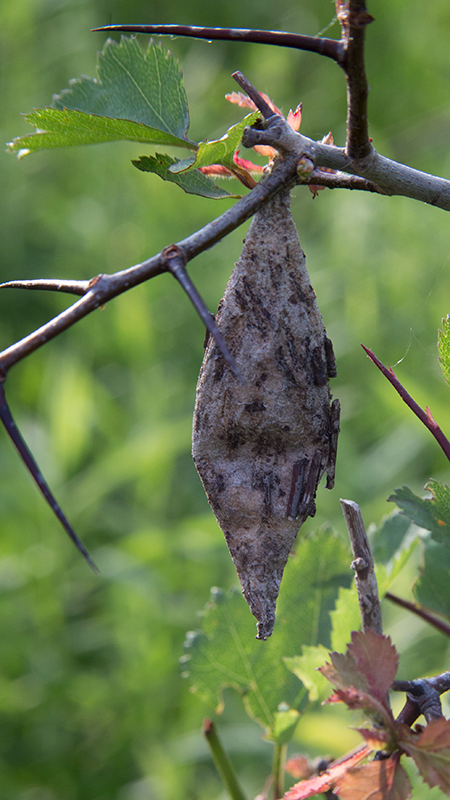
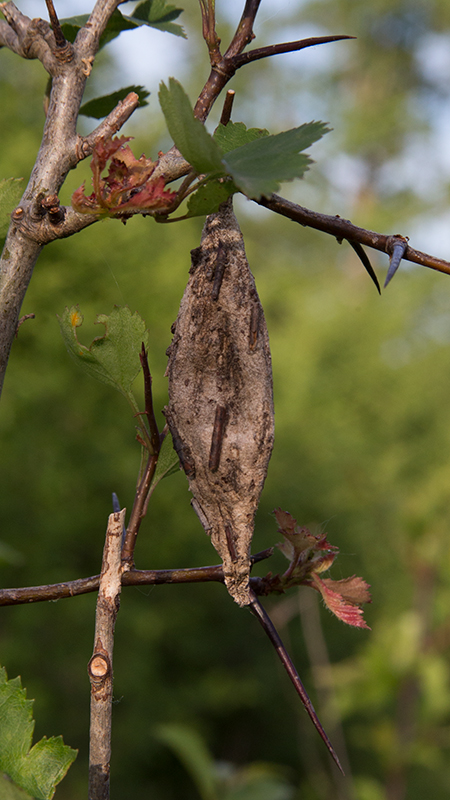
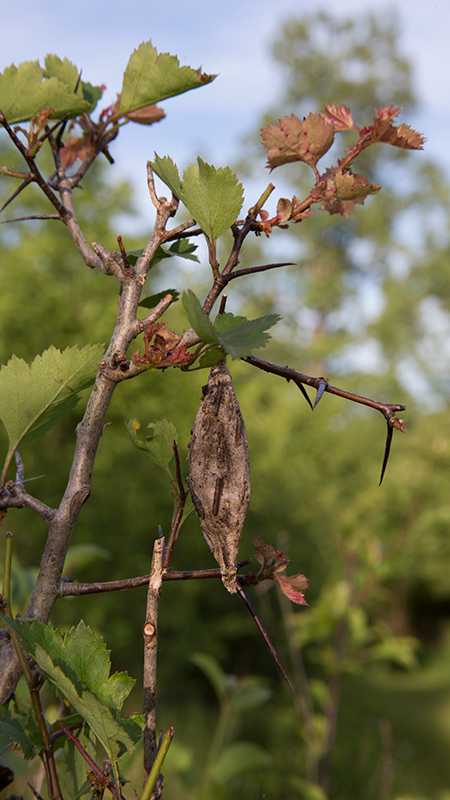
Evergreen Bagworm Moth, Thyridopteryx ephemeraeformis
This cocoon was at Woodland Hills Nature Park on June 4, 2017
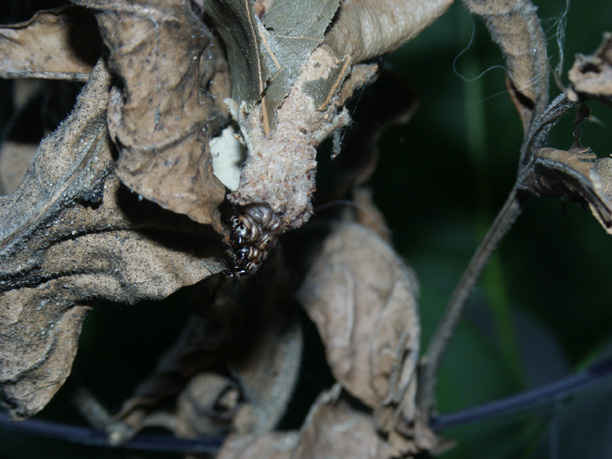
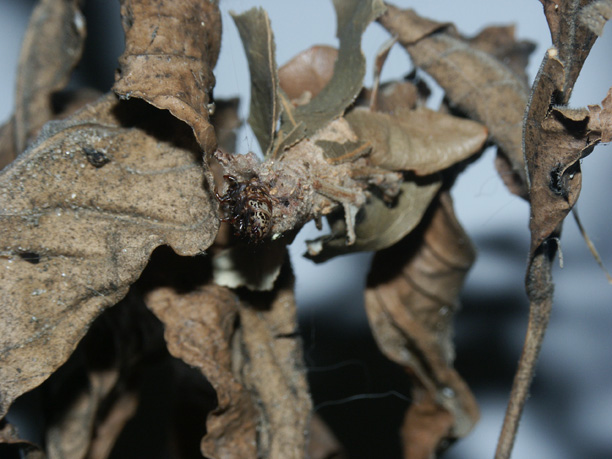
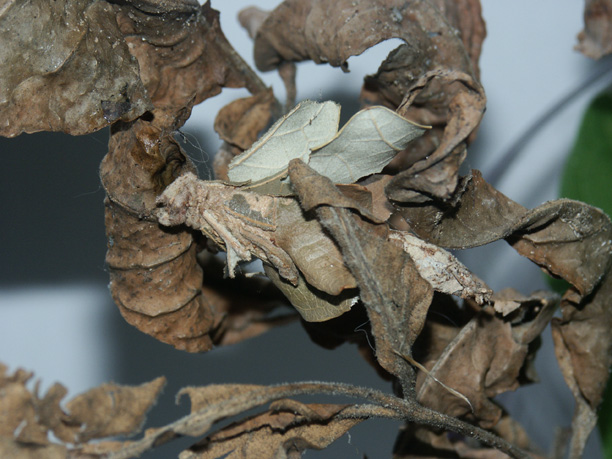
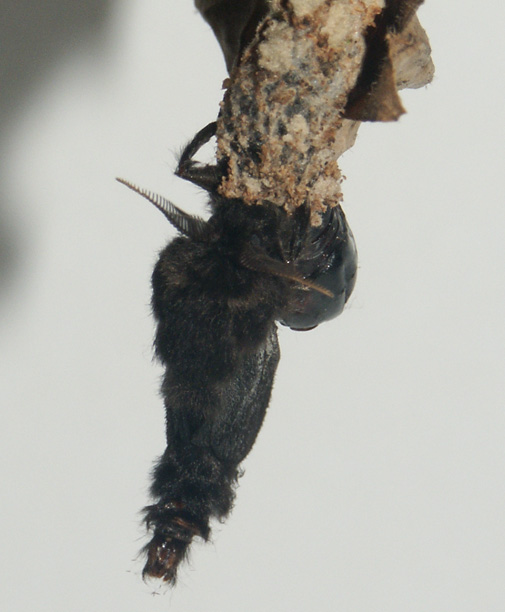
On August 1, 2005, Brian brought home this unusual caterpillar/cocoon that he found on a metal garbage receptacle outside his work. It was covered in pieces of cut leaves and all one could see was its head and a bit of its gray body at times. It had a few brief surges of energy and it moved around on a branch that he placed it on, then it sealed itself up. Click here to see a movie of it while it walked along a leaf. What is most interesting is that after seeing photos of other cocoons on bugguide.net, its cocoon is rather unusual because it doesn't have any evergreen needles attached to it.
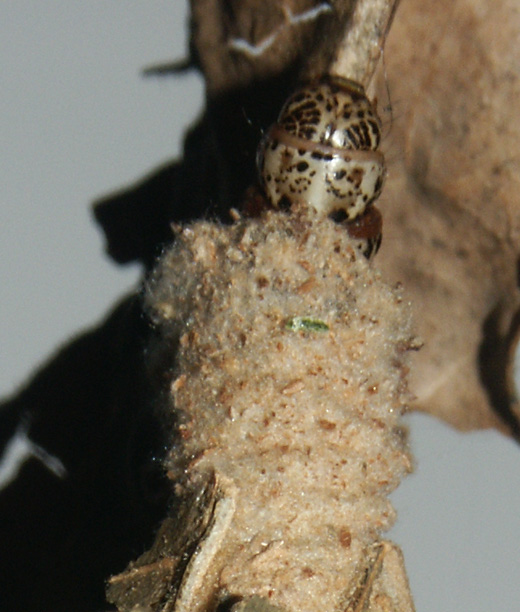

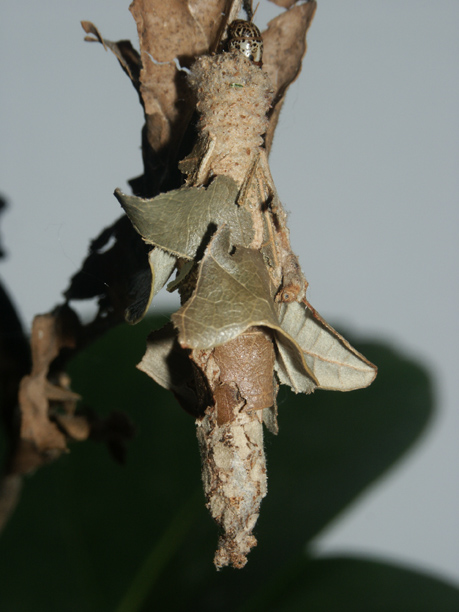
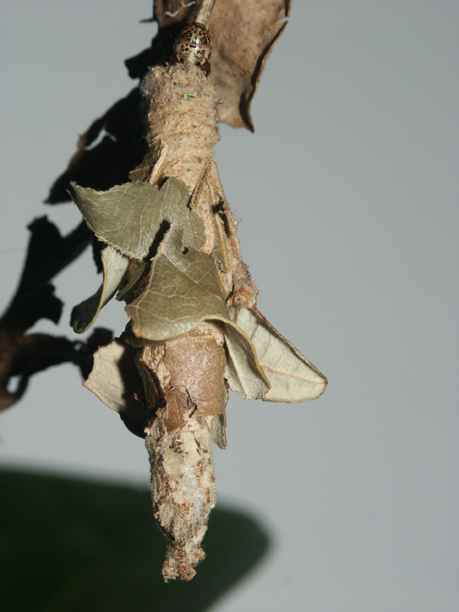
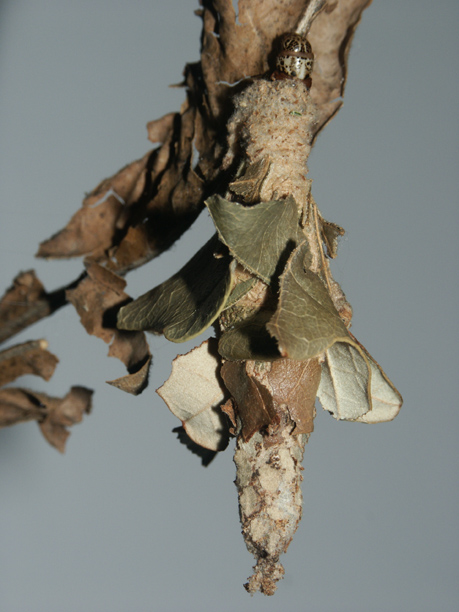
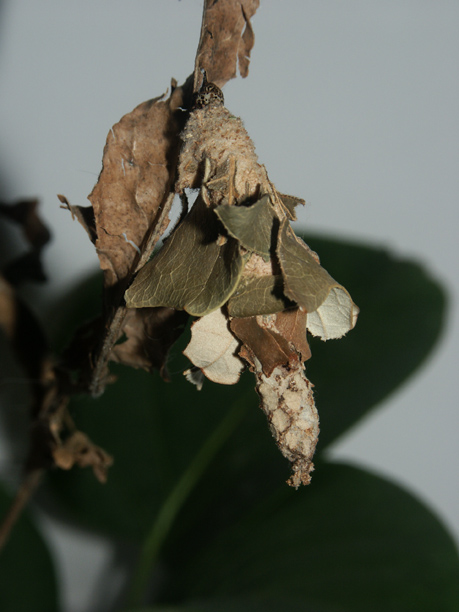

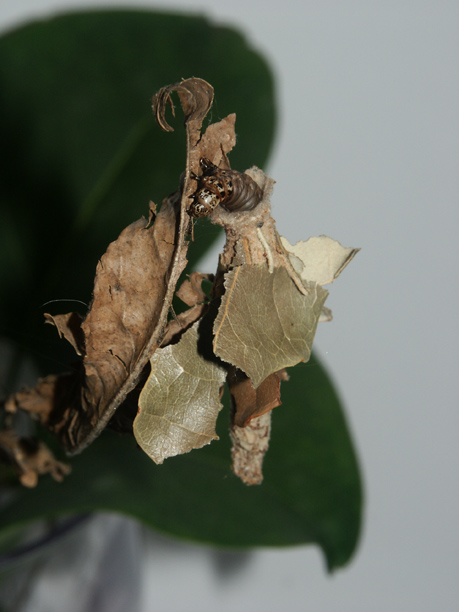
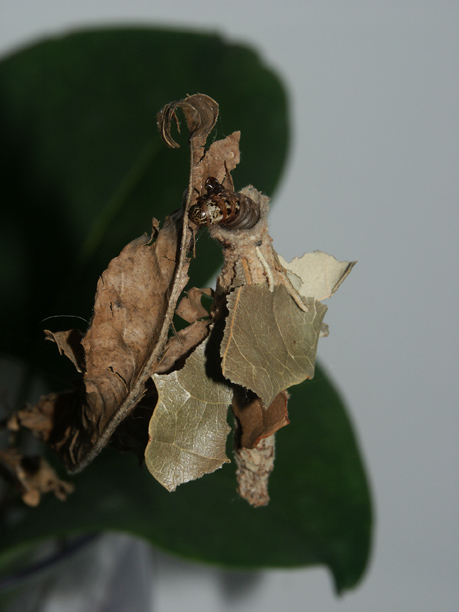
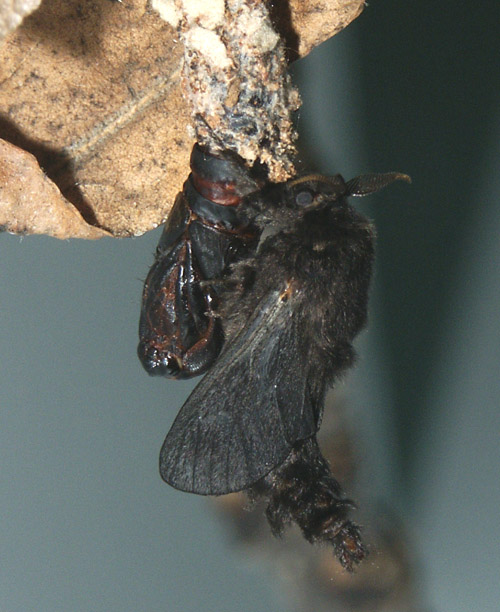
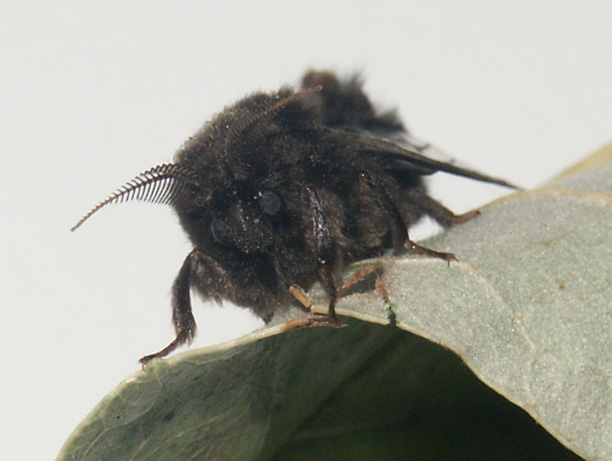
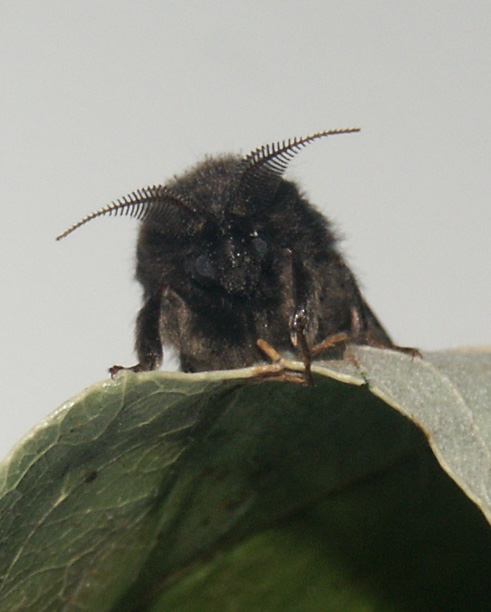
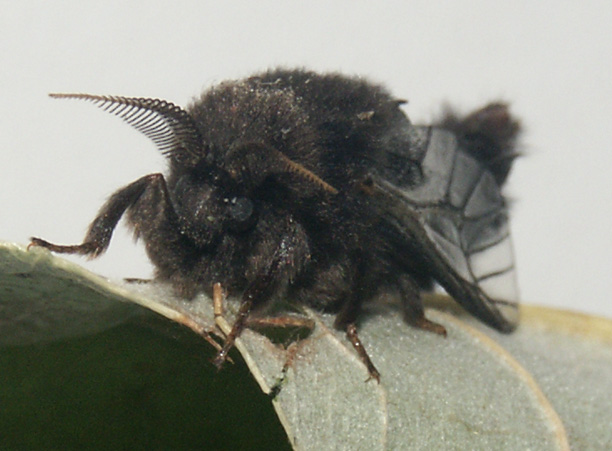
On September 10, 2005, a dark-colored moth emerged and hung from the cocoon. Part of the pupa became exposed and one can see where it has split to allow the moth to be free. I thought it would have emerged from the side where its head was, but it came out the opposite end.


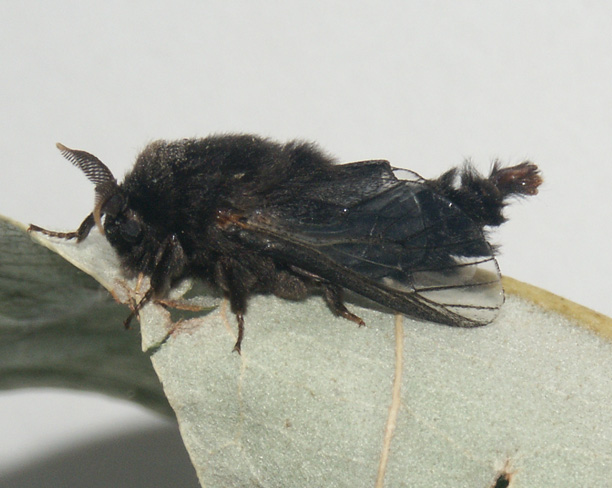
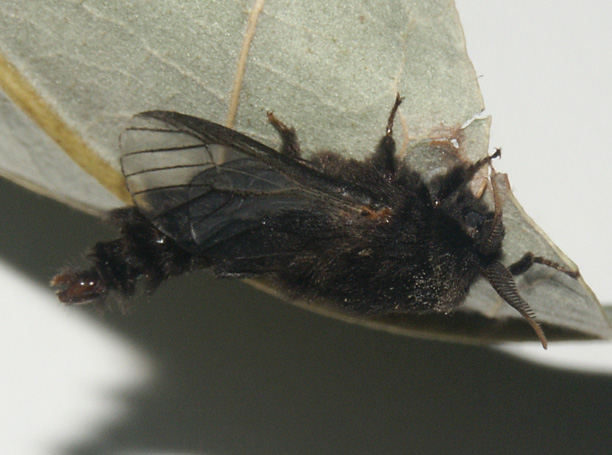
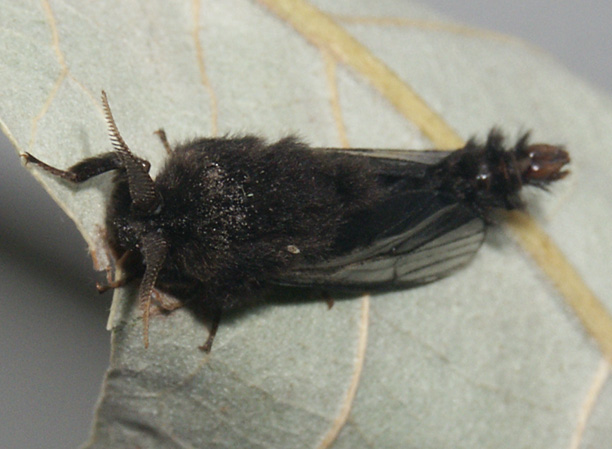
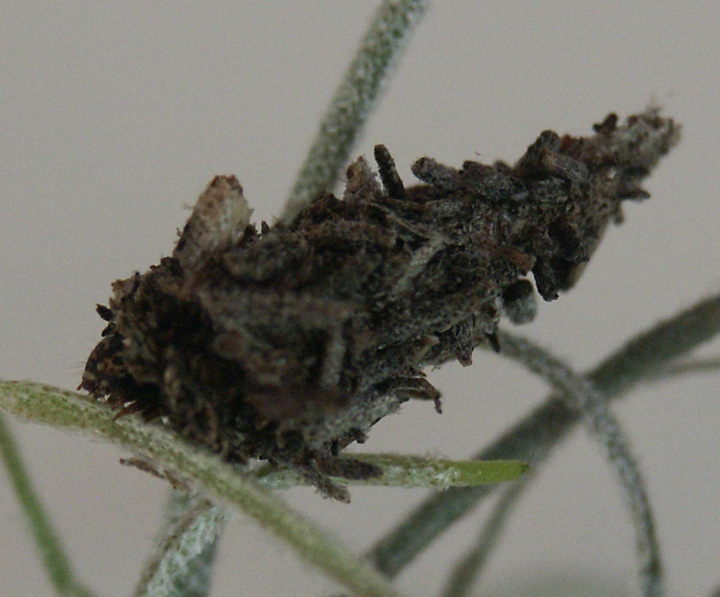
Unidentified bagworm species
My parents brought back some Spanish Moss from a trip to Florida in February 2005. Soon after I opened the bag, two crazy caterpillars were inching about. These things look like they attached small bits of plant matter to their bodies, leaving only their head and front appendages exposed. Very strange creatures. They are only about 3/16 to 1/4 inch long, so I had to use my close-up lens. I also took a short movie of one inching along. Click here to see a movie of this caterpillar in action.
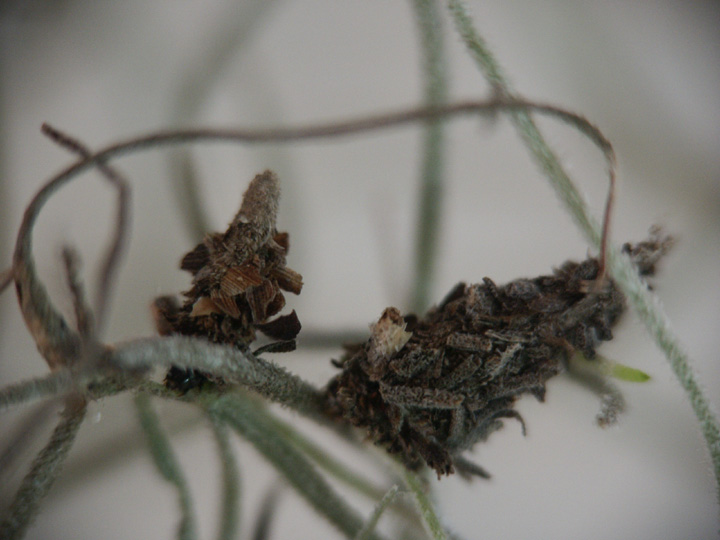
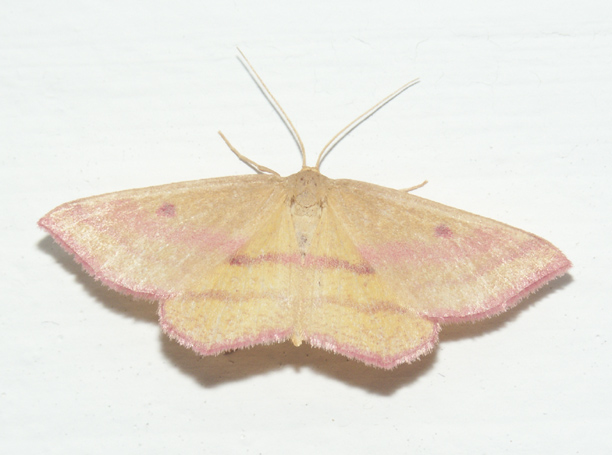
Chickweed Geometer, Haematopis grataria
This moth came inside when I let Darwin out in late September, 2005. It was more colorful than most of the small moths that fly around the light outside the door, so I decided it was photo-worthy. This one is a female (the antennae do not have large receptor sites like a TV antenna).

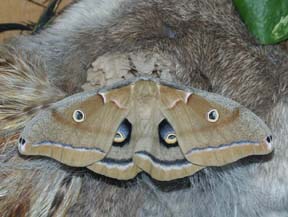
Polyphemus Moth, Antheraea polyphemus
This is one of my favorites. I took so many photographs it needed its own page.
Visit my Polyphemus Moth Page to see an extensive collection of photos and read about my personal experience with a female Polyphemus.
Just click on the photo below...
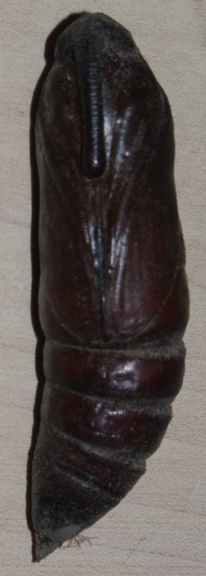
On August 9, 2003, I found a huge, green hornworm caterpillar walking across my driveway. I'd always wanted to find one of these. It was about 4-5 inches long---the largest caterpillar I've ever found. Unfortunately, I didn't get my digital camera until a few days later. I filled a container with a variety of leaves from everything in my yard. The next morning, it had already turned into a pupa! I thought it was rather late in the season and I was wondering when this creature was planning on emerging as a moth. I read about them in one of my wildlife encyclopedias and discovered that the pupa needed to overwinter and would emerge the following spring. I put the pupa in a smaller, covered container in some soil, put it in my refrigerator, and kept it moist throughout the winter. In early May, I took it out and kept it at room temperature. On May 21st, I came home from work and the moth had emerged! He was beautifully soft and fuzzy. However, his wings were folded under and he wasn't able to fly. I took some pictures of him on my woodburned door and let him go in the front flower bed. Amazingly, a week later, my boyfriend Brian found him on the sidewalk path to my house, almost dead.

To learn more about Michigan moths, click here.
To learn more about moths of North America, click here.
For links to photos of over 4100 moth species, click here.
Go to Insects, Spiders and Other Tiny Creatures Main Page
[ Cicadas ] [ Periodical Cicadas] [ Leaf-hoppers ] [ Ant Lions ] [ Ants ] [ Grasshoppers and Crickets ]
[ Katydids ] [ Weevils ] [ Bumblebees and Carpenter Bees ] [ Honeybees ] [ Wasps ] [ Flies and Other Flying Insects ]
[ Beetles and Other Insects ] [ Praying Mantises ] [ Damselflies and Dragonflies ] [ Centipedes and Millipedes ]
[ Moths ] [ Pandora Sphinx Moth ] [ 5-Spotted Hawk Moth ] [ Polyphemus Moth ]
[ Butterflies ] [ Monarchs ] [ Black Swallowtail ] [ Skippers ]
[ Jumping Spiders Volume 1 ] [ Phidippus Jumping Spiders Volume 2 ] [ Phidippus Jumping Spiders Volume 3 ] [ Baby Phidippus Jumpers ]
[ Biglegs the Jumping Spider ] [ Tufts & Mr. Greenfangs ] [ Phidippus clarus Jumping Spiders]
[ "Radinka Onawa" and other Platycryptus undatus jumping spiders ] [ Platycryptus undatus jumping spiders 2012 - present ] [ Platycryptus Babies ]
[ Zebra Spiders ] [ Miscellaneous Jumping Spiders ]
[ Orb-Weavers Volume 1 ] [ Orb-Weavers Volume 2 ] [ Baby Orb-weavers ]
[ Crab Spiders ] [ Miscellaneous Spiders ] [ Spider Webs ]
[ Home ] [ Artwork ] [ Photography ] [ Art Cars ] [ Virtual Museum ] [ Pets ] [ Favorite Links ] [ What's New / My Blog ] [ Guestbook ] [ For Sale ]
Copyright © 2004-2024 kozmicdreams.com. All rights reserved.
All materials contained on this site, including text, graphics and icons, are the property of
kozmicdreams.com.